Candybiotic
Ukraine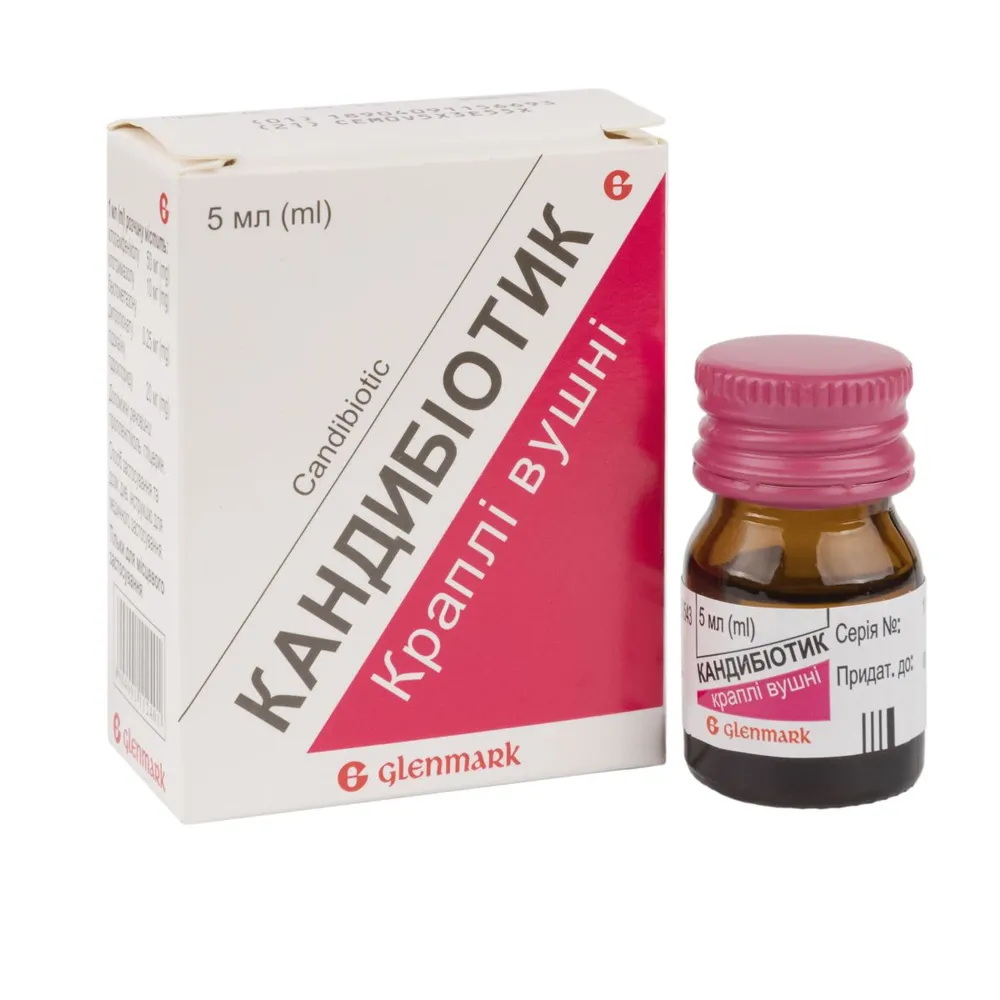
Table of Contents
INSTRUCTION FOR MEDICAL USE OF THE MEDICINAL PRODUCT KANDIBIOTIC (CANDIBIOTIC)
Composition:
Active substances: chloramphenicol, clotrimazole, beclometasone dipropionate, lidocaine hydrochloride;
1 ml of solution contains chloramphenicol 50 mg, clotrimazole 10 mg, beclometasone dipropionate 0.25 mg, lidocaine hydrochloride 20 mg;
Excipients: glycerin, propylene glycol.
Pharmaceutical form. Ear drops.
Main physicochemical properties: clear light-yellow liquid.
Pharmacotherapeutic group.
Preparations used in otology. Combined preparations containing corticosteroids and antimicrobial agents.
ATC code S02CA.
Pharmacological Properties
Pharmacodynamics. A combined topical preparation with antimicrobial, anti-inflammatory, and local anesthetic properties. The pharmacological effect of Candibiotic is determined by the properties of chloramphenicol, clotrimazole, beclomethasone dipropionate, and lidocaine contained in its composition. Chloramphenicol is an amphenicol derivative. It has a broad spectrum of antimicrobial activity. The action of chloramphen游戏副本
Clinical characteristics.
Indications.
Allergic and inflammatory diseases of the external and middle ear; otorrhea; infectious diseases of the external and middle ear caused by microorganisms sensitive to the drug. Surgical interventions on the mastoid process.
Contraindications.
Hypersensitivity to the components of the drug and to other amide local anesthetics.
Chickenpox, simple or herpes zoster, impairment of the integrity of the tympanic membrane.
Interaction with other medicinal products and other forms of interaction.
Not described. Due to the low transdermal absorption of individual active ingredients of the drug, drug interaction with concomitant systemic medications is considered unlikely.
Special precautions for use.
The medication is intended for topical use in the ear canal only.
Treatment with the medicinal product should be discontinued if signs of hypersensitivity to any of the components of the medication occur.
Candybiotic should not be used for prolonged treatment.
To ensure aseptic conditions and prevent bacterial contamination, do not allow the dropper cap to touch any surfaces (including the surface of the ear).
In case of accidental ingestion of Candybiotic, medical advice should be sought immediately.
Ear preparations containing chloramphenicol are not recommended for patients with perforated tympanic membrane due to the high risk of ototoxicity.
Candybiotic ear drops should be used with caution in patients with a history of allergic reactions to other topical or oral corticosteroids due to an increased risk of hypersensitivity.
In children, topical corticosteroids may be absorbed in proportionally larger amounts, increasing the likelihood of systemic toxicity.
Following systemic absorption of topical corticosteroids, reversible suppression of the hypothalamic-pituitary-adrenal (HPA) axis may occur. Clinical symptoms include Cushing's syndrome, hyperglycemia, and glucosuria. Such adverse reactions may be observed more frequently with the use of more potent steroids, application over large body surface areas, prolonged therapy, concomitant use of occlusive dressings, and in patients with hepatic insufficiency. After discontinuation of the medication, HPA axis function recovers rapidly and completely. In isolated cases, steroid withdrawal symptoms may occur, which may require additional systemic corticosteroid therapy.
Patients prescribed topical corticosteroids should be instructed to use the medication strictly according to the physician's instructions, only for the condition for which it was prescribed, and not beyond the prescribed duration.
This medication should be used with caution in patients receiving concomitant systemic antifungal therapy; in patients with diabetes mellitus; in patients with a history of immunosuppression or those with weakened immune systems.
Development of blood dyscrasias, including aplastic anemia, may be associated with the use of chloramphenicol. Adequate blood tests should be performed during prolonged or intermittent therapy.
Prolonged or frequent intermittent use of topical chloramphenicol preparations should be avoided due to the potential risk of hypersensitivity reactions, including bone marrow hypoplasia.
Chloramphenicol is considered hazardous for use in patients with acute porphyria.
In some cases, bacterial resistance to clotrimazole may develop.
Avoid contact of the medication with the eyes.
Visual disturbances may occur with systemic and topical use of corticosteroids. If a patient experiences symptoms such as blurred vision or other visual disturbances, they should be referred to an ophthalmologist for evaluation of possible causes, which may include cataract, glaucoma, or rare conditions such as central serous chorioretinopathy, which have been reported following the use of systemic and topical corticosteroids.
Use during pregnancy or breastfeeding.
Despite the absence of established negative effects on the health of the mother or fetus in clinical and experimental studies, the medication should not be used during pregnancy or breastfeeding.
Ability to affect reaction speed when driving or operating machinery.
Does not affect.
Dosage and Administration.
For topical use.
For adults and children aged 12 years and older: instill 3–4 drops of the preparation into the ear canal 3–4 times daily.
The treatment duration, determined individually depending on the severity and course of the disease, averages 5–7 days.
For children aged 2 to 12 years: 2 drops 4 times daily. The treatment course lasts 5 days.
To administer the preparation, tilt the head, instill the required number of drops into the ear, and keep the head tilted for some time to ensure the medication penetrates into the ear canal.
Children.
The medicinal product is used in children aged 2 years and older.
Overdose.
Not described.
Adverse reactions.
Possible allergic reactions including itching, burning and tingling sensations at the site of administration; erythema, urticaria, swelling, contact dermatitis, visual disturbances (see section "Special precautions").
Shelf life.
2 years.
Storage conditions.
Store in a dry, light-protected place, out of reach of children, at a temperature between 2 and 8 °C.
Packaging.
5 ml in a bottle with a dropper cap, placed into a polyethylene bag, in a cardboard box.
Prescription status.
Prescription only.
Manufacturer.
Glenmark Pharmaceuticals Ltd.
Manufacturer's address.
Plot No E-37/39, M.I.D.C., Industrial Estate, Satpur, Nasik – 422 007, India.