Cameton
Ukraine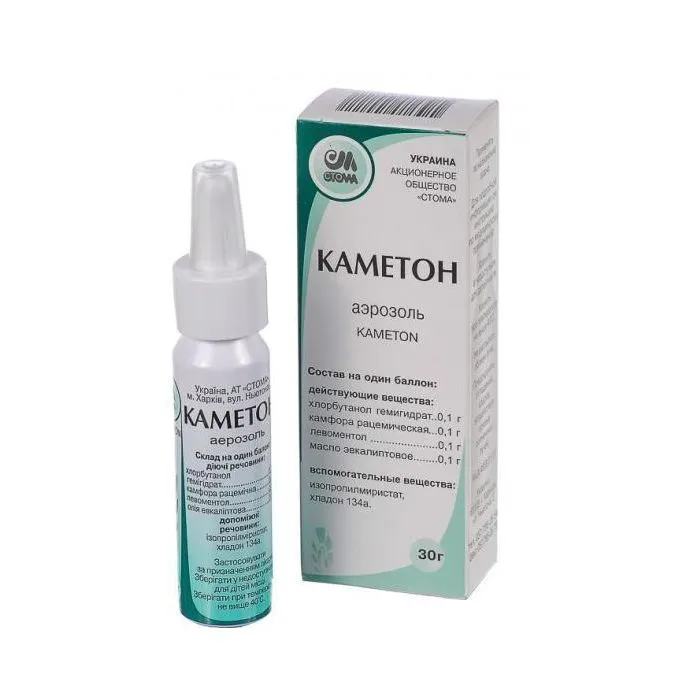
Table of Contents
INSTRUCTION FOR MEDICAL USE OF THE MEDICINAL PRODUCT KAMETON
Composition:
Active substances: 1 can contains chlorobutanol hemihydrate 0.1 g; racemic camphor 0.1 g; levomenthol 0.1 g; eucalyptus oil 0.1 g;
Excipients: isopropyl myristate, propellant 134a.
Pharmaceutical form. Aerosol.
Main physico-chemical properties: clear, colorless or slightly yellowish liquid with a specific odor.
Pharmacotherapeutic group.
Agents acting on the respiratory system. Antiseptics. ATC code R02A A20.
Pharmacological properties.
Pharmacodynamics.
Cameton exerts anti-inflammatory, antiseptic, and mild local anesthetic effects. Its mechanism of action involves a reflex response (stimulation of sensitive nerve endings) and stimulation of the production and release of endorphins and other biologically active endogenous substances that regulate pain sensations and vascular permeability. The combined action of chlorobutanol hydrate, camphor, and eucalyptus oil provides anti-inflammatory and disinfectant effects, facilitating the removal of viscous secretions accumulated in the upper respiratory tract. Levomenthol acts as a mild local anesthetic agent and has a deodorizing effect.
Pharmacokinetics.
Not studied.
Clinical characteristics.
Indications.
Local treatment of acute and chronic (mainly in the stage of exacerbation) infectious and inflammatory diseases of the throat and nose: tonsillitis, pharyngitis, laryngitis, rhinitis.
Contraindications.
Hypersensitivity to any component of the drug.
Interaction with other medicinal products and other types of interactions.
Unknown. If simultaneous use of any medicinal products is necessary, consult a physician.
Special precautions.
Do not spray near fire. The drug should be used with caution in children, as bronchospasm may develop. Treatment of children should be carried out under medical supervision.
Before using Kameton, rinse the oral cavity with warm boiled water. Before administering the drug into the nasal cavity, clear the nose of mucus. When treating the mucous membranes of the throat, the drug should be applied after eating. Do not disassemble the canister and do not give it to children; protect from impacts. After using the drug, place the protective cap on the spray nozzle to prevent contamination. When spraying into the nose, do not tilt the head back or invert the canister. It is not recommended to use the same canister for multiple individuals to avoid spreading infection. During spraying, avoid contact with the eyes. Individuals prone to allergies should consult a physician before using the drug.
In burns, remove the necrotic coating from affected areas with a sterile swab.
Use during pregnancy or breastfeeding.
No contraindications for the use of the drug during pregnancy or breastfeeding have been identified. The drug should be used during these periods only as directed by a physician.
Ability to influence reaction rate when driving or operating machinery.
Not established.
Method of Administration and Dosage
The medication is intended for adults and children aged 5 years and older. To use the spray, remove the protective cap from the dispenser, then insert the dispenser into the nasal or oral cavity to a depth of 0.5 cm and press the base of the dispenser firmly until it stops. The contents of the canister are thus released in a finely dispersed form. Each spray delivers 0.1 g of the medication, containing a total of 1.33 mg of active ingredients. Cameton should be sprayed into the nasal or oral cavity during inhalation, 2–3 sprays at a time, 3–4 times daily.
The usual duration of continuous treatment is 6–7 days (determined individually by a physician). The medication should not be used for longer than 1 week.
Children
The medication may be used in children aged 5 years and older under medical supervision.
Overdose
Overdose may intensify adverse effects. Treatment is symptomatic. Management: discontinue the medication and provide symptomatic therapy.
Adverse reactions.
Immune system disorders: allergic reactions, including urticaria, itching, skin rash, swelling at the site of contact; angioedema (Quincke's edema) may develop in individuals with increased sensitivity.
Respiratory system disorders: dyspnea, sensation of dryness of the mucous membranes of the throat and nose.
Local effects: sensation of irritation or burning in the mouth.
If any adverse reactions occur, discontinue use of the drug and consult a physician immediately.
Shelf life. 2 years.
Do not use the drug after the expiry date stated on the packaging.
Storage conditions.
Keep out of reach of children.
Store in the original packaging at a temperature not exceeding 25 °C.
Protect from falls, impacts, and exposure to direct sunlight.
Packaging.
30 g in an aluminum aerosol can; 1 can with a spray dispenser in a carton.
Availability. Over-the-counter.
Manufacturer. JSC "Stoma", Ukraine.
Manufacturer's address and place of business.
3, Newtona Street, Kharkiv, 61105, Ukraine.
INSTRUCTION
for medical use of the medicinal product
KAMETON
Composition:
Active ingredients: 1 can contains chlorobutanol hemihydrate 0.1 g; racemic camphor 0.1 g; levomenthol 0.1 g; eucalyptus oil 0.1 g;
Excipients: isopropyl myristate, propellant 134a.
Dosage form. Aerosol.
Main physicochemical properties: clear, colorless or slightly yellowish liquid with a specific odor.
Pharmacotherapeutic group.
Agents acting on the respiratory system. Antiseptics. ATC code R02A A20.
Pharmacological properties.
Pharmacodynamics.
Kameton exhibits anti-inflammatory, antiseptic, and mild local anesthetic effects. The mechanism of action involves a reflex response (stimulation of sensory nerve endings) and stimulation of the production and release of endorphins and other biologically active endogenous substances regulating pain sensations and vascular permeability. The combined action of chlorobutanol hydrate, camphor, and eucalyptus oil provides anti-inflammatory and disinfectant effects, facilitating the removal of viscous secretions accumulating in the upper respiratory tract. Levomenthol acts as a mild local anesthetic agent and has a deodorizing effect.
Pharmacokinetics.
Not studied.
Clinical characteristics.
Indications.
Local treatment of acute and chronic (mainly during exacerbation) infectious and inflammatory diseases of the throat and nose: tonsillitis, pharyngitis, laryngitis, rhinitis.
Contraindications.
Hypersensitivity to any component of the drug.
Interaction with other medicinal products and other forms of interaction.
Not known. Consult a physician if simultaneous use with other medicinal products is necessary.
Special precautions.
Do not spray near fire. Use with caution in children, as bronchospasm may develop. Treatment of children should be conducted under medical supervision. Before using Kameton, rinse the mouth with warm boiled water. Before administering the drug into the nasal cavity, clear the nose of mucus. When treating the mucous membranes of the throat, apply the drug after meals. Do not disassemble the can or give it to children; protect from impacts. After using the drug, place the protective cap back on the spray nozzle to prevent contamination. When spraying into the nose, do not tilt the head back or invert the can. It is not recommended to use the same can by multiple individuals to avoid spreading infection. Avoid contact with eyes during spraying. Individuals prone to allergies should consult a physician before using the drug. In case of burns, remove necrotic deposits from affected areas with a sterile swab.
Use during pregnancy or breastfeeding.
No contraindications for use during pregnancy or breastfeeding have been identified. The drug should be used during these periods only as prescribed by a physician.
Effect on ability to drive vehicles or operate machinery.
Not established.
Method of administration and dosage.
The drug is intended for use in adults and children aged 5 years and older. To use, remove the protective cap from the spray nozzle, insert the nozzle into the nasal cavity to a depth of 0.5 cm or into the mouth, and press the base of the nozzle fully. The contents of the can are released as a fine mist. Each actuation delivers 0.1 g of the drug, containing a total of 1.33 mg of active ingredients. Kameton should be sprayed into the nasal or oral cavity during inhalation, 2–3 sprays 3–4 times daily.
The usual duration of continuous treatment is 6–7 days (determined individually by a physician). The drug should not be used for longer than 1 week.
Children.
The drug should be used in children aged 5 years and older under medical supervision.
Overdose.
Overdose may lead to an intensification of adverse effects. Treatment is symptomatic. Treatment: discontinue use of the drug and provide symptomatic therapy.
Adverse reactions.
Immune system disorders: allergic reactions, including urticaria, itching, skin rash, swelling at the site of contact; angioedema (Quincke's edema) may develop in individuals with increased sensitivity.
Respiratory system disorders: dyspnea, sensation of dryness of the mucous membranes of the throat and nose.
Local effects: sensation of irritation or burning in the mouth.
If any adverse reactions occur, discontinue use of the drug and consult a physician immediately.
Shelf life. 2 years.
Do not use the drug after the expiry date stated on the packaging.
Storage conditions.
Keep out of reach of children.
Store in the original packaging at a temperature not exceeding 25 °C.
Protect from falls, impacts, and exposure to direct sunlight.
Packaging.
30 g in an aluminum aerosol can; 1 can with a spray dispenser in a carton.
Availability. Over-the-counter.
Manufacturer. JSC "Stoma", Ukraine.
Manufacturer's address and place of business.
3, Newtona Street, Kharkiv, 61105, Ukraine.