Ivafast
Ukraine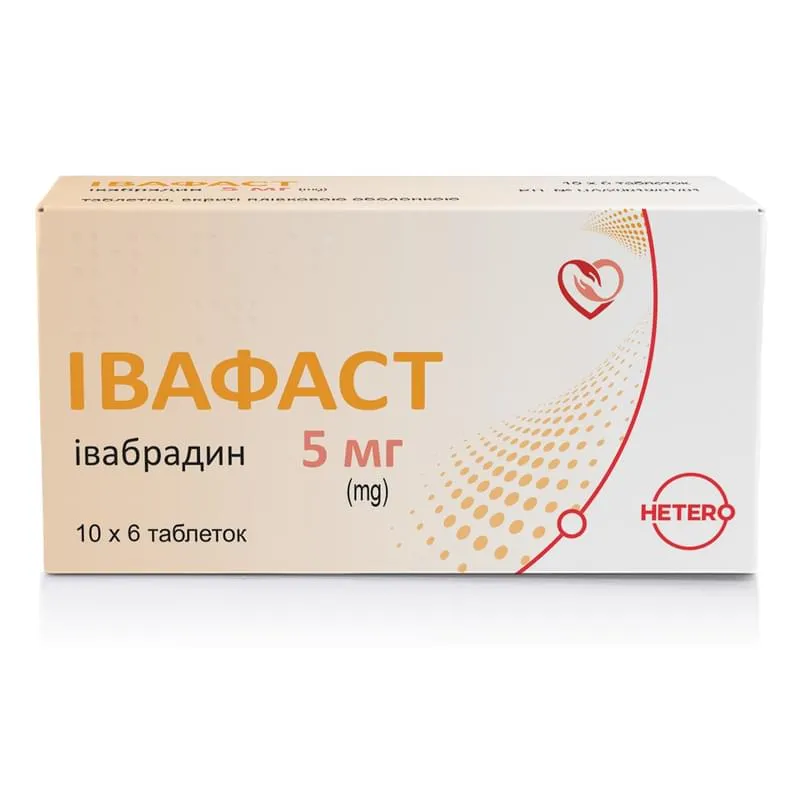
Table of Contents
INSTRUCTIONS FOR MEDICAL USE OF THE MEDICINAL PRODUCT IVAFAST
Composition:
Active substance: ivabradine;
One film-coated tablet contains 5 mg or 7.5 mg of ivabradine (as ivabradine hydrochloride);
Excipients: lactose monohydrate, corn starch, maltodextrin, colloidal anhydrous silicon dioxide, magnesium stearate;
Tablet coating:
5 mg tablets: Opadry White 03G580014 (hypromellose, titanium dioxide (E 171), polyethylene glycol 6000, glycerin, magnesium stearate);
7.5 mg tablets: Opadry Tan 03G570019 (hypromellose, titanium dioxide (E 171), polyethylene glycol 6000, glycerin, yellow iron oxide (E 172), black iron oxide (E 172), red iron oxide (E 172), magnesium stearate).
Pharmaceutical form. Film-coated tablets.
Main physicochemical properties:
Ivafast, 5 mg tablets:
Oval-shaped, film-coated tablets, white or almost white, with a dividing line on both sides, embossed with "V" on one side and "9" and "1" separated by a line on the other side.
Ivafast, 7.5 mg tablets:
Oval-shaped, film-coated tablets, yellow-brown in color, embossed with "V" on one side and "92" on the other side.
Pharmacotherapeutic group. Cardiac drugs. Other cardiac drugs.
ATC code C01EB17.
Pharmacological Properties
Pharmacodynamics
Mechanism of action
Ivabradine is a substance that selectively reduces heart rate (HR) by acting on the heart's pacemaker through selective and specific inhibition of the If current, which controls spontaneous diastolic depolarization in the sinoatrial node and thereby regulates HR. Ivabradine acts exclusively on the sinoatrial node and does not affect intra-atrial, atrioventricular, or intraventricular conduction, myocardial contractility, or ventricular repolarization.
Ivabradine may also interact with the Ih current in the retina of the eye, which is structurally similar to the If current in the cardiac sinoatrial node. This interaction underlies the transient disturbance in light perception due to reduced retinal response to bright light stimuli. Under triggering conditions (sudden change in lighting), partial inhibition of the Ih current by ivabradine may lead to unexpected visual phenomena in patients. These visual phenomena (phosphenes) are described as a transient increase in brightness within a limited area of the visual field (see section "Adverse Reactions").
Pharmacodynamic effects
The main pharmacodynamic property of ivabradine is its selective, dose-dependent reduction of HR. Analysis of HR reduction with ivabradine administered at doses < 20 mg twice daily showed a tendency toward a plateau effect, reducing the risk of developing severe bradycardia (< 40 beats/min) (see section "Adverse Reactions").
When administered at recommended therapeutic doses (5–7.5 mg twice daily), ivabradine reduces HR by approximately 10 beats/min at rest and during exercise. This reduces cardiac workload and myocardial oxygen consumption. Ivabradine does not affect intracardiac conduction, myocardial contractility (no negative inotropic effect), or ventricular repolarization:
- In clinical electrophysiological studies, ivabradine did not affect atrioventricular or intraventricular conduction or corrected QT interval;
- In patients with left ventricular dysfunction (left ventricular ejection fraction [LVEF] of 30–45%), ivabradine showed no negative effect on LVEF parameters.
Clinical efficacy and safety
The antianginal and anti-ischemic efficacy of ivabradine has been demonstrated in five double-blind, randomized trials (three compared with placebo, one with atenolol, and one with amlodipine). A total of 4111 patients with chronic stable angina participated in these studies, of whom 2617 received ivabradine.
Ivabradine at a dose of 5 mg twice daily demonstrated efficacy in exercise testing parameters within 3–4 weeks of treatment. Additional benefits of increasing the dose to 7.5 mg twice daily were confirmed in a controlled comparative study with atenolol: exercise test duration increased by 1 minute after one month of treatment with ivabradine 5 mg twice daily; after three months of dose escalation to 7.5 mg twice daily, exercise duration further increased by nearly 25 seconds. In this study, the antianginal and anti-ischemic properties of ivabradine were confirmed in patients aged ≥ 65 years. The efficacy of ivabradine at doses of 5 mg and 7.5 mg twice daily was consistent across all studies in terms of exercise test parameters (total exercise duration, time to angina-limiting symptoms, time to onset of angina, time to 1 mm ST-segment depression), and was associated with a reduction in the number of angina attacks by approximately 70%. The twice-daily dosing regimen provided stable, effective action over 24 hours.
In a randomized, placebo-controlled study involving 889 patients, ivabradine administered in addition to atenolol 50 mg once daily demonstrated additional efficacy across all exercise test parameters during the interdose interval (12 hours after dosing).
Studies have shown that the efficacy of ivabradine is fully maintained over 3–4 months of treatment. No cases of pharmacological tolerance (loss of efficacy) or withdrawal syndrome after abrupt discontinuation were observed during these studies. The antianginal and anti-ischemic efficacy of ivabradine was associated with dose-dependent reduction in HR and significant reduction in the rate-pressure product (RPP), reflecting myocardial oxygen demand, both at rest and during physical exertion (RPP = HR × systolic blood pressure [SBP]). The effect of ivabradine on blood pressure (BP) and peripheral vascular resistance was minimal and not clinically significant.
A one-year study involving 713 patients confirmed the sustained effect of ivabradine on HR reduction and demonstrated no effect of ivabradine on glucose and lipid metabolism.
The anti-ischemic and antianginal efficacy and safety of ivabradine were confirmed in patients with diabetes mellitus (n = 457).
In the large-scale BEAUTIFUL study investigating morbidity and mortality in 10,917 patients with ischemic heart disease and left ventricular dysfunction (LVEF < 40%), ivabradine was administered on a background of optimal baseline therapy (86.9% of patients received β-blockers). The primary efficacy endpoint (primary composite endpoint) was the total number of events of cardiovascular death, hospitalizations due to myocardial infarction (MI), and hospitalizations due to onset or worsening of heart failure (HF). The study showed no significant difference in reduction of the primary composite endpoint between the ivabradine and placebo groups, either in the overall population (relative risk [RR] 1.00; p = 0.94) or in the subgroup analysis of patients with HR ≥ 70 beats/min (RR 0.91; p = 0.17). However, in patients with HR ≥ 70 beats/min receiving ivabradine, the rate of hospitalizations due to fatal and non-fatal MI decreased by 36% (p = 0.001), and coronary revascularization procedures decreased by 30% (p = 0.016).
A subgroup analysis of patients with symptomatic angina (n = 1507) showed a 24% reduction in the primary endpoint in the ivabradine group (p = 0.05). This benefit was primarily due to a significant reduction in hospitalizations due to MI (42%; p = 0.021). The reduction in hospitalizations due to fatal and non-fatal MI was even more pronounced (73%; p = 0.002) in patients with limiting angina and HR ≥ 70 beats/min.
In the large-scale SIGNIFY study investigating morbidity and mortality in 19,102 patients with ischemic heart disease without clinical signs of heart failure (LVEF > 40%), ivabradine was administered on a background of optimal baseline therapy. In this study, a higher therapeutic dose than approved was used (initial dose: 7.5 mg twice daily [5 mg twice daily for patients aged ≥ 75 years], with dose titration up to 10 mg twice daily). The primary efficacy endpoint was the composite primary endpoint consisting of total cardiovascular death or non-fatal myocardial infarction. The study showed no difference in the incidence of the composite primary endpoint between the ivabradine and placebo groups (RR 1.08; p = 0.197). Bradycardia was observed in 17.9% of patients in the ivabradine group (2.1% in the placebo group). During the study, 7.1% of patients received verapamil, diltiazem, or strong CYP3A4 inhibitors.
A small but statistically significant increase in the incidence of the composite primary endpoint was observed in a pre-specified subgroup of patients with CCS class II or higher angina (Canadian Cardiovascular Society classification) (n = 12,049) (3.4% per year vs. 2.9%, RR 1.18; p = 0.018), but no such effect was observed in the overall subgroup of patients with CCS class ≥ I angina (n = 14,286) (RR 1.11; p = 0.110).
The use of higher-than-approved doses in the study partially explains these results.
SHIFT was a multicenter, international, randomized, double-blind, placebo-controlled morbidity and mortality study involving 6,505 adult patients with stable chronic heart failure (CHF) and left ventricular dysfunction (LVEF ≤ 35%). The study included patients with systolic CHF of NYHA functional classes II–IV (New York Heart Association classification) of duration ≥ 4 weeks and resting HR ≥ 70 beats/min.
Patients received standard therapy, including β-blockers (89%), ACE inhibitors and/or angiotensin II antagonists (91%), diuretics (83%), and aldosterone antagonists (60%). In the ivabradine group, 67% of patients received the drug at a dose of 7.5 mg twice daily. Median follow-up was 22.9 months. Treatment with ivabradine was associated with a mean reduction in HR of 15 beats/min compared to a baseline of 80 beats/min. The difference in HR between the ivabradine and placebo groups was 10.8 beats/min after 28 days, 9.1 beats/min after 12 months, and 8.3 beats/min after 24 months.
This study demonstrated a clinically and statistically significant 18% reduction in the incidence of the primary composite endpoint (cardiovascular death and hospitalization for worsening CHF) (RR 0.82, 95% confidence interval [CI] 0.75–0.90; p < 0.0001). The absolute risk reduction was 4.2%. The treatment effect of ivabradine was evident within the first 3 months of therapy. The results of the primary composite endpoint were primarily driven by heart failure-related endpoints: hospitalizations for worsening CHF (absolute risk reduction 4.7%) and deaths due to CHF (absolute risk reduction 1.1%).
Effect of ivabradine therapy on the primary composite endpoint, its components, and secondary endpoints
| Ivabradine (N = 3241) n (%) |
Placebo (N = 3264) |
HR (95 % CI) |
p-value |
|
| Primary composite endpoint |
793 (24.47) |
937 (28.71) |
0.82 (0.75–0.90) |
< 0.0001 |
| Components of primary endpoint:
|
449 (13.85) 514 (15.86) |
491 (15.04) 672 (20.59) |
0.91 (0.80–1.03) 0.74 (0.66–0.83) |
0.128 < 0.0001 |
| Other secondary endpoints:
|
503 (15.52) 113 (3.49) 1231 (37.98) 977 (30.15) |
552 (16.91) 151 (4.63) 1356 (41.54) 1122 (34.38) |
0.90 (0.80–1.02) 0.74 (0.58–0.94) 0.89 (0.82–0.96) 0.85 (0.78–0.92) |
0.092 0.014 0.003 0.0002 |
A reduction in the incidence of the combined primary endpoint was observed regardless of sex, NYHA class, ischemic or non-ischemic etiology of heart failure, and presence of comorbidities (diabetes mellitus or arterial hypertension) in patient history.
In the subgroup of patients with heart rate ≥ 75 bpm (n = 4150), a significant 24% reduction in the incidence of the primary endpoint was observed (HR 0.76, 95% CI 0.68–0.85; p < 0.0001), as well as reductions in other secondary endpoints, including death from any cause (HR 0.83, 95% CI 0.72–0.96; p < 0.0109) and cardiovascular death (HR 0.83, 95% CI 0.71–0.97; p < 0.0166). The safety profile of ivabradine in this subgroup was consistent with that observed in the overall population.
This study demonstrated a significant reduction in the incidence of the combined primary endpoint in the overall patient group receiving β-blocker therapy (HR 0.85, 95% CI 0.76–0.94). In the subgroup of patients with heart rate ≥ 75 bpm receiving β-blockers at recommended doses, no statistically significant effect on the combined primary endpoint was observed (HR 0.97, 95% CI 0.74–1.28), nor on other secondary endpoints, including hospitalization due to worsening heart failure (HR 0.79, 95% CI 0.56–1.10) or death from heart failure (HR 0.69, 95% CI 0.31–1.53).
In 887 (28%) patients in the ivabradine group, a significant improvement in functional class (NYHA classification) was observed compared to 776 (24%) patients in the placebo group (p = 0.001).
In a randomized, placebo-controlled study involving 97 patients, specialized ophthalmological assessments—designed to document the function of cone and rod systems and the ascending visual pathway (via electroretinogram analysis, static and kinetic visual fields, color vision, and visual acuity)—performed in patients treated with ivabradine for chronic stable angina over 3 years did not reveal any retinal toxicity.
Pharmacokinetics.
Under physiological conditions, ivabradine is rapidly released and highly water-soluble (> 10 mg/mL). Ivabradine is the S-enantiomer and has not shown in vivo bioconversion. The main active metabolite of ivabradine is its N-desmethyl derivative.
Absorption and bioavailability. After oral administration, ivabradine is rapidly and almost completely absorbed. When administered on an empty stomach, maximum plasma concentration (Cmax) is reached within approximately 1 hour. The absolute bioavailability of ivabradine is nearly 40%, due to first-pass metabolism in the gut and liver. Taking the drug with food delays absorption by approximately 1 hour and increases plasma concentration by 20–30%. To minimize intra-individual fluctuations in plasma concentration of ivabradine, the drug should be taken with meals (see section "Dosage and administration").
Distribution. Approximately 70% of ivabradine is bound to plasma proteins. The volume of distribution at steady state is approximately 100 L. With long-term administration of the recommended initial dose of 5 mg twice daily, Cmax in plasma is approximately 22 ng/mL (CV = 29%). The mean plasma concentration at steady state is 10 ng/mL (CV = 38%).
Biotransformation. Ivabradine is extensively metabolized in the liver and intestine via the cytochrome P450 3A4 (CYP3A4) system. The main active metabolite of ivabradine is its N-desmethyl derivative (S18982), with a concentration approximately 40% of that of ivabradine hydrochloride. The main active metabolite is also metabolized by the CYP3A4 cytochrome system. Ivabradine has low affinity for CYP3A4, does not induce or inhibit it, and is therefore unlikely to alter CYP3A4 metabolism or its plasma concentration. However, CYP3A4 inhibitors and inducers can significantly affect plasma concentrations of ivabradine (see section "Interaction with other medicinal products and other forms of interaction").
Elimination. The main elimination half-life of ivabradine is 2 hours (accounting for 70–75% of the area under the plasma concentration-time curve [AUC]), while the effective half-life is 11 hours. Total clearance of ivabradine is 400 mL/min, and renal clearance is 70 mL/min. Metabolites are excreted equally in urine and feces. Approximately 4% of the active substance is excreted unchanged in urine.
Linearity/Non-linearity. The pharmacokinetics of ivabradine are linear over the dose range of 0.5–24 mg.
Special patient groups
Elderly patients (aged 65–75 years): Pharmacokinetic parameters (AUC and Cmax) in this age group do not differ from those in the general patient population.
Renal impairment: The effect of renal impairment (creatinine clearance 15–60 mL/min) on the pharmacokinetics of ivabradine is minimal due to the small proportion of renal clearance (approximately 20%) of total clearance of ivabradine and its main metabolite S18982 (see section "Dosage and administration").
Hepatic impairment: In patients with mild hepatic impairment, unbound AUC of ivabradine and its main active metabolite was 20% higher than in patients with normal liver function. Data on ivabradine pharmacokinetics in patients with moderate hepatic impairment are insufficient; data in patients with severe hepatic impairment are lacking (see sections "Contraindications" and "Dosage and administration").
Pharmacokinetic/pharmacodynamic relationship. Analysis of the pharmacokinetic/pharmacodynamic relationship demonstrated a linear relationship between decreasing heart rate and increasing plasma concentrations of ivabradine and its active metabolite at doses of 15–20 mg twice daily. At higher doses, the reduction in heart rate becomes disproportionate to plasma concentration of ivabradine and tends to plateau. High plasma concentrations of ivabradine may result from co-administration with strong CYP3A4 inhibitors, potentially leading to marked heart rate reduction; however, the risk is reduced when ivabradine is used with moderate CYP3A4 inhibitors (see sections "Contraindications", "Interaction with other medicinal products and other forms of interaction", and "Special precautions").
Clinical characteristics.
Indications.
Symptomatic treatment of chronic stable angina
Ivabradine is indicated for the symptomatic treatment of chronic stable angina in adult patients with ischemic heart disease, normal sinus rhythm, and a heart rate ≥ 70 beats/min.
The drug should be prescribed:
- to adult patients who are intolerant of or have contraindications to β-blockers;
- or in combination with β-blockers to patients whose condition is inadequately controlled with optimal doses of β-blockers.
Treatment of chronic heart failure
Ivabradine is indicated in chronic heart failure (NYHA class II–IV) with systolic dysfunction, in adult patients with sinus rhythm and heart rate ≥ 75 beats/min, in combination with standard therapy including β-blockers, or when there is intolerance to or contraindications against β-blockers.
Contraindications.
-
Hypersensitivity to the active substance or to any of the excipients of the medicinal product.
-
Resting heart rate < 70 beats/min prior to initiation of treatment.
-
Cardiogenic shock.
-
Acute myocardial infarction.
-
Severe arterial hypotension (BP < 90/50 mmHg).
-
Severe hepatic impairment.
-
Sinus node dysfunction (sick sinus syndrome).
-
Sinoatrial block.
-
Unstable or acute heart failure.
-
Presence of a cardiac pacemaker (heart rate is solely controlled by the pacemaker).
-
Unstable angina.
-
Third-degree AV block.
-
Combination with strong CYP3A4 inhibitors: antifungal agents – azole derivatives (ketoconazole, itraconazole), macrolide antibiotics (clarithromycin, oral erythromycin, josamycin, telithromycin), HIV protease inhibitors (nelfinavir, ritonavir), and nefazodone (see sections "Pharmacokinetics" and "Interaction with other medicinal products and other forms of interactions").
-
Concomitant use with verapamil or diltiazem, which are moderate CYP3A4 inhibitors with heart rate-lowering properties (see section "Interaction with other medicinal products and other forms of interactions").
-
Pregnancy, breastfeeding, and women of childbearing potential who are not using appropriate contraceptive methods (see section "Use during pregnancy or breastfeeding").
Interaction with other medicinal products and other forms of interactions.
Pharmacodynamic interactions
Not recommended combinations
Drugs that prolong the QT interval:
- Cardiovascular: quinidine, disopyramide, bepridil, sotalol, ibutilide, amiodarone.
- Non-cardiovascular: pimozide, ziprasidone, sertindole, mefloquine, halofantrine, pentamidine, cisapride, intravenous erythromycin.
Concomitant use of ivabradine with cardiovascular and non-cardiovascular drugs that prolong the QT interval should be avoided, as reduction in heart rate may potentiate QT prolongation. If such combination is necessary, careful cardiac monitoring should be ensured (see section "Special precautions for use").
Combinations requiring caution
Diuretics (thiazide and loop diuretics). Hypokalemia may increase the risk of arrhythmias. Ivabradine may cause bradycardia, and its combination with hypokalemia may trigger severe arrhythmias, particularly in patients with congenital or drug-induced long QT syndrome.
Pharmacokinetic interactions
Cytochrome P450 3A4 (CYP3A4). Ivabradine is metabolized exclusively by cytochrome CYP3A4 and is a very weak inhibitor of this enzyme. It has been confirmed that ivabradine does not affect the metabolism or plasma concentrations of other CYP3A4 substrates (weak, moderate, or strong). Inhibitors and inducers of CYP3A4 are prone to interact with ivabradine, resulting in clinically relevant effects on its metabolism and pharmacokinetics. Studies investigating drug interactions have confirmed that CYP3A4 inhibitors increase plasma concentrations of ivabradine, whereas CYP3A4 inducers decrease them. Increased plasma concentrations of ivabradine may increase the risk of excessive bradycardia (see section "Special precautions for use").
Contraindicated combinations
Concomitant administration of ivabradine with strong CYP3A4 inhibitors such as antifungal azole derivatives (ketoconazole, itraconazole), macrolide antibiotics (clarithromycin, oral erythromycin, josamycin, telithromycin), HIV protease inhibitors (nelfinavir, ritonavir), and nefazodone is contraindicated (see section "Contraindications"). Strong CYP3A4 inhibitors such as ketoconazole (200 mg daily) and josamycin (1 g twice daily) increase the average plasma concentration of ivabradine by 7–8 times.
Moderate CYP3A4 inhibitors. Specific studies in healthy volunteers and patients have shown that combining ivabradine with drugs that reduce heart rate, such as diltiazem and verapamil, leads to increased plasma concentrations of ivabradine (by 2–3 times in terms of AUC) and additional reduction in heart rate by 5 beats/min. Concomitant use of ivabradine with these medicinal products is contraindicated (see section "Contraindications").
Not recommended combinations
Grapefruit juice. Concurrent intake of grapefruit juice with ivabradine doubles the plasma concentration of the latter. Therefore, consumption of grapefruit juice should be avoided.
Combinations requiring caution
Other moderate CYP3A4 inhibitors (e.g., fluconazole). Concomitant use with ivabradine may be initiated at a dose of 2.5 mg twice daily if the resting heart rate is > 70 beats/min. Heart rate monitoring is required.
CYP3A4 inducers – rifampicin, barbiturates, phenytoin, St. John’s wort (Hypericum perforatum). Concomitant use of these agents with ivabradine may reduce its plasma concentration and efficacy, necessitating dose adjustment of ivabradine. When ivabradine 10 mg twice daily is administered concomitantly with St. John’s wort, ivabradine concentration is reduced by half. Therefore, the use of St. John’s wort should be avoided during treatment with ivabradine.
Other combinations
Specific drug interaction studies have shown no clinically significant effect on the pharmacokinetics and pharmacodynamics of ivabradine by the following medicinal products: proton pump inhibitors (omeprazole, lansoprazole), sildenafil, HMG-CoA reductase inhibitors (simvastatin), dihydropyridine calcium channel blockers (amlodipine, lacidipine), digoxin, and warfarin. Studies have also demonstrated that ivabradine has no clinically significant effect on the pharmacokinetics of simvastatin, amlodipine, lacidipine, or on the pharmacokinetics and pharmacodynamics of digoxin and warfarin, as well as on the pharmacodynamics of acetylsalicylic acid.
Phase III clinical trials have confirmed that ivabradine can be used concomitantly with ACE inhibitors, angiotensin II antagonists, β-blockers, diuretics, aldosterone antagonists, short- and long-acting nitrates, HMG-CoA reductase inhibitors, fibrates, proton pump inhibitors, oral antidiabetic agents, acetylsalicylic acid, and other antithrombotic agents.
Special precautions for use.
Special warnings
Insufficient beneficial effect on clinical outcomes in patients with symptomatic chronic stable angina. Ivabradine is indicated only for symptomatic treatment of chronic stable angina, as treatment with ivabradine has not demonstrated a beneficial effect on reducing the risk of cardiovascular events such as myocardial infarction or cardiovascular death (see section "Pharmacodynamics").
Heart rate measurement. Due to possible significant fluctuations in heart rate (HR), serial measurements of resting HR, ECG, or 24-hour ambulatory monitoring should be performed before initiating treatment and when dose titration is required in patients taking ivabradine. This also applies to patients with low HR, especially if HR decreases to < 50 beats/min, or after dose reduction (see section "Dosage and administration").
Arrhythmia. Ivabradine is not indicated for the prevention or treatment of arrhythmias. If tachyarrhythmia (ventricular or supraventricular) develops in a patient during ivabradine therapy, continuing ivabradine is no longer appropriate. Therefore, ivabradine is not recommended for patients with atrial fibrillation and other types of arrhythmias affecting sinus node function.
The risk of developing atrial fibrillation is increased in patients taking ivabradine (see section "Adverse reactions"). Atrial fibrillation occurs more frequently in patients who are concurrently using amiodarone or potent class I antiarrhythmic drugs. Regular clinical monitoring is recommended during ivabradine treatment to enable timely diagnosis of atrial fibrillation (paroxysmal or persistent), including ECG monitoring when clinically justified (e.g., worsening angina symptoms, palpitations, irregular pulse). Patients should be warned about the signs and symptoms of atrial fibrillation and instructed to promptly inform their physician if such symptoms occur. If atrial fibrillation develops during treatment, the benefit-risk ratio of continuing ivabradine therapy should be carefully evaluated.
Patients with heart failure (HF), intraventricular conduction disorders (left bundle branch block, right bundle branch block), and ventricular dyssynchrony should be under close monitoring.
Patients with second-degree AV block. Ivabradine is not recommended for these patients.
Patients with low heart rate. Ivabradine should not be prescribed to patients whose resting HR before treatment initiation is < 70 beats/min (see section "Contraindications"). If resting HR decreases to < 50 beats/min during therapy, or if the patient experiences symptoms of bradycardia (dizziness, weakness, hypotension), the dose should be gradually reduced. Treatment should be discontinued if HR remains < 50 beats/min or if bradycardia symptoms persist (see section "Dosage and administration").
Combination with calcium channel blockers. Concomitant use of ivabradine with calcium channel blockers that reduce heart rate, such as verapamil or diltiazem, is contraindicated (see sections "Contraindications" and "Interaction with other medicinal products and other forms of interaction"). There have been no reports of risk associated with the use of ivabradine together with short- and long-acting nitrates or dihydropyridine calcium channel blockers (e.g., amlodipine). The additional efficacy of ivabradine in combination with dihydropyridine calcium channel blockers has not been studied (see section "Pharmacodynamics").
Chronic heart failure. When considering initiation of ivabradine therapy in heart failure, the patient's condition should be assessed. Treatment is possible only if heart failure is stable. Ivabradine should be used with caution in patients with NYHA class IV heart failure due to limited data in this population.
Stroke. Ivabradine is not recommended for immediate use following a stroke, as studies involving this patient group have not been conducted.
Visual function. Ivabradine affects retinal function. There is no evidence of retinal toxicity with long-term ivabradine treatment (see section "Pharmacodynamics"). If any unexpected visual disturbance occurs, treatment should be discontinued. Ivabradine should be prescribed with caution in patients with retinitis pigmentosa.
Precautions during use
Patients with arterial hypotension. Due to insufficient data on the use of ivabradine in patients with mild to moderate arterial hypotension, the drug should be used with caution in such patients. Ivabradine is contraindicated in patients with severe arterial hypotension (BP < 90/50 mmHg) (see section "Contraindications").
Atrial fibrillation. Cardiac arrhythmia. There is no evidence of risk of severe bradycardia upon restoration of sinus rhythm during pharmacological cardioversion in patients treated with ivabradine. However, due to insufficient data, non-emergency DC cardioversion should be performed no sooner than 24 hours after the last dose of ivabradine.
Patients with congenital long QT syndrome or those taking drugs that prolong the QT interval. These patients should avoid using ivabradine (see section "Interaction with other medicinal products and other forms of interaction"). If ivabradine must be prescribed to such patients, careful cardiac monitoring is recommended. Heart rate reduction due to ivabradine may exacerbate QT interval prolongation, which is associated with the risk of severe arrhythmias, particularly torsades de pointes.
Patients with arterial hypertension requiring treatment adjustments. In the SHIFT study, more episodes of increased blood pressure (7.1%) were observed in patients taking ivabradine compared to those on placebo (6.1%). These episodes occurred more frequently shortly after changes in antihypertensive therapy, were transient, and did not affect the therapeutic effect of ivabradine. Blood pressure should be monitored at regular intervals when treatment modifications are made in patients with chronic heart failure receiving ivabradine (see section "Adverse reactions").
Excipients. The drug contains lactose; therefore, it should not be administered to patients with rare hereditary problems of galactose intolerance, the Lapp lactase deficiency, or glucose-galactose malabsorption syndrome.
Use during pregnancy or breastfeeding.
Women of childbearing potential. Women of childbearing potential should use appropriate contraceptive methods during treatment.
Pregnancy. Data on the use of ivabradine in pregnant women are lacking or limited. Animal studies have shown toxic effects of ivabradine on reproductive function, as well as embryotoxic and teratogenic effects. The potential risk in humans is unknown. Therefore, ivabradine is contraindicated during pregnancy.
Breastfeeding period. Animal studies have demonstrated that ivabradine passes into breast milk. Therefore, ivabradine is contraindicated during breastfeeding.
Women requiring treatment with ivabradine should discontinue breastfeeding and choose an alternative method of infant feeding.
Fertility. No effects of ivabradine on fertility in male or female rats were observed in animal studies.
Ability to affect reaction speed when driving or operating machinery.
A targeted study in healthy volunteers has demonstrated that ivabradine does not impair the ability to drive or operate machinery. However, during the post-marketing period, cases of impaired driving ability due to visual symptoms have been reported. Ivabradine may cause transient visual phenomena, mostly in the form of luminous phenomena (phosphenes), typically occurring after a sudden change in light intensity. This should be taken into account when driving, especially at night, or operating machinery.
Method of Administration and Dosage
The medicinal product Ivasfast is intended for adults.
The tablets are taken orally twice daily: in the morning and in the evening, during meals.
The 5 mg Ivasfast tablet may be divided into equal doses.
The 7.5 mg Ivasfast tablet must not be divided.
Symptomatic treatment of chronic stable angina
Decisions regarding initiation of treatment or dose titration are recommended to be made based on results of serial heart rate (HR) measurements, ECG, or 24-hour ambulatory monitoring.
In patients under 75 years of age, the initial dose of ivabradine should not exceed 5 mg twice daily. If symptoms of stable angina persist after 3–4 weeks of treatment in patients receiving ivabradine 2.5 mg or 5 mg twice daily, the dose may be increased to the next higher dose, provided the initial dose is well tolerated and the resting heart rate remains > 60 beats per minute (bpm). The maintenance dose should not exceed 7.5 mg twice daily.
If there is no improvement in angina symptoms within 3 months after initiation of treatment, ivabradine therapy should be discontinued.
Additionally, discontinuation of therapy should be considered if the symptomatic response is minimal and there is no clinically significant reduction in resting heart rate during 3 months of treatment.
If during treatment the heart rate decreases to < 50 bpm at rest or the patient experiences symptoms of bradycardia (dizziness, weakness, arterial hypotension), the dose should be gradually reduced, including the possibility of using the lowest dose of 2.5 mg twice daily (½ tablet of Ivasfast 5 mg twice daily). Heart rate should be monitored after dose reduction (see section "Special Warnings and Precautions for Use"). The drug should be discontinued if the heart rate remains < 50 bpm or if bradycardia symptoms persist despite dose reduction.
Treatment of chronic heart failure
Treatment should only be initiated in patients with stable heart failure (HF) by a physician experienced in the management of chronic heart failure.
The recommended initial dose of ivabradine is 5 mg twice daily. After a 2-week treatment period, the dose may be increased to 7.5 mg twice daily if the resting heart rate remains > 60 bpm during treatment; or the dose should be reduced to 2.5 mg twice daily (½ tablet of Ivasfast 5 mg twice daily) if the resting heart rate remains < 50 bpm or if the patient experiences symptoms related to bradycardia (dizziness, weakness, arterial hypotension). If the heart rate is within the range of 50–60 bpm, the dose of ivabradine 5 mg twice daily should be maintained unchanged.
If during treatment the heart rate decreases to < 50 bpm at rest or the patient experiences symptoms of bradycardia while receiving ivabradine 7.5 mg or 5 mg twice daily, the dose should be gradually reduced to the next lower dose. If the resting heart rate remains consistently > 60 bpm, patients receiving ivabradine 2.5 mg or 5 mg twice daily should have their dose gradually increased to the next higher dose.
Treatment with the drug should be discontinued if the heart rate remains < 50 bpm during treatment or if symptoms of bradycardia persist (see section "Special Warnings and Precautions for Use").
Special patient populations
Elderly patients. In patients aged 75 years and older, treatment should be initiated with a lower starting dose (2.5 mg twice daily, i.e., ½ tablet of Ivasfast 5 mg twice daily). If further reduction of heart rate is required, the dose may be gradually increased.
Renal impairment. Dose adjustment is not required in patients with creatinine clearance > 15 mL/min (see section "Pharmacokinetics"). Due to insufficient data, ivabradine should be used with caution in patients with creatinine clearance < 15 mL/min.
Hepatic impairment. Patients with mild hepatic impairment do not require dose adjustment. Ivabradine should be used with caution in patients with moderate hepatic impairment. Ivabradine is contraindicated in patients with severe hepatic impairment due to the lack of studies in this patient population and the potential for a marked increase in drug concentration in blood (see sections "Pharmacokinetics" and "Contraindications").
Children.
The safety and efficacy of ivabradine in children (< 18 years of age) have not been established. Data are lacking.
Overdose.
Overdose with ivabradine may lead to severe and prolonged bradycardia (see section "Adverse Reactions"). Severe bradycardia requires symptomatic treatment in specialized medical facilities. In cases of bradycardia with hemodynamic compromise, intravenous β-stimulating agents such as isoprenaline are recommended. In very severe cases, temporary use of a cardiac pacemaker may be considered.
Adverse Reactions
Ivabradine has been studied in clinical trials involving approximately 45,000 individuals.
The most common adverse reactions associated with ivabradine — visual phenomena (phosphenes) and bradycardia — are dose-dependent and related to its pharmacological mechanism of action.
The following adverse reactions may occur during the use of the medicinal product, categorized by frequency as follows: very common (≥ 1/10); common (≥ 1/100, < 1/10); uncommon (≥ 1/1,000, < 1/100); rare (≥ 1/10,000, < 1/1,000); very rare (< 1/10,000); frequency not known (cannot be estimated from the available data).
Blood and lymphatic system disorders: uncommon – eosinophilia.
Metabolism and nutritional disorders: uncommon – increased plasma uric acid levels.
Nervous system disorders: common – headache, usually during the first month of treatment; dizziness, likely related to bradycardia; uncommon* – syncope, likely related to bradycardia.
Eye disorders: very common – visual phenomena (phosphenes); common – blurred vision; uncommon* – diplopia, visual disturbances.
Ear and labyrinth disorders: uncommon – vertigo.
Cardiac disorders: common – bradycardia; first-degree AV block (on ECG – prolonged PQ interval); ventricular extrasystoles; atrial fibrillation; uncommon – palpitations, supraventricular extrasystoles; very rare – second- and third-degree AV block, sick sinus syndrome.
Vascular disorders: common – uncontrolled blood pressure; uncommon* – arterial hypotension, likely related to bradycardia.
Respiratory, thoracic and mediastinal disorders: uncommon – dyspnea.
Gastrointestinal disorders: uncommon: nausea, constipation, diarrhea, abdominal pain*.
Skin and subcutaneous tissue disorders: uncommon* – angioedema; rash; rare* – erythema, pruritus, urticaria.
Musculoskeletal and connective tissue disorders: uncommon – muscle spasms.
General disorders: uncommon* – asthenia, likely related to bradycardia; fatigue, likely related to bradycardia; rare* – malaise, likely related to bradycardia.
Investigations: uncommon – increased plasma creatinine levels; QT interval prolongation on ECG.
* Frequency of adverse reactions identified from spontaneous reports, calculated based on data from clinical trials.
Description of selected adverse reactions
Visual phenomena (phosphenes) were observed in 14.5% of patients as a temporary increase in brightness within a limited area of the visual field. They typically occur following a sudden change in light intensity. Phosphenes have also been described as halos, image decomposition (stroboscopic and kaleidoscopic effects), bright colored flashes, or multiple images (retinal persistence). Phosphenes occur predominantly during the first two months of treatment and may recur later. Most cases were reported as mild or moderate in intensity. All phosphenes resolved during treatment or after discontinuation, with the majority (77.5%) resolving during therapy. Less than 1% of patients required changes in their usual activities or discontinuation of treatment due to phosphenes.
Bradycardia was observed in 3.3% of patients, particularly during the first 2–3 months of treatment. Severe bradycardia with heart rate ≤ 40 beats/min occurred in 0.5% of patients.
In the SIGNIFY trial, atrial fibrillation was observed in 5.3% of patients receiving ivabradine compared to 3.8% in the placebo group. A pooled analysis of results from all double-blind, placebo-controlled Phase II and III clinical trials lasting at least 3 months and involving over 40,000 patients demonstrated that the incidence of atrial fibrillation was 4.86% in patients receiving ivabradine compared to 4.08% in the placebo group, corresponding to a relative risk of 1.26 (95% CI: 1.15–1.39).
Reporting of suspected adverse reactions
Reporting suspected adverse reactions after medicine authorization is important. It allows ongoing monitoring of the benefit-risk balance of the medicinal product. Healthcare professionals, pharmacists, patients, and their legal representatives are encouraged to report all suspected adverse reactions and lack of efficacy via the Automated Pharmacovigilance Information System at: https://aisf.dec.gov.ua
Shelf life. 2 years.
Storage conditions.
No special storage conditions are required for this medicinal product. Keep out of reach and sight of children.
Packaging.
10 tablets per blister, 3 or 6 blisters per cardboard box.
Prescription status.
Prescription only.
Manufacturer.
Annora Pharma Private Limited / Annora Pharma Private Limited.
Manufacturer's address and place of business.
Sy. No. 261, Annaram Village, Gummadidala Mandal, Sangareddy District, Telangana State - 502313, India / Sy. No. 261, Annaram Village, Gummadidala Mandal, Sangareddy District, Telangana State - 502313, India.