Irnizet
Ukraine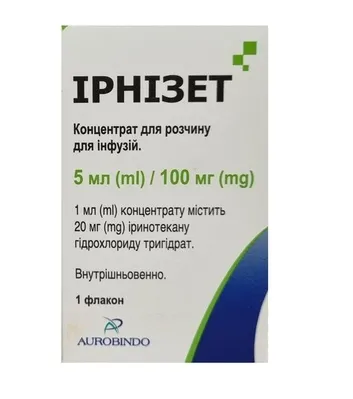
Table of Contents
INSTRUCTIONS FOR MEDICAL USE OF THE MEDICINAL PRODUCT IRNIZET (IRNIZET)
Composition:
Active substance: irinotecan;
1 ml of concentrate contains 20 mg irinotecan hydrochloride trihydrate;
Excipients: sorbitol (E 420), lactic acid, sodium hydroxide, concentrated hydrochloric acid, water for injections, nitrogen.
Pharmaceutical form. Concentrate for solution for infusion.
Main physicochemical properties: a clear, colorless to pale yellow solution, generally free from visible particles.
Pharmacotherapeutic group.
Antineoplastic agents. Plant alkaloids. Topoisomerase 1 (TOP 1) inhibitors. Irinotecan. ATC code L01CE02.
Pharmacological Properties
Pharmacodynamics
Irinotecan is a semisynthetic compound derived from camptothecin. It is an antineoplastic agent that acts as a specific inhibitor of DNA topoisomerase I. Under the action of carboxylesterase, present in most tissues, irinotecan is metabolized to SN-38, a compound that is more active than irinotecan against purified topoisomerase I and more cytotoxic against a number of human and murine tumor cell lines. Inhibition of DNA topoisomerase I by irinotecan or SN-38 leads to single-strand DNA damage, which blocks the DNA replication fork and results in cytotoxic effects. This cytotoxic effect has been shown to be time-dependent and specific to the S-phase of the cell cycle.
In addition to its antitumor activity, the most significant pharmacological effect of irinotecan is the inhibition of acetylcholinesterase activity.
Patients with reduced UGT1A1 activity
Uridine diphosphate glucuronosyltransferase 1A1 (UGT1A1) is involved in the metabolic inactivation of SN-38, the active metabolite of irinotecan, by forming the inactive SN-38 glucuronide (SN-38G). The UGT1A1 gene is highly polymorphic, resulting in various metabolic rates within the population. One specific variant of the UGT1A1 gene contains a polymorphic region in the promoter area and is known as UGT1A1*28. This variant, as well as other inherited disorders of UGT1A1 expression (such as Gilbert’s syndrome or Crigler-Najjar syndrome), are associated with reduced enzyme activity. Meta-analysis data indicate that patients with Crigler-Najjar syndrome (types 1 and 2) or homozygous for the UGT1A1*28 allele (Gilbert’s syndrome) are at increased risk of developing hematological toxicity (grades III and IV) following administration of medium or high doses of irinotecan (>150 mg/m²). A relationship between the UGT1A1 genotype and the occurrence of irinotecan-induced diarrhea has not been established.
Patients known to be homozygous for the UGT1A1*28 allele should receive the standard initial dose of irinotecan. However, such patients should be closely monitored for signs of hematological toxicity. For patients who have previously experienced hematological toxicity during earlier treatment cycles, consideration should be given to reducing the initial dose of irinotecan. The exact extent of dose reduction for this patient group has not been established. Any further dosage adjustments should be based on the patient's tolerance to treatment (see sections "Special precautions" and "Dosage and administration"). Currently, there are insufficient clinical data to recommend routine UGT1A1 genotyping of patients.
Pharmacokinetics
Following administration of irinotecan at doses of 100–750 mg/m² via 30-minute intravenous infusion every 3 weeks, a biphasic or triphasic plasma elimination of irinotecan is observed. The mean plasma clearance is 15 L/h/m², and the volume of distribution at steady state (Vss) is 157 L/m² body surface area. The mean plasma half-life during the first phase of the triphasic model was 12 minutes, during the second phase 2.5 hours, and during the third phase 14.2 hours. Plasma elimination of SN-38 was biphasic, with a mean terminal half-life of 13.8 hours.
In in vitro studies, plasma protein binding of irinotecan was approximately 65%, and for the metabolite SN-38, it was 95%.
More than 50% of the administered intravenous dose of irinotecan is excreted unchanged, with 33% excreted in feces, primarily via bile, and 22% in urine.
Clearance of irinotecan is reduced by nearly 40% in patients with hyperbilirubinemia (serum total bilirubin concentration 1.5 to 3 times the upper limit of normal). In these patients, plasma concentrations of irinotecan at a dose of 200 mg/m² are comparable to those observed in cancer patients with normal liver function receiving a dose of 350 mg/m².
The severity of the most prominent toxic effects of irinotecan (e.g., leukopenia and diarrhea) correlates with exposure, as measured by the area under the concentration-time curve (AUC) of unchanged irinotecan and its metabolite SN-38. A significant association has been observed between hematological toxicity (nadir counts of leukocytes and neutrophils) or the severity of diarrhea and the AUC of irinotecan and its metabolite SN-38 during monotherapy.
Clinical characteristics.
Indications.
Irizet is indicated for the treatment of patients with advanced colorectal cancer:
- in combination with 5-fluorouracil (5-FU) and folinic acid (FA), in patients who have not received prior chemotherapy for advanced disease;
- as monotherapy, if a treatment regimen containing 5-FU has proven ineffective.
Irizet in combination with cetuximab is indicated for the treatment of patients with metastatic colorectal cancer with wild-type KRAS gene and overexpression of epidermal growth factor receptor (EGFR), who have not previously received chemotherapy or after ineffective cytotoxic therapy that included irinotecan.
Irizet in combination with 5-FU, FA and bevacizumab is indicated as first-line therapy for patients with metastatic carcinoma of the colon or rectum.
Irizet in combination with capecitabine (with or without bevacizumab) is indicated as first-line therapy for patients with metastatic colorectal cancer.
Contraindications.
- Hypersensitivity to the active substance or to any of the excipients in the patient's history.
- Chronic inflammatory bowel diseases and/or bowel obstruction (see section "Special precautions").
- Breastfeeding period (see sections "Special precautions" and "Use in pregnancy or breastfeeding").
- Bilirubin levels more than 3 times the upper limit of normal (see section "Special precautions").
- Severe bone marrow insufficiency.
- WHO performance status > 2.
- Concomitant treatment with St. John’s wort (see section "Interaction with other medicinal products and other forms of interaction").
- Administration of live attenuated vaccines.
Complete information on contraindications for cetuximab, bevacizumab or capecitabine is provided in the respective instructions for medical use of these medicinal products.
Interaction with other medicinal products and other forms of interaction.
Concomitant use is contraindicated (see section “Contraindications”)
St. John’s wort. Decreased plasma levels of the active metabolite of irinotecan, SN-38. In a small pharmacokinetic study (n = 5), in which irinotecan 350 mg/m² was administered concomitantly with St. John’s wort (Hypericum perforatum) 900 mg, plasma concentrations of the active metabolite of irinotecan, SN-38, were reduced by 42%. Therefore, St. John’s wort must not be administered with irinotecan.
Live attenuated vaccines (e.g., yellow fever vaccine). Risk of generalized vaccine reaction, which may be fatal. Concomitant use of irinotecan is contraindicated during treatment and for 6 months after discontinuation of chemotherapy. Inactivated or killed vaccines may be administered; however, the immune response to such vaccines may be diminished.
Concomitant use not recommended (see section “Special precautions”)
Concomitant administration of irinotecan with strong inhibitors or inducers of cytochrome P450 3A4 (CYP3A4) may alter the metabolism of irinotecan and should be avoided (see section "Special precautions").
Medicinal products that are strong inducers of CYP3A4 or UGT1A1 (e.g., rifampicin, carbamazepine, phenobarbital, phenytoin or apalutamide). Risk of reduced efficacy of irinotecan, SN-38, and SN-38 glucuronide, leading to decreased pharmacodynamic effect. Several studies have shown that concomitant use of antiepileptic drugs that are CYP3A4 inducers reduces the efficacy of irinotecan, SN-38, and SN-38 glucuronide, resulting in diminished pharmacodynamic effect. These antiepileptic drugs have been shown to reduce AUC of SN-38 and SN-38 glucuronide by 50% or more. In addition to CYP3A enzyme induction, reduced efficacy of irinotecan and its metabolites may also be due to enhanced glucuronidation and increased biliary excretion.
Moreover, when used with phenytoin, there is a risk of seizure exacerbation due to decreased absorption of phenytoin by cytostatic agents.
Strong CYP3A4 inhibitors (e.g., ketoconazole, itraconazole, voriconazole, posaconazole, protease inhibitors, clarithromycin, erythromycin, telithromycin). A study demonstrated that concomitant administration of ketoconazole resulted in an 87% reduction in AUC of the APC metabolite and a 109% reduction in AUC of the SN-38 metabolite compared to irinotecan monotherapy.
UGT1A1 inhibitors (e.g., atazanavir, ketoconazole, regorafenib). Risk of increased systemic exposure to SN-38, the active metabolite of irinotecan. Physicians should consider this if co-administration cannot be avoided.
Other CYP3A4 inhibitors (e.g., crizotinib, idelalisib) — risk of increased irinotecan toxicity due to reduced metabolism when used concomitantly with crizotinib or idelalisib.
Medicinal products that should be used with caution when co-administered with Irizet:
Vitamin K antagonists. Increased risk of hemorrhagic and thrombotic complications in oncological patients. If vitamin K antagonist anticoagulants are indicated, international normalized ratio (INR) should be monitored more frequently than usual.
Medicinal products with which concomitant use of irinotecan requires caution:
Immunosuppressants (e.g., cyclosporine, tacrolimus). Excessive immunosuppression with risk of lymphocyte proliferation.
Neuromuscular blocking agents. Interaction between irinotecan and neuromuscular blocking agents cannot be excluded. Since irinotecan has anticholinesterase activity, drugs with similar anticholinesterase activity may prolong the neuromuscular blockade of succinylcholine and antagonize the neuromuscular blockade of non-depolarizing agents.
Other combinations:
5-FU/FA. Concomitant use of 5-FU/FA as part of combination therapy does not alter the pharmacokinetics of irinotecan.
Bevacizumab. Results from specific drug interaction studies did not demonstrate a significant effect of bevacizumab on the pharmacokinetics of irinotecan and its active metabolite SN-38. However, this does not exclude the possibility of increased toxicity due to their pharmacological properties.
Cetuximab. Information on the effect of cetuximab on the safety profile of irinotecan or vice versa is lacking.
Antineoplastic agents (including flucytosine as a prodrug of 5-fluorouracil). Adverse effects of irinotecan (irinotecan), such as myelosuppression, may be enhanced by other antineoplastic agents with a similar adverse effect profile.
Special precautions for use.
Irinizet should be administered exclusively in a department specialized in cytotoxic chemotherapy. The drug must be used only under the supervision of a qualified physician experienced in anticancer chemotherapy.
Due to the nature and frequency of adverse reactions, Irinizet should be used only after careful assessment of the benefit-risk ratio in the following cases:
- for treatment of patients with risk factors, particularly patients with a WHO performance status of 2;
- in rare individual cases when patients are unlikely to comply with recommendations for managing adverse reactions (requirement for immediate and prolonged treatment of delayed diarrhea combined with high fluid intake at the onset of delayed diarrhea); such patients should be closely monitored in a hospital setting.
When Irinizet is used as monotherapy, it is typically administered once every 3 weeks. However, for patients who may require closer monitoring or who are at particular risk of severe neutropenia, a weekly dosing schedule may be necessary.
Delayed diarrhea.
Patients should be informed about the risk of developing delayed diarrhea occurring more than 24 hours after administration of Irinizet and at any time before the next treatment cycle. With monotherapy, the median time to first episode of loose stools was 5 days after irinotecan administration. Patients must promptly notify their physician about the onset of diarrhea and immediately initiate appropriate therapy.
Patients at increased risk of diarrhea include those previously treated with abdominal or pelvic radiotherapy, patients with baseline hyperleukocytosis, patients with WHO performance status ≥ 2, and women. Without adequate treatment, diarrhea may be life-threatening, especially when associated with neutropenia.
After the first episode of loose stools, patients should immediately start consuming large amounts of electrolyte-containing fluids and initiate appropriate anti-diarrheal treatment. Anti-diarrheal therapy should be initiated in the department where Irinizet was administered. After hospital discharge, patients should receive prescribed medications to allow immediate initiation of diarrhea treatment upon its onset. Additionally, patients must inform their physician or the department where Irinizet was administered about the occurrence of diarrhea.
Current recommended anti-diarrheal treatment consists of high-dose loperamide (4 mg initially, then 2 mg every 2 hours). Treatment should continue for 12 hours after the last episode of loose stools. The treatment regimen must not be modified. Loperamide at these doses should never be used for longer than 48 hours due to the risk of paralytic ileus; however, treatment should not last less than 12 hours.
In cases where diarrhea is accompanied by severe neutropenia (neutrophil count below 500 cells/mm³), broad-spectrum antibiotics should be administered prophylactically in addition to anti-diarrheal therapy.
Hospitalization of patients is recommended in addition to antibiotic therapy in the following cases:
- diarrhea associated with fever;
- severe diarrhea (requiring intravenous rehydration);
- diarrhea persisting for 48 hours after initiation of high-dose loperamide treatment.
Loperamide should not be used prophylactically, even in patients who experienced delayed diarrhea during previous treatment cycles.
Patients with severe diarrhea should have their dose reduced in subsequent treatment cycles (see section "Dosage and administration").
Effects on the blood system.
In clinical studies, the incidence of grade III–IV neutropenia according to the National Cancer Institute (USA) Common Toxicity Criteria (NCI CTC) was significantly higher in patients previously irradiated in the pelvic/abdominal region compared to those who did not receive such irradiation. Patients with baseline total serum bilirubin levels of 1.0 mg/dL or higher also had a significantly higher likelihood of developing grade III–IV neutropenia compared to patients with bilirubin levels below 1.0 mg/dL.
Complete blood counts should be monitored weekly during Irinizet treatment. Patients should be warned about the risk of neutropenia and the significance of fever. Febrile neutropenia (temperature >38 °C and neutrophil count ≤1000 cells/mm³) must be treated immediately in a hospital setting with intravenous broad-spectrum antibiotics. Patients experiencing severe hematological complications should have their dose reduced in subsequent treatment cycles (see section "Dosage and administration"). Patients with severe diarrhea are at increased risk of infections and hematological toxicity manifestations. Complete blood count monitoring is required for these patients.
Liver function impairment.
Liver function tests should be performed at baseline and before the start of each treatment cycle.
In patients with bilirubin levels 1.5–3 times above the upper limit of normal, complete blood counts should be monitored weekly due to reduced irinotecan clearance (see section "Pharmacokinetics"), which increases the risk of hematotoxicity. If bilirubin levels exceed the upper limit of normal by more than 3 times, the use of the medicinal product is contraindicated (see section "Contraindications").
Nausea and vomiting.
Prophylactic antiemetic agents are recommended before each Irinizet treatment cycle. Nausea and vomiting are frequently reported with this drug. If vomiting occurs together with delayed diarrhea, the patient requires immediate hospitalization for appropriate treatment.
Acute cholinergic syndrome.
In the absence of clinical contraindications (see section "Adverse reactions"), subcutaneous administration of 0.25 mg atropine sulfate is recommended if acute cholinergic syndrome develops (early diarrhea in combination with other symptoms such as increased sweating, abdominal cramps, miosis, and increased salivation). These symptoms, which may occur during or immediately after irinotecan infusion, are associated with the anticholinesterase activity of the parent compound irinotecan. The frequency of these symptoms is expected to increase with higher doses of irinotecan.
Patients with asthma should be treated with caution. Patients experiencing severe acute cholinergic syndrome should receive prophylactic atropine sulfate treatment before each subsequent administration of Irinizet.
Respiratory disorders.
Rare cases of interstitial lung disease, potentially fatal, may occur during treatment with this drug, manifesting as lung infiltrates. Possible risk factors for interstitial lung disease include use of lung-toxic drugs, radiation therapy, and colony-stimulating factors. Patients with existing risk factors should be closely monitored for respiratory symptoms before and during treatment.
Extravasation.
Although irinotecan is not considered a tissue necrotizing agent, it should be administered with caution, and the infusion site should be monitored for signs of inflammation. In case of extravasation, the infusion site should be irrigated and ice applied.
Elderly patients.
Due to the higher frequency of decreased biological functions, particularly liver function, Irinizet dosage should be carefully selected in elderly patients (see section "Dosage and administration").
Chronic inflammatory bowel disease and/or bowel obstruction.
Irinizet should not be administered to patients until bowel obstruction has resolved (see section "Adverse reactions").
Patients with renal impairment.
Elevated serum creatinine or blood urea nitrogen levels have been observed. Cases of acute renal failure have occurred. These events were usually associated with complications of infection or dehydration due to nausea, vomiting, or diarrhea. Additionally, isolated cases of renal impairment due to tumor lysis syndrome have been reported.
Radiotherapy.
Patients who previously received pelvic or abdominal irradiation are at increased risk of myelosuppression during irinotecan treatment. Physicians should use this medicinal product cautiously in patients who previously received extensive radiotherapy (e.g., irradiation of >25% of bone marrow within 6 weeks before starting irinotecan treatment). Dose adjustment may be required for these patients (see section "Dosage and administration").
Cardiac disorders.
Cases of myocardial ischemia have been observed after irinotecan administration, primarily in patients with pre-existing heart disease, other known risk factors for cardiac disease, and patients previously treated with cytotoxic chemotherapy (see section "Adverse reactions"). Therefore, patients with risk factors require close monitoring. Measures should be taken to minimize all modifiable risk factors (e.g., smoking, arterial hypertension, and hyperlipidemia).
Vascular disorders.
In patients with multiple risk factors in addition to the primary malignancy, irinotecan use has been rarely associated with thromboembolic complications (pulmonary embolism, venous thrombosis, and arterial thromboembolism).
Other
Rare cases of renal failure, arterial hypotension, or circulatory failure have been reported in patients with dehydration due to diarrhea and/or vomiting, as well as in patients with sepsis.
Women of childbearing potential must use effective contraception during treatment and for 1 month after treatment, and men must use effective contraception during treatment and for 3 months after completion of treatment.
Concomitant administration of irinotecan with a strong inhibitor (e.g., ketoconazole) or inducer (e.g., rifampicin, carbamazepine, phenobarbital, phenytoin, apalutamide) of CYP3A4 may alter irinotecan metabolism and should be avoided (see section "Interaction with other medicinal products and other forms of interaction").
Irinizet should not be prescribed to patients with rare hereditary fructose intolerance.
The medicinal product contains sorbitol. If a patient has a diagnosed intolerance to certain sugars, the physician should take this into account before prescribing the medicinal product.
Use during pregnancy or breastfeeding.
Contraception in men and women.
Women of childbearing potential must use effective contraception during treatment and for 1 month after treatment, and men of reproductive age must use effective contraception during treatment and for 3 months after treatment.
Pregnancy.
There are no data on the use of irinotecan in pregnant women. Animal studies have demonstrated embryotoxic and teratogenic effects of irinotecan. Therefore, considering the results of animal studies and the mechanism of action of irinotecan, this drug should not be used during pregnancy except in cases of urgent medical need.
Breastfeeding.
14C-labeled irinotecan has been detected in the milk of female rats. Therefore, due to the potential for adverse reactions in breastfed infants, breastfeeding must be discontinued during irinotecan treatment (see section "Contraindications").
Effects on fertility.
There is no information on the effect of irinotecan on human fertility. Adverse effects of irinotecan on reproductive function in offspring have been documented in animal studies.
Ability to affect reaction speed when driving or operating machinery.
Irinizet has a moderate influence on the ability to drive vehicles or operate machinery. Patients should be warned about the possible development of dizziness or visual disturbances within 24 hours after administration of the medicinal product and advised not to drive or operate machinery if these symptoms occur.
Method of Administration and Dosage.
The medicinal product is intended exclusively for adults. The infusion solution must be diluted and administered into a peripheral or central vein.
Monotherapy (for previously treated patients).
The recommended dose of Irnizet is 350 mg/m² body surface area, to be administered by intravenous infusion over 30–90 minutes every 3 weeks (see section "Special Instructions").
Combination therapy (for treatment-naïve patients).
The efficacy and safety of irinotecan in combination with 5-FU and FA were evaluated using the dosing regimen described below (see section "Pharmacodynamics").
- Irnizet + 5-FU/FA every 2 weeks
The recommended dose of irinotecan is 180 mg/m² once every 2 weeks as a 30–90 minute intravenous infusion, followed by administration of FA and 5-FU. Information on the dosage and concomitant administration of cetuximab can be found in the summary of product characteristics for this medicinal product. The same dose of irinotecan as used in previous treatment cycles containing irinotecan should generally be applied. Irinotecan should be administered no sooner than 1 hour after the completion of cetuximab infusion. For dosage and administration instructions for bevacizumab, refer to the summary of product characteristics for this medicinal product. For dosage and use of irinotecan in combination with capecitabine, see section "Pharmacological Properties" and the corresponding sections in the summary of characteristics of capecitabine.
Dose adjustment.
Irnizet should be administered only after all adverse reactions have resolved to grade 0 or 1 according to the NCI CTC scale [National Cancer Institute Common Toxicity Criteria (USA)] and after complete resolution of treatment-related diarrhea.
At the beginning of the next treatment cycle, the dose of Irnizet and 5-FU (if used) should be reduced based on the most severe adverse reactions observed during the previous infusion. Treatment initiation should be delayed by 1–2 weeks to allow resolution of treatment-related adverse reactions.
The dose of Irnizet and/or 5-FU (if used) should be reduced by 15–20% in the event of the following adverse reactions:
- Hematotoxicity [grade IV neutropenia, febrile neutropenia (grade III–IV neutropenia accompanied by fever of grade II–IV), thrombocytopenia, and leukopenia (grade IV)];
- Non-hematological toxicity (grade III–IV).
Dose modification recommendations for cetuximab when used in combination with irinotecan should be followed as specified in the cetuximab product characteristics.
For patients aged 65 years and older receiving irinotecan in combination with capecitabine, the recommended dose of capecitabine should be reduced to 800 mg/m² body surface area twice daily. For information on dose adjustments during combination therapy, refer to the summary of characteristics of capecitabine.
Duration of treatment.
Treatment with Irnizet should continue until objective disease progression or until signs of unacceptable toxicity develop.
Patients with hepatic impairment.
Monotherapy.
- For patients with WHO performance status ≤ 2, the initial dose of Irnizet should be determined based on serum bilirubin levels (in patients with bilirubin levels elevated up to 3 times the upper limit of normal). In such patients with hyperbilirubinemia and prothrombin time increased by more than 50%, irinotecan clearance is reduced (see section "Pharmacokinetics"), increasing the risk of hepatotoxicity. Therefore, complete blood counts should be monitored weekly in these patients.
- For patients with bilirubin levels up to 1.5 times the upper limit of normal, the recommended dose is 350 mg/m² body surface area.
- For patients with bilirubin levels between 1.5 and 3 times the upper limit of normal, the recommended dose is 200 mg/m² body surface area.
- Irinotecan should not be administered to patients with bilirubin levels exceeding 3 times the upper limit of normal (see sections "Contraindications" and "Special Instructions").
There is no information available on the use of irinotecan in combination with other agents in patients with hepatic impairment.
Patients with renal impairment.
The use of Irnizet in patients with renal impairment is not recommended, as studies in this patient population have not been conducted (see sections "Pharmacokinetics" and "Special Instructions").
Elderly patients.
No specific pharmacokinetic studies have been conducted in elderly patients. However, dose selection should be cautious in this population due to the higher likelihood of decreased physiological function. These patients require more intensive monitoring (see section "Special Instructions").
Paediatric population
The safety and efficacy of irinotecan in children have not yet been established. Data are lacking.
Preparation of the solution
As with other cytotoxic anticancer agents, Irnizet should be prepared and administered with caution. The use of protective eyewear, mask, and gloves is mandatory.
If the concentrate or infusion solution comes into contact with the skin, the area should be immediately flushed with water and thoroughly washed with soap and water. If contact occurs with mucous membranes, the area should be immediately flushed with water.
As with other injectable drugs, the Irnizet solution should be prepared under aseptic conditions. If visible precipitation is observed in the concentrate or the prepared solution, the product should be discarded following standard procedures for disposal of cytotoxic agents.
Under aseptic conditions, the required amount of Irnizet should be withdrawn from the vial using a calibrated syringe and added to a 250 ml bag or bottle containing 0.9% sodium chloride solution or 5% glucose solution. The solution should be mixed thoroughly by gentle manual agitation.
Disposal.
All materials used for reconstitution and administration of the medicinal product must be disposed of in accordance with the standard procedures of the healthcare facility for cytotoxic agents.
Children.
The medicinal product is intended only for adults. The safety and efficacy of irinotecan in children have not been established. Data on use in children are lacking.
Overdose.
Symptoms. Cases of overdose, potentially fatal, have been reported following administration of doses approximately twice the recommended therapeutic dose. The most significant adverse reactions were severe neutropenia and severe diarrhea.
Treatment. There is no known antidote for irinotecan. Intensive supportive care should be provided to prevent dehydration due to diarrhea and to treat any possible infectious complications.
Adverse reactions.
Clinical studies.
Data on adverse reactions were carefully collected during studies of metastatic colorectal cancer; the frequencies are presented below. When the medicinal product is used for other indications besides colorectal cancer, similar adverse reactions are expected to occur.
The most common (≥1/10) dose-limiting adverse reactions of irinotecan are delayed diarrhea (occurring more than 24 hours after administration of the drug) and hematological disorders, including neutropenia, anemia, and thrombocytopenia.
Neutropenia is the dose-limiting toxic effect. Neutropenia was reversible and not cumulative; during monotherapy or combination therapy, the median time to reach the lowest neutrophil level was 8 days.
A transient acute cholinergic syndrome of severe degree was very frequently observed.
Its main symptoms were early diarrhea and various other symptoms such as abdominal pain, increased sweating, miosis, and increased salivation, occurring during or within the first 24 hours after irinotecan infusion. These symptoms resolved after administration of atropine (see section "Dosage and administration").
Monotherapy
The adverse reactions listed below, considered possibly or probably related to the use of the medicinal product Irniset, were observed in 765 patients who received the recommended dose of 350 mg/m² as monotherapy. Within each frequency group, adverse reactions are listed in order of decreasing severity. The frequency of adverse reactions is classified as follows: very common (≥1/10); common (≥1/100 to <1/10); uncommon (≥1/1,000 to <1/100); rare (≥1/10,000 to <1/1,000); very rare (<1/10,000); frequency not known (cannot be estimated from the available data).
| Adverse reactions reported during monotherapy with irinotecan (regimen 350 mg/m2 every 3 weeks) |
||
| Organ systems (MedDRA) |
Frequency |
Adverse reaction |
| Infections and infestations |
Common |
Infections |
| Blood and lymphatic system disorders |
Very common |
Neutropenia, anemia |
| Common |
Thrombocytopenia, febrile neutropenia |
|
| Metabolism and nutrition disorders |
Very common |
Decreased appetite |
| Nervous system disorders |
Very common |
Cholinergic syndrome |
| Gastrointestinal disorders |
Very common |
Diarrhea, vomiting, nausea, abdominal pain |
| Common |
Constipation |
|
| Skin and subcutaneous tissue disorders |
Very common |
Alopecia (reversible) |
| General disorders and administration site reactions |
Very common |
Mucositis, fever, asthenia |
| Investigations |
Common |
Increased blood creatinine, increased transaminases [alanine aminotransferase (ALT) and aspartate aminotransferase (AST)], increased bilirubin, increased alkaline phosphatase in blood |
Description of individual adverse reactions (with monotherapy).
Severe diarrhea was observed in 20% of patients who followed recommended diarrhea management guidelines. In evaluable treatment cycles, severe diarrhea occurred in 14%. The median time to onset of loose stools after irinotecan infusion was 5 days.
Nausea and vomiting were severe in approximately 10% of patients receiving antiemetic medications.
Constipation occurred in less than 10% of patients.
Neutropenia was observed in 78.7% of patients, of whom 22.6% experienced severe neutropenia (neutrophil count <500 cells/mm³). In evaluable treatment cycles, neutrophil counts were below 1000 cells/mm³ in 18%, including 7.6% with counts <500 cells/mm³. Complete recovery typically took up to 22 days.
Febrile neutropenia of severe degree occurred in 6.2% of patients and in 1.7% of all treatment cycles.
Infection episodes occurred in approximately 10.3% of patients (2.5% of all treatment cycles) and were associated with severe neutropenia in approximately 5.3% of patients (1.1% of all treatment cycles); in two cases, this complication led to a fatal outcome.
Anemia occurred in approximately 58.7% of patients (8% with hemoglobin levels <8 g/dL and 0.9% with levels <6.5 g/dL).
Thrombocytopenia (<100,000 cells/mm³) was observed in 7.4% of patients (1.8% of all treatment cycles), of whom 0.9% of patients (0.2% of treatment cycles) had platelet counts ≤50,000 cells/mm³. In almost all patients, recovery took up to 22 days.
Acute cholinergic syndrome.
Transient acute cholinergic syndrome of severe degree was observed in 9% of patients receiving monotherapy.
Asthenia was severe in less than 10% of patients receiving monotherapy. A causal relationship between this event and irinotecan administration has not been clearly established.
Fever in the absence of infection or concomitant severe neutropenia occurred in 12% of patients receiving monotherapy.
Laboratory parameters
Mild or moderate transient elevations in serum transaminases, alkaline phosphatase, or bilirubin were observed in 9.2%, 8.1%, and 1.8% of patients, respectively, in the absence of progressive liver metastases. Mild or moderate transient elevations in serum creatinine were observed in 7.3% of patients.
Combination therapy.
The adverse reactions described in this section relate to irinotecan.
There is no evidence that cetuximab affects the safety profile of irinotecan or vice versa. During combination therapy with cetuximab, additional adverse reactions expected with cetuximab use have been reported (e.g., acneiform rash in 88% of cases). Information on adverse reactions with the combined use of irinotecan and cetuximab is also provided in the respective medicinal product’s instructions for medical use.
The following adverse reactions were observed with the use of capecitabine in combination with irinotecan, in addition to those observed with capecitabine monotherapy or with higher frequency compared to capecitabine monotherapy.
Very common, all grades of adverse reactions: thrombosis/embolism.
Common, all grades of adverse reactions: hypersensitivity reactions, ischemia/myocardial infarction.
Common, grade III and IV adverse reactions: febrile neutropenia.
Complete information on capecitabine adverse reactions is provided in the medicinal product’s instructions for medical use.
The following grade III and IV adverse reactions were observed with the use of capecitabine in combination with irinotecan and bevacizumab, in addition to those observed with capecitabine monotherapy or with higher frequency compared to capecitabine monotherapy.
Common, grade III and IV adverse reactions: neutropenia, thrombosis/embolism, arterial hypertension, ischemia/myocardial infarction.
Complete information on adverse reactions of capecitabine and bevacizumab is provided in the instructions for medical use of these medicinal products.
The development of grade III arterial hypertension was the main significant risk associated with the addition of bevacizumab to the bolus dose combination of irinotecan/5-FU/FA. In addition, with this treatment regimen, a slight increase in the frequency of grade III/IV chemotherapy-related adverse reactions—diarrhea and leukopenia—was observed compared to patients receiving only the bolus dose combination of irinotecan/5-FU/FA. Additional information on adverse reactions with combination therapy including bevacizumab is provided in the medicinal product’s instructions for medical use.
Studies have been conducted on the use of irinotecan in combination with 5-FU and FA for the treatment of metastatic colorectal cancer.
In clinical trials, very common adverse reactions of grade III or IV according to the National Cancer Institute (USA) scale, possibly or probably related to therapy, were observed in the following organ systems: blood and lymphatic system, gastrointestinal tract, skin and subcutaneous tissue.
The following adverse reactions, possibly or probably related to irinotecan use, were observed in 145 patients who received irinotecan at the recommended dose of 180 mg/m² in combination with 5-FU/FA every 2 weeks.
| Adverse reactions reported during combination therapy with irinotecan (at a dose of 180 mg/m2 every 2 weeks) |
||
| Organ systems (MedDRA) |
Frequency |
Adverse reaction |
| Infections and infestations |
Common |
Infections |
| Blood and lymphatic system disorders |
Very common |
Thrombocytopenia, neutropenia, anemia |
| Common |
Febrile neutropenia |
|
| Metabolism and nutrition disorders |
Very common |
Decreased appetite |
| Nervous system disorders |
Very common |
Cholinergic syndrome |
| Gastrointestinal disorders |
Very common |
Diarrhea, vomiting, nausea |
| Common |
Abdominal pain, constipation |
|
| Skin and subcutaneous tissue disorders |
Very common |
Alopecia (reversible) |
| General disorders and administration site reactions |
Very common |
Mucositis, asthenia |
| Common |
Fever |
|
| Investigations |
Very common |
Increased transaminase levels (ALT and AST), increased bilirubin levels, increased alkaline phosphatase levels in blood |
Description of individual adverse reactions (with combination therapy).
Severe diarrhea was observed in 13.1% of patients who followed recommendations for diarrhea management. In evaluable treatment cycles, severe diarrhea occurred in 3.9%.
Nausea and vomiting of severe intensity were observed less frequently (in 2.1% and 2.8% of patients, respectively).
Constipation due to administration of irinotecan and/or loperamide was observed in 3.4% of patients.
Neutropenia was observed in 82.5% of patients, of whom 9.8% experienced severe neutropenia (neutrophil count <500 cells/mm³). In evaluable treatment cycles, neutrophil count was below 1000 cells/mm³ in 67.3% of patients, including 2.7% with neutrophil count <500 cells/mm³. Complete recovery usually took up to 7–8 days.
Severe febrile neutropenia was observed in 3.4% of patients and in 0.9% of all treatment cycles.
Infectious episodes occurred in approximately 2% of patients (0.5% of all treatment cycles) and were associated with severe neutropenia in approximately 2.1% of patients (0.5% of all treatment cycles); in one case, this complication led to a fatal outcome.
Anemia was observed in 97.2% of patients (2.1% with hemoglobin levels <8 g/dL).
Thrombocytopenia (<100,000 cells/mm³) was observed in 32.6% of patients and in 21.8% of all treatment cycles. No cases of severe thrombocytopenia (<50,000 cells/mm³) were observed.
Acute cholinergic syndrome.
Transient severe acute cholinergic syndrome was observed in 1.4% of patients receiving combination therapy.
Asthenia was severe in 6.2% of patients receiving combination therapy. A causal relationship between this event and administration of irinotecan has not been clearly established.
Fever in the absence of infection or concomitant severe neutropenia occurred in 6.2% of patients receiving combination therapy.
Laboratory parameters.
Transient increases (Grade I and II) in serum levels of AST, ALT, alkaline phosphatase, or bilirubin were observed in 15%, 11%, 11%, and 10% of patients, respectively, in the absence of progressive liver metastases. Transient Grade III increases in these parameters were observed in 0%, 0%, 0%, and 1% of patients, respectively. No Grade IV adverse reactions of this type were observed.
Very rare cases of elevated amylase and/or lipase levels have been reported.
Rare cases of hypokalemia and hyponatremia have been reported, mostly associated with diarrhea and vomiting.
Other adverse reactions reported in clinical trials of weekly irinotecan regimens.
In clinical trials of irinotecan administration, the following adverse reactions related to drug use have been reported: pain, sepsis, rectal disorders, gastrointestinal candidiasis, hypomagnesemia, rash, skin reactions, gait disturbance, confusion, headache, syncope, flushing, bradycardia, urinary tract infections, chest pain, increased gamma-glutamyl transferase levels, hemorrhage, tumor lysis syndrome, cardiovascular disorders (angina pectoris, cardiac arrest, myocardial infarction, myocardial ischemia, peripheral vascular disorders, vascular diseases), and thromboembolic events (arterial thrombosis, ischemic stroke, cerebrovascular accident, deep vein thrombophlebitis, lower extremity venous embolism, pulmonary embolism, thrombophlebitis, thrombosis, and sudden death) (see section "Special precautions").
Post-marketing surveillance.
The frequency of adverse reactions identified during the post-marketing period is unknown (cannot be estimated from the available data).
| System organ classes (MedDRA) |
Adverse reaction |
| Infections and infestations |
Pseudomembranous colitis, one case of which was confirmed by bacteriological analysis (Clostridium difficile); sepsis; fungal infection*; viral infection** |
| Blood and lymphatic system disorders |
Peripheral thrombocytopenia with formation of anti-platelet antibodies |
| Gastrointestinal and metabolism disorders |
Dehydration (due to diarrhoea and vomiting); hypovolaemia |
| Immune system disorders |
hypersensitivity reactions; anaphylactic reactions |
| Nervous system disorders |
Speech disorders, predominantly reversible, in some cases associated with cholinergic syndrome observed during or immediately after irinotecan infusion; paraesthesia; involuntary muscle contractions |
| Cardiac disorders |
Arterial hypertension (during or after infusion); cardiac failure*** |
| Vascular disorders |
Hypotension*** |
| Respiratory, thoracic and mediastinal disorders |
Interstitial lung disease, manifested as pulmonary infiltrates, infrequently observed during irinotecan treatment; dyspnoea (see section "Special warnings and precautions for use"); hiccups |
| Gastrointestinal disorders |
Intestinal obstruction; ileus: cases of ileus without preceding colitis have also been reported; megacolon; gastrointestinal haemorrhage; colitis, in some cases complicated by ulceration, bleeding, ileus or infection; typhlitis; ischaemic colitis; ulcerative colitis; gastrointestinal haemorrhage; symptomatic or asymptomatic increase in pancreatic enzyme levels; intestinal perforation |
| Hepatobiliary disorders |
Steatohepatitis, fatty liver |
| Skin and subcutaneous tissue disorders |
Skin reactions |
| Musculoskeletal and connective tissue disorders |
Cramps |
| Renal and urinary disorders |
Renal function impairment and acute renal failure usually observed in patients with infection and/or hypovolaemia resulting from severe gastrointestinal toxicity***; renal failure*** |
| General disorders and administration site conditions |
Infusion site reactions |
| Investigations |
Increased blood amylase levels; increased lipase levels; hypokalaemia; hyponatraemia, predominantly associated with diarrhoea and vomiting; very rare reports of increased serum transaminase levels (AST and ALT) in the absence of progressive liver metastases |
*For example, Pneumocystis pneumonia, bronchopulmonary aspergillosis, systemic candidiasis.
**Herpes zoster, influenza, reactivation of hepatitis B, cytomegalovirus colitis.
***Rare cases of renal failure, hypotension, or cardiovascular failure have been observed in patients who experienced dehydration due to diarrhea and/or vomiting or sepsis.
Shelf life.
3 years.
Storage conditions.
Store at a temperature not exceeding 25 °C in the original packaging to protect from light. Do not freeze. Keep out of reach of children.
Incompatibilities.
This medicinal product must not be mixed with other medicinal products except those specified in the section "Special precautions for safety".
Packaging.
2 ml / 40 mg or 5 ml / 100 mg or 15 ml / 300 mg or 25 ml / 500 mg in a vial; 1 vial per cardboard box.
Prescription category.
Prescription only.
Manufacturer.
Eugia Pharma Specialities Limited.
Manufacturer's address and address of the place of business.
Survey No. 550, 551 & 552, Kolthur Village, Shameerpet Mandal, Medchal-Malkajgiri, District Medchal, Telangana, 500101, India.