Insuvit® nnp
Ukraine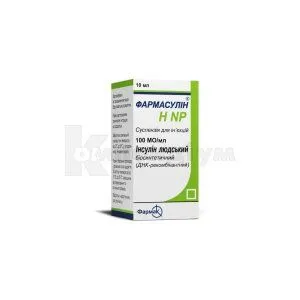
Table of Contents
INSTRUCTIONS FOR MEDICAL USE OF THE MEDICINAL PRODUCT INSUVIT® HNP (INSUVIT® HNP)
Composition:
Active substance: insulin (human);
1 ml of suspension contains 100 IU of human insulin (recombinant DNA);
Excipients: metacresol, zinc oxide, glycerol, phenol liquefied, protamine sulfate, sodium dihydrogen phosphate anhydrous, hydrochloric acid diluted or sodium hydroxide solution, water for injections.
Pharmaceutical form. Injection suspension.
Main physicochemical properties: white-colored suspension, which during storage separates into a colorless or almost colorless supernatant liquid and a white precipitate that readily resuspends upon shaking.
Pharmacotherapeutic group. Antidiabetics. Intermediate-acting insulins and analogues. ATC code A10AC01.
Pharmacological Properties
Pharmacodynamics
The blood glucose-lowering effect of insulin is due to its promotion of glucose uptake by tissues following insulin binding to receptors on muscle and fat cells, as well as simultaneous inhibition of glucose release from the liver.
Insuvit® HNP is a long-acting insulin.
On average, the profile of action after subcutaneous injection is as follows:
onset of action – within 1.5 hours; peak effect – between 4 and 12 hours; duration of action – approximately 24 hours.
Pharmacokinetics
The elimination half-life (t1/2) of insulin from blood is only several minutes; therefore, the insulin's profile of action is determined exclusively by the characteristics of its absorption. This process depends on a number of factors (e.g., insulin dose, method and site of injection, thickness of subcutaneous tissue, type of diabetes), resulting in considerable variability in insulin effect among patients.
Absorption. Peak plasma concentration occurs within 2–18 hours after subcutaneous injection.
Distribution. No significant binding of insulin to plasma proteins has been observed, except for circulating antibodies against insulin (if present).
Metabolism. Human insulin is cleaved by insulin proteases or insulin-degrading enzymes, and possibly by protein disulfide isomerase. Several cleavage (hydrolysis) sites within the human insulin molecule have been identified. None of the metabolites formed after hydrolysis possess biological activity.
Elimination. The terminal t1/2 of insulin is determined by the rate of its absorption from the subcutaneous tissue. Therefore, the terminal t1/2 reflects the rate of absorption rather than elimination (per se) of insulin from plasma (the t1/2 of insulin in circulation is only several minutes). According to available study data, t1/2 ranges from 5 to 10 hours.
Preclinical Safety Data
Preclinical studies on pharmacological safety (repeated-dose toxicity, genotoxicity, carcinogenicity, toxic effects on fertility and fetal development) revealed no hazards associated with the administration of the drug to humans.
Clinical characteristics.
Indications.
Treatment of diabetes mellitus.
Contraindications.
Hypoglycemia. Hypersensitivity to human insulin or to any of the excipients of the medicinal product.
Interaction with other medicinal products and other forms of interaction.
A number of medicinal products are known to affect glucose metabolism.
Medicinal products that may decrease insulin requirements: oral hypoglycemic agents (OHA), monoamine oxidase inhibitors (MAO inhibitors), non-selective β-adrenergic blockers, angiotensin-converting enzyme (ACE) inhibitors, salicylates, anabolic steroids, and sulfonamides.
Medicinal products that may increase insulin requirements: oral contraceptives, thiazides, glucocorticoids, thyroid hormones, sympathomimetics, growth hormone, and danazol.
β-adrenergic blockers may mask the symptoms of hypoglycemia and slow recovery from hypoglycemia.
Octreotide/lanreotide may either decrease or increase insulin requirements. Alcohol may potentiate or weaken the hypoglycemic effect of insulin.
Special precautions for use.
Hyperglycemia
Inadequate dosing or discontinuation of treatment (especially in type 1 diabetes) may lead to hyperglycemia and diabetic ketoacidosis. Typically, the first symptoms of hyperglycemia develop gradually over several hours or days. These include thirst, frequent urination, nausea, vomiting, drowsiness, skin flushing and dryness, dry mouth, loss of appetite, and acetone odor on the breath.
In type 1 diabetes, untreated hyperglycemia leads to diabetic ketoacidosis, which is life-threatening.
Hypoglycemia
Hypoglycemia may occur with insulin doses that are too high relative to insulin requirements. Do not administer the medication in case of hypoglycemia or suspected hypoglycemia.
Skipping meals or unexpected increased physical activity may lead to hypoglycemia.
Patients who have significantly improved glycemic control due to intensive insulin therapy may experience changes in the usual warning signs of hypoglycemia; they should be warned about this in advance.
Usual warning symptoms may disappear in patients with long-standing diabetes. Concomitant illnesses, particularly infections and fever, generally increase insulin requirements.
Concomitant diseases of the kidneys, liver, or disorders of the adrenal glands, pituitary gland, or thyroid gland may require adjustment of insulin dosage.
Switching from other insulins
Switching a patient to another type or brand of insulin should be done under strict medical supervision.
Changes in insulin concentration, type or manufacturer, insulin type, origin (human insulin or human insulin analog), and/or production method (recombinant DNA technology or animal-sourced insulin) may necessitate insulin dose adjustments.
Patients switching to Insuvit® HNP from another insulin may require an increased number of daily injections or dose adjustments. Dose titration may be needed both at the initiation of the new medication and during the first weeks or months of treatment.
Injection site reactions
With any insulin therapy, injection site reactions may occur, including pain, redness, itching, urticaria, swelling, bruising, and inflammation. Regularly changing the injection site, even within the same area, may reduce or prevent these reactions. Reactions usually resolve within a few days or weeks. Rarely, injection site reactions may require discontinuation of Insuvit® HNP.
Patients should be advised to consistently rotate injection sites to reduce the risk of lipodystrophy and cutaneous amyloidosis. There is a potential risk of delayed insulin absorption and impaired glycemic control following insulin injections into areas with such reactions. Changing the injection site to an unaffected skin area may lead to hypoglycemia. Monitoring of blood glucose levels is recommended after changing the injection site, and antidiabetic medication doses should be adjusted if necessary.
Patients should consult their physician before traveling across time zones, as this alters the insulin injection and meal schedules.
Insulin suspensions should not be used in insulin pumps for continuous subcutaneous insulin infusion.
Combination of pioglitazones and insulin products
Cases of congestive heart failure have been reported when pioglitazones are used in combination with insulin, particularly in patients with risk factors. This should be considered when prescribing combination therapy with pioglitazones and insulin. Patients receiving this combination should be monitored closely for signs and symptoms of congestive heart failure, weight gain, and edema. If any worsening of cardiac function occurs, treatment with pioglitazones should be discontinued.
To prevent accidental medication errors, patients should be advised to always check the product label before each injection to avoid confusion between Insuvit® HNP and other insulin products.
Special populations
Elderly patients (≥ 65 years)
Insuvit® HNP can be used in elderly patients.
Enhanced glucose monitoring and individual dose adjustments of insulin are recommended in elderly patients.
Renal and hepatic impairment
Renal and hepatic impairment may reduce insulin requirements. Enhanced glucose monitoring and individual insulin dose adjustments are recommended in patients with renal or hepatic impairment.
Children
The product can be used in children and adolescents.
Content of excipients
Insuvit® HNP contains less than 1 mmol sodium (23 mg)/dose, i.e., practically sodium-free.
Use during pregnancy or breastfeeding
Since insulin does not cross the placental barrier, there are no restrictions on insulin treatment of diabetes during pregnancy. Enhanced monitoring of blood glucose levels is recommended throughout pregnancy and in women with diabetes who are suspected of being pregnant, as inadequate diabetes control—both hypoglycemia and hyperglycemia—increases the risk of fetal malformations and fetal death.
Insulin requirements usually decrease during the first trimester of pregnancy and significantly increase during the second and third trimesters.
After delivery, insulin requirements rapidly return to pre-pregnancy levels.
There are no restrictions on insulin treatment of diabetes during breastfeeding, as maternal treatment poses no risk to the infant. However, dose adjustments and/or dietary modifications for the mother may be necessary.
Fertility
Reproductive toxicity studies in animals using human insulin have shown no adverse effects on fertility.
Ability to influence reaction speed when driving or operating machinery
A patient's reaction and ability to concentrate may be impaired during hypoglycemia. This may represent a risk factor in situations where such abilities are particularly important (e.g., driving a car or operating machinery).
Patients should be advised to take preventive measures against hypoglycemia before driving. This is especially important for patients with diminished or absent hypoglycemia warning symptoms or those experiencing frequent episodes of hypoglycemia. In such cases, the appropriateness of driving should be carefully evaluated.
Method of Administration and Dosage
Insuvit® HNP is a long-acting insulin preparation; therefore, it can be used alone or in combination with short-acting insulin. In intensified insulin therapy, the suspension can be used as basal insulin (injections in the evening and/or morning) supplemented with short-acting insulin administered at meal times.
The potency of human insulin is expressed in International Units (IU).
Dosing
Insulin dosage is individual and must be determined by a physician according to the patient's needs. The individual daily insulin requirement is generally 0.3 to 1.0 IU/kg/day. Daily insulin requirements may increase in patients with insulin resistance (e.g., during puberty or in obesity) and decrease in patients with residual endogenous insulin production.
Dose Adjustment
Concomitant diseases, particularly infections and febrile conditions, usually increase the patient's insulin requirement. Concomitant kidney, liver disease, or disorders affecting the adrenal glands, pituitary gland, or thyroid gland may require adjustment of the insulin dose.
Dose adjustment may also be necessary when there are changes in the patient's level of physical activity or usual diet. Dose titration may also be required when switching patients to other insulin preparations.
Administration
Insuvit® HNP is intended for subcutaneous injection only. Insulin suspension must never be administered intravenously.
Insuvit® HNP is usually injected subcutaneously into the thigh area. It may also be administered into the abdominal wall, buttocks, or deltoid region of the shoulder.
Subcutaneous injections into the thigh result in slower insulin absorption compared to administration into other body areas.
Injection into a lifted skin fold significantly reduces the risk of intramuscular injection.
After injection, the needle should remain under the skin for at least 6 seconds to ensure delivery of the full dose.
To reduce the risk of lipodystrophy and cutaneous amyloidosis, the injection site should always be rotated, even within the same body area (see sections of the instruction "Special Precautions for Use" and
«Side effects»).
Do not use Insuvit® HNP:
- in infusion pumps;
- in case of allergy (hypersensitivity) to human insulin or to any other ingredient of the medicinal product;
- if hypoglycemia (low blood sugar) is suspected;
- if the cartridge or the device containing the cartridge has been dropped, damaged, or dented;
- if the product has been stored improperly or has been frozen;
- if the insulin suspension does not become uniformly white and cloudy after mixing.
Before using Insuvit® HNP:
- check the label to ensure that the insulin type matches the prescribed one;
- always inspect the cartridge, including the rubber plunger (stopper); do not use the cartridge if there are any external damages.
How to use this insulin medicinal product
Insuvit® HNP is administered by subcutaneous injection. Never inject insulin directly into a vein or muscle. Always rotate injection sites, even within the same body area, to reduce the risk of developing lumps or skin depressions. The best sites for self-injection are the buttocks, the front of the thighs, the abdomen, or the upper arms.
Before administration, ensure that the syringe graduation corresponds to the insulin concentration indicated on the vial label: 100 IU/mL. Use only syringes with graduations matching the insulin concentration in this vial.
Avoid injecting into a blood vessel. After injection, do not rub the injection site.
Aseptic technique must be followed during injection. To prevent infectious complications, do not reuse disposable syringes.
- Disinfect the rubber stopper with a cotton swab moistened with medical alcohol.
- Shake the vial until its contents become white and opaque.
- Draw into the syringe an amount of air equal to the insulin dose to be administered.
- Inject the air from the syringe into the insulin vial.
- Shake the vial and draw the required insulin dose into the syringe. Check for air bubbles in the syringe and verify the administered dose.
- Inject the insulin subcutaneously. To administer the injection:
- pinch the skin with two fingers, insert the needle under the skin, and inject the syringe contents;
- keep the needle under the skin for 6 seconds, ensure complete delivery of insulin, then withdraw the needle;
- if bleeding occurs at the injection site after needle removal, press the area firmly with a cotton swab.
For administering Insuvit® HNP in cartridges, an insulin pen must be used according to the manufacturer's detailed instructions. Refilling of cartridges is strictly prohibited. The insulin pen is intended for individual use only. The manufacturer's instructions for pen use must be strictly followed.
Children.
Biosynthetic human insulin preparations are effective and safe medicinal products for the treatment of diabetes mellitus in various pediatric and adolescent age groups. The daily
insulin requirement in children and adolescents depends on the stage of the disease, body weight, age, diet, physical activity, degree of insulin resistance, and glycemic dynamics.
Overdose.
Although a specific definition of insulin overdose is not established, administration of doses exceeding the patient's requirements may lead to hypoglycemia, progressing through successive stages.
Mild hypoglycemia can be treated by oral intake of glucose or sweet foods. Therefore, diabetic patients are advised to always carry several sugar-containing products.
In cases of severe hypoglycemia, when the patient is unconscious, individuals who have received appropriate training should administer glucagon subcutaneously or intramuscularly (0.5 to 1.0 mg). A healthcare professional may administer intravenous glucose. Intravenous glucose should also be administered if the patient does not respond to glucagon within 10–15 minutes.
After the patient regains consciousness, carbohydrate-containing food should be administered to prevent recurrence.
Adverse reactions.
The most common adverse effect of therapy is hypoglycemia. According to clinical trial data as well as post-marketing experience, the frequency of hypoglycemia varies among different patient groups, dosing regimens, and levels of glycemic control.
At the beginning of insulin therapy, refractive disturbances, edema, and injection site reactions (pain, redness, urticaria, inflammation, bruising, swelling, and itching at the injection site) may occur. These reactions are usually transient. Rapid improvement in blood glucose control may cause a temporary condition of acute painful neuropathy, which is usually reversible.
Intensification of insulin therapy aimed at rapid improvement in glycemic control may lead to transient worsening of diabetic retinopathy; however, long-term, well-established glycemic control reduces the risk of progression of diabetic retinopathy.
Adverse reactions are categorized by frequency of occurrence as follows: very common (≥ 1/10), common (≥ 1/100, < 1/10), uncommon (≥ 1/1000, < 1/100), rare (≥ 1/10000, < 1/1000), very rare (< 1/10000), and frequency not known (cannot be estimated based on available data).
Immune system disorders:
Uncommon – urticaria, rash; very rare – anaphylactic reactions*.
Metabolism and nutrition disorders:
Very common – hypoglycemia*.
Nervous system disorders:
Uncommon – peripheral neuropathies (painful neuropathies).
Eye disorders:
Uncommon – diabetic retinopathy; very rare – refractive disturbances.
Skin and subcutaneous tissue disorders:
Uncommon – lipodystrophy*;
Frequency not known – skin amyloidosis.
General disorders and administration site conditions:
Uncommon – injection site reactions, edema.
* See information below. Description of selected adverse reactions
Anaphylactic reactions
Symptoms of generalized hypersensitivity (including generalized skin rash, pruritus, sweating, gastrointestinal disturbances, angioedema, dyspnea,
tachycardia, hypotension, dizziness, or loss of consciousness) are very rare but may be life-threatening.
Hypoglycemia
Hypoglycemia is the most common adverse effect. It may occur when the insulin dose substantially exceeds the patient's insulin requirements. Severe hypoglycemia can lead to loss of consciousness, seizures, and subsequent temporary or permanent impairment of brain function, and even to fatal outcome. Symptoms of hypoglycemia usually appear suddenly. They may include cold sweat, pallor and cold skin, nervousness or tremor, anxiety, unusual fatigue or weakness, confusion, difficulty concentrating, drowsiness, excessive hunger, visual disturbances, headache, nausea, and tachycardia.
Skin and subcutaneous tissue disorders
Lipodystrophy and cutaneous amyloidosis may occur at the injection site and may delay local absorption of insulin. Regular rotation of injection sites within a given area may help reduce or prevent these reactions (see section "Special precautions").
Reporting suspected adverse reactions
After marketing authorization of a medicinal product, it is important to report suspected adverse reactions. This enables ongoing monitoring of the benefit-risk balance of the medicinal product. Healthcare professionals are encouraged to report suspected adverse reactions to the local pharmacovigilance authorities.
Shelf life. 2 years.
The shelf life of the product in cartridges and vials after first opening is 42 days, stored at temperatures not exceeding 25 °C, protected from overheating and direct sunlight. Cartridges in use should not be kept in the refrigerator. Do not use the medicinal product after the expiry date stated on the packaging.
Storage conditions.
Store at 2 °C to 8 °C (in a refrigerator). Do not freeze. Keep out of reach of children.
Incompatibility. Insulin suspensions must not be mixed with infusion solutions.
Packaging. 3 mL in a cartridge. 5 cartridges in a blister, 1 blister in a carton. 10 mL in a vial. 1 vial in a carton.
Prescription status. Prescription only.
Manufacturer. JSC "Farmak".
Manufacturer's address and place of business.
74 Kyrylivska Street, Kyiv, 04080, Ukraine.