Inoseda
Ukraine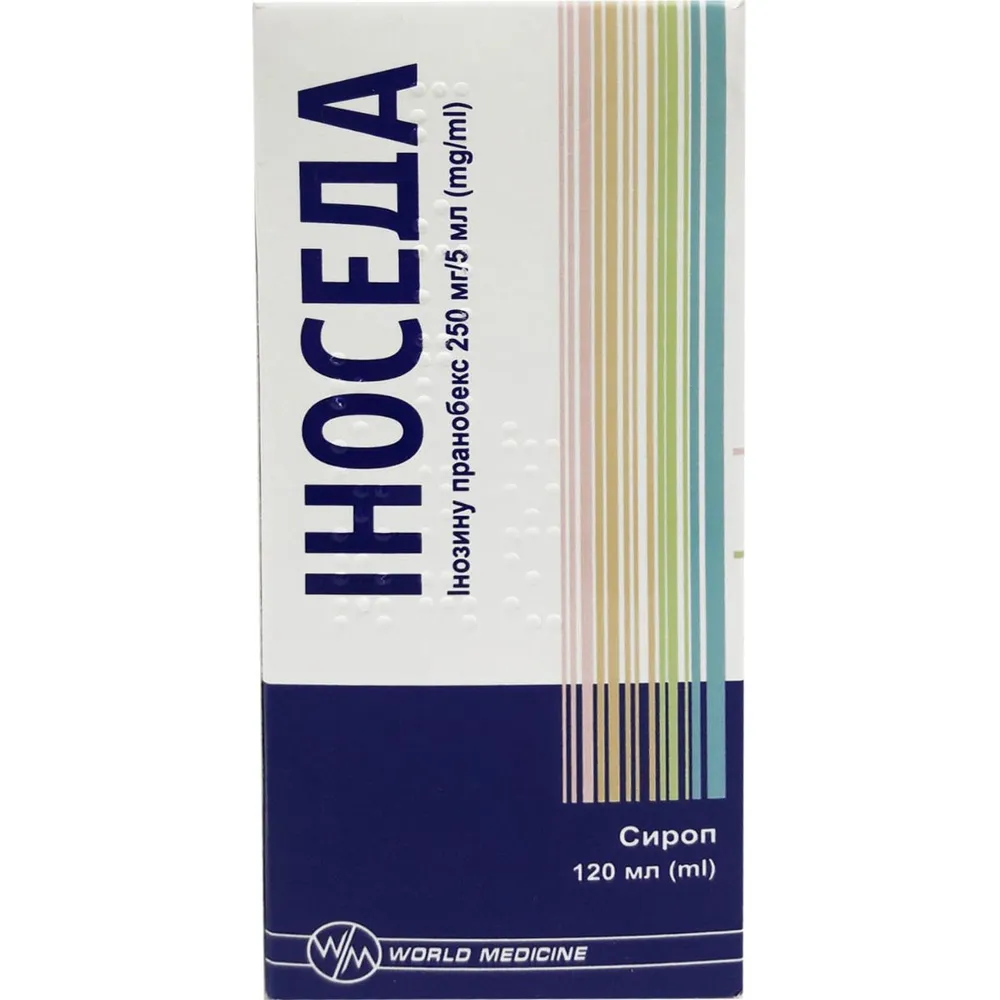
Table of Contents
INSTRUCTIONS FOR MEDICAL USE OF THE MEDICINAL PRODUCT INOSEDA (INOSEDA)
Composition:
Active ingredient: inosine pranobex;
5 ml of syrup contains inosine pranobex 250 mg;
Excipients: methylparahydroxybenzoate (E 218), propylparahydroxybenzoate (E 216), sodium saccharin, sucrose, glycerol, ethanol 96%, "Blueberry" flavor, vanillin, purified water.
Pharmaceutical form. Syrup.
Main physicochemical characteristics: clear solution of light pink color.
Pharmacotherapeutic group
Direct-acting antiviral agents. Other antiviral agents. ATC code J05A X05.
Pharmacological Properties
Pharmacodynamics
Inosine pranobex is a synthetic purine derivative (a molecular complex of inosine and the salt of 4-acetamidobenzoic acid with N,N-dimethylamino-2-propanol in a molar ratio of 1:3).
It belongs to immunomodulating and antiviral agents and has the ability to suppress replication of many strains of both RNA- and DNA-viruses (direct antiviral action). The indirect antiviral effect is associated with enhancement of cell-mediated immunity.
Pharmacokinetics
After oral administration, inosine pranobex is rapidly and well absorbed from the gastrointestinal tract. Maximum plasma concentration is reached within 3 hours. Pharmacological effect manifests approximately within 30 minutes and persists up to 6 hours.
It is well distributed in tissues.
Metabolized in the liver, mainly to uric acid, and excreted by the kidneys.
Clinical Characteristics
Indications
For herpes virus infection and other viral diseases associated with confirmed immune system disorders.
Contraindications
Hypersensitivity to the active substance and/or to any of the excipients of the medicinal product, acute gout, hyperuricemia.
Interaction with other medicinal products and other forms of interaction
The drug should not be taken simultaneously with immunosuppressants.
The medicinal product should be prescribed with caution together with xanthine oxidase inhibitors or with medicinal products promoting uric acid excretion, including diuretic agents, thiazide diuretics (such as hydrochlorothiazide, chlorthalidone, indapamide), or loop diuretics (such as furosemide, torasemide, ethacrynic acid).
Inosine pranobex should not be used during immunosuppressive therapy, since concomitant use of immunosuppressors may affect its expected therapeutic effect due to specific pharmacokinetic mechanisms (administration is possible only after completion of immunosuppressive therapy).
When used concomitantly with zidovudine (azidothymidine), increased nucleotide formation occurs due to enhanced bioavailability of zidovudine in blood plasma and increased intracellular phosphorylation in human blood monocytes. This leads to potentiation of zidovudine effects under the influence of the drug.
Special precautions for use
Since temporary increases in serum uric acid levels may occur during treatment with the medicinal product, especially in men and elderly patients, it is contraindicated in patients suffering from gout or hyperuricemia. The medicinal product should also be used with caution in patients with nephrolithiasis or impaired renal function. Serum uric acid levels should be monitored throughout treatment in these patients.
The increase in uric acid levels is due to the catabolic metabolism of inosine in humans. This does not result from a drug-induced fundamental alteration in enzyme function or renal clearance.
Acute hypersensitivity reactions (e.g., angioedema, anaphylactic shock, urticaria) may occur in some patients. In such cases, treatment with the medicinal product should be discontinued.
Prolonged use of the medicinal product carries a risk of developing nephrolithiasis.
When the medicinal product is used for more than 3 months, it is advisable to monitor liver and kidney function tests monthly (transaminases, creatinine), serum uric acid levels, and perform blood analyses.
Excipients
Sucrose
Each 1 ml of the syrup contains 500 mg of sucrose, which should be taken into account in patients with diabetes mellitus. The product should also not be used in patients with rare hereditary forms of galactose intolerance, lactase deficiency, or glucose-galactose malabsorption syndrome.
Prolonged use of the medicinal product (2 weeks or longer) may lead to dental damage.
Sodium
Each 1 ml of the syrup contains 0.056 mg of sodium, which should be considered in patients on a sodium-restricted diet.
Methyl hydroxybenzoate (E 218) and propyl hydroxybenzoate (E 216)
The medicinal product contains methyl hydroxybenzoate and propyl hydroxybenzoate, which may cause allergic reactions (including delayed-type reactions).
Ethanol
The medicinal product contains approximately 2.5% v/v of ethanol (20 mg of 96% ethanol in 1 ml of syrup), amounting to up to 1600 mg of ethanol in the maximum daily dose (80 ml) for adult patients, equivalent to 40 ml of beer or approximately 17 ml of wine. This is harmful for patients with alcoholism. Caution should be exercised when administering the medicinal product to pregnant women, breastfeeding women, children, patients with liver disorders, and patients with epilepsy.
Use during pregnancy or breastfeeding
There are no controlled studies on fetal outcomes or fertility disturbances in humans. It is unknown whether inosine pranobex is excreted in breast milk. The product should not be used during pregnancy or breastfeeding.
Effect on ability to drive vehicles or operate machinery
The effect of the medicinal product on reaction speed during driving or operating machinery has not been studied. However, patients should be aware that the medicinal product may cause dizziness or other nervous system-related adverse reactions (see section "Adverse reactions").
Dosage and Administration
The medicinal product is intended for oral administration.
Adults
For adults, the medicinal product is administered in tablet form.
Children from 1 year of age
The daily dose of the medicinal product is 50–100 mg/kg body weight (see table below), depending on the severity of the disease. The usual daily dose is 30 ml of syrup (10 ml of syrup 3 times daily). Each 10 ml of the medicinal product contains 500 mg of inosine pranobex.
| Body weight, kg |
Dosing regimen, ml |
| 10–14 |
3 × 5–10 |
| 15–20 |
3 × 5–15 |
| 21–30 |
3 × 7.5–20 |
| 31–40 |
3 × 10–30 |
| 41–50 |
3 × 15–35 |
To measure the dose, use the measuring cup provided in the package.
Administration of the medicinal product according to the above dosage regimen is usually sufficient for the treatment of most viral infections. The duration of treatment varies depending on the type of disease.
Administration of the medicinal product is usually continued for 1 or 2 days after the disappearance of symptoms.
Children
The medicinal product can be used in children aged 1 year and older.
Overdose
Cases of overdose have not been observed. The median lethal dose (LD50) exceeds the therapeutic dose of inosine by more than 40 times.
Overdose may lead to increased levels of uric acid in blood serum and urine. Treatment is symptomatic.
Adverse Reactions
The medicinal product is generally well tolerated, even during prolonged use.
The most common adverse reaction is a transient and slight (usually within normal limits) increase in serum and urinary uric acid concentration (due to inosine metabolism), which normalizes within a few days after discontinuation of the drug.
The frequency of adverse reactions is defined as follows: very common (≥ 1/10); common (≥ 1/100, < 1/10); uncommon (≥ 1/1000, < 1/100); very rare (< 1/10000); frequency not known (cannot be estimated due to lack of data).
Immune system disorders: frequency not known – hypersensitivity reaction, anaphylactic reactions, anaphylactic shock;
Ear and labyrinth disorders: common – vertigo;
Psychiatric disorders: uncommon – nervousness, insomnia;
Nervous system disorders: common – headache, vertigo; uncommon – somnolence, sleep disorders; frequency not known – dizziness;
Gastrointestinal disorders: common – vomiting, nausea, epigastric discomfort; uncommon – diarrhea, constipation; frequency not known – upper abdominal pain;
Skin and subcutaneous tissue disorders: common – pruritus, skin rash; frequency not known – erythema, angioneurotic edema, urticaria;
Musculoskeletal and connective tissue disorders: common – arthralgia;
Renal and urinary disorders: uncommon – polyuria;
General disorders: common – fatigue, malaise;
Investigations: very common – increased blood uric acid level, increased urinary uric acid level; common – increased transaminase levels, increased alkaline phosphatase levels in blood, increased blood urea nitrogen level.
Reporting of suspected adverse reactions
Reporting suspected adverse reactions after marketing authorization is important. It allows continued monitoring of the benefit/risk balance of the medicinal product. Medical and pharmaceutical professionals, as well as patients or their legal representatives, are encouraged to report any suspected adverse reactions and lack of efficacy via the Automated Pharmacovigilance Information System at the following link: https://aisf.dec.gov.ua.
Shelf life
3 years.
After opening the bottle, the product can be used within 6 months.
Storage conditions
Store at a temperature not exceeding 25 °C, in a place inaccessible to children.
Packaging
120 ml in a bottle; 1 bottle with a measuring cup in a cardboard box.
Prescription status
Prescription only.
Manufacturer
UORLDMEDICINE ILAC SAN. VE TIC. A.S. /
WORLD MEDICINE ILAC SAN. VE TIC. A.S.
Manufacturer's address and place of business
15 Temmuz Mahallesi Cami Yolu Caddesi No:50 Gunesli Bagcilar/Istanbul, Turkey.