Immard
Ukraine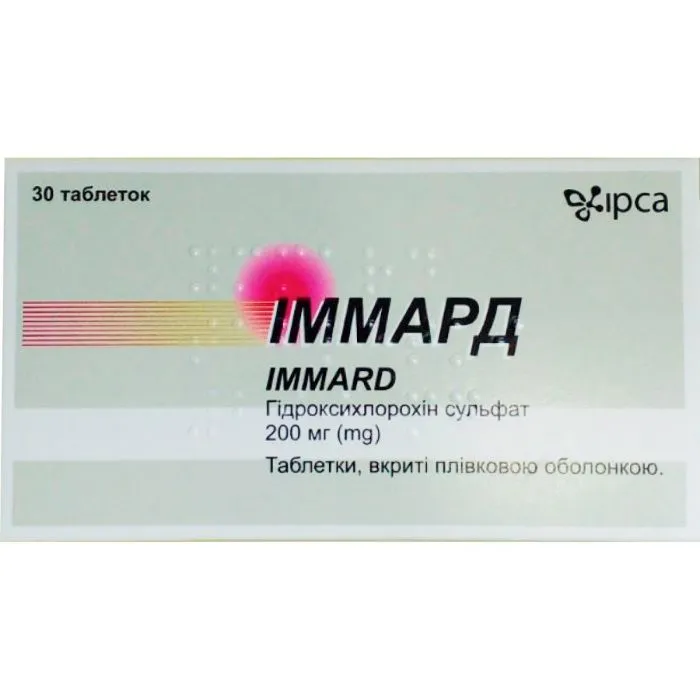
Table of Contents
INSTRUCTIONS FOR MEDICAL USE OF THE MEDICINAL PRODUCT IMMARd (IMMARD)
Composition:
Active substance: hydroxychloroquine;
One tablet contains 200 mg of hydroxychloroquine sulfate;
Excipients: maize starch, calcium hydrogen phosphate, anhydrous colloidal silicon dioxide, polysorbate 80, talc, magnesium stearate, hypromellose, titanium dioxide (E 171), polyethylene glycol 6000.
Pharmaceutical form. Film-coated tablets.
Main physicochemical properties: white, round, biconvex, film-coated tablets.
Pharmacotherapeutic group. Antiparasitic medicinal products. Antimalarial agents. Aminoquinolines. Hydroxychloroquine.
ATC code P01BA02.
Pharmacological Properties
Pharmacodynamics
Antimalarial drugs such as chloroquine and hydroxychloroquine possess several pharmacological properties that account for their therapeutic effect in the treatment of rheumatic diseases, although the exact contribution of each mechanism remains unclear. These effects include interaction with sulfhydryl groups, alteration of enzyme activity (including phospholipase, NADH-cytochrome C reductase, cholinesterase, proteases, and hydrolases), binding to DNA, stabilization of lysosomal membranes, inhibition of prostaglandin production, inhibition of chemotaxis and phagocytosis by polymorphonuclear cells, possible effect on monocyte production of interleukin-1, and inhibition of superoxide release by neutrophils.
Pharmacokinetics
After oral administration, peak blood concentrations are reached approximately within 4 hours.
The absolute bioavailability after oral administration is 79%.
Distribution
Hydroxychloroquine has a large volume of distribution due to extensive tissue accumulation (5,500 L in blood, 44,000 L in plasma) and demonstrates accumulation in blood cells, with a whole blood to plasma concentration ratio of 7.2. Approximately 50% of hydroxychloroquine is protein-bound in plasma.
Metabolism
Hydroxychloroquine is primarily metabolized to N-desethylhydroxychloroquine and two other metabolites common to chloroquine—desethylchloroquine and bisdesethylchloroquine. Based on data from chloroquine, it can be extrapolated that hydroxychloroquine may be metabolized in vitro by the same CYP enzymes as chloroquine, namely CYP2C8 and CYP3A, and to a lesser extent by CYP2D6.
Elimination
Hydroxychloroquine exhibits a multi-phase elimination profile with a prolonged terminal half-life ranging from 30 to 60 days. Approximately 20–25% of the hydroxychloroquine dose is excreted in urine as unchanged drug.
Clinical characteristics.
Indications.
Adults
Treatment of rheumatoid arthritis, discoid and systemic lupus erythematosus, as well as dermatological diseases whose occurrence or worsening is caused by exposure to sunlight.
Pediatric population
Treatment of juvenile idiopathic arthritis (in combination with other medicinal products), discoid and systemic lupus erythematosus.
Contraindications.
- Known hypersensitivity to 4-aminoquinoline compounds.
- Maculopathy diagnosed prior to initiation of treatment with Immarde.
- Age under 6 years (200 mg tablets are not suitable for patients with body weight < 35 kg) or ideal body weight < 31 kg (see section "Method of administration and dosage").
Interaction with other medicinal products and other forms of interaction.
Pharmacodynamic interactions
Medicinal products with known QT-prolonging effect/potential to cause cardiac arrhythmia: Hydroxychloroquine should be used with caution in patients receiving medicinal products with known QT-prolonging effects, such as class IA and III antiarrhythmic agents, tricyclic antidepressants, antipsychotics, and certain anti-infective agents, due to increased risk of ventricular arrhythmia (see sections "Special precautions for use" and "Overdose"). Halofantrine must not be co-administered with hydroxychloroquine.
Since hydroxychloroquine may enhance the effect of hypoglycemic therapy, a reduction in the dose of insulin or antidiabetic agents may be required.
Concomitant use of hydroxychloroquine and antimalarial agents known to reduce seizure threshold (e.g., mefloquine) may increase the risk of seizures.
Reduced efficacy of antiepileptic medicinal products may occur when used concomitantly with hydroxychloroquine.
Where possible, concomitant use of the drug with medicinal products having ocular or hematological toxicity potential should be avoided.
There is a theoretical risk of inhibition of intracellular α-galactosidase activity when hydroxychloroquine is used concomitantly with agalsidase.
Hydroxychloroquine sulfate may also interact with some agents known to interact with chloroquine, even if specific reports are lacking. These include: potentiation of the direct neuromuscular blocking effect of aminoglycoside antibiotics; inhibition of its metabolism by cimetidine, leading to increased plasma concentration of the antimalarial agent; antagonism of the effects of neostigmine and pyridostigmine; reduced antibody production in response to primary immunization with intradermal human diploid cell rabies vaccine.
Effect of other medicinal products on hydroxychloroquine
Antacids
Concomitant use with magnesium-containing antacids or kaolin may reduce the absorption of chloroquine. Therefore, by extrapolation, hydroxychloroquine should be administered at least 2 hours apart from antacids or kaolin.
CYP inhibitors or inducers
Concomitant use of cimetidine, a moderate inhibitor of CYP2C8 and CYP3A4, has been shown to double the exposure of chloroquine. By extrapolating these data, considering the structural and pharmacokinetic similarities between hydroxychloroquine and chloroquine, a similar effect can be expected with hydroxychloroquine. Caution is recommended (e.g., monitoring for adverse effects) when co-administering strong or moderate inhibitors of CYP2C8 and CYP3A4 (such as gemfibrozil, clopidogrel, ritonavir, itraconazole, clarithromycin, grapefruit juice).
Reduced efficacy of hydroxychloroquine has been reported when co-administered with rifampicin, a strong inducer of CYP2C8 and CYP3A4. Caution is recommended (e.g., monitoring efficacy) when co-administering with strong inducers of CYP2C8 and CYP3A4 (such as rifampicin, St. John’s wort, carbamazepine, phenobarbital).
Effect of hydroxychloroquine on other medicinal products
P-glycoprotein substrates
The potential of hydroxychloroquine to inhibit P-glycoprotein substrates has not been evaluated. In vitro observations indicate that all other tested aminoquinolines inhibit P-glycoprotein. Therefore, there is a likelihood of increased plasma concentrations of P-glycoprotein substrates when co-administered with hydroxychloroquine.
Elevated plasma cyclosporine levels have been reported with concomitant use of cyclosporine and hydroxychloroquine.
Increased serum digoxin levels have been reported when digoxin and hydroxychloroquine are used concomitantly. Caution is recommended (e.g., monitoring for adverse effects or plasma concentrations, if appropriate) when co-administering with P-glycoprotein substrates that have a narrow therapeutic index (such as digoxin, cyclosporine, dabigatran).
In a drug interaction study following single-dose administration, chloroquine reduced the bioavailability of praziquantel. It is currently unknown whether a similar effect occurs with concomitant use of hydroxychloroquine and praziquantel. However, by extrapolating these data based on the structural and pharmacokinetic similarities between hydroxychloroquine and chloroquine, a similar effect can be expected with hydroxychloroquine.
Special precautions for use.
Retinopathy.
All patients should undergo an ophthalmological examination before starting treatment with Immarde. Subsequently, such examinations should be performed at least every 12 months.
Toxic reactions affecting the retina are predominantly dose-dependent. The risk of retinal damage is low when daily doses do not exceed 6.5 mg/kg body weight. Exceeding the recommended daily dose increases the risk of retinal toxic reactions.
During ophthalmological examination, visual acuity should be assessed, thorough ophthalmoscopy and fundoscopy performed, as well as evaluation of central visual field using a red target and color vision testing.
More frequent examinations, adapted to individual patient characteristics, are recommended in the following cases:
− daily dose of the drug exceeds 6.5 mg per 1 kg of ideal (non-increased) body weight; using actual body weight to calculate the dose in obese patients may lead to overdosing;
− renal insufficiency;
− visual acuity below 6/8;
− age over 65 years;
− cumulative dose exceeding 200 g.
Treatment with Immarde should be discontinued immediately if pigmentary disturbances, visual field defects, or other abnormalities not attributable to accommodation disorders are observed in the patient (see also section "Adverse reactions"). Monitoring of such patients should continue, as retinal changes and visual disturbances may progress even after discontinuation of the drug (see also section "Adverse reactions").
Concomitant use of hydroxychloroquine with medicinal products known to cause retinal toxicity, such as tamoxifen, is not recommended.
QT interval prolongation. Hydroxychloroquine has the potential to prolong the QTc interval in patients with specific risk factors. Hydroxychloroquine should be used with caution in patients with congenital or documented acquired QT interval prolongation and/or known risk factors for QT prolongation, such as:
- cardiac diseases (e.g., heart failure, myocardial infarction);
- proarrhythmic conditions, e.g., bradycardia (< 50 beats/min);
- history of ventricular arrhythmias;
- uncorrected hypokalemia and/or hypomagnesemia;
- concomitant use with drugs that prolong the QT interval (see section "Interaction with other medicinal products and other forms of interaction"), as this may increase the risk of developing ventricular arrhythmias.
The extent of QT interval prolongation may increase with rising drug concentrations. Therefore, the recommended dose should not be exceeded (see also sections "Interaction with other medicinal products and other forms of interaction" and "Adverse reactions").
Chronic cardiac toxicity. Cases of cardiomyopathy leading to heart failure, sometimes fatal, have been reported in patients receiving treatment with Immarde (see sections "Adverse reactions" and "Overdose"). Therefore, clinical monitoring for signs and symptoms of cardiomyopathy is recommended. If cardiomyopathy develops, treatment with Immarde should be discontinued. In case of diagnosed conduction disorders (bundle branch block / atrioventricular block) or biventricular hypertrophy, chronic drug toxicity should be considered (see section "Adverse reactions").
The drug should be used with caution in patients taking medications that may cause adverse effects on the eyes or skin.
The drug should also be used cautiously:
- in patients with liver or kidney disease, and in patients taking medications that may adversely affect the function of these organs. In patients with severe impairment of renal or hepatic function, plasma levels of hydroxychloroquine should be measured and the dose adjusted accordingly;
- in patients with severe gastrointestinal, neurological, or hematological disorders.
Other monitoring during long-term treatment.
In patients receiving long-term treatment with the drug, a complete blood count should be performed periodically. If pathological changes are detected, treatment with Immarde should be discontinued (see section "Adverse reactions").
In all patients receiving long-term treatment with the drug, periodic assessment of skeletal muscle function and tendon reflexes should be performed. If muscle weakness occurs, the drug should be discontinued (see section "Adverse reactions").
The drug should be used with caution in patients sensitive to quinine, patients with glucose-6-phosphate dehydrogenase deficiency, patients suffering from chronic hematoporphyria, as the course of these diseases may worsen under the influence of hydroxychloroquine, and in patients with psoriasis, as the risk of skin reactions increases.
In very rare cases, suicidal behavior has been observed in patients receiving hydroxychloroquine.
Patients with the following rare hereditary conditions should not take this medicinal product: galactose intolerance, Lapp lactase deficiency, or glucose-galactose malabsorption syndrome.
Young children are particularly sensitive to the toxic effects of 4-aminoquinolines; therefore, patients should be warned that Immarde must be stored out of children's reach.
Hypoglycemia. Hydroxychloroquine has been shown to cause severe hypoglycemia, including loss of consciousness, which may be life-threatening, in patients both taking and not taking antidiabetic medicinal products. Patients receiving hydroxychloroquine treatment should be informed about the risk of hypoglycemia and its associated clinical signs and symptoms. In patients presenting clinical symptoms suggestive of hypoglycemia during hydroxychloroquine treatment, blood glucose levels should be monitored and treatment reviewed if necessary.
Extrapyramidal disorders may occur during treatment with Immarde (see section "Adverse reactions").
Potential carcinogenic risk. Experimental data indicate a potential risk of inducing gene mutations. Carcinogenicity studies in animals are available only for chloroquine (the parent compound), tested in one animal species, and the results were negative. In humans, there are currently insufficient data to exclude an increased risk of cancer in patients receiving long-term treatment.
Use during pregnancy or breastfeeding.
Pregnancy. Clinical data on hydroxychloroquine are limited. In animal studies, chloroquine (a compound related to hydroxychloroquine) showed reproductive toxicity after administration at high doses to the maternal organism. Preclinical data on chloroquine indicate a potential risk of genotoxicity in certain test systems.
For hydroxychloroquine used in long-term therapy of autoimmune diseases at high doses: observational studies and a meta-analysis including data from prospective studies with long-term, high-dose use did not reveal a statistically significant increase in the risk of congenital malformations or adverse pregnancy outcomes.
Hydroxychloroquine crosses the placenta. It should be noted that 4-aminoquinolines at therapeutic doses may cause central nervous system damage, including ototoxicity (auditory and vestibular toxicity, congenital deafness), retinal hemorrhages, and abnormal retinal pigmentation. These effects have not been confirmed in larger series/observational studies. Observational studies and a meta-analysis including data from prospective studies with long-term, high-dose use did not reveal a statistically significant increase in the risk of congenital malformations or adverse clinical outcomes of pregnancy.
Therefore, use of hydroxychloroquine sulfate during pregnancy should be avoided, except when, in the physician’s opinion, the individual potential benefit outweighs the potential risks.
Breastfeeding. Hydroxychloroquine is excreted in breast milk (in amounts less than 2% of the maternal dose, adjusted for body weight). The need for long-term use of hydroxychloroquine during breastfeeding should be carefully considered, taking into account the slow elimination rate of the drug and its potential to accumulate in toxic amounts in the infant’s body. It is known that infants are extremely sensitive to the toxic effects of 4-aminoquinolines.
Currently, very limited data are available on the safety of long-term hydroxychloroquine use in breastfed infants; when prescribing the drug, the physician must evaluate the potential risks and benefits of its use during breastfeeding, considering the indication and duration of treatment.
Fertility. Data on the effect of hydroxychloroquine sulfate on human fertility are lacking. In animal studies, chloroquine (a compound related to hydroxychloroquine) showed adverse effects on male fertility.
Ability to affect reaction speed when driving vehicles or operating machinery.
Since visual disturbances due to accommodation disorders, which may cause blurred vision, may occur shortly after initiation of treatment, patients should exercise caution when driving vehicles or performing tasks requiring heightened attention. If this condition does not resolve spontaneously, it resolves with dose reduction or discontinuation of treatment.
Dosage and Administration
Immarde is intended for oral administration. Each dose should be taken with food or with a glass of milk.
The effect of hydroxychloroquine is cumulative; therefore, several weeks may be required to achieve therapeutic efficacy, while minor adverse effects may occur relatively early. If there is no improvement in the patient's condition within 6 months of treatment for rheumatic disease, the drug should be discontinued.
For diseases associated with increased photosensitivity, treatment should only be conducted during periods of maximum sun exposure.
Adults and elderly patients.
The minimum effective dose should be used. This dose must not exceed 6.5 mg/kg/day (based on ideal body weight, not actual body weight) and should be either 200 mg or 400 mg per day.
Children.
The minimum effective dose should be used, not exceeding 6.5 mg/kg/day based on ideal body weight. Therefore, 200 mg tablets are not suitable for children with an ideal body weight of less than 31 kg.
Children.
The minimum effective dose should be used, not exceeding 6.5 mg per 1 kg of ideal body weight per day. Therefore, 200 mg tablets are not suitable for children with an ideal body weight of less than 31 kg.
Overdose.
Overdose of 4-aminoquinolines is particularly dangerous in infants, as ingestion of even 1–2 grams may result in fatal outcome.
Symptoms of overdose may include headache, visual disturbances, cardiovascular collapse, seizures, hypokalemia, rhythm and conduction disorders, including QT interval prolongation, ventricular tachycardia (torsade de pointes), ventricular tachycardia, ventricular fibrillation, widened QRS complexes, bradyarrhythmias, junctional rhythm, atrioventricular block, followed suddenly by sometimes fatal respiratory and cardiac arrest. These effects may occur shortly after overdose; therefore, immediate medical intervention is required. Gastric contents should be promptly removed by inducing emesis or by gastric lavage. Activated charcoal, in a dose at least 5 times greater than the ingested dose of the drug, may slow further absorption if administered via a gastric tube after lavage and no later than 30 minutes after drug ingestion.
In case of overdose, consider the possibility of parenteral diazepam administration. This drug has been shown to reduce cardiotoxic effects caused by chloroquine.
If necessary, measures should be taken to support respiration and to carry out anti-shock therapy.
Adverse Reactions
The following frequency criteria, as approved by the Council for International Organizations of Medical Sciences (CIOMS), have been used: very common (≥ 1/10); common (≥ 1/100 to < 1/10); uncommon (≥ 1/1000 to < 1/100); rare (≥ 1/10000 to < 1/1000); very rare (< 1/10000); frequency not known (cannot be estimated based on available data).
Blood and lymphatic system disorders
Frequency not known: bone marrow suppression, anaemia, aplastic anaemia, agranulocytosis, leucopenia, thrombocytopenia.
Immune system disorders
Frequency not known: urticaria, angioedema, bronchospasm.
Metabolism and nutrition disorders
Common: loss of appetite.
Frequency not known: hypoglycaemia.
Hydroxychloroquine may exacerbate the course of porphyria.
Psychiatric disorders
Common: affective lability.
Uncommon: nervousness.
Frequency not known: psychosis, suicidal behaviour.
Nervous system disorders
Common: headache.
Uncommon: dizziness.
Frequency not known: seizures have been reported with use of this class of medicinal products.
Extrapyramidal disorders such as dystonia, dyskinesia, tremor (see section "Special precautions").
Eye disorders
Common: blurred vision due to impaired accommodation, which is dose-dependent and reversible.
Uncommon: retinopathy with pigmentary changes and visual field defects may occur. In the early stages, retinopathy is reversible after discontinuation of Immarde. If treatment is not promptly discontinued, there is a risk of progression of retinopathy even after stopping the drug.
Patients with retinopathy may initially be asymptomatic or may experience paracentral or pericentral ring-shaped scotomas, temporal scotomas, or colour vision disturbances.
Corneal changes, including oedema and clouding, have been reported. These may be asymptomatic or may cause disturbances such as halos, blurred vision, or photophobia. These changes may be transient and resolve after discontinuation of treatment.
Frequency not known: cases of maculopathy and macular degeneration have been reported, which may be irreversible.
Ear and labyrinth disorders
Uncommon: vertigo, tinnitus.
Frequency not known: hearing loss.
Cardiac disorders
Frequency not known: QT interval prolongation in patients with specific risk factors, which may lead to arrhythmias (torsade de pointes, ventricular tachycardia); cardiomyopathy, which may lead to heart failure, in some cases with fatal outcome (see sections "Special precautions" and "Overdose").
If conduction disorders (bundle branch block/atrioventricular block) or biventricular hypertrophy are diagnosed, chronic drug toxicity should be considered. Discontinuation of the drug may lead to resolution of these abnormalities.
Gastrointestinal disorders
Very common: abdominal pain, nausea.
Common: diarrhoea, vomiting.
These symptoms usually resolve immediately after dose reduction or discontinuation of treatment.
Hepatobiliary disorders
Uncommon: abnormal liver function test results.
Frequency not known: fulminant hepatic failure.
Skin and subcutaneous tissue disorders
Common: skin rash, pruritus.
Uncommon: skin and mucous membrane pigmentation changes, hair bleaching, alopecia.
These effects usually resolve quickly after discontinuation of treatment.
Frequency not known: bullous eruptions, including erythema multiforme, Stevens-Johnson syndrome, and toxic epidermal necrolysis, drug reaction with eosinophilia and systemic symptoms (DRESS syndrome), photosensitivity, exfoliative dermatitis, acute generalized exanthematous pustulosis.
Acute generalized exanthematous pustulosis should be differentiated from psoriasis, although hydroxychloroquine may also trigger psoriasis attacks. It may be associated with fever and leukocytosis. The prognosis is usually favourable after discontinuation of the drug.
Musculoskeletal and connective tissue disorders
Uncommon: sensory-motor disturbances.
Frequency not known: skeletal myopathy or neuromyopathy leading to progressive weakness and atrophy of proximal muscle groups.
Myopathy may be reversible after discontinuation of the drug, but full recovery may take several months.
Decreased tendon reflexes and abnormal nerve conduction.
Reporting suspected adverse reactions.
Reporting suspected adverse reactions after marketing authorization is important. It allows continued monitoring of the benefit-risk balance of the medicinal product. Healthcare professionals are encouraged to report any suspected adverse reactions via the national reporting system.
Shelf life.
2 years.
Storage conditions.
Store in the original packaging in a dry place at a temperature not exceeding 25 °C.
Keep out of reach and sight of children.
Packaging.
10 tablets in a blister; 3 blisters in a cardboard pack.
Prescription status.
Prescription only.
Manufacturer.
Ipca Laboratories Limited.
Manufacturer's address and place of business.
Plot No. 255/1, Village – Atal, U.T. Dadra and Nagar Haveli, 396230 Silvassa, India.