Griseofulvin
Ukraine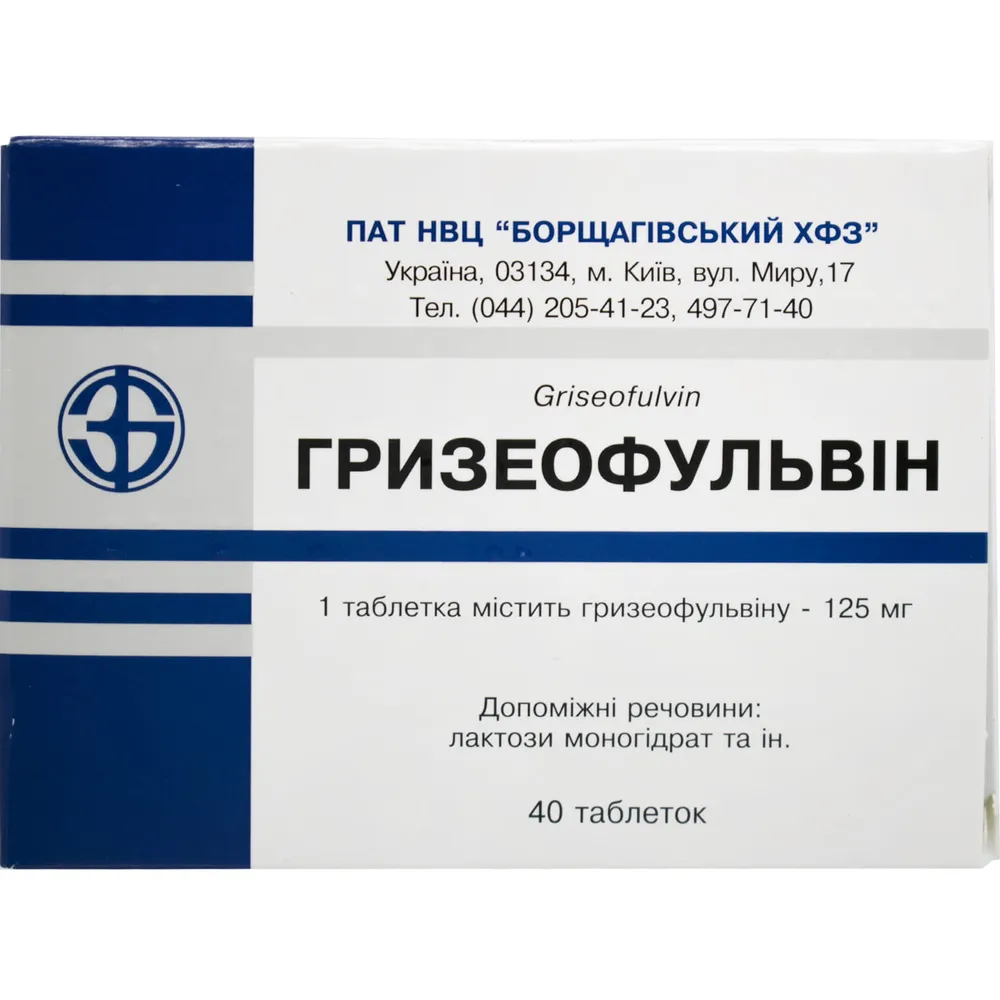
Table of Contents
INSTRUCTIONS FOR MEDICAL USE OF THE MEDICINAL PRODUCT GRISEOFULVIN (GRISEOFULVIN)
Composition:
Active substance: griseofulvin;
1 tablet contains 125 mg of griseofulvin;
Excipients: lactose monohydrate, corn starch, polyethylene glycol, povidone, magnesium stearate.
Pharmaceutical form. Tablets.
Main physicochemical characteristics: white or white with a yellowish tint, round-shaped, biconvex tablets. Marbling on the tablet surface is permissible.
Pharmacotherapeutic group.
Antifungal agents for systemic use. ATC Code D01B A01.
Pharmacological properties.
Pharmacodynamics.
Griseofulvin is an antibiotic produced by the mold fungus Penicillinum nigricans, a fungistatic agent active against various dermatophytes (Trichophyton, Microsporum, Epidermophyton). The drug inhibits fungal cell division in metaphase by disrupting the structure of the mitotic spindle. Griseofulvin accumulates to varying degrees in the cells of the skin, hair, and nails, providing resistance to fungal infection. As infected keratin is shed, it is replaced by healthy tissue.
Pharmacokinetics.
Metabolized in the liver, forming main metabolites: 6-methylgriseofulvin and glucuronide derivative. The elimination half-life is 24 hours. Excreted via the kidneys. Less than 1% is excreted unchanged in urine, and 36% in feces.
Clinical characteristics.
Indications.
Fungal infections of the skin, hair, and nails caused by fungi of the genus Trichophyton, Microsporum, Epidermophyton: tinea (ringworm), favus, microsporiasis of the scalp and smooth skin, cutaneous epidermophytosis (including inguinal epidermophytosis), dermatomycoses of the feet and hands, onychomycoses.
Contraindications.
- Hypersensitivity to griseofulvin and other components of the drug;
- severe leukopenia and systemic blood disorders;
- severe liver and kidney diseases;
- porphyria;
- systemic lupus erythematosus;
- malignant neoplasms;
- lactase deficiency, galactosemia, glucose-galactose malabsorption syndrome (the drug contains lactose).
Interaction with other medicinal products and other forms of interaction.
Interaction of griseofulvin with other medicinal products
Griseofulvin induces cytochrome P450; therefore, it may enhance hepatic metabolism and thus reduce the effect of certain drugs.
Cyclosporine: decreased plasma concentration of cyclosporine; plasma levels should be monitored during treatment with griseofulvin, and cyclosporine dosage adjusted as necessary.
Metadone: reduced plasma levels of methadone with a risk of withdrawal syndrome. The frequency of methadone administration should be increased to 2–3 times daily.
Oral anticoagulants: reduced anticoagulant effect; more frequent monitoring of prothrombin time and international normalized ratio (INR) is required, along with dose adjustment of oral anticoagulants during and for 8 days after discontinuation of griseofulvin therapy.
Hormonal contraceptives: reduced contraceptive efficacy and possible menstrual cycle disturbances. See detailed information in the section "Special precautions".
Estrogens and progestins (non-contraceptive): reduced efficacy due to increased hepatic metabolism. Clinical monitoring is required; dose adjustment of estrogens or progestins may be necessary during and after discontinuation of griseofulvin therapy.
A possible reduction in the efficacy of oral antidiabetic agents (monitoring of blood glucose levels with possible dose adjustment), and theophylline (monitoring of serum levels with possible dose adjustment) may also occur.
Interaction of other medicinal products with griseofulvin
Inducers of microsomal enzymes (including barbiturates, rifampicin, docalciferol, phenylbutazone, primidone, and other sedatives and hypnotics that induce microsomal enzymes) may enhance the metabolism of griseofulvin and reduce its fungistatic activity.
Alcohol: disulfiram-like reactions may occur, manifested by fever, flushing, nausea, vomiting, diarrhea, and peripheral paresthesia. Enhances the effects of ethanol.
Concomitant use of nicotinamide (vitamin B3) and alpha-tocopherol (vitamin E) with griseofulvin increases the concentration of griseofulvin in blood serum and skin.
Effect on laboratory test results
A false-positive result may occur in the determination of vanillylmandelic acid in urine.
Special precautions.
Griseofulvin should not be prescribed for prophylactic use and should not be used to treat mild fungal infections that can be adequately managed with topical antifungal agents.
Prior to initiating treatment, the causative fungal species should be identified.
The drug is ineffective in candidiasis, bacterial infections, histoplasmosis, actinomycosis, sporotrichosis, chromoblastomycosis, coccidioidomycosis, North American blastomycosis, cryptococcosis (torulosis), pityriasis versicolor, and nocardiosis.
Patients should be thoroughly examined before starting prolonged treatment. Use with caution in patients with hypersensitivity to penicillins, coagulation disorders, and mild to moderate hepatic impairment (the drug is contraindicated in severe hepatic dysfunction).
In elderly patients, age-related changes in liver function increase the risk of hepatotoxicity (anorexia, nausea, vomiting, fatigue, jaundice, abdominal pain, dark urine, elevated liver transaminase activity). Therefore, periodic clinical and laboratory monitoring of liver function is required.
To enhance absorption of griseofulvin and minimize gastrointestinal disturbances, it is advisable to include high-fat foods in the diet (e.g., milk, ice cream). During treatment, vitamin supplements such as ascorbic acid and B-complex vitamins are recommended.
If granulocytopenia develops, treatment with griseofulvin should be discontinued.
Griseofulvin may increase skin sensitivity to sunlight; therefore, direct exposure to sunlight and artificial ultraviolet radiation should be avoided during treatment.
Griseofulvin may cause severe congenital malformations when used by women during pregnancy and may induce chromosomal aberrations in spermatocytes. Since griseofulvin reduces the efficacy of hormonal contraceptives (oral and parenteral), additional contraceptive methods (e.g., condoms) should be used during treatment. Women should avoid planning pregnancy for at least 1 month after completion of treatment; men should avoid planning fatherhood during treatment and for 6 months after discontinuation of the drug.
There have been isolated reports of fatal outcomes associated with griseofulvin use, including cardiac arrest, spina bifida, multiple congenital defects, adrenal insufficiency, primary biliary cirrhosis, systemic lupus erythematosus, and peripheral neuropathy.
During prolonged treatment and/or high-dose therapy, regular monitoring of hematopoietic system, liver, and kidney function is recommended.
As with other antibiotics, prolonged treatment with griseofulvin may lead to overgrowth of resistant microorganisms, including fungi, and development of superinfection, which may require appropriate intervention.
To prevent reinfection, disinfection of clothing, bed linen, underwear, and footwear is necessary.
Alcohol consumption should be avoided during treatment with griseofulvin.
The drug should not be administered to patients with carbohydrate intolerance disorders such as lactase deficiency, galactosemia, or glucose-galactose malabsorption syndrome (the drug contains lactose). If you have known sugar intolerances, consult your physician before taking this medication.
Use during pregnancy or breastfeeding.
Griseofulvin crosses the placenta. Adequate studies on the safety of its use during pregnancy have not been conducted. Limited data indicate that griseofulvin may cause serious congenital defects when taken during pregnancy. The use of griseofulvin during pregnancy is contraindicated. Women of reproductive age should use effective contraceptive methods during treatment and for 1 month after discontinuation of the drug; men should use contraception for 6 months after stopping the drug (see section "Special precautions").
It is unknown whether griseofulvin is excreted in breast milk; therefore, breastfeeding should be discontinued during treatment if use of the drug is necessary.
Ability to affect reaction speed when driving or operating machinery.
The drug may negatively affect reaction speed when driving or operating machinery.
Dosage and Administration.
Take tablets during or after meals (with 1 teaspoon of vegetable oil). For microsporia, adults should take 1 g of Griseofulvin per day. The daily dose should preferably be divided into 2 doses.
The drug should be taken daily until the first negative mycological test result. Then continue the same daily dose every other day for 2 weeks, followed by 4 doses over the next 2 weeks.
For onychomycosis, tinea, and favus of the scalp, the daily dose of Griseofulvin for adults weighing up to 50 kg is 625 mg (5 tablets). For higher body weight, an additional 125 mg should be administered for every 10 kg increment.
The treatment duration for severe mycoses may extend up to 12 months. Treatment course for skin lesions of the body lasts 2–4 weeks, for scalp lesions—4–6 weeks, for foot skin—4–8 weeks, for fingernails—not less than 4 months, for toenails—not less than 6 months.
The drug should be taken until full clinical and laboratory recovery.
Children.
The drug should be administered to children with body weight of 25 kg or more at a dose of 10 mg/kg per day, divided into 2 doses.
Overdose.
Cases of griseofulvin overdose have not been reported.
Possible symptoms include nausea, vomiting, headache, paresthesia, confusion, vertigo, urticaria, and porphyria.
Adverse reactions.
Gastrointestinal system: dyspepsia, nausea, vomiting, diarrhea, discomfort/pain in the epigastrium, anorexia, altered taste perception, glossitis.
Immune system: hypersensitivity reactions, including anaphylactic reactions, allergic reactions.
Skin and subcutaneous tissue: urticaria, skin rashes, including erythematous rashes, photosensitivity reactions; angioedema, nodular erythema, erythema multiforme, eczema, toxic epidermal necrolysis, Stevens-Johnson syndrome. Possible alopecia, purpura, acne.
Nervous system and psychiatric disorders: headache, which usually resolves with continued treatment, fatigue, weakness, dizziness, confusion, sleep disturbances (including somnolence), irritability, anxiety, excitement, nightmares, depression; peripheral neuropathy (including limb paresthesia), migraine, coordination disorders.
Hematopoietic system: granulocytopenia, leukopenia, neutropenia, thrombocytopenia, anemia, exacerbation of porphyria and systemic lupus erythematosus.
Urinary system: dysuria, proteinuria, interstitial nephritis, acute renal failure.
Reproductive system and mammary glands: irregular menstruation, metrorrhagia, erectile dysfunction, miscarriage, unintended pregnancy.
Hepatobiliary system: possible signs of hepatotoxicity, including elevated liver transaminase activity, hepatitis, intrahepatic cholestasis.
Cardiovascular system: palpitations, tachycardia, arrhythmia, extrasystoles, syncope, cardiomyopathy, hot flushes, vasculitis.
Sensory organs: tinnitus, vertigo, conjunctival hemorrhage, conjunctivitis, eye pain.
Respiratory system: dyspnea, bronchospasm/exacerbation of bronchial asthma, pneumofibrosis.
Other: alcohol intolerance, candidal stomatitis, hyperthermia, chest pain, facial swelling; cases of arthropathies, griseofulvin-induced myositis, gout, and influenza-like syndrome characterized by headache, arthralgia, myalgia, and sore throat have been reported.
Serious adverse reactions associated with griseofulvin use are rare and generally related to high drug doses and/or prolonged treatment courses.
Shelf life.
4 years.
Storage conditions.
In the original packaging at a temperature not exceeding 25 °C.
Keep out of reach of children.
Packaging.
20 tablets in a blister, 2 blisters per carton.
Prescription category.
Prescription only.
Manufacturer.
Public joint-stock company "Scientific and Production Center "Borshchahivskiy Chemical and Pharmaceutical Plant".
Manufacturer's location and address of operations.
Ukraine, 03134, Kyiv, Miru St., 17.
INSTRUCTION
for medical use of medicinal product
GRISEOFULVIN
(GRISEOFULVIN)
Composition:
active substance: griseofulvin;
1 tablet contains griseofulvin 125 mg;
excipients: lactose monohydrate, corn starch, polyethylene glycol, povidone, magnesium stearate.
Pharmaceutical form. Tablets.
Main physicochemical properties: white or white with a yellowish tint, round-shaped, biconvex tablets. Mottling on the tablet surface is permissible.
Pharmacotherapeutic group.
Antifungal agents for systemic use. ATC code D01B A01.
Pharmacological properties.
Pharmacodynamics.
Griseofulvin is an antibiotic produced by the mold Penicillium nigricans, a fungistatic agent active against various dermatophytes (Trichophyton, Microsporum, Epidermophyton). The drug inhibits fungal cell division during metaphase by disrupting the structure of the mitotic spindle. Griseofulvin accumulates to varying degrees in skin cells, hair, and nails, providing resistance to fungal infection. As infected keratin is shed, it is replaced by healthy keratin.
Pharmacokinetics.
Metabolized in the liver, forming main metabolites: 6-methylgriseofulvin and glucuronide derivative. Elimination half-life is 24 hours. Excreted by the kidneys. Less than 1% is excreted unchanged in urine, 36% in feces.
Clinical characteristics.
Indications.
Fungal infections of the skin, hair, and nails caused by Trichophyton, Microsporum, Epidermophyton species: tinea, favus, microsporia of the scalp and smooth skin, epidermophytia of the skin (including tinea cruris), dermatomycoses of feet and hands, onychomycosis.
Contraindications.
- Hypersensitivity to griseofulvin and other components of the drug;
- severe leukopenia and systemic blood disorders;
- severe liver and kidney diseases;
- porphyria;
- systemic lupus erythematosus;
- malignant neoplasms;
- lactase deficiency, galactosemia, glucose-galactose malabsorption syndrome (the drug contains lactose).
Interaction with other medicinal products and other types of interactions.
Interaction of griseofulvin with other medicinal products
Griseofulvin induces cytochrome P450, thus may enhance hepatic metabolism and consequently reduce the effect of several drugs.
Cyclosporine: decreased cyclosporine plasma concentration; its plasma levels should be monitored during griseofulvin treatment, and cyclosporine dosage adjusted if necessary.
Methadone: reduced plasma methadone levels with risk of withdrawal syndrome. Methadone administration frequency should be increased to 2–3 times daily.
Oral anticoagulants: reduced anticoagulant effect; more frequent monitoring of prothrombin time and international normalized ratio (INR) is required, with possible dose adjustment of oral anticoagulants during and for 8 days after griseofulvin treatment.
Hormonal contraceptives: reduced contraceptive efficacy, possible menstrual cycle disturbances. See section "Special precautions".
Estrogens and progestins (non-contraceptive): reduced efficacy due to increased hepatic metabolism. Clinical monitoring is required, and dose adjustment of estrogen or progestin may be necessary during and after griseofulvin treatment.
Reduced efficacy is also possible with oral antidiabetic agents (monitor blood glucose levels with possible dose adjustment), theophylline (monitor blood concentration with possible dose adjustment).
Interaction of other medicinal products with griseofulvin
Inducers of microsomal enzymes (including barbiturates, rifampicin, doxercalciferol, phenylbutazone, other sedatives and hypnotics that induce microsomal enzymes) may enhance griseofulvin metabolism and reduce its fungistatic activity.
Alcohol: disulfiram-like reactions may occur, manifesting as fever, flushing, nausea, vomiting, diarrhea, and limb paresthesia. Enhances ethanol effects.
Concomitant use of nicotinamide (vitamin B3) and alpha-tocopherol (vitamin E) with griseofulvin increases griseofulvin concentration in serum and skin.
Effect on laboratory test results
False-positive results may occur in urinary vanillylmandelic acid testing.
Special precautions.
Griseofulvin should not be used for prophylactic purposes and should not be prescribed for mild fungal infections treatable with topical antifungal agents.
Prior to initiating treatment, the causative fungal species must be identified.
The drug is ineffective in candidiasis, bacterial infections, histoplasmosis, actinomycosis, sporotrichosis, chromoblastomycosis, coccidioidomycosis, North American blastomycosis, cryptococcosis (torulosis), pityriasis versicolor, and nocardiosis.
Patients should be thoroughly examined before starting prolonged treatment. Use with caution in patients with hypersensitivity to penicillins, hypocoagulation states, and mild to moderate liver dysfunction (contraindicated in severe liver dysfunction).
Elderly patients have an increased risk of drug-induced hepatotoxicity (anorexia, nausea, vomiting, fatigue, jaundice, abdominal pain, dark urine, elevated liver transaminase activity) due to age-related changes in liver function. Periodic clinical and laboratory monitoring of liver function is required.
For better absorption and to minimize gastrointestinal disturbances, it is advisable to include high-fat foods (e.g., milk, ice cream) in the diet. Vitamin supplementation (ascorbic acid and B-complex vitamins) is recommended during treatment.
Treatment with griseofulvin should be discontinued if granulocytopenia develops.
Griseofulvin may increase skin sensitivity to sunlight; therefore, direct sun exposure and artificial ultraviolet radiation should be avoided during treatment.
Griseofulvin may cause serious congenital defects when used during pregnancy and may induce chromosomal aberrations in spermatocytes. Since griseofulvin reduces the efficacy of hormonal contraceptives (oral and parenteral), additional contraceptive methods (e.g., condoms) should be used during treatment. Women should avoid pregnancy for at least 1 month after completing treatment; men should avoid fathering children during treatment and for 6 months after discontinuation.
Isolated fatal cases associated with griseofulvin use have been reported, including cardiac arrest, spina bifida, multiple congenital defects, adrenal insufficiency, primary biliary cirrhosis, systemic lupus erythematosus, and peripheral neuropathy.
During prolonged treatment and/or high-dose regimens, regular monitoring of hematopoietic system, liver, and kidney function is recommended.
As with other antibiotics, prolonged griseofulvin therapy may lead to overgrowth of resistant microflora, particularly fungi, and development of superinfection, requiring appropriate interventions.
To prevent re-infection, disinfection of clothing, bed linens, underwear, and footwear is necessary.
Alcohol consumption must be avoided during griseofulvin treatment!
The drug should not be used in patients with carbohydrate intolerance disorders such as lactase deficiency, galactosemia, or glucose-galactose malabsorption syndrome (the drug contains lactose). If you have known sugar intolerance, consult your doctor before taking this medication.
Use during pregnancy or breastfeeding.
Griseofulvin crosses the placenta. Adequate safety studies during pregnancy have not been conducted. Limited data indicate that griseofulvin may cause serious congenital defects when taken during pregnancy. Use of the drug during pregnancy is contraindicated. Women of childbearing potential should use effective contraceptive methods during treatment and for 1 month after discontinuation; men should avoid fathering children during treatment and for 6 months after stopping the drug (see section "Special precautions").
It is unknown whether griseofulvin is excreted in breast milk; therefore, breastfeeding should be discontinued during treatment if the drug is required.
Ability to affect reaction speed when driving or operating machinery.
The drug may negatively affect reaction speed when driving or operating machinery.
Administration and dosage.
Tablets should be taken during or after meals (with 1 teaspoon of vegetable oil).
For microsporia in adults, administer 1 g of griseofulvin daily. The daily dose should preferably be divided into two doses.
The drug should be taken daily until the first negative mycological test result, then continued at the same dose every other day for 2 weeks, followed by four doses over the next 2 weeks.
For onychomycosis, tinea, and scalp favus, the daily dose of griseofulvin for adults weighing up to 50 kg is 625 mg (5 tablets); for each additional 10 kg of body weight, an extra 125 mg should be added.
Treatment duration for severe mycoses may last up to 12 months. Treatment duration: 2–4 weeks for body skin infections, 4–6 weeks for scalp infections, 4–8 weeks for foot skin infections, at least 4 months for fingernail infections, and at least 6 months for toenail infections.
The drug should be taken until full clinical and laboratory recovery.
Children.
The drug is prescribed to children with body weight ≥25 kg at a dose of 10 mg/kg daily, divided into two doses.
Overdose.
No cases of griseofulvin overdose have been reported.
Possible symptoms include nausea, vomiting, headache, paresthesia, confusion, vertigo, urticaria, porphyria.
Adverse reactions.
Gastrointestinal system: dyspepsia, nausea, vomiting, diarrhea, discomfort/pain in the epigastrium, anorexia, altered taste perception, glossitis.
Immune system: hypersensitivity reactions, including anaphylactic reactions, allergic reactions.
Skin and subcutaneous tissue: urticaria, skin rashes, including erythematous rashes, photosensitivity reactions; angioedema, nodular erythema, erythema multiforme, eczema, toxic epidermal necrolysis, Stevens-Johnson syndrome. Possible alopecia, purpura, acne.
Nervous system and psychiatric disorders: headache, which usually resolves with continued treatment, fatigue, weakness, dizziness, confusion, sleep disturbances (including somnolence), irritability, anxiety, excitement, nightmares, depression; peripheral neuropathy (including limb paresthesia), migraine, coordination disorders.
Hematopoietic system: granulocytopenia, leukopenia, neutropenia, thrombocytopenia, anemia, exacerbation of porphyria and systemic lupus erythematosus.
Urinary system: dysuria, proteinuria, interstitial nephritis, acute renal failure.
Reproductive system and mammary glands: irregular menstruation, metrorrhagia, erectile dysfunction, miscarriage, unintended pregnancy.
Hepatobiliary system: possible signs of hepatotoxicity, including elevated liver transaminase activity, hepatitis, intrahepatic cholestasis.
Cardiovascular system: palpitations, tachycardia, arrhythmia, extrasystoles, syncope, cardiomyopathy, hot flushes, vasculitis.
Sensory organs: tinnitus, vertigo, conjunctival hemorrhage, conjunctivitis, eye pain.
Respiratory system: dyspnea, bronchospasm/exacerbation of bronchial asthma, pneumofibrosis.
Other: alcohol intolerance, candidal stomatitis, hyperthermia, chest pain, facial swelling; cases of arthropathies, griseofulvin-induced myositis, gout, and influenza-like syndrome characterized by headache, arthralgia, myalgia, and sore throat have been reported.
Serious adverse reactions associated with griseofulvin use are rare and generally related to high drug doses and/or prolonged treatment courses.
Shelf life.
4 years.
Storage conditions.
In the original packaging at a temperature not exceeding 25 °C.
Keep out of reach of children.
Packaging.
20 tablets in a blister, 2 blisters per carton.
Prescription category.
Prescription only.
Manufacturer.
Public joint-stock company "Scientific and Production Center "Borshchahivskiy Chemical and Pharmaceutical Plant".
Manufacturer's location and address of operations.
Ukraine, 03134, Kyiv, Miru St., 17.