Gripocitron kids lemon
Ukraine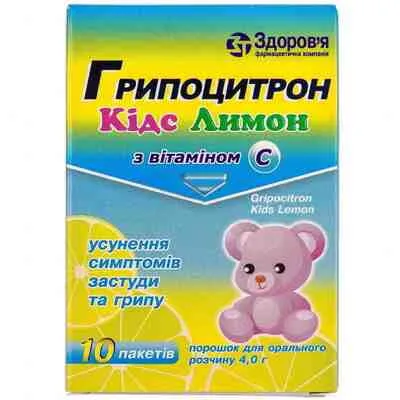
Table of Contents
INSTRUCTIONS for medical use of the medicinal product GRIPOCITRON KIDS LEMON
Composition:
Active ingredients: 1 sachet contains paracetamol 160 mg, ascorbic acid 50 mg, chlorpheniramine maleate 1 mg;
Excipients: citric acid, anhydrous; lactose monohydrate; sodium citrate; sucrose; silicon dioxide; neotame; polyethylene glycol 4000; lemon flavor containing maltodextrin, gum arabic, citric acid.
Pharmaceutical form. Oral soluble powder.
Main physicochemical properties: contents of the sachet – a mixture of granules and powder, white or almost white in colour, with a fruity odour.
Pharmacotherapeutic group. Analgesics and antipyretics. ATC code N02BE51.
Pharmacological Properties
Pharmacodynamics
Paracetamol exerts analgesic, antipyretic, and weak anti-inflammatory effects. Its mechanism of action involves inhibition of prostaglandin synthesis and effects on the thermoregulatory center in the hypothalamus.
Ascorbic acid (vitamin C), as a key component of the antioxidant and immune defense systems, enhances the body's adaptive capacity and increases resistance to infections. It actively participates in regulation of redox processes, carbohydrate metabolism, synthesis of steroid hormones and catecholamines, and blood coagulation. It enhances collagen synthesis, stimulates regenerative processes, and normalizes capillary permeability.
Chlorphenamine maleate is an antihistamine agent from the alkylamine class and an H1-histamine receptor blocker. It exerts antiallergic effects and relieves rhinorrhea, lacrimation, and itching in the eyes and nose. The therapeutic effect develops within one hour after oral administration and lasts for 24 hours.
Pharmacokinetics. The components of the drug are metabolized independently of each other.
After oral administration, paracetamol is rapidly absorbed, primarily in the upper gastrointestinal tract. It quickly distributes into tissues. Plasma protein binding is less than 10%. Paracetamol is mainly metabolized in the liver: the majority is conjugated with glucuronic acid and a smaller portion with sulfuric acid. The half-life of paracetamol is 2–2.5 hours. It is prolonged in patients with liver disease. Paracetamol is excreted in the urine (85% of a single dose is eliminated within 24 hours). Excretion is significantly impaired in patients with renal dysfunction, which may lead to accumulation of paracetamol and its metabolites in the body.
Ascorbic acid is actively absorbed in the small intestine. After oral administration, maximum plasma concentration is reached within 4 hours. It readily penetrates into leukocytes, platelets, and almost all tissues from plasma. It undergoes biotransformation in the liver and is excreted in the urine—partially unchanged and partially as metabolites.
Chlorphenamine maleate is metabolized in the liver. Its elimination half-life is 8 hours. Chlorphenamine maleate and its metabolites are excreted in the urine.
Clinical characteristics.
Indications. For use in children aged 2 to 12 years with influenza, acute viral respiratory infections, and colds to reduce fever and relieve headache, muscle and joint pain, rhinorrhea, sneezing, lacrimation, and other symptoms of inflammation of the mucous membranes of the upper respiratory tract and paranasal sinuses.
Contraindications.
- Hypersensitivity to the drug's ingredients or to other antihistamines;
- Severe impairment of liver function (> 9 points on the Child-Pugh scale) and/or kidney function;
- Alcoholism;
- Congenital glucose-6-phosphate dehydrogenase deficiency;
- Congenital hyperbilirubinemia (including Gilbert's syndrome);
- Blood dyscrasias;
- Blood disorders;
- Marked leukopenia;
- Anemia;
- Thrombosis tendency;
- Severe cardiac conduction disorders;
- Decompensated heart failure;
- Urinary bladder neck obstruction;
- Pyloroduodenal obstruction;
- Thrombosis;
- Thrombophlebitis;
- Severe forms of diabetes mellitus;
- Closed-angle glaucoma;
- Peptic ulcer disease of the stomach and duodenum in the acute phase;
- Age under 2 years.
Do not use concomitantly with monoamine oxidase inhibitors (MAOIs) or within 2 weeks after discontinuation of MAOIs. MAO inhibitors should not be used together with antihistamines due to the potential for additive central nervous system (CNS) depression. They may prolong and intensify the anticholinergic effects of antihistamines.
Interaction with other medicinal products and other forms of interaction.
When used concomitantly with other medicinal products, the following interactions are possible:
- Slowed elimination of antibiotics from the body;
- Anticonvulsants (including phenytoin, barbiturates, carbamazepine), rifampicin, and alcohol enhance the hepatotoxic and nephrotoxic effects of paracetamol;
- Barbiturates reduce the antipyretic effect of paracetamol;
- Tetracycline increases the risk of anemia and methemoglobinemia caused by paracetamol;
- Concurrent use of paracetamol with hepatotoxic agents increases the toxic effects of the drugs on the liver; do not use concomitantly with alcohol;
- Paracetamol reduces the effectiveness of diuretics;
- Concurrent use of high doses of paracetamol with isoniazid or rifampicin increases the risk of hepatotoxic syndrome;
- Enhanced effect of indirect anticoagulants, increasing the risk of bleeding;
- The absorption rate of paracetamol increases when used with metoclopramide and domperidone and decreases when used with cholestyramine;
- Long-term concurrent use with coumarin derivatives (e.g., warfarin) may enhance their effect, increasing the risk of bleeding; patients taking oral anticoagulants should consult their physician and coagulation parameters should be monitored;
- Paracetamol intake may affect blood glucose measurements using the glucose oxidase-peroxidase method, resulting in abnormally high concentrations;
- Paracetamol intake may affect blood urea measurements using the phosphotungstic acid method;
- Tropisetron and granisetron, 5-hydroxytryptamine type 3 antagonists, may completely block the analgesic effect of paracetamol due to pharmacodynamic interaction;
- Concurrent use of paracetamol and zidovudine increases the tendency to leukopenia (neutropenia); therefore, these medicinal products should not be used together unless otherwise recommended by a physician;
- Absorption of ascorbic acid is reduced when used concomitantly with oral contraceptives, fruit or vegetable juices, or alkaline drinks;
- Orally administered ascorbic acid enhances the absorption of penicillin, tetracycline, and iron, increases ethinylestradiol levels, reduces the effectiveness of heparin and indirect anticoagulants, and increases the risk of crystalluria during salicylate therapy;
- Concurrent intake of vitamin C and deferoxamine increases tissue iron toxicity, especially in the myocardium, potentially leading to circulatory decompensation; vitamin C may be taken only 2 hours after deferoxamine injection;
- High doses of the drug reduce the effectiveness of tricyclic antidepressants and phenothiazine-derived neuroleptics, decrease tubular reabsorption of amphetamine, and impair renal excretion of mexiletine;
- Ascorbic acid increases the total clearance of ethanol;
- Quinolone derivatives, calcium chloride, salicylates, and corticosteroids, when used long-term, reduce the body's ascorbic acid stores.
Concurrent use of the drug with sedatives, tranquilizers, neuroleptics, and anxiolytics may significantly enhance the CNS depressant effect of chlorpheniramine maleate.
Chlorpheniramine enhances the anticholinergic effects of atropine, spasmolytics, tricyclic antidepressants, and antiparkinsonian agents. MAO inhibitors should not be prescribed in combination with antihistamines due to the potential for additive CNS depression. They may prolong and intensify the anticholinergic effects of antihistamines.
Caution is advised when using paracetamol concomitantly with flucloxacillin, as this combination has been associated with metabolic acidosis with a high anion gap due to pyroglutamic acidosis, particularly in patients with risk factors (see section "Special precautions").
Special precautions for use.
Avoid concomitant use with other medicinal products intended for symptomatic treatment of cold and flu, and with medicinal products containing paracetamol. Do not exceed the recommended dose or duration of treatment. Concurrent use with other paracetamol-containing products may lead to overdose. Paracetamol overdose can cause liver failure, which may require liver transplantation or result in fatal outcome.
Cases of high anion gap metabolic acidosis (HAGMA) due to pyroglutamic acidosis have been reported in patients with severe underlying conditions such as severe renal insufficiency and sepsis, or in cases of malnutrition and presence of other causes of glutathione deficiency (e.g., chronic alcoholism), who were treated with paracetamol at therapeutic doses for prolonged periods or in combination with flucloxacillin. If HAGMA due to pyroglutamic acidosis is suspected, immediate discontinuation of paracetamol is recommended, along with careful monitoring of the patient's condition. Measurement of urinary 5-oxoproline levels may be useful in identifying pyroglutamic acidosis as the primary cause of HAGMA in patients with multiple risk factors. Symptoms of metabolic acidosis include deep, rapid, or labored breathing, nausea, vomiting, and loss of appetite. Immediate medical attention should be sought if these symptoms occur.
If symptoms persist, consult a physician.
Prolonged use of high doses may lead to liver and kidney damage; the risk of paracetamol hepatotoxicity at therapeutic doses may be increased by concomitant use of multiple medicinal products, alcoholism, alcoholic liver disease, sepsis, or diabetes mellitus.
It should be noted that patients with liver disease have an increased risk of hepatotoxic effects from paracetamol. Medical advice should be sought regarding the possibility of using the drug in patients with mild to moderate renal or hepatic impairment.
Concomitant use of this medicinal product with sedatives or hypnotics is not recommended.
Consult a physician before using the drug if the patient is taking warfarin or similar agents with anticoagulant effects.
Paracetamol may affect laboratory test results for blood glucose and uric acid levels.
The drug should be prescribed by a physician only after assessing the risk/benefit ratio in the following conditions: severe arterial hypertension, epilepsy, glaucoma, oxalaturia, urinary disorders, urinary retention, prostate enlargement, asthma, bronchitis, thyrotoxicosis, glutathione deficiency.
The recommended dose and duration of treatment should not be exceeded. If the drug is used for a prolonged period as directed by a physician, liver function and peripheral blood picture should be monitored.
Severe skin reactions have been reported very rarely. If skin redness, rash, blisters, or peeling occur, paracetamol should be discontinued immediately and medical help sought without delay.
If a patient has known intolerance to certain sugars, consult a physician before taking this drug. Use with caution in patients with diabetes mellitus. Concomitant intake of the drug with alkaline beverages reduces absorption of ascorbic acid; therefore, the powder should not be taken with alkaline mineral water. Absorption of ascorbic acid may also be impaired in cases of intestinal dyskinesia, enteritis, and achylia.
If high body temperature or prolonged fever persists for 3 days despite treatment, or if signs of superinfection appear, consult a physician.
Ascorbic acid may alter results of laboratory tests (glucose, blood bilirubin, transaminase activity).
Do not take the drug with other products for symptomatic treatment of cold and flu containing paracetamol or antihistamines. If symptoms persist, consult a physician. If headache becomes persistent, medical advice should also be sought.
Chlorphenamine maleate may mask symptoms of hypersensitivity reactions and affect the results of skin tests. Therefore, the drug should be discontinued several days before performing such procedures.
Use during pregnancy or breastfeeding.
Do not use.
Ability to affect reaction speed when driving or operating machinery.
Due to the possible occurrence of drowsiness after administration of chlorphenamine maleate, children should refrain from activities requiring high concentration of attention for 4 hours after taking the drug.
Dosage and Administration.
Administer orally, regardless of food intake, after dissolving the contents of the sachet in a glass of hot (not boiling) water. The recommended amount of water for dissolving the powder is usually the volume that a child drinks in one intake (100–200 mL). The single dose for children aged 2–5 years is the contents of 1 sachet; for children aged 6–12 years – the contents of 2 sachets. If necessary, repeat administration every 4–6 hours, but no more than 4 sachets per day.
Maximum duration of use without medical consultation – 3 days. Further use is possible only under medical supervision.
Children.
Do not use in children under 2 years of age. Medical advice should be sought before administering the medication to children aged 2–5 years.
The maximum dose for children is up to 100 mg/kg per day or 4000 mg per day.
Overdose.
Cases of overdose have not been reported. Symptoms of overdose are related to intoxication caused by individual active ingredients.
In patients with risk factors, therapeutic doses of paracetamol may cause symptoms of overdose when used concomitantly with certain medications (see section "Interaction with other medicinal products and other forms of interaction") and in conditions that increase oxidative stress and deplete hepatic glutathione stores (prolonged fasting, sepsis, diabetes mellitus).
The most significant manifestation of acute intoxication is hepatotoxicity – hepatocellular damage associated with binding of active metabolites of paracetamol to liver cell proteins. At therapeutic doses, these metabolites bind to glutathione and form non-toxic conjugates. In massive overdose, SH-group donor reserves (which support glutathione formation) in the liver become depleted. This leads to accumulation of toxic metabolites and hepatocyte necrosis, resulting in progressive liver dysfunction that may progress to hepatic coma.
Symptoms of overdose caused by acetaminophen within the first 24 hours include pallor, nausea, vomiting, anorexia, general weakness, and abdominal pain. The patient's condition may improve within 24–48 hours, although symptoms may persist.
After ingestion of large doses, psychomotor agitation or CNS depression, increased sweating, dizziness, and sleep disturbances may also occur.
Occasionally, nephrotoxicity has been observed, including renal colic, interstitial nephritis, and acute renal failure with acute tubular necrosis, which may manifest as severe pain in the lumbar region, hematuria, proteinuria, and may develop even in the absence of severe liver damage. In severe cases, liver damage (hepatocellular necrosis) and impaired liver function may occur, potentially progressing to hepatic encephalopathy, hepatic coma, cerebral edema, and fatal outcome. Clinical signs of liver damage may not appear within 12–48 hours after overdose. Liver size increases rapidly. Glucose metabolism disturbances, hypokalemia, and metabolic acidosis (including lactic acidosis) may occur, along with elevated liver transaminase activity, increased bilirubin, prolonged prothrombin time, and hemorrhages. Urine output decreases; mild azotemia may be observed. Liver damage in children may develop after administration of more than 150 mg/kg body weight. Common clinical manifestations appearing after 3–5 days include jaundice, fever, hemorrhagic diathesis, hypoglycemia, liver odor from the mouth, and liver failure.
Administration of 5 g or more of paracetamol may lead to liver damage in patients with risk factors (long-term treatment with carbamazepine, phenobarbital, phenytoin, primidone, rifampicin, St. John's wort, or other drugs that induce liver enzymes; regular excessive alcohol consumption; glutathione depletion (digestive disorders, cystic fibrosis, HIV infection, fasting, cachexia)).
Arrhythmia (disturbance of heart rhythm) and pancreatitis have also been reported. After ingestion of large doses, disorientation has been observed from the CNS side.
With prolonged use at high doses, aplastic anemia, pancytopenia, agranulocytosis, neutropenia, leukopenia, and thrombocytopenia are possible.
Chronic intoxication includes various liver injuries. Data on chronic toxicity, particularly nephrotoxicity of paracetamol, are controversial. With prolonged use, peripheral blood analysis should be monitored.
In case of overdose with chlorpheniramine maleate, anticholinergic-like symptoms may occur: mydriasis, photophobia, dryness of skin and mucous membranes, elevated body temperature (hyperpyrexia), tachycardia, intestinal atony, facial flushing. Usually, symptoms of CNS excitation (psychomotor agitation, psychosis, hallucinations, tremor, impaired motor coordination, hyperreflexia, seizures) are observed first, followed by depression, drowsiness, impaired consciousness, accompanied by respiratory disorders and cardiovascular system dysfunction (arrhythmia, extrasystoles, reduced pulse rate, decreased arterial pressure up to circulatory failure and fatal outcome).
Emergency treatment for poisoning with antihistamines consists of symptomatic and supportive therapy, including mechanical ventilation.
Emergency measures. The patient should be immediately transported to a hospital intensive care unit, even if early symptoms of overdose are absent. Continuous monitoring of vital functions, laboratory parameters, and cardiovascular status should be ensured. Symptoms may be limited to nausea and vomiting or may not reflect the severity of overdose or risk of organ damage. Treatment with activated charcoal should be considered if an excessive dose of paracetamol was ingested within 1 hour. Plasma paracetamol concentration should be measured 4 hours or later after ingestion (earlier concentrations are unreliable). Gastric lavage should be performed within 6 hours after suspected acetaminophen overdose. Hemodialysis and hemoperfusion facilitate elimination of the substance. Cytotoxic effects can be reduced by administration of SH-group donors (oral methionine or intravenous cysteamine or N-acetylcysteine) within 10 hours after overdose, as they bind to active metabolites and promote detoxification. N-acetylcysteine may be effective up to 48 hours after poisoning. The efficacy of the antidote decreases sharply after this period.
Symptoms of ascorbic acid overdose. There is no evidence that this medicinal product may cause overdose when used according to recommendations. After single administration of excessive doses, nausea, vomiting, bloating and abdominal pain, itching, skin rash, and increased excitability may occur. With prolonged use at high doses, suppression of the islet apparatus of the pancreas (pancreatic function should be monitored), development of cystitis, and accelerated formation of concrements (urates, oxalates) are possible. Effects of ascorbic acid overdose may be attributed to severe hepatotoxicity due to paracetamol overdose.
High doses of ascorbic acid (more than 3,000 mg) may cause temporary osmotic diarrhea and gastrointestinal disturbances.
Treatment: gastric lavage, administration of alkaline drink, activated charcoal, or other absorbents.
Side effects.
In most cases, the medicinal product is well tolerated.
The following adverse reactions may occur:
Blood system: anaemia, sulfhaemoglobinaemia and methaemoglobinaemia (cyanosis, dyspnoea, chest pain), haemolytic anaemia (in patients with glucose-6-phosphate dehydrogenase deficiency), thrombocytopenia, thrombocytosis, hyperprothrombinaemia, erythropoenia, neutrophilic leukocytosis, agranulocytosis, thrombocytopenic purpura, leukopenia, bruising or bleeding.
Respiratory system: bronchospasm in patients sensitive to acetylsalicylic acid and other NSAIDs.
Gastrointestinal tract: dyspepsia, nausea, vomiting, dry mouth, discomfort and pain in the epigastric region, hypersalivation, decreased appetite, heartburn, diarrhoea.
Endocrine system: hypoglycaemia up to hypoglycaemic coma, damage to the islet apparatus of the pancreas (hyperglycaemia, glucosuria), and impaired glycogen synthesis up to the development of diabetes mellitus.
Hepatobiliary system: liver function disorders, increased activity of liver enzymes, usually without development of jaundice, hepatonecrosis (dose-dependent effect).
Immune system: hypersensitivity reactions (including allergic reactions), anaphylactic reactions and anaphylactic shock.
Nervous system: headache, dizziness, psychomotor agitation and disorientation, restlessness, fear, sleep disturbances, drowsiness, insomnia, confusion, coma, convulsions, dyskinesia, behavioural changes.
Cardiovascular system: tachycardia, reflex bradycardia, dyspnoea, chest pain, increased blood pressure, arrhythmia, myocardial dystrophy (dose-dependent effect with prolonged use).
Urinary system: renal colic and interstitial nephritis, urinary retention and difficulty in urination, aseptic pyuria; with prolonged use in high doses: damage to the glomerular apparatus of the kidneys, crystalluria, formation of urate, cystine and/or oxalate concretions in the kidneys and urinary tract.
Metabolism: disturbances in zinc and copper metabolism, hypokalaemia, metabolic acidosis with high anion gap.
Cases of metabolic acidosis with high anion gap as a consequence of pyroglutamic acidosis have been observed in patients with risk factors who used paracetamol (see section "Special precautions"). Pyroglutamic acidosis may occur due to low glutathione levels in these patients.
Eyes: accommodation disorders, dry eyes, mydriasis, visual disturbances, increased intraocular pressure.
Skin and subcutaneous tissues: pruritus, skin and mucous membrane rashes (usually generalized rash, erythema, urticaria), allergic and angioneurotic oedema, acute generalized exanthematous pustulosis, local drug dermatitis, erythema multiforme (including Stevens-Johnson syndrome), toxic epidermal necrolysis (Lyell's syndrome), including fatal outcomes.
Shelf life. 3 years.
Storage conditions. Store in the original packaging at a temperature not exceeding 25 °C.
Keep out of reach of children.
Packaging. 4 g per sachet, 5 or 10 sachets per box.
Dispensing category. Over-the-counter.
Manufacturer. LIMITED LIABILITY COMPANY "CORPORATION "ZDOROV'YA".
Manufacturer's address and place of business.
22 Shevchenka Street, Kharkiv, Kharkiv Oblast, 61013, Ukraine.