Gripomed® hot
Ukraine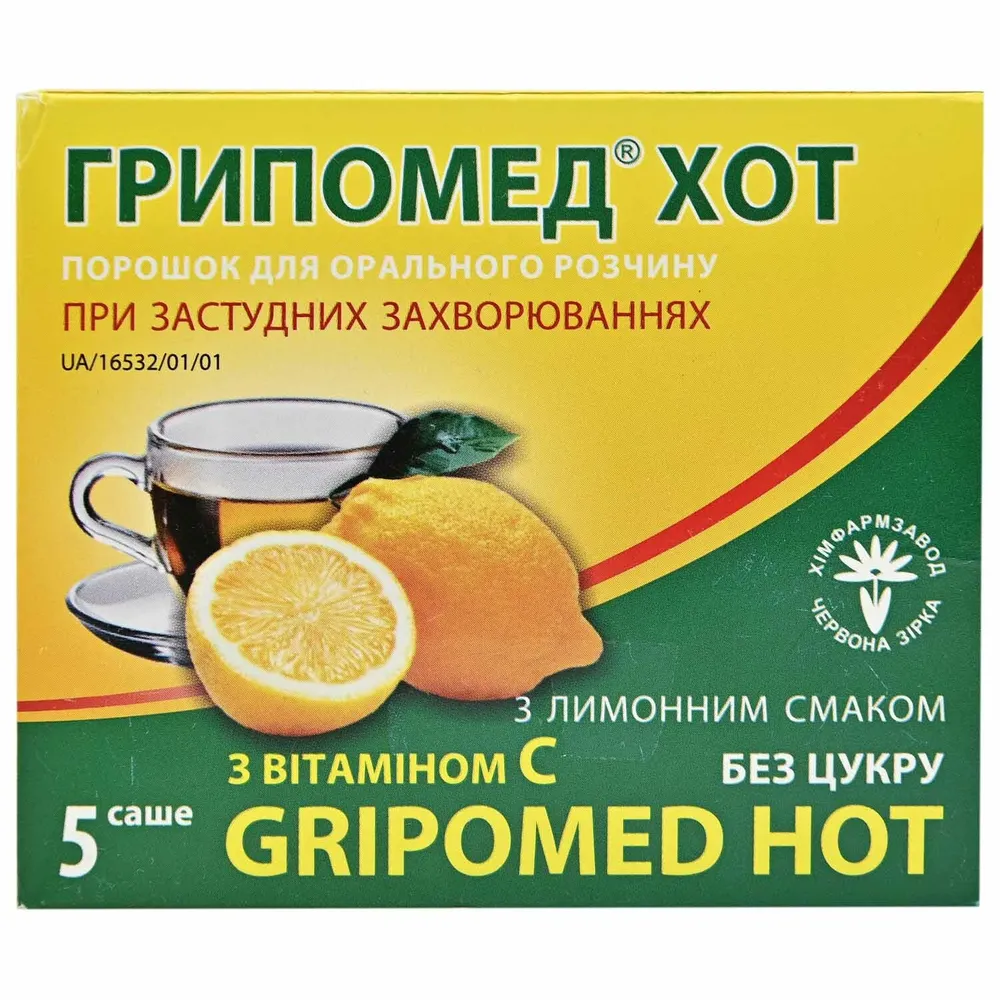
Table of Contents
INSTRUCTIONS FOR MEDICAL USE OF THE MEDICINAL PRODUCT GRIPOMED®HOT (GRIPOMED HOT)
Composition:
Active ingredients: paracetamol, ascorbic acid, pheniramine maleate;
1 sachet contains paracetamol 0.500 g, ascorbic acid 0.200 g, pheniramine maleate 0.025 g;
Excipients:
oral soluble powder with lemon flavor: mannite (E 421), anhydrous citric acid (E 330), povidone, anhydrous trimagnesium dicitrate, aspartame (E 951), flavoring agent "Lemon";
oral soluble powder with raspberry flavor: mannite (E 421), anhydrous citric acid (E 330), povidone, anhydrous trimagnesium dicitrate, aspartame (E 951), flavoring agent "Raspberry".
Pharmaceutical form. Oral soluble powder.
Main physicochemical properties:
oral soluble powder with lemon flavor:
white to yellowish powder with lemon odor; yellowish specks may be present;
oral soluble powder with raspberry flavor:
white to yellowish powder with raspberry odor; yellowish specks may be present.
Pharmacotherapeutic group.
Analgesics. Other analgesics and antipyretics. Anilides. Paracetamol, combinations without psychotropic agents.
ATC code N02BE51.
Pharmacological properties.
Pharmacodynamics.
Pharmacological effects due to the components of the drug:
- pheniramine maleate — an H1-histamine receptor blocker, provides a desensitizing effect manifested by a reduction in inflammatory response of the mucous membranes of the upper respiratory tract (improvement of nasal breathing, reduction of rhinorrhea, sneezing, and lacrimation);
- paracetamol exerts antipyretic and analgesic effects, which alleviate pain and fever (headache, myalgia);
- ascorbic acid compensates for the body's requirements for vitamin C.
Pharmacokinetics.
Paracetamol is rapidly and almost completely absorbed from the gastrointestinal tract after oral administration. Maximum plasma concentration of paracetamol is reached within 30–60 minutes after administration. Paracetamol is rapidly distributed in all tissues. Concentrations in blood, saliva, and plasma are similar. Plasma protein binding is weak. Paracetamol is primarily metabolized in the liver to form conjugates with glucuronic acid and sulfates. A minor metabolic pathway, catalyzed by cytochrome P450, leads to the formation of an intermediate metabolite (N-acetylbenzoquinoneimine), which under normal conditions is rapidly detoxified by reduced glutathione and excreted in urine after conjugation with cysteine and mercapturic acid. However, in cases of severe overdose, the amount of this toxic metabolite increases. Paracetamol is excreted in urine mainly as metabolites. Approximately 90% of the administered dose is eliminated by the kidneys within 24 hours, primarily as glucuronide conjugates (60–80%) and sulfate conjugates (20–30%).
About 5% of the administered dose is excreted unchanged. The elimination half-life is approximately 2 hours.
In cases of severe renal impairment (creatinine clearance less than 10 ml/min), elimination of paracetamol and its metabolites is slowed.
In elderly patients, the capacity for conjugation is not altered.
Pheniramine maleate is well absorbed from the gastrointestinal tract. It is primarily excreted by the kidneys.
Ascorbic acid is well absorbed from the gastrointestinal tract. It is primarily excreted in urine.
Clinical Characteristics.
Indications.
Symptomatic treatment of colds, allergic rhinitis, influenza, and rhinopharyngitis characterized by chills, headache, rhinitis, sneezing, and lacrimation.
Contraindications.
Hypersensitivity to the components of the medicinal product or to other antihistamines; severe hepatic dysfunction (>9 points on the Child–Pugh scale) and/or renal dysfunction; phenylketonuria; congenital hyperbilirubinemia, including fructose intolerance; glucose-6-phosphate dehydrogenase deficiency; Gilbert’s syndrome; Dubin–Johnson syndrome; alcoholism; blood disorders; severe anemia; leukopenia; severe arterial hypertension; unstable angina pectoris; severe cardiac conduction disorders; acute phase of myocardial infarction; severe atherosclerosis; uncompensated heart failure; hyperthyroidism; acute urinary retention due to prostatic hyperplasia; risk of urinary retention in urethral and prostate disorders; bladder neck obstruction; pyloroduodenal obstruction; gastric and duodenal ulcer in the stage of exacerbation; closed-angle glaucoma; thrombosis; thrombophlebitis; severe forms of diabetes mellitus; epilepsy; elderly age; acute pancreatitis; gastric and duodenal peptic ulcer in the stage of exacerbation.
Do not use the drug concomitantly with monoamine oxidase inhibitors (MAOIs) or within two weeks after discontinuation of MAOIs.
Contraindicated in patients taking tricyclic antidepressants or beta-blockers. Urolithiasis (in cases where ascorbic acid intake exceeds 1 g per day).
Do not use in children under 15 years of age.
Special precautions.
In case of high body temperature or prolonged fever persisting for 5 days during treatment, or if signs of superinfection appear, consult a physician to determine the appropriateness of continuing the use of the medicinal product.
Use with caution in patients with diabetes mellitus.
Alcohol enhances the sedative effect of pheniramine maleate and the hepatotoxicity of paracetamol.
Ascorbic acid may alter the results of laboratory tests (blood glucose, bilirubin, transaminase activity).
Risk of primarily psychological dependence may occur when recommended doses are exceeded or with prolonged treatment.
To prevent overdose, do not use other products containing paracetamol.
For adults with body weight over 50 kg, the total daily dose of paracetamol should not exceed 4 g.
Warnings.
Consumption of alcoholic beverages or use of sedatives (especially barbiturates) increases the sedative effect of pheniramine maleate; therefore, avoid using these substances during treatment.
Very rare cases of serious skin reactions have been reported. Patients should be informed about early signs of these serious skin reactions, such as rash or other signs of hypersensitivity. If such symptoms occur, discontinue the drug.
The medicinal product contains aspartame (E 951), a source of phenylalanine, which is hazardous for patients with phenylketonuria. The product also contains mannitol (E 421), which may have a mild laxative effect.
Interaction with other medicinal products and other types of interactions.
Undesirable combinations.
Due to the presence of pheniramine, ethanol enhances the sedative effect of H1-blockers; therefore, avoid driving or operating machinery. During treatment, avoid consumption of alcoholic beverages and use of medicinal products containing ethanol.
Combinations requiring caution.
Due to the presence of pheniramine, other sedative agents may cause central nervous system depression, including: morphine derivatives (analgesics, antitussives, and substitution therapy), neuroleptics, barbiturates, benzodiazepines, anxiolytics other than benzodiazepines (e.g., meprobamate), hypnotics, sedative antidepressants (amitriptyline, doxepin, mianserin, mirtazapine, trimipramine), sedative H1-blockers, centrally acting antihypertensives, baclofen, and thalidomide.
Due to the presence of pheniramine, medicinal products with anticholinergic (antimuscarinic) effects—such as imipramine-type antidepressants, most antimuscarinic H1-blockers, anticholinergics, antiparkinsonian agents, atropine-like spasmolytics, disopyramide, phenothiazine neuroleptics, and clozapine—may enhance undesirable anticholinergic effects such as urinary retention, constipation, and dry mouth.
Combinations to be used with caution.
Concomitant use with oral anticoagulants may increase their effect and elevate the risk of bleeding when paracetamol is used at maximum doses (4 g/day) for at least 4 days. Regular monitoring of INR (International Normalized Ratio) is recommended. If necessary, the dose of the oral anticoagulant may be adjusted during and after paracetamol treatment.
Paracetamol intake may affect blood glucose measurement using the glucose oxidase-peroxidase method, resulting in abnormally high readings.
Paracetamol intake may affect blood urea measurement using the phosphotungstic acid method.
The absorption rate of paracetamol may be increased when used concomitantly with metoclopramide and domperidone, and decreased when used with cholestyramine. The anticoagulant effect of warfarin and other coumarins, with an increased risk of bleeding, may be enhanced by long-term concomitant use of paracetamol. Occasional use has no significant effect.
Barbiturates reduce the antipyretic effect of paracetamol.
Anticonvulsants (including phenytoin, barbiturates, carbamazepine), which stimulate hepatic microsomal enzyme activity, may enhance the hepatotoxic effect of paracetamol due to increased formation of hepatotoxic metabolites. Concomitant use of paracetamol with isoniazid increases the risk of hepatotoxic syndrome.
Caution is advised when using paracetamol concomitantly with flucloxacillin, as this combination has been associated with metabolic acidosis with a high anion gap due to pyroglutamic acidosis, especially in patients with risk factors (see section "Special warnings and precautions for use").
Paracetamol reduces the effectiveness of diuretics.
Do not use concomitantly with alcohol.
Ascorbic acid enhances intestinal iron absorption, increases blood levels of ethinylestradiol, penicillins, and tetracyclines; decreases blood levels of antipsychotic drugs and phenothiazine derivatives. Glucocorticosteroids reduce body stores of ascorbic acid. Concurrent use of ascorbic acid and deferoxamine increases tissue iron toxicity, especially in cardiac muscle, potentially leading to circulatory decompensation. It should be administered only 2 hours after deferoxamine injection. High doses of ascorbic acid reduce the effectiveness of tricyclic antidepressants. Absorption of ascorbic acid is reduced when used concomitantly with oral contraceptives, fruit or vegetable juices, or alkaline drinks.
Special precautions for use.
Patients with liver or kidney disease should consult a physician before using the medicinal product. Consultation with a physician is also necessary if the patient is taking warfarin or similar anticoagulant agents. It should be noted that patients with alcohol-induced necrotic liver damage have an increased risk of hepatotoxic effects of paracetamol; the drug may affect laboratory test results for blood glucose and uric acid levels. In patients with severe infections such as sepsis, which are associated with reduced glutathione levels, administration of paracetamol increases the risk of metabolic acidosis. Symptoms of metabolic acidosis include deep, rapid, or labored breathing, nausea, vomiting, and loss of appetite. Immediate medical attention should be sought if these symptoms occur.
Do not exceed the recommended doses. If symptoms persist, consult a physician.
Cases of high anion gap metabolic acidosis (HAGMA) due to 5-oxoproline (pyroglutamic) acidosis have been reported in patients with severe underlying conditions such as severe renal insufficiency and sepsis, as well as in patients with malnutrition or other causes of glutathione deficiency (e.g., chronic alcoholism) who were treated with paracetamol at therapeutic doses for prolonged periods or in combination with flucloxacillin. If high anion gap metabolic acidosis due to pyroglutamic acidosis is suspected, immediate discontinuation of paracetamol is recommended, along with careful monitoring of the patient's condition. Measurement of urinary 5-oxoproline levels may be useful in identifying pyroglutamic acidosis as the underlying cause of high anion gap metabolic acidosis in patients with multiple risk factors.
The medicinal product should be administered with particular caution in patients with disorders of iron metabolism (hemochromatosis, hemosiderosis, thalassemia).
Since ascorbic acid has a mild stimulating effect, it is not recommended to take this product late in the day. Due to the stimulating effect of ascorbic acid on corticosteroid hormone production, when used in high doses, renal function and blood pressure should be monitored.
The medicinal product should be used cautiously in patients with increased blood coagulability.
The medicinal product should be prescribed with particular caution in patients with a history of nephrolithiasis (risk of hyperoxaluria and precipitation of oxalates in the urinary tract after high-dose ascorbic acid intake).
Prolonged use of high doses of ascorbic acid may accelerate its own metabolism, potentially leading to paradoxical hypovitaminosis after discontinuation of treatment. The recommended dose should not be exceeded.
Do not use simultaneously with other products containing vitamin C.
Absorption of ascorbic acid may be impaired in conditions involving intestinal motility disorders, enteritis, or achylia (suppressed gastric secretion).
It should be noted that high-dose vitamin C intake may alter certain laboratory test parameters (uric acid, creatinine, inorganic phosphates). The test for occult blood in stool may yield a false-negative result.
Use during pregnancy or breastfeeding.
Since the effects of the medicinal product on pregnancy or the breastfeeding period have not been sufficiently studied, it should not be administered during these periods.
Data on paracetamol
Standard studies using currently accepted methods for assessing reproductive and ontogenetic toxicity are lacking.
Current data on the effects of paracetamol in pregnant women indicate no disturbances in fetal development or fetotoxic/neonatal toxicity. Epidemiological studies on the neurodevelopmental outcomes of children exposed to paracetamol in utero have yielded inconclusive results.
Studies on the effects of paracetamol have not revealed any risk to humans regarding intrauterine fetal development or the course of pregnancy.
Paracetamol crosses the placental barrier and is excreted into breast milk.
Data on ascorbic acid
Dietary deficiency of ascorbic acid in pregnant women may be harmful to the fetus; however, high-dose supplementation may also negatively affect fetal development.
Ascorbic acid is excreted into breast milk.
Data on pheniramine maleate
Currently, there are no adequate data from studies on reproductive function or embryotoxic/fetotoxic effects associated with the use of pheniramine.
Ability to influence reaction speed when driving or operating machinery.
The medicinal product may cause drowsiness, particularly at the beginning of treatment. A significant effect on reaction speed is possible. Therefore, driving or operating machinery should be avoided during treatment with this product.
Concomitant use of the medicinal product with alcoholic beverages, products containing ethanol, or other sedative agents increases these risks.
Method of Administration and Dosage
Take orally. For adults and children aged 15 years and older, use 1 sachet 2–3 times daily. The contents of the sachet should be dissolved in a glass of cold or warm water. Patients with symptoms of cold should preferably take the solution warm. The solution should be taken immediately after preparation. The interval between doses should be at least 4 hours. The maximum duration of treatment is 5 days.
For patients with severe renal impairment (creatinine clearance less than 10 ml/min), the interval between doses should be at least 8 hours.
Do not exceed the recommended dose.
Do not take together with other medicinal products containing paracetamol.
Children
Do not use in children under 15 years of age.
Overdose
Related to ascorbic acid.
Ascorbic acid is well tolerated. It is a water-soluble vitamin, and its excess is excreted in urine. However, prolonged use of high doses of vitamin C may lead to suppression of the pancreatic islet apparatus, requiring monitoring of its function. Overdose may cause changes in renal excretion of ascorbic and uric acids during urine acidification, with a risk of precipitation of oxalate stones. Administration of high doses of ascorbic acid may lead to vomiting, nausea, or diarrhea, which resolve after discontinuation of ascorbic acid.
Related to pheniramine.
Pheniramine overdose may cause seizures (especially in children), impaired consciousness, and coma.
Pheniramine overdose leads to anticholinergic-like symptoms: mydriasis, photophobia, dryness of skin and mucous membranes, hyperthermia, and intestinal atony. Central nervous system depression may result in respiratory and cardiovascular system dysfunction (bradycardia, arterial hypotension, collapse).
Related to paracetamol.
There is a risk of intoxication in elderly individuals and especially in young children (therapeutic overdose and accidental poisoning occur quite frequently).
Paracetamol overdose can be fatal.
Symptoms.
Nausea, vomiting, anorexia, pallor, increased sweating, abdominal pain, usually appearing within the first 24 hours.
Acute renal failure with acute tubular necrosis may manifest as severe lumbar pain, hematuria, proteinuria, and may develop even in the absence of severe liver damage. Cardiac arrhythmias and pancreatitis have also been reported.
With prolonged use of the drug in high doses, blood-forming organs may develop aplastic anemia, pancytopenia, agranulocytosis, neutropenia, leukopenia, thrombocytopenia. In the central nervous system — dizziness, psychomotor agitation, disorientation; in the urinary system — nephrotoxicity (renal colic, interstitial nephritis, cortical necrosis); in the gastrointestinal system — hepatonecrosis.
A single intake of more than 10 g of paracetamol in adults and 150 mg/kg body weight in children causes hepatic cytolysis, which may lead to complete and irreversible necrosis and result in hepatocellular failure, metabolic acidosis, encephalopathy, which in turn may lead to coma and fatal outcome.
At the same time, elevated levels of liver transaminases, lactate dehydrogenase, and bilirubin are observed against a background of increased prothrombin levels, which may appear 12–48 hours after administration.
In patients with risk factors [long-term treatment with carbamazepine, phenobarbital, phenytoin, primidone, rifampicin, St. John's wort, or other drugs inducing liver enzymes; alcohol abuse; glutathione deficiency (digestive disorders, cystic fibrosis, HIV infection, starvation, cachexia)], administration of 5 g or more of paracetamol may lead to liver damage.
Emergency measures:
- Immediate hospitalization;
- Determination of initial plasma paracetamol concentration;
- Immediate removal of the administered drug by gastric lavage;
- Standard treatment of overdose includes administration of the antidote N-acetylcysteine either intravenously or orally; the antidote should be administered as early as possible, preferably within 10 hours after overdose;
- Methionine as symptomatic therapy.
Side effects.
Blood and lymphatic system disorders: anemia, sulfhemoglobinemia, and methemoglobinemia (cyanosis, dyspnea, chest pain), hemolytic anemia; thrombosis, hyperprothrombinemia, erythrocytopenia, thrombocytopenia, agranulocytosis, thrombocytopenic purpura, neutrophilic leukocytosis, leukopenia, neutropenia, bruising or bleeding.
Immune system disorders: anaphylaxis, anaphylactic shock, hypersensitivity skin reactions including pruritus, skin and mucous membrane rashes (usually erythematous, urticaria), angioneurotic edema, erythema multiforme (including Stevens–Johnson syndrome), toxic epidermal necrolysis (Lyell’s syndrome), including fatal outcomes.
Respiratory system disorders: bronchospasm in patients sensitive to acetylsalicylic acid and other nonsteroidal anti-inflammatory drugs.
Gastrointestinal disorders: dyspepsia, dry mouth, nausea, heartburn, vomiting, constipation, epigastric pain, diarrhea, liver function disturbances, increased liver enzyme activity, usually without development of jaundice, hepatonecrosis (dose-dependent effect).
Endocrine system disorders: hypoglycemia up to hypoglycemic coma.
Nervous system disorders: rarely – headache, dizziness, sleep disturbances, insomnia, drowsiness, confusion, hallucinations, nervousness, tremor; sedation or, in individual cases – coma, seizures, dyskinesia, behavioral changes, increased excitability; disturbances of balance and memory, inattention, especially in elderly patients.
Anticholinergic effects, such as dry mucous membranes, constipation, accommodation disturbances, mydriasis, palpitations, risk of urinary retention. Orthostatic hypotension.
Cardiovascular system disorders: in isolated cases – tachycardia, myocardial dystrophy (dose-dependent effect with prolonged use), orthostatic hypotension, reflex bradycardia, dyspnea, increased blood pressure, arrhythmia.
Metabolism and nutrition disorders: disturbances in zinc and copper metabolism, hypokalemia.
Renal and urinary system disorders: urinary retention and difficulty in urination, aseptic pyuria, renal colic.
Skin disorders: eczema.
Eye disorders: dry eyes, mydriasis, accommodation disturbances.
With prolonged use in high doses: damage to the glomerular apparatus of the kidneys, crystalluria, formation of urate, cystine and/or oxalate stones in the kidneys and urinary tract; damage to the islet apparatus of the pancreas (hyperglycemia, glucosuria) and impaired glycogen synthesis up to the development of diabetes mellitus.
Metabolism and nutritional disorders: metabolic acidosis with high anion gap (frequency unknown).
Description of selected adverse reactions
Metabolic acidosis with high anion gap. Cases of metabolic acidosis with high anion gap due to pyroglutamic acidosis have been observed in patients with risk factors taking paracetamol (see section "Special precautions"). Pyroglutamic acidosis may occur due to low glutathione levels in these patients.
Adverse reactions associated with ascorbic acid: when used at doses exceeding 1 g per day – irritation of the gastrointestinal mucosa, renal failure, arterial hypertension.
Reporting suspected adverse reactions:
Reporting of suspected adverse reactions after marketing authorization is of great importance. It allows continuous monitoring of the benefit-risk balance of the medicinal product. Healthcare professionals, pharmacists, as well as patients or their legal representatives should report all suspected adverse reactions and lack of efficacy through the Automated Pharmacovigilance Information System at the following link: https://aisf.dec.gov.ua/.
Shelf life.
2 years.
Do not use after the expiry date stated on the packaging.
Storage conditions.
Store in the original packaging at a temperature not exceeding 25 °C.
Keep out of reach of children.
Packaging.
5 g in sachets. 5 or 10 sachets per cardboard box.
Prescription status.
Over-the-counter.
Manufacturer.
JSC "CHEMICAL PHARMACEUTICAL PLANT "CHERVONA ZIRKA".
Manufacturer's address and location of its business activity.
1, Gordienkovska Street, Kharkiv, Kharkiv Oblast, 61010, Ukraine.