Gliaton
Ukraine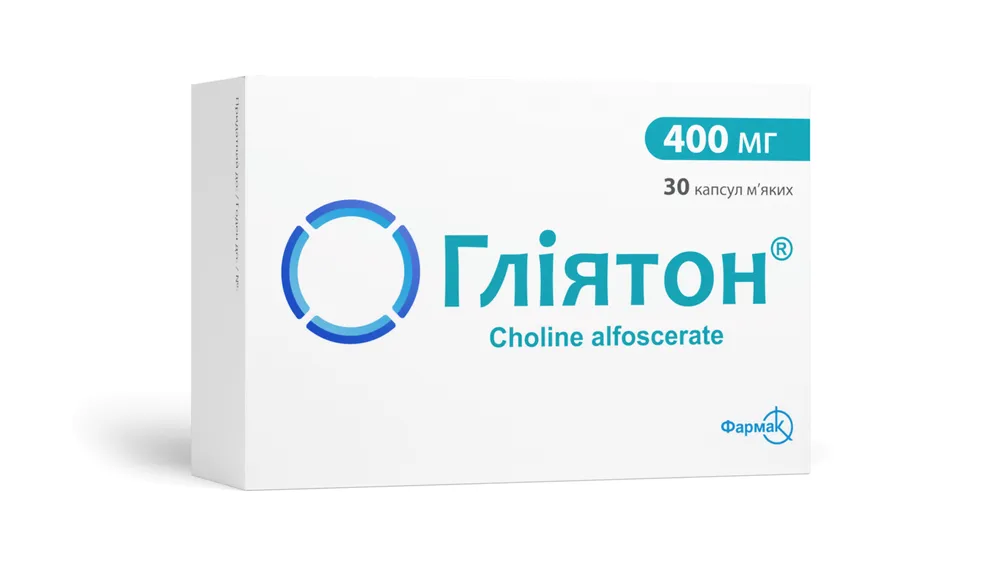
Table of Contents
INSTRUCTIONS FOR MEDICAL USE OF THE MEDICINAL PRODUCT GLIATON® (GLIATON)
Composition:
Active substance: choline alfoscerate;
1 ml of solution contains choline alfoscerate 85.715 mg;
Excipients: methylparahydroxybenzoate (E 218), propylparahydroxybenzoate (E 216), sodium saccharin, orange flavoring (aromatic compound, maltodextrin, xanthan gum (E 415), butylhydroxyanisole (E 320)), purified water.
Pharmaceutical form. Oral solution.
Main physico-chemical characteristics: clear, colorless to slightly yellow solution with an orange odor.
Pharmacotherapeutic group. Agents acting on the nervous system. Parasympathomimetics. Choline alfoscerate. ATC code N07AX02.
Pharmacological properties.
Pharmacodynamics.
Choline alfoscerate is a medicinal agent belonging to the group of central cholinomimetics with a predominant effect on the central nervous system (CNS). Glyaton® positively influences memory function and cognitive abilities, as well as parameters of emotional state and behavior, the deterioration of which was caused by the development of brain involutional pathology.
Choline alfoscerate, as a carrier of choline and a precursor of phosphatidylcholine, has the potential to prevent and correct biochemical impairments that are particularly significant among the pathogenic factors of psychorganic involutional syndrome; that is, it can affect reduced cholinergic tone and altered phospholipid composition of nerve cell membranes.
The medicinal product contains 40.5% metabolically protected choline, which ensures the release of choline in the brain. The mechanism of action is based on the fact that, upon entering the body, choline alfoscerate is enzymatically hydrolyzed into choline and glycerophosphate: choline participates in the biosynthesis of acetylcholine—one of the main mediators of nerve impulse transmission; glycerophosphate serves as a precursor for phospholipids (phosphatidylcholine) of the neuronal membrane. Thus, it improves nerve impulse transmission in cholinergic neurons and exerts a positive effect on neuronal membrane plasticity and receptor function.
Glyaton® improves cerebral blood flow, enhances metabolic processes in the brain, activates structures of the brain reticular formation, and promotes recovery of consciousness following traumatic brain injury.
In rodents, the LD50 exceeds 1 g/kg intravenously and 10 g/kg orally. Daily oral doses of 300 mg/kg and 150 mg/kg administered for 6 months to rats and dogs, respectively, did not cause clinical signs of toxicity or changes in hematological, blood chemical, or urinary parameters. The drug has no mutagenic or teratogenic properties and does not affect reproductive capacity in rats and rabbits.
Pharmacokinetics.
The drug is rapidly absorbed, with approximately 88% of the administered dose of choline alfoscerate being absorbed on average, and rapid distribution in organs and tissues is observed. It crosses the blood-brain barrier. Glyaton® accumulates predominantly in the brain (45% of the drug concentration in blood plasma), lungs, and liver. Renal excretion is about 10%.
Clinical characteristics.
Indications.
Psychorganic syndrome against the background of involutional and degenerative processes in the brain, consequences of cerebrovascular insufficiency, or primary and secondary cognitive impairments in elderly individuals, characterized by memory impairment, confusion, disorientation, reduced motivation and initiative, and decreased ability to concentrate attention. Behavioral and affective disturbances in elderly individuals: emotional lability, increased irritability, indifference to the surrounding environment, pseudomelancholia.
Contraindications.
Hypersensitivity to the components of the medicinal product.
Pregnancy or breastfeeding period.
Patient age under 18 years (due to lack of data).
Marked psychomotor agitation in patients with psychotic disorders.
Interaction with other medicinal products and other types of interactions.
Clinically significant interaction of the drug with other medicinal products has not been established.
Special precautions for use.
Nausea may occur due to dopaminergic activation. Efficacy and safety in children (under 18 years of age) have not been established.
The medicinal product contains methylparahydroxybenzoate (E 218) and propylparahydroxybenzoate (E 216), which may cause allergic reactions (possibly delayed).
Use during pregnancy or breastfeeding.
The therapeutic indications of the medicinal product do not include its use during pregnancy. However, specific studies have not revealed embryotoxic or teratogenic effects.
Ability to affect reaction speed when driving or operating machinery.
The medicinal product does not affect the ability to drive or operate machinery.
Method of administration and dosage.
Take 7 ml of oral solution twice daily.
Use a single-dose (7 ml) vial or sachet, or measure 7 ml using the dosing spoon from a multi-dose (70 ml) bottle.
The stated dose may be increased by a physician.
Children.
There is no experience with the use of Gliaton® in children.
Overdose.
An overdose may enhance the severity of dose-dependent adverse effects. Symptoms of overdose may include nausea, restlessness, excitement, and insomnia. Treatment is symptomatic: administration of adsorbent medicinal products, including activated charcoal. The effectiveness of dialysis has not been established.
Side effects.
The medicinal product is generally well tolerated even with long-term use.
At the beginning of treatment, the following side effects may occur: anxiety, agitation, insomnia. These symptoms are transient and do not require discontinuation of treatment, but a temporary dose reduction may be considered.
Gastrointestinal disorders: nausea (mainly due to secondary dopaminergic activation), abdominal pain.
Nervous system disorders: brief confusion (in such cases, dose reduction is required), headache.
Cardiovascular disorders: decreased blood pressure.
Immune system disorders: hypersensitivity reactions: skin redness, rash, itching, urticaria, angioedema.
Reporting of suspected adverse reactions.
Reporting suspected adverse reactions after authorization of the medicinal product is important. It allows continued monitoring of the benefit-risk balance of the medicinal product. Healthcare professionals should report any suspected adverse reactions through the national reporting system.
Shelf life. 2 years.
Do not use the medicinal product after the expiry date stated on the packaging.
Storage conditions. No special storage conditions required.
Keep out of reach and sight of children.
Packaging. 7 ml in a bottle. 5 bottles in a blister. 2 blisters in a carton.
Or 70 ml in a bottle. 1 bottle in a carton with a dosing spoon.
Or 7 ml in a sachet. 10 or 30 sachets in a carton.
Prescription category. Prescription only.
Manufacturer. JSC "Farmak".
Address of the manufacturer and location of operations.
74, Kyrylivska Street, Kyiv, 04080, Ukraine.