Gliptar
Ukraine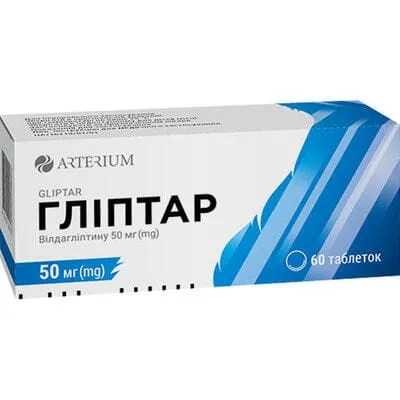
Table of Contents
INSTRUCTIONS FOR MEDICAL USE OF THE MEDICINAL PRODUCT GLIPTAR® (GLIPTAR)
Composition:
Active substance: vildagliptin;
One tablet contains 50 mg of vildagliptin;
Excipients: microcrystalline cellulose, anhydrous lactose, sodium starch glycolate (type A), magnesium stearate.
Pharmaceutical form. Tablets.
Main physicochemical properties: tablets from white to light yellow in color, round-shaped with a flat surface, beveled edge.
Pharmacotherapeutic group. Antihyperglycemic agents, excluding insulin. Dipeptidyl peptidase-4 inhibitors. Vildagliptin.
ATC code A10BH02.
Pharmacological Properties
Pharmacodynamics
Vildagliptin belongs to the class of substances that enhance the function of pancreatic islet beta cells; it is a potent and selective inhibitor of dipeptidyl peptidase-4 (DPP-4).
Mechanism of Action
Administration of vildagliptin results in rapid and complete inhibition of DPP-4 activity. By inhibiting DPP-4, vildagliptin increases endogenous levels of incretin hormones, glucagon-like peptide-1 (GLP-1) and glucose-dependent insulinotropic polypeptide (GIP), both in the fasting state and after food intake.
Pharmacodynamic Effects
By increasing endogenous levels of these incretin hormones, vildagliptin improves beta-cell sensitivity to glucose, leading to enhanced glucose-dependent insulin secretion. Treatment of patients with type 2 diabetes with vildagliptin at doses of 50 to 100 mg daily significantly improved markers of beta-cell function, including HOMA-β (homeostatic model assessment of beta-cell function), proinsulin-to-insulin ratio, and beta-cell sensitivity indices during repeated meal tolerance tests. In non-diabetic individuals (with normal blood glucose levels), vildagliptin does not stimulate insulin secretion or reduce glucose levels.
By increasing endogenous GLP-1 levels, vildagliptin also enhances alpha-cell sensitivity to glucose, resulting in increased glucose-dependent glucagon secretion. The significant increase in the insulin/glucagon ratio during hyperglycemia, driven by elevated incretin hormone levels, leads to reduced glucose production during fasting and postprandial periods, thereby lowering glycemia.
The known effect of elevated GLP-1 levels—delayed gastric emptying—is not observed during treatment with vildagliptin.
Clinical Efficacy and Safety
Over 15,000 patients with type 2 diabetes participated in double-blind, placebo- or active-controlled clinical trials lasting more than 2 years. In these studies, vildagliptin was administered to over 9,000 patients at daily doses of 50 mg once daily, 50 mg twice daily, or 100 mg once daily. Over 5,000 male and over 4,000 female patients received vildagliptin at a dose of 50 mg once daily or 100 mg once daily. Over 1,900 patients receiving vildagliptin at a dose of 50 mg once daily or 100 mg once daily were aged ≥65 years. In these studies, vildagliptin was used as monotherapy in patients with type 2 diabetes who had not previously received antidiabetic medications, or as part of combination therapy in patients whose diabetes was not adequately controlled with other antidiabetic agents.
Overall, vildagliptin improved glycemic control when used as monotherapy or in combination with metformin, sulfonylureas, or thiazolidinediones, as measured by clinically significant reductions in HbA1c from baseline to study endpoint (see table).
In clinical trials, the magnitude of HbA1c reduction with vildagliptin was greater in patients with higher baseline HbA1c levels.
In a 52-week double-blind, controlled study, vildagliptin (50 mg twice daily) reduced baseline HbA1c by -1% compared to -1.6% with metformin (titrated up to 2 g daily); non-inferiority was not statistically achieved. Patients receiving vildagliptin experienced significantly lower rates of gastrointestinal adverse reactions compared to those receiving metformin.
In a 24-week double-blind, controlled study, vildagliptin (50 mg twice daily) was compared to rosiglitazone (8 mg once daily). Mean HbA1c reduction was -1.20% with vildagliptin and -1.48% with rosiglitazone in patients with a mean baseline HbA1c of 8.7%. Patients receiving rosiglitazone showed a mean increase in body weight (+1.6 kg), whereas no weight gain was observed in patients receiving vildagliptin (-0.3 kg). The incidence of peripheral edema was lower in the vildagliptin group than in the rosiglitazone group (2.1% vs. 4.1%, respectively).
In a 2-year clinical study, vildagliptin (50 mg twice daily) was compared to gliclazide (up to 320 mg daily). After 2 years, mean HbA1c reductions were -0.5% for vildagliptin and -0.6% for gliclazide from a mean baseline HbA1c of 8.6%. Non-inferiority was not statistically achieved.
Vildagliptin was associated with fewer hypoglycemic events (0.7%) compared to gliclazide (1.7%).
In a 24-week study, vildagliptin (50 mg twice daily) was compared to pioglitazone (30 mg once daily) in patients whose glycemic control was inadequate with metformin (mean daily dose: 2020 mg). Mean reductions from baseline HbA1c of 8.4% were -0.9% with vildagliptin added to metformin and -1.0% with pioglitazone added to metformin. A mean weight gain of +1.9 kg was observed in patients receiving pioglitazone plus metformin, compared to +0.3 kg in those receiving vildagliptin plus metformin.
In a 2-year clinical study, vildagliptin (50 mg twice daily) was compared to glimepiride (up to 6 mg daily – mean dose after 2 years: 4.6 mg) in patients receiving metformin (mean daily dose: 1894 mg). After 1 year, mean HbA1c reductions were -0.4% with vildagliptin added to metformin and -0.5% with glimepiride added to metformin from a mean baseline HbA1c of 7.3%. Change in body weight was -0.2 kg with vildagliptin versus +1.6 kg with glimepiride. The incidence of hypoglycemia was significantly lower in the vildagliptin group (1.7%) than in the glimepiride group (16.2%). At the study endpoint (2 years), HbA1c levels were similar to baseline in both treatment groups, and differences in body weight and hypoglycemia incidence persisted.
In a 52-week study, vildagliptin (50 mg twice daily) was compared to gliclazide (mean daily dose: 229.5 mg) in patients whose glycemic control was inadequate with metformin (initial metformin dose: 1928 mg daily). After 1 year, mean HbA1c reductions were -0.81% with vildagliptin added to metformin (mean baseline HbA1c 8.4%) and -0.85% with gliclazide added to metformin (mean baseline HbA1c 8.5%); non-inferiority was statistically achieved (95% CI: -0.11 to 0.20). Change in body weight with vildagliptin was +0.1 kg compared to +1.4 kg with gliclazide.
In a 24-week study, the efficacy of fixed-dose vildagliptin/metformin combination (titrated up to 50 mg/500 mg twice daily or 50 mg/1000 mg twice daily) was evaluated as initial therapy in patients who had not previously taken antidiabetic medication. Vildagliptin/metformin 50 mg/1000 mg twice daily reduced HbA1c by -1.82%, vildagliptin/metformin 50 mg/500 mg twice daily by -1.61%, metformin 1000 mg twice daily by -1.36%, and vildagliptin 50 mg twice daily by -1.09%, from a mean baseline HbA1c of 8.6%.
Greater HbA1c reductions were observed in patients with baseline levels ≥10.0%.
A 24-week, multicenter, randomized, double-blind, placebo-controlled study evaluated the effect of vildagliptin 50 mg once daily versus placebo in 515 patients with type 2 diabetes and moderate (N = 294) or severe (N = 221) renal impairment. At baseline, 68.8% and 80.5% of patients with moderate and severe renal impairment, respectively, were receiving insulin (mean daily dose 56 and 51.6 units, respectively). In patients with moderate renal impairment, vildagliptin significantly reduced HbA1c compared to placebo (difference: -0.53%) from a mean baseline of 7.9%. In patients with severe renal impairment, vildagliptin significantly reduced HbA1c compared to placebo (difference: -0.56%) from a mean baseline of 7.7%.
A 24-week, randomized, double-blind, placebo-controlled study was conducted in 318 patients to evaluate the efficacy and safety of vildagliptin (50 mg twice daily) in combination with metformin (≥1500 mg daily) and glimepiride (≥4 mg daily). Vildagliptin in combination with metformin and glimepiride significantly reduced HbA1c compared to placebo. The placebo-corrected mean reduction from a mean baseline HbA1c of 8.8% was -0.76%.
A 24-week, randomized, double-blind, placebo-controlled study was conducted in 449 patients to evaluate the efficacy and safety of vildagliptin (50 mg twice daily) in combination with a stable dose of basal or premixed insulin (mean daily dose: 41 units), with or without concomitant metformin (N = 276 and N = 173, respectively). Vildagliptin in combination with insulin significantly reduced HbA1c compared to placebo. In the overall population, the placebo-corrected mean reduction from a mean baseline HbA1c of 8.8% was -0.72%. In subgroups receiving insulin with or without metformin, the placebo-corrected mean HbA1c reductions were -0.63% and -0.84%, respectively. The incidence of hypoglycemia in the overall population was 8.4% and 7.2% in the vildagliptin and placebo groups, respectively. Patients receiving vildagliptin showed no increase in body weight (+0.2 kg), while those receiving placebo experienced a decrease in body weight (-0.7 kg).
In another 24-week study in patients with advanced type 2 diabetes inadequately controlled with insulin (short- and long-acting, mean insulin dose 80 IU/day), the mean reduction in HbA1c with vildagliptin (50 mg twice daily) added to insulin was statistically significantly greater than with placebo plus insulin (0.5% vs. 0.2%). The incidence of hypoglycemia was lower in the vildagliptin group than in the placebo group (22.9% vs. 29.6%).
A 52-week, multicenter, randomized, double-blind study was conducted in patients with type 2 diabetes and chronic heart failure (NYHA functional class I–III) to evaluate the effect of vildagliptin 50 mg twice daily (N = 128) versus placebo (N = 126) on left ventricular ejection fraction.
Vildagliptin use was not associated with changes in left ventricular function or worsening of existing CHF. Overall cardiovascular events were balanced. In patients with NYHA class III heart failure, more cardiac events were observed with vildagliptin compared to placebo. However, there was an imbalance in baseline cardiovascular risk favoring placebo, and the number of events was low, precluding definitive conclusions. Vildagliptin significantly reduced HbA1c compared to placebo (difference: 0.6%) from a mean baseline of 7.8% at week 16. In the subgroup with NYHA class III, the HbA1c reduction compared to placebo was smaller (difference: 0.3%), but this finding is limited by the small number of patients (n = 44). The incidence of hypoglycemia in the overall population was 4.7% and 5.6% in the vildagliptin and placebo groups, respectively.
A 5-year, multicenter, randomized, double-blind study (VERIFY) was conducted in patients with type 2 diabetes to evaluate the effect of early combination therapy with vildagliptin and metformin (N = 998) versus standard initial monotherapy with metformin followed by combination with vildagliptin (sequential therapy group) (N = 1003) in newly diagnosed patients with type 2 diabetes.
The combination regimen of vildagliptin 50 mg twice daily with metformin resulted in a statistically and clinically significant relative reduction in the risk of "time to confirmed treatment failure" (HbA1c ≥7%) compared to metformin monotherapy in previously untreated patients with type 2 diabetes over the 5-year study period (HR [95% CI]: 0.51 [0.45; 0.58]; p < 0.001). The rate of treatment failure (HbA1c ≥7%) was 429 (43.6%) in the combination therapy group and 614 (62.1%) in the sequential therapy group.
Cardiovascular Risk
A meta-analysis of independently and prospectively adjudicated cardiovascular events from 37 phase III and IV clinical trials of monotherapy and combination therapy lasting over 2 years (mean exposure: 50 weeks for vildagliptin and 49 weeks for comparator agents) showed that vildagliptin treatment was not associated with an increased cardiovascular risk compared to comparator agents. The overall endpoint of major adverse cardiovascular events (MACE), including acute myocardial infarction, stroke, or cardiovascular death, was similar for vildagliptin compared to active comparator and placebo combined [Mantel-Haenszel risk ratio (M-H RR): 0.82 (95% CI: 0.61–1.11)]. MACE occurred in 83 of 9,599 (0.86%) patients receiving vildagliptin and in 85 of 7,102 (1.20%) patients receiving comparator agents. Evaluation of each individual MACE component showed no increased risk (similar M-H RR). Confirmed cases of heart failure (HF), defined as HF requiring hospitalization or new onset HF, were recorded in 41 (0.43%) patients receiving vildagliptin and in 32 (0.45%) patients receiving comparator therapy, with an M-H RR of 1.08 (95% CI: 0.68–1.70).
Key efficacy results of vildagliptin in placebo-controlled monotherapy and add-on combination therapy studies (ITT primary efficacy population)
| Placebo-controlled monotherapy studies |
Mean baseline HbA1c (%) |
Mean change from baseline HbA1c (%) at week 24 |
Placebo-adjusted mean change in HbA1c (%) at week 24 (95% CI) |
| Study 2301: vildagliptin 50 mg twice daily (N = 90) |
8.6 |
-0.8 |
-0.5* (-0.8; -0.1) |
| Study 2384: vildagliptin 50 mg twice daily (N = 79) |
8.4 |
-0.7 |
-0.7* (-1.1; -0.4) |
| * p < 0.05 for comparison vs placebo |
|||
| Study of the drug as add-on therapy / combination therapy studies |
|||
| Vildagliptin 50 mg twice daily + metformin (N = 143) |
8.4 |
-0.9 |
-1.1* (-1.4; -0.8) |
| Vildagliptin 50 mg once daily + glimepiride |
8.5 |
-0.6 |
-0.6* (-0.9; -0.4) |
| Vildagliptin 50 mg twice daily + pioglitazone (N = 136) |
8.7 |
-1.0 |
-0.7* (-0.9; -0.4) |
| Vildagliptin 50 mg twice daily + metformin + glimepiride (N = 152) |
8.8 |
-1.0 |
-0.8* (-1.0; -0.5) |
| * p < 0.05 for comparison vs placebo + comparator drug |
|||
Children
The European Medicines Agency has waived the obligation to submit results of studies with vildagliptin in all subgroups of the paediatric population with type 2 diabetes (see section "Posology and method of administration" for information on use in paediatrics).
Pharmacokinetics
Absorption. After oral administration on an empty stomach, vildagliptin is rapidly absorbed, with peak plasma concentration (Cmax) observed at 1.7 hours. Concomitant intake with food slightly delays the time to reach Cmax in plasma to 2.5 hours, but does not affect total exposure (AUC). Administration of vildagliptin with food results in a reduction of the maximum concentration Cmax (by 19%). Despite this, the magnitude of changes is not clinically significant; therefore, Glyptar® can be administered independently of food intake. Absolute bioavailability is 85%.
Distribution. The plasma protein binding of vildagliptin is low (9.3%); vildagliptin is evenly distributed between plasma and erythrocytes. The mean volume of distribution at steady state (Vss) after intravenous administration is 71 litres, indicating extensive extravascular distribution.
Metabolism. Metabolism is the major route of elimination of vildagliptin in humans, accounting for 69% of the administered dose. The major metabolite, LAY151, is pharmacologically inactive and results from hydrolysis of the cyanopyrrolidine moiety, representing 57% of the dose, with minor contributions from glucuronidation (BQS867) and amide hydrolysis (4% of dose). Data obtained in vitro using human kidney microsomes indicate that the kidneys may be one of the major organs contributing to the hydrolysis of vildagliptin to its major inactive metabolite LAY151. DPP-4 partially contributes to the hydrolysis of vildagliptin, as confirmed by in vivo studies in DPP-4-deficient rats.
Vildagliptin is not metabolized to any clinically significant extent by cytochrome P450 enzymes. Therefore, co-administration with medicinal products such as inhibitors and/or inducers of CYP450 is not expected to affect the metabolic clearance of vildagliptin. In vitro studies have shown that vildagliptin does not inhibit or induce cytochrome P450 enzymes. Thus, vildagliptin is unlikely to affect the metabolic clearance of concomitantly administered medicinal products metabolized by CYP1A2, CYP2C8, CYP2C9, CYP2C19, CYP2D6, CYP2E1, or CYP3A4/5.
Elimination. Following oral administration of [14C]-vildagliptin, approximately 85% of the dose is excreted in urine and 15% in faeces. Renal excretion of unchanged vildagliptin accounts for 23% of the orally administered dose. After intravenous administration to healthy volunteers, total plasma and renal clearance of vildagliptin are 41 L/h and 13 L/h, respectively. The mean elimination half-life after intravenous administration is approximately 2 hours. The elimination half-life after oral administration is approximately 3 hours.
Linearity/Non-linearity. Peak plasma concentration (Cmax) and area under the plasma concentration-time curve (AUC) of vildagliptin increase almost proportionally with dose across the entire therapeutic dose range.
Special patient populations
Gender. No differences in the pharmacokinetics of the drug were observed between healthy male and female volunteers of various ages and body mass index (BMI). Inhibition of DPP-4 by vildagliptin is independent of patient gender.
Hepatic impairment. The effect of hepatic impairment on the pharmacokinetics of vildagliptin was studied in patients with mild, moderate, and severe hepatic impairment according to Child-Pugh classification (scores of 6 for mild to 12 for severe) compared to patients with normal hepatic function. Exposure to vildagliptin after a single dose in patients with mild and moderate hepatic impairment was decreased (by 20% and 8%, respectively), whereas exposure in patients with severe hepatic impairment increased by 22%. The maximum change (increase or decrease) in vildagliptin exposure was approximately 30%, which is not considered clinically significant. No correlation was observed between the degree of hepatic impairment and changes in vildagliptin exposure.
Renal impairment. An open-label multiple-dose study was conducted to evaluate the pharmacokinetics of the lowest therapeutic dose of vildagliptin (50 mg once daily) in patients with varying degrees of chronic renal impairment, as defined by creatinine clearance (mild renal impairment — 50 to <80 mL/min, moderate renal impairment — 30 to <50 mL/min, and severe renal impairment — <30 mL/min), compared to a control group of study participants with normal renal function.
In patients with mild, moderate, and severe renal impairment, AUC of vildagliptin increased compared to patients with normal renal function. AUC values for metabolites LAY151 and BQS867 increased on average by approximately 1.5-, 3-, and 7-fold in patients with mild, moderate, and severe renal impairment, respectively. Limited data in patients with end-stage renal disease (ESRD) indicate that vildagliptin exposure is similar to that in patients with severe renal impairment. Concentrations of LAY151 were approximately 2–3 times higher than in patients with severe renal impairment.
Vildagliptin was eliminated to a limited extent by haemodialysis (3% over a 3–4 hour haemodialysis session initiated 4 hours after drug administration).
Elderly patients. In healthy elderly patients (aged 70 years and older), total exposure to vildagliptin (100 mg once daily) increased by 32% and peak plasma concentration by 18% compared to younger healthy volunteers (aged 18 to 40 years).
However, these changes are not considered clinically significant. Inhibition of DPP-4 by vildagliptin is independent of patient age in the studied age groups.
Race. Limited data suggest that race does not have a significant influence on the pharmacokinetics of vildagliptin.
Clinical Characteristics
Indications
Vildagliptin is indicated as an adjunct to diet and exercise to improve glycemic control in adults with type 2 diabetes mellitus:
- as monotherapy in patients for whom use of metformin is contraindicated or not tolerated;
- in combination with other antidiabetic medicinal products, including insulin, when these do not provide adequate glycemic control (for available data on various combinations, see sections "Pharmacodynamics", "Interaction with other medicinal products and other forms of interaction", and "Special warnings and precautions for use").
Contraindications
Known hypersensitivity to vildagliptin or to any of the excipients.
Interaction with other medicinal products and other forms of interaction
Vildagliptin has a low potential for interactions with other drugs. Since vildagliptin is not a substrate of cytochrome P450 (CYP) enzymes and is neither an inhibitor nor an inducer of CYP450 enzymes, clinically relevant interactions with other medicinal products that are substrates, inhibitors, or inducers of these enzymes are unlikely.
Combination with pioglitazone, metformin, and gliburide
Results from studies conducted with these oral antidiabetic agents showed no clinically relevant pharmacokinetic interactions.
Digoxin (Pgp substrate), warfarin (CYP2C9 substrate)
Clinical studies conducted in healthy volunteers showed no clinically relevant pharmacokinetic interactions. However, this has not been established in the target population.
Combination with amlodipine, ramipril, valsartan, or simvastatin
Drug interaction studies in healthy volunteers have been conducted with amlodipine, ramipril, valsartan, and simvastatin. During these studies, no clinically relevant pharmacokinetic interactions were observed following concomitant administration with vildagliptin.
Combination with ACE inhibitors
There may be an increased risk of angioedema in patients taking angiotensin-converting enzyme inhibitors [ACE inhibitors] concomitantly (see section "Adverse reactions").
As with other oral antidiabetic medicinal products, certain active substances, including thiazides, corticosteroids, thyroid hormones, and sympathomimetics, may reduce the hypoglycemic effect of vildagliptin.
Special precautions for use
When treating diabetes, it is essential to always follow a low-calorie diet and maintain weight control. Regular physical activity is important. These recommendations are relevant not only for initial diabetes therapy but also as an adjunct to pharmacological treatment.
Gliptar® is not a substitute for insulin in insulin-dependent patients. The drug should not be used for the treatment of patients with type 1 diabetes or diabetic ketoacidosis.
Renal impairment
Experience with the use of the drug in patients with moderate or severe renal impairment, as well as in patients with end-stage renal disease (ESRD) on hemodialysis, is limited. Therefore, the use of Gliptar® is not recommended in these patient groups.
Hepatic impairment
Gliptar® is not recommended for use in patients with hepatic impairment, including patients who had alanine aminotransferase (ALT) or aspartate aminotransferase (AST) levels more than three times the upper limit of normal prior to treatment.
Creatinine clearance should be assessed before initiating treatment and monitored regularly during therapy.
Monitoring of liver enzymes
Rare cases of liver function abnormalities (including hepatitis) have been reported. In such cases, the course of the complication was mostly asymptomatic, without clinical consequences, and liver function test (LFT) results returned to normal after discontinuation of treatment. Before initiating treatment with Gliptar®, LFTs should be performed to establish baseline values in the patient. LFT results should be monitored during treatment with the drug, every three to four months during the first year of treatment, and periodically thereafter.
In patients with elevated transaminase levels, repeat monitoring of liver function should be performed to confirm results, followed by continued monitoring with frequent liver function tests until abnormal levels return to normal. If ALT or AST levels increase to three or more times the upper limit of normal, discontinuation of Gliptar® is recommended. Patients who develop jaundice or other signs of liver dysfunction should discontinue use of Gliptar®. After discontinuation of the drug and normalization of LFT results, reinitiation of treatment with vildagliptin is not recommended.
Heart failure
A clinical study of vildagliptin use in patients with heart failure of NYHA functional classes I–III (New York Heart Association functional classification of chronic heart failure) showed that treatment with vildagliptin was not associated with changes in left ventricular function or worsening of existing congestive heart failure. Clinical experience with use in patients with NYHA class III heart failure remains limited and results are inconclusive.
There is no clinical experience with the use of vildagliptin in patients with NYHA class IV heart failure; therefore, the drug is not recommended for use in these patients.
Skin disorders
In preclinical toxicological studies, skin lesions including blistering and ulcers on the extremities were reported in monkeys. Although no increased incidence of skin lesions was observed during clinical trials, experience regarding skin complications in patients with diabetes is limited.
Additionally, during the post-marketing period, cases of bullous and exfoliative skin lesions have been reported.
Therefore, in accordance with standard care for patients with diabetes, monitoring for skin disorders such as blistering or ulceration is recommended.
Pancreatitis
The use of Gliptar® is associated with a risk of developing acute pancreatitis. Patients should be informed about the typical symptoms of acute pancreatitis. Caution should be exercised in patients with a history of acute pancreatitis.
If acute pancreatitis is suspected, Gliptar® should not be continued. If acute pancreatitis is confirmed, reinitiation of Gliptar® is not recommended.
Hypoglycemia
Sulfonylureas are known to cause hypoglycemia. Patients receiving Gliptar® in combination with a sulfonylurea may be prone to hypoglycemia. Therefore, lower doses of sulfonylureas may be considered to reduce the risk of hypoglycemia.
Other
Gliptar® tablets contain lactose. Gliptar® is contraindicated in patients with rare hereditary conditions such as lactose intolerance, lactase deficiency, or glucose-galactose malabsorption.
This medicinal product contains less than 1 mmol (less than 23 mg) of sodium per dose, i.e., essentially "sodium-free."
Use during pregnancy or breastfeeding
Pregnancy
There are currently no adequate studies on the use of vildagliptin in pregnant women.
Animal studies have shown reproductive toxicity at high doses of the drug. The potential risk to humans is unknown. Due to the lack of data, vildagliptin should not be used during pregnancy.
Breastfeeding period
It is unknown whether vildagliptin passes into human breast milk. Animal studies have detected vildagliptin in animal milk. Gliptar® should not be administered to women who are breastfeeding.
Fertility
Studies on the effect of Gliptar® on human fertility have not been conducted.
Ability to affect reaction speed when driving or operating machinery
Studies on the effect of the medicinal product on the ability to drive vehicles or operate machinery have not been conducted. Patients experiencing dizziness should refrain from driving or operating machinery.
Dosage and Administration
Dosage
Adults
When used as monotherapy, in combination with metformin, in combination with thiazolidinedione, in combination with metformin and a sulfonylurea, or in combination with insulin (with or without metformin), the recommended daily dose of vildagliptin is 100 mg, administered as one 50-mg dose in the morning and one 50-mg dose in the evening.
When used in dual combination with sulfonylurea derivatives, the recommended dose of vildagliptin is 50 mg once daily in the morning. In this patient population, vildagliptin 100 mg daily was not more effective than vildagliptin 50 mg once daily.
When used in combination with sulfonylurea derivatives, to reduce the risk of hypoglycemia, lower doses of sulfonylurea may be considered.
Doses higher than 100 mg are not recommended.
If a dose of Glipitar® is missed, it should be taken as soon as the patient remembers. A double dose should not be taken on the same day.
The safety and efficacy of vildagliptin as triple oral therapy in combination with metformin and thiazolidinedione have not been established.
Special Patient Groups
Elderly patients (≥ 65 years of age)
Dose adjustment is not required in elderly patients (see sections "Pharmacodynamics" and "Pharmacokinetics").
Renal impairment
No dose adjustment of Glipitar® is required in patients with mild renal impairment (creatinine clearance ≥ 50 mL/min). In patients with moderate or severe renal impairment or with end-stage renal disease (ESRD), the recommended dose is 50 mg once daily (see sections "Pharmacodynamics", "Pharmacokinetics", and "Special Warnings and Precautions for Use").
Hepatic impairment
Glipitar® is not recommended for use in patients with hepatic impairment, including patients whose baseline ALT or AST levels are more than three times the upper limit of normal (see sections "Pharmacokinetics" and "Special Warnings and Precautions for Use").
Administration
For oral use.
Glipitar® can be administered independently of food intake (see section "Pharmacokinetics").
Children
Glipitar® is not recommended for use in children and adolescents under 18 years of age due to lack of data on safety and efficacy (see section "Pharmacodynamics").
Overdose
Information regarding overdose with Glipitar® is limited.
Symptoms
Data on potential overdose symptoms were obtained from a dose escalation tolerability study in healthy volunteers who received vildagliptin for 10 days. At a dose of 400 mg, three cases of muscle pain were observed, along with several cases of mild and transient paresthesia, fever, development of edema, and transient increases in lipase levels. At a dose of 600 mg, one volunteer developed swelling of the hands and feet, marked elevation in creatine phosphokinase (CPK) levels accompanied by increased AST, C-reactive protein, and myoglobin levels. Three volunteers in this group developed bilateral leg edema, which was accompanied by paresthesia in two cases. All symptoms and laboratory abnormalities resolved after discontinuation of the investigational drug.
Treatment
In case of overdose, supportive therapy is recommended. Vildagliptin is not removed by hemodialysis; however, the majority of hydrolysis metabolites (LAY 151) can be removed by hemodialysis.
Adverse Reactions
Brief description of the safety profile
Safety data were obtained from 5451 patients who received vildagliptin at a daily dose of 100 mg (50 mg twice daily) in randomized, double-blind, placebo-controlled studies lasting at least 12 weeks. Of these patients, 4622 received vildagliptin as monotherapy and 829 received placebo.
Most adverse reactions occurring during vildagliptin treatment were mild in nature, transient, and did not require discontinuation of therapy. There was no observed association between the occurrence of adverse reactions and patient age or race, duration of treatment, or daily dose. Hypoglycemia was reported in patients receiving vildagliptin concomitantly with sulfonylurea derivatives and insulin. An increased risk of acute pancreatitis has been reported with vildagliptin use (see section "Special precautions").
All adverse reactions are listed by system organ class and frequency: very common (≥ 1/10); common (≥ 1/100 to < 1/10); uncommon (≥ 1/1000 to < 1/100); rare (≥ 1/10,000 to < 1/1000); very rare (< 1/10,000); frequency not known (cannot be estimated from available data).
Infections and infestations: very common – nasopharyngitis; common – upper respiratory tract infections.
Metabolism and nutritional disorders: uncommon – hypoglycemia.
Nervous system disorders: common – dizziness, tremor, headache.
Eye disorders: common – blurred vision.
Gastrointestinal disorders: common – constipation, nausea, gastroesophageal reflux disease, diarrhea, abdominal pain (including upper abdominal pain), vomiting; uncommon – flatulence; rare – pancreatitis.
Hepatobiliary disorders: frequency not known* – hepatitis.
Skin and subcutaneous tissue disorders: common – hyperhidrosis, rash, pruritus, dermatitis; uncommon – urticaria; frequency not known* – exfoliative and bullous skin reactions, including bullous pemphigoid, skin vasculitis.
Musculoskeletal and connective tissue disorders: common – arthralgia, myalgia.
Reproductive system and breast disorders: uncommon – erectile dysfunction.
General disorders and administration site conditions: common – asthenia, peripheral edema; uncommon – fatigue, chills, weight increased.
Investigations: uncommon – liver function test abnormalities.
*Based on post-marketing experience.
Description of selected adverse reactions
Hepatic function disorders
Rare cases of hepatic function abnormalities (including hepatitis) have been reported. In these cases, patients were generally asymptomatic without clinical consequences, and liver function returned to normal after discontinuation of treatment. In controlled monotherapy and add-on therapy studies of up to 24 weeks duration, the incidence of ALT or AST elevations ≥ 3 times the upper limit of normal (defined as present in at least 2 consecutive measurements or at the last visit during treatment) was 0.2%, 0.3%, and 0.2% for vildagliptin 50 mg once daily, vildagliptin 50 mg twice daily, and all comparator agents, respectively. These transaminase elevations were generally asymptomatic, non-progressive, and not associated with cholestasis or jaundice.
Angioedema
Rare cases of angioedema have been observed with vildagliptin use, at a frequency similar to that in the control group. A higher number of cases has been reported when vildagliptin was used in combination with an ACE inhibitor. Most events were mild in severity and resolved during continued vildagliptin treatment.
Hypoglycemia
Hypoglycemia was uncommon during vildagliptin monotherapy (0.4%) in comparative controlled monotherapy studies with active comparator or placebo (0.2%). No severe or serious hypoglycemic events were reported. When used as add-on to metformin, hypoglycemia occurred in 1% of patients receiving vildagliptin and in 0.4% of those receiving placebo. Following addition of pioglitazone, hypoglycemia occurred in 0.6% of patients receiving vildagliptin and in 1.9% of those receiving placebo. Following addition of a sulfonylurea, hypoglycemia occurred in 1.2% of patients receiving vildagliptin and in 0.6% of those receiving placebo. Following addition of both sulfonylurea and metformin, hypoglycemia occurred in 5.1% of patients receiving vildagliptin and in 1.9% of those receiving placebo. In patients receiving vildagliptin in combination with insulin, the frequency of hypoglycemia was 14% for vildagliptin and 16% for placebo.
Reporting of suspected adverse reactions
Reporting suspected adverse reactions after medicine authorization is important. It allows ongoing monitoring of the benefit-risk balance of the medicinal product. Healthcare professionals, pharmacists, patients, or their legal representatives are encouraged to report all suspected adverse reactions and lack of efficacy through the Automated Pharmacovigilance Information System at: https://aisf.dec.gov.ua.
Shelf life. 3 years.
Storage conditions. Store in the original packaging at a temperature not exceeding 25 °C. Keep out of reach of children.
Packaging. 10 tablets per blister, 6 blisters per pack.
Prescription status. Prescription only.
Manufacturer. JSC "Kyivmedpreparat".
Manufacturer's address and location of business activity
139 Saksahanskoho Street, Kyiv, 01032, Ukraine.