Glibenclamide
Ukraine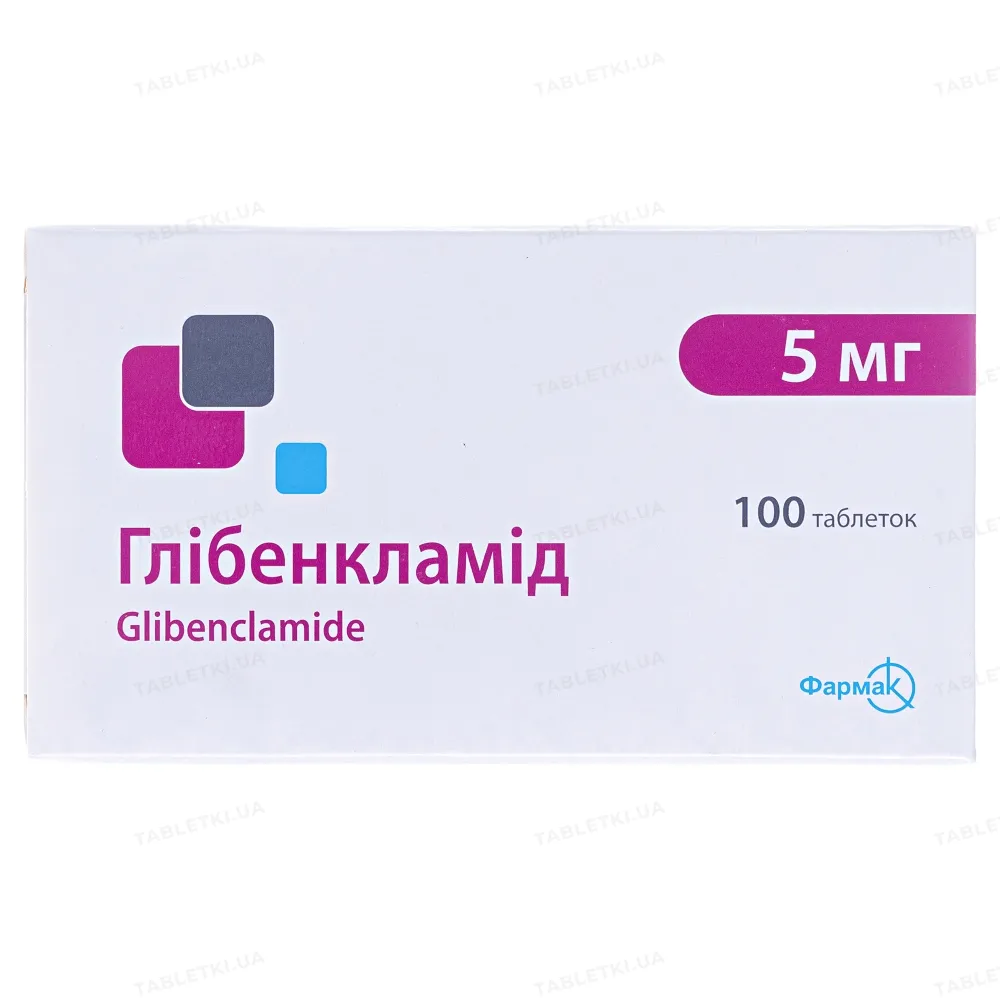
Table of Contents
INSTRUCTIONS FOR MEDICAL USE OF THE MEDICINAL PRODUCT GLIBENCLAMIDE (Glibenclamide)
Composition:
Active ingredient: glibenclamide;
1 tablet contains 5 mg of glibenclamide;
Excipients: lactose monohydrate, potato starch, sodium croscarmellose, povidone, magnesium stearate, colloidal anhydrous silicon dioxide, indigocarmine (E 132).
Pharmaceutical form. Tablets.
Main physicochemical characteristics: monolayer, round-shaped tablets with flat upper and lower surfaces, beveled edges, and a score line, ranging in color from light blue to blue. Speckles on the tablet surface are permissible. When viewed under a magnifying glass, the cross-section reveals a relatively homogeneous structure.
Pharmacotherapeutic group. Digestive system and metabolism. Antidiabetic medicinal products. Blood glucose-lowering agents, excluding insulin. Sulfonylurea derivatives. Glibenclamide. ATC code A10BB01.
Pharmacological properties.
Pharmacodynamics.
Mechanism of action
Glibenclamide exerts a hypoglycemic effect by increasing insulin secretion from the β-cells of pancreatic islets, both in individuals with normal metabolism and in patients with insulin-independent diabetes mellitus (type 2, NIDDM). This effect is glucose concentration-dependent in the environment surrounding the β-cells.
When blood glucose concentration is very high, at a level where glucose-induced insulin secretion is already maximal, additional substantial insulin release due to glibenclamide intake is not expected. The clinical relevance of this observation, made in healthy volunteers, for diabetic patients taking glibenclamide has not been established.
Inhibition of glucagon release from pancreatic α-cells has been described, as well as extrapancreatic effects (insulin receptor replication, increased insulin sensitivity in peripheral tissues); however, their clinical significance has not been determined.
Pharmacokinetics.
Absorption
Glibenclamide is rapidly and almost completely absorbed after oral administration. Concomitant food intake does not significantly affect the absorption of glibenclamide.
Distribution
Plasma protein binding of glibenclamide exceeds 98%.
Maximum serum concentration is reached within 2.5 hours and amounts to 100 ng/mL. After 8–10 hours, serum concentration decreases, depending on the administered dose, to 10–20 ng/mL. The elimination half-life from serum after intravenous administration is approximately 2 hours, and after oral administration – 7 hours. However, some studies indicate that in diabetic patients it may be prolonged up to 8–10 hours.
Metabolism
Glibenclamide is completely metabolized in the liver. The main metabolite is 4-trans-hydroxyglibenclamide; the minor metabolite is 3-cis-hydroxyglibenclamide. The metabolites do not significantly contribute to the hypoglycemic effect of glibenclamide.
Excretion
Metabolites are excreted in approximately equal amounts in urine and bile, and excretion is completed within 45–72 hours.
In patients with impaired liver function, elimination of the active substance from plasma is delayed. In patients with renal insufficiency, depending on the degree of renal function impairment, biliary excretion of metabolites increases compensatorily. With moderate renal insufficiency (creatinine clearance ≥ 30 mL/min), total elimination remains unchanged; with severe renal insufficiency, accumulation is possible.
Preclinical safety data
There are no data from chronic toxicity studies suggesting that previously unknown adverse reactions may occur in humans.
Furthermore, in vitro studies provided no evidence of mutagenic potential.
Regular long-term carcinogenicity studies have not been conducted.
Studies in rats, mice, and rabbits showed no indications of teratogenic effects.
Clinical characteristics.
Indications.
Non-insulin-dependent type 2 diabetes mellitus (adult-onset diabetes), when metabolic control cannot be achieved by diet and physical activity alone and when insulin therapy is not required.
Contraindications.
- Hypersensitivity to the active substance or to any of the excipients of the medicinal product;
- hypersensitivity to other sulfonylurea drugs, sulfonamides, sulfonamide diuretics, or probenecid, since cross-reactions may occur;
- in the following conditions associated with diabetes mellitus requiring insulin therapy: insulin-dependent type 1 diabetes mellitus; complete secondary failure of glyburide therapy in type 2 diabetes mellitus; metabolic acidosis; diabetic precoma or coma; post-pancreatectomy state; severe hepatic impairment; severe renal impairment;
- pregnancy and breastfeeding period (see also section "Use during pregnancy or breastfeeding");
- patients treated with bosentan must not take glyburide.
Interaction with other medicinal products and other forms of interaction.
Concomitant use of other medicinal products may enhance or reduce the effect of glyburide. Therefore, other medicinal products should be taken only with the approval of the treating physician. Glyburide is metabolized primarily by CYP2C9 and to a lesser extent by CYP3A4. This should be taken into account when administering glyburide concomitantly with inducers or inhibitors of CYP2C9.
Hypoglycemic reactions as a manifestation of enhanced drug effect may occur during concomitant use with: oral antidiabetic agents and insulin, ACE inhibitors, anabolic steroids and androgens, antidepressants (such as fluoxetine and MAO inhibitors), quinolone derivatives, chloramphenicol, clarithromycin, clofibrate and its analogs, coumarin derivatives, disopyramide, fenfluramine, miconazole, fluconazole, para-aminosalicylic acid, pentoxifylline (when administered parenterally in high doses), perhexiline, pyrazolone derivatives, probenecid, salicylates, sulfinpyrazone, sulfonamides, sympatholytics (such as beta-adrenergic blockers), tetracyclines, tritoqualine, cytostatic agents such as cyclophosphamide.
The perception of symptoms heralding low blood glucose levels may be impaired during treatment with beta-adrenergic blockers, clonidine, guanethidine, and reserpine.
Hyperglycemic reactions as a manifestation of reduced drug effect may occur during concomitant use with: acetazolamide, beta-adrenergic blockers, barbiturates, diazoxide, diuretics, glucagon, isoniazid, corticosteroids, laxatives (in case of chronic abuse, see section "Special precautions for use"), nicotinic acid, phenothiazine derivatives, phenytoin, rifampicin, thyroid hormones, female sex hormones (progestogens, estrogens), sympathomimetics.
H2-receptor antagonists, clonidine, and reserpine may cause either reduction or enhancement of the hypoglycemic effect.
In individual cases, centamide may cause severe hypoglycemia or hyperglycemia. The effect of coumarin derivatives may be enhanced or reduced.
In patients receiving glyburide concomitantly with bosentan, an increased incidence of elevated liver enzymes has been observed. Both glyburide and bosentan inhibit the bile salt export pump protein, leading to intracellular accumulation of cytotoxic bile salts. Therefore, this combination should not be used (see section "Contraindications").
Glyburide may increase cyclosporine plasma concentrations and thus likely enhance its toxicity. Therefore, when both substances are used concomitantly, measures for monitoring and dose adjustment of cyclosporine are recommended.
Colesevelam binds glyburide and thereby reduces its absorption from the gastrointestinal tract. Glyburide should be administered at least 4 hours before colesevelam, as no interaction has been observed under these conditions.
Other types of interactions. Acute or chronic alcohol consumption may unpredictably enhance or reduce the hypoglycemic effect of glyburide.
Special precautions for use.
The patient should be informed that if other disorders occur during treatment with glibenclamide, he or she should immediately consult the treating physician. When changing physicians, the patient should draw the attention of the new physician to the presence of diabetes mellitus (e.g. during hospitalization, after an accident, or if illness occurs during vacation).
Hypoglycemia
Patients should be made aware of the risk of hypoglycemia when using antidiabetic medications.
Prolonged fasting, inadequate carbohydrate intake, unusual physical exertion, diarrhea, or vomiting are conditions that increase the risk of low blood glucose levels (see section "Adverse reactions").
Patients with marked signs of cerebral sclerosis and those who do not follow medical advice are generally at higher risk of hypoglycemia.
Medications acting on the central nervous system, beta-adrenergic blockers, as well as autonomic neuropathy, may mask the warning symptoms of hypoglycemia.
Despite initial success in treating hypoglycemia, recurrence is possible. Therefore, patients should remain under medical supervision. Severe hypoglycemia or prolonged episodes that can be controlled only briefly with usual amounts of sugar require immediate medical treatment (see section "Overdose").
Hyperglycemia
If the treatment regimen is not followed, if the hypoglycemic effect of the drug is insufficient, or during particularly stressful situations, blood glucose levels may rise.
Symptoms of hyperglycemia may include intense thirst, dry mouth, frequent urination, itching and/or dry skin, fungal or skin infections, and decreased work capacity.
In exceptional stress situations (e.g. trauma, surgery, infectious diseases accompanied by fever), metabolic control may deteriorate, resulting in hyperglycemia, which may indicate the need for temporary insulin therapy.
Laxatives
Chronic abuse of laxatives may lead to deterioration of metabolic control.
Alcohol
Acute or chronic alcohol abuse may unpredictably enhance or weaken the hypoglycemic effect of the drug.
Impaired liver or kidney function and endocrine disorders
The drug should be used with particular caution in patients with impaired liver or kidney function, or reduced function of the thyroid gland, pituitary gland, or adrenal cortex.
Glucose-6-phosphate dehydrogenase deficiency (G6PD deficiency)
Treatment with sulfonylurea drugs may cause hemolytic anemia in patients with glucose-6-phosphate dehydrogenase deficiency (G6PD deficiency). Since glibenclamide belongs to the chemical class of sulfonylurea drugs, it should be used with caution in patients with G6PD deficiency, and consideration should be given to switching to non-sulfonylurea alternative agents.
Elderly patients
Age 65 years and older has been identified as a risk factor for hypoglycemia in patients receiving sulfonylurea therapy. Hypoglycemia may be difficult to recognize in elderly patients. Initial and maintenance doses of glibenclamide should be carefully adjusted to minimize the risk of hypoglycemia (see section "Dosage and administration"). For this age group, sulfonylurea agents with a shorter duration of action should be preferred.
The medicinal product contains lactose.
In patients with known intolerance to certain sugars, consultation with a physician is recommended before taking this medicinal product.
The drug is contraindicated in patients with rare hereditary conditions such as galactose intolerance, lactase deficiency, or glucose-galactose malabsorption syndrome.
Use during pregnancy or breastfeeding.
Pregnancy
The drug is contraindicated during pregnancy. Since oral antidiabetic agents do not control blood glucose levels as reliably as insulin, they are not suitable for the treatment of diabetes mellitus during pregnancy.
Insulin therapy is the treatment of choice during pregnancy. If possible, oral antidiabetic agents should be discontinued and replaced with insulin before planned pregnancy.
Breastfeeding period
Since it is unknown whether the drug passes into breast milk, it is contraindicated during breastfeeding.
Breastfeeding women should be treated with insulin to control diabetes mellitus or should discontinue breastfeeding.
Fertility
There are no data on the effect of glibenclamide on fertility in humans.
Ability to influence reaction speed when driving vehicles or operating machinery.
During episodes of hypoglycemia or hyperglycemia, attention and reaction speed may be impaired, particularly at the beginning of treatment, after a change in therapy, or with irregular intake of glibenclamide. Therefore, patients should be advised to take preventive measures to avoid hypoglycemia while driving or operating machinery. This is especially important for patients with frequent episodes of hypoglycemia or with reduced or absent ability to perceive hypoglycemic warning symptoms. In such cases, the appropriateness of driving a vehicle should be reconsidered.
Dosage and Administration.
The medication should be prescribed only by a physician and must be accompanied by dietary adjustments. Dosage depends on the results of metabolic status assessments (blood and urine glucose levels).
Initial and subsequent dosing. Initiate therapy with the lowest possible dose, especially in patients predisposed to hypoglycemia or with body weight below 50 kg. The initial dose is ½ to 1 tablet of the medication (corresponding to 2.5–5 mg of glibenclamide) per day. If metabolic control is inadequate, the dose may be gradually increased at intervals of several days to one week until the therapeutic dose of 3 tablets daily (corresponding to 15 mg of glibenclamide) is reached.
Switching from other antidiabetic medications. Transition to glibenclamide should be performed very carefully, starting with a dose of ½ to 1 tablet (corresponding to 2.5–5 mg of glibenclamide) per day.
Dose adjustment. In elderly patients, debilitated patients, those with malnutrition, or patients with impaired renal or hepatic function, the initial and maintenance doses should be reduced due to the increased risk of hypoglycemia. Dose adjustments should be considered if the patient experiences weight loss or changes in lifestyle.
Combination with other antidiabetic agents. In selected cases, patients intolerant to metformin may benefit from the addition of glitazone-class medications (rosiglitazone, pioglitazone). Glibenclamide may also be combined with oral antidiabetic agents that do not stimulate β-cell secretion of endogenous insulin (e.g., guar meal or acarbose). In cases of secondary failure of glibenclamide therapy (reduced insulin production due to β-cell exhaustion), combination therapy with insulin may be attempted. However, when endogenous insulin secretion has completely ceased, insulin monotherapy is indicated.
Administration method and duration of treatment. Tablets should be taken before meals, without chewing, and swallowed with sufficient fluid (preferably a glass of water). For daily doses exceeding 2 tablets, it is recommended to divide the total dose into one morning and one evening dose in a 2:1 ratio. It is very important to take the medication at the same time each day. If a dose is missed, it should never be compensated by taking a higher dose at the next scheduled time. The duration of treatment depends on the course of the disease. Regular monitoring of blood and urine glucose levels and overall metabolic status is required throughout treatment.
Children.
The medication should not be used in pediatric practice.
Overdose.
Acute, significant overdose of glibenclamide, such as prolonged use of slightly increased doses, may lead to severe, prolonged hypoglycemia, which can be life-threatening. Careful monitoring is required until it is certain that the patient is no longer at risk. It should be noted that hypoglycemia and its clinical manifestations may recur even after temporary recovery. Substantial overdose and severe reactions, such as loss of consciousness and other serious neurological disturbances, should be considered medical emergencies requiring immediate treatment and hospitalization.
Symptoms of overdose
In cases of intentional overdose, prolonged hypoglycemia with a tendency to relapse after several days of initially successful treatment may occur. In patients with impaired consciousness, hypoglycemic coma may rapidly develop, manifesting as loss of consciousness, tachycardia, moist skin, hyperthermia, motor agitation, hyperreflexia, paresis, and a positive Babinski reflex.
Therapeutic measures in overdose
See section "Adverse Reactions" for treatment of mild hypoglycemia.
In cases of accidental intoxication or in vulnerable patients without seizure predisposition, in addition to intravenous glucose administration, vomiting should first be induced or gastric lavage performed.
For patients in an unconscious state, immediate intravenous administration of glucose is required (40–80 mL of 40% glucose solution as an injection, followed by infusion of 5–10% glucose solution).
Afterward, 1 mg of glucagon may be administered intramuscularly or intravenously. If the patient does not regain consciousness, this measure may be repeated, and further intensive therapy may be necessary.
Particularly in children who have accidentally ingested glibenclamide, glucose solution must be administered cautiously to avoid dangerous hyperglycemia, followed by careful monitoring of blood glucose levels.
Patients who have ingested life-threatening amounts of glibenclamide require detoxification through gastric lavage and administration of activated charcoal, provided the drug was taken recently.
In cases of prolonged hypoglycemia, continued monitoring for several days with regular blood glucose checks and infusion therapy, if necessary, is required.
Adverse Reactions
Adverse reactions were classified according to frequency:
Very common (≥ 1/10);
Common (≥ 1/100, < 1/10);
Uncommon (≥ 1/1000, < 1/100);
Rare (≥ 1/10000, < 1/1000);
Very rare (< 1/10000);
Frequency not known (cannot be estimated from available data).
Hypoglycemia
Hypoglycemia is the most common adverse reaction associated with glibenclamide therapy.
It may be prolonged during glibenclamide treatment and may lead to severe hypoglycemia with coma, which can be life-threatening. In cases of very subtle hypoglycemia, such as in autonomic neuropathy or concomitant therapy with sympatholytic agents (see section "Interaction with Other Medicinal Products and Other Forms of Interaction"), typical warning symptoms of hypoglycemia may be diminished or absent. The clinical presentation of a severe hypoglycemic episode may resemble that of a stroke.
Possible causes of hypoglycemia are described in section "Special Warnings and Precautions for Use".
Hypoglycemia is defined as a drop in blood glucose levels below approximately 50 mg/dL. Symptoms that may signal excessively low blood glucose levels to the patient or to those nearby include: sudden sweating, palpitations, tremor, hunger, anxiety, tingling sensation in the mouth, pallor, headache, drowsiness, sleep disturbances, restlessness, unsteadiness, reversible neurological symptoms (e.g., speech disturbances, visual disturbances, signs of paralysis or sensory disturbances).
If hypoglycemia progresses, the patient may lose self-control and consciousness. Such patients typically have cold, clammy skin and may experience seizures.
A patient with diabetes can manage mild hypoglycemia by consuming sugar or foods or drinks containing a high amount of sugar. Therefore, patients should always carry 20 grams of glucose with them.
If hypoglycemia cannot be promptly corrected, a physician must be contacted immediately.
Other Adverse Reactions
Blood and Lymphatic System Disorders
Rare: thrombocytopenia.
Very rare: leukopenia, erythrocytopenia, granulocytopenia up to agranulocytosis, pancytopenia, hemolytic anemia.
These blood count changes are usually reversible upon discontinuation of the drug, but very rarely may be life-threatening.
Immune System Disorders
Very rare: possible cross-allergy with sulfonamides, sulfonamide derivatives, and probenecid.
Metabolism and Nutrition Disorders
Common: weight gain.
Very rare: hyponatremia, disulfiram-like reaction.
Eye Disorders
Very rare: transient visual disturbances and accommodation disorders, possibly related to changes in blood glucose concentration, particularly at the beginning of treatment.
Gastrointestinal Disorders
Uncommon: nausea, bloating/epigastric fullness, vomiting, abdominal pain, diarrhea, belching, metallic taste in the mouth.
These complaints are often transient and generally do not require discontinuation of the drug.
Hepatobiliary Disorders
Very rare: transient increases in AST, ALT, alkaline phosphatase; drug-induced hepatitis; intrahepatic cholestasis, possibly due to a hyperergic allergic reaction of liver tissue.
These liver function abnormalities are reversible upon discontinuation of the medicinal product, but may also lead to life-threatening hepatic failure.
Skin and Subcutaneous Tissue Disorders
Uncommon: pruritus, urticaria, nodular erythema, measles-like or maculopapular exanthema, increased photosensitivity, purpura.
These are hypersensitivity reactions, usually reversible, but very rarely may progress to life-threatening conditions associated with dyspnea and decreased arterial pressure, potentially leading to shock.
Very rare: life-threatening allergic vasculitis, generalized hypersensitivity reactions including skin rashes, arthralgia, fever, proteinuria, and jaundice.
Any skin reactions should be reported to a physician immediately.
Renal and Urinary Disorders
Very rare: mild diuretic effect, reversible proteinuria.
Reporting of Suspected Adverse Reactions
Reporting suspected adverse reactions after authorization of the medicinal product is important. It allows continued monitoring of the benefit-risk balance of the medicinal product. Healthcare professionals are encouraged to report any suspected adverse reactions via the national reporting system.
Shelf Life. 3 years.
Storage Conditions. Store in the original packaging at a temperature not exceeding 25°C. Keep out of reach and sight of children.
Packaging. 30 tablets in a container. 1 container in a cardboard pack.
Prescription Category. Prescription only.
Manufacturer. JSC "Tekhnolog".
Manufacturer's Address and Place of Business.
8, Stara Prorizna Street, City of Uman, Cherkasy Region, 20300, Ukraine.