Hypothiazide®
Ukraine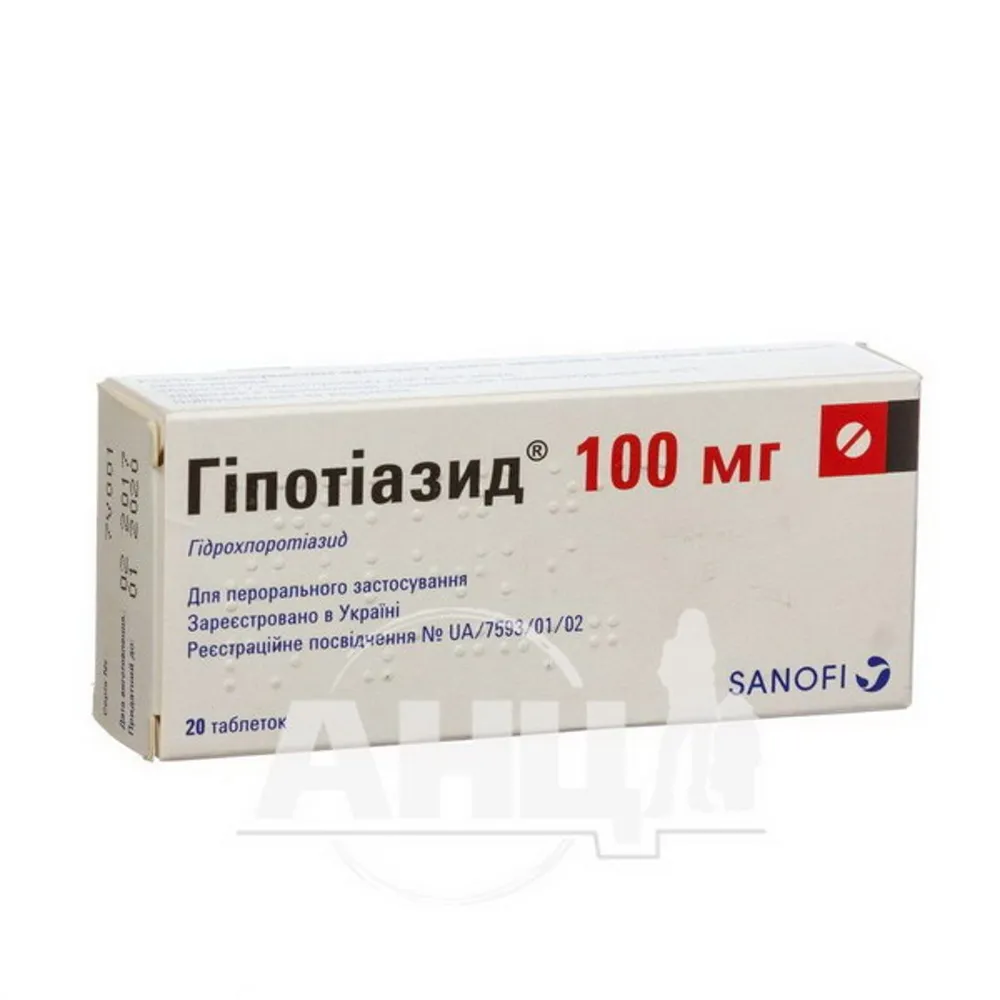
Table of Contents
INSTRUCTIONS FOR MEDICAL USE OF THE MEDICINAL PRODUCT HYPOTHIAZIDÒ (HYPOTHIAZIDÒ)
Composition:
Active substance: hydrochlorothiazide;
1 tablet contains hydrochlorothiazide 25 mg or 100 mg;
Excipients: magnesium stearate, gelatin, talc, corn starch, lactose monohydrate.
Medicinal form. Tablets.
Main physico-chemical properties: white or almost white flat tablets with engraving «H» on one side and a break line on the other.
Pharmacotherapeutic group. Thiazide diuretics. ATC code C03A A03.
Pharmacological Properties
Pharmacodynamics.
The primary mechanism of action of this sulfanilamide derivative is direct inhibition of sodium and chloride ion reabsorption in the distal renal tubules. As a result, excretion of sodium and chloride ions increases, leading to enhanced water excretion and, subsequently, potassium and magnesium. Due to the diuretic effect of hydrochlorothiazide, plasma volume decreases, plasma renin activity increases, and aldosterone excretion is enhanced. This leads to increased urinary excretion of potassium and bicarbonates and reduced serum potassium levels. The renin-aldosterone axis is mediated by angiotensin II; therefore, when angiotensin II receptor antagonists are co-administered, a reverse effect on thiazide-induced potassium excretion may be observed.
The drug also exerts a weak inhibitory effect on carbonic anhydrase. As a result, it moderately enhances bicarbonate excretion without causing significant changes in urine pH.
Non-melanoma skin cancer. Based on available epidemiological data, there is a cumulative, dose-dependent association between hydrochlorothiazide use and the development of non-melanoma skin cancer. One study included a population in which 71,533 cases of basal cell carcinoma (BCC) and 8,629 cases of squamous cell carcinoma (SCC) were diagnosed among 1,430,833 and 172,462 individuals, respectively. High-dose hydrochlorothiazide use (>50,000 mg cumulative dose) was associated with an adjusted odds ratio (OR) of 1.29 (95% CI: 1.23–1.35) for BCC and 3.98 (95% CI: 3.68–4.31) for SCC. A clear dose-response relationship was observed for both BCC and SCC. Another study indicated a potential association between SCC and hydrochlorothiazide use: 633 cases of SCC were matched with 63,067 population-based controls using a risk-set sampling strategy. A cumulative dose-response relationship was demonstrated, with an adjusted OR of 2.1 (95% CI: 1.7–2.6), increasing to OR 3.9 (3.0–4.9) at high cumulative doses (25 mg) and OR 7.7 (5.7–10.5) at the highest cumulative dose (100 mg) (see "Special Instructions").
Pharmacokinetics.
Hydrochlorothiazide is well absorbed following oral administration. The diuretic and natriuretic effects begin within 2 hours after administration, reach maximum effect at 4 hours, and last for 6–12 hours. Plasma protein binding is approximately 40%. The majority of the drug is excreted unchanged by the kidneys. The elimination half-life is 6.4 hours in patients with normal renal function, 11.5 hours in moderate renal impairment, and 20.7 hours in severe renal impairment (creatinine clearance < 30 mL/min). The drug crosses the placenta and is excreted in small amounts in breast milk.
Clinical characteristics.
Indications. Edema associated with cardiovascular diseases, liver and kidney disorders; premenstrual edema; edema caused by drug therapy, e.g., corticosteroids.
Arterial hypertension (as monotherapy or in combination with other antihypertensive agents).
Symptomatic treatment to reduce polyuria (paradoxically), primarily in nephrogenic diabetes insipidus.
Reduction of hypercalciuria.
Contraindications.
Hypersensitivity to the active substance or to any of the excipients of the medicinal product.
Hypersensitivity to other sulfonamides.
Anuria.
Severe renal (creatinine clearance < 30 mL/min) or hepatic impairment.
Breastfeeding.
Refractory hypokalemia or hypercalcemia.
Refractory hyponatremia.
Symptomatic hyperuricemia (gout).
Interaction with other medicinal products and other forms of interaction.
Interactions between thiazide diuretics and the following medicinal products may occur when used concomitantly.
Alcohol, barbiturates, narcotics, or antidepressants. May enhance orthostatic hypotension.
Antidiabetic agents (oral hypoglycemic agents and insulin). Thiazide therapy may reduce glucose tolerance. Dose adjustment may be necessary. Metformin should be used with caution due to the risk of lactic acidosis associated with possible hydrochlorothiazide-induced functional renal impairment.
Other antihypertensive agents. Additive effect.
Cholestyramine and colestipol resins. In the presence of anion-exchange resins, absorption of hydrochlorothiazide from the gastrointestinal tract is impaired. Even a single dose of cholestyramine or colestipol resins binds hydrochlorothiazide and reduces its gastrointestinal absorption by 85% and 43%, respectively.
Pressor amines (e.g., adrenaline). The effect of pressor amines may be diminished, but not to the extent that precludes their use.
Non-depolarizing muscle relaxants (e.g., tubocurarine). Potentiation of the muscle relaxant effect may occur.
Lithium. Diuretics reduce renal clearance of lithium and significantly increase the risk of lithium-induced toxicity. Concomitant use of these agents is not recommended.
Antigout agents (probenecid, sulfinpyrazone, and allopurinol). Dose adjustment of uricosuric agents may be required, as hydrochlorothiazide may increase serum uric acid levels. Increased doses of probenecid or sulfinpyrazone may be necessary. When thiazides are used concomitantly, there may be an increased frequency of hypersensitivity reactions to allopurinol.
Anticholinergic agents (e.g., atropine, biperiden). Due to reduced gastrointestinal motility and delayed gastric emptying, bioavailability of thiazide diuretics is increased.
Cytotoxic agents (e.g., cyclophosphamide, methotrexate). Thiazides may reduce renal excretion of cytotoxic drugs and potentiate their myelosuppressive effect.
Salicylates. When high doses of salicylates are used, hydrochlorothiazide may potentiate their toxic effects on the central nervous system.
Methyldopa. Isolated cases of hemolytic anemia have been reported with concomitant use of hydrochlorothiazide and methyldopa.
Cyclosporine. When used concomitantly, cyclosporine may potentiate hyperuricemia and increase the risk of complications such as gout.
Cardiac glycosides. Thiazide-induced hypokalemia or hypomagnesemia may predispose to cardiac glycoside-induced arrhythmias.
Medicinal products whose effects are influenced by changes in serum potassium levels. Periodic monitoring of serum potassium levels and ECG is recommended when hydrochlorothiazide is used concomitantly with medicinal products whose effects are influenced by changes in serum potassium levels (e.g., cardiac glycosides and antiarrhythmic agents), and with the following agents known to induce torsades de pointes (ventricular tachycardia), as hypokalemia is a contributing factor in the development of torsades de pointes:
- Class Ia antiarrhythmics (e.g., quinidine, hydroquinidine, disopyramide);
- Class III antiarrhythmics (e.g., amiodarone, sotalol, dofetilide, ibutilide);
- Certain antipsychotics (e.g., thioridazine, chlorpromazine, levomepromazine, trifluoperazine, zuclopenthixol, sulpiride, sultopride, amisulpride, tiapride, pimozide, haloperidol, droperidol);
- Other medicinal products (e.g., bepridil, cisapride, difemanil, intravenous erythromycin, halofantrine, mizolastine, pentamidine, terfenadine, intravenous vinca alkaloids).
Calcium salts. Thiazide diuretics increase serum calcium levels by reducing calcium excretion. If calcium-containing dietary supplements are required, serum calcium levels should be monitored and the calcium dose adjusted accordingly.
Effect of medicinal products on laboratory test results. Due to their effect on calcium metabolism, thiazides may influence the assessment of parathyroid gland function (see section "Special precautions for use").
Carbamazepine. Clinical and biological monitoring is necessary due to the risk of symptomatic hyponatremia.
Iodinated contrast agents. In cases of diuretic-induced dehydration, the risk of acute renal failure is increased, particularly with high doses of iodinated contrast agents. Patients should be adequately rehydrated prior to administration of iodinated agents.
Amphotericin B (parenteral), corticosteroids, ACTH, and stimulant laxatives. Hydrochlorothiazide may exacerbate electrolyte imbalance, particularly hypokalemia.
Non-steroidal anti-inflammatory drugs (NSAIDs), including selective cyclooxygenase-2 (COX-2) inhibitors, acetylsalicylic acid >3 g/day, and non-selective NSAIDs. Concomitant use of NSAIDs may reduce the antihypertensive effect of hydrochlorothiazide and enhance its effect on serum potassium levels.
Beta-blockers and diazoxide. Concomitant use of thiazide diuretics, including hydrochlorothiazide, with beta-blockers may increase the risk of hyperglycemia. Thiazide diuretics, including hydrochlorothiazide, may potentiate the hyperglycemic effect of diazoxide.
Amantadine. Thiazides, including hydrochlorothiazide, may increase the risk of adverse effects associated with amantadine.
Special precautions for use.
Arterial hypotension and fluid and electrolyte imbalance. As with other antihypertensive agents, symptomatic arterial hypotension may occur in some patients. Patients should be monitored for clinical signs of fluid and electrolyte imbalance (e.g., hypovolemia, hyponatremia, hypochloremic alkalosis, hypomagnesemia, or hypokalemia), which may develop in case of concomitant diarrhea or vomiting. In such patients, periodic monitoring of serum electrolyte levels is necessary. During warm seasons, hyponatremia may occur in patients with edema due to hemodilution.
Metabolic and endocrine effects. Thiazide therapy may reduce glucose tolerance. Adjustment of antidiabetic medications, including insulin, may be required (see section "Interaction with other medicinal products and other forms of interactions"). Latent diabetes mellitus may become manifest during thiazide therapy.
Thiazides may reduce renal calcium excretion and may cause a slight transient increase in serum calcium levels. Marked hypercalcemia may indicate latent hyperparathyroidism. Thiazide therapy should be discontinued prior to evaluation of parathyroid function.
Increased levels of cholesterol and triglycerides may be associated with thiazide diuretic therapy.
In some patients, thiazide treatment may precipitate hyperuricemia and/or gout.
Choroidal effusion, secondary acute angle-closure glaucoma and/or acute myopia. Hydrochlorothiazide is a sulfonamide. Sulfonamide-containing drugs may cause an idiosyncratic reaction leading to choroidal effusion with visual field defects, which may result in secondary acute angle-closure glaucoma and/or acute myopia. Symptoms include acute onset of decreased visual acuity or ocular pain and typically occur within hours to weeks after initiation of treatment. Untreated acute angle-closure glaucoma with closed angle may lead to permanent vision loss. The primary treatment is prompt discontinuation of the drug. If intraocular pressure remains uncontrolled, prompt medical or surgical intervention may be required. Risk factors for developing acute angle-closure glaucoma may include a history of sulfonamide or penicillin allergy (see section "Adverse reactions").
Acute respiratory toxicity. Very rare, severe cases of acute respiratory toxicity, including acute respiratory distress syndrome (ARDS), have been reported following hydrochlorothiazide administration. Pulmonary edema usually develops within minutes or hours after hydrochlorothiazide intake. Initial symptoms include dyspnea, fever, worsening pulmonary status, and arterial hypotension. If ARDS is suspected, Hypothiazid® should be discontinued and appropriate treatment initiated. Hydrochlorothiazide should not be prescribed to patients with a history of ARDS after hydrochlorothiazide use.
Hepatic disorders. Thiazides should be used with caution in patients with hepatic disorders or progressive liver disease, as these drugs may cause intrahepatic cholestasis, disturbances in fluid and electrolyte balance, and changes in serum ammonia levels, potentially triggering hepatic encephalopathy. Hypothiazid® is contraindicated in patients with severe hepatic insufficiency (see section "Contraindications").
Non-melanoma skin cancer. An increased risk of non-melanoma skin cancer (NMSC) (basal cell carcinoma [BCC] and squamous cell carcinoma [SCC]) associated with cumulative dose of hydrochlorothiazide has been observed in two epidemiological studies based on data from the Danish National Cancer Registry. The photosensitizing effect of hydrochlorothiazide may play a role in the mechanism of NMSC development.
Patients taking hydrochlorothiazide should be informed about the risk of NMSC and should regularly examine their skin for new lesions and promptly report any suspicious skin changes. Preventive measures such as limiting exposure to sunlight and ultraviolet radiation, and using appropriate sun protection, may help minimize the risk of skin cancer. Suspicious skin lesions should be promptly evaluated, including histological examination of biopsy material. Patients with a prior history of NMSC may also require reassessment of hydrochlorothiazide use (see section "Adverse reactions").
Other. Hypersensitivity reactions may occur in patients receiving thiazides, both in those with a history of allergy or bronchial asthma and in those without prior history of such conditions. There have been reports of exacerbation or activation of systemic lupus erythematosus during thiazide therapy.
The drug may affect the results of the following laboratory tests:
- Thiazides may reduce serum protein-bound iodine levels;
- Thiazide therapy should be discontinued prior to laboratory testing for parathyroid function assessment;
- The drug may increase serum bilirubin concentration.
Excipients. In case of lactose intolerance, it should be noted that Hypothiazid® tablets 25 mg contain 63 mg of lactose monohydrate, and Hypothiazid® tablets 100 mg contain 39 mg of lactose monohydrate.
The drug should not be used in rare hereditary forms of galactose intolerance, Lapp lactase deficiency, or glucose-galactose malabsorption syndrome.
Use during pregnancy or breastfeeding.
Pregnancy. Experience with hydrochlorothiazide use during pregnancy, especially in the first trimester, is limited. Data from animal studies are insufficient.
Hydrochlorothiazide crosses the placental barrier. When used during the second and third trimesters, hydrochlorothiazide, due to its pharmacological action, may impair fetoplacental circulation and cause effects in the fetus or newborn such as jaundice, electrolyte imbalance, and thrombocytopenia.
Hydrochlorothiazide should not be used to treat gestational edema, gestational (pregnancy-induced) hypertension, or preeclampsia in pregnant women, as instead of beneficial effects on disease course, it increases the risk of plasma volume reduction and placental hypoperfusion.
Hydrochlorothiazide should not be used for treatment of essential arterial hypertension in pregnant women except in rare cases when alternative treatments are not feasible.
Hypothiazid® tablets should not be used during pregnancy; the drug may be used only in highly justified cases.
Breastfeeding. Hydrochlorothiazide passes into breast milk; its use during breastfeeding is contraindicated. If its use is absolutely necessary, breastfeeding must be discontinued.
Ability to influence reaction speed when driving or operating machinery. Hypothiazid® tablets have a significant effect on functions necessary for driving vehicles or operating machinery. During the initial treatment period (duration individually determined by the physician), driving vehicles and operating machinery are prohibited. Later, the extent of restriction is determined individually by the physician.
Dosage and Administration
The dosage of the drug is individually selected by a physician, who carefully monitors the patient's condition. Due to increased excretion of potassium and magnesium during treatment, replacement therapy with potassium (K+ <3.0 mmol/L) and magnesium may be necessary, especially in cases of heart failure, impaired liver function, and concomitant administration of cardiac glycosides.
Tablets should be taken after meals. A tablet may be divided into two equal halves.
For the treatment of edema in adults, the initial dose is usually 25–100 mg once daily or, for example, every other day. Depending on the therapeutic effect, the dose may be reduced to a maintenance dose of 25–50 mg once daily.
In cases of pronounced edematous syndrome, an initial dose of 200 mg may be required.
For premenstrual edema, the usual daily dose is 25 mg, to be taken from the onset of symptoms until the beginning of menstruation.
For the treatment of arterial hypertension, the usual daily dose of Hypothiazidâ is 25–100 mg as a single dose, either as monotherapy or in combination with other antihypertensive agents.
For some patients, an initial dose of 12.5 mg may be effective (either as monotherapy or in combination with another antihypertensive agent). The desired therapeutic effect should be achieved and maintained using the lowest effective dose, but the daily dose should not exceed 100 mg.
In case of combination therapy, to avoid sudden reduction in arterial blood pressure, the doses of each drug should be appropriately reduced.
The antihypertensive effect begins to develop within 3–4 days; optimal effect is achieved within 3–4 weeks. After discontinuation of therapy, the antihypertensive effect persists for 1 week.
In nephrogenic diabetes insipidus, to reduce polyuria, the usual daily dose is 50–150 mg (in several divided doses).
For children aged 2 to 12 years, the average daily dose is 1–2 mg/kg body weight or 30–60 mg/m² as a single dose (37.5–100 mg per day).
For children aged 12 years and older, the initial dose is 25–100 mg once daily; the maintenance dose is 25–50 mg.
Children. The drug may be used in children aged 2 years and older.
For children aged 2 to 12 years, the average daily dose is 1–2 mg/kg body weight or 30–60 mg/m² as a single dose (37.5–100 mg per day).
For children aged 12 years and older, the initial dose is 25–100 mg once daily, and the maintenance dose is 25–50 mg (see section "Dosage and Administration").
Overdose. Symptoms of overdose are primarily due to significant fluid and electrolyte loss.
Cardiovascular symptoms: tachycardia, arterial hypotension, shock.
Neurological symptoms: weakness, confusion, dizziness, muscle cramps, paresthesia, exhaustion, disturbances of consciousness.
Gastrointestinal symptoms: nausea, vomiting, thirst.
Renal symptoms: polyuria, oliguria, anuria.
Laboratory abnormalities: hypokalemia, hyponatremia, hypochloremia, alkalosis, elevated blood urea nitrogen (mainly due to renal impairment).
Treatment. There is no specific antidote. To remove the drug from the stomach, induction of vomiting, gastric lavage, and administration of activated charcoal to reduce absorption are recommended.
In cases of arterial hypotension and shock, administration of fluids and electrolytes (potassium, sodium, magnesium) is recommended.
Until the patient's condition normalizes, monitoring of fluid and electrolyte balance and renal function is required.
Adverse Reactions
The frequency of adverse effects is listed according to the following categories: very common (≥ 1/10), common (≥ 1/100 to < 1/10), uncommon (≥ 1/1000 to < 1/100), rare (≥ 1/10,000 to < 1/1000), very rare (< 1/10,000), frequency not known (cannot be estimated from the available data).
Benign, malignant and unspecified neoplasms (including cysts and polyps):
Frequency not known: non-melanoma skin cancer (basal cell carcinoma and squamous cell carcinoma).
Blood and lymphatic system disorders:
Very rare: leukopenia, agranulocytosis, thrombocytopenia, hemolytic anemia, aplastic anemia.
Laboratory test results:
Frequency not known: hypokalemia, hyponatremia, hypomagnesemia, hypercalcemia, hyperglycemia, glucosuria, hyperuricemia; with high-dose use, increased blood lipid levels are possible.
Cardiac disorders:
Frequency not known: arrhythmia, orthostatic hypotension.
Nervous system disorders:
Frequency not known: dizziness, headache, seizures, paresthesia.
Psychiatric disorders:
Frequency not known: confusion, lethargy, nervousness, mood changes.
Eye disorders:
Frequency not known: transient visual disturbances, xanthopsia, secondary acute angle-closure glaucoma and/or acute myopia, choroidal effusion.
Gastrointestinal disorders:
Frequency not known: dry mouth, thirst, nausea, vomiting, inflammation of salivary glands, constipation.
Hepatobiliary disorders:
Frequency not known: jaundice (due to intrahepatic cholestasis), pancreatitis, cholecystitis.
Renal and urinary disorders:
Frequency not known: renal failure, interstitial nephritis.
Musculoskeletal and connective tissue disorders:
Frequency not known: muscle spasms and pain.
Metabolism and nutrition disorders:
Frequency not known: hypochloremic alkalosis, which may induce hepatic encephalopathy or hepatic coma; hyperuricemia, which may trigger gout attacks in patients with asymptomatic disease; reduced glucose tolerance, which may lead to manifestation of latent diabetes mellitus; loss of appetite.
Vascular disorders:
Frequency not known: vasculitis, necrotizing angiitis.
Respiratory, thoracic and mediastinal disorders:
Uncommon: respiratory distress, including pneumonitis and pulmonary edema; very rare: acute respiratory distress syndrome (ARDS) (see section "Special precautions for use").
Immune system disorders:
Frequency not known: anaphylactic reactions, shock.
Skin and subcutaneous tissue disorders:
Frequency not known: photosensitivity, urticaria, purpura, toxic epidermal necrolysis, Stevens-Johnson syndrome.
Reproductive system and breast disorders:
Frequency not known: sexual dysfunction.
General disorders and administration site conditions:
Frequency not known: exhaustion.
Description of selected adverse reactions
Non-melanoma skin cancer. Epidemiological data indicate a cumulative dose-dependent association between the use of hydrochlorothiazide and the development of non-melanoma skin cancer. Cases of choroidal effusion associated with visual field defects have been reported following treatment with thiazide and thiazide-like diuretics (see section "Special precautions for use" and section "Pharmacological properties").
Reporting of suspected adverse reactions
Reporting suspected adverse reactions after marketing authorization is important. It allows continued monitoring of the benefit-risk balance of the medicinal product. Healthcare professionals are asked to report any suspected adverse reactions via the national reporting system.
Shelf life. 3 years.
Storage conditions. Keep out of the reach of children. Store in the original packaging at a temperature below 25 °C.
Packaging. No. 20: 20 tablets in a blister, 1 blister in a cardboard box.
Prescription status. Prescription only.
Manufacturer.
Opella Healthcare Hungary Kft., Hungary
Opella Healthcare Hungary Kft., Hungary
Manufacturer's address and location of operations.
Levai utca 5., Veresegyhaz, 2112, Hungary.
Marketing authorization holder. LLC "Sanofi-Aventis Ukraine", Ukraine / Sanofi-Aventis Ukraine LLC, Ukraine.