Hexavit
Ukraine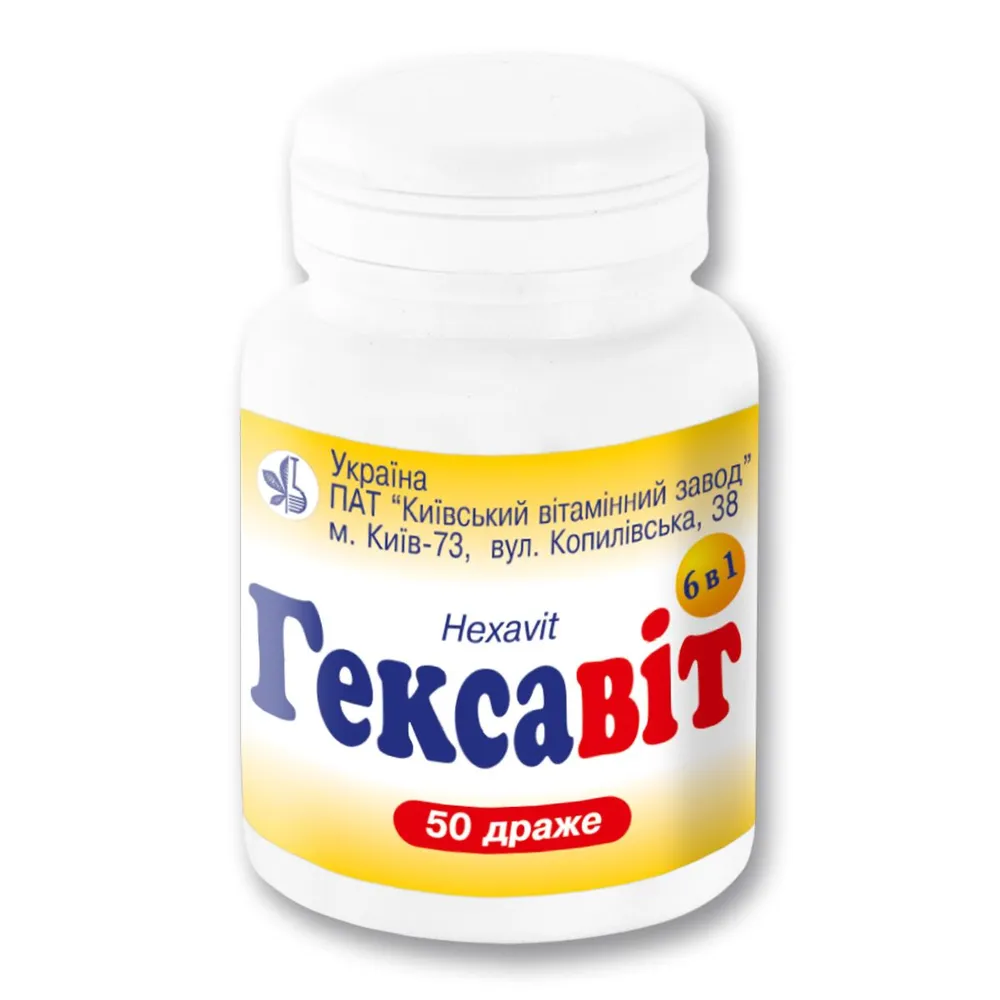
Table of Contents
INSTRUCTION FOR MEDICAL USE OF THE MEDICINAL PRODUCT HEXAVIT (HEXAVIT)
Composition:
Active substances:
1 tablet contains:
vitamin A 5000 IU;
thiamine hydrochloride (vitamin B1) 2 mg;
riboflavin (vitamin B2) 2 mg;
nicotinamide (vitamin PP) 15 mg;
pyridoxine hydrochloride (vitamin B6) 2 mg;
ascorbic acid (vitamin C) 70 mg;
Excipients: wheat flour, starch syrup, sugar, mint flavoring, yellow wax, light mineral oil, talc, quinoline yellow coloring (E 104).
Pharmaceutical form. Dragees.
Main physicochemical properties: spherical dragees of yellow color with uniformly colored surface.
Pharmacotherapeutic group. Vitamins. Multivitamin complexes without additives.
ATC code: A11BA.
Pharmacological properties.
Pharmacodynamics.
A polyvitamin medicinal product whose properties are determined by the characteristics of the vitamins contained in its composition, which actively participate in various metabolic processes regulating homeostasis of the body both under normal conditions and in pathology. The combination of vitamins promotes a more pronounced and diverse biological effect.
Vitamin A (retinol acetate) is necessary for the development of epithelial cells and synthesis of visual pigment.
Vitamin B1 (thiamine hydrochloride) normalizes functional activity of the nervous, cardiovascular, and gastrointestinal systems.
Vitamin B2 (riboflavin) plays an important role in protein, fat, and carbohydrate metabolism; participates in maintaining normal visual acuity and normalizes skin functions.
Vitamin PP (nicotinamide) is a specific anti-pellagric agent and improves carbohydrate metabolism.
Vitamin B6 (pyridoxine hydrochloride) is necessary for regeneration of skin coverings and liver cells, restoration of nervous system function, and improves fat metabolism in atherosclerosis.
Vitamin C (ascorbic acid) plays an important role in regulating redox processes, carbohydrate metabolism, blood coagulation, tissue regeneration, normal capillary permeability, synthesis of steroid hormones and connective tissue components; promotes increased resistance of the body to infectious diseases.
Pharmacokinetics.
Water-soluble vitamins (B-group vitamins, vitamin C) are well absorbed in amounts corresponding to daily requirements. Excess amounts are excreted in urine and, in some cases, also in feces. These vitamins are stored in the body in limited quantities; therefore, they must be regularly supplied with food to maintain their necessary tissue concentrations.
When dietary fats are present, orally administered fat-soluble vitamin A is well absorbed in the small intestine.
Clinical characteristics.
Indications.
- Prevention and treatment of hypovitaminosis in adults;
- treatment of hypovitaminosis in children;
- for individuals whose professional activities require constant high visual acuity (pilots, drivers, crane operators);
- to enhance the body's resistance to infectious and cold-related illnesses during periods of unfavorable epidemiological conditions;
- during prolonged antibiotic therapy.
Contraindications.
Hypersensitivity to the components of the drug, nephrolithiasis, severe renal function impairment, gout, hyperuricemia, chronic glomerulonephritis, pronounced hepatic dysfunction, active hepatitis, thrombosis, thrombophlebitis, thromboembolism, fructose intolerance, glucose-galactose malabsorption syndrome, arterial hypertension (severe forms), hypervitaminosis A, history of sarcoidosis, peptic ulcer of the stomach and duodenum in the phase of exacerbation, disorders of iron or copper metabolism.
Interaction with other medicinal products and other types of interactions.
Vitamin A reduces the anti-inflammatory effect of glucocorticoids. It should not be taken simultaneously with nitrates and cholestyramine, as they impair retinol absorption. Vitamin A should not be prescribed with retinoids, as their combination is toxic.
Due to the risk of developing hypervitaminosis A, concomitant use of this drug with other medicinal products containing vitamin A is not recommended.
Vitamin C enhances the action and toxicity of sulfonamides (risk of crystalluria), penicillin, increases iron absorption, enhances aluminum absorption (should be considered when treating concomitantly with antacids containing aluminum), reduces the effectiveness of heparin and indirect coagulants. High doses of the drug reduce the efficacy of tricyclic antidepressants, neuroleptics—phenothiazine derivatives, tubular reabsorption of amphetamine, and impair renal excretion of mexiletine.
Ascorbic acid may be taken only 2 hours after deferoxamine injection. Prolonged intake of high doses of the drug reduces the effectiveness of disulfiram treatment.
Ascorbic acid increases the total clearance of ethyl alcohol. Ascorbic acid enhances oxalate excretion in urine and increases the risk of crystalluria during salicylate therapy.
Absorption of vitamin C is reduced when used concomitantly with oral contraceptives, fruit or vegetable juices, and alkaline beverages.
Vitamin B1, by affecting polarization processes at neuromuscular synapses, may reduce the curare-like effect of muscle relaxants.
Vitamin B2 is incompatible with streptomycin and reduces the efficacy of antibacterial drugs (oxytetracycline, doxycycline, erythromycin, tetracycline, and lincomycin). Tricyclic antidepressants, imipramine, and amitriptyline inhibit riboflavin metabolism, especially in cardiac tissues.
Vitamin B6 reduces the effect of levodopa and prevents or diminishes toxic manifestations of isoniazid and other antituberculosis drugs.
Cases of rhabdomyolysis have been reported when nicotinic acid is used with lovastatin.
Special precautions for use
The medicinal product is not recommended to be prescribed together with other multivitamins, as this may lead to an overdose of vitamins in the body.
Women who have used high doses of retinol (over 10,000 IU) should not plan pregnancy earlier than 6–12 months after discontinuation. This is due to the risk of fetal developmental abnormalities caused by high levels of vitamin A in the body during this period.
Discoloration of urine to a yellow color may occur, which is completely harmless and is due to the presence of riboflavin in the medicinal product.
Use with caution in severe liver impairment, history of peptic ulcer of the stomach and duodenum, acute nephritis, decompensated cardiac function, cholelithiasis, chronic pancreatitis, allergic reactions, idiosyncrasy, ischemic heart disease, cardiac dystrophic disorders, diabetes mellitus, hematopoietic disorders, iron metabolism disorders (hemidosiderosis, hemochromatosis, thalassemia), gastrointestinal diseases, patients with urolithiasis, glaucoma, hemorrhages, and moderate arterial hypotension. When using this medicinal product, monitoring of blood pressure and renal function is necessary.
It is not recommended to take the medicinal product late in the day, as ascorbic acid has a mild stimulating effect. The recommended dose should not be exceeded. When using Hexavit, as with other multivitamin preparations, a well-balanced protein diet is required to promote better absorption and metabolism of vitamins, especially water-soluble ones.
The medicinal product contains sugar, which should be taken into account in patients with diabetes mellitus.
Use during pregnancy or breastfeeding
Use during pregnancy or breastfeeding is possible only if the benefit to the mother outweighs the potential risk to the fetus/infant.
The dose of vitamin A should not exceed 5,000 IU in pregnant women and women planning pregnancy.
During the II–III trimesters of pregnancy and during breastfeeding, the medicinal product should be used only for prophylactic purposes (exclusively on medical advice and under medical supervision) at a dose of no more than 1 tablet per day. Therapeutic doses of the medicinal product should not be used in pregnant women or breastfeeding mothers.
Effect on the ability to drive or operate machinery
Drivers and operators of complex machinery should be aware of the possible occurrence of adverse effects such as dizziness and somnolence.
Dosage and Administration
The medicinal product should be taken orally, after meals.
For prophylaxis of vitamin deficiency in adults, administer 1 tablet daily; for treatment – 1 tablet 3 times daily.
For prophylactic purposes in pregnant women (during the II–III trimester) and during breastfeeding, the daily dose of the medicinal product should not exceed 1 tablet per day. The treatment course is determined individually.
For therapeutic purposes in children aged 14 years and older, the medicinal product should be administered at a dose of 1 tablet daily.
The medicinal product should be used for 30 days (treatment course repeated 2–3 times per year); however, duration of use and frequency of treatment courses depend on the specific indication, severity and form of the pathological process, and patient's age.
Children. The medicinal product is contraindicated in children under 14 years of age.
Overdose.
In case of overdose, dyspeptic symptoms (nausea, vomiting, diarrhea, epigastric pain), allergic reactions (itching, skin rashes), skin and hair changes, liver function disorders, headache, drowsiness, lethargy, facial hyperemia, and irritability may occur. In such cases, the drug should be discontinued.
Treatment is symptomatic.
Prolonged use of high-dose vitamin C may lead to suppression of the pancreatic islet apparatus function, changes in renal excretion of ascorbic and uric acids during urine acidification, with a risk of precipitation of oxalate calculi.
Adverse reactions.
The medicinal product is generally well tolerated. In isolated cases, the following adverse reactions are possible.
Immune system disorders: in individuals with increased sensitivity – allergic reactions, including anaphylactic shock, angioneurotic edema.
Cardiovascular system disorders: arterial hypertension.
Skin and subcutaneous tissue disorders: skin rashes, urticaria, pruritus, skin redness, dryness of the skin/mucous membranes of the eyes; rarely – bronchospasm in individuals hypersensitive to vitamins A, C, and B complex.
Gastrointestinal disorders: dyspeptic disorders, nausea, vomiting, stomach pain, belching, constipation, diarrhea, increased gastric juice secretion.
Nervous system disorders: headache, dizziness, increased excitability, drowsiness, sleep disturbances, hot flushes which may be accompanied by palpitations, fatigue, irritability, sweating.
Metabolism and nutrition disorders: crystalluria, glucosuria.
Blood and lymphatic system disorders: impaired blood coagulation, hemolysis of erythrocytes in patients with glucose-6-phosphate dehydrogenase deficiency.
Other: possible yellow discoloration of urine, visual disturbances, hyperthermia.
With prolonged use in high doses the following are possible: impaired glucose tolerance, disturbances in zinc and copper metabolism, hyperglycemia, seizures, anorexia, irritation of the gastrointestinal mucosa, gastrointestinal disturbances, arrhythmias, arterial hypotension, erythrocytopenia, neutrophilic leukocytosis, transient increase in the activity of aspartate aminotransferase, lactate dehydrogenase, alkaline phosphatase, electrolyte imbalance, impaired kidney function, renal failure, dryness and cracking of palms and soles, hair loss, seborrheic eruptions, hyperpigmentation, myalgia, myopathy, jaundice, fatty liver degeneration.
Shelf life. 1 year 6 months.
Storage conditions.
Store in the original packaging at a temperature not exceeding 25 °C.
Keep out of reach of children.
Packaging.
50 dragees in containers (bottles).
1 kg of dragees in a double polyethylene bag.
Supply category. Over-the-counter.
Manufacturer. JSC "KYIV VITAMIN PLANT".
Manufacturer's address and place of business.
38 Kopilivska Street, Kyiv, 04073, Ukraine.
Web-site: www.vitamin.com.ua