Gantsil
Ukraine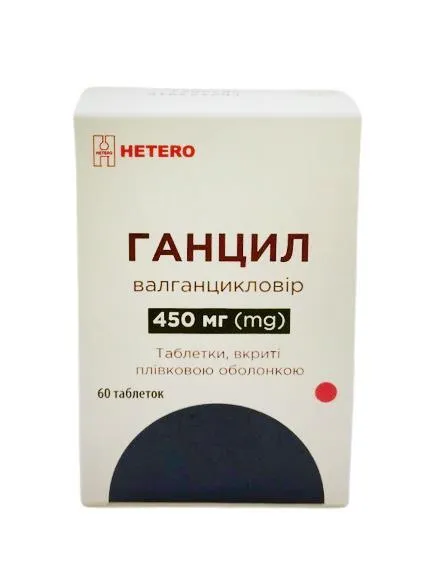
Table of Contents
INSTRUCTION FOR MEDICAL USE OF THE MEDICINAL PRODUCT GANCIL (GANCIL)
Composition:
Active substance: valganciclovir;
One film-coated tablet contains valganciclovir 450 mg as valganciclovir hydrochloride;
Excipients: microcrystalline cellulose, crospovidone, povidone, stearic acid;
Tablet coating: Opadry pink 15B24005 (hypromellose, titanium dioxide (E 171), polyethylene glycol 400, iron oxide red (E 172), polysorbate 80).
Pharmaceutical form. Film-coated tablets.
Main physicochemical properties: oval, biconvex, pink-colored film-coated tablets, marked with "J" on one side and "156" on the other.
Pharmacotherapeutic group. Antiviral agents for systemic use, direct-acting antiviral agents, nucleosides and nucleotides, excluding reverse transcriptase inhibitors. Valganciclovir. ATC code J05A B14.
Pharmacological Properties
Pharmacodynamics
Valganciclovir is the L-valyl ester (prodrug) of ganciclovir. After oral administration, valganciclovir is rapidly and extensively metabolized to ganciclovir by intestinal and hepatic esterases. Ganciclovir is a synthetic analogue of 2'-deoxyguanosine and inhibits replication of herpesviruses in vitro and in vivo. Sensitive human viruses include human cytomegalovirus (CMV), herpes simplex virus types 1 and 2 (HSV-1 and HSV-2), human herpesviruses 6, 7, and 8 (HHV-6, HHV-7, HHV-8), Epstein--Barr virus (EBV), varicella zoster virus (VZV), and hepatitis B virus (HBV).
In CMV-infected cells, ganciclovir is initially phosphorylated by the viral protein kinase pUL97 to ganciclovir monophosphate. Subsequent phosphorylation by cellular kinases leads to the formation of ganciclovir triphosphate, which is then slowly metabolized intracellularly. The metabolism of the triphosphate form has been shown to occur in HSV- and CMV-infected cells with half-lives of 18 hours and between 6 and 24 hours, respectively, after elimination of ganciclovir from the extracellular space. Since phosphorylation is primarily dependent on the viral kinase, phosphorylation of ganciclovir occurs predominantly in virus-infected cells.
The antiviral activity of ganciclovir is due to inhibition of viral DNA synthesis by: competitive inhibition of the incorporation of deoxyguanosine triphosphate into DNA by viral DNA polymerase, and incorporation of ganciclovir triphosphate into viral DNA, resulting in chain termination or severely limited further elongation of viral DNA.
Antiviral Activity
Antiviral activity in vitro, measured as IC50 of ganciclovir against CMV, ranges from 0.08 µM (0.02 µg/mL) to 14 µM (3.5 µg/mL).
The clinical antiviral effect of valganciclovir has been demonstrated in the treatment of AIDS patients with newly diagnosed CMV retinitis. The proportion of patients with CMV detected in urine decreased from 46% (32/69) at the start of the study to 7% (4/55) during the subsequent four weeks of treatment with valganciclovir.
Pharmacokinetics
Pharmacokinetic properties of valganciclovir have been studied in HIV- and CMV-seropositive patients, in AIDS patients with CMV retinitis, and in patients after solid organ transplantation.
Dose proportionality of the AUC of ganciclovir after administration of 450–2625 mg valganciclovir has been demonstrated only when administered with food.
Absorption
Valganciclovir is a prodrug of ganciclovir. It is well absorbed from the gastrointestinal tract and is rapidly and extensively metabolized in the intestinal wall and liver to ganciclovir. Systemic exposure to valganciclovir is transient and low. The absolute bioavailability of ganciclovir from valganciclovir is approximately 60% in all patient groups, and the overall exposure to ganciclovir is comparable to that after intravenous administration (see below). For comparison, the bioavailability of ganciclovir after oral administration of 1000 mg ganciclovir (as capsules) is 6–8%.
Valganciclovir in HIV-positive, CMV-positive patients
Systemic exposure parameters in HIV-positive, CMV-positive patients after administration of ganciclovir and valganciclovir twice daily for one week are presented in Table 1.
Pharmacokinetic parameters in HIV-positive, CMV-positive patients after administration of ganciclovir and valganciclovir twice daily for one week
Table 1
| Parameter |
Ganciclovir n = 18 |
Valganciclovir (900 mg, orally) n = 25 |
|
| Ganciclovir |
Valganciclovir |
||
| AUC(0-12 hr) (mcg·hr/mL) |
28.6 ± 9.0 |
32.8 ± 10.1 |
0.37 ± 0.22 |
| Cmax (mcg/mL) |
10.4 ± 4.9 |
6.7 ± 2.1 |
0.18 ± 0.06 |
The efficacy of ganciclovir in delaying the progression of CMV retinitis has been shown to correlate with systemic exposure (AUC).
Valganciclovir in solid organ transplant recipients
Steady-state systemic exposure to ganciclovir in solid organ transplant recipients following daily oral administration of ganciclovir and valganciclovir is presented in Table 2.
Pharmacokinetic parameters in solid organ transplant recipients
following daily oral administration of ganciclovir and valganciclovir
Table 2
| Parameter |
Ganciclovir |
Valganciclovir (900 mg once daily) |
| Ganciclovir |
||
| AUC(0-24 h) (μg·h/mL) |
28.0 ± 10.9 |
46.3 ± 15.2 |
| Cmax (μg/mL) |
1.4 ± 0.5 |
5.3 ± 1.5 |
Systemic exposure of ganciclovir in the heart, kidneys, and liver of recipients was similar following oral administration of valganciclovir according to a dosing regimen adjusted for renal function.
Food Effect
When valganciclovir was administered with food at the recommended dose of 900 mg, higher values were observed for both mean AUC of ganciclovir (approximately 30%) and mean Cmax of ganciclovir (approximately 14%) compared to fasting conditions. Additionally, inter-individual variability in ganciclovir exposure is reduced when valganciclovir is taken with food. In clinical studies, valganciclovir was administered only with food. Therefore, it is recommended that Gancil be taken with food (see section "Dosage and Administration").
Distribution
Due to the rapid conversion of valganciclovir to ganciclovir, protein binding of valganciclovir in blood has not been determined. The steady-state volume of distribution (Vd) of ganciclovir after intravenous administration was 0.680 ± 0.161 L/kg (n = 114). For intravenously administered ganciclovir, the volume of distribution correlates with patient body weight and ranges at steady state from 0.54 to 0.87 L/kg. Ganciclovir penetrates into cerebrospinal fluid. Plasma protein binding of ganciclovir ranges from 1–2% at concentrations between 0.5 and 51 µg/mL.
Biotransformation
Valganciclovir is rapidly and extensively metabolized to ganciclovir; no other metabolites have been identified. Ganciclovir itself is minimally metabolized.
Elimination
Following oral administration, valganciclovir is rapidly hydrolyzed to ganciclovir. In patients with normal renal function, more than 90% of intravenously administered ganciclovir is excreted unchanged in urine within 24 hours. In patients with normal renal function, post-peak plasma concentrations of ganciclovir declined with a half-life ranging from 0.4 hours to 2.0 hours.
Pharmacokinetics in Special Clinical Populations
Children
In Phase II pharmacokinetic and safety studies involving children after solid organ transplantation (aged 4 months to 16 years, n = 63), valganciclovir (oral solution or tablets) was administered once daily for up to 100 days. Pharmacokinetic parameters were similar across organ types and age groups and comparable to those in adults. Population pharmacokinetic modeling showed a bioavailability of approximately 60%. Clearance was positively influenced by body surface area and renal function.
In a Phase I pharmacokinetic and safety study involving children after heart transplantation (aged 3 weeks to 125 days, n = 14), valganciclovir (oral solution) was administered once daily for 2 days of the study. Population pharmacokinetic estimates indicated a mean bioavailability of 64%.
Comparison of results from these two studies and pharmacokinetic data in adults shows that AUC0-24h ranges were very similar across all age groups, including adults. Mean AUC0-24h and Cmax values were also similar among pediatric age groups under 12 years of age, although a trend toward decreasing mean AUC0-24h and Cmax values across the entire pediatric age range was observed, which correlated with increasing age. This trend was more pronounced for mean clearance and half-life (t½) values. However, this was expected, as clearance depends on changes in body size, growth, and associated maturation of renal function, as demonstrated by population pharmacokinetic modeling.
Table 3 summarizes model-estimated AUC0-24h ranges of ganciclovir from these two studies, along with mean and standard deviation values for AUC0-24h, Cmax, clearance, and t½ in the respective pediatric age groups compared to adults.
Pharmacokinetic parameters of ganciclovir in respective pediatric age groups compared to adults
Table 3
| Pharmacokinetic parameter |
Adults* |
Children |
|||
| ≥ 18 years (n=160) |
< 4 months (n=14) |
4 months - ≤ 2 years (n=17) |
> 2 - < 12 years (n=21) |
≥ 12 years - 16 years (n=25) |
|
| AUC0-24 hr (mcg·hr/mL) |
46.3 ± 15.2 |
68.1 ± 19.8 |
64.3 ± 29.2 |
59.2 ± 15.1 |
50.3 ± 15.0 |
| AUC0-24 hr range |
15.4–116.1 |
34–124 |
34–152 |
36–108 |
22–93 |
| Cmax (mcg/mL) |
5.3 ± 1.5 |
10.5 ± 3.36 |
10.3 ± 3.3 |
9.4 ± 2.7 |
8.0 ± 2.4 |
| Clearance (L/hr) |
12.7 ± 4.5 |
1.25 ± 0.473 |
2.5 ± 2.4 |
4.5 ± 2.9 |
6.4 ± 2.9 |
| t½ (hr) |
6.5 ± 1.4 |
1.97 ± 0.185 |
3.1 ± 1.4 |
4.1 ± 1.3 |
5.5 ± 1.1 |
*Extract from the PV 16000 study report.
The single daily dose of valganciclovir in both aforementioned studies was determined based on body surface area (BSA) and creatinine clearance (CrCl), calculated using the modified Schwartz formula:
Dose for a child (mg) = 7 × BSA × CrCl (see the Mosteller formula for BSA and the Schwartz formula for CrCl), where:

;

;
where k = 0.45* for patients aged <2 years, k = 0.55 for boys aged 2 to 13 years and girls aged 2 to 16 years, k = 0.7 for boys aged 13 to 16 years.
The dose should not exceed 900 mg, the adult dose. If the calculated creatinine clearance by the Schwartz formula exceeds 150 mL/min/1.73 m², the maximum value of 150 mL/min/1.73 m² should be used in the equation.
The pharmacokinetics of ganciclovir after administration of valganciclovir (oral powder) were also evaluated in two studies in neonates and infants with symptomatic congenital CMV infection. In the first study, 24 neonates aged 8 to 34 days received intravenous ganciclovir 6 mg/kg twice daily. Patients then received oral valganciclovir oral powder solution at doses ranging from 14 mg/kg to 20 mg/kg twice daily, with a total treatment duration of 6 weeks. A dose of valganciclovir oral powder solution of 16 mg/kg twice daily provided ganciclovir exposure comparable to that achieved with 6 mg/kg intravenous ganciclovir twice daily in neonates, as well as similar to the effective intravenous adult dose of 5 mg/kg.
In the second study, 109 neonates aged 2 to 30 days received 16 mg/kg of valganciclovir oral powder solution twice daily for 6 weeks, after which 96 of the 109 enrolled patients were randomized to continue valganciclovir or placebo for 6 months. However, the mean AUC0-12h was lower than the mean AUC0-12h values observed in the first study. Table 4 presents mean AUC, Cmax, and t½ values, including standard deviations, compared to adults.
Pharmacokinetic parameters of ganciclovir and valganciclovir in children compared to adults
Table 4
| Pharmacokinetic parameter |
Adults |
Newborns (neonates and infants) |
||
| 5 mg/kg IV Single dose |
6 mg/kg IV Twice daily (n=19) |
16 mg/kg PO Twice daily (n=19) |
16 mg/kg PO Twice daily (n = 100) |
|
| AUC0-∞ (μg · h/L) |
25.4 ± 4.32 |
- |
- |
- |
| AUC0-12h (μg · h/L) |
- |
38.2 ± 42.7 |
30.1 ± 15.1 |
20.85 ± 5.40 |
| Cmax (μg · h/mL) |
9.03 ± 1.26 |
12.9 ± 21.5 |
5.44 ± 4.04 |
- |
| t ½ (h) |
3.32 ± 0.47 |
2.52 ± 0.55 |
2.98 ± 1.26 |
2.98 ± 1.12 |
GCV = ganciclovir, intravenous.
VAL = valganciclovir, oral.
These data are too limited to draw conclusions regarding efficacy or to provide dosing recommendations for children with congenital CMV infection.
Geriatric patients
Pharmacokinetic studies of valganciclovir or ganciclovir have not been conducted in adults aged 65 years and older (see section "Posology and method of administration").
Patients with renal impairment
The pharmacokinetics of ganciclovir after a single 900 mg oral dose of valganciclovir were evaluated in 24 volunteers with impaired renal function and no other comorbidities.
Pharmacokinetic parameters of ganciclovir after a single 900 mg oral dose of valganciclovir tablets in patients with various degrees of renal impairment.
Table 5
| Calculated creatinine clearance (mL/min) |
N |
Established clearance (mL/min), mean value ± SD |
AUClast (µg·h/mL), mean value ± SD |
Elimination half-life (h), mean value ± SD |
| 51–70 |
6 |
249 ± 99 |
49.5 ± 22.4 |
4.85 ± 1.4 |
| 21–50 |
6 |
136 ± 64 |
91.9 ± 43.9 |
10.2 ± 4.4 |
| 11–20 |
6 |
45 ± 11 |
223 ± 46 |
21.8 ± 5.2 |
| ≤ 10 |
6 |
12.8 ± 8 |
366 ± 66 |
67.5 ± 34 |
Impaired renal function leads to decreased clearance of ganciclovir from valganciclovir, resulting in a corresponding increase in terminal half-life. Therefore, dosage adjustment is required for patients with impaired renal function (see sections "Dosage and administration" and "Special precautions").
Patients undergoing hemodialysis
Dosage recommendations for valganciclovir cannot be provided for patients undergoing hemodialysis, since the individual dose of valganciclovir required for these patients is less than 450 mg contained in the tablet. Thus, valganciclovir in film-coated tablets should not be used in these patients (see sections "Dosage and administration" and "Special precautions").
Stable liver transplant patients
The pharmacokinetics of ganciclovir generated from valganciclovir in stable liver transplant patients were studied in one open-label crossover study (N=28) consisting of 4 parts. The bioavailability of ganciclovir generated from valganciclovir after a single 900 mg dose of valganciclovir administered with food was approximately 60%. The AUC0–24h of ganciclovir was comparable to that achieved after intravenous administration of ganciclovir at a dose of 5 mg/kg in liver transplant patients.
Patients with hepatic impairment
The safety and efficacy of valganciclovir have not been studied in patients with hepatic impairment. Hepatic insufficiency is not expected to affect the pharmacokinetics of ganciclovir, as the drug is eliminated by the kidneys; therefore, no specific dosage recommendations are provided.
Cystic fibrosis patients
In a Phase I pharmacokinetic study involving lung transplant patients with cystic fibrosis (CF) or without CF, 31 patients (16 with CF/15 without CF) received post-transplant prophylaxis with valganciclovir 900 mg/day. The study demonstrated that cystic fibrosis had no statistically significant effect on overall mean systemic exposure to ganciclovir in lung transplant patients. Ganciclovir exposure in lung transplant patients was comparable to that shown to be effective in preventing CMV infection in other organ transplant patients.
Clinical characteristics.
Indications.
- Induction and maintenance treatment of cytomegalovirus retinitis in patients with acquired immunodeficiency syndrome (AIDS).
- Prevention of CMV infection in CMV-negative patients who have received parenchymal organ transplantation from CMV-positive donors.
Contraindications.
- Hypersensitivity to valganciclovir, ganciclovir, or to any of the excipients.
- Breastfeeding period (see section "Use during pregnancy or breastfeeding").
Interaction with other medicinal products and other forms of interactions.
Medicinal product interactions with valganciclovir
Pharmacokinetic interactions
Probenecid
Concomitant oral administration of probenecid statistically significantly reduces the renal clearance of ganciclovir (by 20%) and statistically significantly increases its exposure (by 40%). This is explained by a competitive mechanism for tubular renal excretion. Patients receiving probenecid and valganciclovir concomitantly should be carefully monitored to avoid ganciclovir toxicity.
Didanosine
Sequential increases in plasma concentrations of didanosine have been observed when administered concomitantly with intravenous ganciclovir. When doses of 5 and 10 mg/kg/day intravenous ganciclovir were administered, increases in AUC (area under the concentration-time curve) of didanosine ranging from 38% to 67% were observed, confirming a pharmacokinetic interaction when these agents are used together. No significant effect on ganciclovir concentrations was observed. Patients should be closely monitored for signs of didanosine toxicity, such as pancreatitis (see section "Special precautions for use").
Other antiretroviral medicinal products
Cytochrome P450 isoenzymes are not involved in the pharmacokinetics of ganciclovir. Therefore, pharmacokinetic interactions with protease inhibitors and non-nucleoside reverse transcriptase inhibitors are not expected.
Pharmacodynamic interactions
Imipenem-cilastatin
Seizures have been reported in patients receiving ganciclovir and imipenem-cilastatin concomitantly, and a pharmacodynamic interaction between these two agents cannot be ruled out. These agents may be used together only if the potential benefit outweighs the potential risks (see section "Special precautions for use").
Zidovudine
Both zidovudine and ganciclovir can cause neutropenia and anemia. When these agents are used concomitantly, a pharmacodynamic interaction may occur. Some patients may not tolerate combination therapy when full doses are administered (see section "Special precautions for use").
Potential interactions with medicinal products
Toxicity may be increased when ganciclovir/valganciclovir is used concomitantly with other medicinal products that are myelosuppressive or that cause renal impairment. Such agents include nucleoside analogues (e.g., zidovudine, didanosine, stavudine) and nucleotide analogues (e.g., tenofovir, adefovir), immunosuppressants (e.g., cyclosporine, tacrolimus, mycophenolate mofetil), antineoplastic agents (e.g., doxorubicin, vinblastine, vincristine, hydroxyurea), and antibacterial agents (trimethoprim/sulfonamides, dapsone, amphotericin B, flucytosine, pentamidine). Therefore, these medicinal products should be administered concomitantly with valganciclovir only if the expected benefit outweighs the potential risks (see section "Special precautions for use").
Special precautions for use.
Cross-sensitivity
Due to the similarity of chemical structure between ganciclovir and acyclovir or penciclovir, cross-sensitivity reactions between these agents may occur. Therefore, valganciclovir should be administered with caution to patients with known hypersensitivity to acyclovir or penciclovir (or their prodrugs—valacyclovir or famciclovir, respectively).
Mutagenicity, teratogenicity, carcinogenicity, fertility and contraception
Patients should be informed of the potential risks to the fetus before initiating valganciclovir therapy. In animal studies, ganciclovir has demonstrated mutagenic, teratogenic, and carcinogenic effects, as well as suppressive effects on fertility. Thus, valganciclovir should be considered a potential human teratogen and carcinogen capable of causing congenital malformations and cancer. Based on clinical and preclinical data, valganciclovir is likely to cause temporary or permanent suppression of spermatogenesis. Women of childbearing potential should be advised to use effective contraception during treatment and for at least 30 days after completion of therapy. Men should be advised to use barrier contraception during treatment and for at least 90 days thereafter, unless it is certain that their partner is not at risk of pregnancy (see sections "Use during pregnancy or breastfeeding", "Side effects").
Valganciclovir may exert carcinogenic and reproductive toxicity in the long term.
Myelosuppression
Severe leukopenia, neutropenia, anemia, thrombocytopenia, pancytopenia, bone marrow suppression, and aplastic anemia have been observed in patients receiving valganciclovir (and ganciclovir). Therapy should not be initiated if the absolute neutrophil count is less than 500 cells/µL, platelet count is less than 25,000/µL, or hemoglobin level is less than 80 g/L (see sections "Dosage and administration", "Side effects").
If prophylaxis continues for more than 100 days, the potential risk of developing leukopenia and neutropenia should be considered (see sections "Dosage and administration", "Side effects", "Pharmacodynamics").
Valganciclovir should be used with caution in patients with pre-existing hematological cytopenia, a history of drug-induced hematological cytopenia, or those receiving radiation therapy.
Regular complete blood counts and platelet monitoring are recommended during treatment. Enhanced hematological monitoring, at least at each visit to the transplant center, may be justified for patients with renal impairment and pediatric patients. If severe leukopenia, neutropenia, anemia, and/or thrombocytopenia develop, treatment with hematopoietic growth factors and/or interruption of therapy should be considered (see section "Dosage and administration").
Difference in oral ganciclovir bioavailability
The bioavailability of ganciclovir after a single 900 mg dose of valganciclovir is approximately 60%, compared to about 6% after oral administration of 1000 mg ganciclovir (as capsules). Excessive ganciclovir dosing may lead to life-threatening adverse reactions. Therefore, strict adherence to dosing recommendations is essential at the start of therapy, during transition from induction to maintenance therapy, and for patients switching from oral ganciclovir to valganciclovir, as valganciclovir cannot be substituted for ganciclovir on a one-to-one basis. Patients switching from ganciclovir capsules should be informed of the risk of overdose if they take more than the prescribed number of valganciclovir tablets (see sections "Dosage and administration", "Overdose").
Renal function impairment
Dose adjustment is required in patients with impaired renal function based on creatinine clearance (see sections "Dosage and administration", "Pharmacokinetics").
Valganciclovir film-coated tablets should not be administered to patients undergoing hemodialysis (see sections "Dosage and administration", "Pharmacokinetics").
Use with other medicinal products
Seizures have been reported in patients receiving imipenem-cilastatin and ganciclovir. Concomitant use of valganciclovir and imipenem-cilastatin is not recommended unless the potential benefit outweighs the potential risks (see section "Interaction with other medicinal products and other forms of interaction").
Close monitoring for signs of additive toxicity is recommended if patients are receiving valganciclovir together with: 1) didanosine; 2) agents known to cause myelosuppression (e.g., zidovudine); or 3) substances that impair renal function (see section "Interaction with other medicinal products and other forms of interaction").
Controlled clinical trials of valganciclovir for prophylactic treatment of CMV infection after transplantation did not include patients who had undergone lung or intestinal transplantation. Therefore, experience in such transplant recipients is limited.
Disposal of unused and expired medicinal product: Environmental contamination should be minimized. The medicinal product must not be disposed of via wastewater or household waste. Disposal should be carried out via a designated "waste collection system" where available.
Use during pregnancy or breastfeeding.
Contraception in men and women
Due to potential reproductive toxicity and teratogenicity, women of childbearing potential should be counselled on the need for effective contraception during treatment and for at least 30 days after completion of therapy. Men should be advised to use barrier contraception during and for at least 90 days after treatment with valganciclovir, unless it is certain that their partner is not at risk of pregnancy (see sections "Special precautions for use" and "Pharmacological properties").
Pregnancy
The safety of valganciclovir use in pregnant women has not been established. Its active metabolite, ganciclovir, readily crosses the human placenta. Based on its pharmacological mechanism of action and reproductive toxicity observed in animal studies with ganciclovir, a theoretical risk of teratogenicity in humans exists.
Valganciclovir should not be used during pregnancy unless the benefit to the woman clearly outweighs the potential risk of teratogenic damage to the fetus.
Breastfeeding
It is unknown whether ganciclovir is excreted in human breast milk, but excretion of ganciclovir into breast milk and the potential for serious adverse reactions in the nursing infant cannot be excluded. Animal studies have shown that ganciclovir is excreted in milk during lactation in rats. Therefore, breastfeeding should be discontinued during treatment with valganciclovir (see section "Contraindications").
Fertility
In a small clinical study involving kidney transplant patients who received valganciclovir for CMV infection prophylaxis for up to 200 days, an effect on spermatogenesis was observed, with reduced sperm concentration and motility assessed after completion of treatment. This effect was reversible, and approximately 6 months after discontinuation of valganciclovir, mean sperm concentration and motility returned to levels comparable to those in untreated control groups.
In animal studies, ganciclovir caused fertility impairment in male and female mice and suppressed spermatogenesis and induced testicular atrophy in mice, rats, and dogs at clinically relevant doses.
Based on clinical and preclinical data, it is likely that ganciclovir (and valganciclovir) may cause temporary or permanent suppression of spermatogenesis in humans (see section "Special precautions for use").
Ability to affect reaction speed when driving or operating machinery.
Studies evaluating the effect on the ability to drive or operate machinery have not been conducted.
Seizures, dizziness, and confusion have been reported during treatment with valganciclovir and/or ganciclovir. If such symptoms occur, they may impair the ability to perform tasks requiring alertness, including the ability of patients to drive or operate machinery.
Method of Administration and Dosage
Dosing
Caution! To avoid overdose, it is essential to strictly adhere to the recommended dosing guidelines (see sections "Special Warnings and Precautions for Use" and "Overdose").
Valganciclovir is rapidly and extensively metabolized to ganciclovir following oral administration. Oral administration of 900 mg valganciclovir twice daily is therapeutically equivalent to intravenous ganciclovir 5 mg/kg twice daily.
Treatment of Cytomegalovirus Retinitis
Adult Patients
Induction Therapy for CMV Retinitis
For patients with active CMV retinitis, the recommended dose is 900 mg of valganciclovir (2 tablets of Gancyl 450 mg) twice daily for 21 days, preferably taken with food. Prolonged induction therapy increases the risk of bone marrow toxicity (see section "Special Warnings and Precautions for Use").
Maintenance Therapy for CMV Retinitis
Following induction therapy or in cases of inactive CMV retinitis, the recommended dose is 900 mg of valganciclovir (2 tablets of Gancyl 450 mg) once daily, preferably taken with food. If retinitis progression occurs, re-induction therapy may be considered; however, the possibility of viral resistance to drugs should be taken into account.
The duration of maintenance therapy should be determined individually.
Children
The safety and efficacy of valganciclovir for the treatment of CMV retinitis have not been established in adequate and well-controlled clinical trials involving pediatric patients.
Prophylaxis of CMV Infection in Solid Organ Transplant Recipients
Adult Patients
For kidney transplant recipients, the recommended dose is 900 mg (2 tablets of Gancyl 450 mg) once daily, starting within 10 days post-transplantation and continuing until day 100 post-transplantation. Prophylaxis may be extended up to 200 days post-transplantation (see sections "Special Warnings and Precautions for Use", "Undesirable Effects", "Pharmacodynamics").
For recipients of solid organ transplants other than kidney, the recommended dose is 900 mg (2 tablets of Gancyl 450 mg) once daily, starting within 10 days post-transplantation and continuing until day 100 post-transplantation.
Tablets should preferably be taken with food.
Children
Gancyl film-coated tablets may be administered to children aged 16 years and older. For patients aged 16 years and above, adult dosing recommendations should be applied.
Special Dosing Instructions
Children
Dosing in pediatric patients following solid organ transplantation should be individually determined by the physician based on the patient's renal function and body surface area.
Geriatric Patients
Safety and efficacy in this patient population have not been established. Clinical studies involving adults aged 65 years and older have not been conducted. Since renal clearance declines with age, Gancyl should be administered to elderly patients with careful attention to their renal status (see table below).
Patients with Renal Impairment
Serum creatinine levels or calculated creatinine clearance must be closely monitored. Dosage adjustments should be made according to creatinine clearance as shown in Table 6 (see sections "Special Warnings and Precautions for Use", "Pharmacokinetics").
Creatinine clearance (mL/min) can be calculated from serum creatinine using the following formulas:
For men = (140 – age [years]) × (body weight [kg])_____
(72) × (0.011 × serum creatinine [μmol/L])
For women = 0.85 × value in men
Dosage of Valganciclovir according to creatinine clearance
Table 6
| Creatinine clearance (mL/min) |
Valganciclovir induction dose |
Valganciclovir maintenance/prophylactic dose |
| ≥ 60 |
900 mg (2 tablets) twice daily |
900 mg (2 tablets) once daily |
| 40–59 |
450 mg (1 tablet) twice daily |
450 mg (1 tablet) once daily |
| 25–39 |
450 mg (1 tablet) once daily |
450 mg (1 tablet) every 2 days |
| 10–24 |
450 mg (1 tablet) every 2 days |
450 mg (1 tablet) twice weekly |
| <10 |
Not recommended |
Not recommended |
Patients undergoing hemodialysis
For patients undergoing hemodialysis (creatinine clearance <10 mL/min), a dosage recommendation cannot be provided. Therefore, valganciclovir film-coated tablets should not be administered to such patients (see sections "Special precautions for use", "Pharmacokinetics").
Patients with hepatic impairment
The safety and efficacy of valganciclovir tablets in patients with hepatic impairment have not been established (see section "Pharmacokinetics").
Patients with severe leukopenia, neutropenia, anemia, thrombocytopenia, and pancytopenia
See section "Special precautions for use" prior to initiation of therapy.
If significant worsening of blood counts occurs during treatment with Gancil, consideration should be given to treatment with hematopoietic growth factors and/or interruption of therapy (see section "Special precautions for use").
Method of administration
Valganciclovir should be administered orally and, if possible, taken with food (see section "Pharmacokinetics").
Precautions for use
Tablets must not be broken or crushed. Valganciclovir is considered a potential human teratogen and carcinogen. Caution should be exercised with broken tablets (see section "Special precautions for use"). Direct contact with skin or mucous membranes should be avoided when handling broken or crushed tablets. If such contact occurs, the affected area should be thoroughly washed with soap and water; eyes should be rinsed with sterile water, or with plain water if sterile water is not available.
Children
Gancil film-coated tablets may be used in children aged 16 years and older.
For patients aged 16 years and older, the adult dosage should be used.
Overdose
Experience with overdosage of valganciclovir and intravenous ganciclovir
Overdose of valganciclovir is expected to increase renal toxicity (see sections "Dosage and administration", "Special precautions for use").
Cases of overdose, including fatal cases, have been reported during clinical trials and post-marketing surveillance following intravenous administration of ganciclovir. In some of these cases, no adverse effects were observed. Most patients developed one or more of the following adverse reactions:
- Hematologic toxicity: myelosuppression, including pancytopenia, bone marrow failure, leukopenia, neutropenia, granulocytopenia;
- Hepatotoxicity: hepatitis, hepatic dysfunction;
- Renal toxicity: worsening hematuria in patients with pre-existing renal impairment, acute renal failure, elevated creatinine levels;
- Gastrointestinal toxicity: abdominal pain, diarrhea, vomiting;
- Neurotoxicity: generalized tremor, seizures.
Hemodialysis and hydration may be beneficial in reducing plasma concentrations in patients who have received an overdose of valganciclovir.
Side effects.
Valganciclovir is a prodrug of ganciclovir, which is rapidly and extensively metabolized to ganciclovir after oral administration. Adverse effects associated with ganciclovir use may be expected when valganciclovir is administered. All adverse reactions observed during clinical trials with valganciclovir were previously reported with ganciclovir. Therefore, the following list includes all adverse reactions reported during intravenous or oral (this dosage form is no longer in use) administration of ganciclovir or valganciclovir.
In patients receiving valganciclovir/ganciclovir therapy, the most serious and common adverse reactions were hematological events, including neutropenia, anemia, and thrombocytopenia (see section "Special warnings and precautions for use").
Frequency estimates for adverse reactions are based on data from the overall patient population (n=1704) receiving maintenance therapy with ganciclovir or valganciclovir. Exceptions are anaphylactic reaction, agranulocytosis, and granulocytopenia, for which frequency estimates are derived from post-marketing experience. Adverse reactions are listed by MedDRA organ system classes, and frequencies are categorized as follows: very common (≥ 1/10), common (≥ 1/100, < 1/10), uncommon (≥ 1/1000, < 1/100), rare (≥ 1/10000, < 1/1000).
The overall safety profile of ganciclovir/valganciclovir is comparable between HIV-infected patients and transplant recipients, except for retinal detachment, which has been reported only in patients with CMV retinitis. However, there are some differences in the frequency of individual reactions. Valganciclovir is associated with a higher risk of diarrhea compared to intravenous ganciclovir. Pyrexia, fungal infections, depression, severe neutropenia (ANC < 500/μL), and skin reactions are reported more frequently in HIV-infected patients.
Infections and infestations: very common – candidiasis, including oral mucosal candidiasis, upper respiratory tract infections; common – sepsis, influenza, urinary tract infections, subcutaneous tissue infection (cellulitis).
Blood and lymphatic system disorders: very common – neutropenia, anemia; common – thrombocytopenia, leukopenia, pancytopenia; uncommon – bone marrow failure; rare – aplastic anemia, agranulocytosis*, granulocytopenia*.
Immune system disorders: common – hypersensitivity; rare – anaphylactic reactions.
Metabolism and nutrition disorders: very common – decreased appetite; common – weight loss.
Psychiatric disorders: common – depression, anxiety, confusion; uncommon – agitation, psychotic disorder, thinking abnormalities, hallucinations.
Nervous system disorders: very common – headache; common – insomnia, peripheral neuropathy, dizziness, paresthesia, hypesthesia, seizures, dysgeusia (taste disturbance); uncommon – tremor.
Eye disorders: common – vision disorders, retinal detachment**, floaters in the vitreous body, eye pain, conjunctivitis, macular edema.
Ear and labyrinth disorders: common – ear pain; uncommon – deafness.
Cardiac disorders: uncommon – arrhythmia.
Vascular disorders: uncommon – hypotension.
Respiratory, thoracic and mediastinal disorders: very common – dyspnea, cough.
Gastrointestinal disorders: very common – diarrhea, nausea, vomiting, abdominal pain; common – upper abdominal pain, dyspepsia, constipation, flatulence, dysphagia, abdominal distension, oral ulcers, pancreatitis.
Hepatobiliary disorders: common – increased alkaline phosphatase levels in blood, liver function abnormalities, increased aspartate aminotransferase levels, increased alanine aminotransferase levels.
Skin and subcutaneous tissue disorders: very common – dermatitis; common – night sweats, pruritus, rash, alopecia; uncommon – urticaria, dry skin.
Musculoskeletal and connective tissue disorders: common – back pain, myalgia, arthralgia, muscle spasms.
Renal and urinary disorders: common – renal function abnormalities, decreased creatinine clearance, increased blood creatinine levels; uncommon – hematuria, renal failure.
Reproductive system and breast disorders: uncommon – male infertility.
General disorders and administration site conditions: very common – pyrexia, fatigue; common – pain, chills, malaise, asthenia; uncommon – chest pain.
*Frequency of adverse reactions was calculated based on post-marketing data; all other frequency categories are based on clinical trial data.
**Retinal detachment is an adverse reaction reported only in AIDS patients receiving valganciclovir for the treatment of CMV retinitis.
Description of selected adverse reactions
Neutropenia. The risk of developing neutropenia cannot be predicted based on pre-treatment neutrophil counts. Neutropenia usually occurs during the first or second week of induction therapy. Typically, cell counts normalize within 2–5 days after discontinuation of the drug or dose reduction (see section "Special warnings and precautions for use").
Thrombocytopenia. Patients with low baseline platelet counts (< 100,000/μL) have a higher risk of developing thrombocytopenia. Patients with iatrogenic immunosuppression due to immunosuppressive therapy have a higher risk of thrombocytopenia compared to AIDS patients (see section "Special warnings and precautions for use"). Severe thrombocytopenia may be associated with potentially life-threatening bleeding.
Dependence of adverse reactions on duration of therapy and indication. Severe neutropenia (ANC < 500/μL) was more frequently observed in patients with CMV retinitis (14%) receiving valganciclovir or ganciclovir intravenously or orally, compared to solid organ transplant recipients receiving oral valganciclovir or ganciclovir. In patients receiving oral valganciclovir or ganciclovir up to day 100 post-transplant, the frequency of severe neutropenia was 5% and 3%, respectively, whereas in patients receiving valganciclovir up to day 200 post-transplant, the frequency of severe neutropenia was 10%.
Greater increases in serum creatinine levels were observed in solid organ transplant recipients receiving either valganciclovir or ganciclovir orally by day 100 or day 200 post-transplant, compared to patients with CMV retinitis. However, renal dysfunction is a typical characteristic of solid organ transplant recipients.
The overall safety profile of valganciclovir did not change with extended prophylaxis up to 200 days in high-risk kidney transplant patients. A slightly higher incidence of leukopenia was reported in the 200-day treatment group, while the frequencies of neutropenia, anemia, and thrombocytopenia were similar between both groups.
Children
Valganciclovir was studied in 179 children at risk of CMV infection (aged 3 weeks to 16 years) after solid organ transplantation, and in 133 neonates with symptomatic congenital CMV infection (aged 2 to 31 days), with ganciclovir exposure duration ranging from 2 to 200 days.
The most commonly reported adverse reactions in pediatric clinical trials were diarrhea, nausea, neutropenia, leukopenia, and anemia.
The overall safety profile in children and adults after solid organ transplantation was similar. A slightly higher frequency of neutropenia was reported in two pediatric solid organ transplant studies compared to adults, but there was no correlation between neutropenia and infectious events in the pediatric population. The higher risk of cytopenia in neonates and infants requires careful monitoring of complete blood counts in these age groups (see section "Special warnings and precautions for use").
In children with kidney transplants, extending valganciclovir exposure to 200 days was not associated with an overall increase in adverse event frequency. The incidence of severe neutropenia (<500/μL) was higher in children with renal disease receiving treatment up to 200 days compared to those treated up to 100 days, and compared to adult kidney transplant recipients treated up to 100 or 200 days (see section "Special warnings and precautions for use").
Regarding neonates or infants with symptomatic congenital CMV infection treated with valganciclovir, data are limited, but the safety profile corresponds to the known safety profile of valganciclovir/ganciclovir.
Shelf life.
2 years.
Storage conditions.
Store at temperatures not exceeding 25°C, in a place inaccessible to children.
Packaging.
10 tablets in a blister; 6 blisters in a cardboard box.
60 tablets in a container; 1 container in a cardboard box.
Prescription status. Prescription only.
Manufacturer.
Hetero Labs Limited.
Manufacturer's address and location of operations.
Unit-V, Block V and V-A, TSIIC - Formulation SEZ, S. Nos 439, 440, 441 & 458, Polepally Village, Jadcherla Mandal, Telangana State, 509301, India.