Halopril forte
Ukraine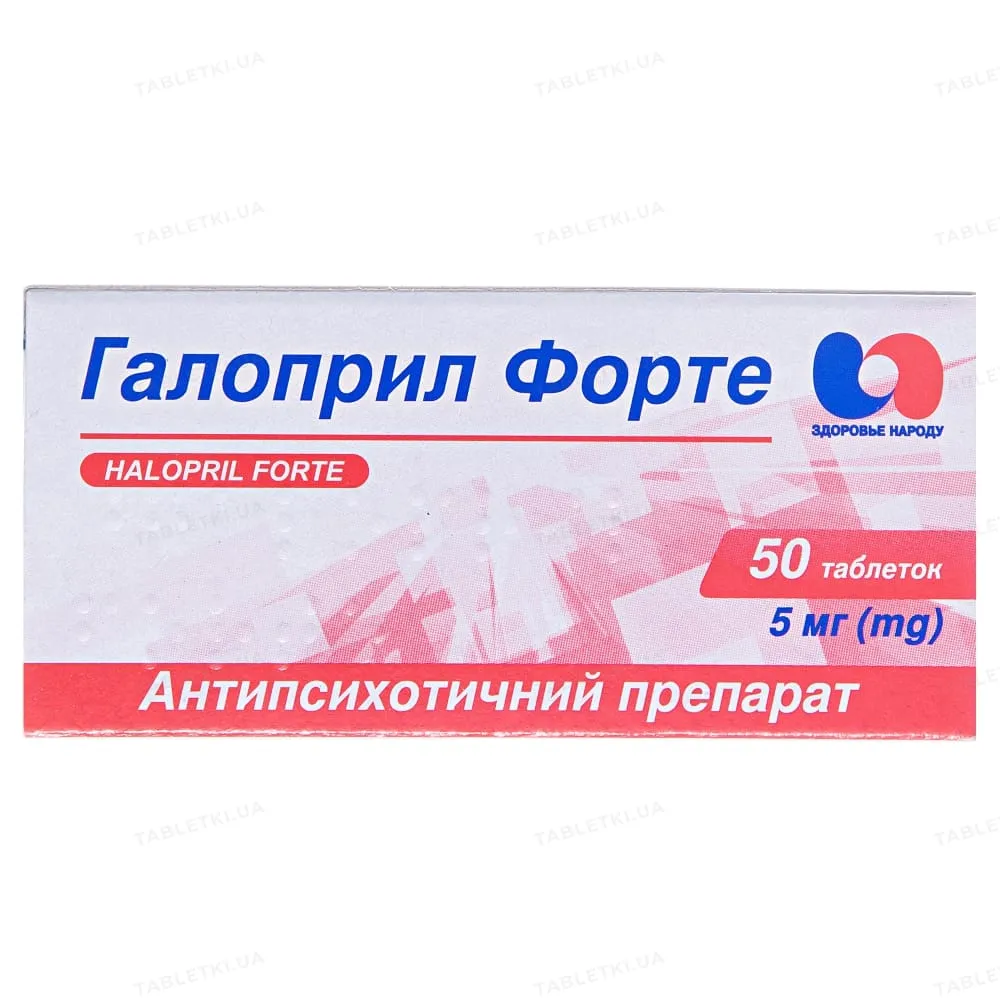
Table of Contents
INSTRUCTIONS FOR MEDICAL USE OF THE MEDICINAL PRODUCT HALOPRIL FORTE (HALOPRIL FORTE)
Composition:
Active substance: haloperidol;
One tablet contains 5 mg of haloperidol;
Excipients: sodium croscarmellose; microcrystalline cellulose; lactose monohydrate; corn starch; colloidal anhydrous silicon dioxide; magnesium stearate; macrogol 4000.
Pharmaceutical form. Tablets.
Main physicochemical properties: white or almost white tablets with a flat surface and a bevelled edge.
Pharmacotherapeutic group.
Antipsychotic agents. Butyrophenone derivatives. ATC code N05AD01.
Pharmacological properties.
Pharmacodynamics.
Haloperidol is a highly effective neuroleptic belonging to the butyrophenone derivatives. It exerts a pronounced antipsychotic and antiemetic effect.
The action of haloperidol is associated with blockade of central dopaminergic (D2) and alpha-adrenergic receptors in the mesocortical and limbic structures of the brain. Blockade of hypothalamic (D2) receptors leads to a decrease in body temperature and galactorrhea due to increased prolactin production. Inhibition of dopaminergic receptors in the trigger zone of the vomiting center underlies the antiemetic and antinausea effects. Interaction with dopaminergic structures of the extrapyramidal system (basal ganglia) leads to extrapyramidal disorders. The drug produces a moderate sedative effect by influencing the limbic system and also acts as an adjuvant in the treatment of chronic pain.
Haloperidol does not exert antihistaminic or anticholinergic effects.
Pharmacokinetics.
Absorption.
Maximum plasma concentration is reached within 2 – 6 hours. The bioavailability of haloperidol is 60 – 70%. Haloperidol is 92% bound to plasma proteins. For a therapeutic effect, the drug concentration in plasma should be within the range of 4 to 20 – 25 mcg/L.
Haloperidol is metabolized in the liver; the metabolite is inactive. Haloperidol is excreted in urine (40%) and feces (60%). Approximately 1% of haloperidol is excreted unchanged in urine. The volume of distribution at steady state is large (7.9 ± 2.5 L/kg). The elimination half-life from plasma after oral administration averages 24 hours (12 – 38 hours).
Haloperidol readily penetrates the blood-brain barrier.
Clinical characteristics.
Indications.
In adults:
- schizophrenia: treatment of symptoms and prevention of relapses;
- other psychoses: particularly paranoid;
- mania and hypomania;
- mental and behavioral problems such as aggression, hyperactivity, tendency to self-mutilation in mentally retarded patients and patients with organic brain damage;
- as an adjunctive agent for short-term treatment of psychomotor agitation (from moderate to severe), anxiety, violent or dangerously impulsive behavior;
- intractable hiccups;
- anxiety and agitation in elderly patients;
- Gilles de la Tourette syndrome and severe tics.
Contraindications.
Comatose state, severe central nervous system depression of toxic origin (alcoholic or drug-induced), endogenous depression without agitation, asthenia, neuroses, spastic states due to basal ganglia lesions (hemiplegia, multiple sclerosis), Parkinson's disease. Pathological processes localized in the area of the basal ganglia.
Hypersensitivity (allergy) to haloperidol or to excipients of the drug and other butyrophenone derivatives.
Clinically significant heart diseases (e.g., recent acute myocardial infarction; decompensated heart failure; arrhythmias treated with class IA and III antiarrhythmic drugs); QTc interval prolongation, history of ventricular arrhythmia or torsades de pointes-type ventricular arrhythmia, clinically significant bradycardia; second- or third-degree atrioventricular block and uncontrolled hypokalemia; concomitant use of drugs that prolong the QT interval.
Interaction with other medicinal products and other forms of interaction.
Concomitant use of drugs causing electrolyte imbalance requires increased caution, as the risk of developing ventricular arrhythmias may increase.
Haloperidol potentiates the central nervous system depressant effects of centrally-acting antihypertensives, opioid analgesics, hypnotics, antidepressants, anesthetic agents, and alcohol. Concurrent administration of haloperidol with these drugs may lead to respiratory depression.
Combining haloperidol with methyldopa enhances the effect of haloperidol on the central nervous system.
When used concomitantly with antiparkinsonian agents (levodopa), the therapeutic effect of these agents may be reduced due to antagonistic effects on dopaminergic structures.
Haloperidol slows the metabolism of tricyclic antidepressants, resulting in increased plasma levels and enhanced toxicity.
Quinidine, buspirone, and fluoxetine moderately increase haloperidol blood concentration; therefore, if concomitant use is necessary, the haloperidol dose should be reduced. Inhibitors of cytochrome P450 and CYP2D6 enzyme systems may increase haloperidol plasma levels.
Concomitant use of haloperidol with drugs known to prolong the QT interval (antiarrhythmic agents of classes IA and III, arsenic trioxide, halofantrine, levomethadyl acetate, mesoridazine, thioridazine, pimozide, sparfloxacin, gatifloxacin, moxifloxacin, dolasetron mesylate, mefloquine, sertindole, or cisapride) is contraindicated (see section "Contraindications").
Prolonged concomitant use of haloperidol with drugs that are liver enzyme inducers (carbamazepine, rifampicin, phenobarbital) leads to decreased serum concentration of haloperidol. When combination is necessary, an increase in haloperidol dose may be required; however, after discontinuation of the liver enzyme inducer, the haloperidol dose must be reduced.
Rare cases of the following symptoms have been reported with concurrent use of haloperidol and lithium salts: encephalopathy, extrapyramidal reactions, tardive dyskinesia, neuroleptic malignant syndrome, brainstem dysfunction, acute brain syndrome, and coma. Most of these symptoms were reversible. It is unknown whether they belong to a distinct nosological group. If the above-mentioned symptoms occur in patients receiving lithium and haloperidol concurrently, therapy must be discontinued immediately.
Haloperidol affects the activity of indirect anticoagulants (phenidione); therefore, when used concomitantly, the dose of the latter must be adjusted. An antagonistic effect on the anticoagulant effect of phenidione is observed. Haloperidol may reduce the effectiveness of adrenaline and other sympathomimetics and may cause a decrease in blood pressure when used with alpha-blockers (guanethidine).
Haloperidol may interfere with the effect of anticonvulsant drugs when used concomitantly, reducing their plasma levels. Dose adjustment of anticonvulsant drugs may become necessary.
Sodium valproate, a known inhibitor of glucuronidation, does not affect haloperidol plasma levels.
Special precautions for use.
Since QT interval prolongation on ECG may occur during haloperidol treatment, the benefit-risk ratio should be assessed in patients with cardiovascular disorders, a family history of sudden death and/or QT interval prolongation. Prior to initiating therapy, ECG monitoring should be performed (see section "Contraindications"). During treatment, the need for ECG monitoring should be determined individually.
Careful monitoring of ECG and serum potassium levels is required in patients with subarachnoid hemorrhage, starvation, alcohol abuse, or uncorrected electrolyte disturbances, especially during the initial phase of treatment before reaching steady-state plasma concentrations of the drug. Electrolyte imbalance may increase the risk of ventricular arrhythmias; therefore, regular monitoring of electrolytes is recommended, particularly in patients receiving diuretics. The dose should be reduced if QT interval prolongation occurs, and haloperidol should be discontinued immediately if the QT interval exceeds 500 ms.
Concomitant use with other neuroleptic agents should be avoided.
In psychiatric practice, cases of sudden death have been reported in patients receiving antipsychotic drugs, including haloperidol. Analyses of seventeen controlled clinical trials versus placebo (median duration 10 weeks), primarily involving treatment with atypical antipsychotics, showed a 1.6- to 1.7-fold higher risk of death in patients receiving antipsychotics compared to those receiving placebo. In a 10-week controlled clinical trial with typical antipsychotics, mortality rates were approximately 4.5% in patients receiving the drug compared to approximately 2.6% in the placebo group. Although the causes of death varied, most were due to cardiovascular events (e.g., heart failure, sudden death) or infections (e.g., pneumonia).
Observational studies suggest that, similar to atypical antipsychotics, treatment with conventional antipsychotics may increase mortality. Therefore, it remains unclear whether the increased mortality observed in observational studies is due to the effects of neuroleptics or to specific patient characteristics.
Cases of venous thromboembolism (VTE) have been reported with antipsychotic drugs. Since patients receiving antipsychotic therapy often have acquired risk factors for VTE, these should be identified prior to initiating treatment. Preventive measures should be taken during haloperidol therapy. Cases of tachycardia and hypotension have been observed in some patients.
Malignant neuroleptic syndrome (MNS). Like other drugs, haloperidol is associated with malignant neuroleptic syndrome—a rare and idiosyncratic condition. Cases of malignant neuroleptic syndrome have been reported with antipsychotic drugs (characterized by hyperthermia, generalized muscle rigidity, autonomic instability, impaired consciousness, and elevated plasma creatine phosphokinase levels). Additional signs may include myoglobinuria (rhabdomyolysis) and acute renal failure. Antipsychotic treatment should be discontinued immediately if these symptoms occur, and appropriate supportive therapy initiated (e.g., intravenous dantrolene infusions).
Increased mortality in elderly patients with dementia.
Elderly patients with dementia treated with antipsychotics have a slightly increased risk of death compared to those not receiving such treatment. Data on the exact magnitude of risk and the reasons for increased risk are insufficient. Haloperidol is not indicated for the treatment of behavioral disorders associated with dementia. Cases of tachycardia and hypotension have been observed in some patients.
In some patients on long-term therapy or after discontinuation of treatment, tardive dyskinesia may develop. This syndrome is characterized by rhythmic involuntary movements of the tongue, face, mouth, or jaw. Symptoms may be persistent or may be masked by resumption of treatment, dose escalation, or switching to another antipsychotic agent. Treatment should be discontinued immediately. Safety data in elderly patients indicate a risk of extrapyramidal symptoms, including tardive dyskinesia and sedation. Long-term safety data are lacking.
As with all neuroleptics, extrapyramidal symptoms may occur: tremor, rigidity, hypersalivation, bradykinesia, akathisia, acute dystonia.
Haloperidol should be administered with caution to patients with epilepsy and those with an increased predisposition to seizures (chronic intoxication, whether alcohol-related or of other origin, history of head trauma).
Patients with schizophrenia respond to antipsychotic therapy with a delay. After discontinuation of haloperidol treatment, symptoms typically reappear only after several weeks or months. Abrupt discontinuation of antipsychotic therapy, especially after high-dose treatment, may lead to withdrawal symptoms (nausea, vomiting, insomnia) and disease relapse. Therefore, the drug should be tapered gradually by reducing the dose.
In patients with psychiatric disorders involving depression and psychosis, haloperidol should be administered in combination with antidepressants.
If concomitant therapy with haloperidol and antiparkinsonian agents is required, antiparkinsonian treatment should be continued after discontinuation of haloperidol to prevent exacerbation of extrapyramidal symptoms, especially if the antiparkinsonian agent is eliminated more rapidly. It should be noted that concomitant use of haloperidol and anticholinergic drugs (including antiparkinsonian agents) may lead to increased intraocular pressure.
Haloperidol should be used with particular caution in patients who are "poor metabolizers" of CYP2D6, as well as when inhibitors of cytochrome P450 are co-administered.
Caution is required when using haloperidol in patients with hepatic impairment. With prolonged use, periodic monitoring of blood counts and liver function is necessary.
Caution is required when using haloperidol in patients with renal insufficiency and pheochromocytoma.
Thyroxine increases haloperidol toxicity; therefore, in patients with hyperthyroidism, haloperidol should be used only under adequate antithyroid therapy.
Hormonal effects of antipsychotic neuroleptics include hyperprolactinemia, which may cause galactorrhea, gynecomastia, and oligo- or amenorrhea. Rare cases of hypoglycemia and syndrome of inappropriate antidiuretic hormone secretion (SIADH) have been reported.
Alcohol consumption is contraindicated during treatment with this drug. At the beginning of haloperidol therapy, and particularly when high doses are used, sedation of varying degrees and reduced attention may occur, which may be intensified by alcohol consumption.
Patients with lactose intolerance should be aware that Halopryl Forte tablets contain lactose as an excipient; therefore, the drug should not be used in patients with rare hereditary forms of galactose intolerance, lactase deficiency, or glucose-galactose malabsorption syndrome.
Corn starch is included as an excipient in the formulation; therefore, patients with increased sensitivity or gluten intolerance should not take this dosage form.
Use during pregnancy or breastfeeding.
The use of haloperidol during pregnancy is possible only if the expected benefit outweighs the potential teratogenic risk. During the third trimester of pregnancy, the fetus is at risk of adverse effects, including extrapyramidal symptoms or withdrawal syndrome, which may vary in severity and duration after birth. Other reported neonatal effects include agitation, arterial hypertension, arterial hypotension, tremor, somnolence, respiratory distress, and feeding difficulties. Therefore, newborns should be closely monitored. Haloperidol is contraindicated in confirmed or suspected pregnancy. Haloperidol passes into breast milk. Breastfeeding should be discontinued if haloperidol treatment is necessary.
Ability to affect reaction speed when driving vehicles or operating machinery.
Haloperidol may cause sedative effects and reduced attention, particularly at higher doses and at the beginning of treatment. This effect may be potentiated by alcohol. Patients should be warned against driving vehicles or operating machinery during treatment until their individual response to the drug is established.
Dosage and Administration
Take orally during or after meals, with a full glass of water.
Dosage for all indications should be individually determined under close medical supervision. The initial dose should be based on the patient's age, severity of symptoms, and prior response to neuroleptics.
Elderly or debilitated patients, especially those with a history of adverse reactions to neuroleptics, may require a lower dose of haloperidol. The initial dose should be half the usual dose, then gradually adjusted to achieve optimal therapeutic response.
Haloperidol should be prescribed at the lowest clinically effective dose.
When a daily dose of 15 mg or higher is required, the use of Halopryl Forte, 5 mg tablets, is recommended in appropriate dosages.
In some cases, adequate dosing may not be achievable with Halopryl Forte 5 mg tablets. In such cases, Halopryl 1.5 mg tablets should be used.
Adults.
Use as a neuroleptic for the treatment of schizophrenia, psychosis, mania and hypomania, and organic brain damage (depending on symptoms).
Acute phase
Administer in doses of 2 to 20 mg/day, either as a single dose or divided into multiple doses.
Chronic phase
1–3 mg orally, divided into three doses, may be increased up to 20 mg/day in multiple doses depending on response.
Use for controlling psychomotor agitation associated with thought or behavioral disorders such as aggression, hyperactivity, self-mutilation in patients with intellectual disability or organic brain damage, violent or dangerously impulsive behavior, Gilles de la Tourette syndrome with severe tics, intractable hiccups.
Acute phase
Mild symptoms: 1.5–3.0 mg two or three times daily.
Severe symptoms/resistant patients: 3.0–5.0 mg two or three times daily.
Chronic phase
0.5–1 mg orally three times daily. If necessary, the dose may be increased to 2–3 mg three times daily to achieve response.
After satisfactory symptom control is achieved, the dose should be gradually reduced to the lowest effective maintenance dose—most commonly 5 to 10 mg/day. Rapid dose reduction should be avoided.
Agitation and anxiety in elderly patients
Treatment should be initiated at half the initial adult dose, followed by dose titration as needed to achieve therapeutic effect.
Children. This formulation is not indicated for use in children.
Overdose.
Symptoms: Characterized by an intensification of known pharmacological and adverse effects. The most important signs of overdose include severe extrapyramidal disorders, arterial hypotension, and sedative effects. Extrapyramidal disorders manifest as muscle rigidity and generalized or localized muscle tremor. Arterial hypertension may occur more frequently than arterial hypotension.
In extreme cases, a comatose state with respiratory depression and marked hypotension may develop. This may be so severe as to lead to shock. Ventricular arrhythmias with QT interval prolongation should also be considered as possible complications.
Treatment: There is no specific antidote. Symptomatic therapy should be administered. Activated charcoal may be used.
In cases of coma, respiratory support is required, including orotracheal or endotracheal intubation. Artificial ventilation of the lungs may be necessary in the event of respiratory depression.
ECG and vital hemodynamic parameters must be monitored until ECG normalizes. For the treatment of severe arterial hypotension or circulatory failure, intravenous administration of adequate fluids, blood plasma, or concentrated albumin, along with vasopressor agents (dopamine or noradrenaline), is required. Adrenaline (epinephrine) should not be used, as it may cause severe arterial hypotension when combined with haloperidol. In cases of severe extrapyramidal symptoms, parenteral antiparkinsonian agents (benztropine mesylate) should be administered (in adults, 1–2 mg intravenously or intramuscularly). Discontinuation of these agents should be done cautiously, as abrupt withdrawal may lead to recurrence of extrapyramidal disorders.
Adverse Reactions
When haloperidol is used briefly and in low doses (1–2 mg per day), adverse effects are rare, mild, and transient. With prolonged use of higher doses, adverse effects occur more frequently. Neurological side effects are the most commonly observed.
Blood and lymphatic system disorders: Rare and transient decreases in blood cell counts have been reported. Very rarely, agranulocytosis and thrombocytopenia may occur; transient leukopenia, usually when haloperidol is combined with other drugs; neutropenia; leukocytosis; pancytopenia.
Immune system disorders: Rarely, anaphylactic reactions have occurred.
Endocrine system disorders: Hormonal side effects of antipsychotic neuroleptics include the potential for hyperprolactinemia, which may lead to inappropriate antidiuretic hormone secretion.
Metabolism and nutrition disorders: Decreased appetite; rarely, hypoglycemia and reduced antidiuretic hormone secretion may occur in exceptional cases.
Psychiatric disorders: Depression, agitation, insomnia, confusion, exacerbation of psychotic symptoms, excitement, loss of libido.
Nervous system disorders: In individual cases, sedative effects, drowsiness, headache, dizziness, grand mal seizures, oculogyric crises, dyskinesia, bradykinesia, hypokinesia, akinesia, mask-like facies, nystagmus, hypertension, lethargy, dizziness, involuntary muscle contractions, parkinsonism, cardioneurosis.
Malignant Neuroleptic Syndrome (MNS): The use of antipsychotic agents, including haloperidol, may lead to MNS. This rare idiosyncratic reaction is characterized by hyperthermia, generalized muscle rigidity, autonomic instability, altered mental status, and elevated plasma creatine phosphokinase levels. Hyperthermia is often an early sign of MNS. If symptoms of MNS appear, neuroleptic therapy must be discontinued immediately, and supportive treatment should be initiated under close observation.
Extrapyramidal symptoms: With prolonged use, symptoms typical of neuroleptics may occur: tremor, muscle rigidity, bradykinesia, akathisia, acute dystonia, or laryngeal dystonia. In such cases, antiparkinsonian agents with anticholinergic activity may be administered, but not as prophylactic therapy, since their use may reduce the effectiveness of haloperidol.
Tardive dyskinesia: As with other antipsychotic agents, prolonged use of haloperidol or its discontinuation may lead to tardive dyskinesia. This syndrome is characterized by involuntary, rhythmic movements of the tongue, face, mouth, or jaw. These symptoms may persist continuously in some patients. The syndrome may be masked when therapy is resumed, the dose of haloperidol is increased, or another antipsychotic agent is administered. Upon appearance of signs of tardive dyskinesia, it is advisable to discontinue therapy as early as possible.
Rhythmic, involuntary movements of the tongue may be an early sign of tardive dyskinesia. Discontinuation of treatment at this early stage may prevent the development of this syndrome.
Eye disorders: In elderly patients, acute angle-closure glaucoma attacks may occur. Periodically, blurred vision, eye movements, and hazy vision may be observed.
Cardiac disorders: In some cases, tachycardia and hypotension may occur. Rarely, in exceptional cases, QT interval prolongation on ECG and/or ventricular arrhythmias, including ventricular fibrillation, ventricular tachycardia, torsades de pointes, and sudden cardiac arrest, extrasystoles. Cases of sudden fatal outcomes have also been reported. These disorders may occur in patients receiving high doses of the drug or those predisposed to cardiovascular disorders.
Vascular disorders: Arterial hypotension has been reported periodically; less frequently, arterial hypertension. With the use of antipsychotic drugs, cases of venous thromboembolism, including pulmonary embolism and deep vein thrombosis, have been reported. The frequency of occurrence is unknown, orthostatic hypotension.
Gastrointestinal disorders: Nausea, vomiting, and dyspeptic symptoms have been reported periodically. In some cases, constipation, dyspepsia, dry mouth, and increased salivation may occur.
Respiratory disorders: Dyspnea, bronchospasm, laryngeal edema, laryngospasm.
Hepatic disorders: Isolated cases of abnormal liver function tests, acute liver failure, hepatitis (most commonly cholestatic), cholestasis have been reported. Jaundice may occur periodically.
Skin and subcutaneous tissue disorders: Increased sweating may occur periodically. Rarely, hypersensitivity reactions such as skin rashes, pruritus, peripheral edema, urticaria, exfoliative dermatitis, erythema multiforme, photosensitization, leukocytoclastic vasculitis have been observed.
Musculoskeletal and connective tissue disorders: Torticollis, trismus, muscle twitching, muscle spasms, gait disturbances, muscle cramps, musculoskeletal pain.
Renal and urinary disorders: Urinary retention may occur periodically.
Reproductive system and breast disorders: Very rarely, oligo- or amenorrhea, galactorrhea, gynecomastia, breast engorgement, discomfort and pain in the breasts, menorrhagia, dysmenorrhea, menstrual cycle disturbances may occur. Sexual dysfunction may be observed: erectile dysfunction, ejaculation disorders, priapism.
Laboratory findings: Both weight gain and weight loss are possible.
General disorders and administration site conditions: Very rarely, gait disturbances, facial edema, hyponatremia, hyperthermia, sudden death may occur.
Shelf life. 3 years.
Storage conditions.
Store in the original packaging at a temperature not exceeding 25 °C.
Packaging.
10 tablets in a blister; 5 or 10 blisters in a cardboard box.
Prescription category.
Prescription only.
Manufacturer.
Limited liability company "Kharkiv Pharmaceutical Enterprise "Zdorovya Narodu".
Manufacturer's address and place of business.
41 Kuilikivska Street, Kharkiv, Kharkiv Oblast, 61002, Ukraine.