Fluanxol
Ukraine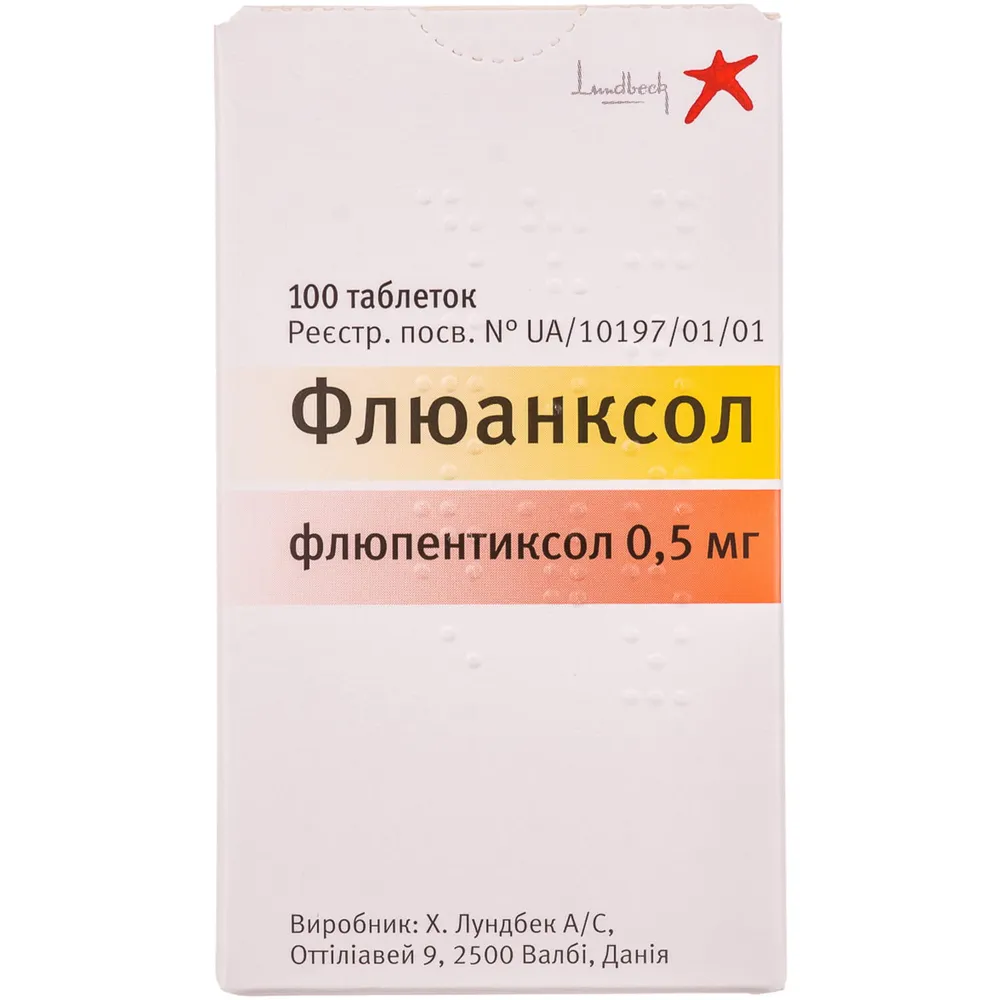
Table of Contents
INSTRUCTIONS FOR MEDICAL USE OF THE MEDICINAL PRODUCT FLUANXOL (FLUANXOL®)
Composition:
Active substance: flupentixol (flupentixol);
1 tablet contains flupentixol dihydrochloride equivalent to 0.5 mg or 1 mg of flupentixol;
Excipients: betadex; lactose monohydrate; maize starch; hydroxypropylcellulose; microcrystalline cellulose; sodium croscarmellose; talc; hydrogenated vegetable oil; magnesium stearate;
Coating: polyvinyl alcohol partially hydrolyzed, titanium dioxide (E 171), macrogol 3350, talc, yellow iron oxide (E 172), macrogol 6000.
Pharmaceutical form. Film-coated tablets.
Main physicochemical properties:
0.5 mg: round, slightly biconvex, yellow, film-coated tablets with marking FD;
1 mg: oval, slightly biconvex, yellow, film-coated tablets with marking FF.
Pharmacotherapeutic group. Psycholeptics. Antipsychotics. Thioxanthene derivatives. Flupentixol.
ATC code N05AF01.
Pharmacological Properties
Pharmacodynamics
Flupentixol is a neuroleptic of the thioxanthene group.
Flupentixol is a mixture of two geometric isomers, cis(Z)-flupentixol and trans(E)-flupentixol, in an approximate ratio of 1:1.
The antipsychotic effect of neuroleptics is associated with blockade of dopamine receptors, as well as possible involvement of 5HT-receptor blockade. In vitro and in vivo, flupentixol has high affinity for both dopamine D1 and D2 receptors, in contrast to fluphenazine, which is D2-selective in vivo. The atypical antipsychotic clozapine has a similar affinity for D1 and D2 receptors as flupentixol, both in vitro and in vivo.
Flupentixol has high affinity for α1-adrenergic and 5HT2 receptors, although somewhat lower than that of chlorprothixene, phenothiazines at high doses, and clozapine, but it lacks affinity for cholinergic muscarinic receptors. It exhibits weak antihistaminergic properties and does not exert blocking activity on α2-adrenergic receptors.
Flupentixol is a high-potency neuroleptic, as demonstrated in all behavioral studies of neuroleptic activity (ability to block dopamine receptors). At average daily doses and with oral administration for antipsychotic treatment, binding affinity to sites associated with the dopamine D2 receptor is observed in both in vitro and in vivo models.
Perioral movements in rats depend on stimulation of D1 receptors or blockade of a population of D2 receptors. These movements can be prevented by flupentixol. Similarly, studies in primates indicate that oral hyperkinesia is more strongly associated with stimulation of D1 receptors and less so with D2 receptor hypersensitivity. This suggests that D1 activation is responsible for the development of such effects in humans, i.e., dyskinesia. Therefore, blockade of D1 receptors may be beneficial in preventing the development of dyskinesia in humans.
Flupentixol prolongs the duration of alcohol- and barbiturate-induced sleep in mice only at very high doses, indicating very weak sedative effects during clinical use.
Like most other neuroleptics, flupentixol increases serum prolactin levels in a dose-dependent manner.
Fluanxol has a broad spectrum of activity that depends on the dose.
At low doses (1–2 mg/day), flupentixol produces antidepressant, anxiolytic, and activating effects.
At medium doses (3–25 mg/day), flupentixol is used to treat acute and chronic psychoses. Within this dosage range, the drug practically lacks nonspecific sedative effects and is unsuitable for treating patients with pronounced psychomotor agitation. In addition to significantly reducing or completely eliminating core symptoms of schizophrenia, such as hallucinations, delusions, and thought disorders, flupentixol also has calming (anti-autistic and activating) properties, improves mood, which is particularly beneficial in treating apathetic, withdrawn, depressed patients with low motivation.
The antipsychotic effect intensifies with increasing dose; some sedation may additionally be expected. Flupentixol produces an anxiolytic effect across the entire dose range, and even at high doses, the calming and mood-elevating effects are preserved. Treatment with high doses does not increase the frequency of extrapyramidal symptoms.
Pharmacokinetics
The data below refer to the active isomer.
Absorption
The bioavailability of flupentixol after oral administration is approximately 40%, and maximum serum concentration is reached within 4–5 hours.
Distribution
The apparent volume of distribution (Vd)β is approximately 14.1 L/kg. Plasma protein binding is approximately 99%.
Biological transformation
Flupentixol metabolism proceeds via three main pathways: sulfoxidation, N-dealkylation of the side chain, and conjugation with glucuronic acid. Metabolites lack psychopharmacological activity. Flupentixol predominates over metabolites in the brain and other tissues.
Elimination
The elimination half-life (T1/2β) is approximately 35 hours, and systemic clearance (Cls) is approximately 0.29 L/min. Excretion occurs primarily via feces and partially via urine.
When tritium-labeled flupentixol was administered to humans, excretion characteristics showed that fecal excretion was about four times greater than urinary excretion.
Flupentixol passes into breast milk in small amounts. In women, the ratio of milk to serum concentration averages 1.3.
Linearity
Kinetics are linear; steady-state plasma concentrations are achieved within 7 days. With administration of 5 mg flupentixol orally once daily, the average minimum steady-state level was about 1.7 ng/mL (3.9 nmol/L).
Elderly patients
Pharmacokinetic studies in elderly patients have not been conducted. However, in a related thioxanthene-group drug, zuclopenthixol, pharmacokinetic parameters do not significantly depend on patient age.
Based on the above characteristics, it can be assumed that reduced renal function may not have a significant impact on serum drug levels.
Data on the effect of hepatic impairment on the pharmacokinetic parameters of the drug are lacking.
Pharmacokinetic/Pharmacodynamic interaction
A minimum (i.e., concentration measured just before the next dose) serum (plasma) concentration of 1–3 ng/mL (2–8 nmol/L) is recommended as the target range for maintenance treatment of patients with schizophrenia of mild to moderate severity.
Clinical Characteristics
Indications
Depressions accompanied by anxiety, asthenia, and loss of initiative.
Chronic neurotic disorders associated with anxiety, depression, and inactivity.
Psychosomatic disorders with asthenic reactions.
Schizophrenia and other psychoses, particularly those with symptoms such as hallucinations, delusions, and thought disturbances, complicated by apathy, anergia, depressed mood, and social withdrawal.
Contraindications
Hypersensitivity to any component of the drug.
Severe depression requiring electroconvulsive therapy or hospitalization; states of emotional agitation or hyperactivity, including mania.
Circulatory collapse, central nervous system depression of any origin (e.g., due to alcohol, barbiturate, or opioid intoxication), coma.
Not recommended for use in easily excitable patients or in patients experiencing nervous excitement.
Interaction with other medicinal products and other forms of interaction
Combinations Requiring Caution in Use
Flupenthixol may enhance the sedative effects of alcohol, barbiturates, and central nervous system depressants. Flupenthixol may potentiate the effects of general anesthetics and anticoagulants and prolong the duration of action of neuromuscular blocking agents.
Antipsychotics may enhance the cardiodepressant effects of quinidine and the absorption of corticosteroids and digoxin. The hypotensive effect of vasodilator antihypertensive agents such as hydralazine, α-blockers (e.g., doxazosin), or methyldopa may be enhanced.
Neuroleptics may either enhance or reduce the effects of antihypertensive agents; the hypotensive effect of guanethidine and similarly acting agents is diminished.
Concomitant use of neuroleptics with lithium or sibutramine increases the risk of neurotoxicity.
Tricyclic antidepressants and neuroleptics mutually inhibit each other's metabolism, and glycemic control in diabetes may worsen.
Antipsychotics may exhibit antagonism to the effects of adrenaline and other sympathomimetics and may neutralize the antihypertensive effects of guanethidine, possibly also clonidine and similar adrenergic-blocking agents. Antipsychotics may reduce the effect of levodopa, adrenergic agents, and anticonvulsants.
Anticholinergic effects of atropine or other medicinal products with anticholinergic properties may be enhanced.
Concomitant use of drugs such as metoclopramide, piperazine, or anti-Parkinsonian agents may increase the risk of extrapyramidal disorders, such as tardive dyskinesia.
Flupenthixol may reduce the effects of levodopa and adrenergic agents, and combination with metoclopramide and piperazine increases the risk of developing extrapyramidal symptoms.
Prolongation of the QT interval associated with the use of antipsychotic agents may be intensified when used concomitantly with other agents capable of significantly prolonging the QT interval. Combinations with such agents should be avoided. Relevant classes include:
- Class Ia and III antiarrhythmic agents (e.g., quinidine, amiodarone, sotalol, dofetilide);
- Some antipsychotic agents (e.g., thioridazine);
- Some macrolide antibiotics (e.g., erythromycin);
- Some antihistamines (e.g., terfenadine, astemizole);
- Some quinolone antibiotics (e.g., gatifloxacin, moxifloxacin).
The above list is incomplete; combinations with other individual drugs capable of significantly prolonging the QT interval (such as cisapride, lithium) should also be avoided.
Agents that alter electrolyte balance, such as thiazide diuretics (causing hypokalemia), and agents that increase flupenthixol concentration should also be used with caution, as they may increase the risk of QT interval prolongation and malignant arrhythmias.
Special precautions for use.
Caution is required in patients with the following conditions: liver disease; heart disease or arrhythmias; severe respiratory disorders; renal insufficiency; epilepsy (and conditions predisposing to epilepsy, such as alcohol withdrawal or brain injury); Parkinson's disease; narrow-angle glaucoma; benign prostatic hyperplasia; hypothyroidism; hyperthyroidism; myasthenia gravis; pheochromocytoma; and patients who are hypersensitive to thioxanthenes or other antipsychotics.
Relapse of depressive symptoms after abrupt discontinuation of the drug occurs rarely.
Acute withdrawal symptoms, including nausea, vomiting, sweating, and insomnia, have been reported after abrupt discontinuation of thioxanthenes and similar medicinal products. Movement disorders (such as akathisia, dystonia, and dyskinesia) have also been reported. Therefore, gradual withdrawal of the drug is recommended.
No cases of drug dependence have been reported to date.
There is a potential risk of developing neuroleptic malignant syndrome (hyperthermia, muscle rigidity, altered consciousness, autonomic dysfunction) with the use of any neuroleptic agent. The risk may be higher when multiple agents are used. Fatal cases have been observed primarily in patients with pre-existing organic brain syndrome, mental retardation, or opioid and alcohol abuse.
Treatment: discontinue the neuroleptic agent, provide symptomatic and general supportive measures. Dantrolene and bromocriptine may be used.
Symptoms may persist for a week or more after discontinuation of oral formulations and somewhat longer after depot formulations.
Rare cases of pathological changes in blood parameters, including thrombocytopenia, have been reported. If a patient develops signs of persistent infection, complete blood counts should be performed.
Like other neuroleptics, flupentixol should be used with caution in patients with organic brain syndrome, seizures, and progressive liver disease.
Flupentixol in doses up to 25 mg/day is not recommended for the treatment of agitated, hyperactive patients, as its activating effect may exacerbate such characteristics. Tranquilizers or sedative neuroleptics should be gradually withdrawn when switching to flupentixol therapy.
Like other antipsychotics, flupentixol may alter insulin and glucose profiles, necessitating adjustment of antidiabetic therapy in patients with diabetes mellitus.
During maintenance therapy, especially when high doses are used, patients should be closely monitored, and periodic evaluation of the possibility of reducing the maintenance dose is recommended.
Like other drugs belonging to the therapeutic class of antipsychotics, flupentixol may lead to QT interval prolongation. Pre-existing QT prolongation may increase the risk of serious arrhythmias. Therefore, flupentixol should be used cautiously in patients with suspected hypokalemia, hypomagnesemia, or genetic predisposition to such conditions, as well as in patients with a history of cardiovascular disorders, such as prolonged QT interval, marked bradycardia (<50 beats/min), recent myocardial infarction, uncompensated heart failure, or cardiac arrhythmia. Concomitant treatment with other antipsychotics should be avoided.
Suicide / suicidal thoughts or clinical worsening
Depression is associated with an increased risk of suicidal thoughts, self-harm, and suicide. This risk persists until significant remission occurs. Since improvement may not occur within the first few weeks of treatment or longer, patients should be closely monitored throughout the period until improvement occurs. Clinical experience indicates that the risk of suicide may increase in the early stages of recovery. Other psychiatric disorders for which flupentixol is prescribed may also be associated with an increased risk of suicide and related events. In addition, these conditions may be comorbid with depressive disorder. The same precautionary measures should be taken when treating patients with major depressive disorder and other psychiatric disorders. Patients with a history of suicide-related events or those who exhibit significant suicidal ideation prior to treatment initiation are known to be at higher risk of suicidal thoughts or attempts and require close monitoring during treatment. A meta-analysis of placebo-controlled clinical trials of antidepressants in psychiatric patients showed an increased risk of suicidal behavior in patients under 25 years of age treated with antidepressants compared to those receiving placebo.
Close monitoring of patients, particularly those at high risk, should accompany pharmacological therapy, especially at the beginning of treatment and after dose adjustments. Patients (and their caregivers) should be advised to monitor for any clinical worsening, suicidal behavior or thoughts, or unusual changes in behavior and to contact their physician immediately if such symptoms occur.
Cases of venous thromboembolism (VTE) have been reported with the use of antipsychotic agents. Since patients receiving antipsychotics often have acquired VTE risk factors, all possible VTE risk factors should be assessed before and during flupentixol treatment, and appropriate preventive measures should be taken.
Elderly patients
Elderly patients require careful monitoring, as they are particularly susceptible to adverse effects such as sedation, arterial hypotension, confusion, and changes in body temperature.
Cerebrovascular disorders
In randomized, placebo-controlled studies in patients with dementia, some atypical antipsychotics have been associated with approximately a threefold increased risk of cerebrovascular adverse events. The mechanism of this increased risk is unknown. An increased risk cannot be excluded for other antipsychotics or other patient populations. Flupentixol should be used with caution in patients with risk factors for stroke.
Increased risk of mortality in elderly patients with dementia
Study data indicate that elderly patients with dementia treated with antipsychotic drugs have a slightly increased risk of death compared to those not receiving such treatment. Data are insufficient to precisely estimate the magnitude of risk, and the cause of the increased risk is unknown.
Flupentixol is not indicated for the treatment of behavioral disorders associated with dementia.
Excipients
The tablets contain lactose monohydrate. This product should not be administered to patients with rare hereditary disorders of galactose intolerance, Lapp lactase deficiency, lactase deficiency, or glucose-galactose malabsorption.
Use during pregnancy or breastfeeding
Pregnancy
Since the safety of Fluanxol use during pregnancy in humans has not been established, flupentixol should not be prescribed during pregnancy, especially during the first and third trimesters, unless the expected benefit to the patient outweighs the theoretical risk to the fetus.
Newborns whose mothers have taken antipsychotics (including flupentixol) during the third trimester of pregnancy may be at risk of adverse reactions, including extrapyramidal disorders and/or withdrawal symptoms, the severity and duration of which may vary after delivery. Cases of restlessness, hypertonia, hypotonia, tremor, somnolence, respiratory distress, or feeding difficulties have been reported. Therefore, newborns should be closely monitored.
Animal studies have shown reproductive toxicity.
Lactation
If the use of Fluanxol is considered essential, breastfeeding mothers should be advised to discontinue breastfeeding.
Fertility
Adverse effects such as hyperprolactinemia, galactorrhea, amenorrhea, decreased libido, erectile dysfunction, and absence of ejaculation have been reported. These effects may negatively affect male or female sexual function and fertility.
If clinically significant hyperprolactinemia, galactorrhea, amenorrhea, or sexual dysfunction occurs, dose reduction (if possible) or discontinuation of the drug should be considered. Effects after discontinuation of the drug are reversible.
In preclinical studies on the effect of the drug on fertility in rats, flupentixol had a minor effect on pregnancy frequency in female rats.
Ability to affect reaction speed when driving or operating machinery
Fluanxol is a non-sedating agent at low and medium dose ranges. However, patients receiving psychotropic drugs, or after alcohol consumption, may experience some reduction in general attention and concentration and should be warned about the possible impact of their treatment on their ability to drive or operate machinery.
Patients should not drive if they experience blurred vision.
Dosage and Administration
Adults
Depression. Chronic neurotic disorders. Psychosomatic disorders
Initially 1 mg daily as a single morning dose or 0.5 mg twice daily. After one week the dose may be increased to 2 mg/day if the clinical response is inadequate. Daily doses exceeding 2 mg should be divided into separate doses, up to a maximum of 3 mg.
Elderly patients
Elderly patients should be given half the recommended dose.
Patients usually begin to respond to flupentixol within two or three days of starting treatment. If no effect is observed after one week of treatment at the maximum dose, the drug should be discontinued.
Schizophrenia and other psychoses
Adults
Dosage should be individually adjusted according to the patient's condition. In general, treatment should start with low doses, which should be increased as rapidly as possible to the optimal effective level, depending on the therapeutic response. The maintenance dose is usually taken as a single morning dose.
Initial dose: 3–15 mg/day in 2 or 3 divided doses, increased if necessary up to 40 mg/day. The usual maintenance dose is 5–20 mg/day, which can be taken as a single daily morning dose.
Elderly patients. Lower doses are required.
Renal impairment. Flupentixol should be administered in usual doses.
Hepatic impairment. Careful dose titration is recommended, and, if possible, monitoring of plasma drug levels should be performed.
Administration
Tablets should be swallowed with water.
Children
The use of the drug is not recommended due to insufficient clinical data.
Overdose
Symptoms: Drowsiness, coma, extrapyramidal symptoms, seizures, arterial hypotension, shock, hypothermia or hyperthermia.
The highest single oral dose used in clinical trials was 80 mg, and up to 320 mg/day.
When overdose occurs concurrently with agents affecting cardiac function, ECG changes, QT prolongation, torsades de pointes, cardiac arrest, and ventricular arrhythmias have been observed.
Treatment: Symptomatic and supportive care. Gastric lavage should be performed as soon as possible, and sorbents should be administered. Measures to maintain respiratory and cardiovascular function should be taken.
If necessary, the following specific measures may be applied:
- Administration of anticholinergic anti-parkinsonian agents in case of extrapyramidal symptoms.
- Sedation (with benzodiazepines) in the unlikely event of nervous agitation, emotional excitement, or seizures.
- Intravenous infusion of noradrenaline in saline solution if shock occurs.
- Consideration should be given to performing gastric lavage.
Epinephrine (adrenaline) should not be used, as it may cause further lowering of blood pressure. Seizures may be treated with diazepam, and extrapyramidal symptoms with biperiden.
Adverse Reactions
Suicidal thoughts and suicidal behavior have been reported during therapy with flupentixol or in the early period after discontinuation of this drug (see section "Special Warnings and Precautions for Use").
Adverse effects are mostly dose-dependent. Their frequency and severity are more pronounced at the beginning of therapy and decrease with continued treatment.
Extrapyramidal symptoms may develop, particularly during the initial phase of treatment. In most cases, these can be managed by reducing the dose and/or using anti-Parkinsonian agents. However, routine prophylactic administration of anti-Parkinsonian drugs is not recommended. Anti-Parkinsonian agents do not eliminate tardive dyskinesia and may even exacerbate it. It is recommended to reduce the dose or, if possible, discontinue flupentixol therapy. In cases of persistent akathisia, treatment with a benzodiazepine or propranolol is recommended.
The adverse reactions listed below are categorized by frequency as follows: very common (≥1/10), common (≥1/100 to <1/10), uncommon (≥1/1000 to <1/100), rare (≥1/10000 to <1/1000), very rare (<1/10000), or not known (cannot be estimated from available data).
| Cardiac disorders |
Common |
Tachycardia, palpitations. |
| Uncommon |
QT interval prolongation on ECG. |
|
| Blood and lymphatic system disorders |
Uncommon |
Thrombocytopenia, neutropenia, leukopenia, agranulocytosis. |
| Nervous system disorders |
Very common |
Somnolence, akathisia, hyperkinesia, hypokinesia. |
| Common |
Tremor, dystonia, dizziness, headache, impaired concentration. |
|
| Uncommon |
Dyskinesia, parkinsonism, speech disorders, seizures. |
|
| Rare |
Tardive dyskinesia. |
|
| Very rare |
Malignant neuroleptic syndrome. |
|
| Eye disorders |
Common |
Accommodation and vision disturbances. |
| Uncommon |
Eye movements. |
|
| Respiratory, thoracic and mediastinal disorders |
Common |
Dyspnea. |
| Gastrointestinal disorders |
Very common |
Dry mouth. |
| Common |
Increased salivation, constipation, vomiting, dyspepsia, diarrhea. |
|
| Uncommon |
Abdominal pain, nausea, flatulence. |
|
| Renal and urinary disorders |
Common |
Urinary disorders, urinary retention. |
| Pregnancy, puerperium and perinatal period |
Not known |
Withdrawal syndrome in newborns. |
| Skin and subcutaneous tissue disorders |
Common |
Hyperhidrosis, pruritus. |
| Uncommon |
Rash, photosensitivity reactions, dermatitis. |
|
| Musculoskeletal and connective tissue disorders |
Common |
Myalgia. |
| Uncommon |
Muscle rigidity. |
|
| Endocrine disorders |
Uncommon |
Hyperprolactinemia. |
| Metabolism and nutrition disorders |
Common |
Increased appetite, weight gain. |
| Uncommon |
Decreased appetite. |
|
| Rare |
Hyperglycemia, impaired glucose tolerance. |
|
| Vascular disorders |
Uncommon |
Arterial hypotension, flushing. |
| Very rare |
Venous thromboembolism. |
|
| General disorders |
Common |
Asthenia, increased fatigue. |
| Immune system disorders |
Uncommon |
Hypersensitivity, anaphylactic reaction. |
| Hepatobiliary disorders |
Uncommon |
Abnormal liver function tests. |
| Very rare |
Jaundice. |
|
| Reproductive system and breast disorders |
Uncommon |
Anejaculation, erectile dysfunction. |
| Rare |
Gynecomastia, galactorrhea, amenorrhea. |
|
| Psychiatric disorders |
Common |
Insomnia, depression, nervousness, agitation, decreased libido. |
| Uncommon |
Confusion. |
|
| Not known |
Suicidal thoughts and behavior* |
* Cases of suicidal thoughts and suicidal behavior have been reported during treatment with flupenthixol or in the early period after discontinuation of therapy.
There have been reports of rare cases of QT prolongation, ventricular arrhythmias – including ventricular fibrillation, ventricular tachycardia, torsade de pointes – and sudden fatal outcomes associated with the use of medicinal products belonging to the antipsychotic therapeutic class, including flupenthixol.
Sudden discontinuation of flupenthixol may cause withdrawal symptoms, the most common of which are nausea, vomiting, anorexia, diarrhea, rhinorrhea, sweating, myalgia, paraesthesia, insomnia, restlessness, anxiety, and agitation. Patients may also experience dizziness, fluctuating sensations of heat or cold, and tremor. Symptoms usually begin within 1–4 days after stopping the drug and gradually subside over 7–14 days.
Shelf life. 3 years.
Storage conditions.
No special storage conditions required. Keep out of the reach and sight of children.
Packaging.
100 tablets in a plastic container in a cardboard box.
Prescription status. Prescription only.
Manufacturer: H. Lundbeck A/S.
Manufacturer's address and place of business: Ottiliavej 9, 2500 Valby, Denmark.