Flu.net
Ukraine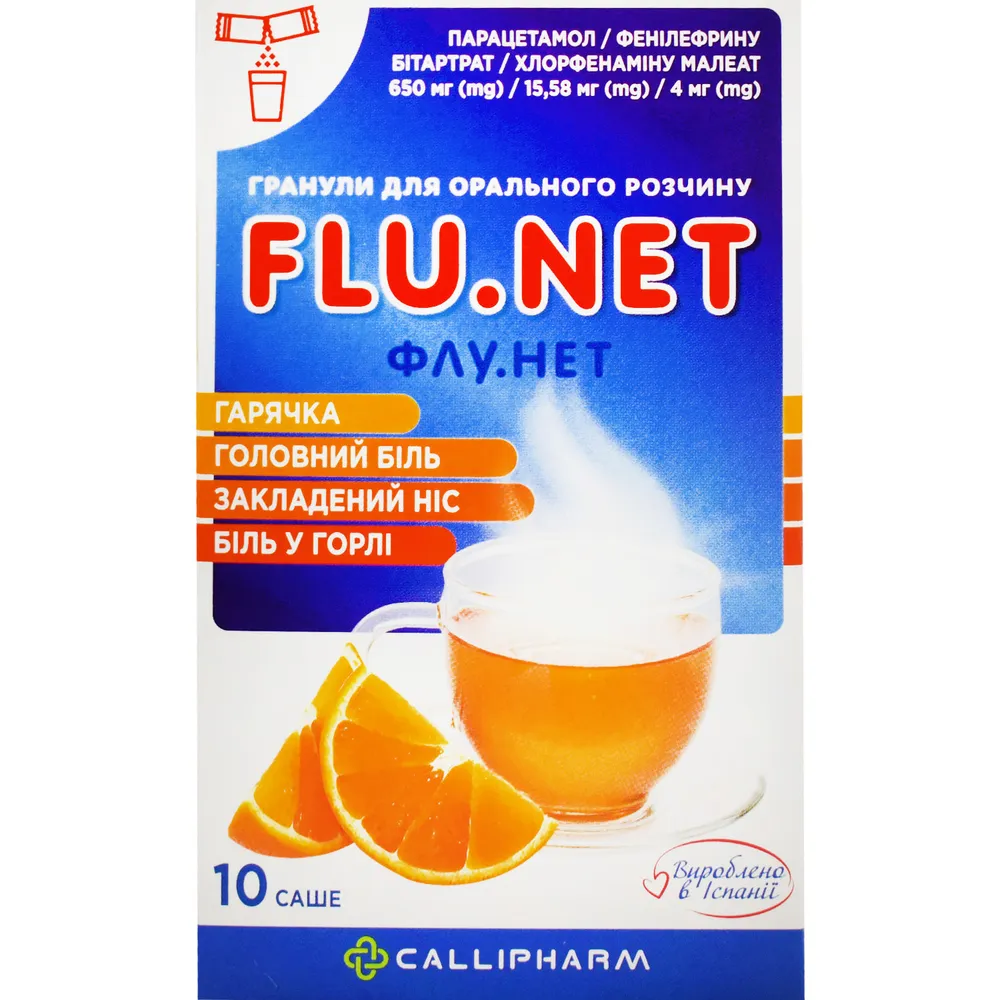
Table of Contents
INSTRUCTIONS FOR MEDICAL USE OF THE MEDICINAL PRODUCT FLU.NET
Composition:
Active substances: paracetamol, phenylephrine bitartrate, chlorpheniramine maleate;
1 sachet contains 650 mg of paracetamol, 15.58 mg of phenylephrine bitartrate, 4 mg of chlorpheniramine maleate;
Excipients: mannitol (E 421), sodium saccharin, orange flavor PHS 132958, colloidal anhydrous silicon dioxide, povidone K30.
Pharmaceutical form. Oral granules for solution.
Main physicochemical characteristics: white or yellowish-white granules; when dissolved in water, forms an opalescent whitish solution with an orange odor.
Pharmacotherapeutic group. Analgesics and antipyretics. Paracetamol combinations without psychotropic agents.
ATC code N02BE51.
Pharmacological properties.
Pharmacodynamics.
A combination drug with analgesic, antipyretic, anti-inflammatory, and antiallergic effects, determined by the actions of the components contained in the medicinal product.
Paracetamol – has analgesic, antipyretic, and weak anti-inflammatory effects. Its mechanism of action involves inhibition of prostaglandin synthesis and effects on the thermoregulatory center in the hypothalamus.
Phenylephrine bitartrate – an α-adrenomimetic agent that reduces edema and hyperemia of the mucous membranes of the upper respiratory tract and nasal sinuses due to its vasoconstrictive action.
Chlorpheniramine maleate – an antihistamine agent of the alkylamine class, an H1-histamine receptor blocker. It has antiallergic effects, alleviating rhinorrhea, lacrimation, and itching in the eyes and nose. The therapeutic effect develops within one hour after oral administration and lasts for 24 hours.
The components of the drug are metabolized independently of each other.
Pharmacokinetics.
After oral administration, paracetamol is rapidly absorbed, primarily in the upper gastrointestinal tract. It quickly distributes into tissues. Protein binding in blood is less than 10%. Paracetamol is mainly metabolized in the liver: the majority conjugates with glucuronic acid, a smaller portion with sulfuric acid. The half-life of paracetamol is 2–2.5 hours. It is prolonged in patients with liver disease.
Paracetamol is excreted in the urine (85% of a single dose is excreted within 24 hours). Excretion is significantly impaired in patients with renal excretory dysfunction, which may lead to accumulation of paracetamol and its metabolites in the body. The elimination half-life of chlorpheniramine maleate is 8 hours. Metabolites and unchanged portions of the drug are excreted in the urine.
Phenylephrine hydrochloride is partially excreted unchanged in the urine; the remainder is inactivated by monoamine oxidase in the blood, liver, and other tissues. The inactive metabolites are partially excreted by the kidneys, and the rest via the liver as glucuronides.
Clinical characteristics.
Indications.
For symptomatic treatment of influenza and acute respiratory infections accompanied by elevated body temperature, sore throat, nasal congestion, rhinitis, and headache in adults and children aged 14 years and older.
Contraindications.
- Hypersensitivity to the components of the drug;
- severe impairment of liver or kidney function;
- congenital glucose-6-phosphate dehydrogenase deficiency (evidenced by hemolytic anemia);
- Gilbert’s syndrome (intermittent benign jaundice due to glucuronyltransferase deficiency);
- blood formation disorders;
- blood diseases;
- severe leukopenia;
- anemia;
- severe cardiac conduction disorders;
- decompensated heart failure;
- severe coronary atherosclerosis;
- severe form of ischemic heart disease;
- severe arterial hypertension;
- bronchial asthma;
- emphysema;
- chronic obstructive pulmonary diseases;
- congenital hyperbilirubinemia;
- Dubin-Johnson syndrome;
- diabetes mellitus;
- hyperthyroidism;
- closed-angle glaucoma;
- bladder neck obstruction;
- pyloroduodenal obstruction;
- peptic ulcer in the acute phase;
- alcoholism;
- arrhythmias;
- benign prostatic hyperplasia with urinary retention;
- acute pancreatitis;
- increased excitability;
- sleep disorders;
- pheochromocytoma;
- epilepsy;
- elderly age;
- patients at risk of developing respiratory insufficiency;
- age under 14 years.
Do not use concurrently with monoamine oxidase inhibitors (MAOIs) or within 2 weeks after discontinuation of MAOIs; also avoid concomitant use with tricyclic antidepressants and β-blockers.
Interaction with other medicinal products and other forms of interactions.
When used simultaneously with paracetamol, the following interactions may occur:
- absorption rate of paracetamol may increase when used concomitantly with metoclopramide and domperidone, and decrease with cholestyramine;
- elimination of antibiotics from the body may be slowed;
- barbiturates and alcohol may enhance hepatotoxic and nephrotoxic effects of paracetamol; barbiturates reduce the antipyretic effect;
- anticonvulsants (phenytoin, barbiturates, carbamazepine), isoniazid, and rifampicin may enhance the hepatotoxic effect of paracetamol;
- tetracycline increases the risk of anemia and methemoglobinemia induced by paracetamol;
- prolonged regular use of paracetamol may enhance the effect of indirect anticoagulants, increasing the risk of bleeding;
- may reduce the effectiveness of diuretics;
- antacids and food reduce paracetamol absorption.
Paracetamol should be used with caution when administered concomitantly with flucloxacillin, as co-administration has been associated with metabolic acidosis with a high anion gap due to pyroglutamic acidosis, particularly in patients with risk factors (see section "Special precautions for use").
Concomitant use of paracetamol with hepatotoxic agents increases the toxic effect of the drugs on the liver.
The medicinal product is not recommended for concomitant use with sedatives, hypnotics, or medicinal products containing alcohol due to increased risk of hepatotoxicity.
Concomitant use with vasoconstrictors is not recommended.
Phenylephrine bitartrate may cause hypertensive crisis or arrhythmias when used concurrently with other adrenergic agents or MAO inhibitors, and may lead to severe arterial hypertension when combined with indomethacin or bromocriptine.
Concomitant use of phenylephrine with other sympathomimetic agents or tricyclic antidepressants (e.g., amitriptyline) may increase the risk of cardiovascular adverse effects. Rauwolfia alkaloids reduce the therapeutic effect of phenylephrine hydrochloride.
Phenylephrine may reduce the effectiveness of β-blockers and other antihypertensive agents (e.g., debrisoquin, guanethidine, reserpine, methyldopa). The risk of developing arterial hypertension and other cardiovascular adverse effects may increase.
Concomitant use of phenylephrine with digoxin and cardiac glycosides may increase the risk of cardiac arrhythmias or cardiac events.
Antidepressants, antiparkinsonian agents, antipsychotics, and phenothiazine derivatives increase the risk of urinary retention, dry mouth, and constipation.
Concomitant use with ergot alkaloids (ergotamine, methysergide) increases the risk of ergotism.
Concomitant use of Flu.Net with the following medicinal products may significantly enhance the depressant effect of chlorpheniramine maleate:
- hypnotics;
- barbiturates;
- sedatives;
- neuroleptics;
- tranquilizers;
- anesthetics;
- narcotic analgesics;
- ethanol-containing products.
Chlorpheniramine enhances the anticholinergic effect of atropine, spasmolytics, tricyclic antidepressants, and antiparkinsonian agents.
Chlorpheniramine maleate may suppress the action of anticoagulants.
Special precautions for use.
Concomitant use with other medicinal products intended for symptomatic treatment of cold and flu, or with medicinal products containing paracetamol, should be avoided.
This medicinal product is not recommended to be used concomitantly with sedatives, hypnotics, or medicinal products containing alcohol due to an increased risk of hepatotoxicity.
Cases of high anion gap metabolic acidosis (HAGMA) resulting from pyroglutamic acidosis have been reported. This has occurred in patients with severe conditions such as severe renal failure and sepsis, or in patients with malnutrition or other sources of glutathione deficiency (e.g. chronic alcoholism), who were treated with paracetamol at therapeutic doses over a prolonged period or in combination with flucloxacillin. If HAGMA due to pyroglutamic acidosis is suspected, immediate discontinuation of paracetamol and careful monitoring are recommended. Measurement of urinary 5-oxoproline levels may be useful in identifying pyroglutamic acidosis as the underlying cause of HAGMA in patients with multiple risk factors.
The medicinal product contains paracetamol, which, due to its hepatotoxic potential, must not be used for longer or in higher doses than recommended in the section "Dosage and administration". Prolonged use may lead to serious liver complications, such as cirrhosis. Acute or chronic overdose may result in severe liver damage and, in rare cases, may be fatal.
Long-term use of paracetamol, especially in combination with other analgesics, may lead to irreversible kidney damage and an increased risk of renal failure (analgesic nephropathy).
Prolonged use of paracetamol at high doses may cause liver and kidney damage. A large number of concomitantly used medications, alcoholism, alcoholic liver disease, sepsis, or diabetes mellitus may increase the risk of paracetamol-induced hepatotoxicity even at therapeutic doses. Overdose risk is particularly high in patients with non-cirrhotic alcoholic liver disease.
If the medicinal product is used long-term as directed by a physician, monitoring of liver function and peripheral blood picture is necessary.
In patients with severe infections such as sepsis, which are associated with reduced glutathione levels, the use of paracetamol may increase the risk of metabolic acidosis (see "Overdose").
Consult a physician before use:
- if the patient is taking warfarin or similar anticoagulant agents;
- if the patient has respiratory problems, chronic lung diseases, emphysema, or chronic bronchitis;
- if the patient has liver disease or infectious liver conditions such as viral hepatitis;
- if the patient has kidney disease, as dose adjustment may be required. In cases of renal insufficiency, the physician should evaluate the risk-benefit ratio before initiating treatment. Dose adjustment is necessary, and continuous monitoring should be ensured;
- in arterial hypertension;
- with daily use of analgesics for mild forms of arthritis.
Use with caution in patients:
- with chronic undernutrition and dehydration;
- with mild to moderate hepatic insufficiency (˂ 9 points on the Child-Pugh scale);
- with Raynaud's disease;
- with thyroid disorders, except for hyperthyroidism specified in the section "Contraindications";
- with glaucoma, except for closed-angle glaucoma specified in the section "Contraindications".
Seek medical advice:
- if symptoms persist and/or are accompanied by high fever lasting more than 3 days;
- if headache becomes persistent.
Very rare cases of severe skin reactions have been reported. In the event of skin redness, rash, blisters, or peeling, paracetamol use must be discontinued immediately and medical help should be sought.
Elevated ALT levels may occur during therapeutic use of paracetamol.
Paracetamol may interfere with laboratory test results for blood glucose and uric acid levels.
Do not exceed the recommended dose.
The Flu.Net medicinal product contains mannitol (E 421), which may have a mild laxative effect.
Use during pregnancy or breastfeeding.
The medicinal product is contraindicated during pregnancy or breastfeeding. If administration of the medicinal product is necessary during lactation, breastfeeding must be discontinued for the entire duration of treatment.
Fertility.
Limited data are available regarding the potential for impaired female fertility due to the effect of cyclooxygenase/prostaglandin synthesis inhibitors on ovulation. This effect is considered reversible and resolves after discontinuation of treatment. Since paracetamol is believed to inhibit prostaglandin synthesis, it may potentially affect fertility, although such cases have not been reported.
Ability to affect reaction speed when driving or operating machinery.
Due to the possible occurrence of drowsiness, patients should refrain from driving or operating machinery for 4 hours after taking the medicinal product.
Method of Administration and Dosage
Oral administration. Dissolve the contents of the sachet in half a glass of warm water before use.
The single dose for adults and children aged 14 years and older is 1 sachet. If necessary, repeat every 6–8 hours, but do not exceed the maximum daily dose of 4 sachets. The duration of treatment should be determined by a physician. The maximum duration of use without medical consultation is 3 days. Do not take together with other products containing paracetamol.
Children
Flu.Net is indicated for children aged 14 years and older.
Overdose
Symptoms of overdose caused by paracetamol within the first 24 hours include pallor, nausea, vomiting, anorexia, and abdominal pain. After ingestion of large doses, disorientation, psychomotor agitation or central nervous system depression, increased sweating, dizziness, and sleep disturbances may also occur. Cardiac arrhythmias and pancreatitis have also been reported.
In isolated cases, acute renal failure with acute tubular necrosis has been reported after paracetamol overdose, which may manifest as severe lumbar pain, hematuria, proteinuria, and may develop even in the absence of severe liver damage; nephrotoxicity (renal colic, interstitial nephritis, papillary necrosis) may also occur.
In severe cases, especially in the presence of alcohol, liver damage (hepatocellular necrosis) and impaired liver function may occur, potentially progressing to hepatic encephalopathy, hepatic coma, cerebral edema, and fatal outcomes. Clinical signs of liver damage may not appear within 12–48 hours after overdose. Disorders of glucose metabolism, hypokalemia, and metabolic acidosis (including lactic acidosis) may occur, along with increased activity of liver transaminases, prolonged prothrombin time, and hemorrhages. Liver damage in adults may develop after ingestion of 10 g or more of paracetamol, and after doses exceeding 150 mg/kg body weight in children.
Common clinical manifestations appearing after 3–5 days include jaundice, fever, hemorrhagic diathesis, hypoglycemia, fetor hepaticus, and liver failure.
Administration of 5 g or more of paracetamol may lead to liver damage in patients with risk factors (long-term treatment with carbamazepine, phenobarbital, phenytoin, primidone, rifampicin, St. John’s wort, or other drugs inducing liver enzymes; regular consumption of excessive amounts of ethanol; glutathione deficiency states (digestive disorders, cystic fibrosis, HIV infection, fasting, cachexia)).
With prolonged use at high doses, aplastic anemia, pancytopenia, agranulocytosis, neutropenia, leukopenia, and thrombocytopenia may occur.
Emergency Treatment
The patient should be immediately transported to a hospital, even if early symptoms of overdose are absent. Symptoms may be limited to nausea and vomiting or may not reflect the severity of overdose or risk of organ damage. Administration of activated charcoal should be considered if the excessive dose of paracetamol was ingested within 1 hour. Plasma paracetamol concentration should be measured at least 4 hours after ingestion (earlier concentrations are unreliable). Gastric lavage should be performed within 6 hours after suspected paracetamol overdose. Hepatotoxic effects may be reduced by oral administration of methionine or intravenous administration of cysteamine or N-acetylcysteine within 8 hours after overdose. The efficacy of the antidote decreases significantly after this time.
Overdose caused by phenylephrine and chlorpheniramine maleate may lead to increased sweating, psychomotor agitation or central nervous system depression, headache, dizziness, drowsiness, impaired consciousness, cardiac arrhythmias, tachycardia, extrasystoles, tremor, hyperreflexia, seizures, nausea, vomiting, irritability, restlessness, and increased blood pressure.
In chlorpheniramine maleate overdose, anticholinergic-like symptoms may occur: mydriasis, photophobia, dryness of the skin and mucous membranes, elevated body temperature, and intestinal atony. Central nervous system depression may be accompanied by respiratory depression and cardiovascular disturbances (decreased pulse rate, decreased blood pressure up to circulatory failure).
In case of overdose, symptomatic therapy is required. In severe arterial hypertension, α-adrenoblockers should be used.
Side effects.
In most cases, the medicinal product is well tolerated.
In rare cases, the following adverse effects may occur after prolonged use in amounts exceeding the recommended daily doses:
- Blood system: anaemia, sulfhaemoglobinaemia and methaemoglobinaemia (cyanosis, dyspnoea, chest pain), thrombocytosis, thrombocytopenia, leucopenia, agranulocytosis, haemolytic anaemia, bruising or bleeding;
- Gastrointestinal tract: heartburn, nausea, vomiting, dry mouth, epigastric discomfort and pain, hypersalivation, decreased appetite, constipation, diarrhoea, flatulence;
- Hepatobiliary system: liver function disturbances, increased liver enzyme activity, usually without development of jaundice; hepatonecrosis (dose-dependent effect);
- Endocrine system: hypoglycaemia up to hypoglycaemic coma;
- Immune system: hypersensitivity reactions (including allergic reactions), anaphylactic reactions and anaphylactic shock;
- Nervous system: headache, weakness, dizziness, psychomotor agitation and disorientation, restlessness, fear, sleep disorders, drowsiness, insomnia, dyskinesia, behavioural changes, irritability or nervousness, tremor, confusion, depressive states, tingling and heaviness in extremities, tinnitus, epileptic seizures, coma;
- Urinary system: renal colic and interstitial nephritis, urinary retention and difficulty in urination, aseptic pyuria;
- Eyes: visual disturbances and accommodation disorders, dry eyes, mydriasis;
- Skin and subcutaneous tissues: pruritus, skin and mucous membrane rashes (usually generalized rash, erythema, urticaria), allergic and angioneurotic oedema, acute generalized exanthematous pustulosis, localised drug dermatitis, erythema multiforme (including Stevens-Johnson syndrome), toxic epidermal necrolysis (Lyell's syndrome), including fatal outcomes;
- Cardiovascular system: tachycardia, reflex bradycardia, dyspnoea, chest pain, increased blood pressure, arrhythmia; with prolonged use in high doses, myocardial dystrophy is possible;
- Respiratory system: bronchospasm in patients sensitive to acetylsalicylic acid and other non-steroidal anti-inflammatory drugs;
- Metabolism and nutrition disorders: metabolic acidosis with high anion gap, frequency "unknown" (cannot be estimated from available data).
Description of individual side effects.
Metabolic acidosis with high anion gap
Cases of metabolic acidosis with high anion gap as a result of pyroglutamic acidosis have been observed in patients with risk factors who used paracetamol (see section "Special precautions"). Pyroglutamic acidosis may occur as a consequence of low glutathione levels in these patients.
Reporting suspected adverse reactions
Reporting suspected adverse reactions after marketing authorisation is of great importance. It allows continuous monitoring of the benefit-risk balance of the medicinal product. Healthcare professionals should report any suspected adverse reactions via the national reporting system.
Shelf life.
3 years.
Storage conditions.
Store at a temperature not exceeding 25 °C. Keep out of reach and sight of children.
Packaging.
10 sachets of granules in a cardboard box.
Supply classification.
Over-the-counter (without prescription).
Manufacturer.
LABORATORIOS ALCALA FARMA, S.L.
Manufacturer's address.
Avenida de Madrid, 82, Alcala de Henares, Madrid, 28802, Spain.