Flexelit
Ukraine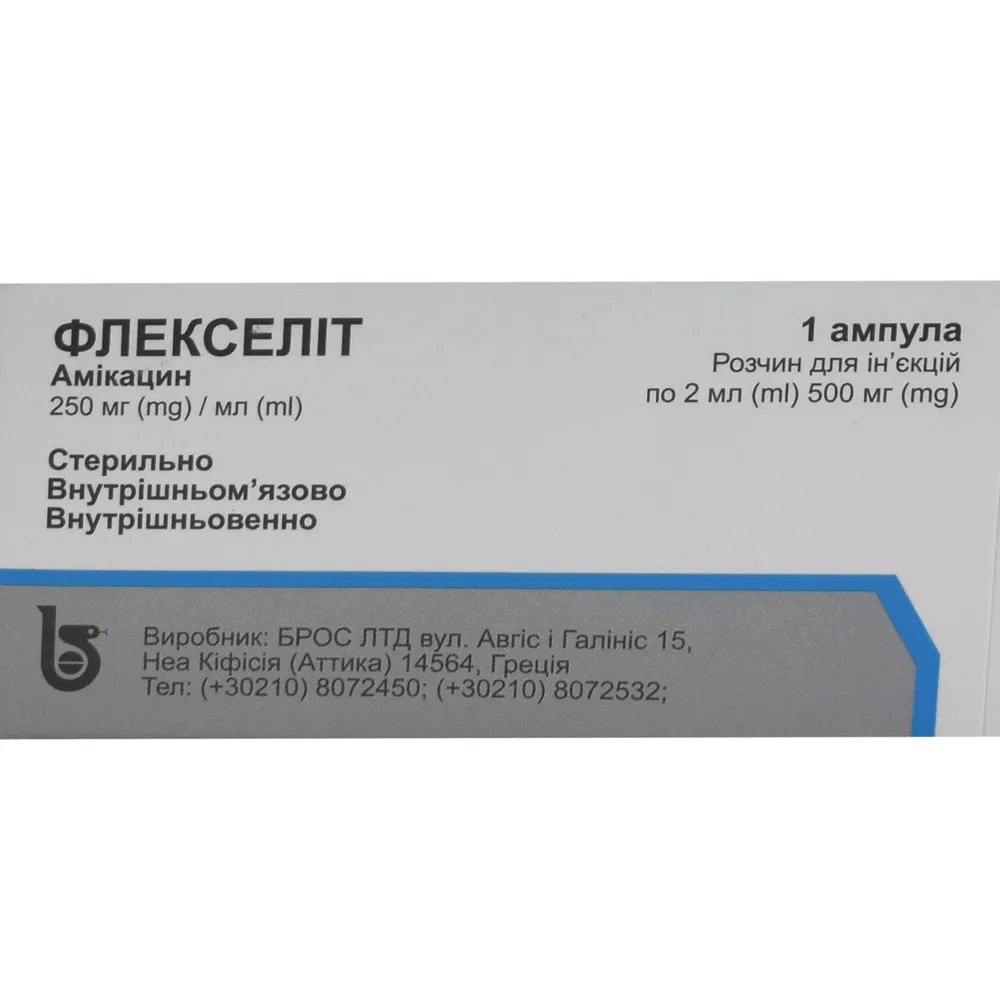
Table of Contents
INSTRUCTION FOR MEDICAL USE OF THE MEDICINAL PRODUCT FLEXELITE (FLEXELITE)
Composition:
Active substance: amikacin;
1 ml of solution contains amikacin sulfate equivalent to amikacin 250 mg;
Excipients: sodium metabisulfite (E 223), sodium citrate, methylparaben (E 218), propylparaben (E 216), water for injections.
Pharmaceutical form. Injection solution.
Main physicochemical properties: colorless or yellowish, clear solution.
Pharmacotherapeutic group.
Antibacterial agents for systemic use. Aminoglycosides.
ATC code J01G B06.
Pharmacological Properties
Pharmacodynamics
Amikacin is a semisynthetic aminoglycoside antibiotic with a broad spectrum of activity. It exhibits bactericidal action. After actively penetrating the bacterial membrane, it binds irreversibly to the 30S ribosomal subunit, thereby inhibiting pathogen protein synthesis.
Highly active against aerobic gram-negative bacteria: Pseudomonas aeruginosa, Escherichia coli, Shigella spp., Salmonella spp., Klebsiella spp., Enterobacter spp., Serratia spp., Providencia stuartii.
Also active against certain gram-positive bacteria: Staphylococcus spp. (including strains resistant to penicillin, methicillin, and some cephalosporins), and some strains of Streptococcus spp.
Inactive against anaerobic bacteria.
Pharmacokinetics
Absorption.
After intramuscular administration, amikacin is rapidly and completely absorbed. Maximum plasma concentration (Cmax) following a 7.5 mg/kg intramuscular dose is 21 mg/mL; following a 30-minute intravenous infusion of 7.5 mg/kg, it is 38 µg/mL. Time to reach Cmax in plasma after intramuscular administration is approximately 1.5 hours.
Distribution.
Distributes uniformly into extracellular fluid (abscess contents, pleural effusion, ascitic, pericardial, synovial, lymphatic, and peritoneal fluids); is found in high concentrations in urine; and in lower concentrations in bile, breast milk, aqueous humor of the eye, bronchial secretions, sputum, and cerebrospinal fluid. It readily penetrates all body tissues and accumulates intracellularly. High concentrations are found in organs with rich blood supply: lungs, liver, myocardium, spleen, and especially in the renal cortex; lower concentrations are observed in muscle, adipose tissue, and bone.
In adult patients, at normal therapeutic doses, amikacin does not cross the blood-brain barrier. However, higher concentrations are achieved in the cerebrospinal fluid of neonates compared to adults.
Amikacin crosses the placental barrier and is detectable in fetal blood and amniotic fluid.
Volume of distribution is 0.26 L/kg in adults, 0.2–0.4 L/kg in children, up to 0.68 L/kg in neonates under one week of age with body weight less than 1.5 kg, up to 0.58 L/kg in neonates under one week of age with body weight over 1.5 kg, and 0.3–0.39 L/kg in patients with cystic fibrosis.
Therapeutic plasma concentrations after intravenous or intramuscular administration are maintained for 10–12 hours.
Metabolism.
Amikacin is not metabolized.
Elimination.
Terminal elimination half-life (T½) in adults is 2–4 hours, in neonates 5–8 hours, and in children 2.5–4 hours. The final elimination phase T½ exceeds 100 hours (due to slow release from intracellular depots).
Amikacin is primarily excreted by the kidneys via glomerular filtration (65–94%) in unchanged form. Renal clearance is 79–100 mL/min.
Pharmacokinetics in Special Clinical Situations.
In adults with impaired renal function, T½ varies depending on the degree of impairment and may extend up to 100 hours. In patients with cystic fibrosis, T½ is shorter—1–2 hours. In burn patients and those with hyperthermia, T½ may be shorter than average due to increased clearance.
Amikacin is removed during hemodialysis (50% within 4–6 hours) and peritoneal dialysis (25% within 48–72 hours).
Clinical characteristics.
Indications.
Infections caused by amikacin-susceptible strains of microorganisms resistant to other aminoglycosides.
Contraindications.
- Renal failure;
- Auditory nerve neuritis;
- Hypersensitivity to amikacin or to any other aminoglycoside antibiotic and their derivatives;
- Hypersensitivity to any of the excipients contained in the medicinal product;
- Myasthenia gravis;
- Vestibular apparatus dysfunction;
- Azotemia (residual nitrogen above 150 mg%);
- Prior treatment with oto- or nephrotoxic drugs.
Interaction with other medicinal products and other forms of interaction.
Pharmaceutically incompatible with penicillins, heparin, cephalosporins, capreomycin, amphotericin B, hydrochlorothiazide, erythromycin, nitrofurantoin, vitamin B complex, vitamin C, and potassium chloride.
Flekselit exhibits synergy when used in combination with carbenicillin, benzylpenicillin, and cephalosporins (in patients with severe chronic renal insufficiency, concomitant use with β-lactam antibiotics may reduce the efficacy of aminoglycosides).
Nalidixic acid, polymyxin B, cisplatin, and vancomycin increase the risk of ototoxicity and nephrotoxicity.
Concomitant use with penicillins, cephalosporins, sulfonamides, vancomycin, methoxyflurane, enflurane, nonsteroidal anti-inflammatory drugs (NSAIDs), radiographic contrast agents, cyclosporine, cisplatin, amphotericin B, cephalothin, polymyxin, and diuretics (especially furosemide) increases the risk of nephrotoxic effects.
Indomethacin, phenylbutazone, and other NSAIDs that impair renal blood flow may slow down the elimination rate of Flekselit. If Flekselit is administered concomitantly with intravenous indomethacin in premature infants, plasma drug concentration increases, increasing the risk of toxicity.
Enhances the muscle-relaxant effect of curare-like agents.
Methoxyflurane, parenteral polymyxin, capreomycin, and other medicinal products that block neuromuscular transmission (halogenated hydrocarbons used for inhalational anesthesia, opioid analgesics), as well as massive blood transfusions with citrate-containing anticoagulants, increase the risk of respiratory arrest.
Parenteral administration of indomethacin increases the risk of toxic effects of aminoglycosides (increased half-life and reduced clearance).
Amikacin reduces the efficacy of medicinal products used in the treatment of myasthenia gravis.
Concomitant use with ethyl ether and neuromuscular blocking agents increases the risk of respiratory depression.
The risk of ototoxic effects increases when Flekselit is used concomitantly with furosemide and ethacrynic acid.
Combinations of antibiotics — amikacin + ceftazidime and amikacin + cefotaxime — show the greatest additive and synergistic effect against Pseudomonas aeruginosa.
When multiple antibiotics are used, Flekselit must not be mixed in the same syringe or vial with other antibacterial agents.
Special precautions for use.
Do not use Flexithil in patients with hypersensitivity to other aminoglycosides due to the risk of cross-allergy. Because of the potential ototoxicity and nephrotoxicity of aminoglycosides, patients must be under close medical supervision.
Exercise caution when using this medicinal product in Parkinsonism, botulism (aminoglycosides may impair neuromuscular transmission, leading to further weakening of skeletal muscles), dehydration, infants (especially premature infants), elderly patients, and patients with neuromuscular conduction disorders due to the possibility of curare-like effects.
During treatment, kidney function, auditory nerve function, and vestibular apparatus function must be monitored at least once a week.
The risk of developing nephrotoxicity is higher in patients with impaired renal function, as well as with high-dose or prolonged administration of the drug (this category of patients requires daily monitoring of kidney function).
If audiometric tests yield unsatisfactory results, the dose should be reduced or treatment discontinued.
In cases of difficult-to-treat or complicated infections, the treatment efficacy should be evaluated after 10 days. Before initiating the next course, kidney function, hearing, vestibular function, and drug concentration in serum should be assessed. If no expected clinical response occurs within 3–5 days, treatment should be discontinued and microbial susceptibility testing performed.
Patients with infectious-inflammatory diseases of the urinary tract are advised to consume large amounts of fluids.
The main toxic effect of the drug upon parenteral administration is its action on the VIII cranial nerve, initially manifesting as hearing loss in the high-frequency range. The risk of ototoxic complications is significantly higher in patients with impaired renal function. Prior to initiating treatment, fluid and electrolyte balance should be corrected. During treatment with amikacin sulfate, adequate fluid intake is necessary, plasma creatinine concentration should be frequently monitored, and the dosing regimen adjusted if needed.
Patients with mitochondrial DNA mutations (particularly the 1555 A>G substitution in the 12S rRNA gene) have an increased risk of ototoxicity, even if serum aminoglycoside levels remain within the recommended range. Alternative treatment options should be considered for such patients.
For patients with a family history of mitochondrial DNA mutations or aminoglycoside-induced hearing loss, alternative treatment options or genetic testing should be considered before prescribing the drug.
Elderly patients require reduced doses of Flexithil due to decreased renal functional activity and possible reduction in body weight. Renal function should be regularly assessed. Urinalysis should be performed before or during treatment. Periodic examination and recording of audiograms, as well as assessment of vestibular function, are necessary. If renal, vestibular, or hearing impairment occurs, amikacin sulfate doses should be reduced or discontinued.
Use of Flexithil may alter the following laboratory parameters: serum alanine aminotransferase, aspartate aminotransferase, bilirubin, lactate dehydrogenase, alkaline phosphatase, blood urea nitrogen, creatinine, and calcium, magnesium, potassium, and sodium ion concentrations.
In patients with impaired renal function, the daily dose should be reduced and/or the dosing interval extended according to serum creatinine concentration to prevent drug accumulation and minimize the risk of ototoxicity. If signs of kidney irritation occur (e.g., albuminuria, microhematuria, leukocyturia), hydration should be increased and the dose reduced. These manifestations usually resolve after treatment ends. If signs of ototoxicity (e.g., dizziness, tinnitus, hearing loss) or nephrotoxicity (e.g., reduced creatinine clearance, oliguria) appear, Flexithil should be discontinued or the dose reduced. If azotemia develops or oliguria worsens, treatment must be stopped.
Concomitant use of amikacin sulfate and potent diuretics such as ethacrynic acid derivatives, furosemide, or mannitol (especially when administered intravenously) may lead to irreversible deafness.
Do not administer two aminoglycosides simultaneously or replace one aminoglycoside with another if the first has been used for 7–10 days. Repeated courses should not be initiated earlier than 4–6 weeks after the previous course.
In the absence of positive clinical response, consider the possibility of resistant microorganisms. In such cases, treatment should be discontinued and appropriate therapy initiated.
Neuromuscular blockade and respiratory paralysis have been reported after parenteral administration, local instillation (during orthopedic or abdominal irrigation or local treatment of empyema), and oral use of aminoglycosides.
The possibility of respiratory paralysis should be considered when aminoglycosides are used by any route, particularly in patients receiving anesthetics or neuromuscular blocking agents such as tubocurarine, succinylcholine, decamethonium, atracurium, rocuronium, or vecuronium, or in patients undergoing massive transfusion of citrate-anticoagulated blood. If neuromuscular blockade occurs, calcium salts may precipitate respiratory paralysis—mechanical respiratory support may be required.
Neuromuscular blockade and muscle paralysis have been demonstrated in laboratory animals receiving high doses of amikacin.
Flexithil must not be used in patients with myasthenia gravis (see section "Contraindications").
Aminoglycosides should be used cautiously in patients with muscle disorders such as Parkinsonism, as these drugs may exacerbate muscle weakness due to their potential curare-like effect on neuromuscular transmission.
The medicinal product contains sodium metabisulfite, as well as methylparaben (E218) and propylparaben (E216), which may cause allergic-type reactions (including delayed reactions), including anaphylaxis and asthma attacks of varying severity, particularly in patients with bronchial asthma.
When used concomitantly with cephalosporins, administration at different sites (for intramuscular injection) with an interval of at least 1 hour is recommended.
Use during pregnancy or breastfeeding.
Since amikacin crosses the placenta and may exert nephrotoxic effects on the fetus, the drug is contraindicated during pregnancy.
Breastfeeding must be discontinued during treatment, as amikacin passes into breast milk in low concentrations and may affect the intestinal microflora of the breastfed infant.
Ability to affect reaction speed when driving or operating machinery.
Clinical experience with amikacin indicates that it does not impair the ability to drive or operate machinery. However, the possibility of central nervous system-related adverse effects such as drowsiness and impaired neuromuscular transmission should be considered.
Method of Administration and Dosage
Administer Flexilite intramuscularly or intravenously. The usual dose for children aged 12 years and older, and adults, is 5 mg/kg body weight every 8 hours or 7.5 mg/kg body weight every 12 hours. The maximum daily dose for adults is 15 mg/kg body weight.
In severe cases and in infections caused by Pseudomonas, the daily dose should be divided into 3 administrations. The maximum single daily dose is 1.5 g. The total cumulative dose should not exceed 15 g. The duration of treatment is usually 3–7 days with intravenous administration and 7–10 days with intramuscular administration.
For premature newborns, the initial dose is 10 mg/kg body weight, followed by 7.5 mg/kg body weight every 18–24 hours for 7–10 days. For full-term newborns and children under 12 years of age, the initial dose is 10 mg/kg body weight, followed by 7.5 mg/kg body weight every 12 hours for 7–10 days.
In patients with impaired renal function, the daily dose should be reduced and/or the intervals between doses extended. The dose should be adjusted according to plasma creatinine levels and the patient’s body weight. The dosing interval can be calculated by multiplying the plasma creatinine level (in mg/dL) by 9; for example, if the creatinine level is 2 mg/dL, the drug should be administered every 18 hours.
Flexilite should be administered by intravenous infusion to adults and children using a volume of fluid sufficient for a drip infusion over 60–90 minutes (at a rate of 50 drops per minute), and for newborns, over 1–2 hours. The concentration of the Flexilite solution for intravenous administration should not exceed 5 mg/mL. Intravenous injection of Flexilite should be performed very slowly (over 2–7 minutes). The parenteral solution should be prepared immediately before administration and used promptly after preparation.
The following diluents may be used for intravenous administration: 0.9% sodium chloride solution, 5% glucose solution, lactated Ringer's injection solution containing glucose (5%).
Children.
The medicinal product is used in pediatric practice.
Flexilite should be used with caution in the treatment of premature and full-term infants due to the immature excretory system, which may prolong the elimination of aminoglycosides and potentially lead to toxic effects.
Overdose.
Symptoms of ototoxicity and nephrotoxicity, as well as signs of neuromuscular blockade, may occur: tinnitus, hearing disturbances, skin rashes, headache, dizziness, fever, paresthesia, decreased renal function (up to renal failure), respiratory depression or paralysis, and toxic reactions (ataxia, urinary disorders, thirst, decreased appetite, nausea, vomiting).
Treatment: If necessary, the drug should be removed from the body by means of peritoneal dialysis or hemodialysis. The drug concentration can be reduced by continuous arteriovenous hemofiltration. Exchange transfusion may also be used to eliminate the drug from the body in newborns.
At the first signs of neuromuscular blockade, administration of amikacin sulfate should be discontinued immediately, and intravenous calcium chloride solution or subcutaneous solutions of proserin (neostigmine) and atropine should be administered promptly. If necessary, the patient should be switched to controlled ventilation.
Adverse Reactions
Infections and infestations: superinfection or colonization with resistant bacteria or fungal yeasts.
Immune system disorders: anaphylactic reactions, including anaphylactic shock, anaphylactoid reactions, hypersensitivity reactions.
Gastrointestinal disorders: nausea, vomiting, liver function abnormalities (elevated liver transaminase activity, hyperbilirubinemia).
Blood and lymphatic system disorders: anemia, leukopenia, granulocytopenia, thrombocytopenia, hematuria, eosinophilia.
Eye disorders: blindness, retinal infarction.
Cardiovascular disorders: vasculitis, arterial hypotension.
Nervous system disorders: headache, drowsiness, neurotoxic effects (muscle twitching, numbness, tingling, epileptic seizures), possible hearing loss, vestibular disorders, dizziness, paresthesia, tremor, convulsions, encephalopathy; in isolated cases – neuromuscular conduction disturbances, possible development of neuromuscular blockade (muscle paralysis, respiratory depression).
Sensory organ disorders: ototoxicity (hearing impairment, hearing loss, tinnitus, vestibular labyrinthine disorders, partially reversible or irreversible deafness), toxic effects on the vestibular apparatus (discoordination of movements, dizziness, nausea, vomiting).
Renal and urinary disorders: nephrotoxicity – kidney function impairment (oliguria, proteinuria, microhematuria, albuminuria, cylinduria, hyperazotemia, hematuria, elevated creatinine levels); rarely – acute necrosis, interstitial nephritis, acute renal failure, toxic nephropathy, azotemia, presence of altered erythrocytes in urine, presence of leukocytes in urine.
Endocrine and metabolic disorders: hypomagnesemia.
Musculoskeletal and connective tissue disorders: arthralgia, muscle cramps.
Respiratory system disorders: apnea, bronchospasm.
Skin and subcutaneous tissue disorders: skin rashes, pruritus, urticaria, skin hyperemia, fever, Quincke's edema.
Other: injection site reactions, pain at injection site, paresthesia, tremor, hyperemia, swelling, hyperthermia, hyperbilirubinemia, elevated blood transaminase levels.
Sodium metabisulfite, an ingredient of the medicinal product, may cause severe hypersensitivity reactions and bronchospasm.
Amikacin is not intended for intravitreal administration. Cases of blindness and retinal infarction have been reported following intravitreal injection (injection into the eye) of amikacin.
All aminoglycosides may cause ototoxicity, nephrotoxicity, and neuromuscular blockade. These toxic effects occur more frequently in patients with renal impairment, in patients receiving other ototoxic or nephrotoxic medicinal products, and in patients receiving treatment for longer periods and/or at higher doses than recommended.
Renal function changes are usually reversible upon discontinuation of the drug.
Toxic effects on the eighth cranial nerve may lead to hearing loss and loss of balance. Amikacin primarily affects auditory function. Cochlear damage, which results in high-frequency irreversible deafness, often occurs before hearing impairment can be clinically detected. Cases of macular infarction, sometimes leading to irreversible vision loss, have been reported following intravenous administration (injection into the eye) of amikacin.
When recommended precautions and dosage regimens are followed, the incidence of toxic reactions such as tinnitus, dizziness, partial reversible deafness, skin rashes, drug fever, headache, paresthesia, nausea, and vomiting is low.
Reactions related to the urinary system (kidney function disorders such as albuminuria, cylinduria, azotemia, and oliguria) have been reported very rarely.
Reporting of Adverse Reactions
Reporting of adverse reactions after medicinal product registration is highly important. It allows continuous monitoring of the benefit-risk balance of the medicinal product. Healthcare professionals, pharmacists, patients, and their legal representatives should report all suspected adverse reactions and lack of efficacy via the Automated Pharmacovigilance Information System at: https://aisf.dec.gov.ua.
Incompatibilities
Amikacin sulfate solution should not be directly mixed with other aminoglycosides, penicillins, heparin, cephalosporins, capreomycin, amphotericin B, thiopental, hydrochlorothiazide, erythromycin, nitrofurantoin, vitamin B and C complexes, or potassium chloride. If co-administration is necessary, the two drugs should be administered separately and sequentially.
Shelf Life
2 years.
Storage Conditions
Store at a temperature not exceeding 25 °C in a place protected from light.
Keep out of reach of children.
Packaging
1 ml (250 mg), 2 ml (500 mg), and 4 ml (1000 mg) in ampoules, with 1 ampoule per blister pack in a cardboard box.
Prescription Status
Prescription only.
Manufacturer
BROS LTD / BROS LTD
Manufacturer's Address and Place of Business
Augis & Galinis 15, Nea Kifisia (Attiki) 14564, Greece /
Вул. Авгіс і Галініс 15, Неа Кіфісія (Аттика) 14564, Греція