Filgrastim
Ukraine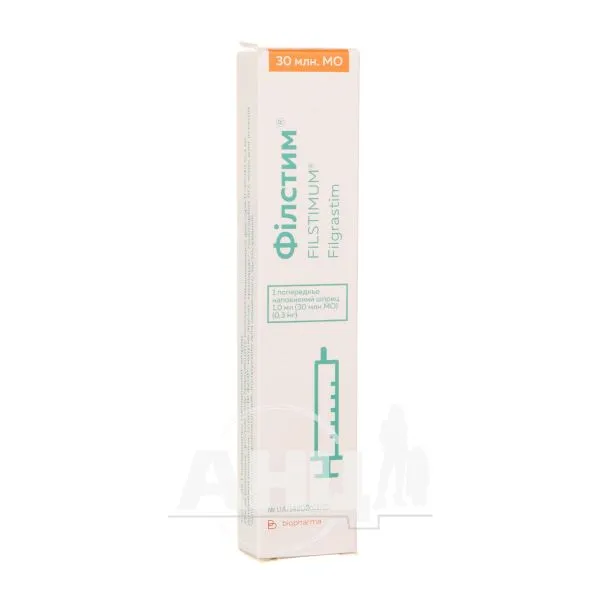
Table of Contents
I N S T R U C T I O N for medical use of the medicinal product Filstim® (Filstimum®)
Composition:
Active substance: filgrastim;
1 ml of solution contains 0.3 mg (30 million IU) of filgrastim, granulocyte colony-stimulating factor (G-CSF);
1.6 ml of solution contains 0.48 mg (48 million IU) of filgrastim, granulocyte colony-stimulating factor (G-CSF);
Excipients: sodium acetate trihydrate; polysorbate 80; sorbitol (E 420); water for injections.
Pharmaceutical form. Solution for injection.
Main physicochemical properties: clear or slightly opalescent, colorless or slightly yellowish liquid.
Pharmacotherapeutic group. Immunostimulants. Colony-stimulating factors. Filgrastim.
ATC code: L03A A02.
Pharmacological Properties
Pharmacodynamics
Filgrastim is a highly purified non-glycosylated polypeptide containing 175 amino acid residues.
It is produced by a genetically modified culture of Escherichia coli BL21(DE3)/pES3-7, which contains the human granulocyte colony-stimulating factor (G-CSF) gene.
Human G-CSF regulates the formation of functionally active neutrophilic granulocytes and their release into the bloodstream from the bone marrow.
Filstim®, containing recombinant G-CSF, significantly increases the number of neutrophilic granulocytes in peripheral blood within the first 24 hours after administration and simultaneously causes a slight increase in monocyte count.
The increase in the number of neutrophilic granulocytes and their functional characteristics is dose-dependent.
The use of filgrastim preparations substantially reduces the frequency and duration of neutropenia in patients after cytostatic chemotherapy, and following myeloablative therapy with subsequent bone marrow transplantation.
Patients receiving the drug less frequently require hospitalization, spend less time in the hospital, and require lower doses of antibiotics compared to patients receiving only cytotoxic therapy.
Administration of filgrastim (both as primary treatment and after chemotherapy) activates peripheral blood progenitor cells (PBPCs).
In children and adults with severe chronic neutropenia (severe congenital, cyclic, and malignant neutropenia), the drug stably increases the number of peripheral blood neutrophilic granulocytes and reduces the frequency of infectious complications.
After discontinuation of treatment, the number of neutrophilic granulocytes in peripheral blood decreases by 50% within 1–2 days and returns to normal levels within 1–7 days.
Pharmacokinetics
After subcutaneous administration at recommended doses, the drug concentration in blood serum exceeds 10 ng/mL for 8–16 hours. The volume of distribution in blood is approximately 150 mL/kg. The mean serum half-life of filgrastim is about 3.5 hours, and the clearance rate is approximately 0.6 mL/min per 1 kg of body weight. Continuous infusion over 28 days in patients recovering after autologous bone marrow transplantation did not result in signs of drug accumulation or prolonged elimination half-life.
Clinical characteristics.
Indications.
- To reduce the duration and frequency of neutropenia, including febrile neutropenia, in patients receiving cytotoxic chemotherapy for non-myeloid malignancies.
- To reduce the duration of neutropenia and its clinical consequences in patients who have undergone myeloablative therapy followed by bone marrow transplantation.
- To mobilize autologous peripheral blood progenitor cells (PBPCs) after myelosuppressive therapy, to accelerate hematopoietic recovery by reinfusion of these cells following myelosuppression or myeloablation.
- For long-term treatment aimed at increasing the number of neutrophilic granulocytes, to reduce the frequency, duration, and severity of infectious complications in children and adults with severe congenital, cyclic, or idiopathic neutropenia (absolute neutrophil count <500 per mm³) and with a history of severe or recurrent infections.
Contraindications. Hypersensitivity to filgrastim, colony-stimulating factors, Escherichia coli, or any component of the drug.
Should not be used to increase tolerance to higher doses of cytotoxic chemotherapeutic agents.
Severe congenital neutropenia (Kostmann's syndrome) with cytogenetic abnormalities and autoimmune neutropenia.
End-stage chronic renal failure (CRF).
Chronic myeloid leukemia and myelodysplastic syndrome.
Interaction with other medicinal products and other forms of interaction. The safety and efficacy of administering filgrastim on the same day as myelosuppressive cytotoxic chemotherapy have not been established. Because rapidly dividing myeloid cells are sensitive to myelosuppressive cytotoxic chemotherapy, filgrastim should not be administered within 24 hours before or after administration of such agents.
Neutropenia may be exacerbated by interaction with 5-fluorouracil. Interaction of filgrastim with other hematopoietic growth factors and cytokines has not been studied.
Since lithium stimulates neutrophil release, an enhanced effect of the drug is possible.
The drug is incompatible with sodium chloride solution.
Special precautions for use. G-CSF promotes the growth of myeloid cells in vitro. A similar in vitro effect may also occur in some non-myeloid cells. The safety and efficacy of filgrastim in patients with myelodysplastic syndrome or chronic myeloid leukemia have not been established. Therefore, the drug is not indicated for these conditions. Particular attention should be paid when differentiating blast transformation in chronic myeloid leukemia from acute myeloid leukemia.
The efficacy of filgrastim in chemotherapy regimens associated with delayed myelosuppression, such as nitrosoureas, mitomycin C, or myelosuppressive doses of antimetabolites like 5-FU or cytarabine, has not been adequately confirmed.
Special warnings for patients with oncological diseases.
Leukocytosis. Leukocytosis of 100×10⁹/L or higher has rarely been observed during treatment with filgrastim at doses exceeding 0.3 million IU (3 mcg)/kg/day. No adverse reactions directly related to such levels of leukocytosis have been described. However, due to the potential risks associated with leukocytosis, regular monitoring of white blood cell counts is required. If the white blood cell count exceeds 50×10⁹/L after reaching the expected nadir, filgrastim should be discontinued immediately. If filgrastim is used for mobilization of peripheral blood stem cells, the drug should be discontinued if the white blood cell count exceeds 70×10⁹/L.
Immunogenicity.
As filgrastim is a peptide, it has potential for immunogenicity. The rate of antibody formation against filgrastim is generally low. As expected, binding to antibodies does occur, as with all biopharmaceuticals. However, to date, immunogenicity has not been shown to result in loss of response to the drug. According to data from four clinical studies involving healthy volunteers and oncology patients, no formation of anti-rhG-CSF antibodies was observed following administration of filgrastim.
Risk associated with high-dose chemotherapy.
Particular caution should be exercised when treating patients receiving high-dose chemotherapy, as improved tumor response to such treatment has not been observed, while higher doses of chemotherapeutic agents are associated with increased toxicity, including cardiovascular, pulmonary, neurological, and dermatological manifestations (see instructions for specific chemotherapeutic agents). Monotherapy with filgrastim does not prevent thrombocytopenia and anemia caused by myelosuppressive chemotherapy, but allows the use of higher doses of chemotherapeutic agents (according to the regimen), thereby exposing the patient to a higher risk of thrombocytopenia and anemia. Regular monitoring of platelet count and hematocrit is recommended. Particular caution should be exercised when using single-agent or combination chemotherapy regimens capable of causing thrombocytopenia.
The use of PBPCs mobilized by filgrastim reduces the severity and duration of thrombocytopenia following myelosuppressive or myeloablative chemotherapy.
Rarely, pulmonary adverse reactions, including interstitial pneumonia, have been reported after administration of granulocyte colony-stimulating factor. Patients with recent history of lung infiltrates or pneumonia may be at increased risk of complications. The onset of respiratory symptoms such as cough, fever, and dyspnea, in combination with radiological signs of lung infiltrates, worsening lung function, and increased neutrophil count, may be early signs of adult respiratory distress syndrome. In such cases, the drug should be discontinued and appropriate treatment initiated.
Experience with the use of the drug in patients with severe hepatic and/or renal impairment is limited.
Special warnings for patients undergoing mobilization of peripheral blood stem cells.
Mobilization.
Prospective randomized studies comparing the two recommended methods of mobilizing peripheral blood stem cells (filgrastim alone or in combination with myelosuppressive therapy) in the same patient population have not been conducted. Direct comparison of results from different studies is difficult due to individual differences among patients and variations in CD34+ cell laboratory assays. Therefore, it is difficult to recommend an optimal mobilization method. The mobilization method should be selected based on the overall treatment goal for the individual patient.
Prior cytotoxic therapy.
In patients who have previously undergone intensive myelosuppressive therapy and subsequently received filgrastim for mobilization of peripheral blood stem cells, there may be insufficient increase in peripheral stem cells to the recommended minimum level of ≥2.0×10⁶ CD34+ cells/kg. Accelerated recovery of platelet counts in these patients may also be less pronounced than in previously untreated patients or those who received less extensive therapy.
Some cytostatic agents are particularly toxic to hematopoietic progenitor cells and may negatively affect their mobilization. The use of agents such as melphalan, carmustine, and carboplatin over a prolonged period prior to planned stem cell mobilization may reduce the extent of mobilization. Conversely, administration of melphalan, carmustine, or carboplatin together with filgrastim promotes mobilization of blood stem cells. If peripheral blood stem cell transplantation is planned, mobilization should be scheduled early in the treatment course. In patients receiving such treatment, particular attention should be paid to the number of mobilized progenitor cells prior to high-dose chemotherapy. If mobilization results are inadequate according to the above criteria, alternative treatments not requiring progenitor cell replacement should be considered.
Assessment of blood stem cell count.
When assessing the number of blood stem cells mobilized by filgrastim in patients, particular attention should be paid to the method of quantitative determination. Results of flow cytometric analysis of CD34+ cell counts depend on the specific methodology, and recommendations regarding their numbers based on studies conducted in other laboratories should be approached with caution.
There is a complex but stable statistical correlation between the number of CD34+ cells infused and the rate of platelet count normalization after high-dose chemotherapy.
The recommended minimum number of 2.0×10⁶ CD34+ cells/kg is based on published experience and leads to adequate hematological recovery. Numbers exceeding this value are clearly associated with faster normalization; lower numbers are associated with slower blood count recovery.
Healthy donors undergoing PBPC mobilization.
Mobilization of PBPCs in donors should only be performed if they meet standard clinical and laboratory criteria for hematopoietic progenitor cell donation, particularly hematological parameters and absence of infectious diseases.
Mobilization of PBPCs does not provide direct clinical benefit to healthy donors and should only be considered for allogeneic stem cell transplantation.
The safety and efficacy of filgrastim in healthy donors under 16 years of age or over 60 years of age have not been evaluated.
Transient thrombocytopenia (platelet count <100×10⁹/L) after administration of filgrastim and leukapheresis was observed in 35% of donors. Among them, two cases of thrombocytopenia with platelet count <50×10⁹/L were recorded, which were associated with leukapheresis.
If more than one leukapheresis is required, particular attention should be paid to donors whose platelet count before leukapheresis is less than 100×10⁹/L. Leukapheresis is not recommended if the platelet count is less than 75×10⁹/L, when anticoagulants are administered, or in the presence of known hemostasis disorders.
Transient cytogenetic abnormalities have been observed in healthy donors after administration of G-CSF. The significance of these changes is unknown. Donors who received filgrastim for PBPC mobilization should be monitored until hematological parameters normalize.
Furthermore, there is a possible risk of stimulating a malignant myeloid clone. Apheresis centers are recommended to register and monitor PBPC donors for at least 10 years to ensure ongoing safety data collection.
Rupture of the spleen may occur after administration of filgrastim in healthy donors. Therefore, spleen size should be monitored (palpation, ultrasound). Rupture of the spleen should be considered in case of complaints of pain in the upper left abdomen or left shoulder.
Special warnings for recipients of allogeneic peripheral blood stem cells mobilized by filgrastim.
Cases of graft-versus-host disease and fatal outcomes have been reported in patients receiving G-CSF after allogeneic bone marrow transplantation.
Transformation to leukemia or preleukemia.
Particular caution should be exercised in differential diagnosis of severe chronic neutropenia and other hematological disorders such as aplastic anemia, myelodysplasia, and myeloid leukemia.
Before initiating treatment, a complete blood count with differential leukocyte count and platelet count, as well as morphological examination of bone marrow and karyotype analysis, should be performed.
Myelodysplasia or leukemia has been observed in patients with congenital neutropenia during long-term treatment with filgrastim (12.1% over 5 years). This observation has been noted only in patients with congenital neutropenia. Myelodysplasia and leukemia are common complications of this disease, and a causal relationship with filgrastim use has not been established. Approximately 12% of patients with initially normal cytogenetics developed abnormalities upon repeated testing, including one case of monosomy 7. Filgrastim should be discontinued if leukemia or preleukemia develops (increased number of leukoblasts in peripheral blood). It is currently unclear whether long-term treatment with filgrastim in patients with impaired cytogenesis promotes the development of cytogenetic abnormalities, myelodysplasia, or leukemia. Regular morphological and cytogenetic examinations of bone marrow (approximately every 12 months) are recommended.
Special warnings for patients with severe chronic neutropenia (SCN).
Blood count.
Platelet count should be closely monitored, especially during the first few weeks of treatment with filgrastim.
If thrombocytopenia develops (platelet count below 100×10⁹/L), temporary discontinuation or dose reduction of the drug should be considered. Other blood count parameters also require careful monitoring, including anemia and transient increase in myeloid progenitor cells.
Cytogenetic abnormalities, leukemia, and osteoporosis (9.1%) were detected during long-term follow-up (more than 5 years) in patients with severe chronic neutropenia. It is unknown whether this pathology is related to treatment.
Infections leading to myelosuppression.
Neutropenia may develop due to bone marrow infiltration by opportunistic infections such as Mycobacterium avium complex or due to tumor involvement of the bone marrow (lymphoma). In patients with known bone marrow infiltration by infectious agents or tumor involvement, filgrastim therapy for neutropenia should be administered concurrently with treatment of the underlying condition. The mechanism of action of filgrastim in treating neutropenia caused by bone marrow infiltration by infectious agents or tumor involvement has not been established.
Special warnings for HIV-infected patients.
Blood count.
Absolute neutrophil count should be regularly monitored, especially during the first few weeks of treatment. Some patients respond rapidly and significantly to initial doses of filgrastim with increased neutrophil counts. During initial treatment, absolute neutrophil count should be determined daily for the first few days. Thereafter, absolute neutrophil count should be determined at least twice weekly for the first 2 weeks and then once weekly or every other week during maintenance therapy. With intermittent maintenance therapy using filgrastim at 300 mcg/day, significant fluctuations in neutrophil counts may occur. Considering these fluctuations, blood sampling for absolute neutrophil count should be performed immediately before administration of the next dose to determine the true nadir level.
Splenomegaly is a direct effect of filgrastim therapy. Splenomegaly was palpable in 31% of patients receiving filgrastim in clinical trials. Enlargement of the spleen detected by radiography occurred early during filgrastim treatment and tended to stabilize. Dose reduction led to slowing or halting of spleen enlargement progression. Splenectomy was required in 3% of patients. Regular assessment of spleen size is recommended. Spleen size should be monitored regularly by abdominal palpation.
Hematuria/proteinuria were observed in a small number of patients. Urinalysis should be performed regularly to monitor these parameters. The safety and efficacy of the drug in newborns and patients with autoimmune neutropenia have not been established. According to published data, in patients with sickle cell anemia, high white blood cell count is an unfavorable prognostic factor. Considering these data, physicians should prescribe filgrastim cautiously to such patients, carefully monitor relevant laboratory parameters, and be aware of the possible association with splenomegaly and vaso-occlusive crises.
Cases of sickle cell crises have been described during filgrastim therapy, some with fatal outcomes. Therefore, caution is necessary when prescribing filgrastim to patients with sickle cell anemia, carefully weighing benefits against potential risks.
Patients with osteoporosis and concomitant bone pathology receiving continuous filgrastim treatment for 6 months or longer should undergo monitoring of bone mineral density.
The medicinal product contains practically no sodium.
If you have known intolerance to certain sugars, consult your doctor before taking this medicinal product.
Use during pregnancy or breastfeeding. The safety of filgrastim use during pregnancy has not been established. It is not recommended during pregnancy. It is unknown whether filgrastim passes into breast milk; therefore, its use during breastfeeding is not recommended.
Ability to affect reaction speed when driving or operating machinery. Not studied.
Administration and Dosage
For standard chemotherapy regimens, the drug should be administered at a dose of 0.5 million IU (5 mcg) per kg of body weight once daily by subcutaneous injection or intravenous infusion.
For myeloablative therapy followed by bone marrow transplantation, the initial dose of filgrastim is 1 million IU (10 mcg) per kg of body weight per day administered as an intravenous infusion over 30 minutes, as continuous intravenous infusion over 24 hours, or subcutaneously.
Prior to intravenous administration, the drug should be dissolved in 20 mL of 5% glucose solution. The first dose should be administered no sooner than 24 hours after cytotoxic therapy or bone marrow transplantation.
Filgrastim should be administered daily until the neutrophil count reaches the expected minimum levels and then normalizes. The duration of treatment may last up to 14 days, depending on the type and regimen of cytotoxic chemotherapy.
An acquired increase in neutrophil count during cytotoxic chemotherapy is typically observed within 1–2 days after starting filgrastim treatment. The drug should not be discontinued before achieving the required minimum neutrophil count.
After the nadir of neutrophil count, the daily dose should be adjusted according to the dynamics of neutrophil counts: if the neutrophil count exceeds 1,000/mm³ for three consecutive days, the dose should be reduced to 0.5 million IU (5 mcg)/kg/day. Then, if the absolute neutrophil count remains above 1,000/mm³ for another three consecutive days, the drug should be discontinued. If during treatment the absolute neutrophil count decreases below 1,000/mm³, the dose should be increased again according to the recommended regimen.
For severe congenital neutropenia, filgrastim should be administered at an initial dose of 1.2 million IU (12 mcg)/kg/day subcutaneously, or the daily dose may be divided into several administrations.
For severe chronic or cyclic neutropenia: 0.5 million IU (5 mcg)/kg/day subcutaneously, either as a single dose or divided into multiple doses.
Patients with severe chronic neutropenia should receive daily subcutaneous filgrastim until the neutrophil count consistently exceeds 1,500/mm³. After achieving therapeutic effect, the minimal effective maintenance dose should be determined. Long-term daily administration is required to maintain the necessary neutrophil count. After 1–2 weeks of treatment, the initial dose may be doubled or halved depending on the patient's response. Subsequently, dose adjustments may be made every 1–2 weeks to maintain the average neutrophil count within the range of 1,500–10,000/mm³. In patients with severe infections, a regimen with more rapid dose escalation may be used.
Reconstituted solutions should be stored in the refrigerator at 2–8 °C and used within 24 hours of preparation.
Children. Filgrastim may be used in children aged 2 years and older for treatment aimed at increasing neutrophil counts, reducing the frequency, and shortening the duration of infectious complications in children with severe congenital, cyclic, or idiopathic neutropenia (absolute neutrophil count <500/mm³) and a history of severe or recurrent infections.
Overdose. No effects associated with filgrastim overdose have been established.
In patients with severe chronic neutropenia, administration of filgrastim at doses exceeding 14.5 million IU (145 mcg)/kg/day did not result in overdose symptoms.
Following overdose, discontinuation of filgrastim was associated with a 50% reduction in neutrophil count within 1–2 days and return to normal levels within 1–7 days.
Side effects.
Patients with severe chronic neutropenia
The most commonly reported clinical adverse events were bone pain and general myalgia. The frequency of these adverse reactions decreases over time with continued filgrastim use. Splenomegaly, which is usually non-progressive, and thrombocytopenia have also been observed. Headache and diarrhea were reported shortly after initiation of filgrastim therapy, usually in less than 10% of patients. Anemia and epistaxis were also reported with similar frequency, but only during long-term treatment. Transient increases in serum uric acid concentration, lactate dehydrogenase activity, and alkaline phosphatase activity without clinical symptoms have been reported, as well as transient mild hypoglycemia. Adverse reactions possibly related to filgrastim therapy, occurring in less than 2% of patients with severe chronic neutropenia, included injection site reactions, headache, hepatomegaly, arthralgia, alopecia, and skin rash.
During long-term use of filgrastim, cutaneous vasculitis was reported in 2% of patients with severe chronic neutropenia. Rare reports of proteinuria/hematuria have also been documented.
Blood and lymphatic system disorders: Very common: anemia, splenomegaly; common: thrombocytopenia; uncommon: splenic dysfunction.
Metabolism and nutrition disorders: Very common: hypoglycemia, increased alkaline phosphatase activity, increased lactate dehydrogenase activity, hyperuricemia.
Nervous system disorders: Common: headache.
Respiratory, thoracic and mediastinal disorders: Very common: epistaxis.
Gastrointestinal disorders: Common: diarrhea.
Hepatobiliary disorders: Common: hepatomegaly.
Skin and subcutaneous tissue disorders: Common: alopecia, cutaneous vasculitis, skin rash, injection site pain, rash.
Musculoskeletal and connective tissue disorders: Very common: musculoskeletal pain, arthralgia; common: osteoporosis.
Renal and urinary disorders: Uncommon: hematuria, proteinuria.
Patients after chemotherapy
In clinical studies, the most common adverse reactions associated with the use of the medicinal product at recommended doses were mild, moderate, or severe musculoskeletal pain. Musculoskeletal pain is generally manageable with conventional analgesics. Less frequent adverse reactions included urinary disorders and mild to moderate dysuria.
Adverse reactions observed in patients receiving chemotherapy with or without adjuvant filgrastim therapy included nausea, vomiting, alopecia, diarrhea, weakness, anorexia, mucositis, headache, cough, skin rash, chest pain, generalized weakness, angina, constipation, and unspecified pain.
Increased lactate dehydrogenase, alkaline phosphatase, and gamma-glutamyl transferase activities, as well as increased serum uric acid concentration, have been observed (reversible, dose-dependent changes, usually mild or moderate). Transient arterial hypotension, not requiring pharmacological correction, has been reported.
Isolated cases of vascular disorders (veno-occlusive disease, fluid imbalance-related conditions) have been reported in patients after high-dose chemotherapy followed by autologous bone marrow transplantation. A causal relationship with filgrastim administration has not been established.
Occasionally, symptoms suggestive of allergic-type reactions have been reported, approximately half of which were associated with the first dose. Overall, such symptoms were more frequently observed after intravenous administration. In some cases, reinitiation of treatment was accompanied by symptom recurrence.
Allergic reactions, including anaphylaxis, skin rash, urticaria, angioedema, dyspnea, and hypotension, have been reported in patients receiving filgrastim, developing either at the beginning of therapy or during continued treatment. In some cases, reinitiation of therapy was followed by symptom recurrence, indicating a causal relationship between the drug and the adverse reaction. Filgrastim therapy should be discontinued in the event of serious allergic reactions.
Cutaneous vasculitis has been very rarely reported in patients receiving long-term treatment. There have been reports of isolated cases of proteinuria/hematuria. Splenomegaly, generally subclinical, developed in approximately 1/3 of patients during prolonged therapy. Isolated cases of Sweet’s syndrome (acute febrile dermatosis) have been reported. Based on available data, a causal relationship with filgrastim use has not been established; however, the possibility of Sweet’s syndrome development cannot be excluded.
Exacerbation of rheumatoid arthritis has been observed in isolated cases.
Rare pulmonary adverse reactions, sometimes fatal, including interstitial pneumonia, have been reported with filgrastim use after chemotherapy, particularly in regimens containing bleomycin, although a causal relationship with treatment has not been established (see bleomycin package insert).
Rarely, pulmonary adverse effects such as interstitial pneumonia, pulmonary edema, lung infiltrates, and pulmonary fibrosis have been reported; some of these led to respiratory failure or adult respiratory distress syndrome, which may be fatal.
Pseudogout has been very rarely reported in patients with malignant tumors receiving filgrastim therapy.
Metabolism and nutrition disorders: Very common: increased alkaline phosphatase activity (50%), increased lactate dehydrogenase activity (60%), hyperuricemia (30%), hyperglycemia.
Nervous system disorders: Common: headache.
Vascular disorders: Rare: vascular disorders, capillary syndrome, capillary leak syndrome, vascular occlusion.
Respiratory, thoracic and mediastinal disorders: Common: cough, angina; rare: lung infiltrates, pulmonary edema, pulmonary fibrosis, interstitial pneumonia, hemoptysis, collagen disease, hypoxia.
Gastrointestinal disorders: Very common: nausea, vomiting; common: constipation, anorexia, diarrhea, mucositis.
Hepatobiliary disorders: Very common: increased gamma-glutamyl transferase levels (10%).
Skin and subcutaneous tissue disorders: Common: alopecia, rash; uncommon: Sweet’s syndrome; rare: cutaneous vasculitis.
Musculoskeletal and connective tissue disorders: Common: chest pain, musculoskeletal pain; rare: exacerbation of rheumatoid arthritis, pseudogout, gout.
Immune system disorders: Hypersensitivity reactions, including angioedema, urticaria, anaphylaxis, dyspnea, hypotension.
Renal and urinary disorders: Rare: laboratory abnormalities in urine (dysuria, abnormal urine).
General disorders and administration site conditions: Common: weakness, generalized weakness; uncommon: unspecified pain; rare: allergic reactions.
HIV-infected patients
In clinical studies, the only adverse reaction associated with filgrastim use was bone and muscle pain, which was generally mild or moderate. The frequency of pain was similar to that observed in oncology patients.
Splenomegaly associated with filgrastim therapy was reported in <3% of patients. In all cases, splenomegaly was mild or moderate on physical examination, with a favorable clinical course. No cases of hypersplenism were observed, and splenectomy was not performed in any case. Splenomegaly is relatively common in HIV-infected patients and occurs to varying degrees in most AIDS patients.
Blood and lymphatic system disorders: Common: splenic dysfunction.
Musculoskeletal and connective tissue disorders: Very common: musculoskeletal pain, arthralgia.
Adverse reactions reported during the post-marketing period
Immune system disorders: Hypersensitivity reactions, including anaphylaxis, skin rash, urticaria, Quincke’s edema, severe allergic reactions, dyspnea.
Symptoms may develop at the beginning of therapy or during continued treatment with filgrastim. In some cases, resumption of treatment was followed by symptom recurrence, indicating a causal relationship.
Filgrastim therapy should be discontinued in the event of serious allergic reactions.
Blood and lymphatic system disorders: Splenomegaly, splenic dysfunction, thrombocytopenia, leukocytosis, anemia. In patients with sickle cell anemia, isolated cases of sickle cell crisis have been described, some with fatal outcomes. Rare cases of splenic rupture have been reported in healthy donors and in oncology patients receiving filgrastim.
Metabolism and nutrition disorders: Increased appetite, hyperglycemia, hyperuricemia.
Vascular disorders: Hypotension, capillary syndrome, capillary leak syndrome.
Respiratory system disorders: Epistaxis, hemoptysis, acute respiratory distress syndrome, respiratory failure, pulmonary edema, collagen disease, pulmonary infiltration, pulmonary hemorrhage, hypoxia.
Hepatobiliary disorders: Hepatomegaly, increased blood AST.
Musculoskeletal disorders: Exacerbation of rheumatoid arthritis, osteoporosis, arthralgia. Very rare cases of pseudogout have been reported in oncology patients receiving filgrastim.
Renal disorders: Dysuria, abnormal urine, proteinuria, hematuria.
General disorders: Injection site reactions.
Skin and subcutaneous tissue disorders: Rare isolated cases of acute febrile dermatosis (Sweet’s syndrome) have been reported (frequency ≥ 0.01% and < 0.1%).
Rare cases of cutaneous vasculitis (0.001%) have been reported in oncology patients receiving filgrastim.
Laboratory findings: In patients receiving filgrastim after cytotoxic chemotherapy, reversible increases in serum uric acid, alkaline phosphatase, and lactate dehydrogenase levels were observed without clinical manifestations (usually mild or moderate).
Shelf life. 2 years.
Storage conditions. Store in the original packaging to protect from light at 2 to 8°C. Keep out of the reach of children.
Packaging.
1 mL (30 million IU) (0.3 mg) or 1.6 mL (48 million IU) (0.48 mg) in a pre-filled syringe. One pre-filled syringe in a blister made of PVC film. One blister in a cardboard carton.
Prescription status. Prescription only.
Manufacturer. LLC "FZ "STADA", Ukraine.
Manufacturer's address and place of business.
37 Kyivska St., Bila Tserkva, Kyiv Oblast, 09100, Ukraine.