Phenibut 250
Ukraine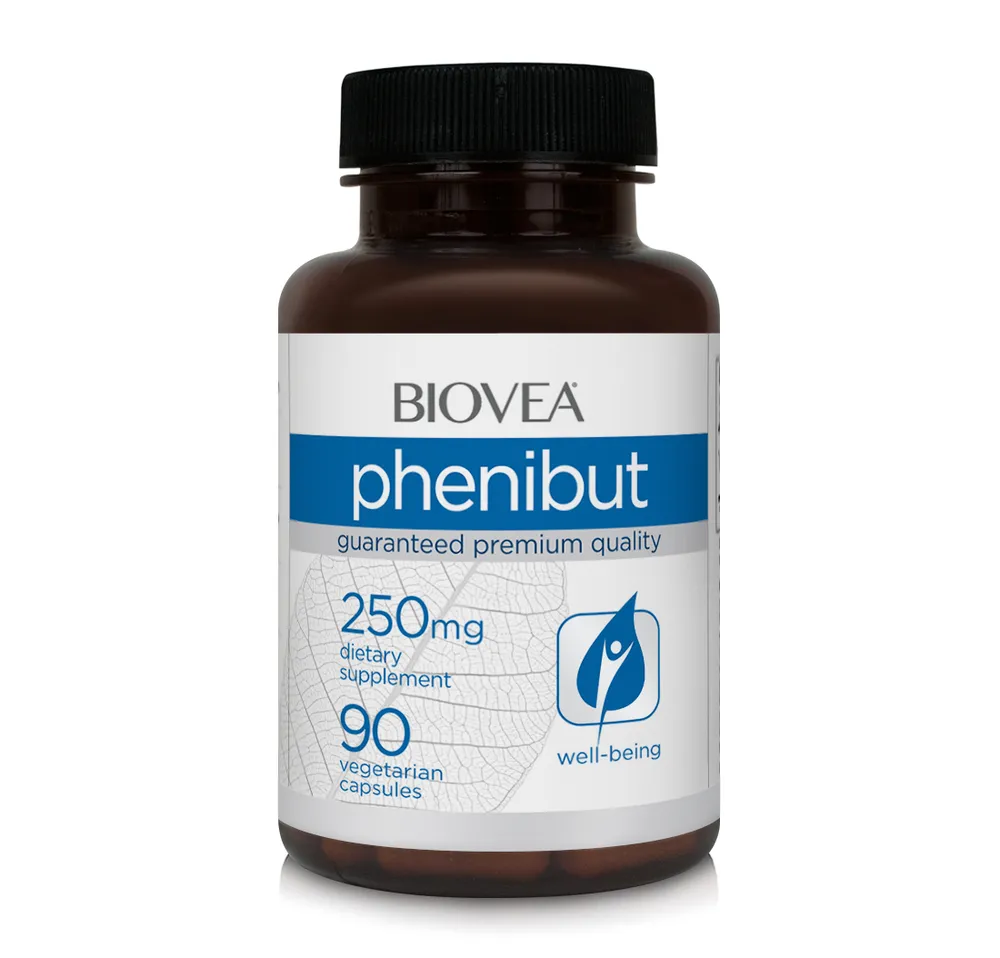
Table of Contents
INSTRUCTIONS FOR MEDICAL USE OF THE MEDICINAL PRODUCT PHENIBUT 250 (PHENIBUT 250)
Composition:
Active substance: phenibut;
1 capsule contains phenibut 250 mg;
Excipients: lactose monohydrate; potato starch; calcium stearate;
capsule shell contains gelatin, titanium dioxide (E 171).
Pharmaceutical form. Hard capsules.
Main physico-chemical properties: hard gelatin capsules of white color. The contents of the capsules – powder of white or almost white color.
Pharmacotherapeutic group. Psychostimulants and nootropic agents. Phenibut.
ATC code N06B X22.
Pharmacological Properties
Pharmacodynamics. Nootropics are also referred to as psychometabolic stimulants because they exert a beneficial effect on metabolic processes in the brain. Phenibut, the active substance of the medicinal product, can be considered both as γ-aminobutyric acid (GABA) and as a derivative of β-phenylethylamine. Phenibut possesses both nootropic and anxiolytic (tranquilizing) activity, typical of GABA derivatives. Phenibut does not affect cholinoreceptors or adrenoreceptors. It reduces anxiety, restlessness, fear, and improves sleep; therefore, the medicinal product can be used for the treatment of neuroses and also prior to surgical procedures. Phenibut prolongs and enhances the effects of hypnotics, narcotics, neuroleptics, and antiparkinsonian agents. It does not exert anticonvulsant effects. Phenibut prolongs the latent period of nystagmus and reduces its duration and intensity. Phenibut significantly reduces manifestations of asthenia and vasovegetative symptoms, including headache, sensation of heaviness in the head, sleep disturbances, irritability, emotional lability, and increases mental performance. Under the influence of phenibut, psychological parameters improve—attention, memory, speed and accuracy of sensorimotor reactions.
In patients with asthenia and emotional lability, phenibut improves subjective well-being from the first days of therapy, increases interest and initiative, and motivation for action, without causing excessive sedation or excitation. In terms of antiasthenic activity (weakness, fatigue, hypodynamia, mental and physical asthenia), phenibut is more active than piracetam.
Pharmacokinetics.
Absorption and Distribution
After oral administration, the drug is well absorbed from the gastrointestinal tract and penetrates into all tissues of the body, easily crossing the blood-brain barrier (approximately 0.1% of the administered dose penetrates into brain tissue; in young and elderly individuals, penetration is significantly greater). 80% of phenibut is bound in the liver; this binding is non-specific.
In healthy volunteers, maximum plasma concentration (Cmax) of the active substance is reached approximately 3 hours after a single 250 mg oral dose taken after food. Cmax after a single 250 mg oral dose is approximately 2593 ng/mL, and steady-state Cmax on day 4 after repeated oral doses of 250 mg three times daily is approximately 4057 ng/mL.
Biotransformation and Elimination
80–95% of phenibut is metabolized in the liver into pharmacologically inactive metabolites. Approximately 5% of the dose is excreted unchanged in urine. No accumulation is observed upon repeated administration. The elimination half-life in healthy volunteers after a single 250 mg oral dose taken after food is approximately 7 hours, and on day 4 after repeated oral administration of 250 mg three times daily, it is approximately 8 hours.
Clinical characteristics.
Indications. Asthenic and anxiety-neurotic states: restlessness, anxiety, and fear; elderly patients – insomnia and nocturnal restlessness; prevention of stress prior to surgery.
Meniere's disease and vertigo associated with vestibular dysfunction of various origins.
Prevention of motion sickness (a specific condition characterized by nausea, vomiting, prostration, and vestibular disturbances caused by being in a moving object, such as a ship or airplane).
Children aged 8 to 14 years – stuttering and tics.
Adjunctive agent in alcohol withdrawal syndrome.
Contraindications. Hypersensitivity to phenibut or to excipients of the medicinal product. Pregnancy or breastfeeding period.
Interaction with other medicinal products and other forms of interaction. Phenibut can be combined with psychotropic medicinal products, reducing the dose of phenibut or of the concomitantly administered medicinal products.
Phenibut enhances and prolongs the effects of hypnotics, narcotics, antipsychotics, and antiparkinsonian medicinal products.
Special precautions for use.
The drug should be used with caution in patients with peptic ulcer of the stomach and/or intestine. To protect mucous membranes from the irritating effect of phenibut, lower doses should be prescribed for these patients.
During prolonged treatment, blood parameters and liver function tests should be monitored.
Literature data indicate the development of dependence after using medicinal products containing phenibut at doses exceeding therapeutic ones.
Experience obtained during the post-marketing period with the use of phenibut at therapeutic doses does not indicate withdrawal syndrome. However, literature data suggest that when phenibut is used at doses higher than therapeutic, abrupt discontinuation may lead to withdrawal syndrome, which can be severe and require hospitalization. In such cases, insomnia, psychomotor agitation, psychosis, auditory and visual hallucinations, anxiety, depression, dizziness, seizures, nausea, vomiting, palpitations, and tachycardia have been reported.
If a patient has known intolerance to certain sugars, a physician should be consulted before taking this medicinal product.
Use during pregnancy or breastfeeding. Animal studies have not revealed mutagenic, teratogenic, or embryotoxic effects of phenibut. Well-controlled and adequate studies on the safety of phenibut use in pregnant and breastfeeding women have not been conducted. Therefore, phenibut should not be used during pregnancy or breastfeeding (see section "Contraindications").
There is no information available on the effect of phenibut on fertility.
Ability to influence reaction rate while driving or operating machinery. Patients who experience drowsiness or other central nervous system disorders during drug administration should refrain from driving vehicles or operating machinery while these adverse reactions are present.
Method of Administration and Dosage
Dosage
Adults
Asthenic and anxiety-neurotic states. The dose is 250−500 mg three times daily. The maximum single dose is 750 mg; for patients aged 60 years and older – 500 mg.
Duration of treatment: 2−3 weeks. If necessary, the course may be extended to 4−6 weeks.
Meniere’s disease and dizziness associated with vestibular dysfunction of various origins. In functional disorders of the vestibular analyzer of infectious origin and during exacerbation of Meniere’s disease:
- initially – 750 mg three times daily for 5−7 days;
- upon reduction in severity of vestibular disturbances – continue treatment with 250−500 mg three times daily for 5−7 days;
- thereafter – 250 mg once daily for another 5 days.
In mild cases, administer 250 mg twice daily for 5−7 days, followed by 250 mg once daily for 7−10 days.
For prevention of dizziness caused by vestibular dysfunction of vascular or traumatic origin: administer 250 mg three times daily for 12 days.
Prevention of motion sickness. The dose is 250−500 mg taken one hour before the expected onset of motion sickness or at the first symptoms of motion sickness. The drug is poorly effective in the presence of pronounced symptoms (e.g., vomiting).
Adjunctive treatment in alcohol withdrawal syndrome. During the first days, administer 250−500 mg three times daily and 750 mg at night; thereafter, the dose should be gradually reduced.
Children
Stuttering and tics. Children aged 8 to 14 years: 250 mg three times daily.
Duration of treatment course: 2−6 weeks.
No drug dependence or withdrawal syndrome has been observed. Literature reports isolated cases of tolerance induced by phenibut therapy.
Patients with hepatic impairment
In patients with impaired liver function, high doses of the drug may cause hepatotoxicity. The lowest effective dose should be used in this patient group.
Patients with renal impairment
There are no data on adverse effects of phenibut in patients with impaired renal function when the drug is used at therapeutic doses.
Method of Administration
Administer orally after meals. Swallow the capsules with sufficient amount of water.
Children. The drug may be administered to children aged 8 years and older.
Overdose. Phenibut is low in toxicity at therapeutic doses.
Symptoms: drowsiness, nausea, vomiting, dizziness. Prolonged use of very high doses may lead to eosinophilia, arterial hypotension, fatty liver dystrophy, and impaired renal function.
Post-marketing data indicate that acute phenibut overdose is associated with symptoms such as depression (including decreased level of consciousness, reduced muscle tone, stupor, and respiratory depression), impaired temperature regulation, arterial hypertension or hypotension, and tachycardia. Psychomotor agitation, hallucinations, seizures, and delirium have also been reported. Cases of overdose were associated with use of phenibut-containing drugs at doses significantly exceeding the therapeutic dose.
Treatment: symptomatic therapy. There is no specific antidote.
Side effects
Like all medicinal products, Phenibut may cause adverse reactions, although they do not occur in all patients.
Adverse reactions are classified according to the MedDRA system organ classification and frequency categories: very common (≥ 1/10); common (≥ 1/100 to < 1/10); uncommon (≥ 1/1,000 to < 1/100); rare (≥ 1/10,000 to < 1/1,000); very rare (< 1/10,000); frequency not known (cannot be estimated from the available data).
Immune system disorders: frequency not known: hypersensitivity reactions (including urticaria, pruritus, erythema, rash, angioneurotic edema, facial swelling, tongue swelling).
Nervous system disorders: frequency not known: somnolence (at the beginning of treatment), headache and dizziness (at doses exceeding 2 g per day; symptoms decrease with dose reduction).
Gastrointestinal disorders: frequency not known: nausea (at the beginning of treatment).
Hepatobiliary disorders: frequency not known: hepatotoxicity (with prolonged use of high doses).
Skin and subcutaneous tissue disorders: rare: allergic reactions (rash, pruritus).
There are isolated reports that inappropriate use of medicinal products according to instructions in children may lead to emotional lability and sleep disturbances.
Reporting of suspected adverse reactions
Reporting of suspected adverse reactions after medicinal product registration is of great importance. It allows ongoing monitoring of the benefit-risk balance of the medicinal product. Healthcare professionals and pharmacists, as well as patients or their legal representatives, should report all suspected adverse reactions and lack of efficacy through the Automated Information System for Pharmacovigilance at the following link: https://aisf.dec.gov.ua.
Shelf life. 2 years.
Storage conditions. Store in the original packaging at a temperature not exceeding 25 °C.
Keep out of reach of children.
Packaging. 10 capsules in a blister, 2 blisters per cardboard box.
Prescription status. Prescription only.
Manufacturer. Limited Liability Company "Pharmaceutical Company "Zdorovya".
Address of manufacturer and location of its operations. 22 Shevchenka Street, Kharkiv, Kharkiv Oblast, 61013, Ukraine.