Femifucin
Ukraine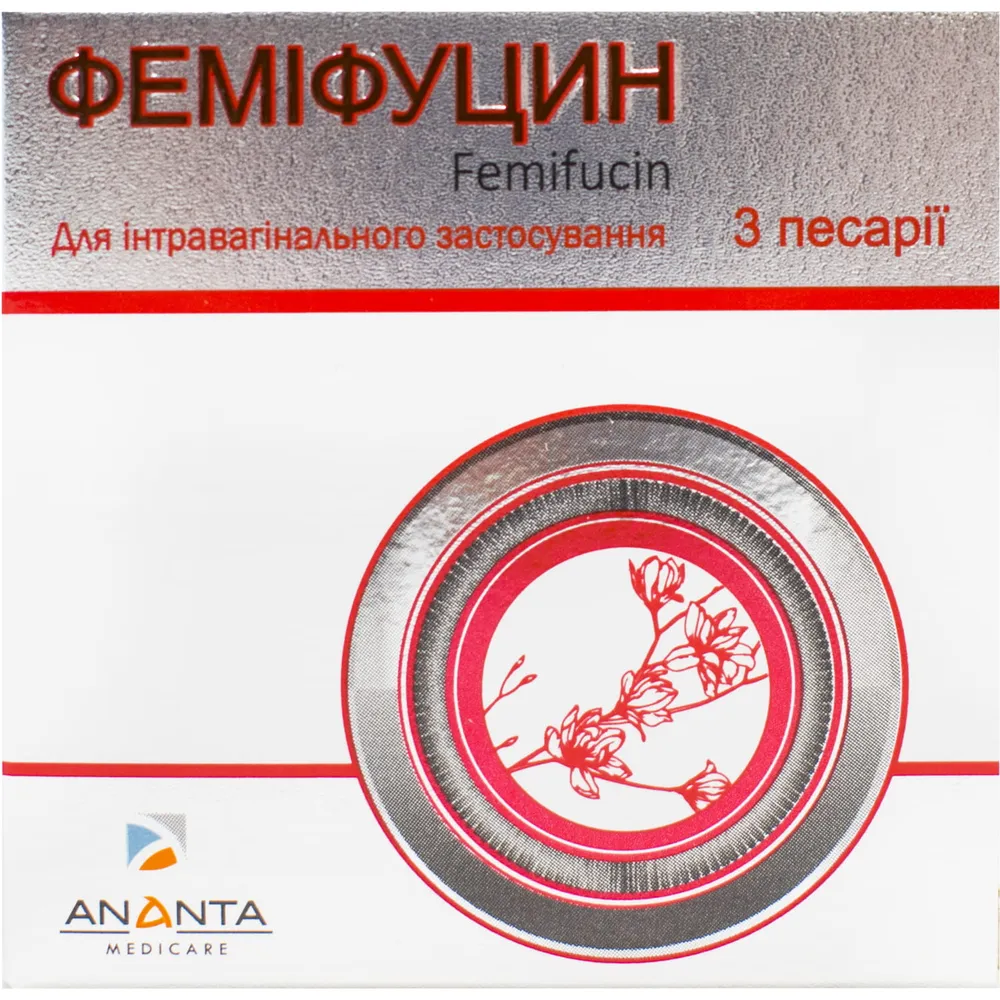
Table of Contents
INSTRUCTION FOR MEDICAL USE OF THE MEDICINAL PRODUCT FEMIFUCIN
Composition:
Active substance: natamycin;
1 suppository contains 100 mg of natamycin;
Excipients: solid fat, sorbitan trioleate, polysorbate 80, cetyl alcohol, sodium hydrogencarbonate, adipic acid.
Medicinal form. Suppositories.
Main physicochemical properties: suppositories of white to light yellow color, torpedo-shaped.
Pharmacotherapeutic group. Antimicrobial and antiseptic agents used in gynecology, excluding combined preparations containing corticosteroids. Antibiotics. Natamycin. ATC code G01A A02.
Pharmacological properties.
Pharmacodynamics.
Natamycin is a fungicidal agent. It binds irreversibly to sterols in the cell membrane, disrupting membrane function and integrity, thereby destroying microorganisms. Natamycin is active against a broad range of yeast fungi, yeast-like organisms, dermatophytes, and molds. The average minimal fungicidal concentration is 1–10 μg/mL for most microorganisms, including strains of Candida albicans—the most common pathogen causing fungal infections. Natamycin is inactive against bacteria. In clinical practice, there have been no reported cases of primary resistance of yeasts, molds, and yeast-like microorganisms to natamycin.
Pharmacokinetics.
Natamycin acts locally and is practically not absorbed through the skin or mucous membranes.
Clinical characteristics.
Indications.
Vaginitis caused by Candida albicans.
Contraindications.
Hypersensitivity to any component of the drug.
Interaction with other medicinal products and other forms of interaction.
Unknown.
Special precautions.
During menstruation, treatment should be interrupted. Therapy should be started in advance before the onset of menstruation or immediately after its completion.
The medicinal product contains cetyl alcohol, which may cause local skin reactions (e.g. contact dermatitis).
Special warnings.
Use during pregnancy or breastfeeding.
The drug can be used during pregnancy or breastfeeding, since nystatin is not absorbed through the skin or mucous membranes.
Ability to influence reaction speed when driving or operating machinery.
No effect.
Method of Administration and Dosage
For use in adult women, one pessary per day for 3–6 days. The pessaries should be inserted as deeply as possible into the vagina (in a lying position) once daily (at bedtime). If treatment over several days is required, the course of therapy should be completed before the onset of menstruation or initiated after menstruation has ended.
Children
Natamycin in the form of pessaries must not be used in children.
Overdose
Systemic effects are practically excluded with the use of pessaries, since the medicinal product is not absorbed through the mucous membrane.
In case of accidental oral ingestion of pessaries, toxic effects are not expected due to negligible absorption from the gastrointestinal tract.
Adverse reactions.
Rare (> 0.01% to < 0.1%)
Skin and subcutaneous tissue disorders: hypersensitivity reaction, burning sensation and irritation.
Hypersensitivity to cetyl alcohol may occur.
Reporting of suspected adverse reactions.
It is important to report suspected adverse reactions after the medicinal product is authorized. This allows continued monitoring of the benefit-risk balance of the medicinal product. Healthcare professionals are asked to report any suspected adverse reactions via the national reporting system.
Shelf life.
2 years.
Do not use the medicinal product after the expiry date stated on the packaging.
Storage conditions.
Store in the original packaging at a temperature not exceeding 25 °C.
Keep out of reach and sight of children.
Packaging.
3 suppositories in a strip made of polyvinyl chloride film. 1 or 2 strips in a cardboard box.
Pharmaceutical classification.
Over-the-counter (without prescription).
Manufacturer.
JSC "Monfarm", Ukraine.
Manufacturer's address and place of business.
8 Zavodska Street, Avramivka, Uman district, Cherkasy region, 19161, Ukraine.