Farmacitron
Ukraine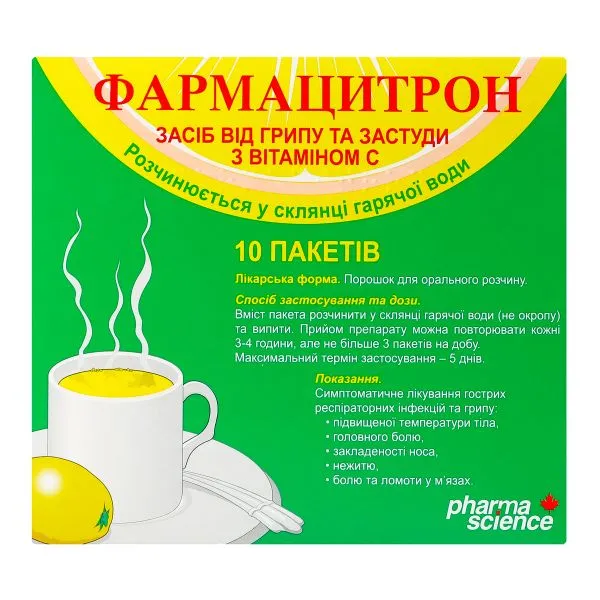
Table of Contents
INSTRUCTIONS FOR MEDICAL USE OF THE MEDICINAL PRODUCT PHARMACITRON (PHARMACITRON)
Composition:
Active ingredients: paracetamol (acetaminophen), phenylephrine hydrochloride, pheniramine maleate, ascorbic acid;
1 sachet contains paracetamol (acetaminophen) 500 mg, phenylephrine hydrochloride 10 mg, pheniramine maleate 20 mg, ascorbic acid 50 mg;
Excipients: sodium citrate, anhydrous citric acid, artificial lemon flavor, quinoline yellow (E 104), red dye FD & C No. 40 (E 129), colloidal silicon dioxide, sucrose, sugar.
Pharmaceutical form. Granules for oral solution.
Main physicochemical properties: granular, free-flowing powder, a mixture of white, pale-yellow and/or orange granules with lemon taste and odor. Agglomeration of granules into larger clusters (lumps) may occur.
Pharmacotherapeutic group.
Analgesics and antipyretics. Paracetamol combinations without psychotropic agents.
ATC code N02BE51.
Pharmacological properties.
Pharmacodynamics.
Paracetamol has antipyretic, analgesic, and weak anti-inflammatory effects. It inhibits prostaglandin synthesis in the central nervous system (CNS) and blocks the transmission of pain impulses.
Pheniramine maleate is a histamine H1-receptor antagonist that reduces vascular permeability and relieves lacrimation, as well as itching of the eyes and nose.
Phenylephrine hydrochloride is an α-adrenomimetic agent with vasoconstrictive properties that reduces swelling of the nasal mucosa and paranasal sinuses.
Ascorbic acid enhances non-specific resistance of the body.
Pharmacokinetics.
Paracetamol is well absorbed, penetrates the placental barrier, and to a minor extent passes into breast milk. It is metabolized by the cytochrome P450 system, excreted by the kidneys, and has a half-life of 1–4 hours. Duration of action is 3–4 hours.
Pheniramine maleate is well absorbed from the gastrointestinal tract. It is metabolized in the liver by the cytochrome P450 system, has a half-life of 16–18 hours, and 70–83% is excreted by the kidneys.
The effect of phenylephrine hydrochloride begins rapidly and lasts approximately 20 minutes. It is metabolized in the liver or gastrointestinal tract and excreted by the kidneys.
Ascorbic acid is rapidly absorbed from the gastrointestinal tract, metabolized in the liver, and excreted by the kidneys.
Clinical characteristics.
Indications.
Symptomatic treatment of acute respiratory infections and influenza:
- elevated body temperature,
- headache,
- nasal congestion,
- runny nose (rhinitis),
- muscle pain and aching.
Contraindications.
Hypersensitivity to the components of the drug; severe impairment of liver and/or kidney function; congenital hyperbilirubinemia; glucose-6-phosphate dehydrogenase deficiency; phenylketonuria, alcoholism; blood disorders; leukopenia; anemia; severe forms of arrhythmia, arterial hypertension, atherosclerosis, ischemic heart disease; hyperthyroidism; acute pancreatitis; prostate hypertrophy with urinary retention; bladder neck obstruction; pyloroduodenal obstruction; bronchial asthma; closed-angle glaucoma; pheochromocytoma; thrombosis; thrombophlebitis; diabetes mellitus; epilepsy; states of increased excitation; sleep disorders associated with treatment using tricyclic antidepressants, β-blockers, other sympathomimetics, appetite-suppressing or appetite-enhancing agents, and amphetamine-like psychostimulants; concomitant therapy and within 2 weeks after use of monoamine oxidase inhibitors (MAO inhibitors).
Interaction with other medicinal products and other forms of interaction.
The absorption rate of paracetamol may be increased when used concomitantly with metoclopramide and domperidone, and decreased with cholestyramine (this effect is negligible if cholestyramine is administered 1 hour apart). Long-term use of paracetamol may enhance the anticoagulant effect of warfarin and other coumarin derivatives, thereby increasing the risk of bleeding. This effect is not significant with occasional use of paracetamol. Barbiturates reduce the antipyretic effect of paracetamol. Hepatotoxic drugs increase the likelihood of paracetamol accumulation and overdose. The risk of paracetamol hepatotoxicity increases with drugs that induce hepatic microsomal enzymes (barbiturates; anticonvulsants – phenytoin, phenobarbital, carbamazepine; and antituberculosis agents – rifampicin, isoniazid). Paracetamol: reduces the efficacy of diuretics; may prolong the half-life of chloramphenicol; may induce hepatic metabolism of lamotrigine, thereby reducing its bioavailability and efficacy. Regular concomitant use of paracetamol and zidovudine may lead to neutropenia and increased risk of liver damage. When probenecid is used, the dose of paracetamol should be reduced, as probenecid affects paracetamol metabolism. Paracetamol may interfere with the determination of uric acid levels by the phosphotungstic acid method. Hepatotoxicity of paracetamol may be enhanced by prolonged or excessive alcohol consumption. Do not use concurrently with alcohol.
Interaction of phenylephrine with monoamine oxidase inhibitors (MAO inhibitors) causes a hypertensive effect; with tricyclic antidepressants (amitriptyline) – increases the risk of cardiovascular adverse effects; with digoxin and cardiac glycosides – may lead to arrhythmias and infarction; with other sympathomimetics – increases the risk of cardiovascular adverse reactions and hypertension; may reduce the effectiveness of β-blockers and other antihypertensive agents (reserpine, methyldopa, debrisoquin, guanethidine), increasing the risk of arterial hypertension and cardiovascular side effects. Concomitant use of phenylephrine with ergot alkaloids (ergotamine and methysergide) may increase the risk of ergotism.
Ascorbic acid, when taken orally, enhances iron absorption; increases blood levels of ethinylestradiol, penicillins, and tetracyclines; reduces blood levels of antipsychotic agents and phenothiazine derivatives; reduces the effectiveness of heparin and indirect anticoagulants; increases the risk of crystalluria during salicylate therapy and the risk of glaucoma during glucocorticoid therapy; large doses reduce the effectiveness of tricyclic antidepressants. Ascorbic acid should be taken only 2 hours after deferoxamine injection, as their concomitant use increases iron toxicity, especially in the myocardium, potentially leading to cardiac decompensation. Long-term use of high doses during disulfiram treatment inhibits the disulfiram-alcohol reaction. Absorption of ascorbic acid is reduced by oral contraceptives, fruit or vegetable juices, and alkaline beverages.
Pheniramine enhances the anticholinergic effects of atropine, spasmolytics, tricyclic antidepressants, and anti-Parkinson agents; it inhibits the action of anticoagulants. Concomitant use of pheniramine with sedatives, barbiturates, tranquilizers, neuroleptics, anesthetics, narcotic analgesics, and alcohol may significantly enhance its CNS depressant effects.
Paracetamol should be used with caution concomitantly with flucloxacillin, as this combination has been associated with high anion gap metabolic acidosis due to pyroglutamic acidosis, particularly in patients with risk factors (see section "Special precautions for use").
Special precautions for use
Do not exceed the recommended doses. If symptoms do not improve within 5 days or are accompanied by high fever, chills lasting more than 3 days, rash, or persistent headache, consult a physician, as these signs may indicate a more serious illness.
Due to the risk of severe liver damage in overdose, do not use simultaneously with other medications for symptomatic treatment of colds and rhinitis (vasoconstrictors, paracetamol-containing products). Use with caution in patients with Raynaud's disease, arterial hypertension, heart disorders, arrhythmias, bradycardia, thyroid disorders, liver or kidney disease, acute hepatitis, glaucoma, chronic pulmonary diseases, prostate hyperplasia (due to risk of urinary retention), elderly individuals, increased blood coagulability, hemolytic anemia, chronic malnutrition, dehydration, or stenosing peptic ulcer. The risk of hepatotoxicity is increased in patients with alcoholic liver disease or those who abuse alcohol.
The product contains phenylephrine, which may provoke angina attacks, and sucrose, which is contraindicated in patients with fructose intolerance, glucose-galactose malabsorption, or sucrose-isomaltase deficiency. If a patient has known sugar intolerance, consult a physician before taking this medication. Use with caution in patients with diabetes mellitus. May be harmful to teeth.
Consult a physician before use if the patient has liver or kidney disease; is taking warfarin or similar anticoagulants; takes analgesics daily for mild arthritis; or has bronchopulmonary diseases (asthma, emphysema, chronic bronchitis).
The drug may affect laboratory test results for blood glucose, uric acid, creatinine, and inorganic phosphates. Occult blood in stool may yield a false-negative result.
In patients with severe infections (sepsis), where glutathione levels are reduced, paracetamol use increases the risk of metabolic acidosis. Symptoms include deep, rapid, or labored breathing, nausea, vomiting, and loss of appetite. In such cases, seek immediate medical attention.
It is not recommended to take this medication late in the day, as high doses of ascorbic acid have a mild stimulant effect. Due to the stimulatory effect of ascorbic acid on corticosteroid hormone production, kidney function and arterial blood pressure should be monitored.
Use with particular caution in patients with iron metabolism disorders (hemochromatosis, hemochromatosis, thalassemia) and in those with a history of nephrolithiasis (risk of hyperoxaluria and oxalate precipitation in the urinary tract after high-dose ascorbic acid intake).
Prolonged use of high doses of ascorbic acid may accelerate its own metabolism, potentially leading to paradoxical hypovitaminosis after discontinuation. Do not use simultaneously with other vitamin C-containing products. Absorption of ascorbic acid may be altered in intestinal motility disorders, enteritis, or reduced gastric secretion.
Cases of high anion gap metabolic acidosis (HAGMA) due to 5-oxoproline (pyroglutamic) acidosis have been reported in patients with severe conditions such as severe renal insufficiency, sepsis, malnutrition, or other causes of glutathione deficiency (e.g., chronic alcoholism), particularly when treated with therapeutic doses of paracetamol over a prolonged period or in combination with flucloxacillin. If high anion gap metabolic acidosis due to pyroglutamic acidosis is suspected, immediate discontinuation of paracetamol is recommended, along with close monitoring of the patient. Measurement of urinary 5-oxoproline levels may be helpful in identifying pyroglutamic acidosis as the underlying cause of high anion gap metabolic acidosis in patients with multiple risk factors.
Use during pregnancy or breastfeeding
The medication is contraindicated during pregnancy and breastfeeding. The effect of the drug on fertility has not been specifically studied. Preclinical studies have not revealed any specific effect of paracetamol on fertility when used at therapeutic doses. Adequate studies on the reproductive toxicity of phenylephrine and pheniramine in animals have not been conducted.
Ability to affect reaction speed when driving or operating machinery
Since the medication may cause drowsiness and other adverse reactions affecting the nervous system and visual organs, driving vehicles or operating complex machinery is not recommended during treatment.
Method of Administration and Dosage
Dissolve the contents of the sachet in a glass of hot water (not boiling water) and drink. The medication may be repeated every 3–4 hours, but no more than 3 sachets per day.
Maximum duration of use – 5 days.
Children.
The drug is contraindicated in children under 14 years of age.
Overdose.
Paracetamol: Within the first 24 hours, symptoms may include pallor, nausea, vomiting, anorexia, and abdominal pain. After ingestion of large doses, disturbances in orientation, psychomotor agitation, dizziness, sleep disturbances, cardiac arrhythmias, pancreatitis, and hepatonecrosis may occur. The first sign of liver damage may be abdominal pain, which does not always appear within the first 12–48 hours and may develop later, up to 4–6 days after drug intake. Liver injury typically occurs within 72–96 hours after ingestion. Glucose metabolism disturbances and metabolic acidosis, as well as hemorrhages, may also occur. With prolonged use of high doses, aplastic anemia, pancytopenia, agranulocytosis, neutropenia, leukopenia, and thrombocytopenia are possible.
In isolated cases, acute renal failure with tubular necrosis has been reported, which may occur even in the absence of severe liver damage, manifesting as severe lumbar pain, hematuria, and proteinuria. Nephrotoxicity is possible: renal colic, interstitial nephritis, capillary necrosis.
Ingestion of 10 g or more of paracetamol by adults or more than 150 mg/kg body weight by children, especially when combined with alcohol, may lead to hepatocellular necrosis, resulting in encephalopathy, hemorrhages, hypoglycemia, hepatic coma, and fatal outcome. In patients with risk factors (long-term treatment with carbamazepine, phenobarbital, phenytoin, primidone, rifampicin, St. John's wort, or other drugs inducing liver enzymes; chronic alcohol abuse; glutathione deficiency (digestive disorders, cystic fibrosis, HIV infection, fasting, cachexia)), ingestion of 5 g or more of paracetamol may cause liver damage.
In case of overdose, immediate medical assistance is required. The patient should be taken to hospital immediately, even if early symptoms of overdose are absent. Symptoms may be limited to nausea and vomiting or may not reflect the severity of overdose or risk of organ damage. Activated charcoal should be administered within the first hour after overdose. Paracetamol blood concentration should be measured 4 hours or later after ingestion (earlier concentrations are unreliable). Treatment with N-acetylcysteine may be administered within 24 hours after paracetamol ingestion, but maximum efficacy is achieved when administered within the first 8 hours; after this, its effectiveness decreases sharply. If intravenous N-acetylcysteine is required, it should be administered according to the established dosage regimen. As an alternative, in the absence of vomiting and when far from medical facilities, oral methionine may be used.
Phenylephrine: Symptoms include hyperhidrosis, psychomotor agitation or CNS depression, headache, dizziness, drowsiness, impaired consciousness, arrhythmias, tremor, hyperreflexia, seizures, nausea, vomiting, irritability, restlessness, and arterial hypertension; in severe cases – coma. To counteract hypertensive effects, an intravenous alpha-receptor blocker may be used; for seizures – diazepam.
Pheniramine: Anticholinergic-like symptoms occur: mydriasis, photophobia, dryness of skin and mucous membranes, hyperthermia, intestinal atony. CNS depression leads to impaired function of the respiratory and cardiovascular systems (bradycardia, arterial hypotension, collapse). Symptoms caused by mutual potentiation of the anticholinergic effect of pheniramine and the sympathomimetic effect of phenylephrine: drowsiness, which may progress to agitation (especially in children) or CNS depression, visual disturbances, rash, persistent headache, nervousness, insomnia, hyperreflexia, irritability, circulatory disturbances, bradycardia. There is no specific antidote for antihistamine overdose. Standard emergency care should be provided, including administration of activated charcoal, a saline laxative, and standard supportive measures for cardiovascular and respiratory systems. CNS stimulants are contraindicated; vasoconstrictors may be used to treat arterial hypotension.
Ascorbic acid: Symptoms include nausea, vomiting, or diarrhea (which resolve after discontinuation); bloating and abdominal pain, itching, skin rashes, and increased excitability. Doses exceeding 3000 mg may cause temporary osmotic diarrhea and gastrointestinal disturbances, disturbances in zinc and copper metabolism, myocardial dystrophy. With prolonged use of high doses, suppression of pancreatic islet function and glucosuria are possible. Overdose may lead to changes in renal excretion of ascorbic and uric acids during urine acidification, resulting in precipitation of oxalate stones.
Treatment is symptomatic: gastric lavage should be performed within the first 6 hours; within the first 8 hours, oral methionine or intravenous cysteamine or N-acetylcysteine should be administered.
Adverse Reactions
Skin and subcutaneous tissue disorders: rash, pruritus, dermatitis, urticaria, erythema multiforme, Stevens-Johnson syndrome, Lyell's syndrome.
Immune system disorders: hypersensitivity reactions, including anaphylactic shock and angioneurotic edema.
Nervous system disorders: headache, dizziness, tremor, restlessness, nervousness, irritability, anxiety, insomnia, somnolence, confusion, hallucinations, psychomotor agitation, disorientation, depression, paresthesia, tinnitus; in isolated cases – coma, seizures, dyskinesia, behavioral changes.
Respiratory system disorders: bronchospasm in patients sensitive to acetylsalicylic acid and NSAIDs.
Eye disorders: visual disturbances and accommodation disorders, mydriasis, increased intraocular pressure, dry eyes.
Gastrointestinal disorders: nausea, vomiting, heartburn, dry mouth, abdominal discomfort and pain, constipation, diarrhea, flatulence, anorexia, aphthae, hypersalivation, hemorrhages, mucosal irritation.
Hepatobiliary disorders: liver function abnormalities, hypertransaminasemia (usually without jaundice), hepatonecrosis (with high-dose administration).
Endocrine system disorders: hypoglycemia, up to hypoglycemic coma.
Blood and lymphatic system disorders: anemia, including hemolytic anemia, sulfhemoglobinemia, and methemoglobinemia (cyanosis, dyspnea, chest pain), bruising or bleeding, thrombocytopenia, neutropenia, agranulocytosis, leukopenia, pancytopenia.
Renal and urinary disorders: nephrotoxicity, interstitial nephritis, papillary necrosis, dysuria, urinary retention and difficulty in micturition, renal colic, renal failure.
Cardiac disorders: arterial hypertension, tachycardia, bradycardia, palpitations, arrhythmia, dyspnea, chest pain, angina attacks.
Metabolism and nutrition disorders: metabolic acidosis with high anion gap (frequency unknown).
Other: general weakness, malaise.
Unlike second-generation antihistamines, pheniramine use is not associated with QT interval prolongation or cardiac arrhythmias.
Description of selected adverse reactions.
Metabolic acidosis with high anion gap. Cases of metabolic acidosis with high anion gap due to pyroglutamic acidosis have been observed in patients with risk factors taking paracetamol (see section "Special precautions"). Pyroglutamic acidosis may occur due to low glutathione levels in these patients.
Shelf life. 2 years.
Storage conditions.
Store in a place inaccessible to children, at a temperature not exceeding 30 °C.
Packaging.
23 g of powder in 1 sachet. 23 g of powder in a sachet, 10 sachets in a cardboard box.
Supply category. Over-the-counter.
Manufacturer. Pharmascience Inc. / Délpharm Orléans.
Manufacturer's address and place of business.
6111 Royalmount Avenue, Suite 100, Montreal, Quebec H4R 2T4, Canada /
5 Avenue de Conflans, Orléans Cédex 2, 45071, France.
Marketing authorization holder. Pharmascience Inc.
Address of the marketing authorization holder.
6111 Royalmount Avenue, Suite 100, Montreal, Quebec H4R 2T4, Canada.