Ezetrex
Ukraine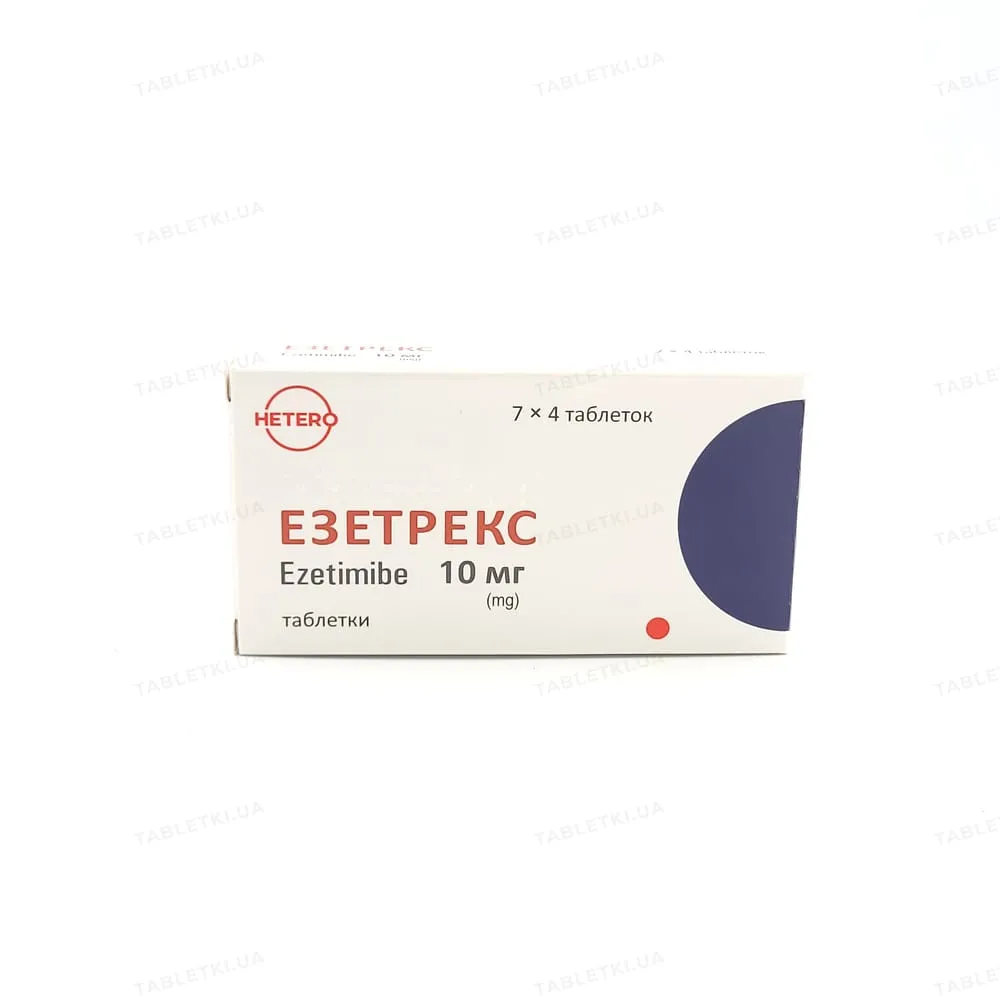
Table of Contents
INSTRUCTIONS FOR MEDICAL USE OF THE MEDICINAL PRODUCT EZETREX (EZETREX)
Composition:
Active substance: ezetimibe;
1 tablet contains ezetimibe 0.01 g;
Excipients: lactose monohydrate, microcrystalline cellulose, colloidal anhydrous silicon dioxide, sodium lauryl sulfate, sodium croscarmellose, hypromellose, magnesium stearate.
Pharmaceutical form. Tablets.
Main physicochemical properties: tablets of white or almost white color, capsule-shaped, with a flat surface, bevelled edges, marked with "I" on one side and "83" on the other.
Pharmacotherapeutic group. Other lipid-modifying agents. ATC code C10AX09.
Pharmacological properties.
Pharmacodynamics.
Ezetimibe is a representative of a new class of lipid-lowering agents that selectively inhibit intestinal absorption of cholesterol and related plant sterols. Ezetimibe is orally active and has a mechanism of action distinct from other classes of cholesterol-lowering drugs (e.g., statins, bile acid sequestrants (resins), fibrate acid derivatives, and plant stanols). The molecular target of ezetimibe is the Niemann-Pick C1-Like 1 (NPC1L1) sterol transporter, responsible for the uptake of cholesterol and phytosterols in the intestine.
Ezetimibe localizes to the brush border of the small intestine and inhibits cholesterol absorption, thereby reducing delivery of intestinal cholesterol to the liver; statins reduce cholesterol synthesis in the liver. Together, these mechanisms provide additive cholesterol reduction. After 2 weeks of clinical use in 18 patients with hypercholesterolemia, ezetimibe reduced cholesterol absorption by 54% compared to placebo.
A series of preclinical studies were conducted to determine the selectivity of ezetimibe in inhibiting cholesterol absorption. Ezetimibe inhibited the absorption of [14C]-cholesterol without affecting the absorption of triglycerides, fatty acids, bile acids, progesterone, ethinylestradiol, or fat-soluble vitamins A and D.
Epidemiological studies have established that cardiovascular disease and mortality are directly related to levels of total cholesterol and low-density lipoprotein cholesterol (LDL-C) and inversely related to high-density lipoprotein cholesterol (HDL-C) levels.
The combination of ezetimibe with a statin is effective in reducing the risk of cardiovascular complications in patients with a history of ischemic heart disease (IHD) and acute coronary syndrome (ACS).
Pharmacokinetics.
Absorption
After oral administration, ezetimibe is rapidly absorbed and actively conjugated to form the pharmacologically active phenolic glucuronide (ezetimibe-glucuronide). The mean maximum plasma concentration (Cmax) of ezetimibe-glucuronide is reached within 1–2 hours, and that of ezetimibe within 4–12 hours. Absolute bioavailability of ezetimibe cannot be determined because the compound is practically insoluble in aqueous media suitable for injection.
Concomitant food intake (with low or high fat content) does not affect the oral bioavailability of ezetimibe, including 10 mg tablets. Ezetrex can be taken independently of food intake.
Distribution
Ezetimibe and ezetimibe-glucuronide are bound to human plasma proteins by 99.7% and 88–92%, respectively.
Metabolism
The primary metabolism of ezetimibe occurs in the small intestine and liver via glucuronidation (phase II reaction), followed by biliary excretion. Minimal oxidative metabolism (phase I reaction) was observed at all stages of transformation. Ezetimibe and ezetimibe-glucuronide are the main components detected in plasma, accounting for approximately 10–20% and 80–90% of total drug content in plasma, respectively. Ezetimibe and ezetimibe-glucuronide are slowly eliminated from plasma through enterohepatic recirculation. The elimination half-life of ezetimibe and ezetimibe-glucuronide is approximately 22 hours.
Excretion
After administration of 20 mg of 14C-ezetimibe to volunteers, approximately 93% of total ezetimibe-related radioactivity was detected in plasma. Approximately 78% and 11% of the administered radioactive dose were excreted in feces and urine, respectively, within 10 days. No measurable levels of radioactivity were observed in plasma 48 hours after administration.
Special populations
Children
The pharmacokinetics of ezetimibe in children aged ≥6 years is similar to that in adults. Pharmacokinetic data in children under 6 years of age are lacking. Clinical experience with ezetimibe in children and adolescents includes patients with homozygous familial hypercholesterolemia, heterozygous familial hypercholesterolemia, or sitosterolemia.
Elderly patients
In elderly patients (≥65 years), plasma concentrations of total ezetimibe are approximately twice higher than in younger patients (18–45 years). Reduction in LDL-C and safety profile are approximately similar in elderly and younger patients receiving ezetimibe. Therefore, dose adjustment is not required for elderly patients.
Patients with hepatic impairment
After a single 10 mg dose of ezetimibe, the mean area under the plasma concentration-time curve (AUC) of total ezetimibe was 1.7 times higher in patients with mild hepatic impairment (5–6 points on the Child-Pugh scale) compared to healthy volunteers. In a 14-day study of ezetimibe (10 mg daily) in patients with moderate hepatic impairment (7–9 points on the Child-Pugh scale), AUC values of total ezetimibe increased approximately 4-fold on day 1 and day 14 compared to healthy volunteers. Dose adjustment is not required for patients with mild hepatic impairment. Since the effects of increased ezetimibe exposure in patients with moderate or severe hepatic impairment (Child-Pugh score >9) are unknown, Ezetrex is not recommended for use in these patients (see section "Special precautions").
Patients with renal impairment
After a single 10 mg dose of ezetimibe in patients with severe renal impairment (n = 8; creatinine clearance ≤30 mL/min/1.73 m²), the mean AUC of total ezetimibe increased by approximately 1.5-fold compared to healthy volunteers (n = 9). This finding is not considered clinically significant. Dose adjustment is not required for patients with renal impairment.
In one patient in this study (who had a kidney transplant and was receiving multiple therapies, including cyclosporine), total ezetimibe levels were 12 times higher.
Gender
Plasma concentrations of total ezetimibe are slightly higher (approximately 20%) in women than in men. Reduction in LDL-C levels and safety profile are approximately similar in men and women receiving ezetimibe. Therefore, dose adjustment based on gender is not required.
Clinical characteristics.
Indications.
Primary hypercholesterolemia
Ezetrax in combination with an HMG-CoA reductase inhibitor (statin) is indicated as adjunctive therapy to diet in patients with primary (heterozygous familial and non-familial) hypercholesterolemia when statin monotherapy is insufficient.
Monotherapy with the medicinal product Ezetrax is indicated as adjunctive therapy to diet in patients with primary (heterozygous familial and non-familial) hypercholesterolemia for whom statin therapy is contraindicated or not tolerated.
Prevention of cardiovascular complications
Ezetrax is indicated to reduce the risk of cardiovascular complications in patients with ischemic heart disease (IHD) and a history of acute coronary syndrome (ACS), regardless of prior statin use.
Homozygous familial hypercholesterolemia (HoFH)
Ezetrax in combination with a statin is indicated as adjunctive therapy to diet in patients with HoFH. Patients may also receive additional treatment (e.g., LDL apheresis).
Homozygous sitosterolemia (phytosterolemia)
Ezetrax is indicated as adjunctive therapy to diet in patients with homozygous familial sitosterolemia.
Contraindications.
Hypersensitivity to the active substance or to any of the excipients.
When Ezetrax is co-administered with any statin, the respective statin's package leaflet should be consulted.
Combination therapy with Ezetrax and statins is contraindicated during pregnancy or breastfeeding, as well as in patients with active liver disease or with unexplained persistent elevations of serum transaminases.
Interaction with other medicinal products and other forms of interaction.
Preclinical studies have shown that ezetimibe does not induce the cytochrome P450 enzyme system responsible for drug metabolism. No clinically significant pharmacokinetic interactions have been observed between ezetimibe and drugs metabolized by cytochrome P450 enzymes 1A2, 2D6, 2C8, 2C9, and 3A4 or by N-acetyltransferase.
In clinical drug interaction studies, ezetimibe did not affect the pharmacokinetics of dapsone, dextromethorphan, digoxin, oral contraceptives (ethinylestradiol and levonorgestrel), glipizide, tolbutamide, or midazolam when used in combination therapy. Cimetidine, when co-administered with ezetimibe, did not affect the bioavailability of ezetimibe.
Antacids. Concomitant administration of antacids results in reduced absorption of ezetimibe but does not affect its bioavailability. This reduction in absorption is not considered clinically significant.
Cholestyramine. When used concomitantly with cholestyramine, the mean AUC of total ezetimibe (ezetimibe and ezetimibe-glucuronide) is reduced by approximately 55%. When ezetimibe is added to cholestyramine, the gradual reduction in LDL-C may be delayed.
Fibrates. In patients taking Ezetrax and fenofibrate, there is a risk of developing cholelithiasis and gallstone disease.
In patients suspected of gallstone disease while receiving Ezetrax and fenofibrate, gallbladder imaging is indicated and such therapy should be discontinued.
Concomitant administration of fenofibrate or gemfibrozil moderately increases total ezetimibe concentrations (approximately 1.5–1.7-fold, respectively).
Combination therapy of ezetimibe with other fibrates has not been studied.
Fibrates may increase biliary cholesterol excretion, leading to gallstone disease. In animal studies, ezetimibe occasionally increased cholesterol levels in gallbladder bile, although not in all species. The risk of gallstone formation associated with therapeutic use of Ezetrax cannot be excluded.
Statins. No clinically significant pharmacokinetic interactions were observed when ezetimibe was co-administered with atorvastatin, simvastatin, pravastatin, lovastatin, fluvastatin, or rosuvastatin.
Cyclosporine. In a study involving 8 kidney transplant patients with creatinine clearance > 50 ml/min receiving a stable dose of cyclosporine, a single 10 mg dose of ezetimibe resulted in a 3.4-fold increase (range: 2.3 to 7.9-fold) in the mean AUC of total ezetimibe compared to control healthy volunteers receiving ezetimibe alone in another study (n = 17). In another case involving a kidney transplant patient with severe renal insufficiency receiving cyclosporine and multiple other drugs, a 12-fold increase in total ezetimibe exposure was observed compared to control patients receiving ezetimibe alone. In a two-period crossover study involving 12 healthy volunteers, daily administration of 20 mg ezetimibe for 8 days with a single 100 mg dose of cyclosporine on day 7 resulted in a mean 15% increase in cyclosporine AUC (range: 10% decrease to 51% increase) compared to administration of a single 100 mg dose of cyclosporine alone. A controlled study on the effect of concomitant ezetimibe administration on cyclosporine exposure in kidney transplant patients has not been conducted. Ezetrax should be initiated with caution in patients receiving cyclosporine. In patients receiving both cyclosporine and Ezetrax, cyclosporine concentrations should be monitored.
Anticoagulants. Concomitant administration of ezetimibe (10 mg once daily) had no significant effect on warfarin bioavailability or prothrombin time in a study involving 12 healthy adult males. However, post-marketing reports have indicated increased international normalized ratio (INR) in patients receiving ezetimibe added to warfarin or fluindione. When ezetimibe is added to warfarin, another coumarin anticoagulant, or fluindione, appropriate monitoring of INR is required.
Children. Drug interaction studies with ezetimibe have been conducted only in adults.
Special precautions for use.
When co-administering the medicinal product Ezetrex with a statin, the prescribing information for that statin should be consulted.
Liver enzymes
During controlled clinical trials, patients receiving a combination of a statin and ezetimibe experienced gradual increases in transaminase levels [≥ 3 × ULN (upper limit of normal)]. When Ezetrex is administered with a statin, liver function tests should be performed at the beginning of therapy and in accordance with recommendations for statin use.
In an international study, 18,144 patients with ischemic heart disease (IHD) and a history of coronary heart disease (CHD) were randomized to receive either ezetimibe/simvastatin 10/40 mg once daily (n = 9,067) or simvastatin 40 mg once daily (n = 9,077). During a follow-up period with a median duration of 6 years, the incidence of elevated transaminase levels (≥ 3 × ULN) was 2.5% in the ezetimibe/simvastatin group and 2.3% in the simvastatin group.
In clinical trials involving over 9,000 patients with chronic kidney disease who were randomized to receive ezetimibe 10 mg combined with a statin 20 mg daily (n = 4,650) or placebo (n = 4,620) (mean observation period 4.9 years), the incidence of consecutive transaminase elevations (≥ 3 × UL0N) was 0.7% in the ezetimibe plus statin group and 0.6% in the placebo group.
Skeletal muscles
Cases of myopathy and rhabdomyolysis have been reported in post-marketing experience with ezetimibe. Most patients who developed rhabdomyolysis were taking a statin concomitantly with ezetimibe. However, cases of rhabdomyolysis have been reported very rarely with ezetimibe monotherapy and very rarely when ezetimibe was added to other agents associated with an increased risk of rhabdomyolysis. If myopathy is suspected, manifested by muscle symptoms or creatine kinase levels more than 10 times the upper limit of normal, ezetimibe, any statin, and any other concurrently administered medication should be discontinued immediately. All patients initiating treatment with ezetimibe should be informed about the risk of myopathy and the necessity of promptly reporting any muscle pain, tenderness, or weakness of unknown origin.
In an international study, 18,144 patients with IHD and a history of CHD were randomized to receive either ezetimibe/simvastatin 10/40 mg once daily (n = 9,067) or simvastatin 40 mg once daily (n = 9,077). During a follow-up period with a median duration of 6 years, the incidence of myopathy was 0.2% in the ezetimibe/simvastatin group and 0.1% in the simvastatin group. Myopathy was defined as muscle weakness or pain of unknown etiology with serum creatine kinase levels ≥ 10 × ULN or levels ≥ 5 × ULN and < 10 × ULN on two consecutive measurements. The incidence of acute skeletal muscle necrosis was 0.1% in the ezetimibe/simvastatin group and 0.2% in the simvastatin group. Acute skeletal muscle necrosis was defined as muscle weakness or pain of unknown etiology with serum creatine kinase levels ≥ 10 × ULN and confirmed renal impairment, ≥ 5 × ULN and < 10 × ULN with confirmed renal impairment on two consecutive occasions, or creatine kinase levels ≥ 10,000 IU/L without signs of renal impairment.
In clinical trials involving over 9,000 patients with chronic kidney disease randomized to receive ezetimibe 10 mg combined with a statin 20 mg daily (n = 4,650) or placebo (n = 4,620) (mean observation period 4.9 years), the incidence of myopathy was 0.2% in the ezetimibe plus simvastatin group and 0.1% in the placebo group.
Hepatic impairment
Since the effects of elevated ezetimibe levels in patients with moderate to severe hepatic impairment are unknown, the medicinal product Ezetrex is not recommended for use in these patients.
Fibrates
The safety and efficacy of co-administration of ezetimibe with fibrates have not been established.
If gallstone disease is suspected in a patient taking Ezetrex and fenofibrate, gallbladder imaging is indicated and such therapy should be discontinued.
Cyclosporine
Treatment with Ezetrex should be initiated with caution in patients receiving cyclosporine. In patients taking cyclosporine and Ezetrex, cyclosporine concentrations should be monitored.
Anticoagulants
If Ezetrex is administered concomitantly with warfarin or another coumarin anticoagulant or with fluindione, INR should be appropriately monitored.
Excipients
Patients with rare hereditary problems of galactose intolerance, Lapp lactase deficiency, or glucose-galactose malabsorption should not take this medicinal product.
Use in pediatric patients
The efficacy and safety of ezetimibe in patients aged 6 to 10 years with heterozygous familial or non-familial hypercholesterolemia were evaluated in a 12-week placebo-controlled clinical trial. The effect of ezetimibe beyond 12 weeks of treatment has not been studied in this age group.
The effect of ezetimibe has not been studied in patients under 6 years of age.
The efficacy and safety of ezetimibe administered in combination with simvastatin in patients aged 10 to 17 years with heterozygous familial hypercholesterolemia were evaluated in a controlled clinical trial involving adolescent boys (Tanner stage II or higher) and girls (at least one year post-menarche).
During this limited controlled study, no notable effects on growth or sexual maturation in adolescent boys and girls were observed, nor any effect on menstrual cycle length in girls. However, the effect of ezetimibe on growth and sexual maturation over treatment periods longer than 33 weeks has not been studied.
The safety and efficacy of ezetimibe administered in combination with simvastatin at doses exceeding 40 mg daily in patients aged 10 to 17 years have not been studied.
The safety and efficacy of ezetimibe administered in combination with simvastatin in patients under 10 years of age have not been studied.
The long-term efficacy of ezetimibe therapy in patients under 17 years of age for reducing morbidity and mortality in adulthood has not been investigated.
Use during pregnancy or breastfeeding
Therapy with the medicinal product Ezetrex in combination with a statin is contraindicated during pregnancy or breastfeeding.
Ezetrex should not be used during breastfeeding.
There are no clinical trial data on the effect of ezetimibe on human fertility.
Ability to affect reaction speed when driving or operating machinery
No studies have been conducted on the effect of ezetimibe on the ability to drive or operate machinery. However, it should be noted that dizziness has been reported during driving and operating machinery.
Dosage and Administration
Throughout the entire course of treatment with Ezetrex, the patient must adhere to a standard lipid-lowering diet.
The recommended dose of the medicinal product Ezetrex is 10 mg (1 tablet) once daily, regardless of food intake.
When adding Ezetrex to a statin, continue taking the statin at the dose previously prescribed. In such cases, refer to the prescribing information for that particular statin.
Patients with a history of CHD and ACS
To reduce the risk of cardiovascular complications in patients with a history of CHD and ACS, Ezetrex may be prescribed concomitantly with a statin proven to provide benefit.
Concomitant use with bile acid sequestrants
Ezetrex should be administered no later than 2 hours before or no earlier than 4 hours after administration of a bile acid sequestrant.
Elderly patients
Elderly patients do not require dose adjustment.
Patients with hepatic impairment
Dose adjustment is not required in patients with mild hepatic impairment (5–6 points on the Child–Pugh scale). Treatment with Ezetrex is not recommended in patients with moderate (7–9 points on the Child–Pugh scale) or severe (more than 9 points on the Child–Pugh scale) hepatic impairment.
Patients with renal impairment
Dose adjustment is not required in patients with renal impairment.
Children
Specialist supervision is required at the beginning of treatment.
Children aged 10 years and older (pubertal stage: in boys — Tanner stage II or higher, in girls — at least one year after menarche) do not require dose adjustment; however, clinical experience with use in children (aged 10 to 17 years) is limited.
When administering Ezetrex concomitantly with simvastatin, refer to the prescribing information for simvastatin regarding dosing in children aged 10 to 17 years.
Children under 10 years of age: The use of Ezetrex in children under 10 years of age is not recommended due to insufficient data on safety and efficacy.
Overdose
In clinical studies, administration of ezetimibe 50 mg/day for up to 14 days in 15 healthy volunteers or 40 mg/day for 56 days in 18 patients with primary hypercholesterolemia was generally well tolerated. In animal studies, no toxicity was observed after single oral doses of 5000 mg/kg ezetimibe (in rats and mice) and 3000 mg/kg (in dogs).
There have been several reported cases of ezetimibe overdose; in most cases, overdose did not result in adverse events. The adverse events observed were not serious. In case of overdose, symptomatic and supportive measures should be undertaken.
Adverse Reactions
The adverse reactions listed below have been identified from clinical trials and post-marketing experience.
In clinical trials lasting up to 112 weeks, ezetimibe 10 mg once daily was administered alone to 2396 patients, in combination with statins to 11,308 patients, or with fenofibrate to 185 patients. Adverse reactions were generally mild and transient. The overall incidence of adverse reactions was similar with ezetimibe and placebo. Likewise, the incidence of treatment discontinuation due to adverse reactions was comparable between ezetimibe and placebo.
Use of ezetimibe alone or in combination with a statin
The following adverse reactions were observed in patients receiving ezetimibe (N = 2396) at a higher frequency than in patients receiving placebo (N = 1159), or in patients receiving ezetimibe in combination with a statin (N = 11,308) at a higher frequency than in patients receiving a statin alone (N = 9,361). Post-marketing adverse reactions have been reported during treatment with ezetimibe, either alone or in combination with a statin.
Adverse effects are classified by frequency of occurrence as follows: very common (≥ 1/10), common (≥ 1/100 and < 1/10), uncommon (≥ 1/1000 and < 1/100), rare (≥ 1/10,000 and < 1/1000), very rare (< 1/10,000), frequency not known (cannot be estimated from available data).
| Monotherapy with ezetimibe |
|||
| Organ systems |
Adverse reactions |
Frequency of occurrence |
|
| Laboratory investigations |
Elevated alanine aminotransferase (ALT) and/or aspartate aminotransferase (AST) levels; elevated blood creatine phosphokinase; elevated gamma-glutamyl transferase levels; abnormal liver function tests |
Uncommon |
|
| Respiratory, thoracic and mediastinal disorders |
Cough |
Uncommon |
|
| Gastrointestinal disorders |
Abdominal pain; diarrhea; flatulence |
Common |
|
| Dyspepsia; gastroesophageal reflux; nausea |
Uncommon |
||
| Musculoskeletal and connective tissue disorders |
Arthralgia; muscle spasms; neck pain |
Uncommon |
|
| Metabolism and nutrition disorders |
Decreased appetite |
Uncommon |
|
| Vascular disorders |
Hot flushes; arterial hypertension |
Uncommon |
|
| General disorders and administration site conditions |
Fatigue |
Common |
|
| Chest pain; pain |
Uncommon |
||
| Concomitant use of ezetimibe with a statin |
|||
| Organ systems |
Adverse reactions |
Frequency of occurrence |
|
| Laboratory investigations |
Elevated ALT and/or AST levels |
Common |
|
| Nervous system disorders |
Headache |
Common |
|
| Paraesthesia |
Uncommon |
||
| Gastrointestinal disorders |
Dry mouth; gastritis |
Uncommon |
|
| Skin and subcutaneous tissue disorders |
Pruritus; rash; urticaria |
Uncommon |
|
| Musculoskeletal and connective tissue disorders |
Myalgia |
Common |
|
| Back pain; muscle weakness; limb pain |
Uncommon |
||
| General disorders and administration site conditions |
Asthenia; peripheral oedema |
Uncommon |
|
| Post-marketing experience with ezetimibe used alone or with a statin |
|||
| Organ systems |
Adverse reactions |
Frequency of occurrence |
|
| Blood and lymphatic system disorders |
Thrombocytopenia |
Frequency unknown |
|
| Nervous system disorders |
Dizziness; paraesthesia |
Frequency unknown |
|
| Respiratory, thoracic and mediastinal disorders |
Dyspnoea |
Frequency unknown |
|
| Gastrointestinal disorders |
Pancreatitis; constipation |
Frequency unknown |
|
| Skin and subcutaneous tissue disorders |
Multi-form erythema |
Frequency unknown |
|
| Musculoskeletal and connective tissue disorders |
Myalgia; myopathy/rhabdomyolysis |
Frequency unknown |
|
| General disorders |
Asthenia |
Frequency unknown |
|
| Immune system disorders |
Increased hypersensitivity, including rash, urticaria, anaphylaxis, and angioedema |
Frequency unknown |
|
| Hepatobiliary disorders |
Hepatitis; cholelithiasis; cholecystitis |
Frequency unknown |
|
| Psychiatric disorders |
Depression |
Frequency unknown |
|
Concomitant use of ezetimibe and fenofibrate
Gastrointestinal disorders: abdominal pain (common).
In a multicenter, double-blind, placebo-controlled clinical trial involving patients with mixed hyperlipidemia, 625 patients were treated for 12 weeks and 576 patients for 1 year. In this study, 172 patients receiving ezetimibe and fenofibrate completed 12 weeks of therapy, and 230 patients receiving ezetimibe and fenofibrate (including 109 who received only ezetimibe during the first 12 weeks) completed 1 year of therapy. The incidence (95% CI — confidence interval) of clinically significant elevations in serum transaminases (> 3 × ULN) was 4.5% (1.9; 8.8) with fenofibrate monotherapy and 2.7% (1.2; 5.4) with combination therapy with ezetimibe and fenofibrate, respectively. Cholecystectomy rates were 0.6% (0.0; 3.1) with fenofibrate monotherapy and 1.7% (0.6; 4.0) with combination therapy with ezetimibe and fenofibrate, respectively.
Children aged 6 to 17 years
In a study involving children aged 6 to 10 years with heterozygous familial hypercholesterolemia (N = 138), elevations in ALT and/or AST levels (≥ 3 × ULN) occurred in 1.1% (1 patient) in the ezetimibe group compared to 0% in the placebo group. No elevations in creatine phosphokinase (CPK) (≥ 10 × ULN) were observed. No cases of myopathy were reported.
In a study involving adolescents aged 10 to 17 years with heterozygous familial hypercholesterolemia (N = 248), elevations in ALT and/or AST levels (≥ 3 × ULN) occurred in 3% (4 patients) in the ezetimibe/simvastatin group compared to 2% (2 patients) in the simvastatin monotherapy group; CPK elevations (≥ 10 × ULN) were observed in 2% (2 patients) and 0%, respectively. No cases of myopathy were reported.
This study did not compare rare adverse drug reactions.
Patients with history of CHD and ASCVD
In the IMPROVE-IT study, which included 18,144 patients receiving treatment with ezetimibe/simvastatin 10 mg/40 mg (n = 9,067; of whom 6% had the ezetimibe/simvastatin dose increased to 10 mg/80 mg) or simvastatin 40 mg (n = 9,077; of whom 27% had the simvastatin dose increased to 80 mg), safety profiles were similar over a mean follow-up period of 6 years. The percentage of discontinuations due to adverse events was 10.6% for patients receiving ezetimibe/simvastatin and 10.1% for those receiving simvastatin. The incidence of myopathy was 0.2% with ezetimibe/simvastatin and 0.1% with simvastatin; myopathy was defined as muscle weakness or pain of unknown etiology with serum creatine kinase levels ≥ 10 × ULN or with levels ≥ 5 × ULN and < 10 × ULN on two consecutive measurements. The incidence of rhabdomyolysis was 0.1% with ezetimibe/simvastatin and 0.2% with simvastatin; rhabdomyolysis was defined as muscle weakness or pain of unknown etiology with serum creatine kinase levels ≥ 10 × ULN with signs of renal impairment, ≥ 5 × ULN and < 10 × ULN with signs of renal impairment on two consecutive measurements, or creatine kinase levels ≥ 10,000 U/L without signs of renal impairment. The incidence of consecutive transaminase elevations (≥ 3 × ULN) was 2.5% with ezetimibe/simvastatin and 2.3% with simvastatin (see section "Special precautions"). Adverse events related to the gallbladder occurred in 3.1% of patients receiving ezetimibe/simvastatin and in 3.5% of those receiving simvastatin. The rate of hospitalizations for cholecystectomy was 1.5% in both treatment groups. Cancer (defined as any malignant neoplasm) was diagnosed in 9.4% and 9.5% of patients, respectively.
Patients with chronic kidney disease
In the SHARP study involving over 9,000 patients receiving 10 mg/20 mg ezetimibe/simvastatin daily (n = 4,650) or placebo (n = 4,620), safety profiles were generally comparable over a 4.9-year observation period. In this study, only serious adverse events and discontinuations due to any adverse events were recorded. The number of discontinuations due to adverse events was comparable (10.4% in patients receiving ezetimibe/simvastatin, 9.8% in patients receiving placebo). The incidence of myopathy/rhabdomyolysis was 0.2% in patients receiving ezetimibe/simvastatin and 0.1% in those receiving placebo. Consecutive transaminase elevations (three times or more above ULN) occurred in 0.7% of patients receiving ezetimibe/simvastatin compared to 0.6% of patients receiving placebo. During the study, there was no statistically significant increase in the frequency of adverse events, including cancer (9.4% with ezetimibe combined with simvastatin vs. 9.5% with placebo), hepatitis, cholecystectomy, or complications of gallstone disease or pancreatitis.
Laboratory test data
In controlled clinical trials of monotherapy, clinically significant elevations in serum transaminases (ALT and/or AST ≥ 3 × ULN) were similar with ezetimibe (0.5%) and placebo (0.3%). In combination therapy studies, the incidence was 1.3% in patients receiving ezetimibe concomitantly with a statin and 0.4% in patients receiving statin alone. Such elevations were usually asymptomatic, not associated with cholestasis, and returned to baseline levels either after discontinuation of therapy or with continued treatment.
In clinical trials, CPK elevations (≥ 10 × ULN) occurred in 0.2% (4 out of 1,674) of patients receiving ezetimibe alone, compared to 0.1% (1 out of 786) of patients receiving placebo, and in 0.1% (1 out of 917) of patients receiving ezetimibe concomitantly with a statin, compared to 0.4% (4 out of 929) of patients receiving statin alone. There was no increased risk of myopathy or rhabdomyolysis with ezetimibe compared to the respective control groups (placebo or statin alone).
Shelf life. 2 years.
Storage conditions.
Store in the original packaging at a temperature not exceeding 25 °C, in a place inaccessible to children.
Packaging.
7 tablets in a blister pack, 4 blisters in a cardboard box.
Prescription category. Prescription only.
Manufacturer.
Hetero Labs Limited.
Manufacturer's address and location of its business operations.
Unit III, Formulation Plot No 22 - 110 IDA, Jeedimetla, Hyderabad, 500 055 Telangana, India.
Unit III, Formulation Plot No 22 - 110 IDA, Jeedimetla, Hyderabad, 500 055 Telangana, India.