Ezantal
Ukraine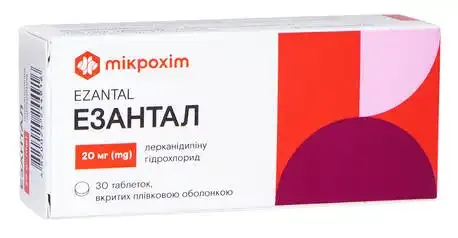
Table of Contents
INSTRUCTIONS FOR MEDICAL USE OF THE MEDICINAL PRODUCT EZANTAL (EZANTAL)
Composition:
active substance: lercanidipine (lercanidipine);
1 tablet contains 10 mg or 20 mg of lercanidipine hydrochloride (as lercanidipine hydrochloride hemihydrate);
excipients: lactose monohydrate; microcrystalline cellulose; sodium croscarmellose; povidone; polysorbate; magnesium stearate; hypromellose; polyethylene glycol 6000 (macrogol 6000); titanium dioxide (E 171); talc; yellow iron oxide (E 172).
Pharmaceutical form. Film-coated tablets.
Main physicochemical properties: yellow, biconvex, round-shaped film-coated tablets.
Pharmacotherapeutic group
Calcium channel blockers. Selective calcium antagonists with predominant vascular action. Dihydropyridine derivatives. Lercanidipine. ATC code C08CA13.
Pharmacological Properties
Pharmacodynamics
Lercanidipine is a calcium antagonist of the dihydropyridine group. It inhibits transmembrane calcium influx into cardiomyocytes and vascular smooth muscle cells. The antihypertensive mechanism of lercanidipine is due to its direct vasorelaxant effect on vascular smooth muscle, thereby reducing total peripheral vascular resistance. Despite its short plasma half-life, lercanidipine exerts a prolonged antihypertensive effect owing to its high membrane partition coefficient. Due to its high vascular selectivity, the drug does not exert negative inotropic effects. Acute arterial hypotension with reflex tachycardia rarely occurs, due to the gradual onset of vasodilation following lercanidipine administration.
As with other asymmetric 1,4-dihydropyridines, the antihypertensive activity of lercanidipine is primarily attributable to its S-enantiomer.
The clinical efficacy and safety of lercanidipine at doses of 10–20 mg once daily have been evaluated in a double-blind, placebo-controlled clinical trial (in which 1200 patients received lercanidipine and 603 received placebo) and in active-controlled and uncontrolled long-term clinical studies involving a total of 3676 patients with arterial hypertension.
Most studies included patients with mild to moderate essential hypertension (including elderly patients and those with diabetes mellitus), who received lercanidipine either as monotherapy or in combination with ACE inhibitors, diuretics, or β-blockers.
In addition to clinical trials conducted to confirm therapeutic indications, a further small, uncontrolled but randomized study in patients with severe arterial hypertension (mean ± standard deviation of diastolic blood pressure 114.5 ± 3.7 mm Hg) demonstrated blood pressure normalization in 40% of 25 patients receiving lercanidipine 20 mg once daily and in 56% of 25 patients receiving lercanidipine 10 mg twice daily. In a double-blind, randomized, placebo-controlled study in patients with isolated systolic hypertension, lercanidipine effectively reduced systolic blood pressure from a mean baseline of 172.6 ± 5.6 mm Hg to 140.2 ± 8.7 mm Hg.
Children
Clinical studies in the pediatric population have not been conducted.
Pharmacokinetics
Absorption
Lercanidipine is completely absorbed after oral administration at doses of 10–20 mg, with maximum plasma concentration (Cmax) of 3.30 ng/mL ± 2.09 CV and 7.66 ng/mL ± 5.90 CV, respectively, reached approximately 1.5–3 hours post-dose.
The two enantiomers of lercanidipine exhibit similar plasma concentration profiles: time to reach Cmax is identical, Cmax and AUC (area under the concentration-time curve) are on average 1.2 times higher for the S-enantiomer, and the elimination half-lives of both enantiomers are essentially the same. In vivo interconversion of enantiomers has not been observed.
Due to extensive first-pass metabolism in the liver, the absolute bioavailability of lercanidipine administered after food intake is approximately 10%. However, this value decreases to one-third of that level when administered to healthy volunteers on an empty stomach. Bioavailability increases fourfold when the drug is taken no later than 2 hours after a high-fat meal. Therefore, lercanidipine should be taken before meals.
Distribution
Distribution from plasma to tissues and organs is rapid and extensive. The extent of lercanidipine binding to plasma proteins exceeds 98%. Since plasma protein levels are reduced in patients with severe renal or hepatic impairment, the free fraction of the drug may increase.
Biotransformation
Lercanidipine is extensively metabolized by the CYP3A4 isoenzyme; unchanged drug is not detected in urine or feces. It is primarily converted into inactive metabolites, with approximately 50% of the administered dose excreted in urine.
In vitro experiments with human liver microsomes indicate that lercanidipine weakly inhibits CYP3A4 and CYP2D6 at concentrations 160 and 40 times higher, respectively, than its plasma Cmax achieved after a 20 mg dose. Furthermore, clinical drug interaction studies have demonstrated that lercanidipine does not alter plasma levels of midazolam, a typical CYP3A4 substrate, or metoprolol, a typical CYP2D6 substrate. Thus, when lercanidipine is used at therapeutic doses, no significant effect on the biotransformation of drugs metabolized by CYP3A4 or CYP2D6 is expected.
Elimination
Elimination occurs primarily via biotransformation. The mean terminal half-life is 8–10 hours, while the therapeutic effect lasts 24 hours due to the high degree of lercanidipine binding to cellular membrane lipids. No accumulation occurs with repeated administration.
Linearity / Non-linearity
After oral administration, lercanidipine plasma concentrations are not directly proportional to the administered dose (non-linear kinetics). Following doses of 10 mg, 20 mg, and 40 mg, observed plasma Cmax values showed ratios of 1:3:8, and AUCs (area under the plasma concentration-time curve) showed ratios of 1:4:18, indicating progressive saturation of first-pass metabolism. Thus, lercanidipine bioavailability increases with increasing dose.
Additional Information in Specific Patient Populations
Pharmacokinetics of lercanidipine in elderly patients and in patients with mild to moderate renal or hepatic dysfunction have been shown to be similar to those observed in the general patient population. In patients with severe renal impairment or those on dialysis, drug concentrations were higher (approximately 70%). In patients with moderate to severe hepatic impairment, systemic bioavailability of lercanidipine is likely increased, as the drug is primarily metabolized in the liver.
Clinical characteristics
Indications
Essential hypertension of mild or moderate severity.
Contraindications
- Hypersensitivity to lercanidipine or to any component of the medicinal product;
- Left ventricular outflow tract obstruction;
- Uncompensated congestive heart failure;
- Unstable angina or recent myocardial infarction (within the last month);
- Severe hepatic impairment;
- Severe renal impairment (creatinine clearance <30 mL/min), including patients on hemodialysis;
- Concomitant use with strong CYP3A4 inhibitors, cyclosporine, grapefruit or grapefruit juice.
Interaction with other medicinal products and other types of interactions
Concomitant use is contraindicated
Inhibitors of CYP3A4
Lercanidipine is metabolized by the CYP3A4 enzyme; therefore, inhibitors and inducers of this enzyme, when administered concomitantly with lercanidipine, may affect the metabolism and elimination of lercanidipine. Interaction studies between lercanidipine and the potent CYP3A4 inhibitor ketoconazole demonstrated a marked increase in plasma lercanidipine levels (15-fold increase in AUC and 8-fold increase in Cmax of the S-enantiomer of lercanidipine).
Concomitant use of lercanidipine with CYP3A4 inhibitors (e.g., ketoconazole, itraconazole, ritonavir, erythromycin, troleandomycin, clarithromycin) should be avoided.
Cyclosporine
Concomitant administration of lercanidipine and cyclosporine increases plasma levels of both substances. A study in young healthy volunteers showed that administration of cyclosporine 3 hours after lercanidipine intake did not alter lercanidipine plasma levels, while the AUC of cyclosporine increased by 27%. However, concomitant use of lercanidipine and cyclosporine leads to a 3-fold increase in lercanidipine plasma levels and a 21% increase in cyclosporine AUC.
Cyclosporine and lercanidipine should not be used together.
Grapefruit or grapefruit juice
As with other dihydropyridines, the metabolism of lercanidipine is slowed by grapefruit juice, resulting in increased systemic availability of lercanidipine and enhanced hypotensive effect. Grapefruit or grapefruit juice should not be consumed simultaneously with lercanidipine.
Concomitant use is not recommended
Inducers of CYP3A4
Lercanidipine should be used with caution when administered concomitantly with CYP3A4 inducers such as anticonvulsants (phenytoin, phenobarbital, carbamazepine) and rifampicin, due to the potential reduction in the antihypertensive effect of lercanidipine. In such cases, more frequent monitoring of blood pressure is recommended.
Alcohol
Alcohol consumption should be avoided due to the potential potentiation of the vasodilatory effect of antihypertensive medicinal products.
Interactions requiring dose adjustment
Substrates of CYP3A4
Caution should be exercised when lercanidipine is used concomitantly with other CYP3A4 substrates such as terfenadine, astemizole, and Class III antiarrhythmics such as amiodarone, quinidine, and sotalol.
Midazolam
When 20 mg lercanidipine and midazolam were administered concomitantly to elderly volunteers, absorption of lercanidipine was increased (by approximately 40%), and the rate of absorption was reduced (tmax prolonged from 1.75 to 3 hours). Midazolam concentration was unchanged.
Metoprolol
Concomitant administration of lercanidipine with metoprolol—a β-blocker primarily eliminated via the liver—does not alter the bioavailability of metoprolol but reduces the bioavailability of lercanidipine by 50%. This effect may be due to reduced hepatic blood flow caused by β-blockers and may also occur with other agents in this class. Therefore, lercanidipine may be prescribed with β-adrenergic blockers, but dose adjustment may be necessary.
Digoxin
When 20 mg lercanidipine was administered concomitantly to patients chronically receiving β-methyldigoxin, no evidence of pharmacokinetic interaction was observed. However, a mean increase in digoxin Cmax of 33% was observed, while AUC and renal clearance were not significantly altered. Patients receiving digoxin concomitantly with lercanidipine should be closely monitored for signs of digoxin toxicity.
Concomitant use with other medicinal products
Fluoxetine
A study investigating interaction with fluoxetine (an inhibitor of CYP2D6 and CYP3A4) in volunteers aged 65 ± 7 years (mean ± SD) did not reveal any clinically significant change in the pharmacokinetics of lercanidipine.
Cimetidine
Concomitant administration of cimetidine at a dose of 800 mg per day does not cause significant changes in lercanidipine plasma concentration; however, caution is advised with higher doses due to the potential for increased bioavailability and antihypertensive effect of lercanidipine.
Simvastatin
When 20 mg lercanidipine was administered concomitantly with 40 mg simvastatin, the AUC of lercanidipine was not significantly altered, while the AUC of simvastatin increased by 56% and that of its active metabolite, β-hydroxyacid, by 28%. Such changes are unlikely to be of clinical significance. No interaction between these agents is expected if lercanidipine is taken in the morning and simvastatin in the evening, as recommended for simvastatin.
Diuretics, angiotensin-converting enzyme (ACE) inhibitors
Lercanidipine may be used concomitantly with diuretics and ACE inhibitors.
Other medicinal products affecting blood pressure
As with all antihypertensive agents, an enhanced hypotensive effect may occur when lercanidipine is used concomitantly with other medicinal products affecting blood pressure, such as α-blockers used for symptomatic treatment of urinary bladder disorders, tricyclic antidepressants, and neuroleptics.
Conversely, a reduced antihypertensive effect may be observed when lercanidipine is used concomitantly with corticosteroids.
Special precautions for use
Sick sinus syndrome
Lercanidipine should be used with caution in patients with sick sinus syndrome (without an implanted pacemaker).
Left ventricular dysfunction
Although hemodynamically controlled studies have not shown worsening of ventricular function, the drug should be prescribed with caution in patients with left ventricular dysfunction.
Ischemic heart disease
It has been suggested that certain short-acting dihydropyridines may be associated with an increased cardiovascular risk in patients with ischemic heart disease. Although EZANTAL is a long-acting formulation, the drug should still be used with caution in such patients. Some dihydropyridines may rarely cause precordial pain or angina. Very rarely, in patients with pre-existing angina, an increase in frequency, duration, or severity of attacks may occur. Isolated cases of myocardial infarction have been reported.
Peritoneal dialysis
Administration of lercanidipine has been associated with turbidity of peritoneal exudate in patients undergoing peritoneal dialysis. This turbidity is due to elevated triglyceride concentrations in the peritoneal exudate. Although the mechanism is not known, this effect tends to resolve shortly after discontinuation of lercanidipine. This association should be taken into account to avoid situations where turbidity of the peritoneal exudate may be mistakenly interpreted as infectious peritonitis, leading to unnecessary hospitalization and empirical antibiotic therapy.
Lactose
This medicinal product contains lactose.
Patients with rare hereditary problems of galactose intolerance, total lactase deficiency, or glucose-galactose malabsorption should not take this medicinal product.
Use during pregnancy or breastfeeding
Pregnancy
There is no clinical experience with the use of lercanidipine during pregnancy. Animal studies have not revealed teratogenic effects, but such effects have been observed with other dihydropyridine compounds. Lercanidipine is not recommended during pregnancy or in women of childbearing potential who are not using effective contraception.
Breastfeeding period
It is not definitively known whether lercanidipine or its metabolites are excreted in human breast milk; therefore, the risk to the infant cannot be excluded. Lercanidipine should not be used during breastfeeding.
Fertility
Clinical data on the effect of lercanidipine on fertility are lacking. Available data indicate reversible biochemical changes in the sperm head observed in patients treated with calcium channel blockers, which may affect fertilizing capacity. In cases of repeated unsuccessful in vitro fertilization with no other explanations, calcium channel blockers should be considered as a possible contributing factor.
Ability to affect reaction speed while driving or operating machinery
The effect of lercanidipine on the ability to drive or operate machinery is negligible. However, one should consider the possibility of dizziness, weakness, increased fatigue, and rarely, somnolence.
Method of Administration and Dosage
The recommended dose is 10 mg orally once daily, administered no less than 15 minutes before a meal. Depending on the individual patient's response to treatment, the dose may be increased to 20 mg.
Dose titration should be gradual, as the maximum antihypertensive effect develops over two weeks of treatment.
For patients whose blood pressure is not adequately controlled on monotherapy with antihypertensive agents, the addition of the medicinal product EZANTAL to treatment regimens with β-blockers (atenolol), diuretics (hydrochlorothiazide), or ACE inhibitors (captopril or enalapril) may be considered.
Since the dose-response curve plateaus within the dose range of 20–30 mg, it is unlikely that higher doses will increase drug efficacy, whereas the risk of adverse reactions may increase.
Elderly Patients
According to pharmacokinetic and clinical studies, the medicinal product EZANTAL can be used in elderly patients without specific dose adjustment; however, treatment in elderly patients should be initiated under medical supervision.
Patients with Renal or Hepatic Impairment
In patients with mild to moderate renal or hepatic impairment, treatment with EZANTAL should be initiated under medical supervision. The usual recommended dose of 10 mg is generally well tolerated in these subgroups; dose escalation to 20 mg requires caution.
In patients with hepatic impairment, an enhanced antihypertensive effect of the drug may occur, necessitating dose adjustment.
Lercanidipine is contraindicated in patients with severe hepatic dysfunction or severe renal impairment (creatinine clearance < 30 mL/min), including patients on hemodialysis.
Method of Administration
Before using the medicinal product EZANTAL, the following should be considered:
- The drug should preferably be taken in the morning, at least 15 minutes before breakfast;
- This medicinal product must not be taken with grapefruit or grapefruit juice.
Children
Safety and efficacy of the medicinal product in children under 18 years of age have not been established; data on use in children are lacking.
Overdose
During the post-marketing period, several cases of lercanidipine overdose have been reported (from 30–40 mg to 800 mg, including a suicide attempt).
Symptoms
By analogy with other dihydropyridines, overdose with lercanidipine may result in excessive peripheral vasodilation and marked arterial hypotension with reflex tachycardia. However, at very high doses, peripheral selectivity may be lost, potentially leading to bradycardia and negative inotropic effects. The most common adverse reactions associated with overdose are arterial hypotension, dizziness, headache, and palpitations.
Treatment
In cases of severe arterial hypotension, active cardiovascular support measures are required, including frequent monitoring of cardiac and respiratory function, placing the patient in a supine position with elevated lower limbs, control of circulating fluid volume and urine output. Due to the prolonged pharmacological effect of lercanidipine, monitoring of cardiovascular status in such patients is necessary for at least 24 hours following overdose. Given the high protein binding of lercanidipine, dialysis may be ineffective. Patients expected to have moderate or severe intoxication should be monitored in intensive care settings.
Adverse Reactions
According to data from clinical studies and post-marketing use, the most commonly reported adverse reactions are peripheral edema, headache, flushing, tachycardia, and palpitations.
The table below lists adverse reactions reported during clinical studies and post-marketing use of the drug worldwide, for which a causal relationship with the drug has been considered reasonable. Adverse reactions are listed according to MedDRA classification and frequency of occurrence: very common (≥ 1/10), common (≥ 1/100, < 1/10), uncommon (≥ 1/1,000, < 1/100), rare (≥ 1/10,000, < 1/1,000), very rare (< 1/10,000), and frequency not known (cannot be estimated based on available information). Within each group, reactions are listed in decreasing order of severity according to frequency.
| MedDRA System Organ Class |
Common |
Uncommon |
Rare |
Frequency not known |
| Immune system disorders |
|
|
hypersensitivity |
|
| Nervous system disorders |
headache |
dizziness |
sleepiness, loss of consciousness |
|
| Cardiac disorders |
tachycardia, palpitations |
|
angina pectoris |
|
| Vascular disorders |
flushing |
arterial hypotension |
|
|
| Gastrointestinal disorders |
|
dyspepsia, nausea, upper abdominal pain |
vomiting, diarrhea |
gingival hyperplasia*, clouding of peritoneal exudate* |
| Hepatobiliary disorders |
|
|
|
elevation of serum transaminases* |
| Skin and subcutaneous tissue disorders |
|
rash, pruritus |
exanthema |
edema* |
| Musculoskeletal and connective tissue disorders |
|
myalgia |
|
|
| Renal and urinary disorders |
|
polyuria |
pollakiuria |
|
| General disorders and administration site conditions |
peripheral edema |
asthenia, increased fatigue |
chest pain |
|
*Adverse reactions from spontaneous reports during post-marketing use worldwide.
Lercanidipine does not adversely affect blood glucose levels or serum lipid levels.
In placebo-controlled clinical trials, peripheral edema occurred in 0.9% of patients receiving lercanidipine at doses of 10–20 mg and in 0.83% of those receiving placebo. This frequency reached 2% in the overall study population, including long-term clinical trials.
The use of some dihydropyridines may occasionally lead to precordial pain or angina; in rare cases, patients with angina may experience an increase in the frequency, duration, or severity of attacks. Isolated cases of myocardial infarction have also been reported.
Reporting suspected adverse reactions. Reporting suspected adverse reactions after marketing authorization is important. It allows ongoing monitoring of the benefit-risk balance of the medicinal product. Medical and pharmaceutical professionals, as well as patients or their legal representatives, should report all suspected adverse reactions and lack of efficacy through the Automated Pharmacovigilance Information System at the following link: https://aisf.dec.gov.ua.
Shelf life
2 years.
Storage conditions
Store at a temperature not exceeding 25 °C in the original packaging.
Keep out of reach of children.
Packaging
10 tablets per blister, 3 or 6 blisters together with the instructions for medical use in a cardboard box.
30 or 60 tablets in a bottle, 1 bottle together with the instructions for medical use in a cardboard box.
Prescription status
Prescription only.
Marketing Authorization Holder
MICROKHIM LLC.
Address of the Marketing Authorization Holder
5, Budyndustrії St., Kyiv, 01013, Ukraine.
You can report an adverse event associated with the use of the medicinal product to the pharmacovigilance system of MICROKHIM LLC by calling +38 (050) 309-83-54 (24/7) or emailing [email protected].
Manufacturer
MICROKHIM LLC (responsible for batch release, excluding batch control/testing).
AT "Lubnifarm" (responsible for manufacturing and batch control/testing, excluding batch release).
Addresses of manufacturers and sites of manufacturing operations
5, Budyndustrії St., Kyiv, 01013, Ukraine.
16, Barvinkova St., Lubny, Poltava Oblast, 37500, Ukraine.