Euphylline
Ukraine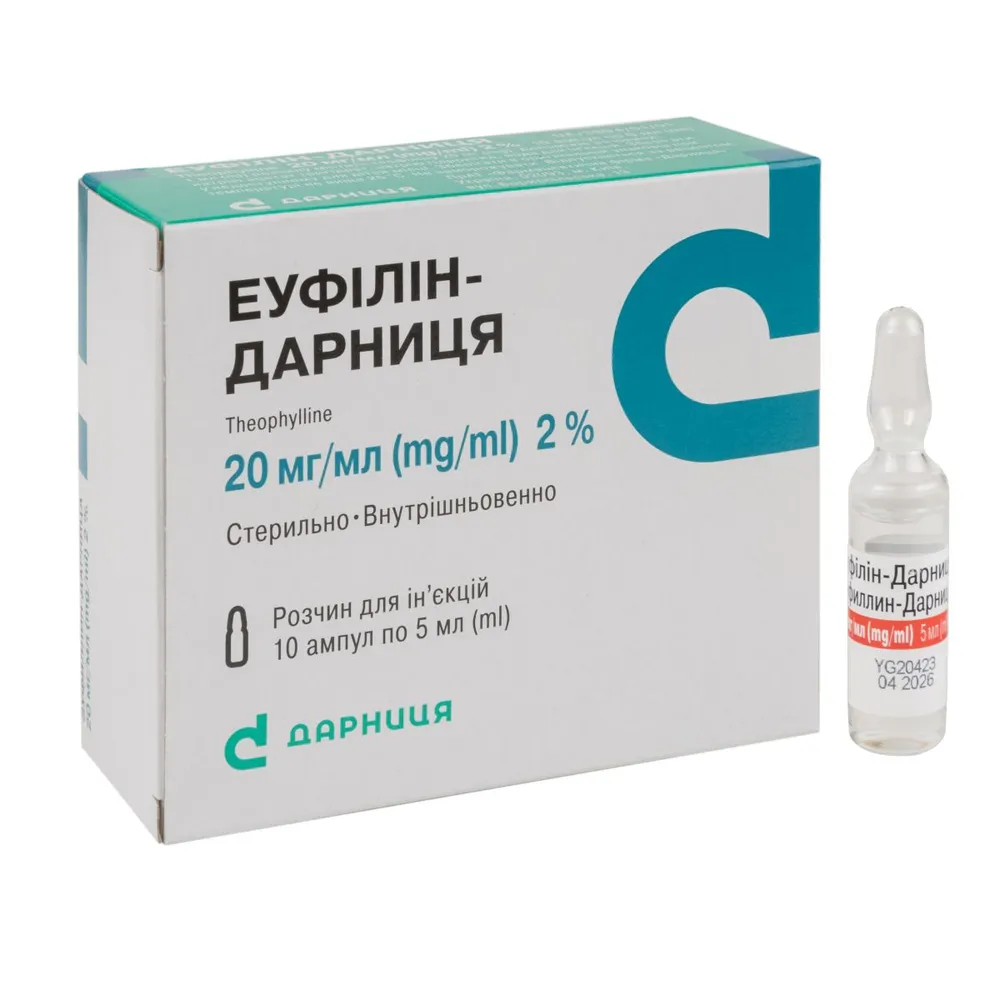
Table of Contents
INSTRUCTIONS FOR MEDICAL USE OF THE MEDICINAL PRODUCT EUPHYLLIN (EuphyllinE)
Composition:
Active substance: theophylline;
1 ml of solution contains 20 mg of theophylline;
Excipients: sodium acetate trihydrate, sodium hydroxide, water for injections.
Pharmaceutical form. Solution for injection.
Main physicochemical properties: clear, colorless liquid.
Pharmacotherapeutic group. Drugs for systemic use in obstructive respiratory diseases. Xanthines. Theophylline. ATC code R03D A04.
Pharmacological properties.
Pharmacodynamics.
Mechanism of action. The mechanism of action of theophylline is not fully understood. Inhibition of phosphodiesterase with increased intracellular cAMP occurs only at concentrations at the upper limit of the therapeutic range.
Other possible mechanisms, which have been questioned, include adenosine receptor antagonism, prostaglandin antagonism, and intracellular calcium translocation. However, these effects are also observed with high doses of theophylline.
Pharmacodynamic effects.
The broad spectrum of action includes:
Effects on the respiratory system
- Relaxation of bronchial and pulmonary vascular smooth muscle;
- Improved mucociliary clearance;
- Inhibition of mediator release from mast cells and other inflammatory cells;
- Reduction of bronchoconstriction;
- Attenuation of immediate and delayed asthmatic reactions;
- Enhanced diaphragmatic contractility.
Extrapulmonary effects
- Reduced sensitivity to dyspnea;
- Vasodilation (vessel dilation);
- Relaxation of smooth muscle (e.g., gallbladder, gastrointestinal tract);
- Inhibition of uterine contractility;
- Positive inotropic and chronotropic effects on the heart;
- Skeletal muscle stimulation;
- Increased diuresis;
- Stimulation of endocrine and exocrine functions (e.g., increased gastric hydrochloric acid secretion, increased catecholamine secretion by adrenal glands).
Pharmacokinetics.
Absorption
After parenteral administration, the effect appears within a few minutes when serum theophylline levels reach approximately 5 mg/L.
Distribution
The bronchodilator effect of theophylline is directly proportional to its plasma concentration; plasma concentrations of 5–20 mg/L achieve optimal therapeutic effect with a low acceptable risk of adverse effects (see section "Administration and dosage"). Concentrations above 20 mg/L should be avoided to reduce the risk of adverse reactions.
Protein binding of theophylline is approximately 40–60%, but this binding is reduced in newborns and in adults with liver disease.
Theophylline is distributed via blood flow to all organs except adipose tissue.
Metabolism or biotransformation
The main metabolites of theophylline are 1,3-dimethyluric acid (approximately 40%), 3-methylxanthine (approximately 36%), and 1-methyluric acid (approximately 17%). Of these, 3-methylxanthine is pharmacologically active, although to a lesser extent than theophylline.
Elimination
Theophylline is eliminated via renal excretion and hepatic biotransformation. In adults, 7–13% of the drug is excreted unchanged in urine. In newborns, conversely, 50% is excreted unchanged, along with a significant amount excreted as caffeine.
The rate of hepatic metabolism of theophylline varies significantly among patients, resulting in corresponding changes in clearance, serum concentration, and elimination half-life.
The most important factors affecting theophylline clearance are age, body weight, nutrition, smoking (theophylline metabolism is significantly faster in smokers), concomitant use of certain drugs, diseases and/or other functional impairments of the heart, lungs, or liver, and viral infections.
In some patients with impaired renal function, accumulation of theophylline metabolites (pharmacologically active in some cases) may occur. Furthermore, theophylline clearance is reduced during physical exertion and in severe hypothyroidism, and increased in severe psoriasis.
Clearance is initially concentration-dependent, but at serum concentrations at the upper limit of the therapeutic range, clearance exhibits saturation kinetics; thus, even a slight increase in dose may lead to a disproportionate increase in theophylline concentration.
Special patient populations
The elimination half-life of theophylline in plasma also varies considerably: 7–9 hours in non-smoking adult asthmatics without other comorbidities; 4–5 hours in smokers; 3–5 hours in children; and over 24 hours in premature infants and patients with heart, lung, or liver disease.
The volume of distribution of theophylline may increase with advancing gestational age, thereby reducing plasma protein binding and theophylline clearance, which may necessitate dose reduction to prevent adverse effects.
Theophylline crosses the placental barrier and is excreted into breast milk.
Some clinical studies report a milk/plasma ratio of 0.6–0.89, which, depending on the infant's clearance rate and maternal plasma concentration, may be sufficient to cause theophylline accumulation in infants.
Clinical characteristics.
Indications.
Treatment of acute attacks of bronchial asthma and reversible bronchospastic conditions associated with chronic bronchitis or emphysema.
Theophylline should not be used as first-line therapy for the treatment of asthma in children.
In complex treatment of paroxysmal dyspnea, acute pulmonary edema, and other manifestations of heart failure.
Contraindications.
Hypersensitivity to any component of the medicinal product, acute tachyarrhythmia, recent myocardial infarction, children under 3 years of age.
Interaction with other medicinal products and other forms of interaction.
During treatment, alcoholic beverages and large amounts of food and drinks containing methylxanthines (coffee, tea, cocoa, chocolate, Coca-Cola, and similar tonic drinks) should not be consumed, as well as medicinal products related to theophylline (caffeine, theobromine, pentoxifylline), α- and β-adrenergic agonists (selective and non-selective), glucagon, because these substances may enhance the stimulatory effect of theophylline on the CNS.
Theophylline may reduce the effect of lithium carbonate and beta-blockers when used concomitantly.
Beta-blockers and theophylline may have antagonistic pharmacological effects. In addition, beta-blockers reduce the elimination of theophylline.
Serum theophylline levels may increase (with a high risk of overdose and adverse effects) due to reduced elimination rate when used concomitantly with: oral contraceptives, macrolide antibiotics (erythromycin, troleandomycin, clarithromycin, josamycin, and spiramycin), quinolones (DNA gyrase inhibitors, especially ciprofloxacin, enoxacin, and pefloxacin; (see below)), imipenem (particularly CNS-related adverse effects such as seizures), isoniazid, thiabendazole, calcium antagonists (e.g., verapamil and diltiazem), propranolol, mexiletine, propafenone, ticlopidine, cimetidine, ranitidine, allopurinol, febuxostat, fluvoxamine, alpha interferon, peginterferon alfa-2, zafirlukast, influenza vaccines, etintidine, hydrochloride, zileuton. In these cases, a reduction in theophylline dosage may be required. Patients receiving these drugs concomitantly with theophylline should be closely monitored to prevent possible overdose.
When theophylline is used concomitantly with ciprofloxacin, the theophylline dose should be reduced to no more than 60% of the recommended dose; when used concomitantly with enoxacin, the theophylline dose should be reduced to no more than 30% of the recommended dose. Other quinolones (e.g., perfloxacin and pipemidic acid) may also potentiate the effects of theophylline-containing preparations. Therefore, serum theophylline levels should be carefully and frequently monitored during concomitant therapy with quinolones.
Theophylline metabolism may be accelerated and/or its bioavailability and efficacy reduced when used concomitantly with the following medicinal products: barbiturates, particularly phenobarbital, pentobarbital, and primidone; carbamazepine, phenytoin and fosphenytoin, rifampicin and rifapentine, sulfinpyrazone, St. John's wort preparations, as well as in patients who smoke. Therefore, in these cases, an increase in theophylline dosage may be necessary.
Since interaction cannot be reliably excluded, serum theophylline levels should be carefully monitored in patients receiving ranitidine and theophylline concomitantly.
Theophylline may enhance the toxicity of digitalis.
May cause tachycardia when used with reserpine.
In patients who smoke, hepatic elimination of theophylline is increased; therefore, doses 50–100% higher than in non-smokers may be required to achieve equivalent plasma levels.
When used concomitantly with theophylline, the action and risk of adverse effects of the following medicinal products may be enhanced: diuretics, e.g., furosemide. The potassium-sparing effect of theophylline and furosemide may be additive.
Administration of halothane to patients receiving theophylline may cause severe cardiac arrhythmias.
Special precautions for use
The solution must be warmed to body temperature before administration.
Theophylline should be used with caution and only under strict indications in patients with unstable angina, predisposition to tachyarrhythmia, severe arterial hypertension, hypertrophic obstructive cardiomyopathy, hyperthyroidism, epilepsy, peptic ulcer of the stomach and/or duodenum, or porphyria.
Theophylline should also be used with caution and with individual dose adjustment (see section "Dosage and administration") in patients with hepatic or renal insufficiency.
The use of theophylline in elderly patients, patients with multiple comorbidities, critically ill patients, and/or patients receiving intensive care is associated with an increased risk of intoxication; therefore, therapeutic drug monitoring is recommended (see section "Dosage and administration").
Fever reduces theophylline clearance. Dose reduction may be necessary to avoid intoxication.
In cases of insufficient effect with recommended doses or the occurrence of adverse reactions, plasma theophylline concentrations should be monitored.
The appearance of gastrointestinal symptoms (nausea, vomiting, etc.) or nervous symptoms (irritability, insomnia) is not a reliable sign of overdose. The safest monitoring method is measuring theophylline levels in blood plasma. Doses that are poorly tolerated by the patient should not be maintained.
Strict adherence to the dosing regimen, especially regarding the intervals between doses, is essential.
It should be noted that in patients with hepatic insufficiency, congestive heart failure, and in patients aged 65 years and older, theophylline is eliminated more slowly than normal; therefore, lower therapeutic doses should be used.
Smoking patients have increased hepatic elimination of theophylline; therefore, higher doses and/or shorter dosing intervals may be required for these patients.
Intravenous injection should be administered slowly (approximately 5 minutes) to the patient in a lying position.
Use during pregnancy or breastfeeding
Pregnancy
Since experience with theophylline use during the first trimester of pregnancy is still insufficiently studied, theophylline use should be avoided during this period.
Theophylline should be used during the second and third trimesters of pregnancy only when the expected benefit outweighs the potential risk to the fetus and only under strict medical supervision, as theophylline crosses the placenta and may cause sympathomimetic effects in the fetus.
During pregnancy, protein binding in plasma and theophylline clearance may decrease; therefore, dose reduction may be required to avoid adverse effects.
In late-term pregnant women receiving theophylline treatment, uterine contractions may be suppressed. Careful monitoring of the effects of theophylline on newborns exposed prenatally to the drug is required.
Breastfeeding
Theophylline passes into breast milk; therefore, serum concentrations in the infant may reach therapeutic levels. For this reason, the therapeutic dose of theophylline in breastfeeding women should be maintained at the lowest possible level, and, if possible, breastfeeding should be performed immediately before drug administration.
Careful monitoring of the effects of theophylline on the infant is necessary. If higher doses of theophylline are required for the mother, breastfeeding should be discontinued.
Ability to influence the speed of reactions when driving or operating machinery
Given that even at doses according to the instructions for medical use, theophylline may reduce reaction speed, patients should refrain from driving vehicles, operating machinery, or performing other tasks requiring concentration of attention during treatment with this medicinal product.
Method of Administration and Dosage.
Dosing
The medicinal product should be administered intravenously.
The dosage of the medicinal product should be individually adjusted, taking into account individual differences in theophylline metabolism and therapeutic dose requirements, and plasma theophylline levels should be monitored.
In adults, the therapeutic range is 8–20 mg/L; in children, it is 5–12 mg/L.
In some cases, plasma concentrations up to 20 mg/L may be required to achieve efficacy. Concentrations exceeding 20 mg/L should be avoided to reduce the risk of adverse reactions. Serum theophylline concentrations should also be monitored in cases of reduced efficacy or occurrence of adverse effects. Theophylline should be monitored using all standard methods for theophylline assay in biological fluids (chromatographic, immunochemical, enzymatic) commonly used in clinical laboratories.
When determining the initial dose (see below), prior treatment with theophylline or its components should be taken into account in order to reduce the dose.
To minimize the risk of adverse effects during intravenous administration, the infusion rate should not exceed 16.5 mg per minute.
Theophylline dosage should be calculated based on ideal body weight, as theophylline does not distribute into adipose tissue.
Special patient groups
Due to more rapid theophylline elimination, smokers require higher theophylline doses per unit of body weight than non-smokers. However, in elderly patients (aged 60 years and older), theophylline elimination is prolonged. Dosing in patients who have stopped smoking should be carefully adjusted due to increased theophylline concentrations.
Theophylline elimination is frequently prolonged in patients with heart failure, severe hypoxia, hepatic dysfunction, pneumonia or viral infections (especially influenza), in elderly patients, and during concomitant therapy with other medicinal products (see "Interaction with other medicinal products and other forms of interaction"). In severe renal impairment, theophylline metabolites may accumulate. In such cases, lower doses are required and dose escalation should be performed with particular caution. In addition, reduced theophylline clearance has been reported after vaccination against tuberculosis and influenza; therefore, dose reduction may be necessary during concomitant treatment.
Children
Maximum doses for children. Intravenous: single dose – 3 mg/kg body weight.
Children aged 14 years and older: intravenous infusion at a dose of 2–3 mg/kg body weight. Maximum daily dose for children aged 14 years and older – 3 mg/kg body weight.
From 16 years of age: dosage is the same as for adults.
Recommended doses
Initial dose
| Dose/mg per kg body weight IV |
|
| Without prior theophylline treatment |
4.0–5.0 mg over 20–30 min IV |
| With prior theophylline treatment or when prior treatment cannot be definitively excluded |
2.00–2.5 mg over 20–30 min IV |
In emergency cases where prior theophylline treatment is unknown and plasma theophylline concentrations are unavailable, an initial dose of 2.0–2.5 mg of theophylline per kg of body weight may be administered intravenously over 20–30 minutes, with a relatively low risk of overdose.
Maintenance dose
| Theophylline dose mg/hour intravenously/kg body weight |
Theophylline dose mg/day intravenously/ kg body weight |
||
| 1–12 hours |
from 13th hour |
||
| Children: |
|||
|
1.00 |
0.80 |
19 |
|
0.80 |
0.65 |
15 |
| Adults: |
|||
|
0.80 |
0.65 |
15 |
|
0.55 |
0.40 |
|
|
0.50 |
0.25 |
|
cardiomyopathy or severe hepatic impairment |
0.40 |
0.10–0.15 |
2–4 |
Method of Administration
The contents of one ampoule are usually administered intravenously 1–3 times daily. If necessary, Euphyllinum may also be administered as an intravenous infusion or, in exceptional cases, orally.
In acute dyspnea, 1–2 ampoules of the drug may be used. There should be an interval of at least 8 hours between two consecutive doses.
Intravenous injection should be administered very slowly (over approximately 5 minutes) with the patient lying down.
For infusion administration, the ampoule contents may be diluted with a compatible solution (e.g., physiological saline, electrolyte solution, or glucose solution).
In emergency situations, the patient may orally take the diluted contents of 1–2 ampoules of Euphyllinum. There should be an interval of at least 8 hours between two consecutive administrations.
Attention should be paid to the pH of the solutions being mixed.
After injection or infusion, the patient should rest briefly under medical supervision.
If prior treatment with methylxanthine-containing drugs is known or cannot be excluded, infusion or injection should be performed under close medical supervision and discontinued at the first sign of any adverse reaction.
Children
The drug must not be administered intravenously to children under 3 years of age.
Administration to children aged 3 years and older is possible only under life-threatening conditions and for no longer than 14 days.
Overdose
Symptoms of intoxication: At therapeutic plasma concentrations of theophylline up to 20 mg/L, known adverse effects include gastrointestinal disturbances (nausea, stomach pain, vomiting, diarrhea), central nervous system (CNS) stimulation (restlessness, headache, insomnia, dizziness), and cardiac disturbances (arrhythmias). These are usually mild or moderate, depending on individual tolerance.
At plasma theophylline concentrations above 20 mg/L, the same symptoms are typically observed but with greater intensity. At concentrations exceeding 25 mg/L, severe cardiac and CNS effects may occur, such as seizures, serious arrhythmias, and cardiac arrest. These reactions may occur without prior milder adverse effects. Overdose may lead to rhabdomyolysis.
Patients with high individual sensitivity to theophylline may experience severe overdose symptoms even at the plasma concentrations mentioned above.
Treatment
In case of mild overdose symptoms:
Administration of the drug should be discontinued and plasma theophylline concentration should be measured. If treatment is resumed, the dose should be appropriately reduced.
The slow release of theophylline from sustained-release formulations means that prolonged intoxication symptoms and possible further increases in plasma theophylline concentration must be considered. Therefore, the measures outlined below deserve special attention in patients receiving controlled-release formulations.
In case of CNS reactions (such as restlessness or seizures):
- Diazepam IV 0.1–0.3 mg/kg body weight, up to 15 mg. Barbiturates are not recommended.
In life-threatening situations:
- Monitoring of vital functions;
- Ensuring airway patency (intubation);
- Oxygen administration (lung ventilation);
- If necessary, IV plasma volume replacement using plasma expanders;
- Monitoring and, if necessary, correction of fluid and electrolyte balance;
- Hemoperfusion (see below).
In life-threatening cardiac arrhythmias:
IV administration of propranolol to non-asthmatics (1 mg for adults, 0.02 mg/kg body weight for children); this dose may be repeated every 5–10 minutes until heart rhythm normalizes, up to a maximum dose of 0.1 mg/kg.
Warning: Propranolol may cause severe bronchospasm in asthmatic patients; therefore, verapamil should be used in such cases. Further treatment depends on the degree of overdose, the course of intoxication, and the symptoms present.
In particularly severe cases of poisoning unresponsive to adequate treatment, and in patients with very high plasma theophylline concentrations, rapid and complete detoxification can be achieved by hemoperfusion or hemodialysis. This is unnecessary in most cases, as theophylline metabolism is relatively rapid.
Other treatment options for theophylline intoxication may be considered depending on the severity, clinical course, and patient symptoms.
Adverse Reactions
Adverse reactions are listed by system organ classes and classified according to the following frequency: very common (≥1/10), common (≥1/100, <1/10), uncommon (≥1/1000, <1/100), rare (≥1/10,000, <1/1000), very rare (<1/10,000), frequency not known (cannot be estimated from the available data).
Cardiovascular system: very common − tachycardia, arrhythmias, palpitations, hypotension.
Gastrointestinal tract: very common − nausea, vomiting, diarrhea, decreased muscle tone of the lower esophageal sphincter, which may exacerbate existing nocturnal gastroesophageal reflux.
Immune system: frequency not known − hypersensitivity reactions.
Metabolism and nutrition: very common − hypokalemia, hypercalcemia, hyperuricemia, hyperglycemia, disturbances in blood acid-base balance.
Nervous system: very common − restlessness, headache, tremor, nervousness, insomnia; frequency not known − seizures.
Renal and urinary system: very common − increased diuresis, elevated serum creatinine levels.
Adverse effects may be more pronounced in the presence of increased sensitivity to theophylline or overdose (plasma theophylline concentration above 20 mg/L).
In particular, plasma theophylline levels exceeding 25 mg/L may cause toxic adverse effects such as seizures, sudden drop in blood pressure, ventricular arrhythmias, and severe gastrointestinal effects (e.g., gastrointestinal hemorrhage).
Reporting of suspected adverse reactions
Reporting suspected adverse reactions after drug registration is important. It allows continued monitoring of the benefit-risk balance of the medicinal product. Healthcare professionals and patients or their legal representatives are encouraged to report any suspected adverse reactions and lack of efficacy through the Automated Pharmacovigilance Information System at: https://aisf.dec.gov.ua.
Shelf life. 2 years.
Storage conditions.
Store in the original packaging at a temperature not exceeding 25 °C.
Keep out of reach of children.
Incompatibility.
Do not use in the same syringe with other injectable medicinal products, except 0.9% sodium chloride solution, due to pharmaceutical incompatibility. The medicinal product must not be used with glucose, fructose, or levulose solutions.
The pH of co-administered solutions should be considered: the medicinal product is pharmaceutically incompatible with acidic solutions.
Packaging.
5 mL or 10 mL in a polyethylene ampoule. 10 ampoules per cardboard pack.
Prescription status. Prescription only.
Manufacturer. LLC "PHARMASEL".
Manufacturer's address and site of operations.
3, Prorizna Street, Kvitneve, Brovary District, Kyiv Oblast, 07408, Ukraine.