Esmeron
Ukraine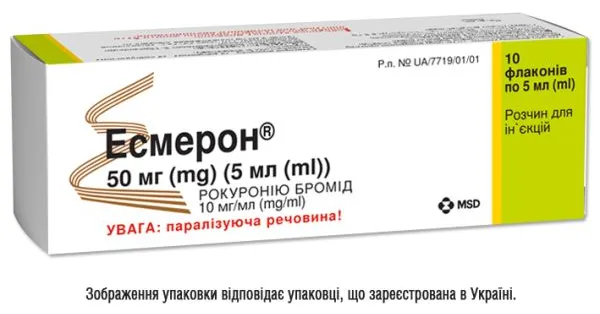
Instructions for Use
INSTRUCTIONS FOR MEDICAL USE OF THE MEDICINAL PRODUCT ESMERON® (ESMERON®)
Composition:
Active substance: rocuronium bromide;
1 ml of solution contains 10 mg of rocuronium bromide;
Excipients: sodium acetate, sodium chloride, glacial acetic acid, water for injections.
Pharmaceutical form. Solution for injection.
Main physicochemical properties: clear aqueous solution ranging from colorless to light brown.
Pharmacotherapeutic group. Peripheral-acting muscle relaxants.
ATC code M03AC09.
Pharmacological Properties.
Pharmacodynamics.
Mechanism of action
Esmeron® (rocuronium bromide) is a fast-acting, intermediate-duration, non-depolarizing neuromuscular blocking agent possessing all the pharmacological effects typical of this class of drugs (curare-like). It blocks nicotinic cholinergic receptors at the motor end plate of the skeletal muscle neuromuscular junction. The antagonists of this action are acetylcholinesterase inhibitors, such as neostigmine, edrophonium, and pyridostigmine.
Pharmacodynamic effects
ED90 (the dose of rocuronium bromide required to achieve 90% suppression of the twitch response of the adductor pollicis muscle to ulnar nerve stimulation) during intravenous anesthesia is approximately 0.3 mg/kg. The ED95 value is lower in infants than in adults and children (0.25, 0.35, and 0.4 mg/kg, respectively).
Clinical duration of action (time to spontaneous recovery of skeletal muscle twitch response to 25% of control level) following a 0.6 mg/kg dose of rocuronium bromide is 30–40 minutes. Total duration (time to spontaneous recovery to 90% of control level) is 50 minutes. The mean time for spontaneous recovery of twitch response from 25% to 75% of control (recovery index) after a bolus dose of 0.6 mg/kg is 14 minutes.
When the drug is administered at lower doses—0.3–0.45 mg/kg (1–1½ × ED90)—onset of action is delayed and duration of action is shorter. At higher doses—2 mg/kg—the clinical duration is approximately 110 minutes.
Intubation during routine anesthesia
Within 60 seconds after intravenous administration of rocuronium bromide at a dose of 0.6 mg/kg (2×ED90 under balanced anesthesia), adequate conditions for intubation are achieved in nearly all patients, with excellent intubation conditions in 80% of them. Complete skeletal muscle relaxation sufficient for any surgical procedure is achieved within 2 minutes. After administration of a 0.45 mg/kg dose, acceptable intubation conditions are established within 90 seconds.
Rapid sequence induction
During rapid sequence induction of anesthesia using propofol or fentanyl/thiopental, adequate intubation conditions are achieved within 60 seconds in 93% and 96% of patients, respectively, after administration of a 1.0 mg/kg dose of rocuronium bromide. Of these, intubation conditions are rated excellent in 70%. Clinical duration of action at this dose approaches 1 hour, after which neuromuscular transmission can be safely reversed. After administration of a 0.6 mg/kg dose of rocuronium bromide, adequate intubation conditions are achieved within 60 seconds in 81% and 75% of patients undergoing rapid sequence induction with propofol or fentanyl/thiopental, respectively.
Special patient groups
Children. The mean onset time of rocuronium bromide in neonates and infants after birth is slightly shorter than in adults when administered at an intubation dose of 0.6 mg/kg. Comparative data across pediatric age groups show that the mean time to onset is shorter in neonates and adolescents (1 minute) compared to infants, toddlers, and young children (0.4, 0.6, and 0.8 minutes, respectively). In children, duration of relaxation and neuromuscular recovery time are shorter compared to infants and adults. Comparative studies in pediatric populations show that the mean time to recovery of T3 response was prolonged in neonates and infants (56.7 and 60.7 minutes, respectively) compared to toddlers, older children, and adolescents (45.4, 37.6, and 42.9 minutes, respectively).
Elderly patients and patients with hepatic and/or biliary tract disorders and/or renal impairment.
The duration of action of rocuronium bromide at a maintenance dose of 0.15 mg/kg may be slightly longer when enflurane or isoflurane anesthesia is used in elderly patients and in patients with hepatic and/or renal impairment (approximately 20 minutes), compared to patients without excretory organ dysfunction under intravenous anesthesia (approximately 13 minutes). With repeated administration of maintenance doses within the recommended range, no cumulative effect (progressive prolongation of duration) has been observed.
Intensive care unit
In the intensive care unit, after continuous infusion, the time to recovery of the train-of-four (TOF) ratio to 0.7 depends on the degree of blockade at the end of infusion. After continuous infusion for 20 hours or longer, the mean time (range) between return of T2 response to TOF stimulation and recovery of the TOF ratio to 0.7 is approximately 1.5 (1–5) hours in patients without multi-organ failure and 4 (1–25) hours in patients with multi-organ failure.
Cardiac surgery
In patients undergoing cardiac surgery, the most common cardiovascular changes observed during peak blockade after administration of 0.6–0.9 mg/kg of Esmeron® are mild and clinically insignificant increases in heart rate up to 9% and increases in mean arterial pressure up to 16% of the control value.
Reversibility of muscle relaxation
Administration of sugammadex or acetylcholinesterase inhibitors (neostigmine, pyridostigmine, or edrophonium) reverses the effect of rocuronium. Sugammadex may be administered for standard reversal (at 1–2 post-tetanic counts before reappearance of T2) or immediate reversal (3 minutes after rocuronium administration). Acetylcholinesterase inhibitors may be administered upon reappearance of T2 or at the first signs of clinical recovery.
Pharmacokinetics.
After intravenous administration of a single bolus dose of rocuronium bromide, its plasma concentration declines in three exponential phases. In healthy adults, the mean (95% confidence interval) elimination half-life is 73 (66–80) minutes, the (steady-state) volume of distribution is 203 (193–214) mL/kg body weight, and plasma clearance is 3.7 (3.5–3.9) mL/kg/min.
Elderly patients and patients with hepatic and/or biliary disorders and/or renal impairment
Controlled studies have shown that plasma clearance is reduced in elderly patients and in patients with renal dysfunction, although in most studies the differences did not reach statistical significance. The elimination half-life increases by an average of 30 minutes in patients with liver disease, and clearance decreases by 1 mL/kg/min (see section "Dosage and administration").
Children
The pharmacokinetics of rocuronium bromide in children (n=146) across age groups (0–17 years) were studied using population analysis of pooled pharmacokinetic data from two clinical anesthesia studies using sevoflurane (induction) and isoflurane/nitrous oxide (maintenance anesthesia). All pharmacokinetic parameters were linearly proportional to body weight, as confirmed by similar clearance (L/h/kg). Volume of distribution (L/kg) and elimination half-life (hours) decreased with increasing age (years).
Pharmacokinetic parameters (PKPs) in typical pediatric patients by age group are summarized below:
Estimated PKPs (mean standard deviation [SD]) of rocuronium bromide in typical pediatric patients during administration of sevoflurane and nitrous oxide (induction) and isoflurane/nitrous oxide (maintenance anesthesia)
| PK |
Patient age range |
||||
| Neonates (0−27 days) |
Infants (28 days− 2 months) |
Young children (3−23 months) |
Older children (2−11 years) |
Adolescents (12−17 years) |
|
| CL (L/kg/h) |
0.31 (0.07) |
0.30 (0.08) |
0.33 (0.10) |
0.35 (0.09) |
0.29 (0.14) |
| Volume of distribution (L/kg) |
0.42 (0.06) |
0.31 (0.03) |
0.23 (0.03) |
0.18 (0.02) |
0.18 (0.01) |
| t ½ β (h) |
1.1 (0.2) |
0.9 (0.3) |
0.8 (0.2) |
0.7 (0.2) |
0.8 (0.3) |
Intensive Care Unit
When administered as a continuous infusion to facilitate mechanical ventilation for 20 hours or longer, the mean elimination half-life and the mean (apparent) volume of distribution at steady state are increased. Controlled clinical studies have demonstrated significant individual variability in these parameters, related to the differing etiology and severity of multiorgan failure and individual patient characteristics. In patients with multiorgan failure, the mean (± SD) elimination half-life was 21.5 (± 3.3) hours, the (apparent) volume of distribution at steady state was 1.5 (± 0.8) L/kg, and the plasma clearance was 2.1 (± 0.8) mL/kg/min (see section "Dosage and Administration").
Rocuronium is excreted in urine and bile. Renal excretion amounts to 40% within 12–24 hours. After injection of radiolabeled rocuronium bromide, excretion averaged 47% in urine and 43% in feces over 9 days. Approximately 50% of the drug is excreted unchanged. Metabolites are not detected in plasma.
Clinical characteristics.
Indications.
Esmeron® is indicated in adults and children (from newborns to adolescents – from 0 to <18 years of age) as an adjunct to general anesthesia to facilitate tracheal intubation during routine rapid sequence induction of anesthesia and to provide skeletal muscle relaxation during surgical procedures. In adults, Esmeron® is also indicated to facilitate tracheal intubation during rapid sequence induction of anesthesia and as an adjunct to assist mechanical ventilation in intensive care units.
Contraindications.
Hypersensitivity to rocuronium, bromides, or to any excipient of the medicinal product.
Interaction with other medicinal products and other forms of interaction.
Medicinal products affecting the intensity and/or duration of action of non-depolarizing neuromuscular blocking agents:
Enhancement of effect
- Volatile halogenated anesthetics potentiate the neuromuscular blockade caused by Esmeron®. This effect becomes evident only after administration of maintenance doses (see section "Administration and dosage"). Recovery of neuromuscular transmission with acetylcholinesterase inhibitors may be delayed.
- Following intubation using succinylcholine (see section "Special precautions").
- Prolonged concomitant use of corticosteroids and Esmeron® in intensive care units may lead to prolonged neuromuscular blockade or to myopathy (see sections "Special precautions" and "Adverse reactions").
Drugs from other groups:
- antibiotics: aminoglycosides, lincosamides, polypeptide antibiotics, acylamino-penicillin antibiotics;
- diuretics, quinidine and its isomer quinine, magnesium salts, calcium channel blockers, lithium salts, local anesthetics (intravenous lidocaine, epidural bupivacaine), and emergency administration of phenytoin or β-adrenergic blockers.
Recurarization has been reported after postoperative administration of aminoglycosides, lincosamides, polypeptide and acylamino-penicillin antibiotics, quinidine, quinine, and magnesium salts.
Reduction of effect
-
prior prolonged administration of phenytoin or carbamazepine;
-
protease inhibitors (gabexate, ulinastatin);
-
neostigmine, edrophonium, pyridostigmine.
Change in effect
- administration of other non-depolarizing neuromuscular blocking agents in combination with Esmeron® may result in reduced or enhanced neuromuscular blockade, depending on the sequence of administration and the neuromuscular blocking agent used;
- succinylcholine administered after Esmeron® may enhance or reduce the neuromuscular blockade induced by Esmeron®.
Effect of Esmeron® on other medicinal products
Combination of Esmeron® with lidocaine may lead to a faster onset of lidocaine action.
Children.
Formal interaction studies have not been conducted. The interactions and special considerations described above for adult patients (see relevant sections) should also be taken into account when administering rocuronium bromide to children.
Compatibility when mixed with other medicinal products.
At nominal concentrations of 0.5 mg/mL and 2 mg/mL, Esmeron® has been shown to be compatible with 0.9% sodium chloride solution, 5% glucose solution for intravenous infusion, 5% glucose in 0.9% sodium chloride solution for intravenous infusion, sterile water for injection, Ringer's lactate solution, and Haemaccel. The infusion should be started immediately after mixing and must be completed within 24 hours. Any unused solution should be discarded.
Special precautions for use
Esmeron® should only be administered by an experienced anaesthesiologist familiar with neuromuscular blocking agents. When using this medicinal product, equipment for emergency controlled ventilation, oxygen administration, and tracheal intubation must be immediately available.
Appropriate management and monitoring
Since Esmeron® causes paralysis of respiratory muscles, artificial ventilation of the lungs must be maintained until adequate spontaneous respiration is restored. As with all neuromuscular blocking agents, potential difficulties with tracheal intubation should be anticipated, especially when the drug is used as part of a rapid sequence induction technique. If intubation difficulties arise, leading to a clinical need for immediate reversal of rocuronium-induced neuromuscular blockade, administration of a reversal agent should be considered. Ensure that the patient is breathing spontaneously, deeply, and regularly before leaving the operating room after anaesthesia.
Residual curarization
As with other neuromuscular blocking agents, residual curarization has been reported after administration of Esmeron®. To prevent complications associated with residual neuromuscular blockade, extubation should only be performed after restoration of neuromuscular conduction in the patient. Elderly patients (aged 65 years and older) have an increased risk of residual neuromuscular blockade. Other factors that may contribute to residual curarization after extubation in the postoperative period (e.g., drug interactions or the patient's clinical condition) should also be considered. If neuromuscular blockade is not part of standard clinical practice, the use of a reversal agent (e.g., sugammadex or an acetylcholinesterase inhibitor) should be considered, especially in cases where residual curarization is most likely.
Anaphylaxis
Anaphylactic reactions may occur after administration of neuromuscular blocking agents. Precautionary measures should always be taken to avoid such reactions. Special precautions should be taken in cases of previous anaphylactic reactions to any neuromuscular blocking agents, as cross-reactive allergic reactions to neuromuscular blockers have been reported.
Rocuronium may increase heart rate.
Long-term use in intensive care units
In general, prolonged paralysis and/or skeletal muscle weakness have been observed in critically ill patients after long-term administration of neuromuscular blocking agents in intensive care units. To prevent possible prolongation of neuromuscular blockade and/or overdose, continuous monitoring of neuromuscular transmission is strongly recommended throughout the period of neuromuscular blocker administration. Patients should also receive adequate analgesia and sedation. Furthermore, neuromuscular blockers should be administered in carefully titrated doses according to individual patient response, under the supervision of an experienced physician and using appropriate neuromuscular monitoring techniques.
Myopathy has been frequently reported after prolonged administration of non-depolarizing neuromuscular blockers in combination with corticosteroid therapy in intensive care units. Therefore, the duration of neuromuscular blocker administration in patients receiving both neuromuscular blockers and corticosteroids should be as short as possible.
Use with succinylcholine
If succinylcholine is used for intubation, administration of Esmeron® should be delayed until the patient has clinically recovered from succinylcholine-induced neuromuscular blockade.
Since rocuronium bromide is always used in combination with other medicinal products and due to the risk of malignant hyperthermia during anaesthesia—even in the absence of known triggering factors—physicians must be familiar with the early signs, diagnosis confirmation, and treatment of malignant hyperthermia prior to initiating anaesthesia. Animal studies have shown that rocuronium bromide is not a trigger for malignant hyperthermia. Rare cases of malignant hyperthermia have been reported during post-marketing surveillance with Esmeron®; however, a causal relationship has not been established.
Risk of death due to medication errors
Administration of Esmeron® results in paralysis that may lead to respiratory arrest and death, particularly in patients for whom this medicinal product is not intended. Ensure correct selection of the prescribed medicinal product and avoid confusion with other injectable solutions available in intensive care units or other clinical settings. If another healthcare professional administers the drug, confirm that the administered dose is clearly specified and verified.
Factors that may affect the pharmacokinetics and/or pharmacodynamics of Esmeron®
Liver and/or biliary tract disease and renal impairment
Since rocuronium bromide is excreted in urine and bile, it should be used with caution in patients with clinically significant liver and/or biliary tract disease and/or renal impairment. Prolonged duration of action of rocuronium bromide at doses of 0.6 mg/kg body weight has been observed in such patients.
Increased circulation time
Conditions associated with prolonged circulation time, such as cardiovascular disease, advanced age, and edema leading to increased volume of distribution, may delay the onset of action of the drug. Duration of effect may also be prolonged due to reduced plasma clearance.
Neuromuscular disorders
As with other neuromuscular blocking agents, Esmeron® should be used with extreme caution in patients with neuromuscular disorders or those who have had poliomyelitis, as the response to muscle relaxants may be significantly altered. The extent and direction of such changes may vary considerably. In patients with severe myasthenia gravis or myasthenic syndrome (Eaton-Lambert syndrome), even small doses of Esmeron® may cause profound neuromuscular blockade; therefore, the dose of Esmeron® should be individualized according to the patient's response.
Hypothermia
During surgical procedures performed under hypothermic conditions, the neuromuscular blocking effect of Esmeron® is enhanced and duration of action prolonged.
Obesity
As with other neuromuscular blocking agents, Esmeron® may have a prolonged effect, and spontaneous recovery of neuromuscular transmission may be delayed in obese patients when the dose is calculated based on actual body weight.
Burns
Resistance to non-depolarizing neuromuscular blocking agents may develop in burn patients. Dose titration according to patient response is recommended.
Conditions that may potentiate the effect of Esmeron®
Hypokalaemia (e.g., after prolonged vomiting, diarrhoea, or diuretic therapy), hypermagnesaemia, hypocalcaemia (after massive blood transfusions), hypoproteinaemia, dehydration, acidosis, hypercapnia, cachexia.
Therefore, severe disturbances in fluid and electrolyte balance, blood pH, or dehydration should be corrected, if possible, before initiating Esmeron®.
Use during pregnancy or breastfeeding
Pregnancy. Clinical data on the use of Esmeron® during pregnancy are lacking. Animal studies have not revealed any direct or indirect harmful effects of the drug on pregnancy, embryonal/fetal development, parturition, or postnatal development. Esmeron® should be used with caution in pregnant women.
Caesarean section. Esmeron® may be used for caesarean section as part of a rapid sequence induction technique, provided that no intubation difficulties are anticipated and an adequate dose of anaesthetic has been administered, or after intubation with succinylcholine.
Administration of Esmeron® at a dose of 0.6 mg/kg has been shown to be safe in parturients undergoing caesarean section. Esmeron® did not affect Apgar scores or fetal muscle tone and cardiorespiratory adaptation. Umbilical cord blood analysis showed that only a negligible amount of rocuronium bromide crosses the placental barrier, resulting in no clinically relevant adverse reactions in neonates.
Note 1. Doses of 1.0 mg/kg have been studied during rapid sequence induction of anaesthesia in other patient groups, but not in patients undergoing caesarean section. Therefore, only the 0.6 mg/kg dose is recommended for use in this patient group.
Note 2. Recovery from neuromuscular blockade after administration of neuromuscular blockers may be delayed or inadequate in patients who have received magnesium salts for the treatment of pre-eclampsia, as magnesium salts potentiate neuromuscular blockade. For such patients, the dose of Esmeron® should be reduced and titrated according to muscular response.
Breastfeeding
It is not known whether Esmeron® is excreted in human milk. Animal studies have demonstrated low levels of the drug in milk. Esmeron® may be used during breastfeeding only if, in the physician’s opinion, the expected benefit to the woman outweighs the potential risk to the infant. After a single dose, it is recommended to withhold breastfeeding for five elimination half-lives of rocuronium, approximately 6 hours.
Ability to influence reaction speed when driving or operating machinery
Since Esmeron® is used as an adjunct in general anaesthesia, standard post-anaesthesia precautions should be followed for outpatient patients.
Method of Administration and Dosage.
Esmeron®, like other muscle relaxants, must be administered only by a physician experienced in the use of such agents, or the administration of the drug must be performed under the supervision of such a specialist. The drug is to be used only under inpatient conditions. Esmeron® is administered intravenously either as a bolus injection or by continuous infusion.
The dosage of Esmeron®, as with other muscle relaxants, must be individually adjusted for each patient. When determining the dose, consider the type of anesthesia and expected duration of surgery, the method of premedication and anticipated duration of mechanical ventilation, possible interactions with other concurrently administered drugs, and the patient's overall condition.
To assess the effectiveness of neuromuscular blockade and recovery of neuromuscular transmission, appropriate neuromuscular monitoring techniques are recommended.
Inhalational anesthetic agents potentiate the neuromuscular blocking effect of Esmeron®. This potentiation may become clinically significant only when, during general anesthesia, the tissue concentration of inhaled agents reaches a level sufficient for such interaction. Therefore, the dose of Esmeron® should be adjusted by administering the smallest maintenance doses at longer intervals or by reducing the infusion rate to the maximum extent during prolonged procedures (over 1 hour) involving inhalational anesthesia.
Risk of medication errors: accidental administration of muscle relaxants may cause serious adverse effects, including fatal outcomes. Store Esmeron® with its intact cap and safety seal, and in such a way as to minimize the risk of selecting the wrong product (see section "Special Precautions").
For adult patients, the following dosage recommendations may be used as a general guideline for tracheal intubation, for providing muscle relaxation during surgeries of varying duration, and when used in intensive care units.
Surgical Procedures
Tracheal Intubation
The standard dose of rocuronium bromide that provides adequate conditions for tracheal intubation within approximately 60 seconds in nearly all patients under routine anesthesia is 0.6 mg/kg body weight. For rapid sequence induction of anesthesia, the recommended dose of rocuronium bromide is 1 mg/kg body weight. When using rocuronium bromide at a dose of 0.6 mg/kg body weight for rapid sequence induction of anesthesia, tracheal intubation should be performed 90 seconds after administration of Esmeron®.
For information on the use of rocuronium bromide during rapid sequence induction of anesthesia in patients undergoing cesarean section, see section "Use During Pregnancy or Breastfeeding."
Maintenance Doses
The recommended maintenance dose of rocuronium bromide is 0.15 mg/kg body weight; during prolonged inhalational anesthesia, this dose should be reduced to 0.075–0.1 mg/kg body weight. Maintenance doses should ideally be administered when the amplitude of muscle twitch responses has recovered to 25% of control level or when 2–3 responses appear during monitoring using sequential tetanic stimulation (TOF).
Continuous Infusion
When Esmeron® is administered by continuous infusion, a loading dose of 0.6 mg/kg body weight is recommended. When neuromuscular transmission begins to recover, infusion should be initiated. The infusion rate should be adjusted to maintain skeletal muscle twitch response at 10% of control level or to sustain 1–2 responses during monitoring using tetanic stimulation (TOF). In adults undergoing intravenous general anesthesia, the infusion rate required to maintain neuromuscular blockade at this level ranges from 0.3 to 0.6 mg/kg/h, and during inhalational anesthesia, from 0.3 to 0.4 mg/kg/h. Continuous neuromuscular monitoring is recommended, as the required infusion rate may vary depending on the type of anesthesia and individual patient characteristics.
Children
For neonates (0–27 days), infants (28 days–2 months), young children (3–23 months), older children (2–11 years), and adolescents (12–17 years), the recommended dose for intubation during routine anesthesia and the maintenance dose are the same as for adults.
However, the duration of action of a single intubation dose will be longer in neonates and infants than in older children.
For continuous administration in pediatric patients (except children aged 2–11 years), the infusion rate is the same as in adults. For children aged 2–11 years, a higher infusion rate may be required. For children aged 2–11 years, initial infusion rates are recommended to be the same as for adults, but should be adjusted during the procedure to maintain muscle twitch amplitude at 10% of control amplitude or to sustain 1–2 responses during monitoring using tetanic stimulation (TOF).
Experience with the use of rocuronium bromide in children during rapid sequence induction is limited; therefore, rocuronium bromide is not recommended for improving tracheal intubation conditions in children during rapid sequence induction.
Dosage in elderly patients, patients with hepatic and/or biliary disorders, and/or renal impairment
The standard dose of Esmeron® for intubation in elderly patients (>65 years), and in patients with hepatic and/or biliary disorders and/or renal impairment during routine anesthesia is 0.6 mg/kg body weight. For these patients, in whom a longer duration of action is expected, a dose of 0.6 mg/kg should be considered for rapid sequence induction of anesthesia. Regardless of the anesthesia technique used, the recommended maintenance dose for these patients is 0.075–0.1 mg/kg rocuronium bromide, and the recommended infusion rate is 0.3–0.4 mg/kg/h (see also "Continuous Infusion").
Dosing in patients with excessive body weight and obesity
When administering the drug to patients with excessive body weight or obesity (whose body weight exceeds standard body weight by 30% or more), doses should be reduced based on standard body weight.
Use in the Intensive Care Unit
Tracheal Intubation
For endotracheal intubation, use the same doses as for surgical procedures.
Maintenance Doses
Rocuronium bromide is recommended to be administered as an initial loading dose of 0.6 mg/kg body weight, followed immediately by continuous infusion once neuromuscular response has recovered to 10% of control level or 1–2 responses are observed during monitoring using tetanic stimulation (TOF). Rocuronium bromide doses should always be titrated according to individual patient response. The recommended initial infusion rate to maintain neuromuscular blockade at 80–90% (1–2 responses during TOF stimulation) in adult patients is 0.3–0.6 mg/kg/h during the first hour of administration, after which the infusion rate should be reduced over the next 6–12 hours according to individual patient response. Thereafter, individual dosage requirements remain relatively constant.
Controlled clinical studies have shown considerable inter-patient variability in hourly infusion rates, with mean values ranging from 0.2 to 0.5 mg/kg/h, depending on the cause and extent of organ dysfunction, concomitant medication, and individual patient characteristics. To ensure optimal control for each patient, neuromuscular monitoring is strongly recommended. Administration of the drug has been studied for durations of up to 7 days.
Special Patient Groups
The drug is not recommended for use in pediatric patients or elderly patients requiring mechanical ventilation during intensive care due to lack of safety and efficacy data in these patient populations.
Children.
Esmeron® is administered to pediatric patients: neonates (0–27 days), infants (28 days–2 months), young children (3–23 months), older children (2–11 years), and adolescents (12–17 years).
Overdose.
In cases of overdose and prolonged neuromuscular blockade, supportive ventilation and sedative therapy must be provided. In such situations, two approaches are available for reversal of neuromuscular blockade:
(1) Sugammadex can be used to reverse profound (deep) and intense (progressing) blockade. The dose of sugammadex depends on the degree of neuromuscular blockade.
(2) After spontaneous respiration begins to return, an acetylcholinesterase inhibitor (e.g., neostigmine, edrophonium, pyridostigmine) should be administered in appropriate doses. If administration of an acetylcholinesterase inhibitor fails to reverse the blocking effect of Esmeron®, artificial ventilation must be continued until spontaneous breathing recovers. Repeated administration of acetylcholinesterase inhibitors may be hazardous.
In animal studies, severe cardiovascular depression leading to circulatory collapse was not observed until a cumulative dose of 750 × ED90 (135 mg rocuronium bromide per kg body weight) was administered.
Adverse Reactions
The most commonly observed adverse reactions associated with the use of the drug were: pain/reaction at the injection site, changes in vital signs, and prolonged duration of neuromuscular blockade. During post-marketing surveillance, the most frequently reported serious adverse reactions were anaphylactic and anaphylactoid reactions, as well as associated symptoms (see table below).
| System organ class |
Frequency of occurrence1 |
||
| Uncommon/rare2 (<1/100, >1/10000) |
Very rare (<1/10000) |
Not known |
|
| Immune system disorders |
Hypersensitivity, anaphylactic reaction, anaphylactoid reaction, anaphylactic shock, anaphylactoid shock |
||
| Nervous system disorders |
Flaccid paralysis |
||
| Eye disorders |
Mydriasis2,3, Fixed pupils2,3 |
||
| Cardiac disorders |
Tachycardia |
Coon's syndrome |
|
| Vascular disorders |
Hypotension |
Vascular collapse and shock, flushing |
|
| Respiratory, thoracic and mediastinal disorders |
Bronchospasm |
||
| Skin and subcutaneous tissue disorders |
Angioneurotic edema, urticaria, rash, erythematous rash |
||
| Musculoskeletal and connective tissue disorders |
Muscle weakness4, steroid myopathy4 |
||
| General disorders and administration site conditions |
Ineffectiveness of the drug, reduced drug effect/therapeutic effect, increased drug effect/therapeutic effect, injection site pain, injection site reaction |
Facial swelling |
|
| Injury, poisoning and procedural complications |
Prolonged neuromuscular blockade, delayed recovery from anesthesia |
Anesthesia-related respiratory complications |
|
1 Frequency determined from post-marketing surveillance reports and published data.
2 Post-marketing surveillance data do not allow calculation of the exact number of cases. For this reason, the frequency of occurrence was divided into 3, rather than 5 categories.
3 In the context of potential increased permeability or disruption of the blood-brain barrier (BBB).
4 Following prolonged resuscitation measures.
Anaphylactic reactions
Severe anaphylactic reactions have been reported, although very rarely, following administration of neuromuscular blocking agents, including Esmeron®. Anaphylactic/anaphylactoid reactions: bronchospasm, cardiovascular disturbances (e.g. arterial hypotension, tachycardia, circulatory collapse – shock), skin and mucous membrane changes (e.g. angioedema, urticaria). In some cases, these reactions were fatal. Due to the potential severity of these reactions, their possible occurrence must always be considered, and appropriate preventive measures taken.
Release of histamine and histamine-mediated reactions
Since administration of neuromuscular blocking agents may induce local release of histamine at the injection site as well as systemic release, possible occurrence of itching and erythematous reactions at the injection site and/or systemic histamine-mediated reactions (anaphylactoid reactions) must always be considered when administering these agents.
During clinical studies, only a slight increase in mean plasma histamine levels was observed after rapid bolus administration of rocuronium bromide at doses of 0.3–0.9 mg/kg body weight.
Prolongation of neuromuscular blockade
The most common adverse reaction associated with the use of non-depolarizing neuromuscular blocking agents as a class is prolongation of their pharmacological effect beyond the required duration. The degree of this reaction may vary from skeletal muscle weakness to profound and prolonged paralysis of skeletal muscles, leading to respiratory insufficiency or apnea.
Myopathy
Myopathy has been reported following administration of various neuromuscular blocking agents in combination with corticosteroids in intensive care units.
Injection site reactions
Pain on injection has been reported during rapid sequence induction of anesthesia, particularly when the patient is still conscious, and especially when propofol was used as the induction agent. In clinical studies, injection pain was reported in 16% of patients undergoing rapid sequence induction of anesthesia with propofol, and in less than 0.5% of patients undergoing rapid sequence induction with fentanyl and thiopental.
Children
A meta-analysis of 11 clinical studies involving children (n=704) who received rocuronium bromide (up to 1 mg/kg) identified tachycardia as an adverse drug reaction with a frequency of 1.4%.
Reporting of suspected adverse reactions
Reporting of adverse reactions after drug registration is of great importance. It enables ongoing monitoring of the benefit-risk balance of the medicinal product. Healthcare professionals and pharmacists, as well as patients or their legal representatives, should report all suspected adverse reactions via the Automated Information System for Pharmacovigilance at the following link: https://aisf.dec.gov.ua.
Shelf life. 3 years.
Storage conditions. Store at 2–8°C in a place inaccessible to children.
Special storage conditions. The product may be stored outside the refrigerator at temperatures up to 30°C for no more than 12 weeks. After storage of Esmeron® outside the refrigerator, it must not be returned to the refrigerator for further storage.
After dilution with infusion solutions specified in the section "Compatibility when mixed with other medicinal products", chemical and physical stability during use has been demonstrated for 72 hours at 30°C.
From a microbiological standpoint, the diluted product should be used immediately.
If the solution is not used immediately, responsibility for the time and conditions of storage lies with the physician administering the product. Storage time must not exceed 24 hours at 2–8°C, provided that dilution was performed under strict aseptic conditions.
Incompatibility.
Physical incompatibility of Esmeron® has been established with solutions containing: amphotericin B, amoxicillin, azathioprine, cefazolin, cloxacillin, dexamethasone, diazepam, enoximone, erythromycin, famotidine, furosemide, hydrocortisone sodium succinate, insulin, Intralipid, methohexital, methylprednisolone, prednisolone sodium succinate, thiopental, trimethoprim, and vancomycin.
Esmeron® must not be mixed with other medicinal products except 0.9% sodium chloride solution for intravenous infusions, 5% glucose solution for intravenous infusions, 5% glucose in 0.9% sodium chloride solution for intravenous infusions, water for injections, Ringer's lactate solution, and Haemaccel.
If Esmeron® is administered through the same infusion system as other medicinal products, the system must be thoroughly flushed (e.g. with 0.9% NaCl solution) between administration of Esmeron® solution and incompatible drugs, as well as when compatibility has not been established.
Packaging.
5 ml (50 mg) in a vial; 10 vials in a cardboard box.
Prescription status. By prescription only. By special hospital order.
Manufacturer.
N.V. Organon, Netherlands.
Merck Sharp & Dohme B.V., Netherlands.
Manufacturer's address and location of operations.
5349 AB Oss, Kloosterstraat 6, Netherlands (legal address);
Molenstraat 110, 5342 SS Oss, Netherlands (location of operations).
Vaarderweg 39, 2031 BN Haarlem, Netherlands.
Frequently Asked Questions
What is Esmeron indicated for?
The drug is used as an adjunct during general anesthesia to facilitate tracheal intubation and to provide skeletal muscle relaxation during surgical procedures. It is also used for mechanical ventilation in intensive care units.
How should Esmeron be taken correctly?
The drug is administered intravenously (as a bolus or continuous infusion) exclusively by a physician in a hospital setting. The dosage is selected individually depending on age, body weight, the method of anesthesia, and the patient's condition.
What are the possible side effects of Esmeron?
The most common side effects observed are pain or reaction at the injection site, changes in vital signs, and prolonged duration of muscle blockade. Serious reactions may also occur, such as anaphylactic shock, bronchospasm, changes in arterial blood pressure, tachycardia, facial edema, or muscle weakness.
Can this drug be combined with other medicines?
Some drugs may enhance the effect of Esmeron, such as inhaled anesthetics, corticosteroids, or certain antibiotics. Other medicines may weaken its effect (for example, protease inhibitors or certain anticonvulsants). It is important to consider interactions with other muscle relaxants and succinylcholine.
Who should not use this drug?
Contraindications include hypersensitivity to rocuronium, bromide, or any other excipient contained in the drug.
Are there specific considerations for use in children and the elderly?
In children, the duration of the drug's action may be shorter compared to adults, while in elderly patients or individuals with liver and kidney diseases, the risk of prolonged muscle blockade is higher.
Similar Medications
-
Rocumid
Form: solution for injection
Active substance Dosage rocuronium bromide 10 mg/ml Manufacturer: Biolik Pharma LLC
-
Rocuronium bromide kalcekz
Form: solution for injection
Active substance Dosage rocuronium bromide 10 mg/ml Manufacturer: JSC "Kalceks" (manufacturer responsible for batch release)
-
Rocuronium kabi
Form: solution for injection
Active substance Dosage rocuronium bromide 10 mg/ml -
Rocuronium-novo
Form: solution for injection
Active substance Dosage rocuronium bromide 10 mg/ml Manufacturer: LLC Firm Novofarm-Biosyntez
This page has been machine-translated and may contain inaccuracies. The original data is available in the manufacturing country's language.
Last data check: July 21, 2026 · Data source: Державний реєстр лікарських засобів України