Erythromycin
Ukraine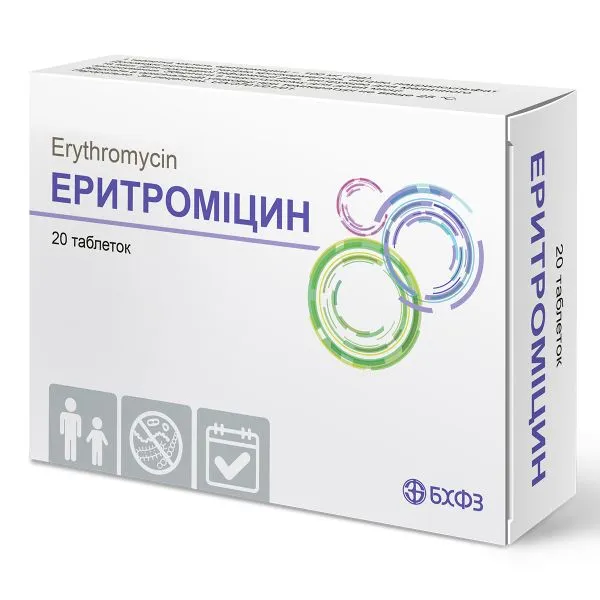
Table of Contents
INSTRUCTIONS FOR MEDICAL USE OF THE MEDICINAL PRODUCT ERYTHROMYCIN (ERYTHROMYCIN)
Composition:
active substance: erythromycin;
1 tablet contains erythromycin – 100 mg;
excipients: microcrystalline cellulose, sodium croscarmellose, sodium lauryl sulfate, colloidal anhydrous silicon dioxide, magnesium stearate.
Pharmaceutical form. Tablets.
Main physicochemical properties: round-shaped tablets, white or almost white, or white with a yellowish tint, with a biconvex surface. Slight specks may be present.
Pharmacotherapeutic group. Antibacterial agents for systemic use. Macrolides. Erythromycin. ATC code J01FA01.
Pharmacological properties.
Pharmacodynamics.
Erythromycin is a macrolide antibiotic with bacteriostatic activity. At high concentrations and against highly susceptible microorganisms, it may exhibit bactericidal effects. It penetrates the bacterial cell membrane and reversibly binds to the 50S subunit of bacterial ribosomes, inhibiting peptide translocation from the acceptor site to the donor site of the ribosome, thereby preventing further protein synthesis.
It is active against Gram-positive bacteria: Streptococcus pyogenes, Streptococcus viridans, Streptococcus pneumoniae, Staphylococcus aureus, Corynebacterium diphtheriae, Corynebacterium minutissimum, Listeria monocytogenes; Gram-negative bacteria: Bordetella pertussis, Legionella pneumophila, some strains of Haemophilus influenzae, Mycoplasma pneumoniae, as well as against Entamoeba histolytica, Chlamydia trachomatis, Treponema pallidum.
Gram-negative bacilli such as Escherichia coli and Pseudomonas aeruginosa, as well as Shigella and Salmonella species, are resistant to erythromycin.
Pharmacokinetics.
Erythromycin is absorbed in the gastrointestinal tract, with the rate of absorption depending on individual characteristics. Bioavailability ranges from 30% to 65%. Maximum blood concentration is reached within 2 hours after administration. It distributes into most tissues and body fluids and crosses the placental barrier and into breast milk.
Plasma protein binding ranges from 70% to 90%. It is metabolized in the liver, partly into inactive metabolites. A significant portion of erythromycin is excreted via bile, while only 2–5% is excreted unchanged in urine. The elimination half-life is 1.4–2 hours in individuals with normal renal function.
Clinical characteristics.
Indications.
Respiratory tract infections, including atypical pneumonia, infections of the ear, nose and throat organs (tonsillitis, otitis, sinusitis), purulent and inflammatory skin diseases and its appendages, erythrasma, diphtheria, gonorrhea, syphilis, listeriosis, Legionnaires' disease, infections in dentistry and ophthalmology, infections caused by microorganisms resistant to beta-lactam antibiotics, penicillin, tetracycline, chloramphenicol, streptomycin.
Contraindications.
- Hypersensitivity to erythromycin or to any component of the drug, or to macrolides;
- severe hepatic insufficiency;
- documented history of QT interval prolongation (congenital or acquired) or ventricular cardiac arrhythmias, including "torsade de pointes";
- electrolyte imbalance (hypokalemia, hypomagnesemia – due to the risk of QT interval prolongation);
- concomitant use with simvastatin, domperidone, tolterodine, mizolastine, amisulpride, terfenadine, astemizole, pimozide, or cisapride, ergotamine, and dihydroergotamine;
- concomitant use with lomitapide (see section "Interaction with other medicinal products and other types of interactions").
Interaction with other medicinal products and other types of interactions.
Concomitant use of erythromycin is contraindicated with:
- astemizole, terfenadine, cisapride, clarithromycin, pimozide: increased risk of cardiotoxicity: QT interval prolongation, severe cardiac rhythm disturbances, including "torsade de pointes" arrhythmias, cardiac arrest;
- ergotamine or dihydroergotamine: possible acute toxicity reactions with vascular spasm and dysesthesia (erythromycin inhibits the metabolism of ergotamine and dihydroergotamine, enhancing ergotamine-related vascular spasm).
Erythromycin biotransformation occurs primarily in the liver via the cytochrome P450 system. Due to its effect on cytochrome P450 activity, erythromycin interacts with the following drugs:
- theophylline, aminophylline, caffeine: increases their serum concentration and toxicity – dose reduction and monitoring of serum levels are required. It has been reported that oral administration of erythromycin together with theophylline results in a significant decrease in erythromycin serum concentration. This reduction may lead to subtherapeutic erythromycin levels;
- digoxin: increases its absorption and serum concentration;
- cyclosporine: increases its concentration and enhances nephrotoxicity;
- carbamazepine: erythromycin can reduce its hepatic metabolism, allowing carbamazepine dosage to be reduced by up to 50% when used concomitantly;
- drugs inducing CYP3A4 (such as rifampicin, phenytoin, carbamazepine, phenobarbital, St. John's wort preparations): may induce erythromycin metabolism. This may lead to subtherapeutic blood levels of erythromycin and reduced efficacy. Induction decreases gradually over two weeks after discontinuation of CYP3A4 inducers. Erythromycin should not be used within two weeks after treatment with CYP3A4 inducers;
- corticosteroids: caution is required when erythromycin is used concomitantly with systemic and inhaled corticosteroids primarily metabolized by CYP3A, due to the potential for increased systemic exposure to corticosteroids. Patients should be closely monitored for adverse reactions when systemic corticosteroids are used concomitantly;
- phenytoin, alfentanil, methylprednisolone, benzodiazepines (such as triazolam, alprazolam, midazolam), hexobarbital, valproic acid, tacrolimus, rifabutin, zopiclone, bromocriptine, cabergoline: increases their concentration and enhances toxicity – dose adjustment is required;
- disopyramide, quinidine, procainamide: may prolong the QT interval or cause ventricular tachycardia;
- oral contraceptives: increases risk of hepatotoxicity, reduces their efficacy by interfering with bacterial hydrolysis of steroid conjugates in the intestine, thereby reabsorbing unconjugated steroid, resulting in decreased plasma levels of active steroid;
- antifungal agents: possible development of cardiotoxicity (QT interval prolongation, paroxysmal ventricular tachycardia of "torsade de pointes" type) and, as a consequence, cardiac arrest. The combination of these drugs is contraindicated;
- anticoagulants (warfarin, acenocoumarol): enhances their effects, which are more pronounced in elderly patients. Therefore, prothrombin time should be monitored continuously; enhanced anticoagulant effects have been reported with concomitant use of erythromycin and the oral anticoagulant rivaroxaban;
- HMG-CoA reductase inhibitors: erythromycin is contraindicated in patients receiving HMG-CoA reductase inhibitors lovastatin and simvastatin (see section "Contraindications"). It has been reported that erythromycin increases plasma concentrations of HMG-CoA reductase inhibitors. Rare cases of rhabdomyolysis have also been reported in patients taking these drugs concomitantly;
- lomitapide: concomitant use with erythromycin is contraindicated due to the potential for significant elevation of transaminase levels (see section "Special precautions for use");
- sildenafil (Viagra): enhances its systemic effect – dose reduction of sildenafil is required;
- calcium channel blockers, such as felodipine, verapamil: slows elimination and enhances their effect. Cases of hypotension, bradyarrhythmia, and lactic acidosis have been reported with concomitant use with erythromycin;
- zafirlukast: reduces its plasma concentration;
- sulfonamides, tetracycline, streptomycin: enhance the effect of erythromycin;
- colchicine, vinblastine: toxicity has been reported with interaction with erythromycin;
- cimetidine: increases risk of its toxicity, including reversible deafness;
- levodopa (in combination with carbidopa): possible inhibition of carbidopa absorption and reduced plasma levels of levodopa. Clinical monitoring is required with such combination. Dose adjustment of levodopa may be necessary;
- bactericidal beta-lactam antibiotics (e.g., penicillin, cephalosporin): antagonism in vitro between erythromycin and bactericidal beta-lactam antibiotics;
- clindamycin, lincomycin, and chloramphenicol: erythromycin antagonizes their effects, and these drugs also inactivate erythromycin; therefore, they should not be used together with erythromycin. The same applies to streptomycin, tetracyclines, and colistin;
- agents increasing gastric juice acidity and acidic beverages: should not be used together as they inactivate erythromycin;
- protease inhibitors: inhibition of erythromycin breakdown is observed with concomitant use of erythromycin and protease inhibitors;
- hydroxychloroquine and chloroquine: erythromycin should be used with caution in patients receiving these drugs, which are known to prolong the QT interval, due to the potential for induction of cardiac arrhythmias and serious cardiovascular adverse events.
The drug may affect the results of urinary catecholamine determination by fluorometric methods.
Special precautions.
Before administering erythromycin, a detailed patient history regarding hypersensitivity reactions to erythromycin, other macrolides, or other allergens should be obtained. Rare but serious allergic reactions, including acute generalized exanthematous pustulosis (AGEP), have been reported. If a hypersensitivity reaction occurs during erythromycin use, the drug should be discontinued immediately and symptomatic treatment initiated. Physicians should be aware that allergic symptoms may recur upon discontinuation of symptomatic therapy.
Prior to initiating therapy, it is advisable to identify the causative pathogen to minimize the risk of developing resistant bacterial strains. However, erythromycin treatment may be started before antibiotic susceptibility testing is completed, and therapy may be continued or appropriately modified based on the results.
Hepatic function abnormalities, including elevated serum "liver" enzymes, hepatocellular and/or cholestatic hepatitis with or without jaundice, have been reported during erythromycin therapy. Erythromycin is primarily eliminated via the liver; therefore, it should be administered with caution in patients with hepatic impairment, those with a history of jaundice, or those receiving potentially hepatotoxic medications. Liver function should be monitored during prolonged treatment or when high doses are administered.
Patients with renal or hepatic impairment, as well as elderly patients due to age-related changes in liver and/or kidney function, are at increased risk of ototoxic effects.
Prolongation of the QT interval, reflecting effects on cardiac repolarization and increasing the risk of cardiac arrhythmias, including "torsade de pointes," sometimes with fatal outcomes, has been observed in patients receiving macrolides, including erythromycin.
Erythromycin should be used with caution in patients with ischemic heart disease, severe heart failure, conduction disorders, or clinically significant bradycardia, and in patients (particularly elderly) concurrently receiving other drugs associated with QT interval prolongation.
Epidemiological studies investigating the risk of adverse cardiovascular outcomes associated with macrolide use have yielded mixed results. Some observational studies have identified a small, short-term increased risk of arrhythmia, myocardial infarction, and cardiovascular mortality associated with macrolides, including erythromycin. Given these findings, physicians should carefully weigh the benefits and risks before prescribing erythromycin.
Due to the risk of adverse reactions such as QT interval prolongation on ECG, ventricular arrhythmias (including ventricular tachycardia and "torsade de pointes"), erythromycin should be administered cautiously to patients with a history of arrhythmias.
Patients with bronchial asthma who are receiving theophylline and erythromycin should be closely monitored, including assessment of serum theophylline levels, to avoid intoxication.
The drug may exacerbate symptoms in patients with myasthenia gravis.
Cases of rhabdomyolysis, with or without renal failure, have been reported in seriously ill patients receiving erythromycin concomitantly with lovastatin. Therefore, when combination therapy with lovastatin or other HMG-CoA reductase inhibitors and erythromycin is necessary, the benefit-risk ratio should be carefully evaluated, patients should be monitored for symptoms such as muscle pain and weakness, and serum creatine kinase and transaminase levels should be checked regularly.
Antibacterial therapy may disrupt the normal flora of the colon and promote overgrowth of resistant Clostridium difficile strains, whose toxins are the primary cause of pseudomembranous colitis. Pseudomembranous colitis may occur both during treatment and up to 2 months after discontinuation of antibacterial therapy. Cases of pseudomembranous colitis, ranging from mild to life-threatening, have been reported with nearly all antibacterial agents. Therefore, pseudomembranous colitis should be considered in any patient presenting with diarrhea following antibacterial use. In mild cases, discontinuation of the drug is usually sufficient; in severe cases, metronidazole or vancomycin should be administered. Antiperistaltic agents are contraindicated.
Prolonged or repeated use of erythromycin, as with other antibacterial agents, may lead to overgrowth of nonsusceptible microorganisms, including fungi. If superinfection develops during treatment, erythromycin should be discontinued and appropriate measures initiated.
When treating syphilis in pregnant women, it should be noted that the drug does not achieve therapeutic concentrations in the fetus; therefore, penicillin should be administered to newborns whose mothers received erythromycin.
Infantile hypertrophic pyloric stenosis (IHPS) has been reported in infants following erythromycin therapy. Epidemiological studies, including meta-analyses, suggest a 2- to 3-fold increased risk of IHPS, particularly within the first 14 days of life. Available data indicate a 2.6% risk (95% CI: 1.5–4.2%) following erythromycin exposure during this period. The baseline risk of IHPS in the general population is 0.1–0.2%.
The drug may interfere with fluorometric determination of urinary catecholamine levels.
Agents that increase gastric acidity and acidic beverages may inactivate erythromycin. Erythromycin should not be taken with milk or dairy products.
The formulation contains sodium (sodium croscarmellose, sodium lauryl sulfate), which should be considered in patients on a sodium-restricted diet.
Use during pregnancy or breastfeeding.
Epidemiological data on the risk of serious congenital malformations associated with macrolide use, including erythromycin, during pregnancy are conflicting. Some observational human studies have reported cardiovascular malformations following exposure to erythromycin-containing drugs in early pregnancy.
The drug crosses the placenta, but fetal serum concentrations are low.
Use of macrolide antibiotics by mothers during the 10 weeks following delivery has been associated with an increased risk of infantile hypertrophic pyloric stenosis (IHPS) in newborns.
Erythromycin should be used in pregnant women only if clearly needed.
Erythromycin is excreted in breast milk; therefore, breastfeeding should be discontinued during treatment.
Ability to affect reaction speed when driving or operating machinery.
Due to the potential for adverse reactions (dizziness, hallucinations, seizures, confusion, reversible hearing loss), patients should refrain from driving or operating machinery while receiving this medication.
Dosage and Administration
The dose should be determined individually, depending on the localization and severity of the infection, as well as pathogen susceptibility.
Administer orally 1–1.5 hours before or 2–3 hours after a meal.
Adults: 200–500 mg four times daily; maximum single dose – 500 mg, maximum daily dose – 2 g.
Children: 30–50 mg/kg/day divided into 4 doses administered every 6 hours;
aged 3 to 6 years – 500–700 mg per day;
aged 6 to 8 years – 700 mg per day;
aged 8 to 14 years – up to 1 g per day, divided into 4 doses;
aged 14 years and older – adult dose.
Elderly patients: dosage adjustment is not required; however, monitoring of liver function is recommended due to the potential for hepatic impairment in this age group.
Duration of treatment: 5–14 days; the drug should be continued for an additional 2 days after symptoms have resolved.
Children.
The drug may be administered to children aged 3 years and older according to the recommendations specified in the section "Dosage and Administration".
Overdose.
Symptoms: nausea, vomiting, diarrhea, and epigastric discomfort; hepatic dysfunction, possibly progressing to acute liver failure; hearing loss, tinnitus, dizziness (particularly in patients with renal and/or hepatic impairment).
Treatment: gastric lavage, activated charcoal, symptomatic therapy. Hemodialysis, peritoneal dialysis, and forced diuresis are ineffective.
Side effects.
Blood and lymphatic system: agranulocytosis, eosinophilia.
Cardiac system: QT interval prolongation on ECG, palpitations, ventricular arrhythmias, including ventricular tachycardia, ventricular fibrillation, and torsade de pointes arrhythmia, cardiac arrest.
Ear and labyrinth disorders: hearing loss and/or tinnitus, which resolves after discontinuation of the drug. Isolated cases of reversible hearing loss have been reported, primarily in patients with renal impairment and in patients receiving high doses of erythromycin (over 4 g/day).
Gastrointestinal system: the most common adverse reactions with oral erythromycin are dose-dependent gastrointestinal disturbances. Reported reactions include epigastric pain, nausea, vomiting, diarrhea, pancreatitis, anorexia, hypertrophic pyloric stenosis in children. Pseudomembranous colitis has been reported rarely.
General disorders and administration site conditions: chest pain, fever, malaise.
Hepatobiliary system: cholestatic hepatitis, jaundice, hepatic dysfunction, hepatomegaly, hepatic failure, hepatocellular hepatitis.
Immune system: allergic reactions, including anaphylactic reactions, such as anaphylactic shock.
Investigations: increased serum levels of "liver" enzymes.
Nervous system: isolated reports of transient central nervous system adverse reactions have been received, including confusion, seizures, dizziness, nightmares; however, a causal relationship has not been definitively established.
Psychiatric disorders: hallucinations.
Eye disorders: mitochondrial optic neuropathy.
Renal and urinary system: interstitial nephritis.
Skin and subcutaneous tissue: skin rash, pruritus, urticaria, exanthema, angioneurotic edema, Stevens-Johnson syndrome, toxic epidermal necrolysis, erythema multiforme; acute generalized exanthematous pustulosis (AGEP).
Vascular system: hypotension.
Infections and infestations: during prolonged or repeated courses of erythromycin treatment, superinfection caused by drug-resistant bacteria may develop.
Other: effects due to chemotherapeutic action: oral candidiasis, vaginal candidiasis; onset of symptoms of myasthenic syndrome/worsening of pre-existing myasthenia gravis.
Shelf life.
3 years.
Storage conditions.
In the original packaging at a temperature not exceeding 25 °C.
Keep out of reach of children.
Packaging. 20 tablets in a blister, 1 blister per pack.
Prescription category.
Prescription only.
Manufacturer.
Public joint-stock company "Scientific and Production Center "Borshchahivskyy Chemical and Pharmaceutical Plant".
Manufacturer's address and location of business activity.
17 Myru Street, Kyiv, 03134, Ukraine.