Erbitux
Ukraine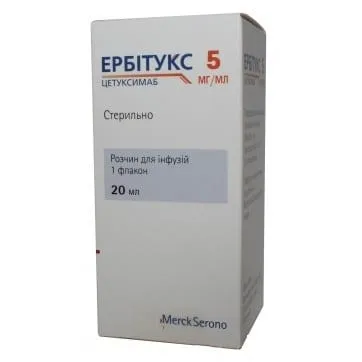
Table of Contents
INSTRUCTIONS FOR MEDICAL USE OF THE MEDICINAL PRODUCT ERBITUX (ERBITUX®)
Composition:
Active substance: cetuximab;
1 ml of solution contains 5 mg of cetuximab;
Excipients: sodium chloride, glycine, polysorbate 80, citric acid monohydrate, sodium hydroxide, water for injections.
Pharmaceutical form. Solution for infusion.
Main physicochemical properties: solution, practically free from visible particles.
Pharmacotherapeutic group. Antineoplastic agents. Monoclonal antibodies and antibody-drug conjugates. EGFR (epidermal growth factor receptor) inhibitors. Cetuximab.
ATC code L01F E01.
Pharmacological Properties
Pharmacodynamics
Mechanism of action
Cetuximab is a chimeric monoclonal antibody of the IgG1 class, with specific activity directed against epidermal growth factor receptors (EGFR).
EGFRs are involved in a signaling cascade that regulates cell viability, the cell cycle, angiogenesis, cell migration, and cellular invasion/metastasis.
The binding affinity of cetuximab to EGFR is approximately 5–10 times higher than that of endogenous ligands. Cetuximab blocks the binding of endogenous ligands to EGFR, thereby inhibiting receptor function. It subsequently induces internalization of EGFR, which may lead to negative regulation of EGFR. Cetuximab also sensitizes cytotoxic immune effector cells to EGFR-expressing tumor cells (antibody-dependent cell-mediated cytotoxicity, ADCC).
Cetuximab does not bind to other receptors belonging to the HER family.
The protein product of the RAS proto-oncogene (rat sarcoma) is a key downstream signal transducer from EGFR. In tumors, RAS activation via EGFR promotes EGFR-mediated proliferation, cell survival, and production of pro-angiogenic factors.
RAS belongs to the family of oncogenes most frequently activated in human cancers. Mutations in RAS genes at specific mutation-sensitive exons 2, 3, and 4 lead to significant activation of RAS proteins independent of the EGFR signaling cascade.
Pharmacodynamic effects
In in vitro and in vivo studies, cetuximab inhibits proliferation and induces apoptosis in human tumor cells expressing EGFR. In vitro, cetuximab inhibits the production of angiogenic factors by tumor cells and blocks endothelial cell migration. In vivo, cetuximab inhibits the expression of angiogenic factors by tumor cells and leads to reduced tumor neovascularization and metastasis.
Immunogenic properties
The development of human anti-chimeric antibodies (HACA) is an effect inherent to the class of chimeric monoclonal antibodies. Current data on HACA development are limited. Overall, measurable HACA titers were detected in 3.4% of patients participating in clinical studies, with the frequency of HACA development in studies for the main indications ranging from 0% to 9.6%. To date, no conclusion has been reached regarding the neutralizing effect of HACA on the activity of cetuximab. The presence of HACA did not correlate with the development of hypersensitivity reactions or any other adverse reactions to cetuximab.
Colorectal cancer
A diagnostic test (EGFR pharmDx) was used for immunohistochemical detection of EGFR expression in tumor samples. A tumor was considered EGFR-expressing if at least one stained cell could be identified. Approximately 75% of patients with metastatic colorectal cancer screened for participation in clinical trials had EGFR-expressing tumors and were thus considered eligible for treatment with cetuximab. The efficacy and safety of cetuximab in patients with tumors lacking EGFR expression have not been established.
Clinical trial data indicate that patients with metastatic colorectal cancer and activating RAS gene mutations are unlikely to benefit from treatment with cetuximab alone or in combination with chemotherapy, and that adding cetuximab to the FOLFOX4 regimen results in a significant negative impact on progression-free survival (PFS).
The use of cetuximab as monotherapy or in combination with chemotherapy has been evaluated in five randomized controlled clinical trials and several additional studies. A total of 3734 patients with metastatic colorectal cancer who had EGFR expression and an ECOG performance status of ≤2 (Eastern Cooperative Oncology Group) were included in the five randomized trials. The majority of patients enrolled in these studies had an ECOG performance status of ≤1.
In all studies, cetuximab was administered according to the recommendations provided in the section "Dosage and administration."
In four randomized controlled trials (EMR 62 202-013, EMR 62 202-047, CA225006, and CA225025), the status of KRAS exon 2 was recognized as a predictive factor for cetuximab treatment. KRAS status was determined in 2072 patients. A further retrospective analysis was conducted on the results of trials EMR 62 202-013 and EMR 62 202-047, in which additional RAS gene mutations (NRAS and KRAS) were identified beyond KRAS exon 2 mutations. Retrospective analysis was not feasible only in trial EMR 62 202-007.
Cetuximab in combination with chemotherapy
- Trial EMR 62 202-013 was a randomized study involving patients with previously untreated metastatic colorectal cancer. The study compared the combination of cetuximab, irinotecan, and infusional 5-fluorouracil/folinic acid (FOLFIRI) with chemotherapy alone. The proportion of patients with KRAS wild-type tumors among those evaluated for KRAS status was 63%. For assessment of RAS status, additional mutations beyond KRAS exon 2 were analyzed in all evaluable samples obtained from patients with KRAS wild-type tumors. The RAS mutation group includes patients with known KRAS exon 2 mutations as well as those with additionally identified RAS gene mutations.
Efficacy data obtained in this trial are summarized in Table 1.
Table 1
| Investigated parameters / statistics |
Wild-type RAS patient population |
Mutant RAS patient population |
||
| Cetuximab plus FOLFIRI (N=178) |
FOLFIRI (N=189) |
Cetuximab plus FOLFIRI (N=246) |
FOLFIRI (N=214) |
|
| OS, months, median value (95 % CI) |
28.4 (24.7; 31.6) |
20.2 (17.0; 24.5) |
16.4 (14.9; 18.4) |
17.7 (15.4; 19.6) |
| Hazard ratio (95 % CI) |
0.69 (0.54; 0.88) |
1.05 (0.86; 1.28) |
||
| p-value |
0.0024 |
0.6355 |
||
| PFS, months, median value (95 % CI) |
11.4 (10.0; 14.6) |
8.4 (7.4; 9.4) |
7.4 (6.4; 8.0) |
7.5 (7.2; 8.5) |
| Hazard ratio (95 % CI) |
0.56 (0.41; 0.76) |
1.10 (0.85; 1.42) |
||
| p-value |
0.0002 |
0.4696 |
||
| ORR, % (95 % CI) |
66.3 (58.8; 73.2) |
38.6 (31.7; 46.0) |
31.7 (25.9; 37.9) |
36.0 (29.6; 42.8) |
| Odds ratio (95 % CI) |
3.1145 (2.0279; 4.7835) |
0.8478 (0.5767; 1.2462) |
||
| p-value |
< 0.0001 |
0.3970 |
||
CI – confidence interval, FOLFIRI – irinotecan plus infusional 5-fluorouracil/folinic acid, OS – overall survival, ORR – objective response rate (patients with complete or partial response), PFS – progression-free survival.
- Study EMR 62 202-047 was a randomized study in patients with previously untreated metastatic colorectal cancer. The study compared cetuximab in combination with oxaliplatin and infusional 5-fluorouracil/folinic acid (FOLFOX4) versus chemotherapy alone. The proportion of patients with KRAS wild-type tumors among those evaluable for KRAS status was 57%. RAS status was assessed for all available tumor samples from patients with KRAS wild-type tumors by testing for additional mutations beyond KRAS exon 2 mutations. The RAS mutation group includes patients with known KRAS exon 2 mutations as well as those with additional RAS gene mutations identified.
Efficacy results from this study are summarized in Table 2.
Table 2
| Investigated parameters / statistics |
Population of patients with wild-type RAS |
Population of patients with RAS mutations |
||
| Cetuximab plus FOLFOX4 (N=38) |
FOLFOX4 (N=49) |
Cetuximab plus FOLFOX4 (N=92) |
FOLFOX4 (N=75) |
|
| OS, months, median value (95% CI) |
19.8 (16.6; 25.4) |
17.8 (13.8; 23.9) |
13.5 (12.1; 17.7) |
17.8 (15.9; 23.6) |
| Hazard ratio (95% CI) |
0.94 (0.56; 1.56) |
1.29 (0.91; 1.84) |
||
| p-value |
0.8002 |
0.1573 |
||
| PFS, months, median value (95% CI) |
12.0 (5.8; -) |
5.8 (4.7; 7.9) |
5.6 (4.4; 7.5) |
7.8 (6.7; 9.3) |
| Hazard ratio (95% CI) |
0.53 (0.27; 1.04) |
1.54 (1.04; 2.29) |
||
| p-value |
0.0615 |
0.0309 |
||
| ORR, % (95% CI) |
57.9 (40.8; 73.7) |
28.6 (16.6; 43.3) |
37.0 (27.1; 47.7) |
50.7 (38.9; 62.4) |
| Odds ratio (95% CI) |
3.3302 (1.375; 8.172) |
0.580 (0.311; 1.080) |
||
| p-value |
0.0084 |
0.0865 |
||
CI – confidence interval, FOLFIRI – irinotecan plus 5-fluorouracil/folinic acid infusions, ORR – objective response rate (patients with complete or partial response), OS – overall survival, PFS – progression-free survival, “-” – not estimable.
Treatment of patients with RAS gene mutations showed a negative effect of adding cetuximab.
- FIRE-3 study – a multicenter randomized trial involving patients with metastatic colorectal cancer with wild-type KRAS exon 2. The study compared FOLFIRI (irinotecan plus infusional 5-fluorouracil/folinic acid) in combination with cetuximab or bevacizumab. RAS gene status was assessed in tumor samples with wild-type KRAS exon 2 obtained from 407 patients, representing 69% of the total study population (592 patients). Within this group, 342 patients had tumors with wild-type RAS, while RAS gene mutations were identified in 65 patients.
Efficacy data obtained in this study are summarized in Table 3.
Table 3
| Investigated parameters / statistics |
Population of patients with wild-type RAS |
Population of patients with RAS mutations |
||
| Cetuximab plus FOLFIRI (N=171) |
Bevacizumab plus FOLFIRI (N=171) |
Cetuximab plus FOLFIRI (N=92) |
Bevacizumab plus FOLFIRI (N=86) |
|
| OS, months, median value (95 % CI) |
33.1 (24.5; 39.4) |
25.6 (22.7; 28.6) |
20.3 (16.4; 23.4) |
20.6 (17.0; 26.7) |
| Hazard ratio (95 % CI) |
0.70 (0.53; 0.92) |
1.09 (0.78; 1.52) |
||
| p-value |
0.011 |
0.60 |
||
| PFS, months, median value (95 % CI) |
10.4 (9.5; 12.2) |
10.2 (9.3; 11.5) |
7.5 (6.1; 9.0) |
10.1 (8.9; 12.2) |
| Hazard ratio (95 % CI) |
0.93 (0.74; 1.17) |
1.31 (0.96; 1.78) |
||
| p-value |
0.54 |
0.085 |
||
| ORR, % (95 % CI) |
65.5 (57.9; 72.6) |
59.6 (51.9; 67.1) |
38.0 (28.1; 48.8) |
51.2 (40.1; 62.1) |
| Odds ratio (95 % CI) |
1.28 (0.83; 1.99) |
0.59 (0.32; 1.06) |
||
| p-value |
0.32 |
0.097 |
||
CI – confidence interval, FOLFIRI – irinotecan plus infusional 5-fluorouracil/folinic acid, OS – overall survival, ORR – objective response rate (patients with complete or partial response), PFS – progression-free survival.
Squamous cell carcinoma of the head and neck
Immunohistochemical assessment of EGFR expression was not performed, as more than 90% of patients with squamous cell carcinoma of the head and neck have EGFR-expressing tumors.
Cetuximab in combination with radiotherapy for the treatment of locally advanced disease
- Study EMR 62 202-006 was a randomized trial comparing the combination of cetuximab and radiotherapy versus radiotherapy alone in patients with locally advanced squamous cell carcinoma of the head and neck. Cetuximab therapy, administered at the doses recommended in the section "Dosage and administration", was initiated one week prior to the start of radiotherapy and continued throughout the entire course of radiotherapy.
Efficacy data obtained in this trial are summarized in Table 4.
Table 4
| Investigated parameters / statistics |
Radiation therapy + cetuximab (N=211) |
Radiation therapy (N=213) |
||
| Locoregional control, months, median (95 % CI) |
24.4 |
(15.7; 45.1) |
14.9 |
(11.8; 19.9) |
| Hazard ratio (95 % CI) |
0.68 (0.52; 0.89) |
|||
| p-value |
0.005 |
|||
| OS, months, median (95 % CI) |
49.0 |
(32.8; 69.5+) |
29.3 |
(20.6; 41.4) |
| Hazard ratio (95 % CI) |
0.73 (0.56; 0.95) |
|||
| p-value |
0.018 |
|||
| Median follow-up period, months |
60.0 |
60.1 |
||
| 1-year OS rate, % (95 % CI) |
77.6 (71.4, 82.7) |
73.8 (67.3, 79.2) |
||
| 2-year OS rate, % (95 % CI) |
62.2 (55.2, 68.4) |
55.2 (48.2, 61.7) |
||
| 3-year OS rate, % (95 % CI) |
54.7 (47.7, 61.2) |
45.2 (38.3, 51.9) |
||
| 5-year OS rate, % (95 % CI) |
45.6 (38.5, 52.4) |
36.4 (29.7, 43.1) |
||
CI – confidence interval, OS – overall survival, "+" – upper limit not reached.
More pronounced benefits were observed in patients with an optimistic prognosis based on assessment of tumor stage, Karnofsky Performance Status (KPS), and patient's age when cetuximab was added to radiation therapy. For patients with KPS ≤ 80 and age of 65 years or older, clinical benefits from using this combination have not been demonstrated.
The use of cetuximab in combination with chemoradiotherapy has not been sufficiently studied to date; therefore, the benefit-risk balance of such use has not yet been established.
Cetuximab in combination with platinum-based chemotherapy in recurrent and/or metastatic disease
- Study EMR 62 202-002 was a randomized trial evaluating treatment of patients with recurrent and/or metastatic squamous cell carcinoma of the head and neck who had not previously received chemotherapy. The study compared the combination of cetuximab with cisplatin or carboplatin and infusional 5-fluorouracil versus chemotherapy alone. Treatment in the cetuximab group consisted of up to 6 cycles of platinum-based chemotherapy combined with cetuximab, followed by cetuximab maintenance therapy until disease progression.
Efficacy data obtained from this study are summarized in Table 5.
Table 5
| Parameters investigated / statistics |
Cetuximab + CTX (N=222) |
CTX (N=220) |
| OS, months, median (95 % CI) |
10.1 (8.6; 11.2) |
7.4 (6.4; 8.3) |
| Hazard ratio (95 % CI) |
0.797 (0.644; 0.986) |
|
| p-value |
0.0362 |
|
| PFS, months, median (95 % CI) |
5.6 (5.0; 6.0) |
3.3 (2.9; 4.3) |
| Hazard ratio (95 % CI) |
0.538 (0.431; 0.672) |
|
| p-value |
< 0.0001 |
|
| ORR, % (95 % CI) |
35.6 (29.3; 42.3) |
19.5 (14.5; 25.4) |
| p-value |
0.0001 |
|
CI – confidence interval, CTx – platinum-based chemotherapy, ORR – objective response rate, OS – overall survival, PFS – progression-free survival.
More pronounced benefits from adding cetuximab to platinum-based chemotherapy were observed in patients with a favorable prognosis based on tumor stage, Karnofsky Performance Status (KPS) score, and patient age. In contrast to progression-free survival, no clinical benefit in terms of overall survival was demonstrated in patients with KPS ≤ 80 and age 65 years or older.
Cetuximab as monotherapy for recurrent and/or metastatic disease following failure of prior chemotherapy
- Study EMR 62 202-016 was an open-label study evaluating cetuximab in patients with recurrent or metastatic squamous cell carcinoma of the head and neck whose prior first-line chemotherapy had failed. The study involved a single patient group comprising 103 individuals.
Efficacy data obtained in this study are summarized in Table 6.
Table 6
| Parameters investigated / statistics |
n (%) |
95 % CI |
| ORR, objective response rate |
13 (12.6) |
6.9; 20.6 |
| DCR, disease control rate |
47 (45.6) |
35.8; 55.7 |
| Median value, months |
95 % CI |
|
| PFS, time to progression |
2.3 |
1.6; 3.1 |
| OS, overall survival |
5.8 |
4.9; 7.1 |
CI – confidence interval, DCR – patients with complete response, partial response, or stable disease for at least 6 weeks.
Pharmacokinetics.
The pharmacokinetic properties of cetuximab were studied in clinical trials when administered as monotherapy or in combination with chemotherapy or radiotherapy. Following intravenous infusion of weekly doses ranging from 5 to 500 mg/m² of body surface area, cetuximab exhibits dose-dependent pharmacokinetics.
After administration of the initial dose of 400 mg/m² of body surface area, the mean volume of distribution of cetuximab is approximately equivalent to the vascular space (2.9 L/m², range 1.5–6.2 L/m²). The mean Cmax (± standard deviation) is 185 ± 55 µg/mL. The mean clearance per 1 m² of body surface area is 0.022 L/hour. Cetuximab has a prolonged elimination half-life, ranging from 70 to 100 hours.
With weekly administration of cetuximab (initial dose 400 mg/m² followed by weekly doses of 250 mg/m²), serum concentrations of cetuximab reached steady-state levels by week 3 after initiation of monotherapy. The mean maximum concentration of cetuximab was 155.8 µg/mL at week 3 and 151.6 µg/mL at week 8 of treatment, while the corresponding mean trough concentrations were 41.3 and 55.4 µg/mL, respectively. In a combination therapy study with irinotecan, the mean trough concentration of cetuximab was 50 µg/mL at week 12 and 49.4 µg/mL at week 36.
When cetuximab was administered every 2 weeks (500 mg/m² every other week), serum concentrations of cetuximab reached steady-state levels by week 5 after initiation of monotherapy. The mean maximum concentration of cetuximab was 297 µg/mL at week 5, while the corresponding mean trough concentration was 31.0 µg/mL.
Several potential pathways of antibody metabolism have been described. All these pathways involve biodegradation processes of antibodies into smaller molecules, i.e., low-molecular-weight peptides or amino acids.
Pharmacokinetics in specific patient populations
A pooled analysis of data from all clinical trials showed that the pharmacokinetic characteristics of cetuximab are not influenced by race, sex, age, or renal and hepatic function.
To date, clinical studies have included only patients with adequate renal and hepatic function (serum creatinine ≤ 1.5 times, transaminases ≤ 5 times, and bilirubin ≤ 1.5 times the upper limit of normal).
Pediatric patients
In a phase I study conducted in pediatric patients (aged 1 to 18 years) with solid tumors refractory to chemotherapy, cetuximab was administered in combination with irinotecan. The pharmacokinetic results obtained in this study were similar to those observed in adults.
Clinical characteristics.
Indications.
Treatment of patients with metastatic colorectal cancer with wild-type RAS and expression of epidermal growth factor receptors EGFR:
- in combination with chemotherapy based on irinotecan or continuous infusions of 5-fluorouracil/folinic acid and oxaliplatin as first-line therapy;
- as monotherapy in case of ineffectiveness of previous oxaliplatin- or irinotecan-based chemotherapy, as well as in case of irinotecan intolerance.
Treatment of patients with head and neck squamous cell carcinoma:
- in combination with radiotherapy for treatment of locally advanced forms as first-line therapy;
- in combination with platinum-based chemotherapy for treatment of recurrent and/or metastatic tumors;
- as monotherapy for recurrent and/or metastatic tumors in case of ineffectiveness of previous chemotherapy.
Contraindications.
Erbitux is contraindicated in patients with known severe hypersensitivity reactions to cetuximab (grade 3 or 4 according to CTCAE criteria (Common Terminology Criteria for Adverse Events, National Cancer Institute)).
Combination of Erbitux with oxaliplatin-based chemotherapy is contraindicated in patients with mutations or unknown status of RAS genes (see section "Special instructions").
Prior to initiating combination therapy, contraindications for concomitant chemotherapeutic agents or radiotherapy should also be considered.
Interaction with other medicinal products and other types of interactions.
Mixing Erbitux with other medicinal products is prohibited, except for those listed in the section "Administration and dosage".
When conducting combination therapy with platinum-containing agents, the frequency of severe leukopenia or severe neutropenia may increase, potentially leading to a higher incidence of infectious complications such as febrile neutropenia, pneumonia, or sepsis, compared to platinum-based chemotherapy alone.
When conducting combination therapy with fluoropyrimidines, an increased frequency of ischemic heart disease, including myocardial infarction and congestive heart failure, as well as hand-foot syndrome (palmar-plantar erythrodysesthesia), has been observed compared to fluoropyrimidine monotherapy.
When conducting combination therapy with capecitabine and oxaliplatin (XELOX), the frequency of severe diarrhea may increase.
An official drug interaction study demonstrated that the pharmacokinetic characteristics of cetuximab are not altered when administered concomitantly with a single dose of irinotecan (350 mg/m² body surface area). Similarly, the pharmacokinetic characteristics of irinotecan are not altered when administered concomitantly with cetuximab.
No other official drug interaction studies with cetuximab have been conducted.
Special precautions for use.
Traceability
To improve traceability of biological medicinal products, the name and batch number of the administered product should be clearly recorded.
Infusion reactions, including anaphylactic reactions
Severe infusion reactions, including anaphylactic reactions, may frequently occur during treatment and, in some cases, may lead to fatal outcomes. In the event of serious infusion reactions, therapy with cetuximab must be immediately and permanently discontinued, and emergency treatment should be initiated if necessary. Some of these reactions may be anaphylactic or anaphylactoid in nature or associated with cytokine release syndrome (CRS). Symptoms of infusion reactions may develop during the first infusion, several hours after its completion, or during subsequent infusions.
Patients should be informed about the possibility of delayed reactions and the necessity to seek medical attention if symptoms or signs of infusion reactions occur. Symptoms may include bronchospasm, urticaria, increased or decreased blood pressure, loss of consciousness, or shock. In isolated cases, angina pectoris, myocardial infarction, or cardiac arrest have been observed.
Anaphylactic reactions, for example, caused by cross-reactivity of pre-formed IgE antibodies with cetuximab, may develop within minutes after the start of the first infusion. Such reactions typically lead to bronchospasm or urticaria and may occur despite premedication. The risk of anaphylactic reactions is significantly increased in patients with allergy to red meat or tick bites in their medical history, or in patients with positive test results for IgE antibodies to cetuximab (α-1-3-galactose). Cetuximab should be administered to such patients only after careful assessment of the benefits and risks of treatment, considering alternative treatment options, and only under close supervision of qualified healthcare professionals with immediate access to resuscitation equipment.
The first dose of the drug should be administered slowly, and careful monitoring of the patient’s condition should be maintained for at least 2 hours after infusion. If infusion reactions occur during the first 15 minutes of the first infusion, the infusion should be interrupted, and a careful assessment of the benefits and risks of further drug use should be performed, including evaluation of whether IgE antibodies may develop in the patient before administration of the next infusion.
If infusion reactions occur later during the first infusion or during subsequent infusions, further actions depend on the severity of the reaction:
- Grade 1: Continue infusion at a slower rate under close supervision;
- Grade 2: Continue infusion at a slower rate and initiate immediate symptomatic treatment of infusion reactions;
- Grade 3 and 4: Immediately discontinue infusion, initiate emergency symptomatic treatment, and cetuximab is contraindicated for further use.
Cytokine release syndrome (CRS) usually develops within 1 hour after completion of the infusion and less frequently leads to bronchospasm and urticaria. Generally, the most severe forms of CRS occur after the first infusion.
Mild or moderate infusion reactions are very common and manifest as symptoms such as fever, chills, dizziness, and dyspnea; they are predominantly associated in time with the first infusion of cetuximab. In case of mild or moderate infusion reactions, the infusion rate may be reduced. All subsequent infusions should be administered at this reduced rate.
Patients should be under close medical supervision, especially during the first infusion. Particular attention should be paid to patients with poor general condition and pre-existing cardiopulmonary diseases.
Respiratory disorders
Cases of interstitial lung disease (ILD), including fatal cases, have been reported in patients treated with Erbitux, most of whom belonged to the Japanese population.
ILD cases are known to be associated with concomitant and/or predisposing factors such as concurrent chemotherapy, and fatal outcomes often occurred in patients with pre-existing lung diseases. Therefore, patients with such risk factors should be closely monitored. In case of symptoms (such as dyspnea, cough, fever) or radiological findings suggestive of ILD, appropriate diagnostic evaluation should be initiated immediately.
Upon diagnosis of interstitial lung disease, cetuximab must be discontinued and appropriate treatment initiated.
Skin reactions
The main adverse reactions associated with cetuximab use are skin reactions, which may be severe, especially when combined with chemotherapy. The risk of secondary infections (mainly of bacterial origin) increases during therapy. Cases of staphylococcal toxic epidermal necrolysis, necrotizing fasciitis, and sepsis have been reported, some of which were fatal (see section "Adverse reactions").
In case of very common skin reactions, treatment interruption or discontinuation may be required. According to clinical treatment protocols, prophylaxis of skin reactions includes administration of oral tetracycline preparations (6–8 weeks) and topical application of 1% hydrocortisone cream with a moisturizer. For treatment of skin reactions, topical corticosteroids of moderate or high potency or oral tetracycline preparations have been used.
In case of development of serious skin reactions (≥ grade 3 according to CTCAE) or intolerance to cetuximab, treatment should be interrupted. Resumption of therapy is possible only after the severity of the reaction has decreased to grade 2. If serious skin reactions occur for the first time, treatment may be resumed without dose adjustment.
If serious skin reactions occur for the second or third time, cetuximab administration should be interrupted again. Therapy may be resumed only after the reaction severity has decreased to grade 2, with a 20% dose reduction (200 mg/m² body surface area for weekly administration, 400 mg/m² body surface area for administration once every 2 weeks) after the second occurrence, and a 40% dose reduction (150 mg/m² body surface area for weekly administration, 300 mg/m² body surface area for administration once every 2 weeks) after the third occurrence.
If serious skin reactions occur for the fourth time or if their severity does not decrease to grade 2 during treatment interruption, therapy with cetuximab must be permanently discontinued.
Electrolyte imbalance
Progressive decrease in serum magnesium levels is frequently observed during treatment, which may lead to severe hypomagnesemia. Hypomagnesemia is reversible upon discontinuation of cetuximab. Additionally, hypokalemia may develop due to diarrhea. Hypocalcemia may also occur; in particular, when combined chemotherapy with platinum agents is administered, the frequency of severe hypocalcemia may increase.
Serum electrolyte levels should be determined before initiation and periodically during cetuximab therapy. If necessary, electrolyte replacement therapy is recommended.
Neutropenia and associated infectious complications
When cetuximab is used in combination with platinum-based chemotherapy, patients have an increased risk of developing severe neutropenia, which may lead to infectious complications such as febrile neutropenia, pneumonia, or sepsis. Such patients should be under close supervision, especially if skin lesions, mucositis, or diarrhea are present, as these conditions may predispose to infections (see section "Adverse reactions").
Cardiovascular disorders
An increased frequency of severe and sometimes fatal cardiovascular complications and fatal outcomes of their treatment has been observed in patients treated for head and neck squamous cell carcinoma and colorectal cancer. In some studies, such cases were associated with age ≥ 65 years and patient comorbidities. When prescribing cetuximab, the general condition and cardiovascular status of patients, as well as concomitant treatment with cardiotoxic agents, particularly fluoropyrimidines, should be taken into account.
Ocular disorders
Patients with signs and symptoms of keratitis, such as acute or worsening eye inflammation, lacrimation, photophobia, blurred vision, eye pain, and/or eye redness, should immediately consult an ophthalmologist.
Upon confirmed diagnosis of ulcerative keratitis, treatment with Erbitux should be interrupted or discontinued. When keratitis is diagnosed, the benefits and risks of further treatment should be carefully weighed.
Erbitux should be prescribed with caution to patients with a history of keratitis, ulcerative keratitis, or severe dry eye syndrome. Contact lens use is an additional risk factor for the development of keratitis and ulcerative keratitis.
Colorectal cancer in patients with RAS gene mutations
Erbitux should not be used for the treatment of patients with colorectal cancer if tumors have RAS gene mutations or unknown RAS gene status. Clinical trial results indicate a negative benefit-risk ratio for the use of the drug when tumors have RAS gene mutations. In particular, in such patients, the addition of cetuximab to the FOLFOX4 regimen was associated with a negative impact on progression-free survival (PFS) and overall survival (OS).
Similar findings have been reported when cetuximab was added to the XELOX regimen in combination with bevacizumab (CAIRO2). However, in this study, no positive effect on PFS and OS was demonstrated even in patients with KRAS wild-type tumors.
Experience with the use of cetuximab in combination with radiotherapy in the treatment of colorectal cancer is limited.
Special patient groups
To date, clinical trials of the drug have included only patients with adequate renal and hepatic function (serum creatinine ≤ 1.5 times, transaminases ≤ 5 times, and bilirubin ≤ 1.5 times the upper limit of normal).
The use of Erbitux has not been studied in patients with one or more of the following abnormal laboratory parameters: hemoglobin < 9 g/dL, leukocyte count < 3000/mm³, absolute neutrophil count < 1500/mm³, platelet count < 100,000/mm³.
Sodium
1 mL of Erbitux contains 2.86 mg of sodium. However, since the dose of Erbitux depends on the patient’s body weight, the exact sodium content in a single dose cannot be specified.
Caution should be exercised when administering the drug to patients on a sodium-controlled diet.
Use during pregnancy or breastfeeding.
Epidermal growth factor receptors (EGFR) are involved in fetal development. Limited animal studies indicate that cetuximab, like other IgG1 antibodies, crosses the placental barrier. Data from animal studies did not reveal any evidence of teratogenicity of cetuximab, but an increased frequency of abortions with a dose-dependent relationship was observed. Data on the use of the drug in pregnant or lactating women are insufficient.
Therefore, Erbitux should be prescribed to pregnant women or women who do not use adequate contraceptive measures only if the potential benefits to the woman outweigh the potential risks to the fetus.
Since it is unknown whether cetuximab is excreted in breast milk, women are not recommended to breastfeed during treatment with Erbitux and for 2 months after the last dose.
There are no data on the effect of cetuximab on human fertility.
Ability to affect reaction speed when driving or operating machinery.
Studies on the effect of the drug on the patient’s ability to drive a vehicle or operate machinery have not been conducted. In case of adverse reactions that negatively affect reaction speed and the patient’s ability to concentrate, it is recommended to refrain from driving a vehicle or operating machinery until these reactions resolve.
Method of Administration and Dosage
Erbitux may only be administered under the supervision of a physician experienced in the use of anticancer agents. Patients must be under close medical supervision during and for at least 1 hour after completion of the infusion, with immediate access to resuscitation equipment.
At least 1 hour before the first Erbitux infusion, patients should receive premedication with antihistamines and corticosteroids. Such premedication is recommended prior to all subsequent infusions.
Colorectal Cancer
For the treatment of metastatic colorectal cancer, Erbitux is administered in combination with chemotherapy, as well as monotherapy (see section "Pharmacodynamics"). Prior to initiating Erbitux therapy, wild-type status of RAS genes (KRAS and NRAS) must be confirmed. The presence of KRAS and NRAS mutations (exons 2, 3, and 4) should be determined using validated methods in a qualified laboratory.
Erbitux can be administered weekly or once every two weeks.
Weekly Dosing Regimen
Erbitux is administered once weekly. The initial dose is 400 mg of cetuximab per 1 m² of body surface area. Subsequent doses are 250 mg/m² of body surface area administered weekly.
Every Two Weeks Dosing Regimen
Erbitux is administered once every two weeks. Each dose is 500 mg of cetuximab per 1 m² of body surface area.
Dosing and recommended modifications of concomitant chemotherapeutic agents are described in the instructions for the respective medicinal products. Concomitant medications must not be administered earlier than 1 hour after completion of the Erbitux infusion.
It is recommended to continue Erbitux treatment until disease progression.
Squamous Cell Carcinoma of the Head and Neck
In combination with radiotherapy
For the treatment of locally advanced squamous cell carcinoma of the head and neck, Erbitux is administered in combination with radiotherapy. It is recommended to initiate Erbitux therapy one week prior to the start of radiotherapy and continue throughout the radiotherapy period.
Erbitux is administered once weekly. The initial dose is 400 mg of cetuximab per 1 m² of body surface area. Subsequent doses are 250 mg/m² of body surface area administered weekly.
In combination with platinum-based chemotherapy
For the treatment of recurrent and/or metastatic squamous cell carcinoma of the head and neck, Erbitux is administered in combination with platinum-based chemotherapy, followed by maintenance monotherapy with Erbitux until disease progression. Chemotherapy must not be initiated earlier than 1 hour after completion of the Erbitux infusion.
Erbitux can be administered weekly or once every two weeks.
Weekly Dosing Regimen
Erbitux is administered once weekly. The initial dose is 400 mg of cetuximab per 1 m² of body surface area. Subsequent doses are 250 mg/m² of body surface area administered weekly.
Every Two Weeks Dosing Regimen
Erbitux is administered once every two weeks. Each dose is 500 mg of cetuximab per 1 m² of body surface area.
Special Patient Populations
To date, clinical trials of the drug have included only patients with adequate renal and hepatic function.
The use of cetuximab in patients with prior hematological disorders has not been studied.
Dose adjustment is not required in elderly patients, although experience in patients aged 75 years and older is limited.
Method of Administration
Erbitux is administered intravenously using an infusion set, infusion pump, or syringe pump. The first dose should be administered slowly to minimize infusion-related reactions. The recommended duration of the initial infusion is 120 minutes. The infusion rate for subsequent doses must not exceed 10 mg/min.
If the initial infusion is well tolerated, the recommended duration for subsequent weekly infusions of 250 mg/m² is 60 minutes, and for the 500 mg/m² dose administered once every two weeks, it is 120 minutes.
Instructions for Preparation and Administration of Infusions
For intravenous infusions of Erbitux, which may be administered using an infusion set, infusion pump, or syringe pump, a separate infusion line must be used and flushed at the end of the infusion with sterile 0.9% sodium chloride injection solution.
Erbitux is compatible with:
- polyethylene, ethyl vinyl acetate, or polyvinyl chloride bags;
- polyethylene, polyurethane, ethyl vinyl acetate, thermoplastic polyolefin, or polyvinyl chloride infusion sets;
- polypropylene syringes for syringe pumps.
The Erbitux infusion solution must be prepared under aseptic conditions according to the following instructions:
- For administration using an infusion pump or infusion set (after dilution with sterile 0.9% sodium chloride solution)
Select an appropriately sized infusion bag containing sterile 0.9% sodium chloride solution. Calculate the required volume of Erbitux. Using an appropriate sterile syringe and suitable needle, withdraw the corresponding volume of sterile 0.9% sodium chloride solution from the infusion bag. Take an appropriate sterile syringe and attach a suitable needle. Withdraw the required volume of Erbitux solution from the vial and transfer it into the prepared infusion bag. Repeat this procedure until the calculated volume of the drug has been transferred. Connect the infusion line and prime it with the diluted Erbitux solution before starting the infusion. Use an infusion set or infusion pump. Set and monitor the infusion rate as indicated above.
- For administration using an infusion pump or infusion set (without prior dilution)
Calculate the required volume of Erbitux. Take an appropriate sterile syringe (minimum capacity 50 mL) and attach a suitable needle. Withdraw the required volume of Erbitux solution from the vial and transfer it into a sterile evacuated container or bag. Repeat this procedure until the calculated volume of the drug has been transferred. Connect the infusion line and prime it with Erbitux before starting the infusion. Set and monitor the infusion rate as indicated above.
- For administration using a syringe pump
Calculate the required volume of Erbitux. Take an appropriate sterile syringe and attach a suitable needle. Withdraw the required volume of Erbitux solution from the vial. Remove the needle and place the syringe into the syringe pump. Connect the infusion line to the syringe, set and monitor the infusion rate as indicated above, and begin the infusion after priming the line with Erbitux or sterile 0.9% sodium chloride solution. Repeat this procedure as necessary until the entire calculated volume of the drug has been administered.
Children.
Cetuximab is not indicated for use in pediatric patients.
The efficacy of cetuximab in pediatric patients (under 18 years of age) has not been studied. In a phase I study involving pediatric patients, no additional safety concerns were identified.
Overdose.
Experience with weekly doses exceeding 250 mg/m² of body surface area or doses higher than 500 mg of cetuximab/m² of body surface area administered once every two weeks is currently limited. In clinical studies, administration of doses up to 700 mg of cetuximab/m² of body surface area once every two weeks did not affect the safety profile of the drug.
Adverse Reactions
The main adverse reactions to cetuximab administration are skin reactions (observed in more than 80% of patients), hypomagnesemia (observed in more than 10% of patients), and infusion reactions, which usually manifest as mild or moderate symptoms in more than 10% of patients and as severe reactions in more than 1% of patients.
The following terminology is used to define the frequency of adverse reactions: very common (≥ 1/10); common (≥ 1/100 to < 1/10); uncommon (≥ 1/1000 to < 1/100); rare (≥ 1/10000 to < 1/1000); very rare (< 1/10000); frequency not known (frequency cannot be determined from available data).
An asterisk (*) indicates that additional information on the specified adverse reactions is provided below.
Metabolism and nutrition disorders
Very common: hypomagnesemia (see section "Special precautions").
Common: dehydration, particularly due to diarrhea or mucositis; hypocalcemia (see section "Special precautions"); anorexia, which may lead to weight loss.
Nervous system disorders
Common: headache.
Frequency not known: aseptic meningitis.
Eye disorders
Common: conjunctivitis.
Uncommon: blepharitis, keratitis.
Vascular disorders
Uncommon: deep vein thrombosis.
Respiratory, thoracic and mediastinal disorders
Uncommon: pulmonary embolism, interstitial lung disease, which may be fatal.
Gastrointestinal disorders
Common: diarrhea, nausea, vomiting.
Hepatobiliary disorders
Very common: increased levels of liver enzymes (AST, ALT, ALP).
Skin and subcutaneous tissue disorders
Very common: skin reactions*.
Rare: Stevens-Johnson syndrome/toxic epidermal necrolysis.
Frequency not known: superinfection of skin lesions*.
General disorders and administration site reactions
Very common: mild or moderate infusion reactions (see section "Special precautions"); mucositis, sometimes severe. Mucositis may lead to epistaxis.
Common: severe infusion reactions, sometimes fatal (see section "Special precautions"), asthenia.
Additional information
Overall, no clinically significant differences in adverse reactions between men and women were observed.
Skin reactions
Skin reactions may develop in more than 80% of patients and are predominantly acneiform rash and/or less frequently pruritus, dry skin, desquamation, hypertrichosis, or nail disorders (e.g., paronychia). Nearly 15% of skin reactions are severe, including isolated cases of skin necrosis. Most skin reactions develop within the first 3 weeks of therapy. They usually resolve without sequelae after some time following discontinuation of treatment, provided dose adjustments were performed according to recommendations in the "Special precautions" section.
Skin lesions caused by cetuximab may predispose to superinfections (e.g., due to S. aureus), which may lead to further complications such as cellulitis, abscess formation, or potentially life-threatening conditions such as staphylococcal toxic epidermal necrolysis, necrotizing fasciitis, or sepsis.
Combination therapy
When administering combination therapy with chemotherapeutic agents, refer to the respective package inserts for those products.
When used in combination with platinum-containing agents, the incidence of severe leukopenia or severe neutropenia may increase, leading to a higher frequency of infectious complications such as febrile neutropenia, pneumonia, or sepsis, compared to platinum-based chemotherapy alone.
When used in combination with fluoropyrimidines, an increased incidence of ischemic heart disease, including myocardial infarction and congestive heart failure, as well as hand-foot syndrome (palmar-plantar erythrodysesthesia), has been observed compared to fluoropyrimidine use alone.
When combined with local radiotherapy of the head and neck, additional adverse effects typical of radiotherapy (such as mucositis, radiation dermatitis, dysphagia, or leukopenia, predominantly lymphopenia) have been observed. In a randomized, controlled clinical trial involving 424 patients, severe acute radiation dermatitis, mucositis, and delayed radiation-related adverse reactions occurred slightly more frequently with the combination of radiotherapy and Erbitux than with radiotherapy alone.
Reporting of adverse reactions after drug registration is important. It enables ongoing monitoring of the benefit-risk balance of the medicinal product. Healthcare professionals, pharmacists, patients, and their legal representatives should report all suspected adverse reactions and lack of efficacy via the Automated Pharmacovigilance Information System at: https://aisf.dec.gov.ua.
Shelf life. 4 years.
If the solution is prepared as described above, it maintains physicochemical stability for 48 hours when stored at 25°C.
Erbitux does not contain antimicrobial preservatives or bacteriostatic agents. From a microbiological standpoint, the product should be used immediately after opening the vial. If the product is not used immediately after opening the vial and if the vial was opened outside controlled and validated aseptic conditions, responsibility for storage duration and conditions lies with the user (under normal conditions, storage at 2–8°C should not exceed 24 hours).
Storage conditions.
Store at 2–8°C (in a refrigerator).
Keep out of the reach of children.
Packaging.
20 ml or 100 ml of solution for infusion in a glass vial closed with a rubber stopper and sealed with an aluminum crimp cap with a plastic cap; 1 vial per cardboard box.
Prescription status. Prescription only.
Manufacturer. Merck Healthcare KGaA
Manufacturer's address and place of business.
Frankfurter Strasse 250, 64293 Darmstadt, Germany.