Entecavir
Ukraine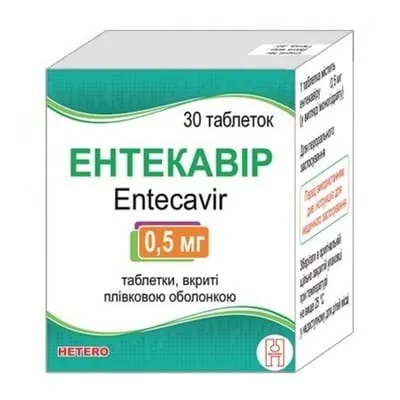
Table of Contents
INSTRUCTIONS FOR MEDICAL USE OF THE MEDICINAL PRODUCT ENTECAVIR (ENTECAVIR)
Composition:
Active substance: entecavir;
1 tablet contains 0.5 mg or 1 mg of entecavir (as monohydrate);
Excipients: calcium carbonate, pregelatinized starch, sodium carboxymethylcellulose, soy polysaccharides, citric acid monohydrate, sodium stearyl fumarate;
Tablets 0.5 mg: Opadry White 13B58802 (hypromellose (E 464), titanium dioxide (E 171), polyethylene glycol (E 1521), polysorbate 80 (E 433));
Tablets 1 mg: Opadry Pink 03B84566 (hypromellose (E 464), titanium dioxide (E 171), polyethylene glycol (E 1521), red iron oxide (E 172)).
Pharmaceutical form. Film-coated tablets.
Main physicochemical properties:
Tablets 0.5 mg: film-coated tablets, white to almost white, triangular-shaped, biconvex, with inscription «J» on one side and «110» on the other;
Tablets 1 mg: film-coated tablets, pink-colored, triangular-shaped, biconvex, with inscription «J» on one side and «111» on the other.
Pharmacotherapeutic group. Antiviral agents for systemic use, nucleoside and nucleotide reverse transcriptase inhibitors. ATC code J05A F10.
Pharmacological properties.
Pharmacodynamics.
Mechanism of action. Entecavir, a guanosine nucleoside analogue with activity against hepatitis B virus (HBV) polymerase, is efficiently phosphorylated to the active triphosphate form (TP), which has an intracellular half-life of 15 hours. By competing with the natural substrate deoxyguanosine triphosphate, entecavir-TP functionally inhibits three activities of viral polymerase: (1) priming of HBV polymerase, (2) reverse transcription of the negative-strand DNA from pre-genomic messenger RNA, and (3) synthesis of HBV positive-strand DNA. The Ki of entecavir-TP for HBV DNA polymerase is 0.0012 µM. Entecavir-TP is a weak inhibitor of human cellular DNA polymerases α, β, and δ, with Ki values ranging from 18 to 40 µM. Additionally, high exposures of entecavir did not cause significant adverse effects on γ-polymerase or mitochondrial DNA synthesis in HepG2 cells (Ki > 160 µM).
Antiviral activity. Entecavir inhibited HBV DNA synthesis (50% reduction, EC50) at a concentration of 0.004 µM in human HepG2 cells transfected with wild-type HBV. The mean EC50 value of entecavir against lamivudine-resistant (LVDr) HBV (rtL180M and rtM204V) was 0.026 µM (range: 0.010–0.059 µM). Recombinant viruses carrying adefovir-resistant substitutions rtN236T or rtA181V remained fully susceptible to entecavir.
Analysis of entecavir's inhibitory activity against a panel of laboratory and clinical isolates of HIV-1 using various cell types and assay conditions yielded EC50 values ranging from 0.026 to >10 µM; lower EC50 values were observed when lower virus levels were used in the assay. In cell culture, entecavir selected for the M184I substitution at micromolar concentrations, confirming inhibitory pressure at high entecavir concentrations. HIV variants containing the M184V substitution showed reduced susceptibility to entecavir (see section "Special precautions").
In combination assays for HBV in cell culture, abacavir, didanosine, lamivudine, stavudine, tenofovir, or zidovudine were not antagonistic to the anti-HBV activity of entecavir across a wide concentration range. In antiviral assays for HIV, entecavir at micromolar concentrations was not antagonistic to the anti-HIV activity in cell culture of these six NRTIs or emtricitabine.
Resistance in cell culture. Compared to wild-type HBV, LVDr viruses containing rtM204V and rtL180M substitutions within reverse transcriptase demonstrate an 8-fold reduced sensitivity to entecavir. Additional incorporation of entecavir resistance (ETVr) amino acid substitutions rtT184, rtS202, or rtM250 further reduces susceptibility to entecavir in cell culture. Substitutions observed in clinical isolates (rtT184A, C, F, G, I, L, M, or S; rtS202C, G, or I; and/or rtM250I, L, or V) further reduced susceptibility to entecavir by 16–741-fold compared to wild-type virus. Lamivudine-resistant strains containing rtL180M plus rtM204V in combination with the rtA181C substitution showed a 16–122-fold reduction in phenotypic susceptibility to entecavir. ETVr substitutions at rtT184, rtS202, and rtM250 have only a moderate impact on entecavir sensitivity and have not been observed in the absence of LVDr substitutions in over 1000 sequenced patient samples. Resistance is mediated by reduced inhibitor binding to the altered HBV reverse transcriptase, and resistant HBV demonstrates reduced replication capacity in cell culture.
Clinical experience. Efficacy was demonstrated based on histological, virological, biochemical, and serological responses after 48 weeks of treatment in active-controlled clinical trials involving 1633 adults with chronic hepatitis B infection, evidence of viral replication, and compensated liver disease. The safety and efficacy of entecavir were also evaluated in an active-controlled clinical study involving 191 patients with HBV infection and decompensated liver disease, and in a clinical study involving 68 patients co-infected with HBV and HIV.
In studies involving patients with compensated liver disease, histological improvement was defined as a decrease of ≥2 points in the Knodell necroinflammatory score from baseline without worsening of the Knodell fibrosis score. Responses in patients with a baseline Knodell fibrosis score of 4 (cirrhosis) were comparable to overall responses across all efficacy endpoints (all patients had compensated liver disease). Higher baseline Knodell necroinflammatory scores (>10) were associated with greater histological improvement in nucleoside-naïve patients. Baseline ALT levels ≥2 times the upper limit of normal and baseline HBV DNA levels ≤9.0 log10 copies/mL were associated with higher rates of virological response (HBV DNA <400 copies/mL at week 48) in nucleoside-naïve, HBeAg-positive patients. Regardless of baseline characteristics, most patients demonstrated histological and virological responses to treatment.
Age/gender: There were no notable differences in entecavir efficacy based on gender (approximately 25% women in clinical trials) or age (approximately 5% of patients aged 65 years or older).
Long-term follow-up
This was a randomized, observational, open-label phase 4 study designed to evaluate the long-term risk of treatment with entecavir (ETV, n = 6216) versus other standard nucleos(t)ide HBV therapies (non-ETV) (n = 6162) for up to 10 years in patients with chronic HBV infection (CHB). The primary clinical outcomes assessed in the study were overall malignancies (composite endpoint of HCC and non-HCC malignancies), progression of liver-related hepatitis B, non-HCC malignancies, HCC, and death, including liver-related deaths. In this study, ETV was not associated with an increased risk of malignancies compared to non-ETV therapies, as assessed by the composite endpoint of overall malignancy incidence (ETV n = 331, non-ETV n = 337; HR = 0.93 [0.8–1.1]), or the individual endpoint of non-HCC malignancy (ETV n = 95, non-ETV n = 81; HR = 1.1 [0.82–1.5]). Rates of progression of liver-related hepatitis B disease and HCC were comparable between ETV and non-ETV groups. The most frequently reported malignancy in both ETV and non-ETV groups was HCC, followed by gastrointestinal tract malignancies.
Pharmacokinetics.
Absorption. Entecavir is rapidly absorbed, with peak plasma concentration (Cmax) observed within 0.5–1.5 hours. Absolute bioavailability has not been determined. Based on urinary excretion of unchanged drug, bioavailability is estimated to be at least 70%. There is a dose-proportional increase in Cmax and AUC following multiple doses in the range of 0.1–1 mg. Steady state is achieved within 6–10 days after once-daily dosing, with approximately twofold accumulation. Steady-state Cmax and trough concentration (Cmin) are 4.2 and 0.3 ng/mL, respectively, for the 0.5 mg dose, and 8.2 and 0.5 ng/mL, respectively, for the 1 mg dose. Tablets and oral solution were bioequivalent in healthy volunteers; therefore, both dosage forms can be used interchangeably.
Administration of 0.5 mg entecavir with a high-fat meal (945 kcal, 54.6 g fat) or a light meal (379 kcal, 8.2 g fat) resulted in minimal delay in absorption (1–1.5 hours post-meal vs. 0.75 hours fasting), a 44–46% reduction in Cmax, and an 18–20% reduction in AUC. The lower Cmax and AUC when taken with food are not considered clinically significant in nucleoside-naïve patients, but may affect efficacy in lamivudine non-responsive patients (see section "Dosage and administration").
Distribution. The estimated volume of distribution of entecavir exceeds total body water. Protein binding to human serum proteins in vitro is approximately 13%.
Biological transformation. Entecavir is not a substrate, inhibitor, or inducer of the CYP450 enzyme system. After administration of 14C-entecavir, no oxidative or acetylated metabolites were observed, and only minor amounts of phase II metabolites, glucuronide and sulfate conjugates, were detected.
Elimination. Entecavir is primarily eliminated by the kidneys, with approximately 75% of the dose excreted unchanged in urine at steady state. Renal clearance is independent of dose and ranges from 360–471 mL/min; entecavir is believed to undergo both glomerular filtration and tubular secretion. After peak plasma levels, entecavir plasma concentration declines in a biexponential manner with a terminal half-life of approximately 128–149 hours. The observed accumulation index is approximately 2-fold with once-daily dosing, indicating an effective half-life of approximately 24 hours.
Hepatic impairment. Pharmacokinetic parameters in patients with moderate or severe hepatic impairment were similar to those observed in patients with normal liver function.
Renal impairment. Entecavir clearance decreases with decreasing creatinine clearance. Approximately 13% of the dose is removed over 4 hours of hemodialysis, and 0.3% is removed by CAPD.
Post-liver transplantation. Exposure to entecavir in HBV-infected liver transplant recipients with stable cyclosporine A or tacrolimus dosing (n = 9) was approximately twice that observed in healthy individuals with normal renal function. Altered renal function contributed to increased entecavir exposure in these patients (see section "Special precautions").
Gender. AUC was 14% higher in women than in men, primarily due to differences in renal function and body weight. After adjustment for creatinine clearance and body weight, there was no difference in exposure between men and women.
Age. The effect of age on entecavir pharmacokinetics was evaluated by comparing elderly subjects aged 65–83 years (mean age: women 69 years, men 74 years) with younger subjects aged 20–40 years (mean age: women 29 years, men 25 years). AUC was 29% higher in elderly patients compared to younger patients, primarily due to differences in renal function and body weight. After adjustment for creatinine clearance and body weight, elderly patients had a 12.5% higher AUC than younger patients. Population pharmacokinetic analysis, including patients aged 16–75 years, did not identify age as a significant factor affecting entecavir pharmacokinetics.
Race. Population pharmacokinetic analysis did not identify race as a significant factor affecting entecavir pharmacokinetics. However, conclusions can only be drawn for White and Asian groups, as very few subjects were included from other racial categories.
Paediatric population. Steady-state pharmacokinetics of entecavir were evaluated in 24 nucleoside-naïve and 19 lamivudine-experienced, HBeAg-positive patients aged 2 to <18 years with compensated liver disease. Exposure to entecavir in nucleoside-naïve patients receiving 0.015 mg/kg once daily (up to a maximum of 0.5 mg) was similar to that achieved in adults receiving 0.5 mg once daily. Cmax, AUC(0–24), and Cmin for these patients were 6.31 ng/mL, 18.33 ng•h/mL, and 0.28 ng/mL, respectively.
Clinical characteristics.
Indications.
Entecavir, tablets, is indicated for the treatment of chronic hepatitis B virus (HBV) infection in adults with:
- compensated liver disease and evidence of active viral replication, persistently elevated serum alanine aminotransferase (ALT) levels, and histological signs of active inflammation and/or fibrosis;
- decompensated liver disease (see section "Special precautions").
For both compensated and decompensated liver disease, this indication is based on clinical trial data in nucleoside-naïve patients with HBeAg-positive and HBeAg-negative HBV infection (for patients with lamivudine-resistant hepatitis B, see sections "Special precautions" and "Dosage and administration").
Entecavir is also indicated for the treatment of chronic HBV infection in pediatric patients aged 2 to < 18 years who are nucleoside-naïve, have compensated liver disease, and have evidence of active viral replication and either persistently elevated serum ALT levels or histological evidence of moderate to severe inflammation and/or fibrosis. For decisions regarding initiation of treatment in pediatric patients, see sections "Special precautions" and "Dosage and administration".
Contraindications.
Hypersensitivity to the active substance or to any of the excipients of the medicinal product.
Interaction with other medicinal products and other forms of interaction.
Since entecavir is primarily eliminated by the kidneys (see section "Pharmacokinetics"), concomitant administration with medicinal products that impair renal function or compete for active tubular secretion may increase the serum concentration of either medicinal product. Except for lamivudine, adefovir dipivoxil, and tenofovir disoproxil fumarate, the effects of coadministration of entecavir with medicinal products that are eliminated by the kidneys or affect renal function have not been evaluated. Patients should be carefully monitored for adverse reactions when entecavir is administered with such medicinal products.
No pharmacokinetic interactions between entecavir and lamivudine, adefovir, or tenofovir were observed.
Entecavir is not a substrate, inducer, or inhibitor of cytochrome P450 (CYP450) enzymes (see section "Pharmacokinetics"). Therefore, interactions mediated by CYP450 are unlikely with entecavir.
Children
Interaction studies have been conducted only in adults.
Special precautions for use.
Renal impairment. Dose adjustment is recommended for patients with renal function impairment (see section "Dosage and administration"). The proposed dose modifications are based on extrapolation of limited data, and their safety and efficacy have not been clinically evaluated. Therefore, virological response should be closely monitored.
Exacerbations of hepatitis. Spontaneous exacerbations of chronic hepatitis B occur relatively frequently and are characterized by a rapid increase in serum ALT levels. After initiation of antiviral therapy, serum ALT levels may increase in some patients as serum HBV DNA levels decrease (see section "Adverse reactions"). Among patients receiving entecavir treatment, exacerbations had a median onset of 4–5 weeks. In patients with compensated liver disease, increased serum ALT levels are usually not accompanied by elevated serum bilirubin levels or hepatic decompensation. Patients with advanced liver disease or cirrhosis may be at increased risk of hepatic decompensation following hepatitis exacerbation and should therefore be closely monitored during therapy.
Acute exacerbations of hepatitis have also been reported in patients who discontinued anti-hepatitis B therapy (see section "Dosage and administration"). Post-treatment exacerbations are generally associated with increased HBV DNA levels, and most of them may be self-limiting. However, serious exacerbations, including fatal cases, have been reported.
Among nucleoside-naïve patients treated with entecavir, post-treatment exacerbations had a median onset of 23–24 weeks, and most were observed in HBeAg-negative patients (see section "Adverse reactions"). Liver function should be monitored with repeated clinical and laboratory assessments for at least 6 months after discontinuation of hepatitis B therapy. If appropriate, resumption of hepatitis B therapy may be justified.
Patients with decompensated liver disease. A higher incidence of serious hepatic adverse reactions (regardless of causality) was observed in patients with decompensated liver disease, particularly in those with Child–Pugh–Turcotte (CPT) class C disease, compared to patients with compensated liver function. Additionally, patients with decompensated liver disease may be at increased risk of developing lactic acidosis and specific renal adverse events such as hepatorenal syndrome. Therefore, clinical and laboratory parameters should be closely monitored in this patient population (see also section "Adverse reactions").
Lactic acidosis and severe hepatomegaly with steatosis. Lactic acidosis (in the absence of hypoxemia), sometimes fatal, has been reported with the use of nucleoside analogues, usually associated with severe hepatomegaly and hepatic steatosis. Since entecavir is a nucleoside analogue, this risk cannot be excluded. Treatment with nucleoside analogues should be discontinued if rapid increases in aminotransferase levels, progressive hepatomegaly, or metabolic lactic acidosis of unknown etiology occur. Benign gastrointestinal symptoms such as nausea, vomiting, and abdominal pain may indicate the development of lactic acidosis. Severe cases, sometimes fatal, have been associated with pancreatitis, hepatic failure/hepatic steatosis, renal failure, and elevated serum lactate levels. Caution should be exercised when prescribing nucleoside analogues to any patient (especially obese women) with hepatomegaly, hepatitis, or other known risk factors for liver disease. These patients should be closely monitored.
To differentiate aminotransferase elevations due to treatment response from those potentially associated with lactic acidosis, physicians should ensure that changes in ALT are associated with improvement in other laboratory markers of chronic hepatitis B.
Resistance and specific precautions for lamivudine-resistant patients. Mutations in HBV polymerase encoding lamivudine-resistant substitutions may lead to the subsequent emergence of secondary substitutions, including those associated with resistance to entecavir (ETVr). In a small percentage of lamivudine-resistant patients, ETVr substitutions at residues rtT184, rtS202, or rtM250 were present at baseline. Patients with lamivudine-resistant HBV are at increased risk of developing subsequent resistance to entecavir compared to patients without lamivudine resistance. The cumulative probability of genotypic resistance to entecavir after 1, 2, 3, 4, and 5 years of treatment in lamivudine-resistant patients was 6%, 15%, 36%, 47%, and 51%, respectively. Virological response should be frequently monitored in the lamivudine-resistant population, and appropriate resistance testing should be performed. In patients with suboptimal virological response after 24 weeks of entecavir treatment, modification of therapy should be considered (see section "Interaction with other medicinal products and other forms of interaction"). When initiating therapy in patients with documented history of lamivudine-resistant HBV, combination therapy with entecavir and a second antiviral agent (that does not share cross-resistance with lamivudine or entecavir) should be considered preferentially over entecavir monotherapy.
Pre-existing lamivudine-resistant HBV is associated with an increased risk of subsequent resistance to entecavir, regardless of the degree of liver disease; in patients with decompensated liver disease, virological breakthrough may be associated with serious clinical complications of the underlying liver disease. Therefore, in patients with decompensated liver disease and lamivudine-resistant HBV, combination therapy with entecavir plus a second antiviral agent (without cross-resistance to either lamivudine or entecavir) should be considered preferentially over entecavir monotherapy.
Paediatric population. A lower rate of virological response (HBV DNA <50 IU/mL) was observed in paediatric patients with baseline HBV DNA ≥ 8.0 log₁₀ IU/mL. Entecavir should be used in such patients only if the expected benefit outweighs the potential risk to the child (e.g., resistance). Since some paediatric patients may require long-term or even lifelong treatment for chronic active hepatitis B, the impact of entecavir on future treatment options should be considered.
Liver transplant recipients. Renal function should be carefully assessed before and during entecavir therapy in recipients who have received cyclosporine or tacrolimus (see section "Pharmacokinetics").
Patients coinfected with hepatitis C or D. There are no data on the efficacy of entecavir in patients coinfected with hepatitis C or D virus.
HIV/HBV coinfected patients not receiving concomitant antiretroviral therapy. Entecavir has not been evaluated in HIV/HBV-infected patients who are not receiving effective HIV treatment. Emergence of HIV resistance has been observed when entecavir was used to treat chronic hepatitis B infection in HIV-infected patients not receiving highly active antiretroviral therapy (HAART). Therefore, entecavir therapy should not be used in HIV/HBV-coinfected patients who are not receiving HAART. Entecavir has not been studied as a treatment for HIV infection and is not recommended for this use.
HIV/HBV coinfected patients receiving concomitant antiretroviral therapy. Entecavir was studied in 68 adults with HIV/HBV coinfection who were receiving a HAART regimen containing lamivudine. There are no data on the efficacy of entecavir in HBeAg-negative, HIV-coinfected patients. Limited data are available for HIV-coinfected patients with low CD4 cell counts (<200 cells/mm³).
General. Patients should be informed that entecavir therapy has not been shown to reduce the risk of HBV transmission, and appropriate preventive measures should therefore be taken.
Use during pregnancy or breastfeeding.
Women of childbearing potential. Since potential risks to fetal development are unknown, women of childbearing potential should use effective contraception.
Pregnancy. There are insufficient data on the use of entecavir in pregnant women. Animal studies have shown reproductive toxicity at high doses. The potential risk to humans is unknown. Entecavir should not be used during pregnancy unless clearly necessary. There are no data on the effect of entecavir on mother-to-newborn transmission of HBV. Therefore, appropriate measures should be taken to prevent HBV acquisition in newborns.
Breastfeeding period. It is unknown whether entecavir passes into breast milk. Available toxicological data in animals have shown excretion of entecavir into milk. Risk to infants cannot be excluded. Breastfeeding should be discontinued during treatment with entecavir.
Reproductive function. Toxicological studies in animals treated with entecavir showed no evidence of impaired fertility.
Ability to influence the speed of reactions when driving or operating machinery.
No studies have been conducted on the effect on the ability to drive vehicles or operate other machinery. Dizziness, fatigue, and somnolence are common adverse reactions that may impair the ability to drive vehicles or operate machinery.
Dosage and Administration
The drug should be administered under the supervision of a physician experienced in the management of chronic hepatitis B.
Administration
Entecavir should be taken orally.
Compensated liver disease
Patients who have not received nucleoside analogues: The recommended dose is 0.5 mg once daily, regardless of food intake.
Lamivudine-resistant patients (i.e., those with evidence of viremia during lamivudine therapy or presence of lamivudine resistance mutations [LVDr]) (see section "Special Instructions"): The recommended dose for adults is 1 mg once daily, taken on an empty stomach (at least 2 hours before and 2 hours after eating) (see section "Pharmacokinetics"). In patients with LVDr mutations, combination therapy with entecavir and another antiviral agent (without cross-resistance to either lamivudine or entecavir) should be considered preferable to entecavir monotherapy (see section "Special Instructions").
Decompensated liver disease
The recommended dose for adult patients with decompensated liver disease is 1 mg once daily, taken on an empty stomach (at least 2 hours before and 2 hours after eating) (see section "Pharmacokinetics"). For patients with lamivudine-resistant hepatitis B, see section "Special Instructions".
Duration of therapy
The optimal duration of treatment is unknown. Discontinuation of therapy may be considered as follows:
- In HBeAg-positive adult patients, therapy should be continued for at least 12 months after HBe seroconversion (loss of HBeAg and undetectable HBV DNA, with anti-HBe detected in two consecutive serum samples collected at least 3–6 months apart) or until HBs seroconversion or loss of response (see section "Special Instructions").
- In HBeAg-negative adult patients, therapy should be continued until HBs seroconversion or evidence of loss of response. For prolonged treatment exceeding 2 years, regular reassessment is recommended to confirm that continuation of the chosen therapy remains beneficial for the patient.
Discontinuation of therapy is not recommended in patients with decompensated liver disease or cirrhosis.
Paediatric population
For appropriate dosing in the paediatric population, 0.5 mg tablets should be used.
The decision to treat paediatric patients should be based on careful consideration of individual patient needs and in accordance with current guidelines for paediatric treatment, including the importance of baseline histological information. The benefits of long-term virological suppression with continued therapy must be weighed against the risks of long-term treatment, including the emergence of hepatitis B virus resistance.
Serum ALT should have been persistently elevated for at least 6 months prior to treatment in paediatric patients with compensated liver disease due to HBeAg-positive chronic hepatitis B, and for at least 12 months in patients with HBeAg-negative disease.
Paediatric patients with body weight ≥32.6 kg should receive a daily dose of one 0.5 mg tablet, regardless of food intake.
Duration of therapy in children
The optimal duration of treatment is unknown. According to current paediatric treatment guidelines, discontinuation of therapy may be considered as follows:
- In HBeAg-positive paediatric patients, therapy should be continued for at least 12 months after achieving undetectable HBeAg and HBV DNA (loss of HBeAg and detection of anti-HBe in two consecutive serum samples collected at least 3–6 months apart) or until HBs seroconversion or loss of response. Serum ALT and HBV DNA levels should be monitored regularly after stopping treatment (see section "Special Instructions").
- In HBeAg-negative paediatric patients, treatment should be continued until HBs seroconversion or evidence of loss of response.
Pharmacokinetics of entecavir in paediatric patients with renal or hepatic impairment have not been studied.
Elderly patients: Dosage adjustment is not required based on age. Dose should be adjusted according to renal function (see dosing recommendations in renal impairment and section "Pharmacokinetics").
Gender and race: Dosage adjustment is not required based on gender or race.
Renal impairment: Entecavir clearance decreases as creatinine clearance declines (see section "Pharmacokinetics"). Dose adjustment is recommended for patients with creatinine clearance <50 mL/min, including those on hemodialysis or continuous ambulatory peritoneal dialysis (CAPD). The daily dose should be reduced using 0.5 mg tablets; dosage may be adjusted by extending the dosing interval as shown in the table. The proposed dose modifications are based on extrapolation of limited data, and their safety and efficacy have not been clinically evaluated. Therefore, virological response should be closely monitored.
| Creatinine clearance (mL/min) |
Entecavir dosing |
|
| Nucleoside-naïve patients |
Lamivudine-resistant or decompensated liver disease |
|
| ≥ 50 |
0.5 mg once daily |
1 mg once daily |
| 30–49 |
0.5 mg every 48 hours |
0.5 mg once daily |
| 10–29 |
0.5 mg every 72 hours |
0.5 mg every 48 hours |
| < 10 Hemodialysis or CAPD* |
0.5 mg every 5–7 days |
0.5 mg every 72 hours |
* On hemodialysis days, administer entecavir after hemodialysis.
Hepatic impairment: dose adjustment is not required for patients with impaired liver function.
Children.
Entecavir is not recommended for use in children under 2 years of age, as safety and efficacy have not been established in this population.
Entecavir 0.5 mg tablets may be used in children with body weight of at least 32.6 kg.
For decisions regarding initiation of treatment in children, see sections "Special instructions" and "Dosage and administration".
Overdose.
Experience with entecavir overdose in patients is limited. Healthy volunteers who received up to 20 mg/day for up to 14 days and single doses up to 40 mg did not experience any unexpected adverse reactions. In case of overdose, the patient should be monitored for signs of toxicity and standard supportive treatment should be administered if necessary.
Adverse reactions
Summary of safety profile
In clinical studies in patients with compensated liver disease, the most common adverse reactions of any severity at least possibly related to entecavir were headache (9%), fatigue (6%), dizziness (4%) and nausea (3%). Hepatitis flare-ups have also been reported during and after discontinuation of entecavir therapy (see section "Special warnings and precautions for use", "Description of selected adverse reactions").
List of adverse reactions
The assessment of adverse reactions is based on post-marketing experience and four clinical studies in which patients with chronic hepatitis B infection and compensated liver disease received double-blind treatment with entecavir or lamivudine for up to 107 weeks. In these studies, safety profiles, including laboratory abnormalities, were comparable between entecavir 0.5 mg once daily (nucleoside-naïve patients, HBeAg-positive or negative, treated for a median of 53 weeks), entecavir 1 mg once daily (lamivudine-refractory patients, treated for a median of 69 weeks) and lamivudine.
Adverse reactions at least possibly related to entecavir treatment are listed by system organ class. Frequency is defined as very common (≥ 1/10); common (≥ 1/100, < 1/10); uncommon (≥ 1/1,000, < 1/100); rare (≥ 1/10,000, < 1/1,000). Within each frequency group, adverse reactions are presented in order of decreasing severity.
| Immune system disorders |
rare: anaphylactoid reaction |
| Psychiatric disorders |
common: insomnia |
| Nervous system disorders |
common: headache, dizziness, somnolence |
| Gastrointestinal disorders |
common: vomiting, diarrhea, nausea, dyspepsia |
| Hepatobiliary disorders |
common: increased transaminases |
| Skin and subcutaneous tissue disorders |
uncommon: rash, alopecia |
| General disorders |
common: fatigue |
Cases of lactic acidosis have been reported, often in association with hepatic decompensation and other serious conditions, or due to the influence of medicinal products (see section "Special warnings and precautions for use").
Long-term treatment beyond 48 weeks: Continued entecavir treatment with a median duration of 96 weeks did not reveal any new safety signals.
Description of selected adverse reactions
Laboratory abnormalities: In clinical trials involving nucleoside-naïve patients, 5% had ALT elevations >3 times above baseline, and <1% had ALT elevations >2 times above baseline together with total bilirubin >2 times the upper limit of normal (ULN) and >2 times above baseline. Serum albumin levels <2.5 g/dL were observed in <1% of patients, amylase levels >3 times above baseline in 2%, lipase levels >3 times above baseline in 11%, and platelet counts <50,000/mm³ in <1%.
In clinical trials involving lamivudine-resistant patients, 4% experienced ALT elevations >3 times above baseline, and <1% had ALT elevations >2 times above baseline together with total bilirubin >2 times ULN and >2 times above baseline. Amylase levels >3 times above baseline were observed in 2% of patients, lipase levels >3 times above baseline in 18%, and platelet counts <50,000/mm³ in <1%.
On-treatment flares: In trials involving nucleoside-naïve patients, ALT elevations >10 times ULN and >2 times above baseline occurred in 2% of patients receiving entecavir compared to 4% of patients receiving lamivudine. In trials involving lamivudine-resistant patients, on-treatment ALT elevations >10 times UL0 and >2 times above baseline were observed in 2% of patients receiving entecavir compared to 11% of patients receiving lamivudine. Among patients receiving entecavir, on-treatment ALT elevations lasted on average 4–5 weeks, usually resolved with continued treatment, and were mostly associated with a decrease in viral load ≥2 log₁₀/mL preceding or coinciding with ALT elevation. Periodic monitoring of liver function is recommended during treatment.
Post-treatment flares: Acute exacerbations of hepatitis have been reported in patients who discontinued antiviral therapy for hepatitis B, including therapy with entecavir (see section "Special warnings and precautions for use"). In trials involving nucleoside-naïve patients, 6% of patients receiving entecavir and 10% of those receiving lamivudine experienced ALT elevations (>10 times ULN and >2 times compared to [minimum baseline or last measurement at end of dosing]) during post-treatment follow-up. Among nucleoside-naïve patients receiving entecavir, elevated ALT levels had a median time to onset of 23–24 weeks, and 86% of ALT elevations occurred in HBeAg-negative patients. In trials involving lamivudine-resistant patients, with a limited number of patients observed, 11% of patients receiving entecavir and none of those receiving lamivudine developed ALT elevations during post-treatment follow-up.
In clinical trials, entecavir treatment was discontinued if patients achieved a predefined response. If treatment is discontinued regardless of treatment response, the rate of post-treatment ALT flares may be higher.
Paediatric population
The safety of entecavir in paediatric patients aged 2 to <18 years is based on two ongoing clinical trials in individuals with chronic HBV infection. These trials were conducted in nucleoside-naïve HBeAg-positive patients who received entecavir for a median duration of 99 weeks. Adverse reactions observed in paediatric patients receiving entecavir were consistent with findings from clinical trials of entecavir in adults (see Summary of safety profile), with the following exception in paediatric patients:
- Very common adverse reactions: neutropenia.
Other special populations
Experience in patients with decompensated liver disease: The safety profile of entecavir in patients with decompensated liver disease was evaluated in a study in which patients received either entecavir 1 mg/day or adefovir dipivoxil 10 mg/day. Regarding adverse reactions listed in the section "List of adverse reactions", one additional adverse reaction [reduction in blood bicarbonate (2%)] was observed in patients receiving entecavir after 48 weeks. The cumulative mortality rate in the study was 23%, and causes of death were generally related to liver disease, as expected in this population. The cumulative incidence of hepatocellular carcinoma (HCC) in the study was 12% (12/102). Serious adverse reactions were generally liver-related, with a cumulative frequency of 69% in the study. Patients with a high baseline Child-Turcotte-Pugh (CTP) score had an increased risk of developing serious adverse reactions (see section "Special warnings and precautions for use").
Laboratory abnormalities: At week 48, among patients with decompensated liver disease receiving entecavir, none had ALT elevations >10 times ULN and >2 times above baseline, while 1% had ALT elevations >2 times above baseline together with total bilirubin >2 times ULN and >2 times above baseline. Serum albumin levels <2.5 g/dL were observed in 30% of patients, lipase levels >3 times above baseline in 10%, and platelet counts <50,000/mm³ in 20%.
Experience in HIV/HBV co-infected patients: The safety profile of entecavir in a limited number of HIV/HBV co-infected patients receiving antiretroviral therapy (HAART) regimens containing lamivudine was similar to the safety profile in HBV-monoinfected patients (see section "Special warnings and precautions for use").
Gender/age: There were no apparent differences in the safety profile of entecavir with regard to gender (approximately 25% women in clinical trials) or age (approximately 5% of patients aged 65 years and older).
Reporting of suspected adverse reactions
Reporting suspected adverse reactions after medicine authorization is of great importance. It allows continuous monitoring of the benefit-risk balance of the medicine. Healthcare professionals, pharmacists, patients, or their legal representatives should report all suspected adverse reactions and lack of efficacy via the Automated Pharmacovigilance Information System at the following link: https://aisf.dec.gov.ua.
Shelf life. 2 years.
Storage conditions.
Store in the original tightly closed packaging at a temperature not exceeding 25 °C, in a place inaccessible to children.
Packaging. 30 tablets in a container; 1 container in a cardboard box.
Prescription status. Prescription only.
Manufacturer. Hetero Labs Limited.
Manufacturer's address and location of its operations.
Unit-V, Block V and V-A, TSIIC – Formulation SEZ, S. Nos 439, 440, 441 & 458, Polepally Village, Jadcherla Mandal, Telangana State, 509301, India.