Enbrel
Ukraine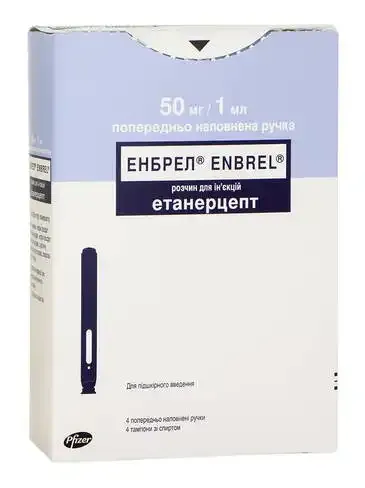
Table of Contents
INSTRUCTIONS FOR MEDICAL USE OF THE MEDICINAL PRODUCT Enbrel® (Enbrel®)
Composition:
Active substance: etanercept;
1 ml of solution contains 50 mg of etanercept;
1 pre-filled syringe contains 25 mg or 50 mg of etanercept; 1 pre-filled pen contains 50 mg of etanercept;
Excipients: sucrose, water for injections, disodium phosphate dihydrate, sodium dihydrogen phosphate dihydrate, L-arginine hydrochloride, sodium chloride.
Pharmaceutical form. Solution for injection.
Main physicochemical properties: liquid, colorless to yellow or pale brown, clear or opalescent; may contain a small amount of translucent or white amorphous particles.
Pharmacotherapeutic group. Immunosuppressants. Tumor necrosis factor-alpha inhibitors. Etanercept. ATC code L04A B01.
Pharmacological properties.
Pharmacodynamics.
Etanercept is a chimeric fusion protein consisting of human tumor necrosis factor receptor (TNF receptor) and p75Fc, produced by recombinant DNA technology using mammalian cells (Chinese hamster ovary cells) as the expression system.
Tumor necrosis factor (TNF) is a proinflammatory cytokine that plays a central role in the inflammatory process of rheumatoid arthritis. Elevated levels of TNF are also found in the synovial membrane and psoriatic plaques of patients with psoriatic arthritis, as well as in serum and synovial tissue of patients with ankylosing spondylitis. Infiltration of psoriatic plaques by inflammatory cells, including T-cells, leads to increased TNF levels at sites of psoriatic lesions compared to non-affected skin areas. Etanercept acts as a competitive inhibitor of TNF binding to its cell surface receptors, thereby suppressing the biological activity of TNF. TNF and lymphotoxin are proinflammatory cytokines that bind to two distinct cell surface TNF receptors (TNFR): 55 kDa (p55) and 75 kDa (p75). Both TNFRs exist in the body in membrane-bound and soluble forms. Soluble TNFRs regulate the biological activity of TNF.
TNF and lymphotoxin primarily exist as homotrimers, and their biological activity depends on cross-linking of TNF receptors located on the cell surface. Dimeric soluble receptors, such as etanercept, have higher affinity for TNF than monomeric receptors, making them significantly more potent competitive inhibitors of TNF binding to its cellular receptors. Additionally, the use of the immunoglobulin Fc fragment as a linking component in the dimeric receptor structure prolongs the serum half-life of the drug.
Mechanism of action
A significant portion of joint pathology in rheumatoid arthritis and ankylosing spondylitis, as well as skin pathology in plaque psoriasis, is mediated by proinflammatory molecules organized in cascades regulated by TNF. The mechanism of action of etanercept is believed to involve its competitive inhibition of TNF binding to TNFRs on the cell surface, thereby preventing TNF-mediated cellular responses and rendering TNF biologically inactive.
Etanercept is also capable of modulating biological responses controlled by downstream signaling molecules (e.g., cytokines, adhesion molecules, or proteases) that are stimulated or regulated by TNF.
Pharmacokinetics.
Absorption
Etanercept is slowly absorbed from the site of subcutaneous injection, reaching peak concentration approximately 48 hours after a single dose. Absolute bioavailability is 76%. When administered twice weekly, steady-state concentrations are expected to be approximately twice those observed after single doses. After a single subcutaneous dose of 25 mg etanercept, the mean peak plasma concentration in healthy volunteers was 1.65 ± 0.66 μg/mL, and the area under the concentration–time curve (AUC) was 235 ± 96.6 μg•h/mL.
Distribution
The concentration-time profile of etanercept is described by a biexponential curve. The central volume of distribution is 7.6 L, while the volume of distribution at steady state is 10.41 L.
Elimination
Etanercept is slowly eliminated from the body. The elimination half-life is prolonged, approximately 70 hours. In patients with rheumatoid arthritis, clearance is approximately 0.066 L/h, slightly lower than in healthy volunteers (0.11 L/h). The pharmacokinetics of etanercept in patients with rheumatoid arthritis, ankylosing spondylitis, and plaque psoriasis are similar.
There are no apparent differences in etanercept pharmacokinetics between men and women.
Linearity
Dose proportionality has not been formally studied, but there is no visible evidence of clearance saturation at any dosage level.
Special populations
Patients with renal impairment
Although excretion of radioactivity after administration of radiolabeled etanercept occurs via urine in both patients and healthy volunteers, increased plasma concentrations of etanercept were not observed in patients with acute renal failure. Renal impairment does not require dose adjustment.
Patients with hepatic impairment
Increased etanercept concentrations were not observed in patients with acute hepatic failure. Hepatic impairment does not require dose adjustment.
Elderly patients
Calculated clearance and volume of distribution values in patients aged 65 to 87 years were similar to those in patients under 65 years of age.
Children with juvenile idiopathic arthritis
Serum concentration profiles of etanercept in children with polyarticular juvenile idiopathic arthritis are similar to those in adult patients with rheumatoid arthritis. In the youngest children (4 years old), clearance was reduced (when normalized for body weight, clearance was increased) compared to older children (12 years old) and adults. Dose modeling suggests that etanercept plasma concentrations in older children (10–17 years) and adult patients are approximately similar, while concentrations in younger children are significantly lower.
Children with psoriasis
Children with plaque psoriasis (aged 4 to 17 years) received etanercept at a dose of 0.8 mg/kg body weight (maximum dose 50 mg weekly) once weekly for up to 48 weeks. Mean steady-state plasma concentrations of etanercept ranged from 1.6 to 2.1 μg/mL at weeks 12, 24, and 48. These mean concentrations in children with plaque psoriasis were similar to those observed in children with juvenile idiopathic arthritis receiving etanercept at 0.4 mg/kg twice weekly (maximum dose 50 mg weekly). These values were comparable to those in adult patients with plaque psoriasis receiving etanercept at 25 mg twice weekly.
Clinical characteristics.
Indications.
Rheumatoid arthritis
Enbrel® in combination with methotrexate is indicated for the treatment of moderate to severe active rheumatoid arthritis in adults when response to disease-modifying antirheumatic drugs, including methotrexate (in the absence of contraindications), is inadequate.
Enbrel® may be administered as monotherapy in cases of methotrexate intolerance or when prolonged treatment with methotrexate is inappropriate.
Enbrel® is also indicated for the treatment of severe active and progressive rheumatoid arthritis in adult patients who have not previously received methotrexate therapy.
Juvenile idiopathic arthritis
Treatment of polyarthritis (rheumatoid factor positive or negative) and extended oligoarthritis in children and adolescents from 2 years of age who have known intolerance or inadequate response to methotrexate therapy.
Treatment of psoriatic arthritis in children from 12 years of age with known intolerance or inadequate response to methotrexate therapy.
Treatment of enthesitis-related arthritis in children from 12 years of age with known intolerance or inadequate response to conventional therapy.
Psoriatic arthritis
Treatment of active and progressive psoriatic arthritis in adults with inadequate response to therapy with disease-modifying antirheumatic drugs.
Axial spondyloarthritis
Ankylosing spondylitis
Treatment of adults with severe active ankylosing spondylitis when conventional therapy has been ineffective.
Non-radiographic axial spondyloarthritis
Treatment of adult patients with severe non-radiographic axial spondyloarthritis with objective signs of inflammation, as indicated by elevated C-reactive protein levels and/or MRI findings, who have had an inadequate response to treatment with nonsteroidal anti-inflammatory drugs (NSAIDs).
Plaque psoriasis
Treatment of adult patients with moderate to severe plaque psoriasis who have contraindications to or intolerance of other systemic therapies, including cyclosporine, methotrexate, psoralen plus ultraviolet A radiation (PUVA therapy), or when such treatments have been ineffective.
Plaque psoriasis in children
Treatment of chronic severe plaque psoriasis in children from 6 years of age in whom adequate disease control has not been achieved with other systemic therapies or phototherapy, or in whom such treatments are not tolerated.
Contraindications.
Hypersensitivity to the active substance or to any of the excipients.
Sepsis or risk of developing sepsis.
Presence of active infectious processes in patients, including chronic or localized infections, at the time of initiation of treatment with Enbrel®.
Interaction with other medicinal products and other forms of interaction.
Concomitant use of anakinra
In adult patients, concomitant treatment with Enbrel® and anakinra has been associated with an increased incidence of serious infections compared to patients receiving either Enbrel® or anakinra alone (based on historical data).
Additionally, in a double-blind, placebo-controlled study involving adult patients receiving methotrexate, concomitant use of Enbrel® and anakinra resulted in an increased incidence of serious infections (7%) and neutropenia compared to patients receiving Enbrel® alone (see sections "Special precautions" and "Adverse reactions").
The combination of Enbrel® and anakinra has not demonstrated increased clinical benefit and is therefore not recommended for use.
Concomitant use of abatacept
In clinical studies, concomitant use of abatacept and Enbrel® resulted in an increased incidence of serious adverse reactions. This combination has not demonstrated increased clinical benefit and is therefore not recommended for use.
Concomitant use of sulfasalazine
In a clinical study involving adult patients receiving standard doses of sulfasalazine and Enbrel®, a statistically significant decrease in mean white blood cell count was observed in patients receiving the combination compared to those receiving Enbrel® or sulfasalazine alone. The clinical significance of this combination is unknown. Physicians should exercise caution when prescribing this combination.
Absence of interaction
No interactions were observed in clinical studies with concomitant administration of Enbrel® and glucocorticoids, salicylates (except sulfasalazine), nonsteroidal anti-inflammatory drugs, analgesics, or methotrexate. Vaccination recommendations are provided in the section "Special precautions."
No clinically significant drug-drug pharmacokinetic interactions were observed in studies with methotrexate, digoxin, or warfarin.
Special precautions for use.
To facilitate the tracking of biological medicinal products, the trade name and batch number of the administered product should be clearly recorded (or indicated) in the patient's medical record.
Enbrel® has been shown to slow the progression of joint damage (as assessed by radiographic data) and improve joint function, both as monotherapy and in combination with methotrexate.
Enbrel® has demonstrated the ability to improve physical function in patients with psoriatic arthritis and to slow the progression of peripheral joint damage (as assessed by radiographic data) in patients with polyarticular symmetric subtypes of the disease.
Infections
The presence of infection should be evaluated in patients prior to initiation of Enbrel® therapy, during treatment, and after completion of therapy, considering that the mean elimination half-life of etanercept is approximately 70 hours (range 7–300 hours).
Serious infections, sepsis, tuberculosis, and opportunistic infections, including invasive fungal infections, listeriosis, and legionellosis (see section "Adverse reactions"), caused by bacteria, mycobacteria, fungi, viruses, and parasites (including protozoa), have been reported during treatment with Enbrel®. In some cases, the specific type of fungal or other opportunistic infection was not identified, leading to delays in initiating appropriate treatment and, in some instances, to death. When evaluating patients for infection, the risk of certain opportunistic infections (e.g., endemic mycoses) should be considered.
Patients who develop new infections while receiving Enbrel® should be closely monitored. If a serious infection occurs, Enbrel® should be discontinued. The efficacy and safety of Enbrel® in patients with chronic infections have not been evaluated. Enbrel® should be used with caution in patients with a history of recurrent or chronic infections or in patients whose underlying conditions (e.g., complicated or poorly controlled diabetes) may predispose them to infection.
Tuberculosis
Cases of active tuberculosis, including miliary tuberculosis and extrapulmonary tuberculosis, have been reported in patients receiving Enbrel®.
All patients should be screened for both active and latent (inactive) tuberculosis before initiating Enbrel® therapy. This evaluation should include a detailed medical history, including prior history of tuberculosis or possible prior exposure to tuberculosis, and history of previous or current immunosuppressive therapy. All patients should undergo appropriate screening tests, such as tuberculin skin testing and chest X-ray (local guidelines may be followed). Documentation of these tests in the patient's medical record is recommended. Physicians should be aware of the possibility of false-negative tuberculin skin test results, particularly in severely ill patients or those with impaired immune function.
Enbrel® should not be administered if active tuberculosis is diagnosed. If latent (inactive) tuberculosis is diagnosed, anti-tuberculosis therapy should be initiated prior to starting Enbrel®, in accordance with local guidelines. In such cases, the benefit-risk ratio of treatment should be carefully evaluated.
All patients should be informed of the need to seek medical advice if signs or symptoms suggestive of tuberculosis (such as persistent cough, fatigue/weight loss, or low-grade fever) develop during or after treatment with Enbrel®.
Hepatitis B reactivation
Cases of hepatitis B reactivation have been reported in patients previously infected with hepatitis B virus who were receiving concomitant treatment with TNF antagonists, including Enbrel®. Reactivation of hepatitis B has also been reported in patients who were positive for anti-HBc antibodies but negative for HBsAg. Before initiating Enbrel® therapy, patients should be screened for hepatitis B virus infection. Patients with positive test results should be referred to a physician experienced in managing hepatitis B. Enbrel® should be used with caution in patients previously infected with hepatitis B virus. Close monitoring for signs and symptoms of acute hepatitis B infection is required throughout treatment and for several weeks after discontinuation. Adequate data on the treatment of hepatitis B-infected patients with a combination of antiviral agents and TNF antagonists are lacking. If hepatitis B infection occurs, Enbrel® should be discontinued and effective antiviral therapy with appropriate supportive treatment should be initiated.
Exacerbation of hepatitis C
Exacerbations of hepatitis C have been reported in patients receiving Enbrel®. Therefore, Enbrel® should be used with caution in patients with a history of hepatitis C.
Concomitant use of anakinra
Concomitant use of Enbrel® and anakinra has been associated with an increased risk of serious infections and neutropenia compared to Enbrel® monotherapy. This combination has not demonstrated additional clinical benefit and is therefore not recommended (see sections "Adverse reactions" and "Interaction with other medicinal products and other forms of interaction").
Concomitant use of abatacept
In clinical studies, concomitant use of Enbrel® and abatacept resulted in an increased frequency of serious adverse reactions. This combination did not demonstrate increased clinical benefit and is therefore not recommended (see section "Interaction with other medicinal products and other forms of interaction").
Allergic reactions
The needle cap of the pre-filled syringe/pen contains latex (dry natural rubber), which may cause hypersensitivity reactions in individuals with known or possible latex sensitivity.
Administration of Enbrel® has frequently been associated with allergic reactions.
Allergic reactions included angioedema and urticaria; cases of severe reactions have occurred. If any severe allergic or anaphylactic reactions occur, treatment with Enbrel® should be immediately discontinued and appropriate therapy initiated.
Immunosuppression
It is possible that TNF antagonists, including Enbrel®, may affect the body's defense mechanisms against infections and malignancies, since TNF is involved in inflammatory processes and modulates cellular immune responses. In a study involving 49 adult patients with rheumatoid arthritis receiving Enbrel®, no cases of suppression of delayed-type hypersensitivity reactions, reduction in immunoglobulin levels, or changes in effector cell populations were observed.
Two patients with juvenile idiopathic arthritis developed varicella and signs and symptoms of aseptic meningitis, which resolved without complications. Patients who have been in contact with varicella should temporarily discontinue Enbrel® therapy and receive prophylactic treatment with Varicella Zoster virus immunoglobulin.
The efficacy and safety of Enbrel® in patients with suppressed immunity or chronic infections have not been evaluated.
Malignant and lymphoproliferative disorders
Solid and hematologic malignancies (excluding skin cancer)
In the post-marketing period (see section "Adverse reactions"), various malignancies have been reported (including breast and lung carcinoma, as well as lymphoma).
During controlled clinical trials of TNF antagonists, more cases of lymphoma were observed in patients receiving TNF inhibitors compared to the control group. However, these cases were isolated, and the observation period for placebo-treated patients was shorter than for those receiving TNF inhibitors. In the post-marketing period, cases of leukemia have been reported in patients receiving TNF antagonist therapy. Patients with long-standing, highly active rheumatoid arthritis have an increased baseline risk of developing lymphoma or leukemia, which complicates risk assessment.
Given current information, a possible risk of lymphoma, leukemia, or other hematologic or solid malignancies in patients receiving TNF antagonists cannot be excluded. Caution should be exercised when considering TNF antagonist therapy in patients with a history of malignancy or continuing therapy in patients who develop malignancies.
In the post-marketing period, reports of malignancies, sometimes fatal, have been received in children, adolescents, and young adult patients (up to 22 years of age) who received TNF antagonist therapy (treatment initiated before age 18), including Enbrel®. In approximately half of these cases, lymphoma was reported. Other reported cases involved a variety of different malignancies and included isolated cases of malignancies typically associated with immunosuppression. The risk of malignancy development in children and adolescents receiving TNF antagonist therapy cannot be excluded.
Skin cancer
Cases of melanoma and non-melanoma skin cancer have been reported in patients receiving TNF antagonist therapy, including Enbrel®. In the post-marketing period, Merkel cell carcinoma has been reported in patients treated with Enbrel® (very rare). Periodic skin examinations are recommended for all patients, particularly those with risk factors for skin cancer.
Pooled results from controlled clinical trials showed a higher incidence of non-melanoma skin cancer in patients receiving Enbrel®, especially in patients with psoriasis, compared to the control group.
Vaccinations
Live vaccines should not be administered concurrently with Enbrel®. There are no data on secondary transmission of infection from live vaccines to patients receiving Enbrel®. In a double-blind, placebo-controlled, randomized clinical trial involving adult patients with psoriatic arthritis, 184 patients also received pneumococcal polyvalent polysaccharide vaccine at week 4 of the study. Most patients receiving Enbrel® were able to mount an effective humoral immune response to the pneumococcal polysaccharide vaccine, although titers were generally somewhat lower, and only in a few patients were antibody titers twice as high as those observed in patients not receiving Enbrel®. The clinical significance of this finding is unknown.
Formation of autoantibodies
Treatment with Enbrel® may lead to the formation of autoantibodies (see section "Adverse reactions").
Hematological reactions
Cases of pancytopenia (rare) and aplastic anemia (very rare), including fatal cases, have been reported in patients receiving Enbrel®. Enbrel® should be used with caution in patients with a history of hematological disorders (blood dyscrasias). All patients and caregivers should be informed of the need to seek immediate medical attention if signs and symptoms suggestive of blood disorders or infections (e.g., persistent fever, sore throat, bruising, bleeding, pallor) occur during treatment with Enbrel®. Such patients should be promptly evaluated, including a complete blood count; if a hematological disorder is confirmed, treatment should be discontinued.
Neurological disorders
Isolated cases of central nervous system demyelinating disorders have been reported in patients receiving Enbrel® (see section "Adverse reactions"). Peripheral demyelinating polyneuropathies (including Guillain-Barré syndrome, chronic inflammatory demyelinating polyneuropathy, demyelinating polyneuropathy, and multifocal motor neuropathy) have also been reported rarely. Although clinical trials of Enbrel® in patients with multiple sclerosis have not been conducted, clinical trials of other TNF inhibitors have shown increased disease activity (multiple sclerosis). Before prescribing Enbrel® to patients with previously diagnosed or recently diagnosed demyelinating disorders, or to patients at increased risk of such disorders, a careful benefit-risk assessment, including neurological status, is recommended.
Combination therapy
In a controlled clinical trial of Enbrel® in combination with methotrexate for two years in patients with rheumatoid arthritis, no unexpected safety findings were observed. The safety profile of Enbrel® (when used in combination with methotrexate) was similar to those observed in studies of each drug individually. Long-term safety studies of this combination are ongoing. The safety of long-term use of Enbrel® in combination with other disease-modifying antirheumatic drugs has not been established.
The use of etanercept in combination with other systemic treatments for psoriasis or phototherapy has not been studied.
Renal and hepatic impairment
Pharmacokinetic data indicate that dose adjustment is not necessary for patients with renal or hepatic impairment; however, clinical experience with the drug in such patients is limited.
Congestive heart failure
Enbrel® should be used with caution in patients with congestive heart failure (CHF). In the post-marketing period, reports of worsening CHF in patients receiving Enbrel® have been received, although precipitating factors were not always identified. Additionally, isolated cases (< 0.1%) of newly diagnosed CHF have been reported, including CHF in patients without known underlying cardiovascular disease. Some of these patients were under 50 years of age. Two large clinical trials evaluating the use of Enbrel® for the treatment of CHF were prematurely terminated due to lack of efficacy. Data from one of these trials, although not conclusive, suggest a possible worsening of CHF in patients treated with Enbrel®.
Alcoholic hepatitis
In a phase II randomized, placebo-controlled study involving 48 hospitalized patients with moderate to severe alcoholic hepatitis who received Enbrel® or placebo, Enbrel® was ineffective, and mortality at 6 months was significantly higher in patients receiving Enbrel®. Therefore, Enbrel® should not be used in patients as a treatment for alcoholic hepatitis. Enbrel® should be used with caution in patients with moderate to severe alcoholic hepatitis.
Granulomatosis with polyangiitis (Wegener's granulomatosis)
A placebo-controlled study in which 89 adult patients received Enbrel® in addition to standard therapy (including cyclophosphamide or methotrexate and glucocorticoids) for a median of 25 months did not demonstrate efficacy of Enbrel® in the treatment of granulomatosis with polyangiitis. The incidence of various types of non-skin malignancies was significantly higher in patients receiving Enbrel® compared to the control group. Therefore, Enbrel® is not recommended for the treatment of granulomatosis with polyangiitis.
Hypoglycemia in patients receiving antidiabetic therapy
Cases of hypoglycemia have been reported after initiation of Enbrel® in patients receiving antidiabetic medications, necessitating dose reduction of antidiabetic agents in some patients.
Special populations
Elderly patients
In phase III studies involving patients with rheumatoid arthritis, psoriatic arthritis, and ankylosing spondylitis, no overall differences in the incidence of adverse reactions, serious adverse reactions, and serious infections were observed between patients aged 65 years and older receiving Enbrel® and younger patients. However, caution should be exercised when treating elderly patients; particular attention should be paid to monitoring for infections.
Children
It is recommended that, whenever possible, pediatric patients receive all vaccinations according to the current national vaccination schedule prior to starting Enbrel® therapy (see section "Vaccinations" above).
Sodium content
This medicinal product contains less than 1 mmol sodium (23 mg) per dose. Patients on a low-sodium diet may be informed that this medicinal product is essentially "sodium-free."
Pregnancy or breastfeeding.
Women of reproductive potential
Women of reproductive potential should use appropriate contraception to avoid pregnancy during treatment with Enbrel® and for 3 weeks after discontinuation of therapy.
Pregnancy
Developmental toxicity studies in animals did not reveal any evidence of harmful effects of etanercept on the fetus or newborn animals. The impact of etanercept on pregnancy outcomes was studied in two observational cohort studies. In one observational study comparing pregnant patients who received etanercept during the first trimester (n = 370) with pregnant patients who did not receive etanercept or other TNF antagonists (n = 164), an increased rate of major congenital malformations was observed (adjusted odds ratio 2.4, 95% CI: 1.0–5.5). The types of major congenital malformations were consistent with those most commonly observed in the general population, and no specific pattern of anomalies was identified. No changes in the rates of spontaneous abortions, stillbirths, or minor malformations were observed. In another international observational registry study comparing the risks of adverse pregnancy outcomes in women who received etanercept during the first 90 days of pregnancy (n = 425) and those who received non-biological agents (n = 3497), no increased risk of major congenital malformations was observed (overall odds ratio (OR) 1.22; 95% CI: 0.79–1.90; after adjustment for country, maternal disease, parity, maternal age, and smoking in early pregnancy, OR = 0.96; 95% CI: 0.58–1.60). In this study, women who received etanercept during pregnancy also did not show an increased risk of minor congenital defects, preterm birth, stillbirth, or infections during the first year of life of their infants. Enbrel® should be used during pregnancy only if clearly needed.
Etanercept crosses the placenta and is detectable in the serum of infants whose mothers received Enbrel® during pregnancy. The clinical significance of this observation is unknown; however, infants may have an increased risk of infection. In general, live vaccines should not be administered to infants within 16 weeks after the mother's last dose of Enbrel®.
Breastfeeding
After subcutaneous administration to animals during lactation, etanercept was excreted in milk and detected in the plasma of suckling rats. Limited published information indicates that etanercept was detected in human breast milk in low amounts. The decision to use etanercept during breastfeeding should consider the benefits of breastfeeding for the child and the benefits of therapy for the mother.
Although systemic exposure in breastfed infants is expected to be low, as etanercept is largely degraded in the gastrointestinal tract, limited data are available on the systemic effects in breastfed infants. Therefore, the possibility of administering live vaccines (e.g., BCG) to infants whose mothers are receiving etanercept may be considered 16 weeks after weaning (or earlier if etanercept levels in the infant's serum are undetectable).
Fertility
Peri- and postnatal toxicity data for etanercept, as well as data on the effects of etanercept on fertility and general reproductive performance, are lacking.
Ability to affect reaction speed when driving or operating machinery.
Enbrel® has no effect or a negligible effect on the ability to drive or use machinery.
Method of Administration and Dosage
Treatment with Enbrel® should be initiated and supervised by a physician experienced in the diagnosis and treatment of rheumatoid arthritis, juvenile idiopathic arthritis, psoriatic arthritis, ankylosing spondylitis, non-radiographic axial spondyloarthritis, plaque psoriasis, and pediatric plaque psoriasis.
Dosage
Rheumatoid Arthritis
The recommended dose is 25 mg of the drug twice weekly. Alternatively, a dose of 50 mg once weekly, which has demonstrated safety and efficacy, may be used.
Psoriatic Arthritis, Ankylosing Spondylitis, and Non-Radiographic Axial Spondyloarthritis
The recommended dose is 25 mg twice weekly or 50 mg once weekly.
For all the above indications, available data suggest that clinical response to treatment usually occurs within 12 weeks of initiating therapy. If no response is observed during this period, the continued appropriateness of such therapy should be carefully reassessed.
Plaque Psoriasis
The recommended dose is 25 mg twice weekly or 50 mg once weekly. Alternatively, Enbrel® may be administered at 50 mg twice weekly for up to 12 weeks. Thereafter, if necessary, treatment may continue with a dose of 25 mg twice weekly or 50 mg once weekly.
Treatment with Enbrel® should be continued until remission is achieved, for a maximum duration of 24 weeks. For some adult patients, treatment beyond 24 weeks may be appropriate (see section "Pharmacodynamics"). Therapy should be discontinued if no effect is observed within 12 weeks of starting treatment. If re-initiation of treatment is required, the recommendations regarding treatment duration mentioned above should be followed. The dose should be 25 mg twice weekly or 50 mg once weekly.
Special Populations
Patients with Renal or Hepatic Impairment
No dose adjustment is required.
Elderly Patients
No dose adjustment is required. The dosage and method of administration are the same as for patients aged 18–64 years.
Children
The dose of Enbrel® for children is calculated based on body weight. For patients with body weight below 62.5 kg, an exact dose (calculated in mg/kg) of Enbrel® in the form of lyophilisate with solvent should be administered (dosing information for specific conditions is provided below). For children with body weight of 62.5 kg or more, a fixed dose of Enbrel® in the form of prefilled syringes or injection pens may be used.
Juvenile Idiopathic Arthritis
The recommended dose is 0.4 mg/kg body weight (maximum single dose – 25 mg) twice weekly as a subcutaneous injection with an interval of 3–4 days between doses, or 0.8 mg/kg (maximum dose – 50 mg) once weekly. If no therapeutic effect is observed after 4 months of treatment, discontinuation of the drug should be considered.
Formal clinical studies of Enbrel® in children aged 2 to 3 years have not been conducted. However, limited safety data from patient registries suggest that the safety profile in children aged 2 to 3 years is similar to that in adults and children aged 4 years and older when administered subcutaneously once weekly at a dose of 0.8 mg/kg.
Enbrel® is generally not recommended for use in children under 2 years of age with juvenile idiopathic arthritis.
Pediatric Plaque Psoriasis (children aged 6 years and older)
The recommended dose is 0.8 mg/kg (maximum single dose – 50 mg) once weekly for a period not exceeding 24 weeks. Treatment should be discontinued if no effect is observed after 12 weeks.
If re-initiation of treatment is required, the recommendations regarding treatment duration mentioned above should be followed. The recommended dose is 0.8 mg/kg (maximum single dose – 50 mg) once weekly.
Enbrel® is generally not recommended for use in children under 6 years of age with plaque psoriasis.
Method of Administration
The drug is administered subcutaneously.
The patient card is available at the following link: https://www.pfizer.ua/node/2186
General Instructions for Using a Prefilled Syringe or Pen
Before administration, the drug should be warmed to room temperature (left at room temperature for approximately 15–30 minutes). Do not heat the drug by any other method. The cap should not be removed until the prefilled syringe (or pen) has warmed to room temperature.
The solution should be clear or slightly opalescent, colorless to yellow or pale brown, and may contain a small amount of semi-transparent or white amorphous protein particles. The drug must not be used if the solution changes color, becomes cloudy, or contains particles different from those described above. If you have concerns about the appearance of the drug, consult your physician.
The recommended injection site is the middle of the anterior thigh. Alternatively, the drug may be administered in the abdominal area, but not closer than 5 cm from the navel, or in the outer surface of the upper arm. Each injection should be administered at least 3 cm from the previous injection site. Do not inject into tender, damaged, or thickened skin. Areas with scars or stretch marks should be avoided. (It may be helpful to record previous injection sites.)
In patients with psoriasis, avoid injecting the drug into raised, thickened, red, or scaly skin areas.
The prefilled syringe is intended for single use only. The syringe and needle must never be reused. Never recap the needle.
Instructions for Using the Prefilled Pen for Administration of Enbrel®
Do not attempt to administer the drug if you do not fully understand the instructions for using the prefilled pen.
Prefilled Pen
Before Injection
| Transparent control window |
| Shelf life |
| Green activation button |
| White needle cap |
After injection
| Open end – protective cap |
| Filled control window |
Fig. 1
Step 1: Preparing for injection of Enbrel® medication.
- Place on a clean, flat, and well-lit surface the items needed for the injection:
- one pre-filled pen and one alcohol swab;
- sharps container (not included in the package);
- clean cotton ball or gauze pad (not included in the package).
- Do not shake the pen.
- Do not remove the white needle cap until instructed.
- For a more comfortable injection, allow the pre-filled pen to reach room temperature for approximately 15–30 minutes, without removing the white needle cap.
- Do not heat the medication in any other way.
Step 2: Check expiration date and dosage.
- Check the expiration date (month/year) on the label of the pre-filled pen.
- Ensure the correct dosage of the medication is indicated on the label.
- If the medication has expired or the dosage is incorrect, do not use the pre-filled pen and consult your doctor.
Step 3: Check the solution.
- Examine the solution inside the pre-filled pen through the transparent viewing window. The solution should be clear or slightly opalescent, colorless to yellow or pale brown, and may contain a small amount of semi-transparent or white amorphous protein particles. This appearance is normal for Enbrel.
- Do not use the medication if the solution has changed color, become cloudy, or contains particles different from those described above. If you have concerns about the appearance of the medication, contact your doctor.
- Note: An air bubble may be visible in the viewing window; this is normal.
Fig. 2
Step 4: Selecting and preparing the injection site.
Instructions for selecting injection sites are provided above (see "General recommendations for using a pre-filled syringe or pen").
-
Clean the injection site with soap and water, or, if preferred, with an alcohol swab.
-
Allow it to dry completely. Do not touch the injection site or blow on it.
Step 5: Removing the needle cap.
- Remove the white needle cap by pulling it straight off (see Fig. 3). Do not bend the cap when removing it.
- Do not recap the needle.
- Do not use the pen if it has been dropped after removing the cap.
- After removing the needle cap, a purple protective needle shield will be visible at the tip of the pen, slightly protruding from the end. Do not press or touch the protective needle shield.
Note: A drop of liquid may appear at the needle tip; this is normal.
Fig. 3
Step 6: Firmly press the pen against the skin.
- Firmly press the open end of the pen against the skin at a 90° angle to the injection site, so that the purple protective needle shield fully retracts into the pen (see Fig. 4).
Note: You will only be able to press the green injection button once the protective needle shield has fully retracted into the pen.
Pinching or stretching the skin before injection may make the injection site firmer, which can help facilitate pressing the injection button.
Fig. 4
Step 7: Starting the injection.
| Press the button |
| Continue to hold |
| 1st click start |
| 2 injections 10 sec |
Fig. 5
- Press the green button fully until you hear a click (see Fig. 5). The click indicates the start of the injection.
- Continue holding the device firmly against the skin until you hear a second click or for 10 seconds after the first click, whichever occurs first.
Note. If the injection does not start as described above, press the device more firmly against the skin and then press the green button again.
Step 8: Removing the device from the skin.
- Remove the device from the skin by lifting it upwards (see Fig. 6).
- The purple protective needle cover will automatically cover the needle.
Fig. 6
Step 9: Checking the viewing window.
- Check the viewing window of the device, which should be completely purple (see Fig. 7).
- If the viewing window is not completely purple, the full dose may not have been delivered. Do not attempt to reuse this device or administer another dose without consulting your doctor. If a drop of blood appears at the injection site, apply a cotton ball or gauze pad to the area for 10 seconds. Do not rub the skin at the injection site.
Note: The button may remain in the depressed position; this is normal.
Fig. 7
Step 10: Disposal of the used device.
- The used device must be disposed of properly. Do not attempt to re-cap the needle.
- Do not press on the tip of the protective needle cover. If you have any questions, consult a healthcare professional experienced in the use of this medication.
Children.
The medication is indicated for the treatment of juvenile idiopathic arthritis in children aged 2 years and older, and for the treatment of plaque psoriasis in children aged 6 years and older.
The safety and efficacy of Enbrel® in children under 2 years of age have not been established.
Data are lacking.
Overdose.
During clinical trials involving patients with rheumatoid arthritis, no toxic effects requiring dose limitation were reported. The highest dose evaluated was a loading dose of 32 mg/m² (intravenously) followed by 16 mg/m² (subcutaneously) twice weekly. One patient with rheumatoid arthritis accidentally self-administered 62 mg of Enbrel® subcutaneously twice weekly for 3 weeks without experiencing any adverse effects. No specific antidote for Enbrel® is known.
Adverse Reactions
The most commonly reported adverse reactions were injection site reactions (such as bleeding at the puncture site, redness, itching, swelling, pain), infections (such as upper respiratory tract infections, bronchitis, skin infections, urinary tract infections), headache, allergic reactions, pruritus, pyrexia, and antibody formation.
Serious adverse reactions have also been reported. Tumor necrosis factor (TNF) antagonists, such as Enbrel®, affect the immune system and their use may influence immune defense against infections and cancer. Serious infections occurred in less than 1 patient in 100 during Enbrel® treatment. Reports included cases of sepsis, fatal infections, and life-threatening infections. Malignancies of various types, including breast, lung, skin, and lymph node cancers (lymphoma), have been reported during Enbrel® treatment.
Severe hematological, neurological, and autoimmune reactions have been reported, including pancytopenia (rarely) and aplastic anemia (very rarely). Cases of central and peripheral demyelination have been reported during Enbrel® treatment (rarely and very rarely, respectively). There have been reports of lupus, lupus-related disorders, and vasculitis.
The list of adverse reactions below is based on data from clinical trials and post-marketing surveillance.
Within each organ and system class, adverse reactions are listed in order of frequency (number of patients in whom the reaction is expected to occur) according to the following categories: very common (≥ 1/10); common (≥ 1/100 to < 1/10); uncommon (≥ 1/1,000 to < 1/100); rare (≥ 1/10,000 to < 1/1,000); very rare (< 1/10,000); frequency not known (cannot be estimated from available data).
Infections and infestations
Very common: infections (including upper respiratory tract infections, bronchitis, cystitis, skin infections)*;
Uncommon: serious infections (including pneumonia, cellulitis, bacterial arthritis, sepsis, parasitic infections)*;
Rare: tuberculosis, opportunistic infections (including invasive fungal, protozoal, bacterial, atypical mycobacterial, viral infections, and infections caused by Legionella)*;
Frequency not known: reactivation of hepatitis B, Listeria.
Benign, malignant and unspecified neoplasms (including cysts and polyps)
Uncommon: non-melanoma skin cancer* (see section "Special warnings and precautions for use");
Rare: malignant melanoma (see section "Special warnings and precautions for use"), lymphoma, leukemia;
Frequency not known: Merkel cell carcinoma (see section "Special warnings and precautions for use"), Kaposi's sarcoma.
Blood and lymphatic system disorders
Uncommon: thrombocytopenia, anemia, leukopenia, neutropenia;
Rare: pancytopenia*;
Very rare: aplastic anemia*;
Frequency not known: hemophagocytic syndrome (including macrophage activation syndrome)*.
Immune system disorders
Common: allergic reactions (see "Skin and subcutaneous tissue disorders"), formation of autoantibodies*;
Uncommon: vasculitis (including antineutrophil cytoplasmic antibody-positive vasculitis);
Rare: severe allergic/anaphylactic reactions (including angioedema, bronchospasm), sarcoidosis;
Frequency not known: worsening of dermatomyositis symptoms.
Nervous system disorders
Very common: headache;
Rare: central nervous system demyelinating events similar to those seen in multiple sclerosis or localized demyelinating conditions such as optic neuritis and transverse myelitis (see section "Special warnings and precautions for use"), cases of peripheral demyelination including Guillain-Barré syndrome, chronic inflammatory demyelinating polyneuropathy, demyelinating polyneuropathy, and multifocal motor neuropathy (see section "Special warnings and precautions for use"), seizures.
Eye disorders
Uncommon: uveitis, scleritis.
Cardiac disorders
Uncommon: worsening of congestive heart failure (see section "Special warnings and precautions for use");
Rare: newly diagnosed congestive heart failure (see section "Special warnings and precautions for use").
Respiratory, thoracic and mediastinal disorders
Rare: interstitial lung disease (including pneumonitis and pulmonary fibrosis)*.
Gastrointestinal disorders
Uncommon: inflammatory bowel disease.
Hepatobiliary disorders
Uncommon: elevated liver enzymes*;
Rare: autoimmune hepatitis*.
Skin and subcutaneous tissue disorders
Common: pruritus, rash;
Uncommon: angioedema, psoriasis (including new onset or worsening of disease and pustular psoriasis, predominantly on palms and soles), urticaria, psoriasiform rash;
Rare: Stevens-Johnson syndrome, cutaneous forms of vasculitis (including hypersensitivity vasculitis), erythema multiforme, lichenoid reactions;
Very rare: toxic epidermal necrolysis.
Musculoskeletal and connective tissue disorders
Rare: cutaneous lupus erythematosus, subacute cutaneous lupus erythematosus, lupus-like syndrome.
Renal and urinary disorders
Rare: glomerulonephritis.
General disorders and administration site conditions
Very common: injection site reactions (including bleeding, bruising, erythema, pruritus, pain, swelling)*;
Common: pyrexia.
*See description of individual adverse reactions below.
Description of selected adverse reactions
Malignancies and lymphoproliferative disorders
A total of 129 cases of new malignancies of various types were observed in 4,114 patients with rheumatoid arthritis treated with Enbrel® in clinical trials over a period of up to approximately 6 years, including 231 patients who received Enbrel® in combination with methotrexate in a 2-year active-controlled clinical study. The incidence and pattern of these events in the aforementioned clinical studies were similar to those expected in the study population. In approximately 2-year clinical trials involving 240 patients with psoriatic arthritis treated with Enbrel®, a total of 2 cases of malignancies were reported. In clinical studies of Enbrel® treatment lasting more than 2 years involving 351 patients with ankylosing spondylitis, 6 cases of malignancies were recorded. During double-blind and open-label studies of up to 2.5 years involving 2,711 patients with plaque psoriasis treated with Enbrel®, 30 cases of malignancies and 43 cases of non-melanoma skin cancer were reported.
Eighteen cases of lymphoma were reported during clinical studies of Enbrel® involving 7,416 patients with rheumatoid arthritis, psoriatic arthritis, ankylosing spondylitis, and psoriasis.
Cases of various malignancies (including breast, lung cancer, and lymphoma) have also been reported in the post-marketing period (see section "Special warnings and precautions for use").
Injection site reactions
Compared to placebo, patients with rheumatic diseases treated with Enbrel® experienced significantly higher rates of injection site reactions (36% vs. 9%). Injection site reactions typically occurred within the first month of treatment, with an average duration of approximately 3–5 days. Most cases did not require treatment; among those who did receive treatment, most used topical agents such as corticosteroids or oral antihistamines. Additionally, some patients experienced recurrent injection site reactions characterized by skin reactions at the site of the most recent injection along with reactions at sites of previous injections. These reactions were generally transient and did not recur during subsequent treatment.
In controlled studies involving patients with plaque psoriasis, injection site reactions occurred in approximately 13.6% of patients receiving Enbrel® compared to 3.4% of patients receiving placebo during the first 12 weeks of treatment.
Serious infections
In placebo-controlled studies, no increase in the incidence of serious infections (fatal, life-threatening, or requiring hospitalization or intravenous antibiotics) was observed. Serious infections occurred in 6.3% of patients with rheumatoid arthritis treated with Enbrel® over a period of up to 48 months. These included abscess (various sites), bacteremia, bronchitis, bursitis, cellulitis, cholecystitis, diarrhea, diverticulitis, suspected endocarditis, gastroenteritis, hepatitis B, herpes zoster, lower limb ulcers, oral infections, osteomyelitis, otitis, peritonitis, pneumonia, pyelonephritis, sepsis, septic arthritis, sinusitis, skin infections, skin ulceration, urinary tract infections, vasculitis, and wound infection. The rate of serious infections during the 2-year active-controlled study was similar across all treatment groups (patients receiving Enbrel® or methotrexate as monotherapy or Enbrel® in combination with methotrexate). However, the combination of Enbrel® with methotrexate may be associated with an increased risk of infections.
In placebo-controlled trials lasting up to 24 weeks, no difference in the incidence of infectious diseases was observed between patients with plaque psoriasis treated with Enbrel® or placebo. Serious infections observed in patients treated with Enbrel® included cellulitis, gastroenteritis, pneumonia, cholecystitis, osteomyelitis, gastritis, appendicitis, streptococcal fasciitis, myositis, septic shock, diverticulitis, and abscess. One patient reported a serious infection (pneumonia) during double-blind and open-label studies of this medicinal product in psoriatic arthritis.
Serious and fatal infections of bacterial, mycobacterial (including Mycobacterium tuberculosis), viral, and fungal etiology have been reported during Enbrel® treatment. Some occurred within several weeks of starting Enbrel® in patients who, in addition to rheumatoid arthritis, had underlying conditions (e.g., diabetes mellitus, congestive heart failure, active or chronic infections in history) (see section "Special warnings and precautions for use"). Enbrel® use may increase mortality in patients diagnosed with sepsis.
Opportunistic infections, including invasive fungal, parasitic (including protozoal), viral (including herpes zoster), bacterial (including infections caused by Listeria and Legionella), and atypical mycobacterial infections, have been reported with Enbrel® use. According to pooled data from clinical trials involving 15,402 participants receiving Enbrel®, the overall incidence of opportunistic infections was 0.09%. The exposure-adjusted rate was 0.06 cases per 100 patient-years. Post-marketing surveillance data indicated that approximately half of the global reports of opportunistic infections were due to invasive fungal infections, most commonly caused by Candida, Pneumocystis, Aspergillus, and Histoplasma. Invasive fungal infections were the cause of death in more than half of all fatal cases. Most fatal cases occurred in patients with Pneumocystis pneumonia, undiagnosed systemic fungal infection, or aspergillosis (see section "Special warnings and precautions for use").
Autoantibodies
Serum samples from adult patients were tested for autoantibodies at several control time points. Among patients with rheumatoid arthritis evaluated for antinuclear antibodies, the percentage of patients who became newly positive for antinuclear antibodies (≥ 1:40) was higher in the Enbrel® group (11%) compared to the placebo group (5%). The percentage of patients who became newly positive for antibodies to native double-stranded DNA was also higher in the Enbrel® group (radioimmunoassay: 15% of patients receiving Enbrel® vs. 4% receiving placebo; Crithidia luciliae test: 3% vs. 0%, respectively). Similarly, the number of patients treated with the drug who developed anticardiolipin antibodies was higher than in those receiving placebo. The impact of long-term Enbrel® treatment on the development of autoimmune diseases is unknown.
Isolated reports have been received of patients, including those with positive rheumatoid factor, who developed other autoantibodies along with lupus-like syndrome or skin rashes clinically and histologically consistent with subacute cutaneous lupus or discoid lupus.
Pancytopenia and aplastic anemia
Post-marketing reports have described cases of pancytopenia and aplastic anemia, some of which were fatal (see section "Special warnings and precautions for use").
Interstitial lung disease
In controlled clinical trials of etanercept for all indications, the incidence (relative frequency) of interstitial lung disease in patients receiving etanercept without concomitant methotrexate was 0.06% (frequency: rare). In controlled clinical trials allowing concomitant use of etanercept and methotrexate, the incidence (relative detection rate) of interstitial lung disease was 0.47% (frequency: uncommon). Post-marketing reports have described cases of interstitial lung disease (including pneumonitis and pulmonary fibrosis), some of which were fatal.
Concomitant use with anakinra
In studies where adult patients received Enbrel® and anakinra simultaneously, the incidence of serious infections was higher than with Enbrel® monotherapy. Neutropenia (absolute neutrophil count < 1,000/mm³) developed in 2% of patients (3 out of 139). One patient developed cellulitis requiring hospitalization during neutropenia (see sections "Special warnings and precautions for use" and "Interaction with other medicinal products and other forms of interaction").
Elevated liver enzymes
During double-blind periods of controlled clinical trials of etanercept for all indications, the frequency (proportion of cases) of adverse reactions in the form of elevated liver enzymes in patients receiving etanercept without concomitant methotrexate was 0.54% (uncommon). During double-blind periods of controlled clinical trials allowing concomitant use of etanercept and methotrexate, the frequency (proportion of cases) of adverse reactions in the form of elevated liver enzymes was 4.18% (common).
Autoimmune hepatitis
In controlled clinical trials of etanercept for all indications, the incidence (relative frequency) of autoimmune hepatitis in patients receiving etanercept without concomitant methotrexate was 0.02% (frequency: rare). In controlled clinical trials allowing concomitant use of etanercept and methotrexate, the incidence (relative detection rate) of autoimmune hepatitis was 0.24% (frequency: uncommon).
Pediatric population
Adverse effects in children with juvenile idiopathic arthritis
Overall, adverse effects in children with juvenile polyarticular idiopathic arthritis were similar in frequency and type to those observed in adult patients. Differences from adults and other specific data requiring attention are described below.
Infections observed in clinical trials involving patients with juvenile idiopathic arthritis aged 2 to 18 years were generally mild to moderate in severity and typical of those commonly seen in children treated on an outpatient basis. Serious adverse reactions included varicella with signs and symptoms of aseptic meningitis, which resolved without complications (see also section "Special warnings and precautions for use"), appendicitis, gastroenteritis, depression/personality disorder, skin ulceration, esophagitis/gastritis, streptococcal septic shock, type 1 diabetes mellitus, and soft tissue and postoperative wound infections.
In one study involving children with juvenile idiopathic arthritis aged 4 to 17 years, infection occurred in 62% of children (43 out of 69) during 3 months of Enbrel® treatment (first open-label phase of the study). The frequency and severity of infections in 58 patients who completed prior treatment during a 12-month open-label clinical study were similar. The types and distribution of adverse events in patients with juvenile idiopathic arthritis were similar to those observed in Enbrel® studies involving adult patients with rheumatoid arthritis. Most were mild. Some adverse reactions were observed more frequently in 69 patients with juvenile idiopathic arthritis treated with Enbrel® for 3 months compared to 349 adult patients with rheumatoid arthritis. These included headache (19% of patients, 1.7 events per patient per year), nausea (9%, 1.0 event per patient per year), abdominal pain (19%, 0.74 events per patient per year), and vomiting (13%, 0.74 events per patient per year).
Four cases of macrophage activation syndrome were reported during clinical trials in patients with juvenile idiopathic arthritis.
Adverse effects in children with plaque psoriasis
In a 48-week study involving 211 children with plaque psoriasis aged 4 to 17 years, the adverse effects observed were similar to those reported in previous studies involving adult patients with plaque psoriasis.
Reporting suspected adverse reactions
Reporting suspected adverse reactions after medicine authorization is important. It allows continued monitoring of the benefit-risk balance of the medicine. Healthcare professionals, pharmacists, patients, and their legal representatives should report all suspected adverse reactions and lack of efficacy via the automated pharmacovigilance information system at: https://aisf.dec.gov.ua.
Shelf life
30 months.
Storage conditions
Store at 2 to 8 °C. Do not freeze. Keep out of reach of children.
Within the shelf life, the medicine may be stored at temperatures not exceeding 25 °C for a single period of up to 4 weeks. After this period, the medicine must not be returned to refrigerated storage. The medicine should be disposed of if not used within 4 weeks after storage outside the refrigerator.
Keep the medicine in the original packaging to protect from light.
Incompatibilities
Enbrel® should not be mixed with other medicinal products, as compatibility studies of etanercept have not been conducted.
Packaging
4 pre-filled syringes of 0.5 mL (25 mg) or 1 mL (50 mg), or 4 pre-filled pens of 1 mL (50 mg), 4 alcohol swabs in a plastic container; plastic container in a cardboard box.
Prescription status
Prescription only.
Manufacturer
Pfizer Manufacturing Belgium NV.
Manufacturer's address
Reyksweg 12, Puurs-Sint-Amands, 2870, Belgium.