Jazz
Ukraine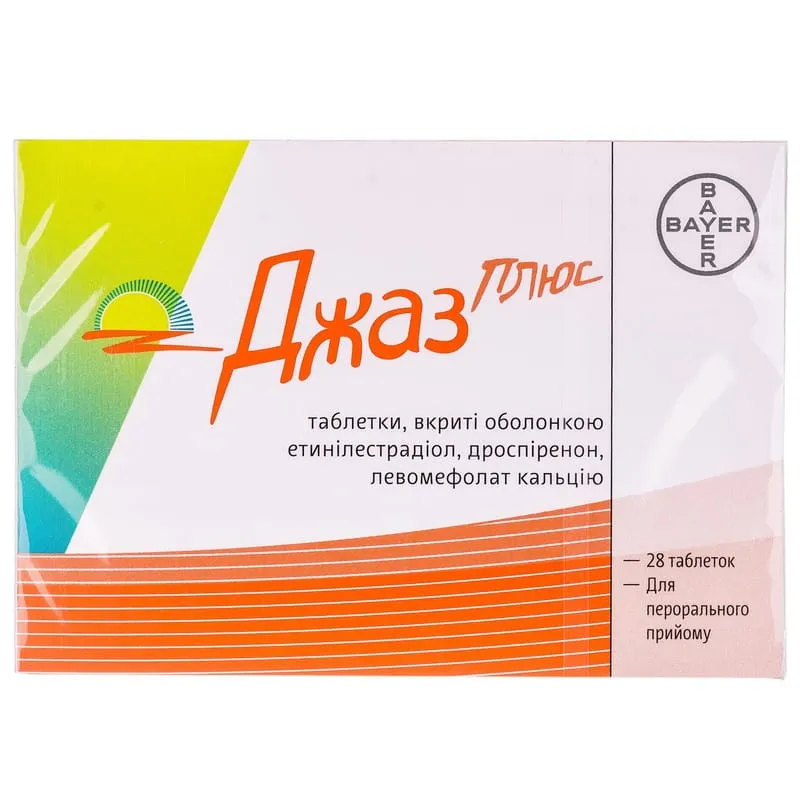
Table of Contents
INSTRUCTIONS FOR MEDICAL USE OF THE MEDICINAL PRODUCT JAZ (YAZ®)
Composition:
Active substances: ethinylestradiol, drospirenone;
1 pack contains 28 tablets (24 light pink tablets and 4 placebo tablets of white color);
1 light pink tablet contains ethinylestradiol 0.02 mg (in the form of a complex with beta-cyclodextrin) and drospirenone 3 mg;
Excipients: lactose monohydrate, maize starch, magnesium stearate, hypromellose, talc, titanium dioxide (E 171), iron oxide red (E 172);
1 white placebo tablet contains:
Excipients: lactose monohydrate, microcrystalline cellulose, magnesium stearate, hypromellose, talc, titanium dioxide (E 171).
Pharmaceutical form. Coated tablets.
Main physicochemical properties: round, biconvex, film-coated tablets of light pink color, marked with the letters "DS" inside a regular hexagon on one side; and round, biconvex, film-coated white tablets, marked with the letters "DP" inside a regular hexagon on one side.
Pharmacotherapeutic group. Hormonal contraceptives for systemic use. Estrogens and progestogens in fixed combinations.
ATC code G03A A12.
Pharmacological Properties
Pharmacodynamics
Pearl Index of contraceptive failures: 0.41 (upper two-sided 95% confidence interval: 0.85). Overall Pearl Index (contraceptive failures + user errors): 0.80 (upper two-sided 95% confidence interval: 1.30).
The contraceptive effect of the drug Yaz is based on the interaction of several factors, the most important of which are inhibition of ovulation and modification of cervical secretion.
In a three-cycle clinical study comparing the combination of drospirenone 3 mg/ethinylestradiol 0.02 mg administered in a 24-day regimen versus a 21-day regimen, the 24-day regimen was associated with greater suppression of follicular development. After intentional dosing errors during the third treatment cycle, ovarian activity, including ovulation, was observed in the majority of women on the 21-day regimen, compared to women on the 24-day regimen. Ovarian activity returned to pre-treatment levels during the cycle after therapy in 91.8% of women on the 24-day regimen.
Yaz is a combined oral contraceptive containing ethinylestradiol and the progestogen drospirenone. At therapeutic doses, drospirenone exhibits antiandrogenic and moderate antimineralocorticoid properties. It has no estrogenic, glucocorticoid, or antiglucocorticoid activity. Therefore, drospirenone has a pharmacological profile similar to that of natural progesterone.
According to clinical study data, the moderate antimineralocorticoid properties of Yaz result in a moderate antimineralocorticoid effect.
Two multicenter, double-blind, randomized, placebo-controlled studies were conducted to evaluate the efficacy and safety of Yaz in women with moderate acne vulgaris. After 6 months of therapy, compared to placebo, the drug demonstrated a statistically significant reduction of 15.6% (49.3% vs. 33.7%) in the number of inflammatory lesions, 18.5% (40.6% vs. 22.1%) in the number of non-inflammatory lesions, and 16.5% (44.6% vs. 28.1%) in the total number of acne lesions. Additionally, a higher percentage of subjects, 11.8% (18.6% vs. 6.8%), achieved "clear" or "almost clear" skin as assessed by the ISGA (Investigator’s Static Global Assessment) scale.
Pharmacokinetics
Drospirenone
Absorption. Orally administered drospirenone is rapidly and completely absorbed. Maximum serum concentration, reaching 38 ng/mL, is achieved approximately 1–2 hours after single oral administration. Bioavailability is 76–85%. Concomitant food intake does not affect the bioavailability of drospirenone.
Distribution. After oral administration, drospirenone serum concentration declines with a mean terminal half-life of about 31 hours. Drospirenone binds to serum albumin and does not bind to SHBG or corticosteroid-binding globulin. Only 3–5% of its total serum concentration is present in free form. Ethinylestradiol-induced increases in SHBG do not affect drospirenone binding to serum proteins. The mean volume of distribution of drospirenone is 3.7±1.2 L/kg.
Metabolism. Drospirenone is extensively metabolized after oral administration. The main metabolites in plasma are the acid forms of drospirenone formed by opening of the lactone ring, and 4,5-dihydro-drospirenone-3-sulfate, formed via hydration followed by sulfation. Drospirenone is also subject to oxidative metabolism catalyzed by CYP3A4. In vitro, drospirenone may weakly or moderately inhibit cytochrome P450 enzymes: CYP1A1, CYP2C9, CYP2C19, and CYP3A4.
Elimination. The metabolic clearance rate of drospirenone from serum is approximately 1.5±0.2 mL/min/kg. Drospirenone is excreted unchanged only in very small amounts. Metabolites are excreted in urine and feces in a ratio of 1.2 to 1.4. The elimination half-life of metabolites in urine and feces is approximately 40 hours.
Steady state. During the treatment cycle, the maximum steady-state concentration of drospirenone in serum, approximately 70 ng/mL, is reached after 8 days of administration. Serum levels of drospirenone accumulate 3-fold as a result of the relationship between the terminal elimination half-life and the dosing interval.
Special patient groups
Women with impaired renal function. Steady-state concentrations of drospirenone in serum in women with mild renal impairment (creatinine clearance 50–80 mL/min) were comparable to those in women with normal renal function (creatinine clearance >80 mL/min). Serum drospirenone levels were on average 37% higher in women with moderate renal impairment (creatinine clearance 30–50 mL/min) compared to women with normal renal function. Administration of drospirenone demonstrated good tolerability in all patient groups. It has been shown that drospirenone intake has no clinically significant effect on serum potassium concentration.
Women with impaired hepatic function.
In a single-dose study, oral clearance of drospirenone decreased by approximately 50% in subjects with moderate hepatic impairment compared to volunteers with normal liver function. The observed alteration in drospirenone clearance in subjects with moderate hepatic impairment did not result in any apparent differences in serum potassium concentration. Even in the presence of diabetes mellitus and concomitant spironolactone therapy (two factors that may predispose to hyperkalemia), serum potassium concentration did not exceed the upper limit of normal. It can be concluded that drospirenone is well tolerated in individuals with mild to moderate hepatic impairment (Child-Pugh class B).
Ethnic groups. No clinically significant differences in the pharmacokinetics of drospirenone or ethinylestradiol were observed between Japanese women and Caucasians.
Ethinylestradiol
Absorption. After oral administration, ethinylestradiol is rapidly and completely absorbed. Maximum serum concentration of 33 pg/mL is reached within 1–2 hours after single oral administration. Absolute bioavailability, due to presystemic conjugation and first-pass hepatic metabolism, is approximately 60%. Concomitant food intake reduces bioavailability of ethinylestradiol by approximately 25% in study subjects, with no change in the remainder.
Distribution. Serum levels of ethinylestradiol decrease in a biphasic manner, with a terminal phase half-life of approximately 24 hours. Ethinylestradiol binds strongly but non-specifically to serum albumins (approximately 98.5%) and induces increased serum concentrations of SHBG and CBG. The apparent volume of distribution is approximately 5 L/kg.
Metabolism. Ethinylestradiol is extensively metabolized in the gastrointestinal tract and during first-pass through the liver. It is metabolized primarily by hydroxylation of the aromatic ring, forming a wide spectrum of hydroxylated and methylated metabolites, present in free form and as glucuronide and sulfate conjugates. Metabolic clearance of ethinylestradiol is approximately 5 mL/min/kg.
In vitro, ethinylestradiol is a reversible inhibitor of CYP2C19, CYP1A1, and CYP1A2, and a mechanism-based inhibitor of CYP3A4/5, CYP2C8, and CYP2J2.
Elimination. Ethinylestradiol is practically not excreted unchanged. Metabolites of ethinylestradiol are excreted in urine and bile in a ratio of 4:6. The elimination half-life of metabolites is nearly 1 day.
Steady state. Steady state is achieved in the second half of the treatment cycle, when serum concentration of ethinylestradiol increases by 2.0–2.3 times.
Preclinical safety data
In laboratory animals, effects of drospirenone and ethinylestradiol were limited to those associated with known pharmacological actions. In particular, animal studies on reproductive toxicity revealed species-specific embryotoxic and fetotoxic effects. At exposures exceeding those in Yaz users, effects on sexual differentiation were observed in certain animal species. Environmental risk assessment studies indicated that ethinylestradiol and drospirenone may potentially pose a threat to the aquatic environment (see section "Special precautions for environmental safety").
Clinical characteristics.
Indications.
Oral contraception.
Contraindications.
Combined hormonal contraceptives (CHCs) must not be used if any of the following conditions are present. If any of these conditions occur for the first time during CHC use, the drug should be discontinued immediately.
- Presence or risk of venous thromboembolism (VTE).
- Current venous thromboembolism, including cases requiring anticoagulant therapy, or history of VTE (e.g., deep vein thrombosis (DVT) or pulmonary embolism (PE));
- Known hereditary or acquired predisposition to venous thromboembolism, such as activated protein C resistance (including factor V Leiden mutation), antithrombin-III deficiency, protein C deficiency, protein S deficiency;
- Major surgery with prolonged immobilization (see section "Special precautions");
- High risk of venous thromboembolism due to multiple risk factors (see section "Special precautions").
- Presence or risk of arterial thromboembolism (ATE).
- Current or past arterial thromboembolism (e.g., myocardial infarction) or presence of prodromal symptoms (e.g., angina pectoris);
- Current or past cerebrovascular accident, or presence of prodromal symptoms (e.g., transient ischemic attack (TIA));
- Known hereditary or acquired predisposition to arterial thromboembolism, such as hyperhomocysteinemia and antiphospholipid antibodies (anti-cardiolipin antibodies, lupus anticoagulant);
- History of migraine with focal neurological symptoms;
- High risk of arterial thromboembolism due to multiple risk factors (see section "Special precautions") or due to presence of a single serious risk factor, such as:
- diabetes mellitus with vascular complications;
- severe arterial hypertension;
- severe dyslipoproteinemia.
- Current or past severe liver disease until liver function tests return to normal range.
- Severe renal insufficiency or acute renal failure.
- Current or past liver tumors (benign or malignant).
- Known or suspected hormone-dependent malignant neoplasms (e.g., of genital organs or breast).
- Vaginal bleeding of unknown etiology.
- Hypersensitivity to the active substances or to any of the excipients of the drug.
The medicinal product Jazz is contraindicated when used concomitantly with medicinal products containing ombitasvir/paritaprevir/ritonavir and dasabuvir, or glecaprevir/pibrentasvir, or sofosbuvir/velpatasvir/voxilaprevir (see section "Interaction with other medicinal products and other forms of interaction").
Special safety measures.
This medicinal product may be hazardous to the environment (see section "Pharmacological properties"). Any unused medicinal product or waste material must be disposed of in accordance with local requirements.
Interaction with other medicinal products and other forms of interaction.
Information on concomitantly administered medicinal products should be reviewed to identify potential interactions.
- Effect of other medicinal products on the medicinal product Jazz
Interactions are possible with medicinal products that induce microsomal enzymes. This may lead to increased clearance of sex hormones, resulting in changes in menstrual bleeding patterns and/or loss of contraceptive efficacy.
Therapy
Enzyme induction may be observed within a few days of treatment. Maximum enzyme induction generally occurs after several weeks. After discontinuation of treatment, enzyme induction may persist for approximately 4 weeks.
Short-term treatment
Women taking enzyme-inducing medicinal products should temporarily use a barrier method or another contraceptive method in addition to COCs. The barrier method should be used throughout the entire treatment period with the respective drug and for an additional 28 days after discontinuation of the drug. If treatment is initiated during the period of taking the last tablets in the COC pack, the next pack of COC tablets should be started immediately after the previous one, without the usual tablet-free interval.
Long-term treatment
Women undergoing long-term therapy with enzyme-inducing substances are advised to use a barrier method or another appropriate non-hormonal contraceptive method.
The following interactions have been documented according to published data.
Active substances that increase COC clearance (reducing COC efficacy through enzyme induction), e.g.:
barbiturates, bosentan, carbamazepine, phenytoin, primidone, rifampicin; drugs used in HIV infection: ritonavir, nevirapine, and efavirenz; also possibly felbamate, griseofulvin, oxcarbazepine, topiramate, and herbal medicinal products containing St. John's wort (Hypericum perforatum).
Active substances with variable effects on COC clearance
When used concomitantly with COCs, many combinations of HIV protease inhibitors and non-nucleoside reverse transcriptase inhibitors, including combinations with hepatitis C virus (HCV) antivirals, may either increase or decrease plasma concentrations of estrogens or progestins. The net effect of these changes may be clinically significant in some cases.
Therefore, information on the medical use of the medicinal product for treatment of HIV/HCV, taken concomitantly, should be reviewed to identify potential interactions and any other recommendations. In case of any doubts, women should additionally use a barrier method of contraception during therapy with protease inhibitors or non-nucleoside reverse transcriptase inhibitors.
Active substances that reduce COC clearance (enzyme inhibitors)
The clinical significance of potential interactions with enzyme inhibitors remains unclear.
Concomitant use of strong CYP3A4 inhibitors may increase plasma concentrations of estrogen, progestin, or both components.
In a multiple-dose study of the combination drospirenone (3 mg/day)/ethinylestradiol (0.002 mg/day) and the strong CYP3A4 inhibitor ketoconazole, administered concomitantly for 10 days, the AUC(0-24h) of drospirenone and ethinylestradiol increased by 2.7 and 1.4 times, respectively.
Etoricoxib at doses of 60 to 120 mg/day demonstrated a 1.4- to 1.6-fold increase in plasma concentrations of ethinylestradiol, respectively, when administered concomitantly with a combined hormonal contraceptive containing 0.035 mg ethinylestradiol.
- Effect of the medicinal product Jazz on other medicinal products
COCs may affect the metabolism of certain active substances. Consequently, plasma and tissue concentrations may either increase (e.g., cyclosporine) or decrease (e.g., lamotrigine).
Based on in vivo interaction studies in female volunteers using omeprazole, simvastatin, and midazolam as marker substrates, clinically significant interaction of drospirenone at a dose of 3 mg with other active substances metabolized by cytochrome P450 is unlikely.
Clinical data indicate that ethinylestradiol inhibits the clearance of CYP1A2 substrates, leading to mild (e.g., theophylline) or moderate (e.g., tizanidine) increases in their plasma concentrations.
Pharmacodynamic interactions
During clinical trials involving patients receiving medicinal products for the treatment of hepatitis C virus (HCV) infection containing ombitasvir/paritaprevir/ritonavir and dasabuvir, with or without ribavirin, elevated transaminases (ALT) more than 5 times above the upper limit of normal (ULN) were observed. This occurred significantly more frequently in women using medicinal products containing ethinylestradiol, including combined hormonal contraceptives (CHCs). Additionally, during treatment with glecaprevir/pibrentasvir or sofosbuvir/velpatasvir/voxilaprevir, increased ALT levels were observed in women taking ethinylestradiol-containing medicinal products, such as CHCs (see section "Contraindications").
Therefore, women using the medicinal product Jazz must temporarily switch to an alternative method of contraception (e.g., progestogen-only contraceptives or non-hormonal methods) before starting therapy with the specified combination of medicinal products. Use of the medicinal product Jazz may be resumed 2 weeks after completion of therapy with the specified combination.
In patients with normal renal function, concomitant use of drospirenone and ACE inhibitors or non-steroidal anti-inflammatory drugs (NSAIDs) did not show a significant effect on serum potassium levels. However, concomitant use of the medicinal product Jazz with aldosterone antagonists or potassium-sparing diuretics has not been studied. In such cases, serum potassium levels should be monitored during the first treatment cycle (see also section "Special precautions").
Other forms of interaction
Laboratory tests
Use of contraceptive steroids may affect the results of certain laboratory tests, such as biochemical parameters of liver, thyroid, adrenal, and kidney function; plasma concentrations of transport proteins such as corticosteroid-binding globulin; plasma concentrations of lipid/lipoprotein fractions; carbohydrate metabolism parameters; and coagulation and fibrinolysis parameters. Such changes are usually within normal limits. Drospirenone increases plasma renin and aldosterone activity, induced by its moderate anti-mineralocorticoid activity.
Special precautions for use.
The decision to prescribe the medicinal product Jazz should be made taking into account the individual risk factors currently present in a woman, including risk factors for developing venous thromboembolism (VTE), as well as the VTE risk associated with the use of Jazz compared to other combined hormonal contraceptives (CHCs) (see sections "Contraindications" and "Special precautions for use").
Warning
If any of the conditions or risk factors listed below are present, the appropriateness of using the medicinal product Jazz should be discussed with the woman.
In case of exacerbation or at the first signs of any of the listed conditions or risk factors, women are advised to consult a physician and determine whether discontinuation of the medicinal product Jazz is necessary.
If VTE or arterial thromboembolism (ATE) is suspected or confirmed, CHCs should be discontinued. If anticoagulant therapy is initiated, an alternative effective contraception should be provided due to the teratogenic effect of anticoagulants (coumarins).
- Circulatory disorders
Risk of venous thromboembolism (VTE)
The use of any CHCs increases the risk of venous thromboembolism (VTE) in women using them compared to women who do not use them. Medicinal products containing levonorgestrel, norgestimate, or norethisterone are associated with a lower risk of VTE. The use of other medicinal products, such as Jazz, may result in a doubling of the risk. The decision to use medicinal products other than those with the lowest risk of VTE should only be made after discussion with the woman. It is necessary to ensure that she understands the risk of VTE associated with the use of the medicinal product Jazz, the extent to which her existing risk factors contribute, and the fact that the risk of VTE is highest during the first year of use. According to some data, the risk of VTE may increase when resuming CHC use after a break of 4 weeks or longer.
Among 10,000 women who do not use CHCs and are not pregnant, approximately 2 will develop VTE within one year. However, in individual women, the risk may be significantly higher depending on their existing risk factors (see below).
It has been established1 that among 10,000 women using CHCs containing drospirenone, 9–12 women will develop VTE within one year. This compares with a rate of 6–2 in women using CHCs containing levonorgestrel.
In both cases, the number of VTE cases per year was lower than what is usually expected during pregnancy or the postpartum period.
VTE can be fatal in 1–2% of cases.
Number of VTE cases per 10,000 women per year
1 These estimates are based on all available epidemiological data, taking into account relative risks associated with the use of different CHCs compared to CHCs containing levonorgestrel.
2 An average of 5–7 cases per 10,000 woman-years, based on the calculated relative risk of using CHCs containing levonorgestrel compared to non-use of CHCs (approximately 2.3–3.6 cases).
Risk factors for VTE
The risk of venous thromboembolic complications in women using CHCs may be substantially higher in the presence of additional risk factors, especially multiple ones (see Table 1).
The use of the medicinal product Jazz is contraindicated in women with multiple risk factors that may increase the risk of venous thrombosis (see section "Contraindications"). If a woman has more than one risk factor, the increase in risk may be greater than the sum of the risks associated with each individual factor; therefore, the overall risk of VTE should be considered. If the benefit-risk ratio is unfavorable, CHCs should not be prescribed (see section "Contraindications").
Table 1.
Risk factors for VTE
| Risk factor |
Note |
| Obesity (body mass index exceeding 30 kg/m²) |
Risk increases significantly with higher body mass index. Particular attention is required if other risk factors are present. |
| Long-term immobilization, major surgery, surgery on lower limbs or pelvic organs, neurosurgical procedures, or extensive trauma. Note: Temporary immobilization, including flights > 4 hours, may also be a risk factor for VTE, especially in women with other risk factors. |
In such situations, it is recommended to discontinue the medicinal product (at least 4 weeks prior to elective surgery) and not resume treatment until at least 2 weeks after full restoration of mobility. Alternative contraceptive methods should be used to avoid unintended pregnancy. Consideration should be given to antithrombotic therapy if prior discontinuation of the medicinal product Jazz was not performed. |
| Family history (venous thromboembolism in a close relative or parent, particularly at a relatively young age, e.g., before 50 years). |
If there is a hereditary predisposition, women should consult a specialist before using any COCs. |
| Other conditions associated with VTE |
Cancer, systemic lupus erythematosus, hemolytic-uremic syndrome, chronic inflammatory bowel disease (Crohn’s disease or ulcerative colitis), and sickle cell anemia. |
| Age |
Particularly over 35 years of age |
There is no consensus regarding the possible influence of varicose veins and superficial thrombophlebitis on the development and progression of venous thrombosis.
Particular attention should be paid to the increased risk of thromboembolism during pregnancy, especially within the 6 weeks following delivery (for information on pregnancy or breastfeeding, see section "Use in pregnancy or breastfeeding").
Symptoms of VTE (deep vein thrombosis and pulmonary embolism)
Women should be advised to seek immediate medical attention and inform their physician that they are taking a COC if any of the symptoms listed below occur.
Symptoms of DVT may include: unilateral swelling of the leg and/or foot or along a vein in the leg; pain or tenderness in the leg, which may only be felt while standing or walking; warmth in the affected leg; redness or discoloration of the skin on the leg.
Symptoms of PE may include: sudden unexplained shortness of breath or rapid breathing; sudden cough, possibly with hemoptysis; sudden chest pain; syncope or dizziness; rapid or irregular heartbeat.
Some of these symptoms (e.g., shortness of breath, cough) are nonspecific and may be misinterpreted as more common or less serious conditions (e.g., respiratory tract infections).
Other manifestations of vascular occlusion may include sudden pain, swelling, acute abdomen, and mild cyanosis of a limb.
Ocular vessel occlusion may initially present with blurred vision without pain, which may progress to vision loss. Sometimes, vision loss develops almost instantaneously.
Risk of arterial thromboembolism (ATE)
Epidemiological data indicate that use of any COC is associated with an increased risk of arterial thromboembolism (myocardial infarction) or cerebrovascular events (transient ischemic attack, stroke). Arterial thromboembolic events may be fatal.
Risk factors for ATE
When using COCs, the risk of developing arterial thromboembolic complications or cerebrovascular events increases in women with risk factors (see Table 2). Use of the medicinal product Jazz is contraindicated in women who have one serious or multiple risk factors that may increase the risk of arterial thrombosis (see section "Contraindications"). If a woman has more than one risk factor, the increase in risk may be greater than the sum of the risks associated with each individual factor, so the overall risk should be considered. If the benefit-risk balance is unfavorable, COCs should not be prescribed (see section "Contraindications").
Table 2.
Risk factors for ATE
| Risk factor |
Note |
| Increasing age |
Especially over the age of 35 |
| Smoking |
Women using COCs are advised not to smoke. Women aged 35 years and older who continue to smoke are strongly advised to use another method of contraception. |
| Arterial hypertension |
|
| Obesity (body mass index over 30 kg/m2) |
Risk increases significantly with increasing body mass index. Requires particular attention when other risk factors are present in women. |
| Family history (arterial thromboembolism in a close relative or parent, especially at a relatively young age, e.g. under 50 years) |
If there is a hereditary predisposition, women are advised to consult a specialist before using any COCs. |
| Migraine |
An increase in frequency or severity of migraine during COC use (possible prodromal signs preceding cerebrovascular events) may necessitate immediate discontinuation of COCs. |
| Other conditions associated with adverse vascular events |
Diabetes mellitus, hyperhomocysteinemia, heart valve disorders, atrial fibrillation, dyslipoproteinemia, and systemic lupus erythematosus. |
ATE Symptoms
Women should be advised to seek immediate medical attention and inform their physician that they are taking COCs if any of the symptoms listed below occur.
Symptoms of cerebrovascular disorders may include: sudden numbness of the face, weakness or numbness of the extremities, especially on one side of the body; sudden difficulty walking, dizziness, loss of balance or coordination; sudden confusion, speech or comprehension disturbances; sudden vision impairment in one or both eyes; sudden, severe or prolonged headache without apparent cause; loss of consciousness or fainting, with or without seizures.
Transient nature of these symptoms may indicate a transient ischemic attack (TIA).
Symptoms of myocardial infarction may include: pain, discomfort, tightness or heaviness in the chest, arms, or below the sternum; discomfort radiating to the back, jaw, throat, arm, or stomach; sensations of stomach fullness, indigestion, or suffocation; excessive sweating, nausea, vomiting, or dizziness; extreme weakness, anxiety, or shortness of breath; rapid or irregular heartbeat.
Tumors
Results of some epidemiological studies suggest an increased risk of cervical cancer with long-term use of COCs (>5 years), although this finding remains controversial due to uncertainty about whether the studies adequately accounted for confounding risk factors such as sexual behavior and human papillomavirus infection.
A meta-analysis based on 54 epidemiological studies indicates a slight increase in relative risk (RR = 1.24) of breast cancer among women using COCs. This increased risk gradually disappears within 10 years after discontinuation of COCs. Since breast cancer is rare in women under 40 years of age, the increase in diagnosed cases among current or recent COC users is minimal relative to the overall risk of breast cancer. These studies do not provide evidence of a causal relationship. The increased risk may be due to earlier diagnosis of breast cancer in COC users, a biological effect of COCs, or a combination of both. There is a trend indicating that breast cancer diagnosed in women who have ever used COCs tends to be less clinically advanced than in those who have never used COCs.
Benign, and in rare cases malignant, liver tumors have been observed in women using COCs, which in some instances led to life-threatening intra-abdominal hemorrhage. In cases of severe epigastric pain, hepatomegaly, or signs of intra-abdominal bleeding, the possibility of a COC-related liver tumor should be considered in differential diagnosis.
High-dose COCs (50 mcg ethinyl estradiol) reduce the risk of endometrial and ovarian cancer. It remains to be confirmed whether this benefit extends to low-dose COCs.
Other Conditions
The progestin component of the drug Yaz is an aldosterone antagonist with potassium-sparing properties. In most cases, elevated serum potassium levels are not expected during use. Clinical trials have shown slight, non-significant increases in serum potassium levels in some patients with mild to moderate renal insufficiency who were concurrently using potassium-sparing medications during treatment with drospirenone. Therefore, monitoring of serum potassium levels is recommended during the first treatment cycle in patients with renal impairment. These patients should also maintain serum potassium levels at or below the upper limit of normal before starting Yaz, especially when concomitantly using potassium-sparing drugs (see section "Interaction with other medicinal products and other forms of interaction").
Women with hypertriglyceridemia or a family history of this condition are at increased risk of pancreatitis when using COCs.
Although minor increases in blood pressure have been reported in many women taking COCs, clinically significant hypertension occurs only rarely. Immediate discontinuation of COCs is required only in these rare cases. Persistent hypertension or inability to control blood pressure with antihypertensive therapy warrants discontinuation of COCs. If appropriate, COC use may be resumed after normotension is achieved with antihypertensive treatment.
The following conditions have been reported to occur or worsen during pregnancy and with COC use, although a definitive causal relationship with estrogen/progestin use has not been established: cholestasis-related jaundice and/or pruritus, gallstone formation, porphyria, systemic lupus erythematosus, hemolytic uremic syndrome, Sydenham's chorea, herpes gestationis, hearing loss associated with otosclerosis.
Exogenous estrogens may induce or exacerbate symptoms of hereditary or acquired angioedema.
Acute or chronic liver dysfunction may require discontinuation of COCs until liver function tests return to normal and a causal link with COCs is excluded.
COCs should be discontinued in case of recurrence of cholestatic jaundice and/or cholestasis-related pruritus previously experienced during pregnancy or prior use of sex hormones.
Although COCs may affect peripheral insulin resistance and glucose tolerance, there is no evidence to suggest changes in therapeutic management for diabetic women using low-dose COCs (<0.05 mg ethinyl estradiol). However, diabetic women should be closely monitored during COC use, particularly at the beginning of treatment.
Exacerbations of epilepsy, Crohn's disease, and ulcerative colitis have also been reported during COC use.
Depressed mood and depression are well-known adverse effects that may occur during use of hormonal contraceptives (see section "Adverse Reactions"). Depression can be a serious condition and is a well-known risk factor for suicidal behavior and suicide. Women should be advised to consult a physician if they experience mood changes or symptoms of depression, including shortly after initiating treatment.
Chloasma may occasionally occur, particularly in women with a history of chloasma gravidarum. Women predisposed to chloasma should avoid direct sunlight or ultraviolet radiation during COC use.
Each light pink film-coated tablet contains 46 mg of lactose, and each white film-coated tablet contains 22 mg of lactose. In patients with rare hereditary conditions of galactose intolerance, Lapp lactase deficiency, or glucose-galactose malabsorption, or those on a lactose-free diet, this lactose content should be taken into account.
Consultations/Medical Examinations
Before initiating or resuming use of Yaz, a complete medical and family history should be obtained, a full medical examination performed, and pregnancy excluded. Blood pressure should be measured and a medical evaluation conducted, considering contraindications (see section "Contraindications") and special precautions (see section "Special Precautions"). Women should be informed about venous and arterial thrombosis, including the risk associated with Yaz compared to other hormonal contraceptives, symptoms of VTE and ATE, known risk factors, and actions to take if thrombosis is suspected.
Patients should be advised to carefully read the package leaflet and follow the recommendations provided.
The frequency and nature of follow-up examinations should be based on established medical practice guidelines, taking into account individual patient characteristics.
Patients should be informed that hormonal contraceptives do not protect against HIV infection (AIDS) or any other sexually transmitted diseases.
Reduced Efficacy
The efficacy of COCs may be reduced by missed tablet intake (see section "Dosage and Administration"), gastrointestinal disturbances (see section "Dosage and Administration"), or concomitant use of other medicinal products (see section "Interaction with other medicinal products and other forms of interaction").
Menstrual Irregularities
Irregular bleeding (spotting or breakthrough bleeding) may occur during COC use, especially during the first few months. If such bleeding persists beyond three menstrual cycles, it should be considered significant.
If irregular bleeding persists or reappears after a period of regular bleeding, non-hormonal causes should be considered and appropriate diagnostic measures undertaken, including evaluation to exclude malignancy and pregnancy. Diagnostic procedures may include curettage.
In some women, withdrawal bleeding may not occur during the tablet-free interval. If COCs have been taken according to instructions in the "Dosage and Administration" section, pregnancy is unlikely. However, if COCs have been taken irregularly prior to the absence of the first withdrawal bleed, or if withdrawal bleeding is absent for two consecutive cycles, pregnancy must be ruled out before continuing COC use.
Use during Pregnancy or Breastfeeding
Pregnancy. The drug is contraindicated during pregnancy.
If pregnancy occurs while taking Yaz, treatment should be discontinued immediately. However, epidemiological studies do not indicate an increased risk of congenital malformations in children whose mothers used COCs before pregnancy, nor is there evidence of teratogenic effects from inadvertent COC use during pregnancy.
Animal studies have shown adverse effects during pregnancy and lactation (see section "Pharmacological Properties"). Based on these animal studies, adverse effects due to the hormonal activity of the active ingredients cannot be excluded. However, overall clinical experience with COC use during pregnancy does not indicate adverse effects in humans.
Available data on Yaz use during pregnancy are too limited to draw conclusions regarding any negative impact on pregnancy outcome or fetal and neonatal health. Currently, there are no relevant epidemiological data.
When resuming Yaz, the increased risk of VTE in the postpartum period should be considered (see sections "Dosage and Administration" and "Special Precautions").
Breastfeeding. COCs may affect breastfeeding by reducing the quantity and altering the composition of breast milk. Therefore, COCs are not recommended during breastfeeding. Small amounts of contraceptive steroids and/or their metabolites may pass into breast milk during COC use and may affect the infant.
Fertility. Yaz is indicated for prevention of pregnancy. Information on fertility recovery can be found in the section "Pharmacological Properties."
Ability to influence reaction speed when driving or operating machinery.
No studies on the effect of Yaz on the ability to drive or operate machinery have been conducted. No effects on the ability to drive or operate machinery have been reported in women using COCs.
Dosage and Administration
Route of administration: Oral.
Dosage
How to take Jazz tablets
Tablets should be taken daily at approximately the same time each day, following the order indicated on the blister pack, with a small amount of liquid if necessary. Tablets should be taken continuously. Take 1 tablet daily for 28 consecutive days. The next pack should be started the day after the previous pack is finished. Withdrawal bleeding usually begins on days 2–3 after starting the placebo tablets (last row) and may continue until the start of the next pack.
Starting Jazz
- No previous hormonal contraception (last month)
Begin taking tablets on the first day of the natural cycle (i.e., the first day of menstrual bleeding).
- Switching from another combined oral contraceptive (COC), vaginal ring, or transdermal patch
It is recommended to start taking Jazz tablets the day after the last active (hormonal) tablet of the previous COC. However, it may be started no later than the day after the tablet-free interval or after the last placebo tablet of the previous COC. When switching from a contraceptive vaginal ring or transdermal patch, start Jazz on the day of removal, but no later than the day the next application would have been due.
- Switching from a progestogen-only method (‘mini-pill’, injection, implant) or an intrauterine system containing progestogen
Jazz may be started at any time after stopping the ‘mini-pill’ (in the case of an implant or intrauterine system – on the day of removal; in the case of an injection – instead of the next injection). However, in all cases, it is recommended to use an additional barrier method of contraception for the first 7 days of taking Jazz.
- After a first-trimester abortion
Jazz may be started immediately. In this case, additional contraceptive methods are not required.
- After childbirth or second-trimester abortion
It is recommended to start taking Jazz on days 21–28 after childbirth or second-trimester abortion. If starting later, an additional barrier method of contraception should be used for the first 7 days of tablet intake. However, if sexual intercourse has already occurred, pregnancy should be ruled out before starting the medication, or the woman should wait for the onset of the first menstrual period.
For breastfeeding women, see section "Use during pregnancy or breastfeeding".
What to do if a tablet is missed
A missed placebo tablet from the last (4th) row can be disregarded. However, such tablets should be removed from the pack to avoid unintentional prolongation of the placebo phase. The instructions below apply only to missed active tablets containing active ingredients.
If the delay in taking a tablet does not exceed 24 hours, contraceptive protection is not reduced. The missed tablet should be taken as soon as possible. The next tablet should be taken at the usual time.
If the delay in taking the missed tablet exceeds 24 hours, contraceptive protection may be reduced. In such cases, two main principles should be followed:
- The recommended hormone-free interval is 4 days; the tablet-free interval must never exceed 7 days;
- Adequate suppression of the hypothalamic-pituitary-ovarian system is achieved by continuous tablet intake for 7 days.
Based on these principles, the following practical recommendations should be followed:
- Days 1–7
Take the last missed tablet as soon as possible, even if this means taking two tablets at the same time. Then continue taking tablets at the usual time. In addition, a barrier method of contraception (e.g., condom) should be used for the next 7 days. If sexual intercourse occurred in the previous 7 days, the possibility of pregnancy should be considered. The greater the number of missed tablets and the closer to the placebo phase, the higher the risk of pregnancy.
- Days 8–14
Take the last missed tablet as soon as possible, even if two tablets must be taken at the same time. Then continue taking tablets at the usual time. If the woman has taken tablets correctly for the 7 days prior to the missed dose, no additional contraceptive methods are required. Otherwise, or if more than one tablet has been missed, additional contraceptive methods should be used for 7 days.
- Days 15–24
The risk of reduced efficacy increases as the placebo phase approaches. However, by following one of the regimens below, a reduction in contraceptive protection can be avoided. If one of the following options is followed and tablets were taken correctly for 7 days before the missed dose, additional contraceptive methods are not required. Otherwise, the first option below should be followed and additional barrier methods used for the next 7 days.
- Take the last missed tablet as soon as possible, even if two tablets must be taken at the same time. Then continue taking tablets at the usual time until all active tablets are finished. The 4 placebo tablets in the last row should be skipped. Start taking tablets from the next pack immediately after the last active tablet. Withdrawal bleeding is unlikely before finishing all active tablets from the second pack, although breakthrough bleeding or spotting may occur during tablet intake.
- Alternatively, stop taking active tablets from the current pack. Then take the placebo tablets from the last row for 4 days, including the days of missed tablets; start the next pack after this.
If withdrawal bleeding does not occur during the first normal tablet-free interval after missed tablets, pregnancy should be considered.
Recommendations in case of gastrointestinal disturbances
In case of severe gastrointestinal disturbances (e.g., vomiting or diarrhea), incomplete absorption of the drug may occur. In such cases, additional contraceptive methods should be used. If vomiting occurs within 3–4 hours after taking an active tablet, a new (replacement) tablet should be taken as soon as possible. The next tablet should be taken, if possible, within 24 hours according to the usual dosing schedule. If more than 24 hours have passed, follow the recommendations above under "What to do if a tablet is missed". If a woman does not wish to change her tablet-taking schedule, she should take additional tablet(s) from the next pack.
How to delay withdrawal bleeding
To delay withdrawal bleeding, continue taking Jazz tablets from a new pack without taking the placebo tablets from the current pack. The duration of intake may be extended up to the end of active tablets in the second pack, if desired. Breakthrough bleeding or spotting may occur during this period. Usually, Jazz is resumed after taking the placebo tablets.
To shift the timing of withdrawal bleeding to another day of the week, it is recommended to shorten the placebo interval by the desired number of days. It should be noted that the shorter the interval, the more likely it is that withdrawal bleeding will not occur and breakthrough bleeding or spotting may occur during intake of tablets from the second pack (similar to delaying menstruation).
Additional information for special patient groups
Elderly patients. Jazz is not indicated after menopause.
Patients with hepatic impairment. Jazz is contraindicated in women with severe hepatic impairment (see sections "Contraindications" and "Pharmacological properties").
Patients with renal impairment. Jazz is contraindicated in women with severe or acute renal impairment (see sections "Contraindications" and "Pharmacological properties").
Children.
The drug is indicated for use only after menarche and only under medical supervision.
Overdose.
There are no clinical data on overdose with Jazz tablets. Based on general experience with COCs, overdose may result in nausea, vomiting, and withdrawal bleeding. Withdrawal bleeding may occur in girls even before menarche in case of accidental or unintentional intake of the drug. There is no specific antidote; treatment should be symptomatic.
Adverse reactions.
For serious adverse reactions in women using COCs, see also section "Special precautions for use". The adverse reactions listed below were observed during use of the drug Jazz (see Table 3).
The table below presents adverse reactions by MedDRA system organ classes. Frequencies are based on clinical data. The preferred MedDRA terms are used to describe specific reactions and their synonyms and related conditions.
Table 3.
Frequency of adverse reactions reported during clinical studies of Jazz as an oral contraceptive and for the treatment of mild acne, according to MedDRA system organ classes and preferred terms.
| System Organ Classes (MedDRA version 9.1) |
Common (≥1/100 to <1/10) |
Uncommon (≥1/1000 to <1/100) |
Rare (≥1/10000 to <1/1000) |
Frequency unknown |
| Infections and infestations |
Candidiasis |
|||
| Blood and lymphatic system disorders |
Anaemia, thrombocytosis |
|||
| Immune system disorders |
Allergic reactions |
Hypersensitivity Exacerbation of symptoms of hereditary and acquired angioedema |
||
| Endocrine disorders |
Endocrine disorders |
|||
| Metabolism and nutrition disorders |
Increased appetite, anorexia, hyperkalaemia, hyponatraemia |
|||
| Psychiatric disorders |
Emotional lability |
Depression, nervousness, somnolence |
Anorgasmia, insomnia |
|
| Nervous system disorders |
Headache |
Dizziness, paraesthesia |
Vertigo, tremor |
|
| Eye disorders |
Conjunctivitis, dry eyes, visual disturbance |
|||
| Cardiac disorders |
Tachycardia |
|||
| Vascular disorders |
Migraine, varicose veins, arterial hypertension |
Phlebitis, vascular disorders, epistaxis, syncope, venous thromboembolism (VTE), arterial thromboembolism (ATE) |
||
| Gastrointestinal disorders |
Nausea |
Abdominal pain, vomiting, dyspepsia, flatulence, gastritis, diarrhoea |
Abdominal distension, gastrointestinal discomfort, gastrointestinal bloating, hiatal hernia, oral candidiasis, constipation, dry mouth |
|
| Hepatobiliary disorders |
Gallbladder pain, cholecystitis |
|||
| Skin and subcutaneous tissue disorders |
Acne, pruritus, rash |
Chloasma, eczema, alopecia, acneiform dermatitis, dry skin, nodular erythema, hirsutism, skin disorders, striae, contact dermatitis, photosensitive dermatitis, nodular skin |
Stevens-Johnson syndrome |
|
| Musculoskeletal and connective tissue disorders |
Back pain, limb pain, muscle cramps |
|||
| Reproductive system and breast disorders |
Breast tenderness, metrorrhagia*, amenorrhoea |
Vaginal candidiasis, pelvic pain, breast enlargement, fibrocystic mastopathy, uterine/vaginal bleeding*, genital discharge, hot flushes, vaginitis, menstrual cycle disturbance, dysmenorrhoea, hypomenorrhoea, menorrhagia, vaginal dryness, abnormal Pap smear, decreased libido |
Dyspareunia, vulvovaginitis, postcoital bleeding, withdrawal bleeding, breast cyst, breast hyperplasia, breast neoplasm, cervical polyp, endometrial atrophy, ovarian cyst, uterine enlargement |
|
| General disorders |
Asthenia, increased sweating, oedema (generalised oedema, peripheral oedema, facial oedema) |
Malaise |
||
| Investigations |
Weight increased |
Weight decreased |
*Irregular bleeding usually diminishes with continued therapy.
Description of selected adverse reactions
Women taking COCs have been observed to have an increased risk of venous or arterial thrombotic and thromboembolic events, including myocardial infarction, stroke, transient ischemic attacks, venous thrombosis, and pulmonary embolism, which are described in detail in the section "Special precautions for use".
The following serious adverse reactions have been observed in women using COCs and are also described in the section "Special precautions for use":
- venous thromboembolic disorders;
- arterial thromboembolic disorders;
- arterial hypertension;
- liver tumors;
- development or exacerbation of diseases for which a relationship with COC use has not been definitively established: Crohn's disease, ulcerative colitis, epilepsy, uterine fibroids, porphyria, systemic lupus erythematosus, herpes gestationis, Sydenham's chorea, hemolytic-uremic syndrome, cholestatic jaundice;
- chloasma;
- acute or chronic disorders of liver function, which may require discontinuation of COC use until liver function tests return to normal.
The incidence of breast cancer diagnosis is slightly increased among women using COCs. Since breast cancer is rare in women under 40 years of age, the increase in the number of diagnosed cases of breast cancer among women currently or recently using COCs is small relative to the overall risk of breast cancer. The relationship with COC use is unknown. See also sections "Contraindications" and "Special precautions for use".
Interactions
Breakthrough bleeding and/or reduced contraceptive efficacy may occur due to interactions between other medicinal products (enzyme inducers) and oral contraceptives (see section "Interaction with other medicinal products and other forms of interaction").
Reporting of suspected adverse reactions
Reporting suspected adverse reactions after product authorization is very important. It allows ongoing monitoring of the benefit-risk balance of the medicinal product. Healthcare professionals should report any suspected adverse reactions.
Shelf life. 5 years.
Do not use after the expiry date stated on the packaging.
Storage conditions.
Store at temperatures not exceeding 30 °C in a place inaccessible to children.
Packaging.
Blister pack containing 28 film-coated tablets and an adhesive strip with days of the week printed on it, in a cardboard box.
Prescription status.
Prescription only.
Manufacturers.
Bayer AG
Bayer Weimar GmbH & Co. KG
Addresses of manufacturers and their registered places of business.
Müllerstrasse 178, 13353 Berlin, Germany.
Dobbenauerstrasse 20, 99427 Weimar, Germany.