Dipyridamole
Ukraine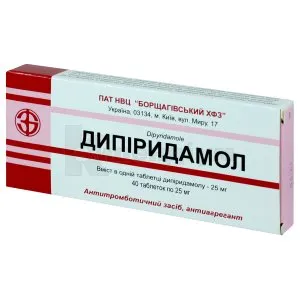
Table of Contents
INSTRUCTION FOR MEDICAL USE OF THE MEDICINAL PRODUCT DIPYRIDAMOLE (DIPYRIDAMOLE)
Composition:
Active substance: dipyridamole;
1 tablet contains dipyridamole (calculated as 100% dry substance) – 25 mg;
Excipients: potato starch, lactose monohydrate, calcium stearate.
Pharmaceutical form. Tablets.
Main physicochemical characteristics: round, biconvex tablets of yellow color with a greenish tint.
Pharmacotherapeutic group. Antithrombotic agents. Antiaggregants. Dipyridamole. ATC code B01AC07.
Pharmacological Properties.
Pharmacodynamics.
Dipyridamole dilates coronary vessels, increases the volumetric velocity of coronary blood flow, improves oxygen supply to the myocardium, and enhances its resistance to hypoxia. It promotes improvement of blood circulation in the collateral vascular network in case of disturbances in the main coronary vessels. It reduces total peripheral vascular resistance, slightly decreases systemic arterial pressure, and improves cerebral circulation. Dipyridamole is a competitive inhibitor of adenosine deaminase—an enzyme that breaks down adenosine—and promotes increased adenosine formation, which participates in the autoregulation of coronary blood flow. The drug inhibits platelet aggregation and prevents thrombus formation. This effect is apparently due to stimulation of prostacyclin synthesis and inhibition of thromboxane biosynthesis. The influence of the drug on arachidonic acid metabolism is associated with increased prostacyclin synthesis in the vascular wall. The anti-aggregatory activity of dipyridamole is similar to that of acetylsalicylic acid.
Pharmacokinetics.
The bioavailability of the drug is 37–66%. Time to reach maximum plasma concentration – 40–60 minutes. Plasma protein binding – 80–95%. It rapidly penetrates into tissues. It is metabolized in the liver to form monoglucuronide, which is excreted with bile.
Clinical characteristics.
Indications.
- Prevention and treatment of arterial and venous thrombosis and their complications (including prevention of thromboembolism after heart valve replacement surgery);
- ischemic-type cerebrovascular disorders;
- microcirculation disorders (as part of complex therapy).
Contraindications.
- Hypersensitivity to dipyridamole or to any of the other components of the drug;
- acute myocardial infarction;
- unstable angina;
- decompensated heart failure;
- severe cardiac arrhythmias;
- severe arterial hypotension (systolic pressure below 90 mm Hg);
- collapse;
- hemorrhagic diatheses, diseases associated with bleeding risk (e.g., peptic ulcer of the stomach and duodenum);
- severe renal or hepatic insufficiency;
- widespread stenosing atherosclerosis of coronary arteries;
- subaortic aortic stenosis;
- bronchial asthma, obstructive lung diseases.
Interaction with other medicinal products and other forms of interactions.
Adenosine: dipyridamole inhibits the reuptake of adenosine and increases its plasma levels and cardiovascular effects (significant risk of toxicity). Doses of adenosine should be adjusted when used concomitantly.
Fludarabine: possible reduction in fludarabine absorption and decreased efficacy.
Coumarin-type anticoagulants, acetylsalicylic acid, heparin, clopidogrel, as well as β-lactam antibiotics (penicillins, cephalosporins), tetracyclines, chloramphenicol: enhanced anticoagulant and antiplatelet effects. The combination of dipyridamole with coumarin anticoagulants, heparin does not alter prothrombin time, but may increase the risk of serious bleeding. The combination of dipyridamole with aspirin does not increase the frequency of bleeding. There is an increased risk of bleeding when clopidogrel is used with dipyridamole. When using the drug with acetylsalicylic acid or anticoagulants, information regarding risks and incompatibilities of these medicinal products should be taken into account.
Phenindione: the antiplatelet action of dipyridamole enhances the anticoagulant effect of phenindione.
Cholinesterase inhibitors: dipyridamole may counteract the anticholinesterase effects of cholinesterase inhibitors, potentially causing exacerbation of myasthenia gravis.
Medicinal products with antimuscarinic properties: dipyridamole exerts some antimuscarinic effect. Additive antimuscarinic effects, both peripheral and central, may occur when two or more drugs with antimuscarinic properties are used concomitantly.
Antihypertensive agents: enhanced hypotensive effect.
Antacids, sorbents, and protective agents: reduced absorption of dipyridamole, resulting in decreased blood concentration and reduced efficacy.
Xanthine derivatives (caffeine, theophylline, aminophylline), caffeine-containing products: diminished coronary vasodilatory effect of dipyridamole, reduced efficacy.
Digoxin: possible slight increase in digoxin absorption.
Special precautions for use.
The drug should be prescribed with caution to patients:
- with arterial hypotension;
- with severe coronary artery disease (e.g., recent myocardial infarction, heart failure) – due to vasodilatory effects, substernal pain may be exacerbated; administration of high doses may cause the "steal" syndrome (reduced blood supply to ischemic areas of the myocardium);
- with myasthenia gravis (risk of exacerbation) – dosage adjustment of dipyridamole may be required;
- when used concomitantly with drugs that increase the risk of bleeding.
Oral administration of dipyridamole should be discontinued 24 hours before performing an ECG stress test with intravenous dipyridamole (stress testing).
Dipyridamole use may lead to migraine exacerbation.
High-dose dipyridamole therapy may lead to increased plasma levels of liver enzymes and hepatic failure. Cases of incorporation of non-conjugated dipyridamole into gallstones (up to 70% of the dry weight of the concrement) have been reported in elderly patients with signs of cholangitis after several years of dipyridamole treatment.
There is no data on the use of the drug in elderly patients or in patients with hepatic or renal insufficiency; therefore, it should be used with caution in these cases.
During treatment, avoid frequent consumption of strong coffee or tea.
The drug should not be used in patients with lactase deficiency, galactosemia, or glucose-galactose malabsorption syndrome (the drug contains lactose).
Use during pregnancy or breastfeeding.
The drug should not be used during pregnancy.
The drug passes into breast milk; therefore, breastfeeding should be discontinued during treatment.
Ability to affect reaction rate while driving or operating machinery.
Possible reduction in arterial pressure and consequent cerebral hypoperfusion may affect the ability to drive or operate potentially hazardous machinery; therefore, caution is advised.
Method of Administration and Dosage
The drug should be taken orally, 1 hour before meals, without chewing or breaking the tablets, and swallowed with a small amount of water. The recommended daily dose for adults and children aged 12 years and older is 75–225 mg (3–9 tablets), divided into 3 doses. In severe cases, the dose may be gradually increased up to 600 mg.
The duration of treatment depends on the nature and severity of the disease and usually lasts from several weeks to several months.
Children.
The drug is indicated for children aged 12 years and older, as there is insufficient clinical experience regarding its use in children under 12 years of age.
Overdose.
Symptoms: generalized vasodilation, arterial hypotension, increased sweating, headache, irritability, angina attacks, tachycardia, sensation of warmth, facial flushing, weakness, dizziness.
Treatment: symptomatic therapy: gastric lavage, induction of vomiting, and measures to reduce drug absorption (administration of sorbents). Slow intravenous injection of xanthine derivatives (e.g., 50–100 mg aminophylline administered over 1 minute) blocks the vasodilatory effect of dipyridamole. To correct arterial hypotension, vasopressor agents should be administered, particularly mesaton (phenylephrine) at a dose of 0.5–1 ml intramuscularly. In case of angina attacks, sublingual nitroglycerin should be used.
Due to the high degree of plasma protein binding of dipyridamole, dialysis is ineffective.
Adverse reactions.
Immune system: hypersensitivity reactions, including itching, skin rashes, urticaria, bronchospasm, angioedema.
Nervous system: headache and dizziness of vascular origin, weakness, fainting, tremor.
Cardiovascular system: chest pain, palpitations, exacerbation of symptoms of ischemic heart disease such as angina, arrhythmia (including tachycardia, bradycardia), myocardial infarction, arterial hypotension, sensation of warmth, especially in patients taking vasodilators, facial skin hyperemia (flushing), coronary steal syndrome.
Gastrointestinal tract: dyspepsia, epigastric discomfort/pain, nausea, vomiting, diarrhea.
Hepatobiliary system: increased levels of liver enzymes; there have been reports that dipyridamole is a component of gallbladder stones.
Other: myalgia, arthritis, increased bleeding during or after surgical procedures, hemorrhage, thrombocytopenia, changes in platelet functional properties.
Reporting suspected adverse reactions
Reporting suspected adverse reactions after drug registration is of great importance. It allows continuous monitoring of the benefit-risk balance of the drug. Medical and pharmaceutical professionals, as well as patients or their legal representatives, should report all suspected adverse reactions and lack of drug efficacy via the Automated Pharmacovigilance Information System at the following link: https://aisf.dec.gov.ua.
Shelf life. 4 years.
Storage conditions.
Store in the original packaging at a temperature not exceeding 25 °C.
Keep out of reach of children.
Packaging.
20 tablets in a blister, 2 blisters per carton. 10 tablets in a blister, 4 blisters per carton.
Prescription status. Prescription only.
Manufacturer.
Public Joint-Stock Company "Scientific and Production Center "Borshchagovskiy Chemical and Pharmaceutical Plant".
Limited Liability Company "Agrofarm".
Manufacturer's location and address of business activity.
Ukraine, 03134, Kyiv, Miru St., 17.
Ukraine, 08200, Kyiv Oblast, Irpin, Centralna St., 113-A.