Dipyridamole
Ukraine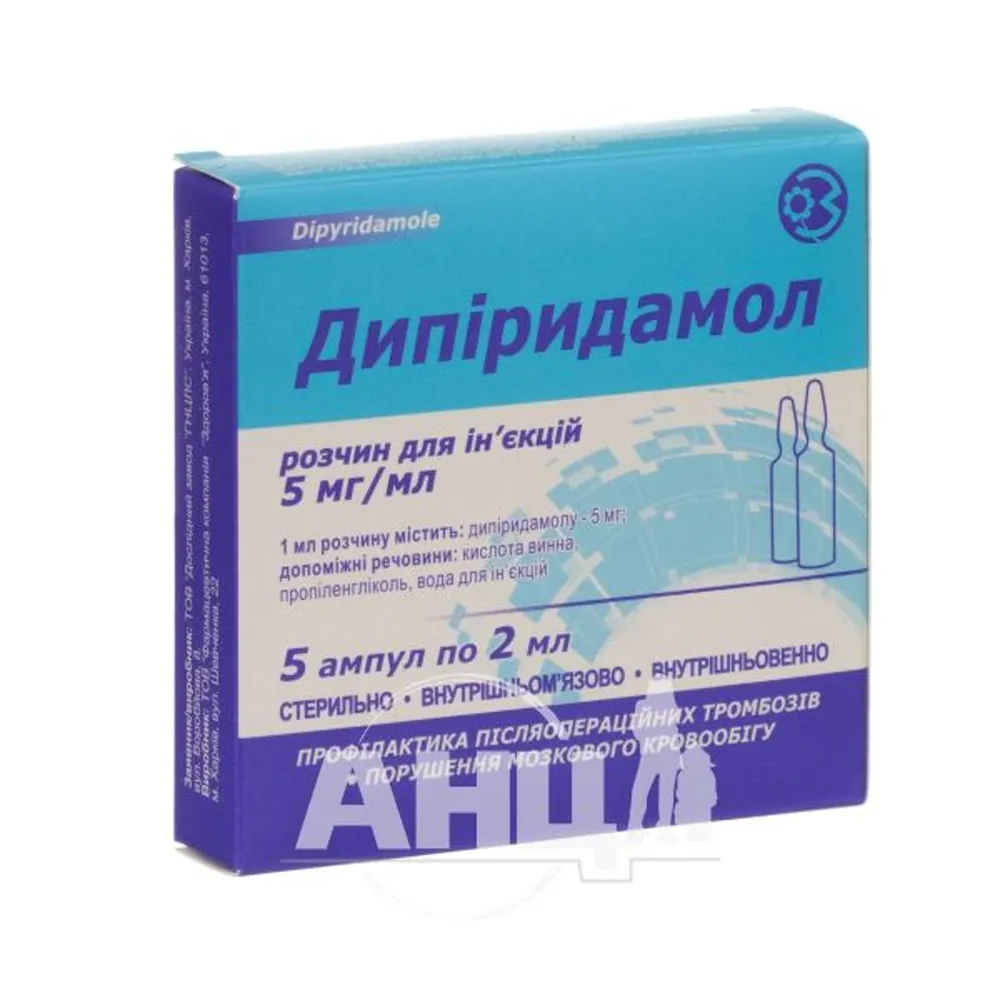
Table of Contents
INSTRUCTION FOR MEDICAL USE OF THE MEDICINAL PRODUCT DIPYRIDAMOLE
Composition:
Active substance: dipyridamole;
1 ml of solution contains 5 mg of dipyridamole;
Excipients: tartaric acid, propylene glycol, water for injections.
Pharmaceutical form. Solution for injection.
Main physicochemical properties: yellow transparent liquid.
Pharmacotherapeutic group.
Antithrombotic agents. Antiaggregants. ATC code B01AC07.
Pharmacological Properties.
Pharmacodynamics. Dipyridamole dilates coronary vessels, increases volumetric velocity of coronary blood flow, improves oxygen supply to the myocardium, and enhances its resistance to hypoxia. It promotes improvement of blood circulation in the collateral vascular network in case of disturbances in the main coronary vessels. Dipyridamole reduces total peripheral vascular resistance, slightly decreases systemic arterial pressure, and improves cerebral blood flow. Dipyridamole is a competitive inhibitor of adenosine deaminase—an enzyme that degrades adenosine—and thereby promotes increased formation of adenosine, which participates in autoregulation of coronary blood flow. The drug inhibits platelet aggregation and prevents thrombus formation. This effect is apparently due to stimulation of prostacyclin synthesis and inhibition of thromboxane biosynthesis. The drug's effect on arachidonic acid metabolism is associated with increased prostacyclin production in the vascular wall. The antiaggregatory activity of dipyridamole is similar to that of acetylsalicylic acid.
Pharmacokinetics. Bioavailability of the drug is 37–66%. Time to reach maximum plasma concentration is 40–60 minutes. Plasma protein binding is 80–95%. It rapidly penetrates into tissues. It is metabolized in the liver to form monoglucuronide, which is excreted with bile.
Clinical characteristics.
Indications. As an antiplatelet agent for the prevention of postoperative thrombosis and cerebral circulation disorders.
Contraindications. Hypersensitivity to the components of the drug. Widespread coronary artery atherosclerosis, acute myocardial infarction, decompensated heart failure, arrhythmias, arterial hypotension (collapse), unstable angina, subaortic stenosis, renal failure, bronchial asthma, obstructive lung diseases, severe hepatic insufficiency, hemorrhagic diatheses, diseases with a tendency to bleeding (peptic ulcer of the stomach and duodenum).
Interaction with other medicinal products and other types of interactions. Dipiridamol is incompatible with xanthine derivatives.
Concomitant use of dipyridamole with cholinesterase inhibitors may worsen the course of the disease in patients with myasthenia gravis.
The use of the drug with heparin increases the risk of hemorrhagic complications.
When used concomitantly with anticoagulants, acetylsalicylic acid, heparin, as well as β-lactam antibiotics (penicillins, cephalosporins), tetracyclines, chloramphenicol, an enhanced antiplatelet effect is observed. Administration of dipyridamole with heparin may be accompanied by a risk of hemorrhagic complications. Xanthine derivatives reduce the coronary dilating effect of the drug. Antacids, sorbents, and coating agents reduce the absorption of dipyridamole, leading to a decrease in its maximum plasma concentration and reduced efficacy.
Dipyridamole enhances the hypotensive effect of antihypertensive agents and reduces the anticholinergic properties of cholinesterase inhibitors.
Dipyridamole increases plasma adenosine levels and its cardiovascular effects. Therefore, dose adjustment of adenosine may be required.
Special precautions for use.
When administering parenterally, care must be taken to avoid injecting the drug subcutaneously (irritant effects may occur).
Coronary artery disease. High doses of the drug may cause the "steal" syndrome, i.e. reduced blood supply to ischemic areas of the myocardium. Dipyridamole has a vasodilatory effect; therefore, it should be used with caution in patients with severe coronary artery disease (e.g. unstable angina or recent myocardial infarction). In such patients, dipyridamole may exacerbate substernal pain.
Hepatic impairment. Administration of high doses of dipyridamole may lead to increased levels of liver enzymes and hepatic failure.
There are no data on the use of the drug in elderly patients with hepatic or renal impairment; therefore, it should be used with caution in such cases.
Arterial hypotension. Dipyridamole should be used with caution in patients with arterial hypotension due to its potential to cause peripheral vasodilation.
Use during pregnancy or breastfeeding. The drug should not be used during pregnancy.
The drug passes into breast milk; therefore, breastfeeding should be discontinued during treatment with this drug.
Ability to influence reaction rate when driving or operating machinery. Caution should be exercised when driving or operating machinery during treatment with this drug.
Method of Administration and Dosage
For adults and children aged 12 years and older: administer 1–2 mL of the 0.5% solution daily by intramuscular or slow intravenous injection. The duration of treatment is determined individually and depends on the degree of risk of thromboembolic complications.
Children. Not recommended for children under 12 years of age.
Overdose. Symptoms: sensation of warmth, facial flushing, increased sweating, irritability, general weakness and dizziness, arterial hypotension, tachycardia, angina attacks.
Treatment: use of adsorbents; symptomatic treatment with vasopressor agents is recommended. Administration of xanthine derivatives (e.g., aminophylline) inhibits the vasodilatory effect of dipyridamole.
Due to the high degree of protein binding of dipyridamole, dialysis is ineffective.
The vasodilatory effect of dipyridamole can be terminated by intravenous administration of aminophylline (50–100 mg over 1 minute). In case of angina attacks, sublingual nitroglycerin should be administered.
Adverse Reactions.
Cardiovascular system: palpitations, bradycardia, arrhythmias, arterial hypotension, sensation of warmth and tachycardia, especially in patients taking vasodilators, exacerbation of ischemic heart disease (angina and arrhythmia), coronary steal syndrome, decreased blood pressure with rapid intravenous administration.
Gastrointestinal tract: nausea, vomiting, diarrhea, epigastric pain, dyspepsia.
Blood system: thrombocytopenia, changes in platelet functional properties, bleeding; very rarely increased tendency to bleeding during or after surgical procedures has been observed.
Nervous system: headache, weakness, vascular dizziness, loss of consciousness, tremor.
Skin and subcutaneous tissue: allergic reactions, including transient skin rashes, urticaria.
Immune system: possible severe bronchospasm and Quincke's edema.
Musculoskeletal system: muscle pain, arthritis, myalgia.
Hepatobiliary system: there have been reports that dipyridamole is a component of gallstones.
General disorders: general weakness, sensation of ear fullness, tinnitus, facial skin hyperemia, rhinitis, injection site reactions.
Shelf life. 3 years.
Storage conditions. Store at a temperature not exceeding 25 °C in the original packaging.
Keep out of reach of children.
Incompatibility. The drug solution must not be mixed in the same syringe with other medicinal products.
Packaging. 2 ml in ampoules, pack of 5 in a carton; pack of 5 in a blister in a carton.
Prescription category. Prescription only.
Manufacturer.
Limited Liability Company "Experimental Plant 'GNCLS'".
LIMITED LIABILITY COMPANY "CORPORATION 'ZDOROVIYA'".
Manufacturer's address and place of business.
8 Vorobiova Street, Kharkiv, Kharkiv Oblast, Ukraine.
(Limited Liability Company "Experimental Plant 'GNCLS')
22 Shevchenka Street, Kharkiv, Kharkiv Oblast, 61013, Ukraine.
(LIMITED LIABILITY COMPANY "CORPORATION 'ZDOROVIYA')