Dinastat
Ukraine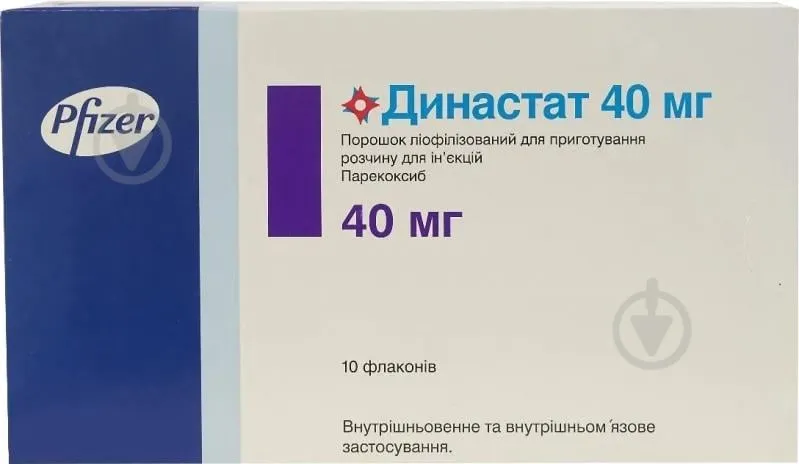
Table of Contents
INSTRUCTION FOR MEDICAL USE OF THE MEDICINAL PRODUCT DYNASTAT (DYNASTAT)
Composition:
Active substance: parecoxib;
One vial contains 40 mg of parecoxib as 42.36 mg of parecoxib sodium;
Excipients: anhydrous sodium hydrogen phosphate;
Solvent: sodium chloride, water for injections.
Pharmaceutical form. Lyophilisate for solution for injection.
Main physicochemical properties: solid, white to almost white substance in a closed transparent glass vial of 5 ml (40 mg).
Solvent: clear, colorless solution.
Pharmacotherapeutic group. Non-steroidal anti-inflammatory and anti-rheumatic drugs. Coxibs. ATC code M01AH04.
Pharmacological Properties.
Pharmacodynamics.
Parecoxib is a prodrug of valdecoxib. Valdecoxib is a selective inhibitor of cyclooxygenase-2 (COX-2) within the clinical dose range. Cyclooxygenase is responsible for the formation of prostaglandins. Two isoforms of cyclooxygenase have been identified: cyclooxygenase-1 (COX-1) and cyclooxygenase-2 (COX-2). COX-2 is the enzyme isoform that is induced by pro-inflammatory signals and is considered primarily responsible for the synthesis of prostanoic mediators of pain, inflammation, and fever. COX-2 also plays a role in ovulation, implantation, and closure of the ductus arteriosus, regulation of renal function, and functions of the central nervous system (induction of fever, pain perception, and cognitive function). It may also play a role in ulcer healing. COX-2 has been identified in tissues surrounding gastric ulcers in humans, although its role in ulcer healing has not been established.
The difference in antiplatelet activity between traditional non-selective nonsteroidal anti-inflammatory drugs (NSAIDs) that inhibit COX-1 and selective COX-2 inhibitors may have clinical significance in patients at risk of thromboembolic events. Selective COX-2 inhibitors reduce the formation of systemic (and thus possibly endothelial) prostacyclins without affecting platelet thromboxane. The clinical significance of these findings has not been established.
Parecoxib has been used during various major and minor surgical procedures. The efficacy of Dynastat has been demonstrated in clinical studies involving dental, gynecological (hysterectomy), orthopedic (knee and hip replacement), and post-coronary artery bypass graft (CABG) surgery. The first noticeable analgesic effect was observed within 7–13 minutes, and clinically significant analgesia occurred within 23–39 minutes after intravenous or intramuscular administration of single doses of Dynastat at 40 mg, with maximum effect observed within 2 hours. The analgesic effect of a 40 mg dose was comparable to that of 60 mg ketorolac administered intramuscularly or 30 mg administered intravenously. After a single dose, the duration of analgesia depended on the dose and the clinical pain model and ranged from 6 to over 12 hours.
Use of parecoxib for more than 3 days.
In most clinical studies, parecoxib was administered for up to 3 days. Data from 3 randomized, placebo-controlled trials in which use of parecoxib for more than 3 days was permitted according to protocols were pooled and analyzed. According to the pooled analysis of 676 patients, 318 patients received placebo and 358 patients received parecoxib. Among patients treated with parecoxib, 317 received it for up to 4 days, 32 for up to 5 days, while only 8 patients received the drug for up to 6 days and 1 patient for 7 or more days. Among patients receiving placebo, 270 received it for up to 4 days, 43 for up to 5 days, while only 3 patients received placebo for up to 6 days and 2 patients for 7 or more days. Demographic characteristics were similar in both groups. Mean (SD) duration of treatment was 4.1 (0.4) days in the parecoxib group and 4.2 (0.5) days in the placebo group, with a range of 4–7 days in the parecoxib group and 4–9 days in the placebo group. The incidence of adverse reactions in patients who received parecoxib for 4–7 days (mean duration 4 days) was low after day 3 and comparable to that in the placebo group.
Opioid-sparing effect.
In a placebo-controlled study involving orthopedic and general surgical procedures (n=1050), patients received parenteral Dynastat initially at a dose of 40 mg, followed by 20 mg twice daily for at least 72 hours as an adjunct to standard therapy, which included controlled additional opioid use. Reduction in opioid use during treatment with Dynastat on day 2 and day 3 was 7.2 mg and 2.8 mg (37% and 28%, respectively). This reduction in opioid use was associated with a significant decrease in opioid-related distress symptoms as reported by patients. Additional pain reduction was demonstrated compared to opioid use alone. Similar results were obtained in additional studies involving other surgical conditions. There are no data indicating a lower overall incidence of adverse events with parecoxib compared to placebo when administered in combination with opioids.
Gastrointestinal tract pathology studies.
In short-term studies (7 days), the incidence of gastric and duodenal ulcers or erosions detected by endoscopy in healthy young and elderly volunteers (≥65 years) receiving Dynastat (5–21%) was higher than in the placebo group (5–12%), but was statistically significantly lower than with non-selective NSAIDs (66–90%).
Safety studies after coronary artery bypass graft (CABG) surgery.
In addition to commonly reported adverse events, two placebo-controlled trials in which patients received parecoxib for at least 3 days followed by oral valdecoxib for a total of 10–14 days evaluated predefined categories of adverse reactions determined by an independent expert committee. All patients received standard analgesic therapy during treatment.
Low-dose acetylsalicylic acid was administered to patients before randomization and throughout both CABG surgery trials.
In the first CABG surgery trial, patients received intravenous parecoxib 40 mg twice daily for at least 3 days followed by valdecoxib 40 mg twice daily (parecoxib/valdecoxib group) (n=311) or placebo/placebo (n=151) in a 14-day double-blind, placebo-controlled study. Nine predefined categories of adverse reactions were evaluated (cardiovascular thromboembolic events, pericarditis, onset or worsening of congestive heart failure, renal failure/renal dysfunction, upper gastrointestinal ulcer complications, significant non-gastrointestinal bleeding, infections, non-infectious pulmonary complications, and deaths). The parecoxib/valdecoxib group showed a significantly (p<0.05) higher incidence of cardiovascular/thromboembolic events (myocardial infarction, ischemia, acute cerebrovascular events, deep vein thrombosis, and pulmonary embolism) compared to the placebo/placebo group during the intravenous treatment period (2.2% vs. 0.0%, respectively) and over the entire study period (4.8% vs. 1.3%, respectively). Postoperative wound complications (mainly sternal wounds) occurred more frequently in the parecoxib/valdecoxib treatment group.
In the second CABG surgery trial, four predefined categories of adverse reactions were evaluated (cardiovascular/thromboembolic; renal dysfunction/renal failure; upper gastrointestinal ulcer/bleeding; surgical wound complications). Patients were randomized to receive, within 24 hours after CABG surgery: intravenous parecoxib with an initial dose of 40 mg followed by 20 mg intravenously every 12 hours for at least 3 days, then switched to oral valdecoxib (20 mg every 12 hours) (n=544) for the remainder of a 10-day treatment period; intravenous placebo followed by oral valdecoxib (n=544); or intravenous placebo followed by oral placebo (n=548). A significantly (p=0.033) higher incidence of adverse reactions in the cardiovascular/thromboembolic category was observed in the parecoxib/valdecoxib group (2.0%) compared to the placebo/placebo group (0.5%). Treatment with placebo/valdecoxib also showed a higher incidence of cardiovascular thromboembolic events compared to placebo, although this difference did not reach statistical significance. Three of the six cardiovascular thromboembolic events in the placebo/valdecoxib group occurred during the placebo treatment period; these patients did not receive valdecoxib. The most frequently occurring predefined adverse reactions across all three treatment groups involved surgical wound complications, particularly deep postoperative infections and sternal wound healing disturbances.
No significant difference was observed between active treatment and placebo for any other predefined category of adverse reactions (renal dysfunction/renal failure; upper gastrointestinal ulcer complications; or surgical wound complications).
General surgery.
In a large-scale (N=1050) study involving major orthopedic/general surgical procedures, patients received intravenous parecoxib with an initial dose of 40 mg followed by 20 mg intravenously every 12 hours for at least 3 days, then switched to oral valdecoxib (20 mg every 12 hours) (n=525) for the remainder of a 10-day treatment period, or received intravenous placebo followed by oral placebo (n=525). No significant difference was observed in the overall safety profile (including the four predefined categories of adverse reactions described above for the second CABG surgery study) between parecoxib/valdecoxib and placebo treatment in these post-surgical patients.
Studies on platelet effects.
In several small multiple-dose studies involving healthy young and elderly volunteers, Dynastat at doses of 20 mg or 40 mg twice daily did not affect platelet aggregation or bleeding compared to placebo. In young patients, Dynastat 40 mg twice daily did not clinically significantly interfere with acetylsalicylic acid-mediated platelet function inhibition (see section "Interaction with other medicinal products and other forms of interaction").
Pharmacokinetics.
After intravenous or intramuscular injection, parecoxib is rapidly converted to valdecoxib, the pharmacologically active substance, via enzymatic hydrolysis in the liver.
Absorption.
Exposure to valdecoxib after single doses of Dynastat, measured by the area under the plasma concentration-time curve (AUC) and peak concentration (Cmax), is approximately linear within the clinical dose range. AUC and Cmax after twice-daily administration are linear up to 50 mg intravenously and 20 mg intramuscularly. Steady-state plasma concentrations are achieved within 4 days with twice-daily dosing.
After intravenous and intramuscular administration of single 20 mg doses of parecoxib, Cmax of valdecoxib is reached approximately within 30 minutes and 1 hour, respectively. Exposure to valdecoxib after intravenous and intramuscular administration is similar in terms of AUC and Cmax. Exposure to parecoxib after intravenous or intramuscular administration is similar in terms of AUC. The mean Cmax of parecoxib after intramuscular administration is lower than after intravenous bolus injection, due to slower extravascular absorption after intramuscular injection. This reduction is not considered clinically significant, as Cmax of valdecoxib is comparable after intravenous and intramuscular administration of parecoxib.
Distribution.
The volume of distribution of valdecoxib after intravenous administration is approximately 55 liters. It is approximately 98% bound to plasma proteins over the concentration range achieved with the highest recommended dose of 80 mg/day. Valdecoxib, but not parecoxib, is extensively distributed into erythrocytes.
Biotransformation.
Parecoxib is rapidly and almost completely converted to valdecoxib and propionic acid in vivo, with a plasma half-life of approximately 22 minutes. Valdecoxib is eliminated via active hepatic metabolism involving multiple metabolic pathways, including cytochrome P450 (CYP) 3A4 and CYP2C9 enzymes, as well as glucuronidation (about 20%) of the sulfonamide group. A hydroxylated metabolite of valdecoxib (via CYP pathway) acting as a COX-2 inhibitor has been identified in human plasma. This metabolite accounts for about 10% of valdecoxib concentration; due to its low concentration, it is not expected to contribute significantly to the clinical effect after therapeutic doses of parecoxib.
Elimination.
Valdecoxib is eliminated via hepatic metabolism, with less than 5% of unchanged valdecoxib excreted in urine. Unchanged parecoxib is not detected in urine, and only traces are found in feces. Approximately 70% of the dose is excreted in urine as inactive metabolites. Plasma clearance (CLp) of valdecoxib is about 6 L/h. After intravenous or intramuscular administration of parecoxib, the elimination half-life (t1/2) of valdecoxib is approximately 8 hours.
Elderly patients.
Dynastat was administered to 335 elderly patients (65–96 years) in pharmacokinetic and therapeutic effect studies. In healthy elderly volunteers, apparent oral clearance of valdecoxib was reduced, resulting in approximately 40% higher plasma exposure to valdecoxib compared to healthy young volunteers. When adjusted for body weight, steady-state plasma exposure to valdecoxib was 16% higher in elderly women compared to elderly men (see section "Method and dosage").
Renal impairment.
In patients with varying degrees of renal impairment who received intravenous Dynastat 20 mg, parecoxib was rapidly cleared from plasma. Since renal excretion of valdecoxib does not play a significant role in its disposition, no changes in valdecoxib clearance were observed even in patients with severe renal impairment or those on dialysis (see section "Method and dosage").
Hepatic impairment.
Moderate hepatic impairment does not reduce the rate or extent of conversion of parecoxib to valdecoxib. In patients with moderate hepatic impairment (Child-Pugh score 7–9), treatment should begin with half the usual recommended dose of Dynastat, and the maximum daily dose should be reduced to 40 mg, as exposure to valdecoxib is increased by more than 2-fold (130%). Studies in patients with severe hepatic impairment have not been conducted; therefore, Dynastat is not recommended for patients with severe hepatic impairment (see sections "Method and dosage" and "Contraindications").
Clinical characteristics.
Indications.
Treatment of acute pain. Preoperative (preventive) analgesia. Short-term treatment of postoperative pain in adults. Use in combination with opioid analgesics to reduce opioid requirements.
The decision to prescribe a selective COX-2 inhibitor should be based on an assessment of all individual patient risk factors.
Contraindications.
Hypersensitivity to the active substance or to any of the excipients of the medicinal product.
Severe allergic reactions of any type to the drug in medical history, particularly skin reactions, including Stevens–Johnson syndrome, drug reaction with eosinophilia and systemic symptoms (DRESS syndrome), toxic epidermal necrolysis, erythema multiforme, or established hypersensitivity to sulfonamides in patients (see sections "Special precautions for use" and "Adverse reactions").
Active peptic ulcer or gastrointestinal bleeding.
History of bronchospasm, acute rhinitis, nasal polyps, angioedema, urticaria, or other types of allergic reactions after administration of acetylsalicylic acid or nonsteroidal anti-inflammatory drugs, including COX-2 inhibitors.
Third trimester of pregnancy or breastfeeding (see section "Use during pregnancy or breastfeeding").
Severe hepatic impairment (serum albumin < 25 g/L or Child–Pugh score ≥ 10).
Inflammatory bowel disease.
Congestive heart failure (NYHA II–IV).
Postoperative pain treatment following coronary artery bypass graft (CABG) surgery (see sections "Adverse reactions" and "Pharmacodynamics").
Established ischemic heart disease, peripheral arterial disease, and/or cerebrovascular disease.
Interaction with other medicinal products and other forms of interactions.
Pharmacodynamic interactions.
Patients receiving warfarin or other anticoagulants should be monitored for anticoagulant therapy, especially during the first few days after initiating treatment with Dynastat, as such patients have an increased risk of bleeding complications. Therefore, in patients receiving oral anticoagulants, international normalized ratio (INR) and prothrombin time must be carefully monitored, particularly during the first few days after starting treatment with parecoxib or after changing the dose of this drug (see section "Special precautions for use").
Dynastat does not affect acetylsalicylic acid-mediated inhibition of platelet aggregation or bleeding time. Clinical study results indicate that Dynastat can be used concomitantly with low-dose acetylsalicylic acid (≤ 325 mg). In clinical trials, it has been demonstrated that, as with other nonsteroidal anti-inflammatory drugs, concomitant use of low-dose acetylsalicylic acid increases the risk of gastrointestinal ulcers or other gastrointestinal complications compared to parecoxib monotherapy (see section "Pharmacodynamics").
Concomitant administration of parecoxib and heparin did not affect heparin pharmacodynamics (activated partial thromboplastin time) compared to heparin monotherapy.
Inhibition of prostaglandins by nonsteroidal anti-inflammatory drugs, including COX-2 inhibitors, may reduce the effects of angiotensin-converting enzyme (ACE) inhibitors, angiotensin-II antagonists, beta-blockers, and diuretics. This interaction should be considered in patients taking parecoxib concomitantly with ACE inhibitors, angiotensin-II antagonists, beta-blockers, and diuretics.
In elderly patients, patients with reduced blood volume (particularly those receiving diuretic therapy), or patients with impaired renal function, concomitant use of nonsteroidal anti-inflammatory drugs, including selective cyclooxygenase-2 inhibitors, with ACE inhibitors or angiotensin-II antagonists may lead to further deterioration of renal function, including possible development of acute renal failure. These effects are usually reversible.
Therefore, caution should be exercised when using these drugs concomitantly. Patients should drink sufficient fluids; monitoring of renal function should be considered at the start of combined treatment and periodically during therapy.
Concomitant use of nonsteroidal anti-inflammatory drugs and cyclosporine or tacrolimus is considered to increase the nephrotoxic effects of cyclosporine and tacrolimus due to the effect of nonsteroidal anti-inflammatory drugs on renal prostaglandins. When parecoxib is used concomitantly with either of these drugs, renal function must be closely monitored.
Dynastat can be used concomitantly with opioid analgesics. In clinical studies, daily opioid doses required were significantly reduced when administered concomitantly with parecoxib.
Effect of other medicinal products on the pharmacokinetics of parecoxib (or its active metabolite, valdecoxib).
Parecoxib is rapidly hydrolyzed to form the active metabolite valdecoxib. According to study results in humans, valdecoxib metabolism is primarily mediated by CYP2C9 and CYP3A4 isoenzymes.
When the drug was administered concomitantly with fluconazole (predominantly a CYP2C9 inhibitor), exposure to valdecoxib in plasma (AUC and Cmax) increased (by 62% and 19%, respectively), indicating the need to reduce the dose of parecoxib in patients receiving fluconazole therapy.
When the drug was administered concomitantly with ketoconazole (predominantly a CYP3A4 inhibitor), exposure to valdecoxib in plasma (AUC and Cmax) increased (by 38% and 24%, respectively), but dose adjustment is generally not required in patients receiving ketoconazole.
The effect of enzyme induction has not been studied. Valdecoxib metabolism may be increased when administered concomitantly with enzyme inducers, such as rifampicin, phenytoin, carbamazepine, or dexamethasone.
Effect of parecoxib (or its active metabolite valdecoxib) on the pharmacokinetics of other medicinal products.
Treatment with valdecoxib (40 mg twice daily for 7 days) resulted in a threefold increase in plasma concentrations of dextromethorphan (a CYP2D6 substrate). Therefore, caution is required when administering Dynastat concomitantly with medicinal products that are primarily metabolized by CYP2D6 and have a narrow therapeutic window (e.g., flecainide, propafenone, metoprolol).
Exposure to omeprazole (a CYP2C19 substrate) in plasma increased by 46% when administered at a dose of 40 mg once daily after administration of valdecoxib at 40 mg twice daily for 7 days, while exposure to valdecoxib in plasma remained unchanged. These results indicate that although valdecoxib is not metabolized by CYP2C19, it may inhibit this isoenzyme. Therefore, caution is required when administering Dynastat concomitantly with medicinal products known to be CYP2C19 substrates (such as phenytoin, diazepam, or imipramine).
In two pharmacokinetic interaction studies, patients with rheumatoid arthritis receiving a stable weekly dose of methotrexate (5–20 mg weekly as a single oral or intramuscular dose) took valdecoxib orally (10 mg twice daily or 40 mg twice daily); in these cases, the effect on steady-state plasma concentrations of methotrexate was either absent or negligible. However, methotrexate should be used concomitantly with nonsteroidal anti-inflammatory drugs with caution, as NSAID use may lead to increased plasma levels of methotrexate. When parecoxib and methotrexate are used concomitantly, appropriate monitoring for methotrexate-related toxicity is recommended.
Concomitant administration of valdecoxib and lithium resulted in a significant reduction in lithium serum clearance (25%) and renal clearance (30%), with a 34% higher exposure to the drug in serum compared to lithium monotherapy. Serum lithium concentrations must be closely monitored at the initiation and during changes in parecoxib therapy in patients receiving lithium.
Concomitant administration of valdecoxib and glyburide (a CYP3A4 substrate) did not affect the pharmacokinetics (exposure) or pharmacodynamics (blood glucose and insulin levels) of glyburide.
Intravenous anesthetics.
Concomitant intravenous administration of parecoxib 40 mg and propofol (a CYP2C9 substrate) or midazolam (a CYP3A4 substrate) did not affect the pharmacokinetics (metabolism and exposure) or pharmacodynamics (effects on electroencephalography, psychomotor tests, and recovery from sedation) of intravenous propofol or midazolam. Additionally, concomitant administration of valdecoxib did not clinically significantly affect CYP3A4-mediated midazolam metabolism in the liver and intestine following oral administration of midazolam.
Intravenous administration of parecoxib 40 mg did not significantly affect the pharmacokinetics of fentanyl or alfentanil (CYP3A4 substrates) when administered intravenously.
Inhalational anesthetics.
Formal interaction studies have not been conducted. In surgical intervention studies where parecoxib was administered preoperatively, no signs of pharmacodynamic interaction were observed in patients receiving parecoxib and inhalational anesthetics nitrous oxide and isoflurane (see section "Pharmacodynamics").
Special precautions for use.
Dynerix was studied in dental, orthopedic, gynecological (mainly hysterectomy), and aortocoronary bypass surgery procedures. There is limited experience with its use in other types of surgical interventions, such as gastrointestinal or urological procedures (see section "Pharmacodynamics").
Other routes of administration apart from intravenous and intramuscular (e.g., intra-articular, intrathecal) have not been studied and should not be used.
Since the risk of adverse reactions increases with higher doses of parecoxib, other COX-2 inhibitors, and nonsteroidal anti-inflammatory drugs (NSAIDs), patients receiving parecoxib treatment should be monitored after dose escalation. If efficacy does not improve, alternative therapeutic options should be considered (see section "Dosage and administration"). Clinical experience with Dynerix treatment for periods longer than 3 days is limited (see section "Pharmacodynamics").
If during treatment organ system functions deteriorate in patients, as described below, appropriate measures must be taken and discontinuation of parecoxib therapy should be considered.
Cardiovascular reactions.
Long-term use of COX-2 inhibitors has been associated with an increased risk of cardiovascular and thrombotic adverse events. The exact risk level associated with single-dose administration is not established, and the duration of treatment associated with increased risk is also not clearly defined.
Patients with significant risk factors for cardiovascular events (e.g., arterial hypertension, hyperlipidemia, diabetes mellitus, smoking) should be treated with parecoxib only after careful consideration (see section "Pharmacodynamics").
If such patients develop clinical signs of worsening condition with specific symptoms, appropriate measures must be taken and discontinuation of parecoxib therapy should be considered. Dynerix has not been studied in cardiovascular revascularization procedures, except for aortocoronary bypass surgery. Studies on the use of the drug in surgical procedures other than aortocoronary bypass included only patients with ASA (American Society of Anesthesiologists) physical status class I–III.
Acetylsalicylic acid and other nonsteroidal anti-inflammatory drugs.
COX-2 inhibitors cannot replace acetylsalicylic acid in the prevention of cardiovascular thromboembolic events, as they do not reduce platelet aggregation. Therefore, antiplatelet therapy should not be discontinued (see section "Pharmacodynamics"). Dynerix should be used with caution in combination with warfarin and other oral anticoagulants (see section "Interaction with other medicinal products and other forms of interaction"). Concurrent use of parecoxib with other nonsteroidal anti-inflammatory drugs, except acetylsalicylic acid, should be avoided.
Dynerix may mask fever and other signs of inflammation (see section "Pharmacodynamics"). In isolated cases, worsening of soft tissue infections has been reported with the use of nonsteroidal anti-inflammatory drugs and in preclinical studies of Dynerix. Postoperative patients receiving Dynerix should be carefully monitored at the surgical incision site for signs of infection.
Gastrointestinal reactions.
Upper gastrointestinal complications (perforations, ulcers, or bleeding), some of which were fatal, have been observed in patients treated with parecoxib. Treatment should be administered with caution in patients at high risk of gastrointestinal complications when using nonsteroidal anti-inflammatory drugs; including elderly patients or those with a history of gastrointestinal disease, particularly peptic ulcer or gastrointestinal bleeding, or patients receiving concomitant acetylsalicylic acid. The class of nonsteroidal anti-inflammatory drugs may also be associated with an increased risk of gastrointestinal complications when used concomitantly with glucocorticoids, selective serotonin reuptake inhibitors, other antiplatelet agents, or in patients who consume alcohol. The risk of gastrointestinal adverse effects (gastrointestinal ulcers or other gastrointestinal complications) further increases with the concomitant use of parecoxib and acetylsalicylic acid (even at low doses).
Skin reactions.
Severe skin reactions, including erythema multiforme, exfoliative dermatitis, and Stevens–Johnson syndrome (some fatal), have been reported in patients receiving parecoxib during post-marketing surveillance. Additionally, fatal cases of toxic epidermal necrolysis have been reported in patients receiving valdecoxib (the active metabolite of parecoxib) during post-marketing surveillance; therefore, the occurrence of this condition cannot be excluded with parecoxib use (see section "Adverse reactions"). The use of some NSAIDs and selective COX-2 inhibitors has been associated with an increased risk of generalized bullous fixed drug eruptions. Based on other severe skin reactions reported with celecoxib and valdecoxib, DRESS syndrome may occur during parecoxib treatment. Patients likely have the highest risk of these reactions early in therapy; reactions typically occurred within the first month of treatment.
Appropriate measures should be taken to monitor for any severe skin reactions, such as additional patient consultations. Patients should be advised to immediately inform their physician of any skin changes.
Parecoxib treatment should be discontinued at the first appearance of skin rash, mucosal changes, or any signs of hypersensitivity. Severe skin reactions have been reported with the use of nonsteroidal anti-inflammatory drugs, including selective COX-2 inhibitors, and other medicinal products. However, the incidence of severe skin events appears to be higher with valdecoxib (the active metabolite of parecoxib) compared to other selective COX-2 inhibitors. Patients with a history of sulfonamide allergy may have an increased risk of skin reactions (see section "Contraindications"). Patients without a history of sulfonamide allergy may also be at risk of developing severe skin reactions.
Hypersensitivity.
Hypersensitivity reactions (anaphylaxis and angioedema) have been reported after the marketing of valdecoxib and parecoxib (see section "Adverse reactions"). Some of these reactions occurred in patients with a history of allergic reactions to sulfonamides (see section "Contraindications"). Parecoxib treatment should be discontinued at the first signs of hypersensitivity.
After parecoxib was marketed, cases of severe arterial hypotension shortly after administration have been reported. Some of these cases occurred without signs of anaphylaxis. Physicians should be prepared to treat severe arterial hypotension.
Fluid retention, edema, renal reactions.
As with other medicinal products known to inhibit prostaglandin synthesis, fluid retention and edema have been observed in some patients receiving parecoxib. Therefore, parecoxib should be used with caution in patients with impaired cardiac function, existing edema, and other conditions predisposing to or worsened by fluid retention, particularly in patients receiving diuretic therapy or with other risk factors for hypovolemia. If clinical signs of worsening condition occur in these patients, appropriate measures should be taken, including discontinuation of parecoxib therapy.
During post-marketing surveillance, cases of acute renal failure have been reported in patients receiving parecoxib (see section "Adverse reactions"). Since inhibition of prostaglandin synthesis may lead to impaired renal function and fluid retention, Dynerix should be used with caution in patients with impaired hepatic function (see section "Dosage and administration"), arterial hypertension, or impaired hepatic or cardiac function, or other conditions predisposing to fluid retention.
Dynerix should be used with caution at the beginning of treatment in dehydrated patients. In such cases, rehydration is recommended before initiating Dynerix therapy.
Arterial hypertension.
As with all nonsteroidal anti-inflammatory drugs, parecoxib use may lead to the onset or worsening of pre-existing arterial hypertension, potentially increasing the frequency of cardiovascular events. Parecoxib should be used with caution in patients with arterial hypertension. Careful monitoring of blood pressure is required at the beginning of therapy and throughout the treatment course. If blood pressure increases significantly, alternative treatments should be considered.
Hepatic impairment.
Dynerix should be used with caution in patients with moderate hepatic impairment (Child–Pugh score 7–9) (see section "Dosage and administration").
Use with oral anticoagulants.
Concomitant use of nonsteroidal anti-inflammatory drugs with oral anticoagulants increases the risk of bleeding. Oral anticoagulants include warfarin, other coumarin anticoagulants, and novel oral anticoagulants (e.g., apixaban, dabigatran, rivaroxaban) (see section "Interaction with other medicinal products and other forms of interaction").
Sodium content.
This medicinal product contains less than 1 mmol of sodium (23 mg) per ml, i.e., practically sodium-free.
Special precautions for handling and disposal of residues.
Dynerix must be reconstituted before use. Dynerix does not contain preservatives. Aseptic technique must be followed during reconstitution.
Reconstitution solvents.
Acceptable solvents for reconstituting Dynerix are:
- Sodium chloride 9 mg/ml (0.9%), solution for injection/infusion;
- Glucose 50 mg/ml (5%), solution for infusion;
- Sodium chloride 4.5 mg/ml (0.45%) and glucose 50 mg/ml (5%), solution for injection/infusion.
Reconstitution process.
Use aseptic technique to reconstitute lyophilized parecoxib (as parecoxib).
Remove the removable cap from the vial containing 40 mg of parecoxib to expose the center of the rubber stopper. Using a sterile needle and syringe, draw 2 ml of an acceptable solvent and insert the needle into the center of the rubber stopper to transfer the solvent into the vial containing 40 mg of the drug. Completely dissolve the powder by gently swirling and inspect the reconstituted solution before use. The entire contents of the vial are intended for single use.
After reconstitution, the solution should be clear. The reconstituted Dynerix should be visually inspected for mechanical particles and color changes before administration. The solution must not be used if it has changed color or if it is cloudy or contains mechanical particles. Dynerix must be administered within 24 hours after reconstitution or discarded.
The reconstituted preparation is isotonic.
Compatibility with infusion solution.
After reconstitution with acceptable solvents, Dynerix may be administered only intravenously or intramuscularly or into an intravenous infusion system containing the following solvents:
- Sodium chloride 9 mg/ml (0.9%), solution for injection/infusion;
- Glucose 50 mg/ml (5%), solution for infusion;
- Sodium chloride 4.5 mg/ml (0.45%) and glucose 50 mg/ml (5%), solution for injection/infusion;
or
- Ringer-lactate solution for injection.
For single use only. Any unused medicinal product or waste must be disposed of.
Data indicate that chemical and physical stability of the reconstituted solution, which must not be refrigerated or frozen, is maintained for up to 24 hours at 25°C. Therefore, the maximum shelf life of the reconstituted product is considered to be 24 hours. However, due to the significant risk of microbiological contamination of injectable products, the reconstituted solution should be used immediately, except when reconstituted under controlled and validated aseptic conditions. If such conditions were not maintained, responsibility for storage time and conditions before use lies with the user, and storage time should generally not exceed 12 hours at 25°C.
Use during pregnancy or breastfeeding.
Use during pregnancy.
There are no adequate data from the use of parecoxib in pregnant women or during labor. However, inhibition of prostaglandin synthesis may adversely affect pregnancy. Epidemiological study data suggest an increased risk of pregnancy loss after using prostaglandin synthesis inhibitors in early pregnancy. In animal studies, prostaglandin synthesis inhibitors, including parecoxib, have been shown to increase pre- and post-implantation fetal loss and embryofetal mortality (see section "Pharmacodynamics"). Use of Dynerix from the 20th week of pregnancy may cause oligohydramnios due to impaired fetal renal function. Oligohydramnios, which may develop immediately after starting treatment, usually resolves after discontinuation of therapy. Additionally, cases of fetal ductus arteriosus constriction have been reported after administration in the second trimester, most of which resolved after discontinuation of the drug. Therefore, Dynerix should not be used during the first and second trimesters of pregnancy unless clearly necessary. If Dynerix is used in women attempting to become pregnant or in pregnant women during the first and second trimesters, the dose should be as low as possible and the duration of treatment as short as possible. If Dynerix is administered for several days starting from the 20th week of pregnancy, antenatal monitoring for oligohydramnios or ductus arteriosus constriction should be considered. If oligohydramnios or ductus arteriosus constriction is detected, Dynerix use should be discontinued.
During the third trimester of pregnancy, all prostaglandin synthesis inhibitors may cause in the fetus:
- Cardio-pulmonary toxicity (premature constriction/closure of the ductus arteriosus and pulmonary hypertension);
- Impaired renal function (see above).
The effect of prostaglandin synthesis inhibitors at the end of pregnancy on the mother and newborn includes:
- Possible prolongation of bleeding time, antiplatelet effect, which may occur even with very low doses;
- Inhibition of uterine contractions, leading to delayed or prolonged labor.
Therefore, Dynerix is contraindicated during the third trimester of pregnancy (see section "Contraindications").
Use during breastfeeding.
A single dose of parecoxib administered to women who are breastfeeding after cesarean section resulted in a relatively small amount of parecoxib and its active metabolite valdecoxib passing into breast milk, leading to the newborn receiving a relatively low dose (approximately 1% of the maternal dose, corrected for body weight). Dynerix should not be used in women who are breastfeeding (see section "Contraindications").
Effect on fertility.
The use of Dynerix, as with any medicinal product known to inhibit cyclooxygenase/prostaglandin synthesis, is not recommended in women attempting to become pregnant (see section "Contraindications" and "Pharmacodynamics").
Considering the mechanism of action, the use of nonsteroidal anti-inflammatory drugs may delay or prevent the rupture of ovarian follicles, which has been associated with reversible infertility in some women. For women experiencing difficulties in conception or undergoing infertility evaluation, discontinuation of nonsteroidal anti-inflammatory drugs, including Dynerix, should be considered.
Ability to affect reaction speed when driving or operating machinery.
Patients who experience dizziness, vertigo, or somnolence after using Dynerix should refrain from driving or operating machinery.
Method of Administration and Dosage
Dosage.
Treatment of Acute Pain. The recommended dose is 40 mg administered intravenously or intramuscularly, followed by further doses of 20 mg or 40 mg every 6–12 hours as needed, but not exceeding 80 mg/day.
Since the risk of cardiovascular adverse events with selective COX-2 inhibitors may increase with higher doses and longer duration of treatment, the shortest possible duration of therapy should be used, employing the lowest effective daily dose. However, the relevance of these data to short-term use of parecoxib in the postoperative period has not been evaluated.
Clinical experience with treatment using Dynastat for longer than 3 days is limited (see section "Pharmacodynamics").
Prevention or Reduction of Postoperative Pain. The recommended dose is 40 mg of the drug administered intravenously or intramuscularly (preferably intravenously) 30–45 minutes before surgical intervention. Prolonged postoperative administration of Dynastat may be necessary to achieve analgesic effect.
Concomitant Use with Opioid Analgesics.
Opioid analgesics may be used together with Dynastat at the doses described above. In all clinical reports, parecoxib was administered at fixed intervals, while opioids were given on an as-needed basis.
In clinical studies, daily opioid requirements were significantly reduced (by 20–40%) when used concomitantly with parecoxib. Optimal effect is achieved when Dynastat is administered prior to opioids.
Elderly Patients.
In general, dosage adjustment in elderly patients (≥65 years) is not required. However, in elderly patients weighing less than 50 kg, treatment should be initiated with half the usual recommended dose of Dynastat, and the maximum daily dose should be reduced to 40 mg (see section "Pharmacokinetics").
Hepatic Impairment.
There is no clinical experience with the use of the drug in patients with severe hepatic impairment (≥10 points on the Child–Pugh scale); therefore, its use in these patients is contraindicated (see sections "Contraindications" and "Pharmacokinetics"). In patients with mild hepatic impairment (5–6 points on the Child–Pugh scale), dosage adjustment is generally not required. In patients with moderate hepatic impairment (7–9 points on the Child–Pugh scale), treatment with Dynastat should be initiated cautiously, starting with half the usual recommended dose, and the maximum daily dose should be reduced to 40 mg.
Renal Impairment.
Treatment with parecoxib in patients with severe renal impairment (creatinine clearance <30 mL/min) or in patients who may be predisposed to fluid retention should be initiated at the lowest recommended dose (20 mg), with mandatory careful monitoring of renal function (see sections "Special Warnings" and "Pharmacokinetics"). Based on pharmacokinetic data, dosage adjustment is not required in patients with mild to moderate renal impairment (creatinine clearance 30–80 mL/min).
Method of Administration.
Intravenous bolus injection may be administered rapidly and directly into a vein or into an established intravenous infusion line. Intramuscular injection should be administered slowly and deeply into the muscle. For instructions on reconstitution of the medicinal product prior to administration, see section "Special Warnings".
Since precipitation may occur when Dynastat in solution is combined with other medicinal products, Dynastat must not be mixed with any other medicinal product either during reconstitution or administration. If the same intravenous infusion system has been used for another medicinal product, it must be adequately flushed with a compatible solution before and after administration of Dynastat.
After reconstitution with appropriate diluents, Dynastat may be administered only intravenously or intramuscularly, or into an intravenous infusion system containing one of the following:
- sodium chloride 9 mg/mL (0.9%), solution for injection/infusion;
- glucose 50 mg/mL (5%), solution for infusion;
- sodium chloride 4.5 mg/mL (0.45%) and glucose 50 mg/mL (5%), solution for injection/infusion;
or
- Ringer-lactate solution for injection.
Injection into an intravenous infusion system containing glucose 50 mg/mL (5%) in Ringer-lactate solution for injection or other intravenous fluids not listed above is not recommended, as this may lead to precipitation in the solution.
Children.
The safety and efficacy of parecoxib in children under 18 years of age have not been established. Available data are lacking; therefore, parecoxib is not recommended for use in this patient population.
Overdose.
Cases of parecoxib overdose have been reported to be accompanied by adverse reactions similar to those observed with recommended doses of parecoxib.
In cases of acute overdose, patients should receive symptomatic and supportive treatment. There are no specific antidotes. Parecoxib is a prodrug of valdecoxib. Valdecoxib is not removed by hemodialysis. Due to the high degree of protein binding of valdecoxib, diuresis or urinary alkalinization may be ineffective.
Adverse Reactions.
Summary of safety profile.
The most commonly reported adverse reaction associated with the use of Dynastat is nausea. The most serious reactions were infrequent or rare and included cardiovascular events such as myocardial infarction and severe arterial hypotension, as well as hypersensitivity reactions, including anaphylaxis, angioedema, and severe skin reactions. Patients undergoing coronary artery bypass graft (CABG) surgery who received Dynastat have an increased risk of developing adverse reactions, particularly cardiovascular/thromboembolic events (including myocardial infarction, stroke/transient ischemic attack, pulmonary embolism, and deep vein thrombosis; see sections "Contraindications" and "Pharmacodynamics"), deep postoperative infections, and complications related to sternal wound healing.
List of adverse reactions.
The adverse reactions listed below were reported in 28 placebo-controlled clinical trials involving patients receiving parecoxib (N=5402). Reports received during the post-marketing period are listed as "frequency unknown," as it is not possible to estimate their frequency retrospectively based on available data. Within each category, adverse reactions are listed using MedDRA terminology and presented in decreasing order of severity according to frequency.
Frequency of adverse reactions: very common (≥1/10), common (≥1/100 to <1/10), uncommon (≥1/1000 to <1/100), rare (≥1/10000 to <1/1000), frequency unknown.
Infections and infestations. Common: pharyngitis, alveolar osteitis (dry socket); uncommon: pathological serous wound discharge at the sternal site, wound infection.
Blood and lymphatic system disorders. Common: postoperative anemia; uncommon: thrombocytopenia.
Immune system disorders. Rare: anaphylactoid reaction.
Metabolism and nutrition disorders. Common: hypokalemia; uncommon: hyperglycemia, anorexia.
Psychiatric disorders. Common: agitation, insomnia.
Nervous system disorders. Common: hypesthesia, dizziness; uncommon: cerebrovascular disorder.
Ear and labyrinth disorders. Uncommon: ear pain.
Cardiac disorders. Uncommon: myocardial infarction, bradycardia; frequency unknown: vascular collapse, congestive heart failure, tachycardia.
Vascular disorders. Common: arterial hypertension, arterial hypotension; uncommon: worsening of arterial hypertension, orthostatic hypotension.
Respiratory, thoracic and mediastinal disorders. Common: respiratory failure; uncommon: pulmonary embolism; frequency unknown: dyspnea.
Gastrointestinal disorders. Very common: nausea; common: abdominal pain, vomiting, constipation, dyspepsia, flatulence; uncommon: gastric and duodenal ulcer, gastroesophageal reflux disease, dry mouth, abnormal gastrointestinal sounds; rare: pancreatitis, esophagitis, perioral swelling (perioral edema).
Skin and subcutaneous tissue disorders. Common: pruritus, hyperhidrosis; uncommon: ecchymosis, rash, urticaria; frequency unknown: Stevens-Johnson syndrome, erythema multiforme, exfoliative dermatitis.
Musculoskeletal and connective tissue disorders. Common: back pain; uncommon: arthralgia.
Renal and urinary disorders. Common: oliguria; rare: acute renal failure; frequency unknown: renal failure.
General disorders and administration site conditions. Common: peripheral edema; uncommon: asthenia, injection site pain, injection site reactions; frequency unknown: hypersensitivity reactions, including anaphylaxis and angioedema.
Investigations. Common: increased blood creatinine; uncommon: increased blood levels of creatine phosphokinase, lactate dehydrogenase, and AST; increased blood levels of ALT and blood urea nitrogen.
Injury, poisoning and procedural complications. Uncommon: post-procedural complications (skin-related).
Description of selected adverse reactions.
Following market release, cases of toxic epidermal necrolysis associated with valdecoxib use have been reported, and such events cannot be excluded with parecoxib use (see section "Special precautions"). Additionally, bronchospasm and hepatitis have been reported as isolated severe adverse reactions associated with nonsteroidal anti-inflammatory drugs (NSAIDs), and these cannot be excluded with the use of Dynastat.
Reporting of suspected adverse reactions.
Reporting of suspected adverse reactions after marketing authorization is important. It allows continued monitoring of the benefit-risk balance of the medicinal product. Healthcare professionals are encouraged to report any suspected adverse reactions.
Shelf life. 3 years.
Storage conditions. Store at temperatures not exceeding 30 °C in a place inaccessible to children.
Incompatibilities.
This medicinal product must not be mixed with other medicinal products except those specified in the section "Special precautions."
Dynastat and opioids must not be administered together in the same syringe.
Use of Ringer's lactate solution for injection or 50 mg/ml (5%) glucose in Ringer's lactate solution for injection to reconstitute the product causes precipitation of parecoxib in solution and is therefore not recommended.
Use of water for injection is also not recommended, as the resulting solution is not isotonic.
Dynastat must not be administered into an intravenous delivery system containing any other medicinal product. The intravenous delivery system must be adequately flushed with a compatible solution before and after administration of Dynastat (see section "Special precautions").
Injection into an intravenous delivery system containing 50 mg/ml (5%) glucose in Ringer's lactate solution for injection or other intravenous fluids not specified in the section "Special precautions" is not recommended, as it may lead to precipitation in solution.
Packaging. 10 vials of lyophilisate in a cardboard box; 5 vials of lyophilisate and 5 ampoules of 2 ml solvent in a cardboard box.
Prescription status. Prescription only.
Manufacturer.
Pfizer Manufacturing Belgium NV.
Manufacturer's address and place of business.
Reyksweg 12, Puurs-Sint-Amands, 2870, Belgium.