Dimista
Ukraine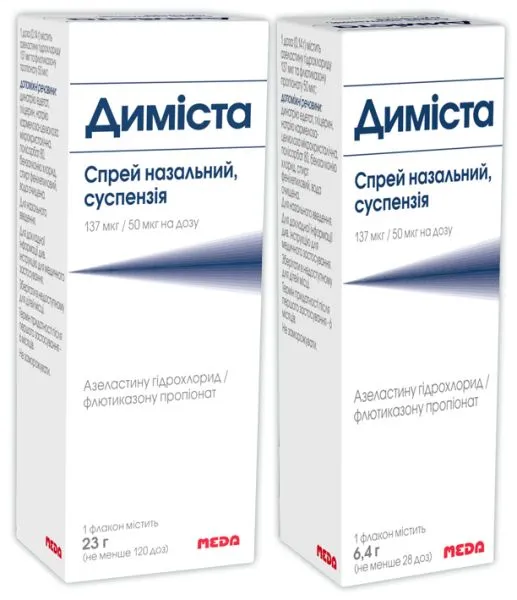
Table of Contents
- INSTRUCTIONS FOR MEDICAL USE OF THE MEDICINAL PRODUCT DYMISTA (DYMISTA)
- Composition:
- Pharmacological properties.
- Clinical characteristics.
- Special precautions for use.
- Method of Administration and Dosage
- Adverse Reactions
- Composition:
- Pharmacological Properties
- Clinical characteristics.
- Special precautions for use.
- Method of Administration and Dosage
- Side effects.
INSTRUCTIONS FOR MEDICAL USE OF THE MEDICINAL PRODUCT DYMISTA (DYMISTA)
Composition:
Active substances: azelastine hydrochloride / fluticasone propionate;
1 dose (0.14 g) contains 137 mcg of azelastine hydrochloride and 50 mcg of fluticasone propionate;
Excipients: disodium edetate, glycerin, sodium carmellose, microcrystalline cellulose, polysorbate 80, benzalkonium chloride, phenethyl alcohol, purified water.
Pharmaceutical form. Nasal spray, suspension.
Main physicochemical characteristics: white, homogeneous, redispersible suspension, free from visible foreign particles.
Pharmacotherapeutic group. Anti-inflammatory and other drugs for local application in nasal cavity disorders. Corticosteroids. Fluticasone, combinations.
ATC code R01AD58.
Pharmacological properties.
Pharmacodynamics.
Mechanism of action and pharmacodynamic effects
Dymista contains azelastine hydrochloride and fluticasone propionate, which have different mechanisms of action and exhibit synergy in alleviating symptoms of allergic rhinitis and rhinoconjunctivitis.
Fluticasone propionate
Fluticasone propionate is a synthetic trifluorinated corticosteroid with very high affinity for glucocorticoid receptors, exerting a potent anti-inflammatory effect that is 3–5 times stronger than that of dexamethasone in studies of binding to cloned human glucocorticoid receptors and gene expression.
Azelastine hydrochloride
Azelastine, a phthalazinone derivative, is a known potent, long-acting antiallergic compound that acts as a selective H1-receptor antagonist, stabilizes mast cells, and has anti-inflammatory properties. In vivo (preclinical) and in vitro data show that azelastine inhibits the synthesis or release of chemical mediators known to be involved in both early and late phases of allergic reactions, such as leukotrienes, histamine, platelet-activating factor (PAF), and serotonin.
Relief of nasal allergic symptoms is observed within 15 minutes after administration.
Dymista
In four clinical studies involving adults and adolescents with allergic rhinitis, the use of Dymista (one spray in each nostril twice daily) significantly improved nasal symptoms (including rhinorrhea, nasal congestion, sneezing, and nasal itching) compared to placebo, azelastine hydrochloride alone, and fluticasone propionate alone. It also significantly improved ocular symptoms (including eye itching, tearing, and eye redness) and patients' quality of life in all four studies.
Compared to fluticasone propionate nasal spray, a significant symptom relief (50% reduction in severity of nasal symptoms) was achieved significantly faster (within 3 days or more) with Dymista. The advantages of Dymista over fluticasone propionate nasal spray were maintained throughout a one-year study in patients with chronic persistent allergic rhinitis and non-allergic or vasomotor rhinitis.
In an allergen challenge study using an ambrosia pollen exposure chamber, the first statistically significant improvement in nasal symptoms was observed 5 minutes after administration of Dymista nasal spray (compared to placebo). Within 15 minutes after administration of Dymista, 60% of patients reported a clinically relevant reduction in symptoms of at least 30%.
Pharmacokinetics.
Absorption
After intranasal administration of two sprays in each nostril of Dymista (548 mcg azelastine hydrochloride and 200 mcg fluticasone propionate), the mean (± standard deviation) maximum concentration (Cmax) was 194.5 ± 74.4 pg/mL for azelastine and 10.3 ± 3.9 pg/mL for fluticasone propionate. The mean AUC (area under the pharmacokinetic curve) was 4217 ± 2618 pg/mL*hr for azelastine and 97.7 ± 43.1 pg/mL*hr for fluticasone propionate. The mean time to peak concentration (tmax) after a single dose was 0.5 hours for azelastine and 1.0 hour for fluticasone propionate.
Systemic exposure to fluticasone propionate with Dymista was approximately 50% higher compared to the conventional fluticasone propionate nasal spray. Dymista was equivalent to azelastine nasal spray in terms of systemic exposure to azelastine. There is no evidence of pharmacokinetic interaction between azelastine hydrochloride and fluticasone propionate.
Distribution
Fluticasone propionate has a large volume of distribution at steady state (approximately 318 liters). Plasma protein binding is 91%.
The volume of distribution of azelastine indicates predominant distribution into peripheral tissues. Plasma protein binding ranges from 80–90%. Furthermore, both substances have a wide therapeutic window. Therefore, drug displacement reactions are unlikely.
Biotransformation
Fluticasone propionate is rapidly cleared from systemic circulation, primarily via hepatic metabolism, which converts it into an inactive carboxylic acid metabolite by the CYP3A4 isoenzyme of the cytochrome P450 system. When swallowed, fluticasone propionate undergoes extensive first-pass metabolism. Azelastine is metabolized to N-desmethylazelastine by various CYP isoenzymes, primarily CYP3A4, CYP2D6, and CYP2C19.
Elimination
Clearance after intravenous administration of fluticasone propionate is linear over doses ranging from 250 mcg to 1000 mcg and is characterized by rapid plasma clearance (CL = 1.1 L/min). Plasma concentrations decrease by approximately 98% within 3–4 hours, and only low plasma levels are observed during the terminal elimination half-life of 7.8 hours. Renal clearance of fluticasone propionate is negligible (< 0.2%) and less than 5% for its carboxylic acid metabolite. The primary route of elimination is biliary excretion of fluticasone propionate and its metabolites.
The plasma elimination half-life of a single dose of azelastine is approximately 20–25 hours for azelastine and approximately 45 hours for its therapeutically active metabolite, N-desmethylazelastine. Excretion occurs predominantly in feces. Prolonged excretion of small amounts in feces suggests the possibility of enterohepatic recirculation.
Clinical characteristics.
Indications. Relief of symptoms of moderate to severe seasonal and perennial allergic rhinitis when monotherapy with intranasal antihistamines or glucocorticoids has proven insufficient.
Contraindications. Hypersensitivity to the active substances or to any of the excipients.
Interaction with other medicinal products and other forms of interactions.
Fluticasone propionate
Under normal conditions, low plasma concentrations of fluticasone propionate are observed after intranasal administration due to extensive first-pass metabolism and high total clearance mediated by cytochrome P450 3A4 in the intestine and liver. Therefore, clinically significant drug interactions mediated by fluticasone propionate are unlikely.
Drug interaction studies in healthy subjects have shown that ritonavir (a strong inhibitor of cytochrome P450 3A4) can significantly increase plasma concentrations of fluticasone propionate, resulting in a marked reduction in serum cortisol concentrations. Cases of clinical manifestations of drug interactions have been reported during use of the medicinal product in patients receiving intranasal or inhaled fluticasone propionate and ritonavir, leading to systemic corticosteroid effects.
Concomitant therapy with other CYP3A4 inhibitors, including drugs containing cobicistat, increases the risk of systemic adverse effects. Therefore, such combinations should be avoided unless the benefit outweighs the risk of systemic corticosteroid side effects; in such cases, patients should be monitored for systemic corticosteroid adverse effects.
Studies have shown that other cytochrome P450 3A4 inhibitors cause minor (erythromycin) or moderate (ketoconazole) increases in the overall exposure to fluticasone propionate without notable reductions in serum cortisol concentrations. Concomitant administration with cytochrome P450 3A4 inhibitors (e.g. ketoconazole) should be used with caution due to the potential for increased systemic exposure to fluticasone propionate.
Azelastrine hydrochloride
Drug interaction studies with azelastine hydrochloride nasal spray have not been conducted. Studies using high oral doses have been performed; however, these are not relevant to azelastine nasal spray, as the recommended nasal doses result in much lower systemic exposure. Caution should be exercised when prescribing azelastine hydrochloride to patients who are concurrently taking sedative medicinal products or central nervous system (CNS)-acting agents, as sedative effects on the CNS may be potentiated. Alcohol may also potentiate this effect (see section "Ability to influence reaction rate when driving or operating machinery").
Special precautions for use.
Clinical manifestations of interactions with other medicinal products have been reported in patients receiving fluticasone propionate and ritonavir, resulting in systemic corticosteroid effects including Cushing's syndrome and adrenal suppression. Therefore, concomitant use of fluticasone propionate and ritonavir should be avoided, except when the expected benefit outweighs the potential risk of corticosteroid-related adverse effects (see section "Interaction with other medicinal products and other forms of interaction").
Systemic effects of intranasal corticosteroids may occur, particularly with high-dose and long-term treatment. The likelihood of such effects is much lower than with oral corticosteroids and may vary among individual patients depending on the type of corticosteroid preparation. Systemic effects may include Cushing's syndrome, Cushingoid features, adrenal suppression, growth retardation in children and adolescents, cataract, glaucoma, and, less frequently, effects on mental status and behavior, manifesting as psychomotor hyperactivity, sleep disturbances, anxiety, depression, or aggression (particularly in children).
Dymista undergoes rapid metabolism during first-pass, so the systemic effect of intranasal fluticasone propionate may be increased in patients with severe hepatic impairment. This may lead to an increased frequency of systemic adverse effects.
The use of Dymista in this patient group is recommended with caution.
Exceeding the recommended doses of intranasal corticosteroids may lead to clinically significant adrenal suppression.
If treatment with higher than recommended doses is used during periods of stress or prior to elective surgery, consideration should be given to the need for additional systemic corticosteroid therapy.
In general, the dose of intranasal fluticasone should be reduced to the lowest possible dose that maintains effective control of rhinitis symptoms. There are no data on the use of higher doses of Dymista than those recommended (see section "Dosage and administration"). As with other intranasal corticosteroids, the total systemic corticosteroid exposure should be considered whenever other forms of corticosteroids are prescribed concomitantly.
Growth retardation has been reported in children receiving intranasal corticosteroids at recommended doses. Regular monitoring of growth in adolescents undergoing long-term treatment with intranasal corticosteroids is recommended. If growth retardation is observed, treatment should be re-evaluated and the dose of intranasal corticosteroids reduced, if possible, to the lowest dose that maintains effective symptom control.
Ocular disorders may occur with both systemic and topical corticosteroid use. If a patient experiences symptoms such as blurred vision or other visual disturbances, the patient should be referred to an ophthalmologist to determine the cause, which may include cataract, glaucoma, or rare conditions such as central serous chorioretinopathy, which have been reported following systemic and topical corticosteroid use.
Patients with visual changes or with a history of elevated intraocular pressure, glaucoma, and/or cataract require ongoing monitoring.
Patients being transferred from systemic corticosteroid therapy to Dymista should be monitored carefully if there is suspicion of adrenal insufficiency.
For patients with tuberculosis, untreated infections, or those who have recently undergone nasal or oral surgery or trauma, the potential benefits of Dymista treatment should be weighed against possible risks.
Since nasal infections are treated with antibacterial or antifungal agents, concomitant treatment with Dymista is not contraindicated.
Dymista contains benzalkonium chloride. Prolonged use may cause nasal mucosal edema.
Use during pregnancy or breastfeeding.
Fertility. Data on the effect on fertility are limited.
Pregnancy. Data on the use of azelastine hydrochloride and fluticasone propionate in pregnant women are lacking or limited. Therefore, Dymista should be used during pregnancy only if the expected benefit outweighs the potential risk to the fetus.
Breastfeeding. It is unknown whether azelastine hydrochloride or its metabolites and fluticasone propionate or its metabolites are excreted in human milk following intranasal administration. During breastfeeding, Dymista should be used only if the expected benefit outweighs the potential risk to the newborn/infant.
Ability to drive and use machines. Dymista has negligible influence on the ability to drive or operate machinery.
In individual cases, use of Dymista may be associated with increased fatigue, exhaustion, dizziness, or weakness, which may themselves be manifestations of the underlying disease. In such cases, the ability to drive or operate machinery may be impaired. Alcohol may potentiate these effects.
Method of Administration and Dosage
1 g of the suspension contains 1000 mcg of azelastine hydrochloride and 365 mcg of fluticasone propionate.
One dose (0.14 g) contains 137 mcg of azelastine hydrochloride and 50 mcg of fluticasone propionate.
Dosing
For achieving a sustained therapeutic effect, regular use is recommended.
Avoid contact with eyes.
Adults and adolescents aged 12 years and older: One spray into each nostril twice daily (in the morning and evening).
Elderly patients: Dose adjustment is not required.
Patients with hepatic or renal impairment: Data on use are lacking.
Treatment Duration
Dymista is suitable for long-term treatment. The duration of treatment should correspond to the period of allergic exposure.
Method of Administration
For nasal use only.
Instructions for Use
Preparing the spray
Before first use, gently shake the spray for 5 seconds, turning the bottle upside down and back. Then remove the protective cap. Before the first use, prime the pump by pressing and releasing it 6 times. If the spray has not been used for 7 days or more, re-prime the pump by pressing and releasing it once.
Using the spray
Before each use, gently shake the spray for 5 seconds, turning the bottle upside down and back, then remove the protective cap.
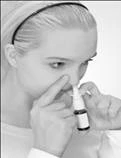
After clearing the nose, administer one spray into each nostril while tilting the head forward (see illustration). After use, wipe the nozzle with a clean tissue and replace the protective cap.
 |
If the spray does not dispense, do not pierce the nozzle. Rinse the device with water.
Children. Not recommended for children under 12 years of age, as the safety and efficacy of the product have not been established in this age group.
Overdose. Reactions from overdose are not expected with intranasal administration.
There are no data regarding acute or chronic overdose following intranasal administration of fluticasone propionate.
Intranasal administration of 2 mg fluticasone propionate (10 times higher than the recommended daily dose) twice daily for 7 days in healthy volunteers did not affect the hypothalamic-pituitary-adrenal (HPA) axis.
Prolonged use at doses exceeding those recommended may lead to temporary suppression of adrenal gland function.
In such cases, treatment with Dymista should be continued at a dose sufficient to control symptoms; adrenal function recovers within several days (this can be verified by measuring plasma cortisol levels).
Based on animal studies, in case of overdose due to accidental oral ingestion, central nervous system disturbances (including drowsiness, confusion, coma, tachycardia, or hypotension) caused by azelastine hydrochloride may occur.
Treatment of such disturbances is symptomatic. Depending on the amount ingested orally, gastric lavage is recommended. There is no known antidote.
Adverse Reactions
Following administration, taste disturbances and an unpleasant, specific aftertaste caused by the medication may occur (this may result from incorrect administration technique, such as excessive backward tilting of the head).
Frequency categories are defined as follows: very common (≥ 1/10); common (≥ 1/100 to < 1/10); uncommon (≥ 1/1000 to < 1/100); rare (≥ 1/10000 to < 1/1000); very rare (< 1/10000); frequency not known (cannot be estimated from available data).
Immune system disorders: very rare – hypersensitivity, including anaphylactic reactions, angioedema (facial, lingual or lip swelling and skin rash), bronchospasm.
Nervous system disorders: common – headache, taste disturbance (unpleasant taste), unpleasant smell; very rare – dizziness, somnolence (drowsiness, lethargy).
Eye disorders: very rare – glaucoma, increased intraocular pressure, cataract; frequency not known – blurred vision (see also section "Special warnings and precautions for use").
Respiratory, thoracic and mediastinal disorders: very common – epistaxis (nosebleed); uncommon – nasal discomfort (irritation, burning, itching), sneezing, nasal dryness, cough, dry throat, throat irritation; very rare – nasal septum perforation**, mucosal erosions; frequency not known – nasal ulcers.
Gastrointestinal disorders: rare – dry mouth; very rare – nausea.
Skin and subcutaneous tissue disorders: very rare – rash, pruritus, urticaria.
General disorders: very rare – increased fatigue (tiredness, exhaustion), weakness (see section "Effects on ability to drive and use machines").
*A very small number of spontaneous reports have been received during long-term intranasal treatment with fluticasone propionate.
**Cases of nasal septum perforation have been reported with intranasal corticosteroids.
Systemic effects typical of some intranasal corticosteroids may occur, particularly when administered at high doses over prolonged periods (see section "Special warnings and precautions for use").
Growth retardation has been reported in children treated with intranasal corticosteroids. Growth retardation in adolescents is also possible (see section "Special warnings and precautions for use").
Rarely, osteoporosis may occur after long-term use of intranasal glucocorticoids.
Reporting of suspected adverse reactions
Reporting suspected adverse reactions after medicine authorization is important. It allows continued monitoring of the benefit-risk balance of the medicine. Healthcare professionals and patients, as well as their legal representatives, should report any suspected adverse reactions and lack of efficacy through the Automated Information System of Pharmacovigilance at the following link: https://aisf.dec.gov.ua.
Shelf life
24 months (23 g pack).
18 months (6.4 g pack).
Shelf life after first use – 6 months.
Storage conditions. Do not freeze.
Keep out of the reach and sight of children.
Packaging.
6.4 g of suspension in a 10 ml glass bottle; 1 bottle per cardboard pack.
23 g of suspension in a 25 ml glass bottle; 1 bottle per cardboard pack.
Prescription status. Prescription only.
Manufacturer.
Mylan Hungary Kft./Mylan Hungary Ltd.
Manufacturer's name and address.
Mylan utca 1., Komárom, 2900, Hungary.
INSTRUCTIONS
for medical use of medicinal product
DYMISTA
(DYMISTA)
Composition:
Active substances: azelastine hydrochloride / fluticasone propionate;
1 dose (0.14 g) contains azelastine hydrochloride 137 mcg and fluticasone propionate 50 mcg;
Excipients: disodium edetate, glycerin, sodium carmellose microcrystalline cellulose, polysorbate 80, benzalkonium chloride, phenylethyl alcohol, purified water.
Pharmaceutical form. Nasal spray, suspension.
Main physico-chemical properties: white, homogeneous, redispersible suspension, free from visible foreign particles.
Pharmacotherapeutic group. Anti-inflammatory and other drugs for local use in nasal cavity disorders. Corticosteroids. Fluticasone, combinations.
ATC code R01AD58.
Pharmacological Properties
Pharmacodynamics
Mechanism of Action and Pharmacodynamic Effects
Dymista contains azelastine hydrochloride and fluticasone propionate, which have different mechanisms of action and exhibit synergism in relieving symptoms of allergic rhinitis and rhinoconjunctivitis.
Fluticasone Propionate
Fluticasone propionate is a synthetic trifluorinated corticosteroid with very high affinity for glucocorticoid receptors, exerting a potent anti-inflammatory effect that is 3–5 times stronger than dexamethasone in studies of binding to cloned human glucocorticoid receptors and gene expression.
Azelastine Hydrochloride
Azelastine, a phthalazinone derivative, is a known potent, long-acting antiallergic compound that acts as a selective H1-receptor antagonist, stabilizes mast cells, and has anti-inflammatory properties. Data from in vivo (preclinical) and in vitro studies indicate that azelastine inhibits the synthesis or release of chemical mediators involved in both the early and late phases of allergic reactions, such as leukotrienes, histamine, platelet-activating factor (PAF), and serotonin.
Relief of nasal allergic symptoms is observed within 15 minutes after administration.
Dymista
In four clinical studies involving adults and adolescents with allergic rhinitis, the use of Dymista—administered as one spray in each nostril twice daily—significantly improved nasal symptoms (including rhinorrhea, nasal congestion, sneezing, and nasal pruritus) compared to placebo, azelastine hydrochloride alone, and fluticasone propionate alone. It also significantly improved ocular symptoms (including eye pruritus, tearing, and eye redness) and patients' quality of life in all four studies.
Compared to fluticasone propionate nasal spray, a significant symptom improvement (50% reduction in severity of nasal symptoms) was achieved significantly faster (by 3 days or more) with Dymista. The advantages of Dymista over fluticasone propionate nasal spray were maintained throughout a one-year study in patients with chronic persistent allergic rhinitis and non-allergic or vasomotor rhinitis.
In an allergen challenge study using an ambrosia pollen exposure chamber, the first statistically significant improvement in nasal symptoms occurred within 5 minutes after administration of Dymista nasal spray (compared to placebo). Within 15 minutes after administration of Dymista, 60% of patients reported a clinically relevant reduction in symptoms of at least 30%.
Pharmacokinetics
Absorption
After intranasal administration of two sprays in each nostril of Dymista (548 μg azelastine hydrochloride and 200 μg fluticasone propionate), the mean value (± standard deviation) of maximum concentration (Cmax) was 194.5 ± 74.4 pg/mL for azelastine and 10.3 ± 3.9 pg/mL for fluticasone propionate. The mean AUC (area under the pharmacokinetic curve) was 4217 ± 2618 pg/mL*h for azelastine and 97.7 ± 43.1 pg/mL*h for fluticasone propionate. The mean time to peak concentration (tmax) after a single dose was 0.5 hours for azelastine and 1.0 hour for fluticasone propionate.
Systemic exposure to fluticasone propionate with Dymista was approximately 50% higher compared to the conventional fluticasone propionate nasal spray. Dymista was equivalent to azelastine nasal spray in terms of systemic exposure to azelastine. There is no evidence of pharmacokinetic interaction between azelastine hydrochloride and fluticasone propionate.
Distribution
Fluticasone propionate has a large volume of distribution at steady state (approximately 318 liters). Plasma protein binding is 91%.
The volume of distribution of azelastine indicates predominant distribution into peripheral tissues. Plasma protein binding ranges from 80% to 90%. Furthermore, both substances have a wide therapeutic window. Therefore, drug displacement interactions are unlikely.
Biotransformation
Fluticasone propionate is rapidly cleared from systemic circulation, primarily via hepatic metabolism by the CYP3A4 isoenzyme of the cytochrome P450 system, which converts it into an inactive carboxylic acid metabolite. When ingested, fluticasone propionate also undergoes extensive first-pass metabolism. Azelastine is metabolized to N-desmethylazelastine by various CYP isoenzymes, primarily CYP3A4, CYP2D6, and CYP2C19.
Elimination
The elimination rate of fluticasone propionate after intravenous administration is linear over doses ranging from 250 μg to 1000 μg and is characterized by rapid plasma clearance (CL = 1.1 L/min). Plasma concentration peaks decrease by approximately 98% within 3–4 hours, and only low plasma concentrations remain during the terminal elimination half-life of 7.8 hours. Renal clearance of fluticasone propionate is negligible (< 0.2%) and less than 5% for its metabolite, the carboxylic acid. The primary route of elimination is biliary excretion of fluticasone propionate and its metabolites.
The plasma elimination half-life of a single dose of azelastine is approximately 20–25 hours for azelastine and approximately 45 hours for its therapeutically active metabolite, N-desmethylazelastine. Excretion occurs predominantly in feces. Prolonged excretion of small amounts in feces suggests the possibility of enterohepatic recirculation.
Clinical characteristics.
Indications. Relief of symptoms of moderate to severe seasonal and perennial allergic rhinitis when monotherapy with intranasal antihistamines or glucocorticoids has proven insufficient.
Contraindications. Hypersensitivity to the active substances or to any of the excipients.
Interaction with other medicinal products and other forms of interaction.
Fluticasone propionate
Under normal conditions, low plasma concentrations of fluticasone propionate are observed after intranasal administration due to extensive first-pass metabolism and high total clearance mediated by cytochrome P450 3A4 in the intestine and liver. Therefore, clinically significant drug interactions mediated by fluticasone propionate are unlikely.
Drug interaction studies in healthy volunteers have shown that ritonavir (a potent inhibitor of cytochrome P450 3A4) can significantly increase plasma concentrations of fluticasone propionate, resulting in a marked reduction in serum cortisol concentrations. Cases of clinical manifestations of drug interaction have been reported in patients receiving intranasal or inhaled fluticasone propionate concomitantly with ritonavir, leading to systemic corticosteroid effects.
Concomitant therapy with other CYP3A4 inhibitors, including drugs containing cobicistat, increases the risk of systemic adverse effects. Therefore, such combinations should be avoided except when the benefit outweighs the risk of systemic corticosteroid side effects; in such cases, patients should be monitored for systemic corticosteroid side effects.
Studies have shown that other cytochrome P450 3A4 inhibitors cause slight (erythromycin) or moderate (ketoconazole) increases in systemic exposure to fluticasone propionate without notable reductions in serum cortisol concentrations. Concomitant administration with cytochrome P450 3A4 inhibitors (e.g., ketoconazole) should be used with caution, as there is a potential for increased systemic exposure to fluticasone propionate.
Azelastrine hydrochloride
Drug interaction studies with azelastine hydrochloride nasal spray have not been conducted. Studies using high oral doses have been performed; however, these are not relevant to azelastine nasal spray, as the recommended nasal doses result in much lower systemic exposure. Caution should be exercised when prescribing azelastine hydrochloride to patients who are concurrently taking sedative medicinal products or central nervous system (CNS)-acting drugs, as sedative effects on the CNS may be enhanced. Alcohol may also potentiate this effect (see section "Ability to affect reaction speed when driving or operating machinery").
Special precautions for use.
Clinical manifestations of interaction with other medicinal products have been reported in patients receiving fluticasone propionate and ritonavir, resulting in systemic corticosteroid effects including Cushing’s syndrome and adrenal suppression. Therefore, concomitant use of fluticasone propionate and ritonavir should be avoided, except when the expected benefit outweighs the potential risk of corticosteroid-related adverse effects (see section "Interaction with other medicinal products and other forms of interaction").
Systemic effects of intranasal corticosteroids may occur, particularly with high-dose and long-term treatment. The likelihood of such effects is considerably lower than with oral corticosteroids and may vary between individual patients depending on the type of corticosteroid preparation. Systemic effects may include Cushing’s syndrome, Cushingoid features, adrenal suppression, growth retardation in children and adolescents, cataract, glaucoma, and, more rarely, effects on mental state and behavior, manifesting as psychomotor hyperactivity, sleep disturbances, anxiety, depression, or aggression (particularly in children).
Dymista undergoes rapid metabolism during first-pass passage; therefore, systemic exposure to intranasal fluticasone propionate may be increased in patients with severe hepatic impairment. This may lead to an increased frequency of systemic adverse effects.
The use of Dymista in such patients should be approached with caution.
Exceeding the recommended doses of intranasal corticosteroids may lead to clinically significant adrenal suppression.
If treatment with doses higher than recommended is used during periods of stress or prior to surgery, consideration should be given to additional systemic corticosteroid therapy.
In general, the dose of intranasal fluticasone should be reduced to the lowest effective dose that maintains adequate control of rhinitis symptoms. There are no data on the use of Dymista at doses higher than those recommended (see section "Dosage and administration"). As with other intranasal corticosteroids, the total systemic corticosteroid burden should be considered whenever other forms of corticosteroids are prescribed concomitantly.
Growth retardation has been reported in children receiving intranasal corticosteroids at recommended doses. Regular monitoring of growth in adolescents undergoing long-term treatment with intranasal corticosteroids is recommended. If growth retardation is observed, therapy should be re-evaluated and the dose of intranasal corticosteroids reduced, if possible, to the lowest dose providing effective symptom control.
Ocular disorders may occur with systemic and topical corticosteroid use. If a patient experiences symptoms such as blurred vision or other visual disturbances, they should be referred to an ophthalmologist to determine the cause, which may include cataract, glaucoma, or rare conditions such as central serous chorioretinopathy, which has been reported after systemic and topical corticosteroid use.
Patients with visual changes or a history of elevated intraocular pressure, glaucoma, and/or cataract require ongoing monitoring.
If adrenal insufficiency is suspected, transitioning patients from systemic corticosteroid therapy to Dymista should be done with caution.
For patients with tuberculosis, any untreated infection, or those who have recently undergone nasal or oral surgery or trauma, the potential benefits of Dymista treatment versus possible risks should be carefully evaluated.
Since nasal infections are treated with antibacterial or antifungal agents, concomitant treatment with Dymista is not contraindicated.
Dymista contains benzalkonium chloride. Prolonged use may cause nasal mucosal swelling.
Use during pregnancy or breastfeeding.
Fertility. Data on the effect on fertility are limited.
Pregnancy. Data on the use of azelastine hydrochloride and fluticasone propionate in pregnant women are lacking or limited. Therefore, Dymista should be used during pregnancy only if the expected benefit outweighs the potential risk to the fetus.
Breastfeeding. It is unknown whether azelastine hydrochloride or its metabolites, or fluticasone propionate or its metabolites, are excreted in human breast milk following intranasal administration. Dymista may be used during breastfeeding only if the expected benefit outweighs the potential risk to the newborn/infant.
Ability to drive and use machines. Dymista has negligible influence on the ability to drive or operate machinery.
In individual cases, use of Dymista may be associated with increased fatigue, exhaustion, dizziness, or weakness, which may themselves be manifestations of the underlying disease. In such cases, the ability to drive or operate machinery may be impaired. Alcohol may potentiate these effects.
Method of Administration and Dosage
1 g of the suspension contains 1000 mcg of azelastine hydrochloride and 365 mcg of fluticasone propionate.
1 dose (0.14 g) contains 137 mcg of azelastine hydrochloride and 50 mcg of fluticasone propionate.
Dosing
For a sustained therapeutic effect, regular use is recommended.
Avoid contact with the eyes.
Adults and adolescents aged 12 years and older: One spray into each nostril twice daily (in the morning and evening).
Elderly patients: Dose adjustment is not required.
Patients with hepatic or renal impairment: Data on use are lacking.
Treatment Duration
Dymista is suitable for long-term treatment. The duration of treatment should correspond to the period of allergic exposure.
Method of Administration
For nasal use only.
Instructions for Use
Preparing the spray
Before use, gently shake the spray for 5 seconds, turning the bottle upside down and back. Then remove the protective cap. Before the first use, prime the pump by pressing down and releasing 6 times. If the spray has not been used for 7 days or more, re-prime the pump by pressing down and releasing once.
Using the spray
Before each use, gently shake the spray for 5 seconds, turning the bottle upside down and back, then remove the protective cap.
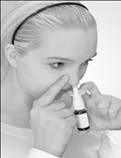
After clearing the nose, administer one spray into each nostril, with the head tilted slightly forward (see illustration). After use, wipe the nozzle clean and replace the protective cap.
 |
If there is no spray dispersion, do not pierce the nozzle. Rinse the device with water.
Children. Not recommended for children under 12 years of age, as the safety and efficacy of the product have not been established in this age group.
Overdose. Reactions due to overdose are not expected with intranasal administration.
There is no evidence of acute or chronic overdose occurring with intranasal use of fluticasone propionate.
Intranasal administration of 2 mg fluticasone propionate (10 times the recommended daily dose) twice daily for 7 days in healthy volunteers did not affect the hypothalamic-pituitary-adrenal (HPA) axis.
Prolonged use at doses higher than recommended may lead to temporary suppression of adrenal gland function.
In such cases, treatment with Dymista should be continued at a dose sufficient to control symptoms; adrenal function recovers within several days (this can be verified by measuring plasma cortisol levels).
According to animal studies, in case of overdose due to accidental oral ingestion, central nervous system disturbances (including somnolence, confusion, coma, tachycardia, or hypotension) caused by azelastine hydrochloride may occur.
Treatment of such disturbances is symptomatic. Depending on the amount ingested orally, gastric lavage is recommended. There is no known antidote.
Side effects.
After administration, disturbance of taste and an unpleasant specific aftertaste caused by the drug may be observed (this may occur due to incorrect administration technique when the head is tilted too far backward).
Frequency is defined as follows: very common (≥ 1/10); common (from ≥ 1/100 to < 1/10); uncommon (from ≥ 1/1000 to < 1/100); rare (from ≥ 1/10000 to < 1/1000); very rare (<1/10000); frequency not known (cannot be estimated based on available data).
Immune system disorders: very rare – hypersensitivity, including anaphylactic reactions, angioedema (facial or lingual swelling and skin rash), bronchospasm.
Nervous system disorders: common – headache, taste disturbances (unpleasant taste), unpleasant odor; very rare – dizziness, somnolence (drowsiness, lethargy).
Eye disorders: very rare – glaucoma, increased intraocular pressure, cataract; frequency not known – blurred vision (see also section "Special precautions for use").
Respiratory, thoracic and mediastinal disorders: very common – epistaxis (nosebleed); uncommon – nasal discomfort (irritation, burning, itching), sneezing, nasal dryness, cough, dryness in the throat, throat irritation; very rare – nasal septum perforation**, erosions of the mucous membrane; frequency not known – nasal ulcers.
Gastrointestinal disorders: rare – dry mouth; very rare – nausea.
Skin and subcutaneous tissue disorders: very rare – rash, pruritus, urticaria.
General disorders: very rare – increased fatigue (tiredness, exhaustion), weakness (see section "Effect on ability to drive and use machines").
*Very few spontaneous reports have been received during long-term intranasal treatment with fluticasone propionate.
**Cases of nasal septum perforation have been reported with the use of intranasal corticosteroids.
Systemic effects typical for some nasal corticosteroids may occur, particularly when administered in high doses over a prolonged period (see section "Special precautions for use").
Growth retardation has been reported in children treated with intranasal corticosteroids. Growth retardation in adolescents is also possible (see section "Special precautions for use").
In rare cases, osteoporosis may develop if nasal glucocorticoids are used over a prolonged period.
Reporting of suspected adverse reactions
Reporting suspected adverse reactions after medicine authorization is important. It allows ongoing monitoring of the benefit-risk balance of the medicine. Healthcare professionals and patients, as well as their legal representatives, are encouraged to report any suspected adverse reactions and lack of efficacy through the Automated Pharmacovigilance Information System at the following link: https://aisf.dec.gov.ua.
Shelf life.
24 months (23 g pack).
18 months (6.4 g pack).
Shelf life after first use – 6 months.
Storage conditions. Do not freeze.
Keep out of the reach of children.
Packaging.
6.4 g of suspension in a 10 ml glass bottle; 1 bottle per cardboard pack.
23 g of suspension in a 25 ml glass bottle; 1 bottle per cardboard pack.
Prescription status. Prescription only.
Manufacturer. MEDA Pharma GmbH & Co. KG, Germany (manufacturer responsible for batch release).
Manufacturer's name and address. Benzstrasse 1, 61352 Bad Homburg, Germany.