Duglimax
Ukraine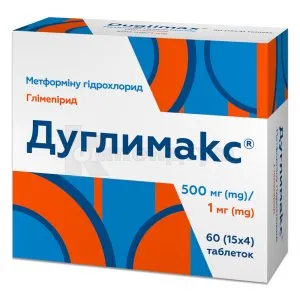
Table of Contents
INSTRUCTION FOR MEDICAL USE OF THE MEDICINAL PRODUCT DUGLIMAXÒ (DUGLIMAXÒ)
Composition:
Active substances: metformin hydrochloride, glimepiride;
One tablet contains metformin hydrochloride (prolonged release) 500 mg and glimepiride 1 mg, or metformin hydrochloride (prolonged release) 500 mg and glimepiride 2 mg;
Excipients (tablets 500 mg/1 mg): sodium carboxymethylcellulose, hypromellose, microcrystalline cellulose, magnesium stearate, lactose monohydrate, sodium croscarmellose, hydroxypropylcellulose, iron oxide red (E 172);
Excipients (tablets 500 mg/2 mg): sodium carboxymethylcellulose, hypromellose, microcrystalline cellulose, magnesium stearate, lactose monohydrate, sodium croscarmellose, hydroxypropylcellulose, Pigment Blend PB-51323 green.
Pharmaceutical form. Tablets.
Main physicochemical properties:
Duglimax® (500 mg/1 mg): bilayered, capsule-shaped, biconvex tablets, pink on one side and white on the other, smooth on both sides; marbling is permissible;
Duglimax® (500 mg/2 mg): bilayered, capsule-shaped, biconvex tablets, green on one side and white on the other, smooth on both sides; marbling is permissible.
Pharmacotherapeutic group.
Antidiabetic agents. Combination of oral hypoglycemic agents.
ATC code A10BD02.
Pharmacological properties.
Pharmacodynamics.
Glibenclamide is a substance with hypoglycemic activity upon oral administration and belongs to the sulfonylurea derivatives group. It can be used in insulin-independent diabetes mellitus.
The effect of glibenclamide is mediated by stimulating insulin release from pancreatic β-cells. Like other sulfonylurea derivatives, it increases the sensitivity of pancreatic β-cells to physiological glucose stimulation. In addition, glibenclamide, as well as other sulfonylurea derivatives, likely exerts a pronounced extrapancreatic effect.
Insulin release.
Sulfonylureas regulate insulin secretion by closing ATP-sensitive potassium channels in the β-cell membrane. This closure leads to depolarization of the cell membrane, resulting in the opening of calcium channels and a significant influx of calcium into the cell.
This stimulates insulin release via exocytosis.
Glibenclamide binds with high affinity to a protein on the β-cell membrane associated with the ATP-sensitive potassium channel, but at a site different from the usual sulfonylurea binding site.
Extrapancreatic activity.
The extrapancreatic effect includes, in particular, increased insulin sensitivity of peripheral tissues and reduced hepatic insulin uptake.
Glucose transfer from blood into peripheral muscle and adipose tissue occurs via specific transporter proteins located in the cell membrane. It is precisely the transport of glucose into these tissues that represents the rate-limiting step in glucose uptake. Glibenclamide rapidly increases the number of active glucose transporters in the plasma membrane of muscle and fat cells, thereby stimulating glucose uptake.
Glibenclamide enhances the activity of phospholipase C specific to glycosyl-phosphatidylinositol, which may be associated with the enhanced lipogenesis and glycogenesis observed in isolated adipose and muscle cells under the influence of this agent.
Glibenclamide inhibits glucose production in the liver by increasing intracellular fructose-2,6-bisphosphate concentration, which in turn inhibits gluconeogenesis.
Metformin.
Metformin is a biguanide with hypoglycemic action, manifested by reduction of both fasting plasma glucose levels and postprandial plasma glucose levels. It does not stimulate insulin secretion and therefore does not cause hypoglycemia.
The action of metformin includes:
- reduction of glucose production by the liver through inhibition of gluconeogenesis and glycogenolysis;
- in muscles – increased insulin sensitivity, improved peripheral glucose uptake and utilization;
- delayed intestinal glucose absorption.
Metformin stimulates intracellular glycogen synthesis by affecting glycogen synthase.
Metformin enhances the transport capacity of specific membrane glucose transporters (GLUT-1 and GLUT-4).
In humans, regardless of blood glucose levels, metformin affects lipid metabolism. This has been demonstrated during administration of the drug at therapeutic doses in controlled medium- or long-term clinical trials: metformin reduces total cholesterol, LDL (low-density lipoproteins), and triglyceride levels.
Pharmacokinetics.
Glibenclamide.
Absorption.
The bioavailability of glibenclamide after oral administration is complete. Food intake does not significantly affect absorption, only slightly reducing its rate. Cmax is reached approximately 2.5 hours after oral administration (on average 0.3 μg/mL after repeated administration of the drug at a daily dose of 4 mg). A linear relationship exists between dose and Cmax and AUC.
Distribution.
Glibenclamide has a very low volume of distribution (approximately 8.8 liters), which is close to the distribution volume of albumin, a high degree of plasma protein binding (>99%), and low clearance (approximately 48 mL/min).
In animals, glibenclamide is excreted in milk. Glibenclamide can cross the placenta. Penetration through the blood-brain barrier is negligible.
Biotransformation and elimination.
The mean elimination half-life, dependent on serum concentration under repeated dosing conditions, is 5–8 hours. Slightly longer half-lives were observed after high doses.
After a single radiolabeled dose of glibenclamide, 58% was found in urine and 35% in feces. The unchanged substance does not appear in urine. Two metabolites are excreted in urine and feces, most likely hepatic metabolites (the main enzyme responsible for biotransformation is cytochrome P450 2C9): hydroxy derivative and carboxy derivative. After oral administration of glibenclamide, the terminal half-lives of these metabolites were 3–6 hours and 5–6 hours, respectively.
Comparative studies showed no significant differences in pharmacokinetics after single and multiple doses; intra-individual variability was very low. No significant accumulation was observed.
Pharmacokinetics were similar in men and women, as well as in young and elderly (over 65 years) patients. In patients with low creatinine clearance, there was a tendency toward increased clearance and reduced mean serum concentrations of glibenclamide, likely due to faster elimination resulting from poorer protein binding. Renal excretion of the two metabolites was reduced. Overall, there was no additional risk of drug accumulation in these patients.
In five non-diabetic patients after surgical intervention on the bile ducts, pharmacokinetics were similar to those in healthy volunteers.
Metformin.
Absorption.
After oral administration of metformin, the time to reach maximum plasma concentration (tmax) is 2.5 hours. Absolute bioavailability of metformin after a 500 mg oral dose in healthy volunteers is approximately 50–60%. The unabsorbed fraction recovered in feces after oral administration was 20–30%.
Absorption of metformin after oral administration is saturable and incomplete. It has been assumed that the pharmacokinetics of metformin absorption are linear. At usual doses and dosing regimens, steady-state plasma concentrations are achieved within 24–48 hours and typically do not exceed 1 μg/mL. During controlled clinical trials, plasma Cmax of metformin did not exceed 4 μg/mL, even with the highest doses.
Food intake reduces the extent and slightly prolongs the absorption time of metformin. After an 850 mg dose taken with food, a 40% reduction in plasma Cmax, a 25% reduction in AUC, and a 35-minute prolongation of tmax were observed. The clinical significance of these changes is unknown.
Distribution.
Protein binding is negligible. Metformin distributes into erythrocytes. Blood Cmax is lower than plasma Cmax and is reached approximately at the same time. Erythrocytes likely serve as a secondary distribution compartment. The mean Vd ranges between 63 and 276 L.
Biotransformation and elimination.
Metformin is excreted unchanged in urine. No metabolites have been identified in humans.
Renal clearance of metformin is >400 mL/min, indicating that metformin is eliminated by glomerular filtration and tubular secretion. After oral administration, the terminal elimination half-life is approximately 6.5 hours. If renal function is impaired, renal clearance decreases proportionally to creatinine clearance, resulting in prolonged elimination half-life and consequently increased plasma metformin levels.
Clinical characteristics.
Indications.
As an adjunct to diet and physical exercise in patients with insulin-independent diabetes mellitus (type 2):
- when monotherapy with glimepiride or metformin does not provide adequate glycemic control;
- as a replacement for combination therapy with glimepiride and metformin.
Contraindications.
- Insulin-dependent diabetes mellitus type 1 (e.g., diabetes with history of ketoacidosis), diabetic ketoacidosis, diabetic coma and precoma, acute or chronic metabolic acidosis.
- Hypersensitivity to any of the excipients contained in this medicinal product, or to sulfonylureas, sulfonamides, or biguanides.
- Hepatic insufficiency, severe impairment of liver function, hemodialysis (currently no experience with use of the drug in such cases). In cases of severe hepatic and renal dysfunction, patients must be switched to insulin therapy to achieve adequate blood glucose control.
- Pregnancy; suspected pregnancy; breastfeeding period.
- Predisposition to lactic acidosis, history of lactic acidosis, renal insufficiency or impaired renal function (as indicated, for example, by plasma creatinine levels ≥ 1.5 mg/dL in men and ≥ 1.4 mg/dL in women or impaired creatinine clearance), which may also be caused by conditions such as cardiovascular collapse (shock), acute myocardial infarction, and sepsis.
- Radiological procedures involving intravascular administration of iodine-containing contrast agents (such as intravenous urography, intravenous cholangiography, angiography, and computed tomography (CT)): iodinated contrast agents administered intravenously during imaging procedures may cause acute renal impairment and lactic acidosis in patients taking metformin. Therefore, patients scheduled for such procedures should temporarily discontinue Duglymax® 48 hours before the procedure. Therapy should not be resumed until renal function has been re-evaluated and found to be normal. Additionally, the drug is contraindicated in patients with acute conditions that may impair renal function (dehydration, severe infection, shock).
- Severe infections, pre- and post-surgical states, serious trauma. Any surgical intervention requires temporary discontinuation of treatment with this drug (except minor procedures not requiring dietary or fluid restrictions). Therapy should not be resumed until the patient is able to eat independently and renal function parameters are within normal limits.
- Undernutrition, starvation, or patient exhaustion.
- Hypopituitarism or adrenal insufficiency.
- Liver dysfunction (since cases of lactic acidosis have been observed in patients with impaired liver function, this drug should generally not be prescribed to patients with clinical or laboratory signs of liver disease), pulmonary infarction, severe impairment of pulmonary function, and other conditions that may be associated with hypoxemia (cardiac or pulmonary insufficiency, recent myocardial infarction, shock), excessive alcohol abuse, dehydration, gastrointestinal disorders, including diarrhea and vomiting.
- Severe renal insufficiency (glomerular filtration rate (GFR) < 30 mL/min).
- Congestive heart failure requiring pharmacological treatment; recent myocardial infarction; severe cardiovascular insufficiency or respiratory impairment.
Interaction with other medicinal products and other types of interactions.
Glimepiride.
If a patient taking Duglymax® concurrently receives certain other medicinal products or discontinues their use, this may either enhance or reduce the hypoglycemic effect of glimepiride. Based on experience with Duglymax® and other sulfonylurea derivatives, the following potential interactions between Duglymax® and other medicinal products should be considered.
This drug is metabolized by cytochrome P450 2C9 (CYP2C9), which should be taken into account when co-administering inducers (e.g., rifampicin) or inhibitors (e.g., fluconazole) of CYP2C9.
Medicinal products that enhance the glucose-lowering effect.
Insulin and oral antidiabetic agents, nonsteroidal anti-inflammatory drugs, ACE inhibitors, allopurinol, anabolic steroids, male sex hormones, chloramphenicol, coumarin-derived anticoagulants, cyclophosphamide, disopyramide, fenfluramine, pheniramidol, fibrates, fluoxetine, guanethidine, ifosfamide, monoamine oxidase (MAO) inhibitors, miconazole, fluconazole, para-aminosalicylic acid, pentoxifylline (when administered parenterally at high doses), phenylbutazone, probenecid, quinolone antibiotics, salicylates, sulfinpyrazone, sulfonamides, clarithromycin, tetracyclines, troxipide, trofosfamide, azapropazone, oxyphenbutazone, sympatholytics.
Medicinal products that reduce the glucose-lowering effect.
Acetazolamide, barbiturates, corticosteroids, diazoxide, diuretics, epinephrine (adrenaline) or sympathomimetics, glucagon, laxatives (with prolonged use), nicotinic acid (at high doses), estrogens, progestogens, oral contraceptives, phenothiazines, phenytoin, rifampicin, thyroid hormones, chlorpromazine, isoniazid.
Medicinal products that may either enhance or reduce the glucose-lowering effect.
H2-receptor antagonists, clonidine, and reserpine.
β-adrenergic blockers reduce glucose tolerance, which may impair metabolic control in patients with diabetes mellitus. β-blockers may increase the risk of hypoglycemia (due to impaired counter-regulation).
Medicinal products that may weaken or block the signs of adrenergic counter-regulation of hypoglycemia.
Sympatholytic agents (e.g., β-blockers, clonidine, guanethidine, and reserpine).
Both single and regular alcohol consumption may enhance or weaken the glucose-lowering effect of Duglymax®.
This drug may either enhance or weaken the effects of coumarin-derived anticoagulants.
Bile acid sequestrants: Colesevelam binds to glimepiride and reduces its absorption from the gastrointestinal tract. No interaction was observed when glimepiride was administered at least 4 hours before colesevelam. Therefore, glimepiride should be administered at least 4 hours before colesevelam.
Lactic acidosis may develop when used concomitantly with certain agents. The patient's condition must be closely monitored when co-administered with the following: iodinated contrast agents, antibiotics with strong nephrotoxic effects (gentamicin, etc.).
When used concomitantly with certain medicinal products, the glucose-lowering effect may either be enhanced or reduced. Close monitoring of the patient and blood glucose levels is necessary when co-administered with:
- agents that enhance glucose-lowering effect: insulin, sulfonamides, sulfonylurea agents, meglitinides (repaglinide, etc.), alpha-glucosidase inhibitors (acarbose, etc.), anabolic steroids, guanethidine, salicylates (aspirin, etc.), β-blockers (propranolol, etc.), MAO inhibitors, angiotensin-converting enzyme (ACE) inhibitors;
- agents that reduce glucose-lowering effect: adrenaline, sympathomimetics, corticosteroids, thyroid hormones, estradiol, estrogens, oral contraceptives, thiazides and other diuretics, pyrazinamide, isoniazid, nicotinic acid, phenothiazines, phenytoin, calcium channel blockers, β-2 agonists such as salbutamol, formoterol, etc.
Glibenclamide: in a study of interactions with single-dose administration in patients with type 2 diabetes mellitus, concomitant administration of metformin and glibenclamide did not result in any changes in the pharmacokinetics or pharmacodynamics of metformin. A decrease in the area under the plasma concentration-time curve (AUC) and maximum serum concentration (Cmax) of glibenclamide was observed, but this was highly variable. Due to the single-dose design of the study and the lack of correlation between blood metformin levels and its pharmacodynamic effects, it is uncertain whether this interaction has clinical significance.
Furosemide: in a study of interactions between metformin and furosemide with single-dose administration in healthy volunteers, it was demonstrated that concomitant administration of these drugs affects their pharmacokinetic parameters. Furosemide increased the Cmax of metformin in plasma by 22% and AUC by 15%, without any significant changes in renal clearance of metformin. When administered with metformin, Cmax and AUC of furosemide decreased by 31% and 12%, respectively, compared to monotherapy with furosemide, and the terminal half-life decreased by 32%, without any significant changes in renal clearance of furosemide. Information on interactions between metformin and furosemide with long-term use is lacking.
Nifedipine: in a study of interactions between metformin and nifedipine with single-dose administration in healthy volunteers, it was demonstrated that concomitant administration of nifedipine increases Cmax and AUC of metformin in plasma by 20% and 9%, respectively, and also increases the amount of drug excreted in urine. No effect was observed on time to maximum concentration (Tmax) or half-life of metformine. Nifedipine was shown to enhance metformin absorption. Metformin had almost no effect on the pharmacokinetics of nifedipine.
Medicinal products that may affect renal function, cause hemodynamic changes, or cationic medicinal products excreted via renal tubular secretion.
Cationic drugs: cationic drugs (e.g., amiloride, digoxin, morphine, procainamide, quinidine, quinine, ranitidine, triamterene, trimethoprim, vancomycin) excreted by the kidneys via tubular secretion may theoretically interact with metformin due to competition for the common renal tubular transport system. Such an interaction between metformin and cimetidine was observed in studies of interactions between metformin and cimetidine with single and multiple dosing in healthy volunteers. These studies demonstrated a 60% increase in Cmax of metformin in plasma and total blood concentrations, and a 40% increase in AUC of metformin in plasma and blood. In the single-dose study, no changes in half-life duration were observed. Metformin did not affect the pharmacokinetics of cimetidine. Despite the theoretical possibility of such interactions (except for cimetidine), careful monitoring of patients and dose adjustment of metformin and/or the interacting drug is recommended when cationic drugs excreted via proximal tubular secretion are used.
Others. In a study of interactions with single-dose administration in healthy volunteers, the pharmacokinetics of metformin and propranolol, as well as metformin and ibuprofen, were not altered when these drugs were administered concomitantly.
The extent of protein binding of metformin to plasma proteins is negligible. Therefore, its interaction with drugs that have a high degree of plasma protein binding, such as salicylates, sulfonamides, chloramphenicol, and probenecid, is less likely compared to sulfonylurea derivatives, which have a high degree of plasma protein binding.
Metformin may reduce the anticoagulant effect of phenprocoumon. Therefore, careful monitoring of INR (International Normalized Ratio) is recommended.
Levothyroxine may reduce the glucose-lowering effect of metformin. Monitoring of blood glucose levels is recommended, especially at the beginning or upon discontinuation of thyroid hormone therapy, and the dose of metformin should be adjusted as necessary.
Organic cation transporters (OCT).
Metformin is a substrate for OCT1 and OCT2 transporters.
Concomitant administration of metformin with:
- OCT1 inhibitors (e.g., verapamil) may reduce the efficacy of metformin.
- OCT1 inducers (e.g., rifampicin) may enhance metformin absorption in the gastrointestinal tract and increase its efficacy.
- OCT2 inhibitors (e.g., cimetidine, dolutegravir, ranolazine, trimethoprim, vandetanib, isavuconazole) may reduce renal excretion of metformin and thus lead to increased plasma concentrations of metformin.
- Inhibitors of both OCT1 and OCT2 (e.g., crizotinib, olaparib) may alter the efficacy of metformin and its renal excretion.
Therefore, caution is recommended when co-administering these drugs with metformin, especially in patients with impaired renal function, as this may increase plasma concentrations of metformin. Dose adjustment of metformin may be considered as necessary, since OCT inhibitors/inducers may alter the efficacy of metformin.
Special precautions for use.
Special precautions
Careful monitoring of the patient is required during the first week of treatment due to an increased risk of hypoglycemia. The risk of hypoglycemia exists in the following patients or conditions:
- patient's unwillingness or inability to cooperate with the physician (more common in elderly patients);
- inadequate or irregular nutrition, skipping meals;
- imbalance between physical activity and carbohydrate intake, severe myoclonus;
- alcohol consumption;
- impaired renal function (may lead to increased sensitivity to the glucose-lowering effect of glimepiride);
- overdose of the drug;
- certain decompensated endocrine disorders (e.g., thyroid dysfunction and adrenohypophysial or adrenocortical insufficiency), which may affect carbohydrate metabolism and counter-regulation of hypoglycemia;
- concomitant use of certain other medicinal products (see section "Interaction with other medicinal products and other types of interactions").
When such factors increasing the risk of hypoglycemia are present, the dose of Duglymax® or the entire treatment regimen should be adjusted. This should also be done in case of any illness or change in the patient's lifestyle. Symptoms of hypoglycemia caused by adrenergic counter-regulation may be blunted or completely absent when hypoglycemia develops gradually: in elderly patients, in patients with autonomic neuropathy, or in those receiving concomitant treatment with sympatholytics.
General precautions
Hypoglycemia
From experience with other sulfonylurea drugs, it is known that despite initial success of preventive measures, recurrent episodes of hypoglycemia are possible. Therefore, the patient should remain under careful observation. Possible symptoms of hypoglycemia include headache, intense feeling of hunger ("wolfish" appetite), nausea, vomiting, increased fatigue, apathy, insomnia, restlessness, sleep disturbances, aggression, difficulty concentrating, decreased alertness and reaction speed, depression, confusion, speech disturbances, aphasia, visual disturbances, tremor, paresis, sensory disturbances, dizziness, loss of self-control, delirium, central origin seizures, loss of consciousness, coma, drowsiness, shallow breathing, and bradycardia. Additionally, signs of adrenergic counter-regulation may occur: excessive sweating, clammy skin, anxiety, tachycardia, arterial hypertension, palpitations, angina attacks, and cardiac arrhythmias.
The clinical picture of a severe hypoglycemic episode may resemble a stroke. Patients with severe hypoglycemia require immediate therapy under medical supervision and, under certain circumstances, hospitalization. Control of hypoglycemia can almost always be rapidly restored by immediate intake of carbohydrates (glucose or sugar, e.g., in the form of a piece of sugar, fruit juice with sugar, sweetened tea). For such cases, patients should always carry at least 20 g of sugar. Patients and their family members should be informed about the risk of developing hypoglycemia, its symptoms, treatment methods, and factors contributing to its occurrence. Assistance from others may be required to prevent complications. Artificial sweeteners have no effect on blood glucose control.
Lactic acidosis.
Lactic acidosis is a rare but serious metabolic complication resulting from metformin accumulation during treatment with this drug. If this condition occurs, it is fatal in nearly 50% of cases. Lactic acidosis may also occur in certain pathophysiological states, including diabetes mellitus, as well as in the presence of significant tissue hypoperfusion and hypoxemia. Lactic acidosis is characterized by elevated blood lactate levels (≥ 5 mmol/L), decreased blood pH, electrolyte imbalance with increased anion gap, and increased lactate/pyruvate ratio. In cases where lactic acidosis is caused by metformin, plasma metformin levels usually exceed 5 μg/mL.
The frequency of reported cases of lactic acid游戏副本
Method of Administration and Dosage
The dosage of antidiabetic drugs should be individually adjusted according to the patient's blood glucose levels.
Generally, treatment should be initiated with the lowest effective dose, and the dose should be increased based on concomitant therapy with other antidiabetic agents and the patient’s blood glucose levels. Regular monitoring of blood glucose levels is required for this purpose.
For patients whose diabetes is not controlled on monotherapy with sulfonylurea derivatives or metformin: the usual starting dose of this medicinal product is 1 mg/500 mg, administered once daily. The dose may be adjusted depending on concomitant therapy with another antidiabetic agent or according to the patient's glycemic levels. When switching from sulfonylureas with a long elimination half-life (e.g., chlorpropamide), careful monitoring for hypoglycemia is required, as hypoglycemia may occur due to an additive effect.
Although additional effects with glimepiride monotherapy were generally minimal when doses of 4 mg daily or higher were used, some patients showed improved metabolic control when the dose was increased to 6 mg (or 8 mg).
The medicinal product is intended for use in adults only.
The medicinal product should be administered once or twice daily with or during meals.
Switching from combination therapy with separate tablet formulations: when switching from combination therapy with glimepiride and metformin as separate tablets, Duglymax® should be prescribed considering the doses and administration regimen of glimepiride and metformin hydrochloride currently used by the patient.
If necessary, the dose may be increased up to the maximum recommended daily dose of 8 mg glimepiride and 2000 mg metformin daily, taking into account the ongoing therapy, efficacy, and tolerability of the medicinal product. Therefore, blood glucose levels must be carefully monitored.
A missed dose should never be compensated by taking a higher dose at the next administration.
Patients should be advised that the tablet must be swallowed whole, without breaking or chewing, as it has a prolonged-release property.
Children
The safety and efficacy of the medicinal product in children have not been established. Studies on the treatment of maturity-onset diabetes of the young (MODY) have not been conducted.
Overdose
Since this medicinal product contains glimepiride, overdose may lead to decreased blood glucose levels. In case of suspected glimepiride overdose, a physician must be notified immediately. The patient should promptly ingest sugar, preferably in the form of glucose, unless the physician assumes responsibility for managing the overdose. Mild hypoglycemia without loss of consciousness or neurological symptoms should be actively treated with oral glucose intake and adjustment of the medicinal product dose and/or diet. It is very important to continue careful monitoring until the physician confirms that the patient is no longer at risk. Therapeutic measures primarily include preventing drug absorption by inducing vomiting, followed by administration of sweet non-alcoholic drinks or water containing activated charcoal (adsorbent) and sodium sulfate (laxative). If a significant amount of the medicinal product has been absorbed, gastric lavage should be performed, followed by administration of activated charcoal and sodium sulfate.
Cases of significant overdose and severe reactions with symptoms such as loss of consciousness or other serious neurological disturbances constitute medical emergencies requiring immediate treatment and hospitalization. In cases of diagnosed or suspected hypoglycemic coma due to severe overdose, the patient should receive a rapid intravenous injection of concentrated (50%) glucose solution or 40 mL of 20% glucose solution, followed by continuous infusion of a less concentrated (10%) glucose solution at a rate sufficient to maintain a stable blood glucose level above 100 mg/dL.
As an alternative, glucagon may be administered intravenously, intramuscularly, or subcutaneously to adults, for example, at doses of 0.5 mg to 1 mg. The patient should be under continuous observation for at least 24 to 48 hours, as recurrent hypoglycemia may occur after apparent clinical recovery.
Particularly in the treatment of hypoglycemia resulting from accidental ingestion of glimepiride in infants and young children, the administered glucose dose should be carefully calculated, and continuous monitoring of blood glucose levels is essential.
Since this medicinal product contains metformin, it may cause lactic acidosis. Hypoglycemia has not been observed after oral intake of up to 85 g of metformin hydrochloride. Metformin is eliminated during hemodialysis with a clearance of up to 170 mL/min under conditions of adequate hemodynamics. Therefore, in suspected metformin overdose, hemodialysis is the most effective measure for removing the accumulated drug from the body.
Pancreatitis may occur as a result of metformin overdose.
Adverse Reactions.
Lactic acidosis: see section "Special precautions for use".
Hypoglycaemia: see section "Special precautions for use".
Gastrointestinal disorders: gastrointestinal symptoms, including diarrhoea, nausea, vomiting, bloating, dyspepsia, constipation, abdominal pain, and anorexia, are among the most commonly reported reactions to this medication and occur approximately 30% more frequently in patients taking metformin than in those receiving placebo, particularly at the beginning of treatment. These symptoms are usually transient and resolve spontaneously during continued therapy. In some cases, temporary dose reduction may be beneficial. During clinical trials, metformin had to be discontinued due to gastrointestinal adverse reactions in approximately 4% of patients.
Since gastrointestinal symptoms at the beginning of treatment are dose-dependent, their intensity may be reduced by gradual dose escalation, achieved by taking the medication with meals. Since severe diarrhoea and/or vomiting may lead to dehydration and extrarenal azotemia, the drug should be temporarily discontinued under such circumstances.
In patients who have been stabilized on this medication, the appearance of non-specific gastrointestinal symptoms should not be considered a consequence of therapy unless concomitant illnesses or lactic acidosis have been ruled out.
Treatment with glimepiride may occasionally cause nausea, vomiting, epigastric fullness or discomfort, abdominal pain, and diarrhoea.
Sensory organs: approximately 3% of patients may experience taste disturbances or a metallic taste in the mouth at the initial stage of treatment, which usually resolves spontaneously. Transient visual disturbances may occur due to changes in blood glucose levels, particularly at the beginning of treatment. Post-marketing experience has reported cases of dysgeusia following glimepiride administration (frequency unknown).
Skin reactions and hypersensitivity: allergic or pseudoallergic reactions (e.g., mild erythema (very rare − ˂0.01%), pruritus, urticaria, or rash) may occasionally occur. Most of these reactions are mild, but they may progress to severe reactions and may be accompanied by dyspnoea and hypotension, sometimes leading to shock. In case of urticaria, immediate medical attention is required. Cross-allergic reactions with sulfonylureas or sulfonamides or their derivatives are possible.
Hematological parameters: thrombocytopenia may rarely occur; in isolated cases – leukopenia or hemolytic anemia, erythrocytopenia, granulocytopenia, agranulocytosis, pancytopenia. Careful monitoring of the patient is required, as cases of aplastic anemia have been reported during treatment with sulfonylurea drugs. The drug should be discontinued and appropriate treatment initiated if these events occur. Cases of severe thrombocytopenia with platelet counts <10,000/μL and thrombocytopenic purpura have been reported (frequency unknown). Vitamin B12 deficiency or reduced serum levels are frequently observed during treatment with this drug. In patients who have taken metformin for prolonged periods, reduced absorption of vitamin B12 and decreased serum levels have been observed; generally, this phenomenon is clinically insignificant (< 0.01%). However, post-marketing experience has reported cases of peripheral neuropathy in patients with vitamin B12 deficiency (frequency unknown). Plasma folate levels are not significantly reduced. Only megaloblastic anemia has been reported during treatment with this drug; no increased frequency of neuropathy has been observed. Therefore, serum vitamin B12 levels should be carefully monitored or vitamin B12 should be supplemented parenterally on a periodic basis.
Liver and biliary disorders: in isolated cases, increased liver enzyme activity and impaired liver function (cholestasis and jaundice), as well as hepatitis, which may progress to liver failure, are possible. Reports with metformin use include abnormal liver function tests or cases of hepatitis that resolved after discontinuation of metformin.
Other reactions: in isolated cases, allergic vasculitis, photosensitivity, and hyponatremia may occur.
Additionally, other adverse reactions with unknown frequency have been reported:
- decreased thyroid-stimulating hormone levels in patients with hypothyroidism;
- hypomagnesemia due to diarrhoea;
- encephalopathy;
- alopecia, weight gain (after glimepiride administration).
Adverse reactions in children receiving metformin monotherapy. Adverse reactions observed in a clinical study in a small cohort of children aged 10 to 16 years who received metformin for 1 year, as well as those reported in publications and during post-marketing surveillance, were similar in characteristics and severity to those observed in adults.
Adverse reactions from post-marketing surveillance.
The incidence of adverse reactions, regardless of causal relationship to the study drug, during a 6-year post-marketing surveillance study involving 1,235 patients with type 2 diabetes mellitus was 2.75% (34/1,235 patients, 35 events). These adverse reactions included: hypoglycaemia with a frequency of 0.8% (10/1,235 patients, 10 events); abdominal pain – 0.57% (7/1,235 patients, 7 events); bloating – 0.49% (6/1,235 patients, 6 events); vomiting and dyspepsia – 0.16% each (2/1,235 patients, 2 events each); benign prostatic hyperplasia, palpitations, dizziness, diarrhoea, nausea, peripheral oedema, cardiac arrest, and colorectal cancer – 0.08% each (1/1,235 patients, 1 event each). The incidence of adverse drug reactions for which a causal relationship to the study drug could not be excluded was 2.02% (25/1,235 patients, 26 events), including: hypoglycaemia – 0.8% (10/1,235 patients, 10 events); bloating and abdominal pain – 0.48% each (6/1,235 patients, 6 events each); palpitations, vomiting, dyspepsia, and dizziness – 0.08% each (1/1,235 patients, 1 event each). Serious adverse reactions included cardiac arrest and colorectal cancer, each with a frequency of 0.08% (1/1,235 patients, 1 event), neither of which had a causal relationship to the study drug. Unexpected adverse reactions included dyspepsia with a frequency of 0.16% (2/1,235 patients, 2 events); benign prostatic hyperplasia, peripheral oedema, and colorectal cancer – 0.08% each (1/1,235 patients, 1 event each). Among these, dyspepsia was the only adverse drug reaction for which a causal relationship with the medicinal product could not be excluded.
Adverse reactions with glimepiride (oral) monotherapy from post-marketing surveillance.
The incidence of adverse reactions, regardless of causal relationship to the study drug, during a 6-year post-marketing surveillance study involving 12,056 patients was 1.2% (149/12,056 patients, 181 events). The most frequently observed adverse reaction was hypoglycaemia – 0.75% (90/12,056 patients, 102 events); followed by vertigo (dizziness) – 0.08% (10/12,056 patients, 10 events); hepatic dysfunction – 0.07% (8/12,056 patients, 8 events); and abdominal pain – 0.06% (7/12,056 patients, 7 events). Among these, new adverse reactions not previously observed in pre-registration clinical trials were arthralgia, dyspepsia, and facial oedema (2 events each), and impotence, alopecia, hyperaemia, and gastritis (1 event each).
If any of the above-mentioned adverse reactions, other adverse events, or unexpected changes occur, patients should immediately contact their physician. Some adverse reactions, including severe hypoglycaemia, specific blood parameter changes, severe allergic or pseudoallergic reactions, and liver failure, may be life-threatening under certain conditions. Therefore, patients must immediately inform their physician about such reactions and discontinue the drug until further instructions are received.
Reporting suspected adverse reactions.
Reporting of adverse reactions after drug registration is of great importance. It enables ongoing monitoring of the benefit-risk balance of the medicinal product. Healthcare professionals, pharmacists, patients, and their legal representatives should report all suspected adverse reactions and lack of efficacy through the Automated Information System for Pharmacovigilance at the following link: https://aisf.dec.gov.ua.
Shelf life.
2 years.
Storage conditions.
Store at a temperature not exceeding 25 °C in the original packaging.
Keep out of reach of children.
Packaging.
15 tablets in a blister; 2 or 4 blisters in a cardboard package.
Prescription status.
Prescription only.
Manufacturer.
LLC "KUSUM PHARM".
Manufacturer's location and address of business activity.
54 Skryabina Street, Sumy, Sumy region, 40020, Ukraine.
or
Manufacturer.
LLC "GLEDPHARM LTD".
Manufacturer's location and address of business activity.
54 Davydovskoho Hryhoriia Street, Sumy, Sumy region, 40020, Ukraine.