Dolonika 40 mg
Ukraine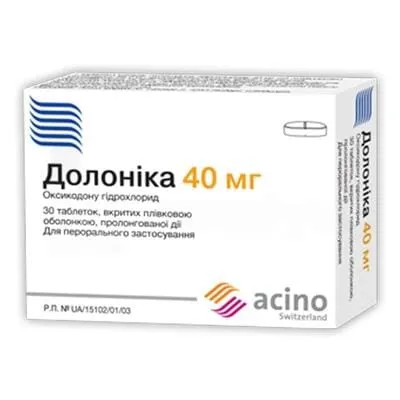
Table of Contents
INSTRUCTION FOR MEDICAL USE OF THE MEDICINAL PRODUCT
Dolonica 10 mg
Dolonica 20 mg
Dolonica 40 mg
Dolonica 80 mg
(Dolonica 10 mg)
(Dolonica 20 mg)
(Dolonica 40 mg)
(Dolonica 80 mg)
Composition:
Active substance: oxycodone hydrochloride;
One prolonged-release film-coated tablet contains 10 mg of oxycodone hydrochloride (equivalent to 9.0 mg of oxycodone), or 20 mg of oxycodone hydrochloride (equivalent to 17.9 mg of oxycodone), or 40 mg of oxycodone hydrochloride (equivalent to 35.9 mg of oxycodone), or 80 mg of oxycodone hydrochloride (equivalent to 71.7 mg of oxycodone);
Excipients: tablet core – spherical sugar, hypromellose, macrogol 6000, talc, ethylcellulose, hydroxypropylcellulose, propylene glycol, microcrystalline cellulose, powdered cellulose (only for 10 mg tablets), magnesium stearate, colloidal anhydrous silicon dioxide;
film coating – hypromellose, talc, macrogol 6000, titanium dioxide (E 171), red iron oxide (E 172) (only for 10 mg, 20 mg and 40 mg tablets), brown iron oxide (E 172) (only for 10 mg tablets), yellow iron oxide (E 172) (only for 40 mg and 80 mg tablets).
Pharmaceutical form. Prolonged-release film-coated tablets.
Main physicochemical properties:
10 mg tablets: elongated, biconvex film-coated tablets, brown-red in colour, with break lines on both sides;
20 mg tablets: elongated, biconvex film-coated tablets, pink in colour, with break lines on both sides;
40 mg tablets: elongated, biconvex film-coated tablets, orange in colour, with break lines on both sides;
80 mg tablets: elongated, biconvex film-coated tablets, yellow in colour, with break lines on both sides.
Pharmacotherapeutic group.
Analgesics. Opioids. Natural opium alkaloids.
ATC code: N02A A05.
Pharmacological properties.
Pharmacodynamics.
Oxycodone exhibits affinity for kappa-, mu-, and delta-opioid receptors in the brain, spinal cord, and peripheral organs. It acts on these receptors as an opioid agonist without any antagonist effect. The therapeutic effect is primarily analgesic and sedative. Compared to immediate-release oxycodone formulations, which are used either as monotherapy or in combination with other substances, prolonged-release tablets provide pain relief over a significantly longer period without increasing the frequency of adverse effects.
Endocrine system
See section "Special precautions for use".
Gastrointestinal tract
Opioids may cause spasm of the sphincter of Oddi.
Other pharmacological effects
Children
Overall safety data from 9 clinical pharmacodynamic and pharmacokinetic studies involving a total of 629 infants and children (aged from 2 months to 17 years) who received oral oxycodone demonstrate that oral oxycodone is well tolerated in pediatric patients, with minor adverse effects mainly affecting the gastrointestinal tract and nervous system. The positive safety data for oral oxycodone are supported by 9 studies involving a total of 1860 infants and children who received oxycodone buccally, intramuscularly, and intravenously, in which only mild adverse effects were observed, similar to those seen with oral administration of oxycodone.
The dose range of parenteral oxycodone administered to infants and children in clinical trials was from 0.025 mg/kg to 0.1 mg/kg, with the dose of 0.05 mg/kg most frequently used following a dose of 0.1 mg/kg. The intravenous oxycodone dose range was from 0.025 mg/kg to 0.1 mg/kg, with the 0.05 mg/kg dose most frequently used after a 0.1 mg/kg dose. The intramuscular oxycodone dose range was from 0.02 mg/kg to 0.1 mg/kg. The oral oxycodone dose range was from 0.1 mg/kg (initial dose) to 1.24 mg/kg/day. The buccal oxycodone dose was 0.1 mg/kg.
Overall, adverse effects observed in these oxycodone studies in infants and children are consistent with the known safety profile of oxycodone established in numerous clinical trials conducted in adults. No new or unexpected safety signals were identified during these studies. All reported adverse effects corresponded to the known safety profile of oxycodone and other similar strong opioids. However, the medicinal product Dolonika is not recommended for use in children under 12 years of age due to insufficient data on safety and efficacy.
Pharmacokinetics.
Absorption
To maintain the controlled-release properties of the tablets, prolonged-release tablets should be swallowed whole or divided into equal doses, but not chewed or crushed, as this would result in immediate release of oxycodone.
The relative bioavailability of oxycodone in the prolonged-release formulation is comparable to that of the immediate-release oral oxycodone formulation; however, with prolonged release, peak plasma concentration is reached approximately at 3 hours, rather than at 1–1.5 hours. Maximum and minimum plasma concentrations of oxycodone in prolonged- and immediate-release formulations are comparable after administration of equivalent doses at 12-hour and 6-hour intervals, respectively. Absolute bioavailability of oxycodone is approximately two-thirds that of the parenteral formulation. The 10 mg, 20 mg, 40 mg, and 80 mg prolonged-release tablets are proportionally bioequivalent with respect to the amount of absorbed active substance, as well as with respect to the rate and extent of absorption. Maximum plasma concentration may increase after consumption of a high-fat meal compared to administration on an empty stomach.
Distribution
At steady state, the volume of distribution of oxycodone is 2.6 L/kg, and plasma protein binding is 38–45%; elimination half-life is 4–6 hours, and plasma clearance is 0.8 L/min. The elimination half-life of oxycodone when using prolonged-release tablets is 4.5 hours, with steady-state levels reached on average after the first day of treatment.
Metabolism
Oxycodone is metabolized in the intestine and liver via CYP3A4 and CYP2D6 to noroxycodone, oxymorphone, and noroxymorphone, followed by formation of glucuronide conjugates. None of these metabolites are considered to play a significant role in the analgesic effect of oxycodone.
In vitro studies show that therapeutic doses of cimetidine are unlikely to have a significant effect on noroxycodone formation. In humans, quinidine reduces the production of oxymorphone, while the pharmacodynamic properties of oxycodone remain largely unchanged. The role of metabolites in the overall pharmacodynamic effect is minor.
Elimination
Oxycodone and its metabolites are excreted in urine and feces. Oxycodone crosses the placental barrier and is detected in breast milk. On average, women have plasma oxycodone concentrations up to 25% higher than men, based on body weight adjustment.
Clinical characteristics.
Indications.
Severe pain syndrome that can be adequately controlled only with opioid analgesics.
The medicinal product Dolonika is indicated for adults and adolescents aged 12 years and older.
Contraindications.
Hypersensitivity to the active substance or to any of the excipients.
Marked respiratory depression with hypoxia and/or hypercapnia.
Severe chronic obstructive pulmonary disease.
Cor pulmonale.
Severe bronchial asthma.
Paralytic ileus.
Interaction with other medicinal products and other forms of interaction.
Concomitant use of opioids with sedative medicinal products such as benzodiazepines or similar medicinal products increases the risk of sedation, respiratory depression, coma, and fatal outcome due to additive depressant effects on the central nervous system (CNS). The dose and duration of concomitant use should be limited. CNS-acting medicinal products include other opioids, gabapentinoids such as pregabalin, anxiolytics, sedatives and hypnotics, including benzodiazepines, neuroleptics, antidepressants, phenothiazines, and alcohol.
Concomitant use of alcohol and Dolonika should be avoided, as pharmacodynamic effects of the medicinal product may be enhanced.
Concomitant use of oxycodone with serotonergic agents, such as selective serotonin reuptake inhibitors (SSRIs) or serotonin-norepinephrine reuptake inhibitors (SNRIs), may cause serotonin toxicity. Symptoms of serotonin toxicity may include mental status changes (e.g., agitation, hallucinations, coma), autonomic instability (e.g., tachycardia, unstable blood pressure, hyperthermia), neuromuscular abnormalities (e.g., hyperreflexia, incoordination, rigidity), and/or gastrointestinal symptoms (e.g., nausea, vomiting, diarrhea). Oxycodone should be used with caution, and dose reduction may be necessary in patients receiving these medicinal products.
Anticholinergic agents (e.g., antipsychotics, tricyclic antidepressants, antihistamines, antiemetics, muscle relaxants, antiparkinsonian agents) may potentiate anticholinergic adverse effects of oxycodone, such as constipation, dry mouth, or urinary retention.
The medicinal product Dolonika should be used with caution in patients who are currently receiving or have received monoamine oxidase inhibitors (MAOIs) within the previous two weeks.
In individual cases, clinically significant decreases or increases in the international normalized ratio (INR) have been observed during concomitant use of oxycodone and coumarin anticoagulants.
Oxycodone is metabolized primarily by CYP3A4 and CYP2D6 enzymes. The activity of these metabolic pathways may be inhibited or induced by various co-administered medicinal products or dietary components.
The following sections provide more detailed explanations of these interactions.
CYP3A4 inhibitors such as macrolide antibiotics (e.g., clarithromycin, erythromycin, or telithromycin), azole antifungals (e.g., ketoconazole, voriconazole, itraconazole, or posaconazole), protease inhibitors (e.g., boceprevir, ritonavir, indinavir, nelfinavir, or saquinavir), cimetidine, and grapefruit juice may reduce oxycodone clearance, leading to increased plasma concentrations of oxycodone. Therefore, the oxycodone dose may require appropriate adjustment.
Some specific examples of CYP3A4 enzyme inhibition are listed below:
- Itraconazole, a potent CYP3A4 inhibitor administered at a dose of 200 mg orally for 5 days, increased the AUC of oral oxycodone. On average, AUC values were approximately 2.4 times higher (range 1.5–3.4).
- Voriconazole, a CYP3A4 inhibitor administered at a dose of 200 mg twice daily for 4 days (400 mg for the first two doses), increased the AUC of oral oxycodone. On average, AUC values were approximately 3.6 times higher (range 2.7–5.6).
- Telithromycin, a CYP3A4 inhibitor administered at a dose of 800 mg orally for 4 days, increased the AUC of oral oxycodone. On average, AUC values were approximately 1.8 times higher (range 1.3–2.3).
- Grapefruit juice, a CYP3A4 inhibitor administered at 200 mL three times daily for 5 days, increased the AUC of oral oxycodone. On average, AUC values were approximately 1.7 times higher (range 1.1–2.1).
CYP3A4 inducers such as rifampicin, carbamazepine, phenytoin, or St. John’s wort may induce oxycodone metabolism and increase oxycodone clearance, leading to decreased plasma concentrations of oxycodone. Therefore, the oxycodone dose may require appropriate adjustment.
Some specific examples of CYP3A4 enzyme induction are listed below:
- St. John’s wort, a CYP3A4 inducer administered at 300 mg three times daily for 15 days, decreased the AUC of oral oxycodone. On average, AUC values were approximately 50% lower (range 37–57%).
- Rifampicin, a CYP3A4 inducer administered at 600 mg once daily for 7 days, reduced the AUC of oral oxycodone. On average, AUC values were approximately 86% lower.
Medicinal products that inhibit CYP2D6 activity, such as paroxetine or quinidine, may reduce oxycodone clearance, leading to increased plasma concentrations of oxycodone.
Special precautions for use.
Oxycodone should be used with caution in the following cases: severe respiratory impairment, sleep apnea, concomitant use of CNS depressants, MAO inhibitors, opioid tolerance, physical dependence and withdrawal syndrome (see below), psychological dependence, risk of abuse, and history of alcohol or drug dependence; elderly or debilitated patients; head injury, intracranial lesions or increased intracranial pressure; decreased level of consciousness of unknown origin; arterial hypotension; hypovolemia; epilepsy or predisposition to seizures; pancreatitis; obstructive or inflammatory bowel disorders; hepatic or renal impairment; myxedema; hypothyroidism; Addison’s disease; benign prostatic hyperplasia; alcoholism; toxic psychosis; alcoholic delirium; constipation; biliary tract disorders.
If intestinal obstruction is suspected or develops during treatment, administration of the medicinal product Dolonika must be discontinued immediately.
Hepatobiliary disorders
Oxycodone may cause dysfunction and spasm of the sphincter of Oddi, thereby increasing the risk of biliary tract symptoms and pancreatitis. Therefore, oxycodone should be used with caution in patients with pancreatitis or biliary tract disorders.
Respiratory depression
The primary risk of opioid overdose is respiratory depression.
Opioids may cause sleep-related breathing disorders, including sleep apnea and sleep-related hypoxemia. Opioid use increases the risk of developing sleep apnea in a dose-dependent manner. For patients with sleep apnea, consideration should be given to reducing the total opioid dose.
Risk of concomitant use of sedative medicinal products such as benzodiazepines or related drugs:
Concomitant use of oxycodone and sedative medicinal products such as benzodiazepines or similar agents may result in sedation, respiratory depression, coma, and death. Due to these risks, concomitant use of sedatives such as benzodiazepines or related drugs with opioids should be reserved only for patients for whom alternative treatment options are inadequate. If a decision is made to prescribe oxycodone together with benzodiazepines, the lowest effective dose should be used, and the duration of treatment should be as short as possible.
Patients must be closely monitored for signs and symptoms of respiratory depression and sedation. Therefore, it is strongly recommended to inform patients and caregivers about the potential for these symptoms.
For Dolonika 80 mg tablets only:
The medicinal product Dolonika, prolonged-release tablets 80 mg, must not be used in opioid-naïve patients, as this may lead to life-threatening respiratory depression.
To maintain the controlled-release properties of the prolonged-release tablets, they must be swallowed whole and not chewed or crushed. Chewing or crushing the tablets results in rapid release and absorption of potentially fatal doses of oxycodone hydrochloride (see section "Overdose").
MAO inhibitors
Oxycodone should be administered with caution to patients receiving MAO inhibitors or who have received MAO inhibitors within the previous two weeks.
Tolerance, physical dependence and withdrawal syndrome
With chronic use, patients may develop tolerance to the medicinal product, requiring dose escalation to maintain the same level of pain control as previously achieved. Prolonged use of Dolonika may lead to drug dependence, necessitating higher doses to achieve the desired analgesic effect. Long-term use of Dolonika may result in physical dependence. Abrupt discontinuation of the drug may lead to withdrawal symptoms. If oxycodone therapy is no longer needed, gradual tapering of the daily dose is recommended to prevent withdrawal syndrome.
Withdrawal symptoms may include yawning, miosis, lacrimation, rhinorrhea, tremor, excessive sweating, restlessness, anxiety, seizures, insomnia, or myalgia.
Opioids are not first-line therapy for patients with chronic non-malignant pain and are not recommended as the sole treatment. Opioids should be used as part of a comprehensive treatment program that includes other medicinal products and non-pharmacological approaches. Patients with chronic non-malignant pain require monitoring for the development of dependence and abuse. To achieve treatment goals, it is strongly recommended that the physician define treatment outcomes in accordance with established pain management guidelines. Dosing may be adjusted as needed. If treatment goals are not achieved, consideration should be given to discontinuing therapy.
Opioid use disorder (abuse and dependence)
Repeated use of opioids such as oxycodone may lead to the development of tolerance and physical and/or psychological dependence.
Repeated use of the medicinal product Dolonika may lead to opioid use disorder (OUD). Higher doses and longer duration of opioid treatment may increase the risk of OUD. Abuse or intentional misuse of Dolonika may result in overdose and/or death. The risk of OUD is increased in patients with substance use disorders (including alcohol abuse), smokers, or patients with mental health disorders (e.g., major depression, anxiety, and personality disorders), including those with personal or family history.
Prior to initiating and during treatment with oxycodone, treatment goals and a discontinuation plan should be established with the patient (see section "Dosage and administration"). Before starting and during treatment, patients should also be informed about the risks and signs of OUD. Patients should be advised to contact their physician if such signs appear.
Patients require careful monitoring for signs of misuse, abuse, or dependence (e.g., frequent early requests for prescription refills). This includes reviewing concomitant use of opioids and psychoactive drugs (such as benzodiazepines). For patients exhibiting signs and symptoms of OUD, consultation with an addiction specialist should be considered.
Alcohol
Concomitant use of alcohol and Dolonika may enhance adverse effects of the drug; therefore, simultaneous use should be avoided.
Hyperalgesia
Hyperalgesia may occur, in which further increases in oxycodone dose do not result in increased analgesia, particularly with high-dose therapy. Dose reduction of oxycodone or switching to another opioid may be required.
Children
Due to safety and efficacy concerns, the medicinal product Dolonika should not be used in children under 12 years of age.
Dolonika should not be used in patients prior to surgery or within the first 12–24 hours after surgery. Depending on the type and extent of surgical procedure, anesthetic technique, concomitant medications, and individual patient status, the timing of postoperative Dolonika use should be determined after careful benefit-risk assessment in each individual case.
Opioids such as oxycodone hydrochloride may affect the hypothalamic-pituitary-adrenal or gonadal systems. Some observable changes include increased serum prolactin levels and decreased plasma cortisol and testosterone levels. Such hormonal changes may manifest as clinical symptoms.
As with all opioid-containing medicinal products, special caution is required when using Dolonika in patients undergoing bowel surgery due to known impairment of gastrointestinal motility. Opioids should only be administered after a physician has confirmed restoration of bowel function.
Parenteral intravenous injection of oral dosage forms may lead to serious, potentially fatal consequences.
Dolonika may cause a positive doping test result.
Use of Dolonika as a doping agent may be harmful to health.
This medicinal product contains sucrose. Patients with rare hereditary problems of fructose intolerance, glucose-galactose malabsorption, or sucrase-isomaltase deficiency should not take this medicinal product.
Use during pregnancy or breastfeeding.
Use of this medicinal product is not recommended during pregnancy or breastfeeding whenever possible.
Pregnancy
Data on oxycodone use during pregnancy are limited. Neonates born to mothers who received opioids during the last 3–4 weeks before delivery require monitoring for respiratory depression. Withdrawal symptoms may occur in newborns of mothers undergoing oxycodone treatment.
Breastfeeding
Oxycodone may be excreted in breast milk and may cause sedation and respiratory depression in breastfed infants. Therefore, Dolonika should not be used in women who are breastfeeding.
Fertility
There are no data on the effect of oxycodone on human fertility. Animal studies in rats showed no effect on fertility.
Ability to influence reaction speed when driving or operating machinery.
Oxycodone may have a significant effect on the ability to drive vehicles or operate machinery. This is particularly likely at the beginning of Dolonika therapy, after dose escalation or change of medication, and when oxycodone is used concomitantly with other CNS depressants.
During stable therapy, an absolute prohibition on driving is not required.
The physician should assess the patient’s ability to drive or operate machinery in each individual case.
Method of Administration and Dosage
Dosage
The dosage depends on the intensity of pain and the individual sensitivity of the patient to treatment.
Unless otherwise indicated, the following general dosage recommendations for Dolonika should be observed:
Adults and adolescents (aged 12 years and older)
Dose titration
The usual initial dose for patients who have not previously received opioids, or for patients with severe pain not controlled by weaker opioids, is 10 mg of oxycodone hydrochloride administered every 12 hours.
Patients already receiving opioids may initiate treatment at higher doses, based on their prior opioid experience.
Transition from morphine to oxycodone
Individual differences among patients require careful dose selection for each patient. At the beginning of the transition, a dose lower than the calculated equivalent may be recommended. Patients previously receiving oral morphine prior to oxycodone therapy should be given a daily dose based on the following ratio: 10 mg of oral oxycodone is equivalent to 20 mg of oral morphine.
Due to individual differences in sensitivity to various opioids, it is recommended that patients transitioning from other opioids to oxycodone hydrochloride prolonged-release tablets start with 50–75% of the calculated oxycodone hydrochloride dose.
Dose adjustment
Some patients receiving Dolonika on a regular schedule may additionally require immediate-release analgesics as rescue medication for breakthrough pain. Prolonged-release Dolonika tablets are not indicated for the treatment of breakthrough pain. A single dose of rescue medication should be 1/4 of the total daily equianalgesic dose of Dolonika, administered every 6 hours. The need for rescue medication more than twice daily indicates that the dose of prolonged-release Dolonika tablets should be increased. Dose adjustments should not be made more frequently than every 1–2 days until stable twice-daily administration is achieved.
After increasing the dose from 10 mg to 20 mg every 12 hours, dose adjustments should be made in steps approximately equal to one-third of the total daily dose until the desired effect is achieved. The goal of treatment is individualized dosing for each patient, such that twice-daily administration provides adequate pain relief with tolerable side effects and minimal need for rescue medication for as long as pain relief is required.
For most patients, an even dose distribution (equal morning and evening doses) according to a fixed schedule (every 12 hours) is appropriate. For some patients, an uneven distribution of the total daily dose may be beneficial.
The lowest effective analgesic dose should generally be used.
For pain not associated with malignancies, a daily dose of 40 mg is usually sufficient, although higher doses may be required. Patients with pain related to malignancies may require doses ranging from 80 mg to 120 mg, and in some cases, doses may be increased up to 400 mg. When higher doses are required, decisions should be made individually, considering the balance between efficacy and tolerability, and the risk of adverse effects.
Treatment goals and discontinuation
Prior to initiating oxycodone therapy, the treatment strategy—including duration, treatment goals, and a plan for discontinuation—should be discussed and agreed upon with the patient, in accordance with pain management guidelines. During treatment, regular communication between physician and patient is essential to assess the need for continued therapy, consider discontinuation, and adjust dosing as necessary. When a patient no longer requires oxycodone therapy, gradual dose reduction may be appropriate to prevent withdrawal symptoms. In the absence of adequate pain control, consider the possibility of hyperalgesia, opioid tolerance, or progression of the underlying disease (see section "Special precautions").
Duration of treatment
Dolonika should not be used longer than necessary.
Elderly patients
Dosage adjustment in elderly patients without clinical evidence of impaired liver and/or kidney function is not required.
Patients with renal or hepatic impairment
A conservative approach should be followed when initiating treatment in this patient group. Treatment in adult patients should begin with half the recommended dose (e.g., starting from a total daily dose of 10 mg orally for opioid-naïve patients) and be individually titrated according to clinical response. Therefore, the lowest recommended dose specified in this Instructions for Medical Use—namely, 10 mg—may not be suitable as an initial dose.
Patients in other risk groups
Treatment of patients with low body weight or slow metabolism of drugs who have not previously received opioids should begin with half the recommended adult dose.
Thus, the lowest recommended dose specified in this Instructions for Medical Use—namely, 10 mg—may not be suitable as an initial dose.
Children (under 12 years of age)
Oxycodone is not recommended for use in children under 12 years of age due to insufficient data on safety and efficacy.
Method of administration
For oral use.
Dolonika should be taken twice daily at the prescribed dose according to a fixed schedule.
Prolonged-release tablets may be taken independently of food, with sufficient fluid. Dolonika tablets must be swallowed whole or divided into equal doses; they must not be chewed or crushed.
Overdose
Symptoms of intoxication:
Acute oxycodone overdose may result in respiratory depression, drowsiness, stupor or coma, decreased skeletal muscle tone, miosis, bradycardia, hypotension, pulmonary edema, circulatory collapse, and fatal outcomes.
Toxic leukoencephalopathy has been observed in cases of oxycodone overdose.
Treatment of intoxication:
Airway patency must be restored. Pure opioid antagonists such as naloxone are specific antidotes for opioid overdose symptoms. Other supportive measures should be used as needed.
Naloxone: e.g., 0.4–2 mg intravenously. Single doses should be repeated as necessary every 2–3 minutes depending on the clinical situation. Intravenous infusion of 2 mg naloxone in 500 mL of isotonic saline or 5% dextrose solution (resulting in 0.004 mg/mL naloxone) may be used. The infusion rate should be adjusted based on prior bolus doses and patient response.
Other supportive measures: artificial ventilation, oxygen therapy, administration of vasoconstrictors, and infusion therapy to treat associated hemodynamic shock. In cases of cardiac arrest or arrhythmia, cardiac massage or defibrillation is indicated. Maintenance of fluid and electrolyte balance is essential.
Side effects.
Due to its pharmacological properties, oxycodone may cause respiratory depression, miosis, bronchospasm, smooth muscle spasms, and suppression of the cough reflex.
The most common side effects are nausea (especially at the beginning of treatment) and constipation.
As with other opioids, the most serious adverse reaction is respiratory depression. This reaction is most likely to occur in elderly and debilitated patients or in patients with opioid intolerance.
In sensitive patients, opioids may cause pronounced lowering of blood pressure.
Adverse reactions are classified by frequency of occurrence into the following categories:
Very common (≥ 1/10), common (from ≥ 1/100 to < 1/10), uncommon (from ≥ 1/1,000 to < 1/100), rare (from > 1/10,000 to < 1/1,000), very rare (< 1/10,000), frequency not known (frequency cannot be estimated from available data).
Infections and infestations
Rare: Herpes simplex.
Immune system disorders
Uncommon: Hypersensitivity reactions.
Frequency not known: Anaphylactic reaction, anaphylactoid reaction.
Metabolism and nutrition disorders
Common: Decreased appetite up to loss of appetite.
Uncommon: Dehydration.
Rare: Increased appetite.
Psychiatric disorders
Common: Anxiety, confusion, depression, decreased activity, restlessness, psychomotor hyperactivity, nervousness, insomnia, unusual thoughts.
Uncommon: Excitement, affective lability, euphoric mood, perceptual disturbances (e.g., hallucinations, derealization), decreased libido, drug dependence (see section "Special precautions for use").
Frequency not known: Aggression.
Nervous system disorders
Very common: Somnolence, sedation, dizziness, headache.
Common: Tremor, general weakness.
Uncommon: Amnesia, seizures (particularly in patients with epilepsy or predisposition to seizures), difficulty concentrating, migraine, arterial hypertension; involuntary muscle contractions, hypesthesia, coordination disturbances, speech disorders, vertigo, paresthesia, dysgeusia.
Frequency not known: Hyperalgesia.
Eye disorders
Uncommon: Visual disturbances, miosis.
Ear and labyrinth disorders
Uncommon: Hearing disturbances, vertigo.
Cardiac disorders
Uncommon: Tachycardia, increased heart rate (in the context of withdrawal syndrome).
Vascular disorders
Uncommon: Vasodilation.
Rare: Arterial hypotension, orthostatic hypotension.
Respiratory, thoracic and mediastinal disorders
Common: Dyspnea.
Uncommon: Respiratory depression, voice changes, cough.
Frequency not known: Sleep apnea syndrome.
Gastrointestinal disorders
Very common: Constipation, vomiting, nausea.
Common: Abdominal pain, diarrhea, dry mouth, hiccup, dyspepsia.
Uncommon: Oral ulcers, stomatitis, dysphagia, flatulence, belching, intestinal obstruction.
Rare: Melena, dental disorders, tooth damage, gum bleeding.
Frequency not known: Caries.
Hepatobiliary disorders
Uncommon: Increased liver enzyme levels.
Frequency not known: Cholestasis, biliary colic, Oddi sphincter dysfunction.
Skin and subcutaneous tissue disorders
Very common: Itching.
Common: Skin reactions/rash, hyperhidrosis.
Uncommon: Dry skin.
Rare: Urticaria.
Renal and urinary disorders
Common: Urination disorders, increased urge to urinate.
Uncommon: Urinary retention.
Reproductive system and breast disorders
Uncommon: Erectile dysfunction, hypogonadism.
Frequency not known: Amenorrhea.
General disorders and administration site conditions
Common: Asthenia, fatigue.
Uncommon: Chills; withdrawal syndrome, pain (e.g., chest pain), malaise, swelling, peripheral edema, physical dependence, thirst.
Rare: Changes in body weight (increase or decrease).
Frequency not known: Withdrawal syndrome in newborns.
Injury, poisoning and procedural complications
Uncommon: Accidental injuries.
Description of selected adverse reactions
Drug dependence
Repeated administration of oxycodone may lead to drug dependence, even at therapeutic doses. The risk of developing drug dependence may vary depending on individual patient risk factors, dosage, and duration of opioid treatment (see section "Special precautions for use").
Children and adolescents
The frequency, nature, and severity of adverse reactions in patients under 12 years of age are expected to be no different from those in adults and adolescents aged 12 years and older.
For newborns of mothers who have been or are currently receiving Dolonika.
Shelf life.
For 10 mg tablets – 3 years.
For 20 mg, 40 mg, and 80 mg tablets – 4 years.
Storage conditions.
For 10 mg tablets: Store in a place inaccessible to children at a temperature not exceeding 30 °C.
For 20 mg, 40 mg, and 80 mg tablets: Store in a place inaccessible to children. No special storage conditions required.
Packaging.
10 tablets in a blister. 3 or 10 blisters with child-resistant closure in a cardboard box.
Prescription status. Prescription only.
Manufacturer.
Aspen Pharma AG.
Manufacturer's address and place of business.
Birsstrasse 2, 4253 Liestal, Switzerland.