Doxycycline
Ukraine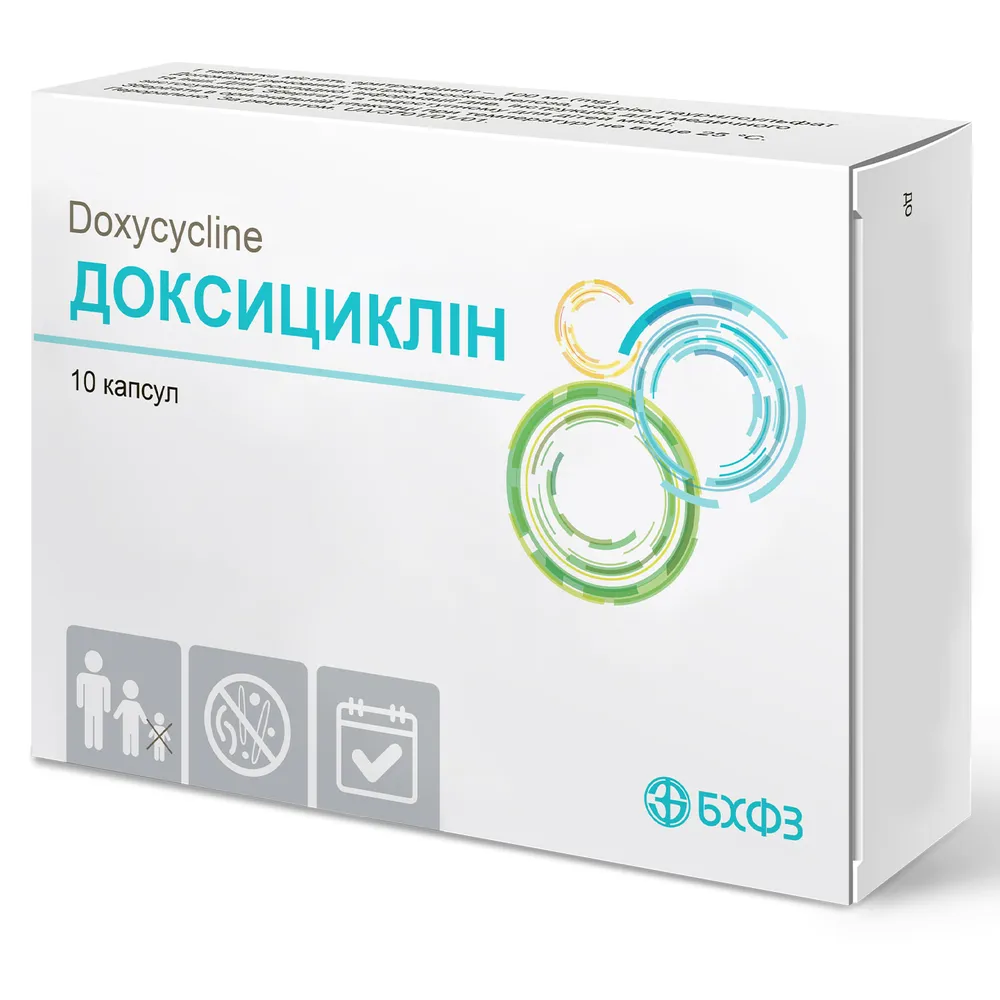
Table of Contents
INSTRUCTIONS FOR MEDICAL USE OF THE MEDICINAL PRODUCT DOXYCYCLINE
Composition:
Active substance: doxycycline;
1 capsule contains doxycycline hyclate equivalent to doxycycline – 100 mg;
Excipients: lactose monohydrate, calcium stearate; the capsule shell contains the colouring agent Yellow West FCF (E 110).
Pharmaceutical form. Capsules.
Main physicochemical properties: hard capsules with yellow cap and body, containing a powder or mass in the form of a partially or completely formed column of yellow colour with a greenish tint. White specks may be present.
Pharmacotherapeutic group. Antibacterials for systemic use. Tetracyclines. Doxycycline. ATC code J01AA02.
Pharmacological properties.
Pharmacodynamics.
Doxycycline is a semi-synthetic antibiotic of the broad-spectrum tetracycline group. It exerts a bacteriostatic effect by inhibiting microbial protein synthesis through blocking the binding of aminoacyl-transfer RNA (tRNA) to the "messenger RNA (mRNA)–ribosome" complex.
It is active against Gram-positive bacteria: aerobic cocci – Staphylococcus spp. (including penicillinase-producing strains), Streptococcus spp. (including Streptococcus pneumoniae); aerobic spore-forming bacteria – Bacillus anthracis; aerobic non-spore-forming bacteria – Clostridium spp. Doxycycline is also active against Gram-negative bacteria: aerobic cocci – Neisseria gonorrhoeae; aerobic bacteria – Escherichia coli, Shigella spp., Salmonella spp., Enterobacter spp., Klebsiella spp., Bordetella pertussis, as well as against Rickettsia spp., Treponema spp., Mycoplasma spp., Chlamydia spp.
Resistant to doxycycline are Pseudomonas aeruginosa, Proteus spp., Serratia spp., and most strains of Bacteroides fragilis.
Pharmacokinetics.
The drug is rapidly absorbed from the gastrointestinal tract and slowly eliminated from the body. Studies show that doxycycline absorption differs from that of some other tetracyclines and is not affected by concomitant food intake (including milk).
Depending on the dose, therapeutic blood concentrations are maintained for 18–24 hours. It is 80–90% bound to plasma proteins. It rapidly distributes into most body fluids, including bile, secretions of the paranasal sinuses, pleural, synovial, and ascitic fluids. Concentrations in cerebrospinal fluid vary and, after parenteral administration, may reach 10–25% of serum concentrations. The elimination half-life of the drug is 12–22 hours. A significant portion is excreted unchanged in feces; approximately 40% is excreted in urine.
Clinical characteristics.
Indications.
Treatment of infections caused by susceptible strains of gram-positive and gram-negative microorganisms and certain other microorganisms, namely:
- Respiratory tract infections: pneumonia and other lower respiratory tract diseases caused by susceptible strains of Streptococcus pneumoniae, Haemophilus influenzae, Klebsiella pneumoniae; pneumonia caused by Mycoplasma pneumoniae; chronic bronchitis, sinusitis;
- Urinary tract infections: infections caused by susceptible strains of Klebsiella, Enterobacter, as well as Escherichia coli, Streptococcus faecalis;
- Sexually transmitted infections:
- infections caused by Chlamydia trachomatis, including uncomplicated urethral and endocervical infections and rectal infections;
- nongonococcal urethritis caused by Ureaplasma urealyticum (T-mycoplasma);
- chancroid, granuloma inguinale, lymphogranuloma venereum;
- the drug is an alternative for the treatment of gonorrhea and syphilis;
- Skin infections: acne when antibiotic therapy is indicated.
Treatment of infections caused by microorganisms sensitive to tetracyclines, namely:
- Ophthalmological infections: infections caused by susceptible bacteria Gonococci, Staphylococci, and Haemophilus influenzae. Infection causing trachoma is not always eliminated, as confirmed by immunofluorescence testing. For the treatment of paratrachoma, the drug may be used as monotherapy or in combination with other medicinal products;
- Rickettsial infections: spotted fever group, Rocky Mountain spotted fever, Q fever, tick-borne fever, endocarditis caused by Coxiella;
- Other infections: ornithosis, brucellosis (when used in combination with streptomycin), cholera, bubonic plague, epidemic relapsing fever, tick-borne relapsing fever, tularemia, melioidosis; chloroquine-resistant tropical malaria, and acute intestinal amoebiasis (when used in combination with an amebicide).
Alternative treatment of leptospirosis, gas gangrene, tetanus.
Prophylaxis of the following conditions: Japanese encephalitis, traveler's diarrhea (caused by enterotoxigenic Escherichia coli), leptospirosis, malaria. Malaria prophylaxis should be conducted in accordance with current guidelines due to the potential development of resistance.
Contraindications.
- Hypersensitivity to tetracyclines, doxycycline, and other components of the drug;
- porphyria;
- severe hepatic insufficiency;
- leukopenia.
Interaction with other medicinal products and other forms of interactions.
Iron salts, oral zinc and bismuth preparations, aluminum-, calcium-, and magnesium-containing antacids, and other products containing these cations (including magnesium-containing laxatives, sucralfate), cholestyramine, colestipol, kaolin, activated charcoal, agents increasing gastric pH (including sodium bicarbonate, H2-histamine blockers): reduced absorption of doxycycline. Administration of doxycycline with these products should be separated as much as possible in time (2 hours before or 4 hours after their administration).
Quinapril: due to magnesium carbonate content, may affect doxycycline absorption.
Derivatives of sulfonylurea: enhanced hypoglycemic effect.
Curare-like agents: doxycycline potentiates their effect.
Penicillins, cephalosporins, beta-lactam antibiotics: as a bacteriostatic antibiotic, doxycycline may interfere with the bactericidal activity of other antibiotics.
Indirect anticoagulants, including warfarin, phenindione, antithrombotic agents: possible increase in prothrombin index. Tetracyclines reduce plasma prothrombin levels, potentiate the effect of indirect anticoagulants, therefore, a reduction in anticoagulant dosage may be necessary.
Barbiturates, carbamazepine, primidone, phenytoin, other agents inducing liver enzymes, including rifampicin, carbonic anhydrase inhibitors (including acetazolamide): decreased plasma concentration and shortened elimination half-life (T1/2) of doxycycline (induction of mono-oxygenases and accelerated biotransformation in the liver), which may lead to reduced antibacterial effect. This effect may persist for several days after discontinuation of the above-mentioned agents; therefore, consideration should be given to increasing the daily dose of doxycycline.
Ethanol: shortened T1/2 of doxycycline. Alcohol should not be consumed during doxycycline therapy.
Hormonal contraceptives: reduced efficacy (unplanned pregnancy) and increased frequency of breakthrough bleeding when used concomitantly with tetracyclines. Therefore, non-hormonal methods of contraception are recommended during doxycycline use and for 7 days after completion of the doxycycline course.
Cyclosporine: possible increase in its plasma concentration and, as a result, increased toxicity. This combination should be used under close monitoring.
Methoxyflurane anesthesia: possible nephrotoxic effects, including acute renal failure, with fatal outcome.
Methotrexate: increased toxicity of the latter; this combination should be used with caution.
Ergotamine and methysergide: increased risk of ergotism.
Vitamin A and retinoids (including isotretinoin, etretinate): increased risk of intracranial hypertension; this combination should not be used. To prevent this complication during acne treatment with retinoids, an interval after doxycycline therapy should be observed.
Theophylline: increased risk of gastrointestinal adverse effects.
Lithium preparations: possible increase or decrease in blood lithium levels.
Oral typhoid vaccine: antibacterial agents, including tetracyclines, may reduce its therapeutic effect. Administration of the vaccine should be avoided during doxycycline treatment.
During fluorescence testing, false-positive results for increased urinary catecholamines may occur.
Additionally, tetracycline use may lead to inaccurate laboratory test results when measuring levels of glucose, protein, and urobilinogen in urine.
Special precautions for use.
Hepatic function impairment. Doxycycline should be used with caution in patients with impaired liver function and in patients receiving potentially hepatotoxic medicinal products.
Hepatic function disorders associated with oral or parenteral administration of tetracyclines, including doxycycline, have been reported very rarely.
Renal function impairment. Renal excretion of doxycycline amounts to approximately 40% within 72 hours in patients with normal renal function. This range may decrease to 1–5% within 72 hours in patients with severe renal impairment (creatinine clearance below 10 mL/min).
Studies have not revealed any significant difference in the serum half-life of doxycycline between patients with normal renal function and those with severe renal impairment. Haemodialysis does not affect the serum half-life of the drug.
The anti-anabolic effect of tetracyclines may lead to increased blood urea levels. Current evidence indicates that doxycycline does not cause an anti-anabolic effect in patients with impaired renal function. Dose adjustment is not necessary in renal impairment.
Severe skin reactions. Severe skin reactions such as exfoliative dermatitis, erythema multiforme, Stevens-Johnson syndrome, toxic epidermal necrolysis, and DRESS syndrome (drug reaction with eosinophilia and systemic symptoms) have been reported during treatment with doxycycline (see section "Undesirable effects"). Doxycycline therapy should be discontinued immediately at the first signs of skin rash or any other symptoms of hypersensitivity, and appropriate therapy should be initiated.
Photosensitivity. Cases of photosensitivity reactions with clinical manifestations of severe sunburn have been reported in patients taking tetracyclines, including doxycycline. During treatment with doxycycline and for 4–5 days after its discontinuation, exposed areas of skin should be protected from direct sunlight and artificial UV radiation. Patients should be informed about the possibility of such a reaction and advised to discontinue therapy immediately upon the first signs of erythema. Cases of photo-onycholysis have also been reported in patients taking doxycycline (see section "Undesirable effects").
Microflora. Antibiotic use may occasionally lead to overgrowth of non-susceptible microorganisms, including fungi such as Candida, and development of superinfection, which may require discontinuation of the antibiotic and appropriate intervention.
To prevent candidiasis, antifungal agents are recommended to be used concomitantly with doxycycline.
Pseudomembranous colitis / antibiotic-associated diarrhoea. Reports of pseudomembranous colitis have been associated with nearly all antibacterial agents, including doxycycline. The severity of this complication ranges from mild to life-threatening. This diagnosis should be considered in patients presenting with diarrhoea following antibacterial therapy. Drugs that inhibit intestinal motility should not be used in the treatment of pseudomembranous colitis.
Antibiotic-associated diarrhoea has been reported with the use of nearly all antibacterial agents, including doxycycline. The severity may range from mild diarrhoea to fatal colitis. Antibacterial treatment disrupts the normal flora of the colon, which may lead to overgrowth of Clostridium difficile. C. difficile produces toxins A and B, which contribute to the development of C. difficile-associated diarrhoea (CDAD). Hyper-toxin-producing strains of C. difficile are associated with increased morbidity and mortality, as such infections may be resistant to antibacterial therapy and may require colectomy. CDAD should be considered in all patients who develop diarrhoea during or after antibiotic therapy. A careful medical history is essential, as CDAD may occur up to two months after completion of antibacterial treatment. In cases of severe diarrhoea, drugs that inhibit intestinal motility are contraindicated.
Oesophagitis. Cases of oesophagitis and oesophageal ulcers have been reported in patients taking encapsulated or tablet forms of tetracycline-class drugs, including doxycycline. Most of these patients took the drug with insufficient fluid or immediately before going to bed. The drug should be taken with sufficient liquid and swallowed in an upright (sitting or standing) position. If symptoms such as dysphagia or substernal pain occur, oesophageal complications should be considered and treatment discontinued. Doxycycline should be used with caution in patients with oesophageal reflux.
Benign intracranial hypertension (pseudotumour cerebri) has been reported in patients receiving tetracyclines, including doxycycline, at the maximum therapeutic dose. It is usually transient and rapidly resolves after discontinuation of the drug. However, cases of irreversible vision loss due to benign intracranial hypertension have been reported. Immediate ophthalmological evaluation is required if visual disturbances occur during treatment. Cases of bulging fontanelle in infants receiving tetracycline therapy have also been reported. Women of childbearing age who are overweight or have a history of intracranial hypertension episodes are at higher risk of developing tetracycline-associated intracranial hypertension. Since intracranial pressure may remain elevated for several weeks after discontinuation of the drug, patients should be monitored until their condition stabilizes. Concomitant use of doxycycline with isotretinoin or other systemic retinoids should be avoided, as isotretinoin is also known to cause benign intracranial hypertension (pseudotumour cerebri) (see section "Interaction with other medicinal products and other forms of interaction").
Porphyria. Rare cases of porphyria have been observed in patients receiving tetracyclines.
Venereal diseases. In the treatment of venereal diseases with suspected concomitant syphilis, appropriate diagnostic procedures, including dark-field microscopy and other tests, should be performed. In such cases, monthly serological testing should be conducted for at least 4 months.
Beta-haemolytic streptococci. For infections caused by group A beta-haemolytic streptococci, treatment should last for at least 10 days.
Myasthenia gravis. Tetracyclines may cause mild neuromuscular blockade; therefore, doxycycline should be used with caution in patients with myasthenia gravis.
Systemic lupus erythematosus. Tetracyclines may exacerbate systemic lupus erythematosus.
Methoxyflurane. Methoxyflurane should be used with caution in combination with tetracyclines due to the potential for fatal nephrotoxicity.
Jarisch-Herxheimer reaction. In some patients with spirochetal infections, a Jarisch-Herxheimer reaction may occur shortly after initiation of doxycycline therapy. Patients should be informed that this reaction, which is usually self-limiting, is a consequence of antibiotic treatment of spirochetal infections.
Excipients. This medicinal product contains lactose. Patients with rare hereditary problems of galactose intolerance, lactase deficiency, or glucose-galactose malabsorption should not take this medicine.
The product contains azo dye "Sunset Yellow FCF" (E 110), which may cause allergic reactions, including bronchial asthma. The risk of allergy is higher in patients with hypersensitivity to acetylsalicylic acid.
During prolonged high-dose therapy, periodic laboratory monitoring of haematopoietic, renal, and hepatic function is recommended.
Use during pregnancy or breastfeeding.
The use of this medicinal product during pregnancy is contraindicated, as it crosses the placenta and may impair normal tooth development, cause inhibition of fetal skeletal growth (see section "Children"), and induce fatty infiltration of the liver. Tetracyclines are excreted in breast milk; therefore, breastfeeding should be discontinued during treatment if use of the drug is necessary.
Ability to influence the ability to drive and use machines.
The effect of doxycycline on the ability to drive or operate machinery has not been studied. If adverse reactions such as arterial hypotension, tinnitus, blurred vision, scotoma, diplopia, or prolonged loss of vision occur, patients should refrain from driving or operating machinery.
Method of Administration and Dosage.
The drug should be taken orally during or after meals to reduce the risk of esophageal and gastric irritation, and washed down with sufficient fluid (milk or kefir may be used). Concurrent intake of food (including milk) has almost no effect on the absorption of the drug.
Capsules should be swallowed in an upright position—sitting or standing—and well before bedtime to reduce the risk of esophageal irritation or ulceration.
The duration of treatment is determined individually by the physician; treatment should be continued for at least 24–48 hours after the disappearance of symptoms and normalization of body temperature.
In streptococcal infections, the drug should be administered for at least 10 days to prevent the development of rheumatic fever or glomerulonephritis.
Adults and children aged 12 years and older with body weight above 45 kg. On the first day of treatment for acute infections, the daily dose is 200 mg (administered as a single dose or 100 mg every 12 hours); in subsequent days, 100 mg/day. In the treatment of severe infections (particularly chronic urinary tract infections), the drug should be administered at a dose of 200 mg/day throughout the entire treatment period. Frequency of administration: 1–2 times daily.
Special Cases of Use.
Acne – the drug should be prescribed at a dose of 50 mg daily for 6–12 weeks (pharmaceutical forms containing 50 mg of doxycycline should be used).
Sexually transmitted infections:
- Uncomplicated urethral, cervical, and rectal infections caused by Chlamydia trachomatis; nongonococcal urethritis caused by Ureaplasma urealyticum; uncomplicated genital infections caused by Neisseria gonorrhoeae (except anorectal infection in males) – 100 mg twice daily for at least 7 days;
- Acute orchioepididymitis caused by Chlamydia trachomatis or Neisseria gonorrhoeae – 100 mg twice daily for 10 days;
- Primary and secondary syphilis in non-pregnant patients with penicillin allergy (as alternative therapy) – 200 mg twice daily for 14 days.
Epidemic relapsing fever, tick-borne relapsing fever – single dose of 100–200 mg depending on the severity of the disease.
Chloroquine-resistant tropical malaria – 200 mg daily for at least 7 days. Due to the potentially severe nature of the infection, a fast-acting schizonticidal agent (e.g., quinine) should always be used in addition to doxycycline; the dose of the additional agent depends on the specific case.
Malaria prophylaxis – the recommended dose for adults is 100 mg daily. For children aged 12 years, the recommended dose is 2 mg/kg daily (using doxycycline formulations allowing such dosing), up to a maximum total dose of 100 mg daily. Prophylactic use may be started 1–2 days before travel to a malaria-endemic region, continued daily during the stay in the region, and for 4 weeks after leaving the region. Current standards for malaria treatment should also be considered.
Prophylaxis of Japanese river fever (scrub typhus) – the recommended dose is 200 mg as a single dose.
Treatment and prophylaxis of cholera – the recommended dose is 300 mg as a single dose.
Prophylaxis of traveler’s diarrhea in adults – 200 mg on the first day of travel (as a single dose or 100 mg every 12 hours), followed by 100 mg daily during subsequent days of travel. Information on prophylactic use beyond 21 days is lacking.
Prophylaxis of leptospirosis – 200 mg once weekly throughout the stay in a leptospirosis-endemic area and 200 mg at the end of the trip. Information on use beyond 21 days for prophylaxis is lacking.
Special Patient Groups.
Elderly patients: the drug can be used at standard doses without special precautions. Dose adjustment is not necessary in renal impairment. Doxycycline may be the preferred agent in elderly patients, as its use is less associated with esophageal irritation and ulceration.
In patients with renal impairment, administration of the drug at recommended doses does not lead to antibiotic accumulation (see section "Special Instructions").
Patients with hepatic impairment: see section "Special Instructions."
Children.
Doxycycline is contraindicated in children under 12 years of age. This pharmaceutical form is not intended for use in children aged 12 years and older with body weight below 45 kg.
Like other tetracyclines, doxycycline forms stable calcium complexes in any developing bone tissue (skeleton, tooth enamel, dentin). Decreased growth rate of the tibia has been observed in premature infants receiving tetracyclines orally at a dose of 25 mg/kg body weight every 6 hours. This adverse reaction is reversible upon discontinuation of the drug.
Use of tetracyclines during tooth development (children under 12 years of age) may cause permanent discoloration of teeth (yellow-brown-gray). This adverse reaction is more common with prolonged use but may also occur after repeated short courses of treatment. Hypoplasia of enamel has also been reported.
Overdose.
Acute overdose of antibiotics is rare.
Symptoms. Possible damage to renal parenchyma, development of pancreatitis, and exacerbation of other adverse reactions.
Treatment. Administration of the drug should be discontinued; gastric lavage, symptomatic and supportive therapy should be initiated.
Since tetracyclines can form chelate complexes with calcium salts, calcium salts may be used as an antidote in cases of intoxication.
Hemodialysis does not affect the elimination half-life of the drug from blood serum and is therefore ineffective in overdose.
Adverse Reactions
Blood and lymphatic system: anemia, including hemolytic anemia, leukopenia, leukocytosis, thrombocytopenia, neutropenia and eosinophilia, lymphocytopenia, lymphadenopathy, appearance of atypical lymphocytes, toxic granulation of granulocytes, coagulation disorders, decreased prothrombin activity, hematuria, porphyria.
Immune system: hypersensitivity reactions, including anaphylactic shock, anaphylaxis, arterial hypotension, pericarditis, tachycardia, angioneurotic edema, dyspnea (including due to bronchospasm, exacerbation of bronchial asthma), generalized rashes, exacerbation of systemic lupus erythematosus, serum sickness, peripheral edema and urticaria; anaphylactoid reactions, anaphylactoid purpura. Cases of DRESS syndrome (drug reaction with eosinophilia and systemic symptoms), Jarisch-Herxheimer reaction have been reported. Complete cross-allergy exists among tetracyclines. The drug contains the dye "Yellow FCF" (E 110), which may cause allergic reactions, including bronchial asthma.
Skin and subcutaneous tissue: pruritus, rashes, including maculopapular, erythematous, pustular, photosensitization reactions, multiform erythema, exfoliative dermatitis, Stevens-Johnson syndrome, toxic epidermal necrolysis, photo-onycholysis, nail discoloration, skin hyperpigmentation.
Nervous system: bulging of the fontanelle in infants and benign intracranial hypertension (pseudotumor cerebri) in adolescents and adults, whose initial symptoms may include headache, dizziness, fatigue, blurred vision, scotoma, diplopia, nausea, vomiting; hypesthesia, paresthesia, restlessness, anxiety, malaise, confusion, somnolence. Seizures, depression, hallucinations are possible.
Sensory organs: tinnitus, vertigo; conjunctivitis, periorbital edema. Cases of prolonged/permanent vision loss, disturbances/loss of smell and taste sensations, which were sometimes only partially reversible, have been reported.
Vascular system: flushes, Schönlein-Henoch disease, dyspnea.
Gastrointestinal system: nausea, vomiting, dry mouth, pharyngitis, abdominal pain, dyspepsia (including heartburn/gastritis), dysphagia, diarrhea, pancreatitis, steatorrhea, decreased appetite/anorexia. Cases of esophagitis and esophageal ulcer formation have been reported in patients taking doxycycline capsules and tablets. Common symptoms of esophagitis and esophageal ulcers include odynophagia, chest pain, and dysphagia. Colitis caused by the microorganism Clostridium difficile, enterocolitis, inflammatory lesions (with monilial overgrowth) in the anogenital area.
Hepatobiliary system: cases of hepatotoxicity with transient elevation of liver transaminases in blood, liver function impairment have been reported; hepatitis, jaundice, fatty liver dystrophy, liver failure.
Effects due to biological action: prolonged use of high doses of antibiotics, including doxycycline, may lead to superinfection, which can result in candidiasis, glossitis, glossophytia, stomatitis, staphylococcal enterocolitis, CDAD, pseudomembranous colitis, anal itching, inflammatory lesions of the anogenital area (due to candidiasis), vulvovaginitis.
Endocrine system: with prolonged use of tetracyclines, brown-black pigmentation of thyroid tissue microscopic preparations has been observed. Thyroid function remains unaffected. Hypoglycemia is possible.
Musculoskeletal system: arthralgia, myalgia.
Renal and urinary system: dose-dependent increase in blood urea levels. Cases of interstitial nephritis, acute renal failure, anuria have been reported.
Other: tetracyclines may cause tooth discoloration, hypoplasia of dental enamel.
Shelf life. 3 years.
Do not use after the expiry date stated on the packaging.
Storage conditions. In the original packaging at a temperature not exceeding 25 °C. Keep out of reach of children.
Packaging. 10 capsules in a blister pack, 1 blister pack in a carton.
Prescription status. Prescription only.
Manufacturer.
Public Joint-Stock Company "Scientific and Production Center "Borshchahivskiy Chemical and Pharmaceutical Plant".
Manufacturer's address and location of business activity.
17 Miru Street, Kyiv, 03134, Ukraine.