Dianorm-m
Ukraine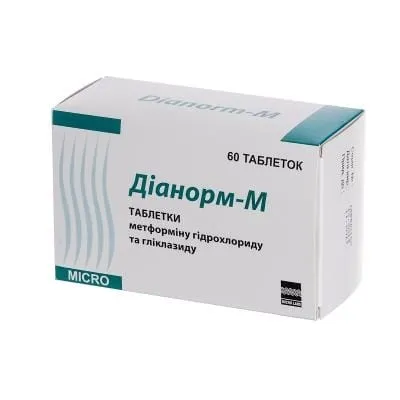
Table of Contents
INSTRUCTIONS FOR MEDICAL USE OF THE MEDICINAL PRODUCT DIANORM-M (DIANORM-M)
Composition:
Active substances: metformin hydrochloride and gliclazide;
One tablet contains 500 mg of metformin hydrochloride and 80 mg of gliclazide;
Excipients: microcrystalline cellulose, maize starch, povidone, talc, colloidal anhydrous silicon dioxide, magnesium stearate, sodium starch glycolate (type A).
Pharmaceutical form. Tablets.
Main physicochemical characteristics: white, capsule-shaped tablets with a dividing line on one side.
Pharmacotherapeutic group. Combination of oral hypoglycemic agents.
ATC code A10BD02.
Pharmacological Properties.
Pharmacodynamics.
Gliclazide reduces blood glucose levels by affecting insulin secretion and peripheral insulin sensitivity. This occurs through closure of K+-channels in pancreatic β-cells, resulting in opening of Ca2+-channels and influx of intracellular calcium, thereby increasing insulin release. Gliclazide also enhances β-cell sensitivity to glucose and restores peripheral cell sensitivity to insulin. Gliclazide reduces platelet adhesive activity and levels of free radicals, thus contributing to prevention of vascular complications. There is evidence that gliclazide can reduce plasma cholesterol and triglyceride levels during long-term use.
Metformin acts as an antihyperglycemic agent by increasing insulin sensitivity in liver and peripheral tissues. It also exerts a positive effect on plasma lipid levels and fibrinolytic activity.
Sulfonylurea and biguanide provide a synergistic effect. Both components have additional antihyperglycemic effects without enhancing the adverse effects typical of drugs in their pharmacological classes.
Gliclazide stimulates pancreatic β-cells to release insulin and also increases peripheral insulin sensitivity. Metformin promotes peripheral glucose recognition and utilization. It also reduces hepatic glucose production. Combined use of sulfonylurea and metformin allows better control of blood glucose levels. This combination is particularly beneficial in cases where sulfonylurea monotherapy is ineffective. The combination of these agents can be used to achieve glycemic control and reduce insulin requirements in some patients.
Gliclazide causes hypoglycemia and body weight gain to a lesser extent compared to other sulfonylurea agents. Metformin has a predominantly peripheral mechanism of action. It lacks the anabolic effects typical of sulfonylurea derivatives and therefore does not affect patient body weight. Gliclazide use is beneficial in macro- and microvascular complications associated with hyperinsulinemia, arterial hypertension, hyperglycemia, hyperlipidemia, and increased platelet aggregation. Metformin use leads to reduced triglyceride levels, increased high-density lipoprotein cholesterol and tissue plasminogen activator levels, and decreased platelet aggregability. Pharmacokinetically, both drugs are compatible because metformin does not bind to plasma proteins and is not metabolized in the liver. Therefore, competition with gliclazide—which is 80–90% protein-bound and metabolized in the liver—is not possible. Thus, the use of the gliclazide-metformin combination is beneficial in the treatment of patients with insulin-independent diabetes mellitus and in the prevention of macro- and microvascular complications.
Pharmacokinetics.
After single oral administration of gliclazide at doses of 40 to 120 mg, maximum plasma concentrations range from 2.2 to 8 mg/L, achieved within 2 to 8 hours. Steady-state concentrations of gliclazide are reached within 2 days after initiation of treatment at doses of 40–120 mg. Administration of gliclazide with food results in reduced peak concentration and delayed time to maximum effect. Distribution of gliclazide is limited due to its high plasma protein binding (85–97%). The elimination half-life of gliclazide after single oral administration ranges from 8.1 to 20.5 hours. Gliclazide is metabolized into 7 metabolites, which are primarily excreted in urine as carboxylic acid derivatives; 60–70% of the administered dose is excreted in urine and 10–20% in feces.
Metformin has an oral bioavailability of 50–60%. It is absorbed from the gastrointestinal tract over 6 hours and rapidly distributed into tissues thereafter. Renal elimination of metformin is biphasic.
Approximately 95% of absorbed metformin is eliminated during the first phase, with a half-life of 6 hours. The remaining 5% is eliminated during the second phase, with a half-life of 20 hours. Metformin does not bind to plasma proteins; 40–60% of the administered dose is excreted unchanged in urine and 30% in feces.
Metformin and gliclazide do not affect each other's pharmacokinetics.
Clinical characteristics.
Indications.
Non-insulin-dependent diabetes mellitus without obesity in adults.
Contraindications.
Hypersensitivity to metformin, gliclazide, or any other component of the drug. Hypersensitivity to other sulfonylurea drugs or sulfonamides.
Type 1 diabetes mellitus. Diabetic precoma and coma, diabetic ketoacidosis (insulin therapy is recommended in such cases). Moderate (Stage IIIb) to severe renal impairment or renal dysfunction (creatinine clearance < 45 mL/min or eGFR < 45 mL/min/1.73 m²). Acute conditions associated with a risk of developing renal dysfunction, such as: dehydration, severe infections, shock. Conditions that may lead to tissue hypoxia (especially acute conditions or exacerbations of chronic diseases): decompensated heart failure, respiratory failure, recent myocardial infarction, shock. Hepatic insufficiency, acute alcohol intoxication, alcoholism. Treatment with miconazole. Treatment with quinolones. Breastfeeding period.
Interaction with other medicinal products and other forms of interaction.
When prescribing drugs that may cause hypoglycemia or hyperglycemia when used concomitantly (see below), patients should be warned about the need for careful monitoring of blood glucose levels during treatment. Dose adjustment of the antidiabetic drug may be necessary during and after treatment with these agents.
Drugs whose concomitant use may increase the risk of hypoglycemia.
Concomitant use contraindicated.
Miconazole (for systemic use, oral gel) enhances the hypoglycemic effect, possibly leading to symptoms of hypoglycemia and even coma.
Quinolone enhances the hypoglycemic effect, possibly leading to severe, profound, persistent hypoglycemia that is difficult to control, or even coma, particularly in elderly patients with renal impairment.
Not recommended for concomitant use.
Phenylbutazone (for systemic use) enhances the hypoglycemic effect of sulfonylurea drugs (by displacing their binding to plasma proteins and/or reducing their elimination). Alcohol increases the risk of hypoglycemic reactions (due to inhibition of compensatory mechanisms), potentially leading to hypoglycemic coma. Consumption of alcohol and medicinal products containing alcohol should be avoided. Acute alcohol intoxication is associated with an increased risk of lactic acidosis, especially in cases of fasting, low-calorie diet, or hepatic insufficiency. During treatment with Dianorm-M, alcohol and alcohol-containing medicinal products should be avoided.
Iodinated contrast agents. Intravenous administration of iodinated contrast agents may lead to renal impairment and, consequently, accumulation of metformin and increased risk of lactic acidosis.
In patients with eGFR > 60 mL/min/1.73 m², metformin should be discontinued before or during the procedure and not restarted earlier than 48 hours after the procedure, only after re-evaluation of renal function and confirmation of no further deterioration in renal status (see section "Special precautions").
In patients with moderate renal impairment (eGFR 45–60 mL/min/1.73 m²), metformin should be discontinued 48 hours before administration of iodinated contrast agents and not restarted earlier than 48 hours after the procedure, only after re-evaluation of renal function and confirmation of no further deterioration in renal status.
Combinations requiring caution.
Concomitant use with any of the following drugs may in some cases lead to hypoglycemia due to enhanced hypoglycemic effect: other antidiabetic agents (insulins, acarbose, metformin, thiazolidinediones, dipeptidyl peptidase-4 inhibitors, glucagon-like peptide-1 (GLP-1) receptor agonists), β-blockers, fluconazole, ACE inhibitors (captopril, enalapril), H2-receptor antagonists, MAO inhibitors, sulfonamides, clarithromycin, sympathomimetics, nonsteroidal anti-inflammatory drugs.
Drugs whose concomitant use may increase the risk of hyperglycemia.
Not recommended for concomitant use.
Danazol exerts a diabetogenic effect.
Combinations requiring caution.
Chlorpromazine (neuroleptic), when used in high doses (over 100 mg/day), increases blood glucose levels (due to reduced insulin release).
Glucocorticoids (for systemic and local use: intra-articular, topical, and rectal preparations) and tetracosactide increase blood glucose levels with possible development of ketoacidosis (due to reduced carbohydrate tolerance).
Intravenous: ritodrine, salbutamol, terbutaline, and other sympathomimetics increase blood glucose levels via β2-agonist effects.
Blood glucose levels should be monitored more frequently, especially at the beginning of treatment. Dose adjustment of Dianorm-M is necessary during and after discontinuation of such combination therapy.
Diuretics, particularly loop diuretics, may increase the risk of lactic acidosis due to possible reduction in renal function.
St. John's wort (Hypericum perforatum) decreases gliclazide concentration. Emphasis should be placed on the importance of blood glucose monitoring.
Combinations to be considered.
Anticoagulants (e.g., warfarin, etc.). When used concomitantly with anticoagulants, sulfonylurea drugs may potentiate the anticoagulant effect. The dose of anticoagulants may need to be adjusted if necessary.
Special precautions for use.
Lactic acidosis is a very rare but serious metabolic complication (with high mortality if not treated urgently) that may result from metformin accumulation. Cases of lactic acidosis have been reported in patients with diabetes and renal impairment or a marked decline in renal function. Caution is required in conditions that may impair renal function, such as dehydration (severe diarrhea or vomiting), initiation of antihypertensive agents, diuretics, or nonsteroidal anti-inflammatory drugs (NSAIDs). If such conditions occur, the drug should be temporarily discontinued.
Other risk factors for lactic acidosis should be considered: poorly controlled diabetes, ketosis, prolonged fasting, excessive alcohol intake, hepatic impairment, or any condition associated with hypoxia (decompensated heart failure, acute myocardial infarction).
Lactic acid游戏副本
Method of Administration and Dosage
The daily dose for adults is 1–2 tablets once or twice daily taken with meals, but not exceeding 4 tablets per day. The duration of treatment is determined individually by a physician.
Children
The use of this medication is contraindicated in children.
Overdose
When metformin was administered at a dose of 85 g, hypoglycemia was not observed. However, in this case, lactic acidosis developed. Significant overdose of metformin or concomitant risk factors may lead to the development of lactic acidosis. Lactic acidosis is a life-threatening condition requiring immediate hospitalization. Hemodialysis is the most effective method for removing lactate and metformin from the body.
Overdose of sulfonylurea drugs may cause hypoglycemia.
Symptoms of moderate hypoglycemia (without loss of consciousness and without neurological symptoms) should be corrected by carbohydrate intake (sugar), adjustment of the dose of the antidiabetic drug, and/or dietary changes. Close monitoring of the patient should continue until the physician is confident that the patient is safe.
Severe hypoglycemia with coma, convulsions, or other neurological disturbances requires emergency medical care and immediate hospitalization.
In case of diagnosed hypoglycemic coma or suspected onset of coma, the patient must be rapidly administered 50 mL of concentrated glucose solution (20–30%) intravenously, followed by continuous infusion of a less concentrated glucose solution (10%) at a rate sufficient to maintain blood glucose levels above 1 g/L. Continuous monitoring of the patient is required. Depending on the patient's condition, the physician decides on further monitoring.
Gliclazide is highly protein-bound in plasma; therefore, dialysis is ineffective.
Adverse Reactions
The most common adverse reactions at the beginning of metformin therapy are nausea, vomiting, diarrhea, abdominal pain, and loss of appetite. These symptoms usually resolve spontaneously in most cases. To prevent the occurrence of these adverse effects, a gradual increase in dosage is recommended, along with dividing the daily dose into several administrations.
The most frequent adverse reaction associated with gliclazide use is hypoglycemia. As with other sulfonylurea agents, gliclazide may cause hypoglycemia in cases of irregular eating patterns and especially when meals are skipped. Hypoglycemia may be accompanied by characteristic symptoms such as: headache, intense hunger, nausea, vomiting, fatigue, sleep disturbances, agitation, aggression, reduced concentration and attention, slowed reactions, depression, confusion, loss of consciousness, visual and speech disturbances, aphasia, tremor, paresis, sensory disturbances, dizziness, weakness, loss of self-control, delirium, seizures, shallow breathing, bradycardia, drowsiness, and loss of consciousness, which may progress to coma and potentially fatal outcomes.
In addition, disturbances of the adrenergic system may occur: sweating, clammy skin, anxiety, tachycardia, arterial hypertension, palpitations, chest pain, and arrhythmia.
Symptoms of hypoglycemia usually resolve after carbohydrate intake (e.g., sugar). However, sugar substitutes are not effective in such cases. Clinical experience with other sulfonylurea agents indicates that even after effective intervention, hypoglycemia may recur.
If a hypoglycemic episode is severe or prolonged and the patient's condition is only temporarily controlled by sugar intake, emergency medical assistance or even hospitalization is required.
Adverse effects are classified by frequency of occurrence as follows:
Very common (> 1/10), common (> 1/100 and < 1/10), uncommon (> 1/1000 and < 1/100), rare (> 1/10,000 and < 1/1000), very rare (< 1/10,000).
Within each organ system class, adverse reactions are listed in decreasing order of clinical significance.
Metabolic disorders
Common: decreased levels/vitamin B12 deficiency (see section "Special precautions").
Very rare: lactic acidosis (see section "Special precautions").
Nervous system disorders
Common: taste disturbances.
Gastrointestinal disorders
Very common: gastrointestinal disturbances such as nausea, vomiting, diarrhea, abdominal pain, and loss of appetite. These adverse effects most commonly occur at the beginning of metformin therapy and usually resolve spontaneously in most cases. To prevent gastrointestinal adverse effects, a gradual increase in dosage is recommended, along with administering the daily dose in several divided doses taken during or after meals.
Hepatobiliary disorders
Very rare: abnormal liver function tests or hepatitis, which completely resolve after discontinuation of metformin. Increased levels of liver enzymes (ALT, AST, alkaline phosphatase), hepatitis (isolated cases). If cholestatic jaundice occurs, treatment with the drug should be discontinued.
These adverse effects usually resolve after discontinuation of the drug.
Skin and subcutaneous tissue disorders
Very rare: skin reactions including erythema, pruritus, urticaria. Rash, angioneurotic edema, maculopapular eruptions, bullous reactions (such as Stevens-Johnson syndrome and toxic epidermal necrolysis).
Blood and lymphatic system disorders: hematological disorders are rare and may include anemia, thrombocytopenia, leukopenia, granulocytopenia. These effects usually resolve after discontinuation of treatment.
Eye disorders: transient visual disturbances may occur due to changes in blood glucose levels, particularly at the beginning of treatment.
Reactions typical of the sulfonylurea class: cases of erythropenia, agranulocytosis, hemolytic anemia, pancytopenia, allergic vasculitis, hyponatremia, elevated liver enzymes, and even liver function impairment (e.g., with cholestasis and jaundice), hepatitis with regression after discontinuation of sulfonylureas or, in isolated cases, progressive life-threatening liver failure.
Shelf life. 3 years.
Storage conditions. Store at temperatures not exceeding 25°C in a dry place, out of reach of children.
Packaging. 10 tablets per blister; 6 blisters per cardboard box.
Prescription status. Prescription only.
Manufacturer. Micro Labs Limited.
Manufacturer's address.
92, Sipcot Industrial Complex, Hosur, Tamil Nadu, IN–635 126, India.