Denebol
Ukraine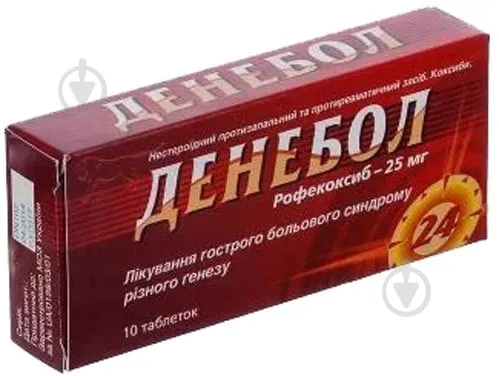
Table of Contents
INSTRUCTIONS FOR MEDICAL USE OF THE MEDICINAL PRODUCT DENEBOL (DENEBOL)
Composition:
Active substance: rofecoxib;
1 tablet contains 50 mg or 25 mg of rofecoxib;
Excipients:
for 25 mg tablet – betacyclodextrin, corn starch, microcrystalline cellulose, povidone, sodium methylparaben (E 219), sodium propylparaben (E 217), talc, magnesium stearate, anhydrous colloidal silicon dioxide, sodium starch glycolate (type A), tartrazine dye (E 102), brilliant blue dye (E 133);
for 50 mg tablet – betacyclodextrin, corn starch, microcrystalline cellulose, povidone, sodium methylparaben (E 219), sodium propylparaben (E 217), talc, magnesium stearate, anhydrous colloidal silicon dioxide, sodium starch glycolate (type A), tartrazine dye (E 102), brilliant blue dye (E 133).
Pharmaceutical form. Tablets.
Main physicochemical properties: 25 mg tablets – light green/green, round, biconvex tablets, with "25" imprinted on one side and a score line on the other; speckles are permissible;
50 mg tablets – light green/green, round, biconvex tablets, with "50" imprinted on one side and a score line on the other; speckles are permissible.
Pharmacotherapeutic group. Nonsteroidal anti-inflammatory and antirheumatic agents. Coxibs.
ATC code M01AH02.
Pharmacological properties.
Pharmacodynamics.
A nonsteroidal anti-inflammatory drug – a highly selective inhibitor of cyclooxygenase-2 (COX-2). Possesses analgesic, antipyretic, and anti-inflammatory properties. COX-2 is activated in response to an inflammatory process. This leads to the synthesis and accumulation of inflammatory mediators, including prostaglandin E2, which causes inflammation, swelling, and pain. The anti-inflammatory effect of rofecoxib is achieved by inhibiting the synthesis of prostaglandins through inhibition of COX-2.
At therapeutic concentrations, rofecoxib does not inhibit cyclooxygenase-1 (COX-1). Thus, it does not affect prostaglandins synthesized via COX-1 activation and therefore does not interfere with normal physiological processes associated with COX-1 in tissues, particularly in the gastrointestinal tract (GI tract) and platelets.
Pharmacokinetics.
Absorption.
After oral administration, rofecoxib is well absorbed; the bioavailability of rofecoxib averages 93%. With daily administration of the drug once daily at a dose of 25 mg, the maximum plasma concentration (Cmax) in adults is reached approximately within 2 hours and amounts to 0.305 μg/mL.
Distribution. Approximately 85% of rofecoxib is bound to plasma proteins in the body at concentrations of 0.05–25 μg/mL.
Metabolism. Rofecoxib is metabolized in the liver. The main metabolites do not inhibit COX-2.
Elimination. 72% of the drug is excreted in the urine as metabolites, 14% – in feces. The plasma clearance after administration of the drug at a dose of 25 mg once daily is approximately 120 mL/min.
Clinical characteristics.
Indications.
Osteoarthritis.
Rheumatoid arthritis.
Acute pain syndrome of various origins.
Algodysmenorrhea, dental pain.
In the postoperative period and in dentistry.
Contraindications.
Hypersensitivity to rofecoxib and to other nonsteroidal anti-inflammatory drugs (NSAIDs), or to any other component of the medicinal product.
Asthma, particularly if induced by acetylsalicylic acid.
Active peptic ulcer or gastrointestinal bleeding, acute rhinitis, nasal polyps, angioedema, urticaria, or other allergic reactions following intake of acetylsalicylic acid or other NSAIDs, including cyclooxygenase-2 (COX-2) inhibitors, in medical history.
The medicinal product is contraindicated in women of reproductive age who may become pregnant and who do not use effective contraception.
Severe hepatic impairment (serum albumin level < 25 g/L or Child-Pugh score ≥ 10), creatinine clearance < 30 mL/min; inflammatory bowel diseases; congestive heart failure (NYHA class II–IV (New York Heart Association classification)); diagnosed ischemic heart disease; peripheral arterial occlusive diseases and/or cerebrovascular diseases.
The medicinal product is contraindicated in oncological patients and in patients belonging to a high cardiovascular risk group (history of myocardial infarction, stroke, stage III arterial hypertension (AH), progressive clinical forms of atherosclerosis).
The medicinal product is contraindicated in patients aged 65 years and older.
Interaction with other medicinal products and other types of interactions.
NSAIDs may reduce the efficacy of diuretics and antihypertensive agents. NSAIDs increase the risk of developing acute, usually reversible, renal failure in patients with pre-existing renal impairment (e.g., in dehydrated patients or elderly patients), as well as when used concomitantly with angiotensin-converting enzyme (ACE) inhibitors or angiotensin II receptor antagonists. Therefore, such combinations should be used with caution, especially in elderly patients. When using the above-mentioned combinations, adequate hydration of patients is required. Renal function should be carefully monitored after initiation of combination therapy and periodically re-evaluated.
Concomitant use of NSAIDs with cyclosporine or tacrolimus is considered to enhance the nephrotoxic effects of the latter. When rofecoxib is used concomitantly with any of the above-mentioned drugs, renal function should be monitored.
Rofecoxib may be used with low-dose acetylsalicylic acid; however, it does not substitute for acetylsalicylic acid in the prevention of cardiovascular diseases. The risk of ulceration or other gastrointestinal complications is increased when highly selective COX-2 inhibitors are used concomitantly with low-dose acetylsalicylic acid, compared to monotherapy with highly selective COX-2 inhibitors.
Rofecoxib increases methotrexate plasma concentration by 23%. It reduces the effectiveness of antihypertensive therapy with ACE inhibitors. When used concomitantly with anticoagulants, an increase in prothrombin time is possible.
Rifampicin and rifamycin reduce rofecoxib plasma concentration by 50%. Rofecoxib does not significantly affect the pharmacokinetics of prednisolone, hormonal contraceptives for oral use (ethinyl estradiol, norethindrone), digoxin, antacids, cimetidine, or ketoconazole.
The medicinal product should not be used concomitantly with hemostatics or with drugs that increase arterial pressure (AP).
An increase in AP may occur when used concomitantly with drugs and food products containing caffeine.
Special precautions for use.
It is forbidden to exceed the recommended doses. Maximum daily dose – 50 mg.
Complications of the upper gastrointestinal tract (perforations, ulcers, or bleeding), in some cases with fatal outcomes, have been observed in patients treated with COX-2 inhibitors. The drug should be used with caution in patients at high risk of gastrointestinal complications. These include elderly patients, patients concurrently taking other NSAIDs or acetylsalicylic acid, and patients with gastrointestinal disorders such as peptic ulcer or history of gastrointestinal bleeding.
An increased risk of gastrointestinal adverse effects (ulcers or other complications) associated with COX-2 inhibitors has been observed during concomitant use of highly selective COX-2 inhibitors and acetylsalicylic acid (even at low doses). In long-term clinical trials of COX-2 inhibitors, no significant difference in gastrointestinal safety was found between combinations of selective COX-2 inhibitors / acetylsalicylic acid and NSAIDs / acetylsalicylic acid.
Concomitant use of rofecoxib and NSAIDs should be avoided, except for acetylsalicylic acid.
Since the cardiovascular risks associated with selective COX-2 inhibitors increase with dose and duration of treatment, the shortest possible treatment courses and the lowest effective doses should be used whenever possible. The patient's need for symptom relief and response to therapy should be periodically evaluated, especially in patients with osteoarthritis.
When used concomitantly with anticoagulants, prothrombin time should be monitored. The drug should not be used for the prevention of cardiovascular diseases. Selective COX-2 inhibitors do not replace acetylsalicylic acid in the prevention of cardiovascular thromboembolic disorders, as they lack antiplatelet properties. Therefore, antiplatelet therapy should not be discontinued.
As with other drugs capable of inhibiting prostaglandin synthesis, fluid retention and edema have been observed in patients treated with rofecoxib. Therefore, rofecoxib should be used with caution in patients with a history of heart failure, left ventricular dysfunction, or hypertension, as well as in patients with existing edema of any etiology, since prostaglandin inhibition may lead to worsening renal function and fluid retention. Rofecoxib should also be used cautiously in patients taking diuretics or those with other risk factors for hypovolemia.
Like all NSAIDs, rofecoxib may cause or exacerbate hypertension and may promote the occurrence of cardiovascular complications. Blood pressure should be carefully monitored at the beginning of rofecoxib therapy and throughout the treatment course.
Renal or hepatic dysfunction, and particularly cardiac dysfunction, are more likely to develop in elderly patients; therefore, such patients should be under continuous medical supervision during rofecoxib treatment.
Rofecoxib should be prescribed to patients at high risk of cardiovascular complications (e.g., patients with hypertension, hyperlipidemia, diabetes mellitus, or smokers) only after careful assessment of the benefit-risk ratio.
Rofecoxib, like other NSAIDs, may have nephrotoxic effects. Patients with impaired renal function, heart failure, hepatic dysfunction, and elderly patients belong to the group at increased risk of nephrotoxicity. The condition of such patients should be continuously monitored during rofecoxib therapy.
In patients at increased risk of impaired renal perfusion, the use of rofecoxib, which inhibits prostaglandin synthesis, may lead to reduced renal blood flow and worsening renal function. This effect is most likely in patients with a history of severe renal impairment, heart failure, or hepatic cirrhosis. In patients with impaired renal or hepatic function and heart failure, renal function (creatinine clearance, total secretion) should be monitored throughout the treatment course. In patients with significant dehydration prior to therapy, rehydration is recommended.
The drug may mask fever and other signs of inflammation that may indicate infection, which should be taken into account.
Severe hepatic reactions have been reported during rofecoxib use, including fulminant hepatitis (some with fatal outcomes), liver necrosis, and liver failure (some with fatal outcomes or requiring liver transplantation).
If the function of any of the organ systems mentioned above deteriorates during treatment, appropriate measures should be taken and discontinuation of rofecoxib therapy should be considered.
Rofecoxib inhibits CYP2D6; therefore, dose reduction of drugs metabolized by CYP2D6 and individually dosed may be required, although it is not a potent inhibitor of this enzyme.
Treatment of patients with low CYP2C9 metabolic activity requires caution.
Very rare serious skin reactions (some with fatal outcomes), including exfoliative dermatitis, Stevens–Johnson syndrome, and toxic epidermal necrolysis, have been reported with rofecoxib use. The highest risk of these reactions occurs during the initial phase of treatment. Serious hypersensitivity reactions (anaphylactic shock and angioedema) have been reported in patients taking rofecoxib. Rofecoxib use should be discontinued at the first signs of skin rash, mucosal lesions, or other signs of hypersensitivity.
In patients concurrently taking warfarin, cases of serious bleeding have been observed. Rofecoxib should be used with caution when combined with warfarin or other oral anticoagulants.
Excipients.
Tartrazine (E 102), sodium methylparaben (E 219), and sodium propylparaben (E 217) contained in the medicinal product may cause allergic reactions (possibly delayed).
Use during pregnancy or breastfeeding.
The drug is contraindicated during pregnancy or breastfeeding. If use of the drug is necessary, breastfeeding should be discontinued.
Ability to affect reaction speed when driving or operating machinery.
During treatment, patients should refrain from driving vehicles and from work requiring high attention and rapid reaction.
Method of Administration and Dosage.
For oral use in adults.
For the treatment of acute pain and primary dysmenorrhea, the recommended dose of Denebol is 50 mg once daily. Subsequent doses are 25 mg or 50 mg once daily, as needed. The maximum daily dose is 50 mg. Treatment should continue until the acute pain syndrome resolves, but not for more than 2 weeks.
Osteoarthritis and rheumatoid arthritis: The recommended initial dose of rofecoxib is 12.5 mg once daily, which may be increased to 25 mg once daily—the maximum recommended daily dose. Treatment courses should last 4–6 weeks.
Denebol may be taken independently of food intake.
Children.
Do not use in children.
Overdose.
Signs of overdose have not been observed. Administration of a single 1000 mg dose of rofecoxib to healthy study participants, as well as multiple daily doses of 250 mg for 14 days, did not reveal serious toxicity; however, an increase in the severity of adverse reactions is possible.
Treatment. In case of overdose, clinical monitoring and symptomatic supportive therapy are required. Rofecoxib is not removed from the body by hemodialysis.
Adverse reactions.
Cardiac disorders: congestive heart failure, lower limb edema, disturbances of cerebral and coronary circulation, chest pain, intracranial hemorrhage with fatal outcome, ocular hemorrhage, retinal arterial or venous occlusion, stroke, myocardial infarction, cardiac rhythm disturbances (bradycardia, atrial fibrillation, premature ventricular complexes, tachycardia), acute heart failure, sudden cardiac arrest, pulmonary artery embolism, unstable angina, pulmonary edema.
Vascular disorders: arterial hypertension, hypertensive crisis.
Immune system disorders: hypersensitivity reactions, including angioedema, pulmonary edema, allergic rhinitis, vasculitis, anaphylactic shock, anaphylaxis.
Skin and subcutaneous tissue disorders: skin rashes, including erythematous rash, bullous eruption, exfoliative dermatitis, erythema multiforme, toxic epidermal necrolysis, acute generalized exanthematous pustulosis, photosensitivity, Stevens-Johnson syndrome, urticaria, atopic dermatitis, pruritus, ecchymosis, alopecia.
Gastrointestinal disorders: dyspepsia, heartburn, discomfort/pain in the epigastric region, nausea; aphthous stomatitis, gastric and intestinal ulcers; gastrointestinal bleeding, diarrhea, flatulence, vomiting, dysphagia, constipation, belching, gastritis, exacerbation of inflammatory gastrointestinal disorders, gastric/intestinal perforation, esophagitis, melena, pancreatitis, colitis/exacerbation of colitis.
Hepatobiliary disorders: increased alanine aminotransferase (ALT) and aspartate aminotransferase (AST) activity, elevated alkaline phosphatase levels, occasionally hepatitis (including fulminant hepatitis), hepatic failure, liver necrosis.
Respiratory, thoracic and mediastinal disorders: upper respiratory tract infections, sinusitis, bronchitis, influenza-like symptoms, pharyngitis, rhinitis, cough, dyspnea, bronchospasm.
Nervous system disorders: somnolence, slowed thinking, dizziness, headache, restlessness, depression. Occasionally hyperesthesia (paresthesia), insomnia, exhaustion, fatigue, aseptic meningitis, delirium, leg cramps, anxiety, confusion, hallucinations, ataxia, altered taste sensation, exacerbation of epilepsy, ageusia, anosmia.
Eye disorders: blurred vision, conjunctivitis.
Ear and labyrinth disorders: otitis, tinnitus.
Renal and urinary disorders: renal failure, elevated creatinine levels, increased blood urea nitrogen (BUN), interstitial nephritis, hyponatremia, urinary tract infections, proteinuria.
Blood and lymphatic system disorders: agranulocytosis, leukopenia, thrombocytopenia, anemia, pancytopenia, decreased hematocrit.
Other: arthralgia, myositis, menstrual cycle disturbances, hyperkalemia.
Shelf life. 3 years.
Storage conditions.
Store at a temperature not exceeding 25 °C in the original packaging and in a place inaccessible to children.
Packaging. 10 tablets per blister in a cardboard box.
Prescription status. Prescription only.
Manufacturer.
Mepro Pharmaceuticals Private Limited.
Manufacturer's address.
Unit II, Q-Road, Phase IV, GIDC, Wadhwan, Surendranagar, Gujarat, 363 035, India.
Marketing Authorization Holder.
Mili Healthcare Limited.
Address of the Marketing Authorization Holder.
Fairfax House 15, Fulwood Place, London, WC1V 6AY, Great Britain.