Dexilant
Ukraine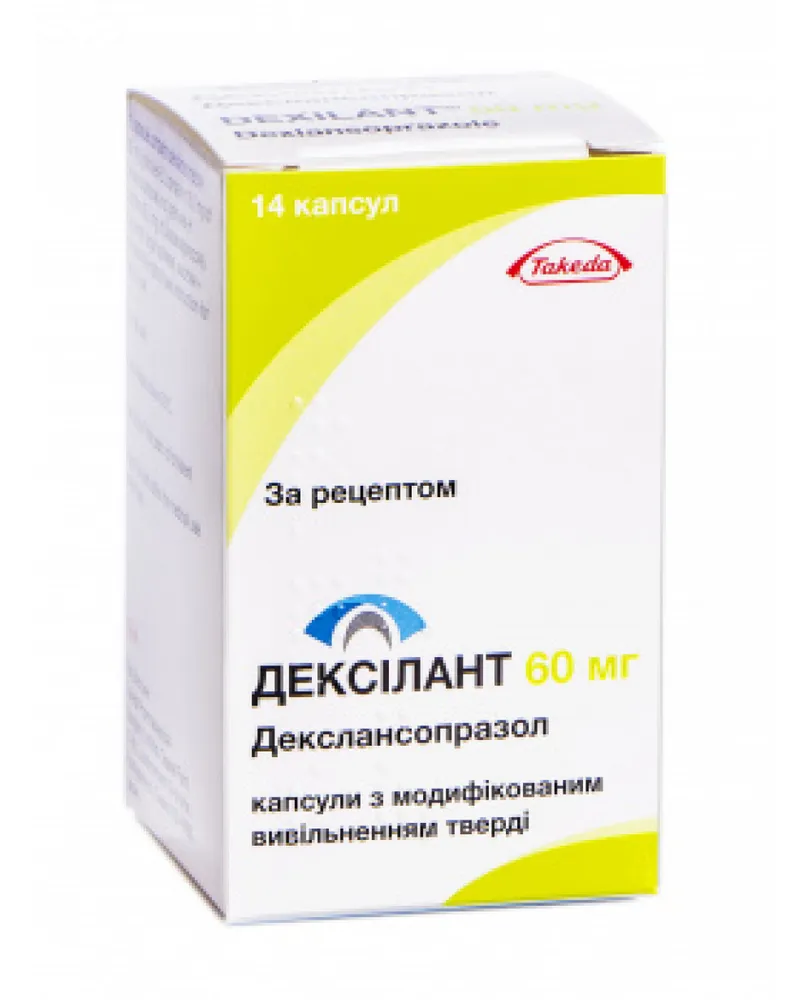
Table of Contents
INSTRUCTION |
DEXILANTâ |
Composition:
Active substance: dexlansoprazole;
One capsule contains 30 mg of dexlansoprazole (LL granules – 7.5 mg dexlansoprazole and H granules – 22.5 mg dexlansoprazole) or 60 mg of dexlansoprazole (LS granules – 15 mg dexlansoprazole and H granules – 45 mg dexlansoprazole);
Excipients:
LL granules: spherical sugar; magnesium carbonate; sucrose; low-substituted hydroxypropylcellulose; hydroxypropylcellulose; hypromellose 2910; talc; titanium dioxide (E 171); methacrylate copolymer dispersion; polyethylene glycol 8000; polysorbate 80; colloidal anhydrous silicon dioxide;
LS granules: spherical sugar; magnesium carbonate; sucrose; low-substituted hydroxypropylcellulose; hydroxypropylcellulose; hypromellose 2910; talc; titanium dioxide (E 171); methacrylate copolymer dispersion; polyethylene glycol 8000; polysorbate 80; colloidal anhydrous silicon dioxide;
H granules: spherical sugar; magnesium carbonate; sucrose; low-substituted hydroxypropylcellulose; hydroxypropylcellulose; hypromellose 2910; talc; titanium dioxide (E 171); methacrylate copolymer (type B); methacrylate copolymer (type A); triethyl citrate; colloidal anhydrous silicon dioxide.
Pharmaceutical form. Modified-release hard capsules.
Main physicochemical properties:
30 mg capsules: capsules with an opaque blue cap with dark grey imprint "TAP" and an opaque grey body with dark grey imprint "30", containing granules from white to almost white;
60 mg capsules: capsules with an opaque blue cap with dark grey imprint "TAP" and an opaque blue body with dark grey imprint "60", containing granules from white to almost white.
Pharmacotherapeutic group. Proton pump inhibitors. ATC code A02BC06.
Pharmacological Properties.
Pharmacodynamics. Dexlansoprazole belongs to the class of antisecretory compounds known as substituted benzimidazoles, which inhibit gastric acid secretion by specifically suppressing the activity of (H+, K+)-ATPase at the secretory surface of gastric parietal cells. Since this enzyme system is considered the acid (proton) pump of parietal cells, dexlansoprazole is classified as a proton pump inhibitor that blocks the final step of acid production.
Pharmacokinetics. Absorption. After oral administration of Dexilant® at doses of 30 mg or 60 mg to healthy volunteers and patients with symptomatic gastroesophageal reflux disease, mean Cmax and AUC values of dexlansoprazole increased almost proportionally with dose.
When 60 mg of Dexilant® granules are mixed with water and administered via a nasogastric tube or orally using a syringe, the bioavailability (Cmax and AUC) of dexlansoprazole is equivalent to that observed after administration of a 60 mg intact capsule.
Food intake does not affect the AUC of dexlansoprazole.
Distribution. Plasma protein binding of dexlansoprazole in healthy volunteers ranged from 96% to 99% and was independent of drug concentration within the range of 0.01 to 20 mcg/mL. In patients with symptomatic gastroesophageal reflux disease, the apparent volume of distribution (Vz/F) after multiple dosing was 40 L.
Metabolism. Dexlansoprazole is extensively metabolized in the liver through oxidation, reduction, and subsequent formation of sulfate, glucuronide, and glutathione conjugates into inactive metabolites. Oxidative metabolites are formed via the cytochrome P450 (CYP) enzyme system, including hydroxylation primarily by CYP2C19 and oxidation to sulfone by CYP3A4.
CYP2C19 is a polymorphic liver enzyme exhibiting three phenotypes in the metabolism of CYP2C19 substrates: rapid metabolizers, intermediate metabolizers, and poor metabolizers. Dexlansoprazole is the main circulating component in plasma regardless of CYP2C19 metabolic status. In rapid and intermediate CYP2C19 metabolizers, the main plasma metabolites are 5-hydroxydexlansoprazole and its glucuronide conjugate, whereas in poor CYP2C19 metabolizers, the main plasma metabolite is dexlansoprazole sulfone.
Elimination. After administration of Dexilant®, unchanged dexlansoprazole is not excreted in urine. Following administration of 14C-labeled dexlansoprazole to six healthy volunteers, approximately 50.7% (standard deviation [SD]: 9.0%) of the administered radioactivity was excreted in urine and 47.6% (SD: 7.3%) in feces. The apparent clearance (CL/F) in healthy volunteers was 11.4 to 11.6 L/h after 5 days of treatment with 30 mg or 60 mg once daily.
Special Patient Populations
Pediatric Population
The pharmacokinetics of dexlansoprazole have not been studied in patients under 12 years of age.
Patients Aged 12 to 17 Years
Pharmacokinetics of dexlansoprazole were evaluated in 36 patients aged 12 to 17 years with symptomatic non-erosive gastroesophageal reflux disease in a multicenter study. Patients were randomized to receive Dexilant® 30 mg or 60 mg once daily for 7 days. Mean Cmax and AUC values of dexlansoprazole in patients aged 12 to 17 years were 105% and 88%, respectively, compared to adult patients receiving 30 mg, and 81% and 78%, respectively, when compared to those receiving 60 mg.
Elderly Patients. The terminal half-life of dexlansoprazole is significantly longer in elderly patients compared to younger patients (2.2 and 1.5 hours, respectively). Systemic exposure (AUC) of dexlansoprazole in elderly patients is higher (by 34%) than in younger patients.
Gender. A study involving 12 male and 12 female patients who received a single oral dose of 60 mg of Dexilant® showed that female patients had higher systemic exposure (AUC) (by 43%) than male patients. This difference in exposure does not affect the safety profile of the drug.
Renal Impairment. Dexlansoprazole is extensively metabolized in the liver to inactive metabolites; therefore, the parent active substance is not detected in urine after oral administration of dexlansoprazole. Thus, altered pharmacokinetics of dexlansoprazole in patients with renal impairment is not expected. Studies in patients with renal impairment have not been conducted. Additionally, the pharmacokinetics of lansoprazole were not clinically different in patients with mild, moderate, or severe renal impairment compared to healthy volunteers.
Hepatic Impairment. A study in 12 patients with moderate hepatic impairment (Child-Pugh class B) who received a single oral dose of 60 mg of Dexilant® showed that systemic exposure to both bound and unbound dexlansoprazole was approximately twice higher than in healthy volunteers. This difference in exposure is not related to differences in plasma protein binding. Studies in patients with severe hepatic impairment (Child-Pugh class C) have not been conducted (see section "Dosage and Administration").
Clinical characteristics.
Indications.
- Treatment of all stages of erosive esophagitis in patients aged 12 years and older for up to 8 weeks.
- Maintenance treatment of erosive esophagitis and relief of heartburn in patients aged 12 years and older for up to 6 months in adult patients and up to 16 weeks in patients aged 12 to 17 years.
- Treatment of heartburn associated with symptomatic non-erosive gastroesophageal reflux disease in patients aged 12 years and older for 4 weeks.
Contraindications.
Hypersensitivity to the active substance or any component of the medicinal product. Hypersensitivity reactions may include anaphylaxis, anaphylactic shock, angioedema, bronchospasm, acute tubulointerstitial nephritis, and urticaria (see sections "Special precautions for use" and "Adverse reactions"). Proton pump inhibitors (PPIs), including Dexilant®, are contraindicated for concomitant use with medicinal products containing rilpivirine (see section "Interaction with other medicinal products and other forms of interaction").
Interaction with other medicinal products and other forms of interaction.
Below are clinically significant drug interactions and changes in diagnostic test results when used concomitantly with Dexilant®, as well as measures to prevent or manage them.
For more detailed information on interactions with proton pump inhibitors, refer to the instructions for medical use of the respective medicinal products.
Antiretroviral agents. Clinical effect. The effect of PPIs on antiretroviral agents is variable. The clinical significance and mechanisms of these interactions are not fully known in all cases.
- Reduced exposure of certain antiretroviral agents (e.g., rilpivirine, atazanavir, and nelfinavir) when co-administered with dexlansoprazole may reduce antiviral efficacy and lead to the development of drug resistance.
- Increased exposure of other antiretroviral agents (e.g., saquinavir) when co-administered with dexlansoprazole may increase antiretroviral toxicity.
- There are other antiretroviral agents whose interactions with dexlansoprazole are not clinically significant.
Measures. Medicinal products containing rilpivirine: concomitant use with Dexilant® is contraindicated (see section "Contraindications").
Atazanavir. Refer to the atazanavir medical instruction for dosing.
Nelfinavir. Concomitant use with Dexilant® should be avoided. Refer to the nelfinavir medical instruction.
Saquinavir. Refer to the saquinavir medical instruction; monitoring for potential toxic effects of saquinavir is recommended.
Other antiretroviral agents. Refer to the respective medical instructions.
Warfarin. Clinical effect. Increased international normalized ratio (INR) and prothrombin time have been observed in patients receiving proton pump inhibitors and warfarin concomitantly. Elevated INR and prothrombin time may lead to pathological bleeding and even death.
Measures. Monitoring of INR and prothrombin time is required. Dose adjustment of warfarin may be necessary to maintain the target INR level. Refer to the warfarin medical instruction.
Methotrexate. Clinical effect. Concomitant use of proton pump inhibitors and methotrexate (especially at high doses) may increase and prolong serum concentrations of methotrexate and/or its metabolite hydroxymethotrexate, potentially leading to methotrexate toxicity. Formal interaction studies with high-dose methotrexate and proton pump inhibitors have not been conducted (see section "Special precautions for use").
Measures. For some patients receiving high-dose methotrexate, consider temporary discontinuation of Dexilant®.
Digoxin. Clinical effect. Increased digoxin exposure is possible.
Measures. Monitoring of digoxin concentrations is required. Dose adjustment of digoxin may be necessary to maintain therapeutic levels. Refer to the digoxin medical instruction.
Medicinal products whose absorption depends on gastric pH (e.g., iron salts, erlotinib, dasatinib, nilotinib, mycophenolate mofetil, ketoconazole/itraconazole)
Clinical effect. Dexlansoprazole may reduce the absorption of other medicinal products due to its effect of reducing gastric acidity.
Measures. Mycophenolate mofetil. When used concomitantly with proton pump inhibitors in healthy volunteers and in transplant patients receiving mycophenolate mofetil, reduced exposure of the active metabolite (mycophenolic acid) has been reported, possibly due to decreased solubility of mycophenolate mofetil at increased gastric pH. The clinical significance of reduced mycophenolic acid exposure regarding the risk of transplant rejection in patients receiving Dexilant® and mycophenolate mofetil has not been established. Dexilant® should be used with caution in transplant patients receiving mycophenolate mofetil.
Refer to the medical instructions for other medicinal products whose absorption is pH-dependent.
Tacrolimus. Clinical effect. Increased tacrolimus exposure is possible, particularly in transplant patients with moderate or low CYP2C19 activity.
Measures. Monitoring of trough whole blood concentrations of tacrolimus is required. Dose adjustment of tacrolimus may be necessary to maintain therapeutic levels. Refer to the tacrolimus medical instruction.
Effect on tests for neuroendocrine tumor markers. Clinical effect.
Reduced gastric acidity due to proton pump inhibitor use leads to secondary elevation of chromogranin A (CgA) levels. Elevated CgA levels may result in false-positive diagnosis of neuroendocrine tumors (see section "Special precautions for use").
Measures. Dexilant® therapy should be temporarily discontinued at least 14 days before CgA measurement, and repeat testing should be considered if initial CgA levels are high. For serial testing (e.g., monitoring), the same laboratory should be used, as reference ranges may vary between laboratories.
Effect on secretin stimulation test. Clinical effect. A hypergastrinemic response during the secretin stimulation test may lead to a false diagnosis of gastrinoma.
Measures. Dexilant® treatment should be temporarily discontinued at least 30 days before the test to allow gastrin secretion to return to baseline levels.
False-positive urine tetrahydrocannabinol (THC) screening. Clinical effect. False-positive results in urine screening tests for tetrahydrocannabinol have been reported in patients taking proton pump inhibitors.
Measures. Consider using alternative confirmatory testing methods to verify positive results.
Medicinal products and substances that have clinically significant effects on Dexilant® when used concomitantly
CYP2C19 or CYP3A4 inducers. Clinical effect. Reduced dexlansoprazole exposure is possible when used with strong inducers.
Measures. St. John’s wort (Hypericum perforatum), rifampicin. Concomitant use with Dexilant® should be avoided.
Medicinal products containing ritonavir. Refer to the medical instruction for ritonavir-containing medicinal products.
CYP2C19 or CYP3A4 inhibitors. Clinical effect. Increased dexlansoprazole exposure is expected when used with strong inhibitors.
Measures. Voriconazole. Refer to the medical instruction for voriconazole-containing medicinal products.
Special precautions for use.
Gastric malignancies
In adult patients, symptomatic response to treatment with Dexilant® does not exclude the presence of gastric malignancies. In adult patients with suboptimal response or early recurrence of symptoms after completion of proton pump inhibitor (PPI) therapy, additional monitoring and diagnostic evaluation should be considered. In elderly patients, endoscopic examination should be considered.
Acute tubulointerstitial nephritis. Acute tubulointerstitial nephritis has been observed during PPI therapy. Acute tubulointerstitial nephritis may develop at any time during PPI treatment. Patients may present with various signs and symptoms ranging from hypersensitivity reactions to nonspecific symptoms of impaired renal function (e.g., malaise, nausea, anorexia). According to case series reported, acute tubulointerstitial nephritis was diagnosed by biopsy in some patients in the absence of extrarenal manifestations (e.g., fever, rash, or arthralgia). Acute tubulointerstitial nephritis may progress to renal failure. Treatment with Dexilant® should be discontinued and patients suspected of having acute tubulointerstitial nephritis should be evaluated (see section "Contraindications").
Clostridium difficile-associated diarrhea. Several observational studies suggest that PPIs, such as Dexilant®, may increase the risk of Clostridium difficile-associated diarrhea, particularly in hospitalized patients. This diagnosis should be considered in cases of diarrhea that does not improve (see section "Adverse reactions").
Patients at risk of Clostridium difficile-associated diarrhea should receive PPI treatment at the lowest recommended dose and for the shortest duration appropriate to the condition being treated.
Bone fractures. Several observational studies suggest that PPIs may increase the risk of osteoporotic fractures of the hip, wrist, or spine. The risk of fracture increases with higher doses, multiple daily doses, and prolonged use (for one year or longer). Patients at risk of osteoporotic fractures should receive appropriate treatment and PPIs should be used at the lowest recommended dose and for the shortest duration possible. Patients at risk of osteoporotic fractures should be managed according to current guidelines (see sections "Dosage and administration", "Adverse reactions").
Severe cutaneous adverse reactions. Severe skin adverse reactions associated with PPI use have been reported, including Stevens-Johnson syndrome, toxic epidermal necrolysis, drug reaction with eosinophilia and systemic symptoms (DRESS syndrome), and acute generalized exanthematous pustulosis (see section "Adverse reactions"). Treatment with Dexilant® should be discontinued at the first signs or symptoms of severe cutaneous adverse reactions or other signs of hypersensitivity, and further evaluation should be considered.
Cutaneous and systemic lupus erythematosus. Cases of development or exacerbation of cutaneous lupus erythematosus (CLE) and systemic lupus erythematosus (SLE) have been reported in patients receiving PPIs. In most cases, CLE was observed.
The most frequently reported form of CLE in patients receiving PPI therapy was subacute CLE; the disease developed after periods ranging from several weeks to several years of continuous therapy in patients of all ages (from infants to elderly individuals). Histological changes were typically observed without organ involvement.
Cases of SLE associated with PPI use were reported less frequently than CLE. SLE associated with PPI use is generally milder compared to drug-uninduced SLE. Onset of SLE typically occurs from several days to several years after initiation of therapy, primarily in patients from young to elderly age. In most patients, the disease is characterized by rash, although arthralgia and cytopenia have also been reported.
PPIs should be used only as long as medically indicated. If patients receiving Dexilant® develop symptoms suggestive of CLE or SLE, the drug should be discontinued and the patient referred to an appropriate specialist for evaluation. In most patients, improvement occurs within 4 to 12 weeks after discontinuation of the PPI. Serological test results (e.g., antinuclear antibodies) may remain positive and elevated for a longer period than the duration of clinical symptoms.
Deficiency of cyanocobalamin (vitamin B12). Long-term daily use (e.g., more than 3 years) of any medicinal product that suppresses gastric acid secretion may lead to malabsorption of cyanocobalamin (vitamin B12), hypo- or achlorhydria. Rare cases of vitamin B12 deficiency have been reported during treatment with acid-suppressing agents. This information should be considered if patients receiving Dexilant® develop clinical symptoms associated with vitamin B12 deficiency.
Hypomagnesemia and mineral metabolism. Hypomagnesemia (symptomatic and asymptomatic) has been rarely reported in patients receiving PPIs for at least three months, most often after one year of therapy. Serious adverse reactions include tetany, arrhythmias, and seizures. Hypomagnesemia may lead to hypocalcemia and/or hypokalemia and may exacerbate hypocalcemia in at-risk patients. Replacement therapy and discontinuation of PPIs are usually required to treat hypomagnesemia. For patients likely to receive long-term PPI therapy or those receiving PPIs concomitantly with medications such as digoxin or other drugs that may cause hypomagnesemia (e.g., diuretics), monitoring of serum magnesium levels before starting and periodically during PPI therapy may be necessary (see section "Adverse reactions"). Monitoring of magnesium and calcium levels should be considered before starting Dexilant® and periodically during treatment in patients with existing risk factors for hypocalcemia (e.g., hypoparathyroidism). Supplementation with magnesium and/or calcium may be required. If hypocalcemia is refractory to treatment, discontinuation of PPI therapy should be considered.
Neuroendocrine tumor testing. Serum chromogranin A (CgA) levels increase due to drug-induced reduction in gastric acidity. Elevated CgA levels may lead to false-positive results in the diagnosis of neuroendocrine tumors. Physicians should temporarily discontinue dexlansoprazole therapy at least 14 days before assessing CgA levels. Testing should be repeated if initial CgA levels are elevated. For serial testing (e.g., monitoring), the same laboratory should be used, as reference ranges may vary (see section "Interaction with other medicinal products and other forms of interaction").
Interaction with methotrexate. Concomitant use of PPIs and methotrexate (primarily at high doses) has been reported to increase methotrexate and/or its metabolite concentrations in serum, prolonging their presence and potentially leading to methotrexate toxicity. In patients receiving high-dose methotrexate, temporary discontinuation of PPIs may be recommended (see section "Interaction with other medicinal products and other forms of interaction").
Fundic gland polyps. PPI use is associated with an increased risk of fundic gland polyps, which increases with prolonged use, typically beyond one year. Fundic gland polyps are usually detected incidentally during endoscopy, as they are asymptomatic. PPIs should be used for the shortest duration possible appropriate to the condition being treated.
Risk of cardiac valve thickening in children under two years of age
Dexilant® is not recommended for use in children under two years of age. Preclinical studies with lansoprazole demonstrated an adverse effect of cardiac valve thickening in young rats. Dexlansoprazole is the R-enantiomer of lansoprazole.
Sucrose. If you have been diagnosed with an intolerance to certain sugars, consult your physician before taking this medicinal product.
Use during pregnancy or breastfeeding.
Pregnancy. Studies in pregnant women to evaluate risks associated with Dexilant® use have not been conducted. Reproductive toxicity studies in animals showed no effect on embryonic/fetal development following oral administration of dexlansoprazole or lansoprazole. The estimated baseline risk of major congenital malformations and pregnancy loss in this patient population is unknown.
Breastfeeding. There are no data on the excretion of dexlansoprazole in human breast milk, its effects on the breastfed infant, or its effects on milk production. However, lansoprazole and its metabolites are present in the milk of lactating animals. The benefits of breastfeeding for the infant's development and health should be weighed against the mother's clinical need for Dexilant® and any potential adverse effects on the breastfed infant due to Dexilant® or the mother's underlying condition.
Ability to influence reaction speed when driving or operating machinery. The potential for adverse reactions should be taken into account (see section "Adverse reactions").
Method of administration and dosage.
The recommended dosage regimen of Dexilant® for patients aged 12 years and older:
| Indications |
Recommended dose of Dexilant® |
Duration of treatment |
| Treatment of erosive esophagitis |
1 capsule 60 mg once daily |
Up to 8 weeks |
| Maintenance treatment of erosive esophagitis and relief of heartburn |
1 capsule 30 mg once daily |
Controlled studies did not exceed 6 months in adult patients and 16 weeks in patients aged 12 to 17 years |
| Treatment of heartburn associated with symptomatic non-erosive gastroesophageal reflux disease |
1 capsule 30 mg once daily |
4 weeks |
Dosage adjustment in patients with hepatic impairment for the treatment of erosive esophagitis. Patients with mild hepatic impairment (Child-Pugh class A) do not require dosage adjustment of Dexilant®. In a study of adult patients with moderate hepatic impairment (Child-Pugh class B) who received a single 60 mg dose of Dexilant®, a significant increase in systemic exposure to dexlansoprazole was observed compared to healthy volunteers. Therefore, dose reduction is recommended for patients with moderate hepatic impairment (Child-Pugh class B) when treating erosive esophagitis. For patients with moderate hepatic impairment (Child-Pugh class B), the maximum daily dose for the treatment of erosive esophagitis is 30 mg once daily for 8 weeks. Studies in patients with severe hepatic impairment (Child-Pugh class C) have not been conducted; therefore, Dexilant® should not be used in this patient population.
Dexilant® may be taken independently of meals. Capsules should be swallowed whole and not chewed.
Missed doses. If a dose is missed, it should be taken as soon as possible. However, if it is almost time for the next scheduled dose, the missed dose should be skipped and the next dose taken at the regular time. Double doses should not be taken to make up for a missed dose.
Patients who have difficulty swallowing capsules
Administration with applesauce
Place 1 tablespoon of applesauce into a clean container. Open the capsule and empty the intact granules onto the applesauce and take immediately. Do not chew the granules. Do not store applesauce with granules for later use.
Alternatively, the capsule contents may be administered with water using an oral syringe or a nasogastric tube.
Oral administration with water using a syringe
Open the capsule and empty the granules into a clean container with 20 mL of water. Draw the resulting mixture into a syringe. Gently shake the syringe to prevent settling of granules. Administer the mixture into the mouth and swallow immediately. Do not store the water-granule mixture for later use. Add 10 mL of water to the syringe, gently shake, and swallow. Repeat by adding another 10 mL of water to the syringe, gently shaking, and swallowing.
Administration with water via nasogastric tube (size ≥ 16 French)
Open the capsule and empty the granules into a clean container with 20 mL of water. Fill the catheter-tipped syringe with the resulting mixture. Gently shake the catheter-tipped syringe to prevent settling of granules. Immediately administer the mixture through the nasogastric tube into the stomach. Do not store the water-granule mixture for later use. Add 10 mL of water to the catheter-tipped syringe, gently shake, and administer. Repeat by adding another 10 mL of water to the catheter-tipped syringe, gently shake, and administer.
Pediatric population
Dexilant® is not recommended for the treatment of gastroesophageal reflux disease (GERD) symptoms in children aged one month to one year, as lansoprazole (racemic mixture) was not found to be effective in a multicenter, double-blind, controlled study. In preclinical studies with lansoprazole, adverse reactions such as thickening of heart valves and changes in bone tissue were observed.
Due to the lack of data on safety and efficacy of Dexilant® in children under 12 years of age, its use is not recommended in this age group.
Safety and efficacy of Dexilant® have been established in patients aged 12 to 17 years for the treatment of all stages of erosive esophagitis, maintenance treatment of erosive esophagitis, and for relief of heartburn and treatment of heartburn associated with symptomatic non-erosive gastroesophageal reflux disease. The use of Dexilant® in this age group is supported by data from adequate and well-controlled studies in adult patients, as well as additional safety, efficacy, and pharmacokinetic data in patients aged 12 to 17 years.
The adverse reaction profile in patients aged 12 to 17 years was similar to that observed in adults.
Dexilant® is not recommended for use in children under two years of age (see sections "Special precautions for use" and "Adverse reactions"). Preclinical studies in young rats receiving lansoprazole (racemic mixture) demonstrated adverse effects including thickening of heart valves and bone changes at exposures to dexlansoprazole expected to be equal or higher than those in children aged 1 to 2 years.
Overdose.
No serious cases of overdose with Dexilant® have been reported. Multiple doses of Dexilant® up to 120 mg and single doses of 300 mg did not result in death or other severe adverse reactions. Serious adverse events (arterial hypertension) have been reported, and mild adverse reactions (flushing, contusion, oropharyngeal pain, weight loss) were observed with administration of Dexilant® at 60 mg twice daily.
Dexlansoprazole is not removed from the bloodstream by hemodialysis. In case of overdose, symptomatic and supportive therapy should be administered.
Side effects.
Serious adverse reactions reported include: acute tubulointerstitial nephritis, Clostridium difficile-associated diarrhea, fractures, severe skin reactions, cutaneous and systemic lupus erythematosus, vitamin B12 (cyanocobalamin) deficiency, hypomagnesemia, fundic gland polyps, and risk of cardiac valve thickening in children under two years of age (see section "Special precautions").
The most common adverse reactions occurring at a frequency > 2%, observed during placebo-controlled clinical trials, are: diarrhea, abdominal pain, nausea, upper respiratory tract infections, vomiting, and flatulence. The most frequent adverse reaction leading to discontinuation of the drug during controlled clinical trials was diarrhea (0.7%).
The following are adverse reactions occurring at a frequency of less than 2%.
Blood and lymphatic system disorders: anemia, lymphadenopathy.
Cardiac disorders: angina pectoris, arrhythmia, bradycardia, chest pain, edema, myocardial infarction, palpitations, tachycardia.
Ear and labyrinth disorders: ear pain, tinnitus, vertigo.
Endocrine disorders: goiter.
Eye disorders: eye irritation, eye swelling.
Gastrointestinal disorders: abdominal discomfort, abdominal tenderness, bowel disorder, discomfort in anal area, Barrett's esophagus, bezoar, abnormal bowel sounds, bad taste in mouth, microscopic colitis, colonic polyps, constipation, dry mouth, duodenitis, dyspepsia, dysphagia, enteritis, eructation, esophagitis, gastric polyp, gastritis, gastroenteritis, disorders of stomach and duodenum, gastroesophageal reflux disease (GERD), gastric and intestinal ulcer and perforation, hematemesis, hematochezia, hemorrhoids, impaired gastric emptying, irritable bowel syndrome, mucus in stool, oral mucosal ulceration, painful defecation, proctitis, oral paresthesia, rectal bleeding, nausea.
General disorders and administration site conditions: asthenia, chest pain, chills, discomfort, inflammation, mucosal inflammation, nodular thickening, pain, fever.
Hepatobiliary disorders: hepatic colic, cholelithiasis, hepatomegaly.
Immune system disorders: hypersensitivity reactions.
Infections and infestations: Candida infections, influenza, nasopharyngitis, oral herpes, pharyngitis, sinusitis, viral infections, genital and vaginal infections.
Injury, poisoning and procedural complications: falls, fractures, ligament sprain, pain at application site, photosensitivity.
Investigations: increased alanine aminotransferase (ALT), aspartate aminotransferase (AST), alkaline phosphatase (ALP), increased/decreased bilirubin levels, increased creatinine, gastrin, glucose, and blood potassium levels, abnormal liver function tests, decreased platelet count, increased total protein, weight gain.
Metabolism and nutrition disorders: appetite changes, hypercalcemia, hypokalemia.
Musculoskeletal and connective tissue disorders: arthralgia, arthritis, cramps, musculoskeletal pain, myalgia.
Nervous system disorders: taste alteration, convulsions, dizziness, headache, migraine, memory impairment, paresthesia, psychomotor hyperactivity, tremor, trigeminal neuralgia.
Psychiatric disorders: sleep disorders, anxiety, depression, insomnia, libido changes.
Renal and urinary disorders: dysuria, urgency, tubulointerstitial nephritis (with potential progression to renal failure).
Reproductive system and breast disorders: dysmenorrhea, pain during sexual intercourse, hypermenorrhea, menstrual cycle disturbances.
Respiratory, thoracic and mediastinal disorders: aspiration, asthma, bronchitis, cough, dyspnea, hiccups, hyperventilation, respiratory congestion, sore throat.
Skin and subcutaneous tissue disorders: acne, dermatitis, erythema, pruritus, rash, skin lesions, urticaria.
Vascular disorders: deep vein thrombosis, hot flushes, hypertension.
Additional adverse reactions were reported during long-term uncontrolled studies and considered by physicians to be related to the use of DEXILANT®. These include: anaphylaxis, auditory hallucinations, B-cell lymphoma, bursitis, central obesity, acute cholecystitis, dehydration, diabetes mellitus, dysphonia, epistaxis, folliculitis, goiter, herpes zoster, hyperlipidemia, hypothyroidism, increased neutrophil count, decreased mean corpuscular hemoglobin concentration, neutropenia, tenesmus, restless legs syndrome, lethargy, tonsillitis.
Pediatric population. The safety of DEXILANT® was evaluated in controlled and uncontrolled clinical trials involving 166 patients aged 12 to 17 years for the treatment of symptomatic non-erosive gastroesophageal reflux disease, erosive esophagitis, maintenance treatment of erosive esophagitis, and relief of heartburn.
The adverse reaction profile was similar to that observed in adults. The most common adverse reactions occurring in ≥ 5% of patients were headache, abdominal pain, diarrhea, nasopharyngitis, and oropharyngeal pain.
Adverse reactions reported during the post-marketing period (frequency and causal relationship not established):
Blood and lymphatic system disorders: autoimmune hemolytic anemia, idiopathic thrombocytopenic purpura.
Ear and labyrinth disorders: deafness.
Eye disorders: blurred vision.
Gastrointestinal disorders: oral cavity swelling, pancreatitis, fundic gland polyps.
General disorders: facial swelling.
Hepatobiliary disorders: drug-induced hepatitis.
Immune system disorders: anaphylactic shock (requires emergency treatment), exfoliative dermatitis, Stevens-Johnson syndrome / toxic epidermal necrolysis (may be fatal), drug reaction with eosinophilia and systemic symptoms (DRESS syndrome), acute generalized exanthematous pustulosis, erythema multiforme.
Infections and infestations: Clostridium difficile-associated diarrhea.
Metabolism and nutrition disorders: hypomagnesemia, hypocalcemia, hypokalemia, hyponatremia.
Musculoskeletal and connective tissue disorders: bone fractures.
Nervous system disorders: cerebrovascular accident, transient ischemic attack.
Renal and urinary disorders: acute renal failure, erectile dysfunction.
Respiratory, thoracic and mediastinal disorders: pharyngeal edema, sore throat.
Skin and subcutaneous tissue disorders: generalized rash, leukocytoclastic vasculitis.
Reporting of suspected adverse reactions
Reporting suspected adverse reactions after medicine authorization is of great importance. It allows continuous monitoring of the benefit-risk balance of the medicinal product. Healthcare professionals, pharmacists, patients, and their legal representatives should report all suspected adverse reactions and lack of efficacy through the automated pharmacovigilance information system (https://aisf.dec.gov.ua).
Shelf life. 3 years.
Storage conditions.
Store at a temperature not exceeding 25 °C. Keep out of reach and sight of children!
Packaging.
14 capsules per blister; 1 or 2 blisters per cardboard box.
Prescription status. Prescription only.
Manufacturer.
Delpharm Novara S.r.l., Italy / Delpharm Novara S.r.l., Italy.
Takeda GmbH, Oranienburg site, Germany / Takeda GmbH Betriebsstatte Oranienburg, Germany.
Manufacturer's address and place of business.
Via Crosa, 86 - 28065 Cerano (NO), Italy / Via Crosa, 86 - 28065 Cerano (NO), Italy.
Lehnitzstrasse 70-98, 16515 Oranienburg, Germany / Lehnitzstrasse 70-98, 16515 Oranienburg, Germany.