Dexapos
Ukraine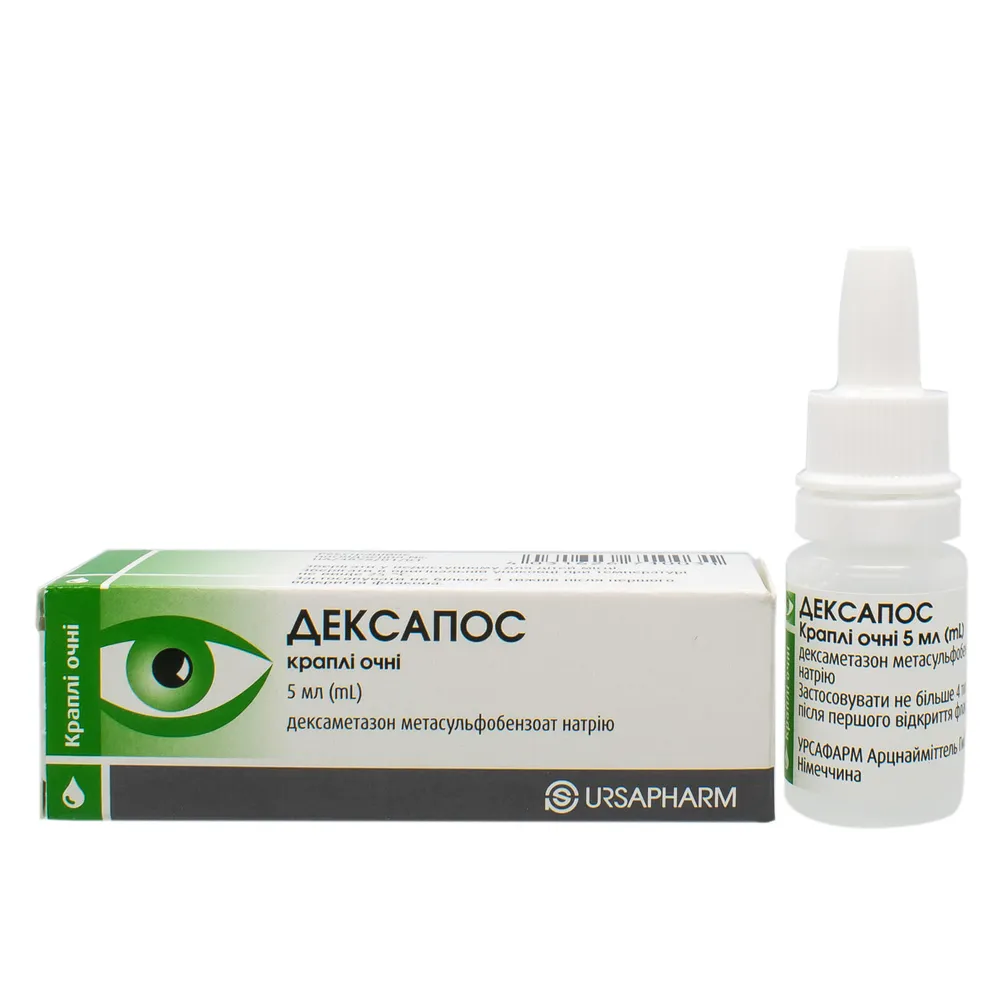
Table of Contents
INSTRUCTIONS FOR MEDICAL USE OF THE MEDICINAL PRODUCT DEXAPOS (DEXAPOS)
Composition:
Active substance: dexamethasone;
1 ml of solution contains 1 mg of dexamethasone sodium metasulfobenzoate;
Excipients: thimerosal, hypromellose, glucose monohydrate, water for injections.
Pharmaceutical form. Eye drops.
Main physicochemical properties: clear, colorless solution.
Pharmacotherapeutic group. Agents used in ophthalmology. Anti-inflammatory agents. Corticosteroids. ATC code S01B A01.
Pharmacological properties.
Pharmacodynamics.
Dexamethasone sodium metasulfobenzoate, a synthetic corticosteroid, is used in ophthalmic drops due to its pronounced anti-inflammatory effect. The efficacy of topical corticosteroids has been established in the treatment of inflammatory and allergic irritations of the anterior segment of the eye. After surgical procedures, the drug can be effectively used for the prevention and treatment of inflammation.
The specific mechanism of action of corticosteroids has not yet been fully elucidated. By binding to intracellular protein receptors, corticosteroids affect metabolism at the genomic level, which may include, among other effects, inhibition of proteins important for chemotaxis and immunological reactions. In addition, corticosteroids directly influence cellular and humoral immunity and lead to the development of lymphopenia and monocytopenia.
Pharmacokinetics.
Several studies have shown that effective local concentrations of dexamethasone sodium metasulfobenzoate are achieved in tissues following topical administration. While the fraction of active substance penetrating intact corneal epithelium is small, the extent of penetration increases during ocular inflammation or corneal damage.
Clinical characteristics.
Indications.
Treatment of severe non-infectious eye inflammations, such as severe allergic eye diseases, severe conjunctivitis, keratitis, and anterior segment inflammation, as well as postoperative inflammation.
Contraindications.
- Hypersensitivity to the active substance or to any of the excipients;
- viral, bacterial, or fungal eye infections;
- corneal injuries or ulcers;
- glaucoma;
- immunosuppressive conditions.
Interaction with other medicinal products and other forms of interaction.
No specific studies on drug interactions have been conducted.
CYP3A4 inhibitors, including ritonavir and cobicistat, may reduce the clearance of dexamethasone, leading to enhanced effects of dexamethasone and development of adrenocortical suppression/Cushing's syndrome. Such combinations should be avoided unless the benefits of treatment outweigh the increased risk of systemic side effects typical of corticosteroids. If such combination is used, the patient should be under medical supervision to detect systemic corticosteroid effects.
Concomitant use with atropine, other anticholinergic agents, and mydriatics may lead to an additional increase in intraocular pressure.
When using Dexpas with other topical ophthalmic medicinal products, a 15-minute interval should be maintained between instillations. Ophthalmic ointments should always be applied last.
Special precautions for use.
Before instilling Dexpas eye drops, contact lenses should be removed and not reinserted earlier than 20 minutes after administration of the medication.
To prevent possible systemic absorption, the nasolacrimal duct should be compressed for several minutes after instillation of the medication.
Since prolonged corticosteroid therapy may cause reversible elevation of intraocular pressure (glaucoma) or irreversible development of cataract, intraocular pressure and the patient's ocular status should be monitored regularly when the medication is used for more than 10 consecutive days.
The use of corticosteroids after surgical treatment of cataract may delay wound healing and lead to the formation of blebs. Treatment with corticosteroid-containing eye drops may lead to the development of acute anterior uveitis (iritis) and corneal perforation.
In cases of previous ocular infection with herpes simplex virus or after surgical procedures, Dexpas may be used only under the supervision of an ophthalmologist. Due to the immunosuppressive effect of corticosteroids, without appropriate concomitant antibacterial therapy, the risk of secondary infection of non-infectious inflammation increases, as well as the risk of masking or worsening undiagnosed bacterial infections. Furthermore, the risk of fungal or viral (e.g. herpes simplex keratitis) ocular infections may increase. Therefore, in cases of persistent corneal ulcers, laboratory testing should be performed to rule out fungal infections associated with corticosteroid use.
Cushing’s syndrome and/or adrenocortical suppression due to systemic absorption of ophthalmic dexamethasone preparations may occur after intensive or prolonged continuous therapy in patients predisposed to such disorders, including children and patients taking CYP3A4 inhibitors (including ritonavir and cobicistat). In such patients, treatment should be tapered gradually.
Visual disturbances may occur during treatment with systemic or topical corticosteroid medications. If a patient experiences symptoms such as blurred vision or other visual disturbances, they should consult an ophthalmologist to determine possible causes, including cataract, glaucoma, or rare conditions such as central serous chorioretinopathy (CSC), which has been reported following systemic or topical corticosteroid therapy.
Topical corticosteroid medications and thimerosal may cause hypersensitivity reactions accompanied by inflammatory symptoms such as transient burning and stinging, as well as other mild ocular irritation symptoms such as blurred vision, foreign body sensation, and allergic reactions. In addition, there have been reports of corneal ulcers, mydriasis, transient accommodation disorders, and ptosis. If hypersensitivity reactions occur during use of Dexpas, treatment should be discontinued immediately.
In conditions causing corneal thinning (e.g. keratitis), use of the medication may lead to corneal perforation.
Use during pregnancy or breastfeeding.
During pregnancy, especially in the first trimester, the medication should be used only after careful assessment of the benefit-risk ratio. With prolonged use of corticosteroids during pregnancy, the possibility of fetal developmental abnormalities, such as congenital cleft palate, cannot be excluded. The use of corticosteroids near the end of pregnancy may lead to adrenal cortical atrophy in the fetus, which may necessitate subsequent replacement therapy in the newborn.
It is generally known that corticosteroids pass into breast milk, although there have been no reports to date of adverse effects of topical corticosteroid medications on breastfed infants. Therefore, the medication may be prescribed to breastfeeding women only if the expected therapeutic benefit outweighs the potential risks to the infant. If the patient's condition requires increased dosage, breastfeeding should be discontinued.
Effect on the ability to drive or operate machinery.
Immediately after administration, the medication may temporarily affect visual acuity and thus impair reaction speed when driving or operating machinery.
Method of administration and dosage.
The product is intended for ophthalmic use.
The medication should be instilled into the conjunctival sac of the affected eye, 1 drop 3–5 times daily. According to the physician's instructions, in cases of particularly severe acute conditions, the medication Dexpas may be administered more frequently at the beginning of treatment.
The usual duration of treatment should not exceed 2 weeks. If no improvement is observed after the first 2 days of treatment, the continued appropriateness of therapy should be re-evaluated.
When instilling eye drops, avoid any contact between the dropper tip and the eye or skin.
Children.
There is no experience with the use of the medication for treatment in children.
Overdose.
There have been no reports to date of acute intoxication following ophthalmic administration of the medication. In case of local overdose, rinse the eyes with water. Systemic adverse effects may occur after prolonged treatment with very high doses. With ophthalmic use, isolated cases of Cushing's syndrome have been reported. Even in the event of accidental oral ingestion, acute life-threatening intoxication is unlikely.
Side effects
When using ophthalmic preparations of dexamethasone and other corticosteroids, the following adverse reactions have been reported.
Endocrine system disorders: Cushing's syndrome, adrenocortical suppression (see section "Special precautions for use").
Immune system disorders: Local hypersensitivity reactions, including inflammatory symptoms such as transient burning, stinging, irritation, redness, foreign body sensation in the eye, and blurred vision.
Eye disorders: Reversible increase in intraocular pressure, glaucoma, cataract, transient accommodation disorders, acute anterior uveitis, corneal erosion and perforation, ptosis, mydriasis, delayed wound healing, and development of blebs after surgical procedures.
Infections and infestations: Masking or exacerbation of concomitant infections, development of fungal infections.
Shelf life. 2 years.
Do not use after the expiry date stated on the packaging.
Use no longer than 4 weeks after first opening the bottle.
Storage conditions. Store in the original packaging at a temperature not exceeding 25 °C.
Keep out of reach and sight of children.
Packaging. 5 ml of ophthalmic solution in dropper bottles closed with caps featuring a first-opening control. One dropper bottle in a cardboard box.
Prescription status. Prescription only.
Manufacturer. URSAPHARM Arzneimittel GmbH / URSAPHARM Arzneimittel GmbH.
Manufacturer's address. Industriestrasse 35, 66129 Saarbrucken, Germany.