Daporin
Ukraine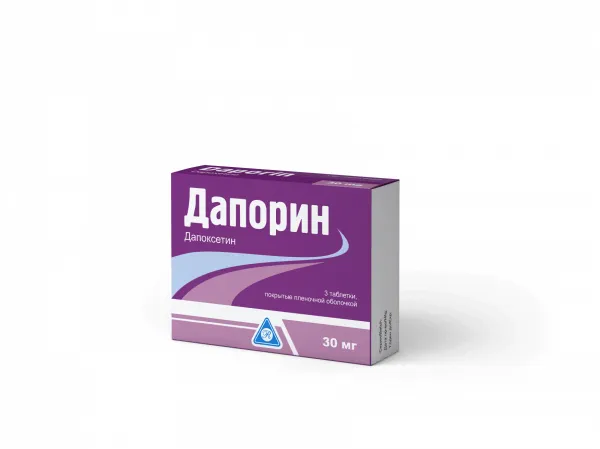
Table of Contents
INSTRUCTIONS FOR MEDICAL USE OF THE MEDICINAL PRODUCT DAPORIN (DAPORIN)
Composition:
active substance: dapoxetine;
1 film-coated tablet contains dapoxetine (in the form of dapoxetine hydrochloride) 30 mg or 60 mg;
excipients: lactose monohydrate; microcrystalline cellulose; sodium croscarmellose; colloidal hydrated silicon dioxide; magnesium stearate;
film coating Opadry® grey II 32K275005 [hypromellose; lactose monohydrate; titanium dioxide (E 171); glycerol triacetate; iron oxide black (E 172); iron oxide red (E 172); iron oxide yellow (E 172)].
Pharmaceutical form. Film-coated tablets.
Main physicochemical properties:
film-coated tablets of 30 mg: round, convex on one side and flat on the other side, film-coated, light grey in color, engraved with "30" within a triangle on the convex side;
film-coated tablets of 60 mg: round, convex on one side and flat on the other side, film-coated, light grey in color, engraved with "60" within a triangle on the convex side.
Pharmacotherapeutic group
Agents used in urology. Other urological agents. ATC code G04BX14.
Pharmacological Properties
Pharmacodynamics
Mechanism of action
Dapoxetine is a potent selective serotonin reuptake inhibitor (SSRI) with an IC50 of 1.12 nM, while its primary metabolites, desmethyldapoxetine (IC50 < 1.0 nM) and didesmethyldapoxetine (IC50 = 2.0 nM), are equivalent or less potent (dapoxetine-N-oxide, IC50 = 282 nM).
Ejaculation in humans is primarily regulated by the sympathetic nervous system. Ejaculation is initiated by a spinal reflex center involving the brainstem, which is primarily influenced by several brain nuclei (medial preoptic and paraventricular nuclei).
The mechanism of action of dapoxetine in premature ejaculation is likely related to inhibition of neuronal reuptake of serotonin and subsequent enhancement of neurotransmitter effects on pre- and postsynaptic receptors.
Clinical efficacy and safety
The efficacy of dapoxetine in the treatment of premature ejaculation was established in five double-blind, placebo-controlled clinical trials involving a total of 6081 randomized patients. Patient age was at least 18 years. In the 6 months prior to enrollment, the majority of these individuals experienced premature ejaculation during most sexual intercourse attempts. Premature ejaculation was defined according to DSM-IV diagnostic criteria (Diagnostic and Statistical Manual of Mental Disorders): short time to ejaculation (intravaginal ejaculatory latency time [IELT; time from vaginal penetration to intravaginal ejaculation measured using a stopwatch in four studies] less than two minutes), poor control over ejaculation, and significant distress or interpersonal difficulties caused by this condition.
Patients with other types of sexual dysfunction, including erectile dysfunction, as well as those using other medications for the treatment of premature ejaculation, were excluded from all studies.
Results from all randomized trials were comparable. Efficacy was observed after 12 weeks of treatment. One study included patients from both EU and non-EU countries and had a treatment duration of 24 weeks. In this study, 1162 patients were randomized: 385 patients received placebo, 388 patients received dapoxetine 30 mg as needed, and 389 patients received dapoxetine 60 mg as needed. Mean and median IELT (Intravaginal Ejaculatory Latency Time) values at the end of the study are presented in Table 1, and the overall distribution of patients achieving at least a certain level of mean IELT at the end of the study is presented in Table 2. Other studies and the pooled analysis of data at week 12 yielded similar results.
Table 1
Mean and median IELT values at the end of the study, calculated by the least squares method*
| Mean IELT |
Placebo |
Dapoxetine 30 mg |
Dapoxetine 60 mg |
| Median |
1.05 min |
1.72 min |
1.91 min |
| Difference compared to placebo [95% confidence interval (CI)] |
0.6 min** [0.37; 0.72] |
0.9 min** [0.66; 1.06] |
|
| Least squares mean |
1.7 min |
2.9 min |
3.3 min |
| Difference compared to placebo [95% CI] |
1.2 min** [0.59; 1.72] |
1.6 min** [1.02; 2.16] |
*Baseline (predose) value extrapolated to patients for whom no baseline data were available.
**Difference was statistically significant (p-value ≤ 0.001).
Table 2
Patients achieving at least a specified level of mean IELT at the end of the study*
| IELT (minutes) |
Placebo % |
Dapoxetine 30 mg, % |
Dapoxetine 60 mg, % |
| ≥ 1.0 |
51.6 |
68.8 |
77.6 |
| ≥ 2.0 |
23.2 |
44.4 |
47.9 |
| ≥ 3.0 |
14.3 |
26.0 |
37.4 |
| ≥ 4.0 |
10.4 |
18.4 |
27.6 |
| ≥ 5.0 |
7.6 |
14.3 |
19.6 |
| ≥ 6.0 |
5.0 |
11.7 |
14.4 |
| ≥ 7.0 |
3.9 |
9.1 |
9.8 |
| ≥ 8.0 |
2.9 |
6.5 |
8.3 |
*Baseline value imputed for patients with missing baseline data.
The magnitude of IELT prolongation was related to baseline IELT and was variable among individual patients: clinical significance of treatment efficacy with dapoxetine was demonstrated in the presented efficacy measures and analysis of data from patients with therapeutic response.
A patient with therapeutic response was defined as one who had at least a 2-category improvement in control of ejaculation plus at least a 1-category reduction in distress related to ejaculation. Statistically significantly more patients had a therapeutic response in each dapoxetine group compared to the placebo group at the end of the study: week 12 or 24. A higher percentage of patients with therapeutic response was observed in the dapoxetine 30 mg group (11.1–95% CI [7.24; 14.87]) and the dapoxetine 60 mg group (16.4–95% CI [13.01; 19.75]) compared to the placebo group at week 12 (pooled analysis).
The clinical significance of the effect of dapoxetine treatment is illustrated by the Patient Global Impression of Change outcome measure, in which patients were asked to compare their premature ejaculation at the end of the study with the beginning of the study, using a response scale ranging from "much better" to "much worse." At the end of the study (week 24), 28.4% of patients in the dapoxetine 30 mg group and 35.5% of patients in the dapoxetine 60 mg group reported their condition was better or much better compared to 14% in the placebo group. Additionally, 53.4% and 65.6% of patients receiving dapoxetine 30 mg and 60 mg, respectively, reported their condition was at least somewhat better compared to 28.8% in the placebo group.
Pharmacokinetics
Absorption
Dapoxetine is rapidly absorbed and reaches peak plasma concentration (Cmax) approximately 1–2 hours after tablet intake. Absolute bioavailability is 42% (range 15–76%), and within the 30–60 mg dose range, Cmax and area under the curve (AUC) increased proportionally with dose. Following multiple dosing, AUC values for dapoxetine and its active metabolite desmethyldapoxetine increased by approximately 50% compared to AUC values after single-dose administration. Consumption of a fatty meal slightly reduced Cmax (by 10%) and slightly increased AUC of dapoxetine (by 12%), as well as slightly prolonged the time to reach peak concentration (Tmax) of dapoxetine. These changes were not clinically significant. Dapoxetine can be taken independently of food intake.
Distribution
More than 99% of dapoxetine is bound to plasma proteins in vitro. The active metabolite desmethyldapoxetine is 98.5% protein-bound. The mean volume of distribution at steady state for dapoxetine is 162 L.
Metabolism
In vitro studies indicate that dapoxetine is metabolized by multiple enzyme systems in the liver and kidneys, primarily by CYP2D6, CYP3A4, and flavin-containing monooxygenase (FMO1). After oral administration of 14C-dapoxetine, it was extensively metabolized, mainly via the following biotransformation pathways: N-oxidation, N-demethylation, naphthyl hydroxylation, glucuronidation, and sulfation. Evidence suggests the presence of a presystemic first-pass effect after oral administration.
The main circulating components in plasma were intact dapoxetine and dapoxetine-N-oxide. In vitro binding and transport studies showed that dapoxetine-N-oxide is inactive. Additional metabolites, including desmethyldapoxetine and didesmethyldapoxetine, accounted for less than 3% of the total drug-related substances in plasma. In vitro binding studies indicated that desmethyldapoxetine has similar potency to dapoxetine, while didesmethyldapoxetine has approximately 50% of the activity of dapoxetine. The concentration of free desmethyldapoxetine (AUC and Cmax) is 50% and 23% of the free dapoxetine concentration, respectively.
Elimination
Dapoxetine metabolites are primarily excreted in urine as conjugates. The unchanged active substance was not detected in urine. After oral administration, the initial elimination half-life (t1/2) of dapoxetine was approximately 1.5 hours; plasma levels were less than 5% of Cmax within 24 hours after intake, and the terminal t1/2 was approximately 19 hours, similar to the terminal t1/2 of desmethyldapoxetine.
Pharmacokinetics in Special Patient Populations
The metabolite desmethyldapoxetine contributes to the pharmacological effect of dapoxetine, particularly when its influence is increased. Below is the increase in active fraction exposure in certain patient groups. This summarizes the free effects of dapoxetine and desmethyldapoxetine. Desmethyldapoxetine has the same potency as dapoxetine. Preliminary calculations suggest uniform distribution of desmethyldapoxetine in the central nervous system (CNS), although this has not been proven.
Patients of Different Races
A clinical pharmacology analysis of a single 60 mg dose of dapoxetine showed no statistically significant differences among patients of different races.
A clinical pharmacology analysis after a single 60 mg dose of dapoxetine revealed no statistically significant differences between Latino Americans and individuals of Caucasian, African, and Mongoloid descent. Clinical studies comparing dapoxetine pharmacokinetics in Japanese and Caucasian subjects found that plasma levels of dapoxetine (AUC and Cmax) were 10–20% higher in Japanese subjects, attributable to lower body weight. No clinically significant effect is expected from this slightly higher concentration.
Elderly Patients (Age 65 Years and Older)
A pharmacokinetic analysis of single 60 mg dose studies showed no significant differences in pharmacokinetic parameters (Cmax, AUCinf, Tmax) between healthy elderly men and healthy young men. Efficacy and safety have not been established in this patient group.
Patients with Renal Impairment
A clinical pharmacology study of a single 60 mg dose of dapoxetine was conducted in patients with mild (creatinine clearance 50–80 mL/min), moderate (creatinine clearance 30 to <50 mL/min), and severe (creatinine clearance <30 mL/min) renal impairment, as well as in patients with normal renal function (creatinine clearance >80 mL/min). No trend toward increasing dapoxetine AUC with decreasing renal function was observed. AUC in patients with severe renal impairment was approximately twice that in patients with normal renal function, although data in patients with severe renal impairment are limited. Pharmacokinetics of dapoxetine have not been evaluated in patients requiring hemodialysis (see sections "Special Warnings" and "Dosage and Administration").
Patients with Hepatic Impairment
In patients with moderate hepatic impairment, free Cmax of dapoxetine is reduced by 28%, and free AUC remains unchanged. Free Cmax and AUC of the active fraction (sum of free dapoxetine and desmethyldapoxetine) are reduced by 30% and 5%, respectively. In patients with moderate hepatic impairment, free Cmax of dapoxetine is practically unchanged (3% reduction), and free AUC increases by 66%. Free Cmax and AUC of the active fraction of dapoxetine and desmethyldapoxetine are practically unchanged and doubled, respectively.
In patients with severe hepatic impairment, free Cmax of dapoxetine is reduced by 42%, but free AUC is increased by approximately 223%. Cmax and AUC of the active fraction show similar changes (see sections "Contraindications" and "Special Warnings").
CYP2D6 Polymorphism
A clinical pharmacology study of a single 60 mg dose of dapoxetine showed that plasma concentrations in CYP2D6 poor metabolizers were higher than in extensive metabolizers (approximately 31% higher for Cmax, 36% higher for AUCinf of dapoxetine, 98% higher for Cmax, and 161% higher for AUCinf of desmethyldapoxetine). The active fraction of dapoxetine may be increased by approximately 46% for Cmax and approximately 90% for AUC. This increase may lead to higher incidence and more severe dose-dependent adverse effects, such as dose dependency (see section "Contraindications"). The safety of dapoxetine use in CYP2D6 poor metabolizers is of particular concern when co-administered with other medicinal products that may inhibit dapoxetine metabolism, such as moderate and strong CYP3A4 inhibitors.
Clinical Characteristics
Indications
For the treatment of premature ejaculation in adult men aged 18 to 64 years who meet the following criteria:
- Intravaginal ejaculatory latency time (IELT) of less than 2 minutes;
- Persistent or recurrent ejaculation with minimal sexual stimulation occurring before, during, or shortly after penetration, earlier than desired by the patient;
- Marked distress or interpersonal difficulties resulting from premature ejaculation;
- Inadequate control over the timing of ejaculation;
- Premature ejaculation in the majority of sexual attempts over the past 6 months.
The medicinal product should be used on an as-needed basis only as treatment prior to anticipated sexual activity. The medicinal product must not be used to delay ejaculation in men who have not been diagnosed with premature ejaculation.
Contraindications
-
Hypersensitivity to the active substance and/or to any of the excipients.
-
Heart failure [NYHA (New York Heart Association) classes II–IV].
-
Cardiac conduction disorders, such as atrioventricular block or sick sinus syndrome.
-
Severe ischemic heart disease.
-
Severe valvular heart disease.
-
Moderate or severe hepatic impairment.
-
History of syncope.
-
History of mania or severe depression.
-
Concomitant use of monoamine oxidase inhibitors (MAOIs) and within 14 days of discontinuation. Treatment with the medicinal product must be discontinued at least 7 days prior to initiating therapy with MAOIs.
-
Concomitant use of thioridazine and within 14 days of discontinuation. Treatment with the medicinal product must be discontinued at least 7 days prior to initiating thioridazine therapy (see section "Interaction with other medicinal products and other forms of interaction").
-
Concomitant use of selective serotonin reuptake inhibitors (SSRIs), serotonin-norepinephrine reuptake inhibitors (SNRIs), tricyclic antidepressants (TCAs), or other medicinal products/herbal preparations with serotonergic activity [such as L-tryptophan, triptans, tramadol, linezolid, lithium, St John’s wort (Hypericum perforatum)], and within 14 days of their discontinuation. The aforementioned medicinal products/herbal preparations should not be taken within 7 days after stopping treatment with Daporin (see section "Interaction with other medicinal products and other forms of interaction").
-
Concomitant use of strong CYP3A4 inhibitors, such as ketoconazole, itraconazole, ritonavir, saquinavir, telithromycin, nefazodone, nelfinavir, atazanavir (see section "Interaction with other medicinal products and other forms of interaction").
Interaction with other medicinal products and other forms of interaction
Pharmacodynamic interactions
MAO inhibitors. Serious reactions, sometimes fatal, including hyperthermia, rigidity, myoclonus, autonomic instability with rapid fluctuations of vital signs, and mental status changes including extreme agitation progressing to delirium and coma, have been reported when SSRIs are used concomitantly with MAO inhibitors. Such reactions have also been observed in patients who have recently discontinued SSRIs and started MAO inhibitors. Isolated cases with symptoms resembling neuroleptic malignant syndrome have been reported. Animal data on the combined use of SSRIs and MAO inhibitors suggest a synergistic effect leading to increased blood pressure and excitation. The medicinal product must not be used concomitantly with MAO inhibitors or within 14 days of their discontinuation. MAO inhibitors must not be taken within 7 days after stopping dapoxetine (see section "Contraindications").
Thioridazine. Thioridazine prolongs the QTc interval, which is associated with the occurrence of severe ventricular arrhythmias. Dapoxetine inhibits the CYP2D6 isoenzyme and is likely to inhibit thioridazine metabolism. The resulting increased thioridazine levels are expected to cause more pronounced QTc interval prolongation. The medicinal product must not be used concomitantly with thioridazine or within 14 days of its discontinuation. Thioridazine is contraindicated within 7 days after stopping dapoxetine (see section "Contraindications").
Herbal medicinal products with serotonergic effects. As with SSRIs, concomitant use with herbal medicinal products having serotonergic mechanisms of action (including MAO inhibitors, L-tryptophan, triptans, tramadol, linezolid, SSRIs, SNRIs, lithium, and St John’s wort preparations (Hypericum perforatum )) may increase the risk of serotonergic effects. Daporin is contraindicated in combination with other SSRIs, MAO inhibitors, and other medicinal products/herbal preparations with serotonergic mechanisms of action, and within 14 days of their discontinuation. The aforementioned medicinal products/herbal preparations are contraindicated within 7 days after stopping Daporin (see section "Contraindications").
Medicinal products acting on the CNS (such as antiepileptic drugs, antidepressants, antipsychotics, anxiolytics, sedative hypnotics). The concomitant use of dapoxetine with CNS-acting medicinal products has not been studied in patients with premature ejaculation. Concomitant use of dapoxetine with such medicinal products requires caution.
Pharmacokinetic interactions
Effect of other medicinal products on the pharmacokinetics of dapoxetine
In vitro studies using human liver and kidney tissues, as well as intestinal microsomes, have shown that dapoxetine is primarily metabolized by CYP2D6, CYP3A4, and flavin-containing monooxygenase 1 (FMO1). Therefore, inhibitors of these enzymes may reduce dapoxetine clearance.
CYP3A4 inhibitors
Medicinal products known as strong CYP3A4 inhibitors. Administration of ketoconazole (200 mg twice daily for 7 days) increased Cmax and AUCinf of dapoxetine (single 60 mg dose) by 35% and 99%, respectively. Regarding the distribution of both free dapoxetine and desmethyldapoxetine, Cmax of the active moiety may increase by approximately 25%, and AUC of the active moiety may double when strong CYP3A4 inhibitors are taken.
The increase in Cmax and AUC of the active moiety may be significantly greater in patients with impaired functional CYP2D6 enzyme activity, particularly in poor metabolizers of CYP2D6 or when used concomitantly with strong CYP2D6 inhibitors.
Concomitant use of the medicinal product and strong CYP3A4 inhibitors, such as ketoconazole, itraconazole, ritonavir, saquinavir, telithromycin, nefazodone, nelfinavir, and atazanavir, is contraindicated.
Grapefruit juice is also a strong CYP3A4 inhibitor; therefore, its consumption should be avoided within 24 hours before taking the medicinal product.
Medicinal products known as moderate CYP3A4 inhibitors. Concomitant use of dapoxetine and moderate CYP3A4 inhibitors (such as erythromycin, clarithromycin, fluconazole, amprenavir, fosamprenavir, aprepitant, verapamil, diltiazem) may also lead to a marked increase in exposure to dapoxetine and desmethyldapoxetine, especially in poor metabolizers of CYP2D6. When used concomitantly with such medicinal products, the maximum dose of dapoxetine should not exceed 30 mg (see sections "Special warnings and precautions for use" and "Dosage and administration"). This applies to all patients except those identified as extensive metabolizers of CYP2D6 based on genotyping or phenotyping. For patients who are extensive metabolizers of CYP2D6, a maximum dapoxetine dose of 30 mg is recommended when co-administered with a strong CYP3A4 inhibitor. Caution is advised when using the medicinal product at a dose of 60 mg concomitantly with moderate CYP3A4 inhibitors.
Medicinal products known as strong CYP2D6 inhibitors. Cmax and AUCinf of dapoxetine (single 60 mg dose) increase by 50% and 88%, respectively, when co-administered with fluoxetine (60 mg/day for 7 days). Regarding the distribution of both free dapoxetine and desmethyldapoxetine, Cmax of the active moiety may increase by approximately 50%, and AUC of the active moiety may double when strong CYP2D6 inhibitors are taken concomitantly. This increase in Cmax and AUC of the active moiety is similar to that expected in poor metabolizers of CYP2D6 and may result in increased frequency and severity of dose-dependent adverse reactions.
Phosphodiesterase-5 (PDE-5) inhibitors. Patients taking phosphodiesterase-5 (PDE5) inhibitors should not take the medicinal product due to the potential for reduced orthostatic tolerance (see section "Special warnings and precautions for use"). Orthostatic hypotension may occur when used concomitantly with dapoxetine (see section "Special warnings and precautions for use"). The efficacy and safety in patients with premature ejaculation and erectile dysfunction who are taking dapoxetine and PDE5 inhibitors concomitantly have not been established. Pharmacokinetics of dapoxetine (60 mg) in combination with tadalafil (20 mg) and sildenafil (100 mg) were also evaluated in a crossover study. Tadalafil did not affect the pharmacokinetics of dapoxetine. Sildenafil caused minor changes in dapoxetine pharmacokinetics (22% increase in AUCinf and 4% increase in Cmax), which are unlikely to be clinically significant.
Effect of dapoxetine on the pharmacokinetics of concomitantly administered medicinal products
Tamsulosin. Concomitant administration of single or multiple doses of dapoxetine (30 or 60 mg) in patients taking tamsulosin at a daily dose of 0.4 mg did not alter the pharmacokinetics of tamsulosin. Concomitant administration of dapoxetine and tamsulosin did not alter the orthostatic profile or orthostatic effects compared to tamsulosin alone or tamsulosin in combination with dapoxetine 30 or 60 mg. However, concomitant use of the medicinal product with alpha-adrenergic receptor antagonists requires caution due to the potential for reduced orthostatic tolerance.
Medicinal products metabolized by CYP2D6. Repeated administration of dapoxetine (60 mg/day for 6 days) followed by a single 50 mg dose of desipramine resulted in an 11% and 19% increase in mean Cmax and AUCinf of desipramine, respectively, compared to desipramine alone. Dapoxetine may cause a similar increase in plasma concentrations of other medicinal products metabolized by CYP2D6. This is unlikely to be clinically significant.
Medicinal products metabolized by CYP3A4. Repeated administration of dapoxetine (60 mg/day for 6 days) resulted in approximately a 20% reduction in AUCinf of midazolam (single 8 mg dose) (range from -60% to +18%). This effect on midazolam is unlikely to be clinically significant for most patients. However, increased CYP3A activity may be clinically relevant in some patients who are concomitantly taking a medicinal product primarily metabolized by CYP3A and having a narrow therapeutic index.
Medicinal products metabolized by CYP2C19. Repeated administration of dapoxetine (60 mg/day for 6 days) did not inhibit metabolism after a single 40 mg dose of omeprazole. Dapoxetine is unlikely to affect the pharmacokinetics of other CYP2C19 substrates.
Medicinal products metabolized by CYP2C9. Repeated administration of dapoxetine (60 mg/day for 6 days) did not affect the pharmacokinetics or pharmacodynamics of a single 5 mg dose of glyburide. Dapoxetine is unlikely to affect the pharmacokinetics of other CYP2C9 substrates.
Warfarin and other medicinal products affecting blood coagulation and/or platelet function. There are no data on the effect of chronic warfarin use with dapoxetine; therefore, caution is recommended when using dapoxetine in patients on chronic warfarin therapy. In a pharmacokinetic study, dapoxetine (60 mg/day for 6 days) did not affect the pharmacokinetics or pharmacodynamics of warfarin (prothrombin time or international normalized ratio) (single 25 mg dose). However, bleeding has been reported with SSRIs (see section "Special warnings and precautions for use").
Ethanol. Concomitant administration of ethanol (single dose of 0.5 g/kg – average 2 drinks) did not affect the pharmacokinetics of dapoxetine (single 60 mg dose). However, concomitant use of dapoxetine with ethanol enhances drowsiness and significantly reduces alertness. Pharmacodynamic measurements of cognitive impairment (digit symbol substitution test, digit vigilance test) also revealed an additive effect. Concurrent use of alcohol and dapoxetine increases the likelihood or severity of adverse reactions such as dizziness, drowsiness, slowed reflexes, or impaired judgment, and may increase the risk of developing such neurocardiogenic adverse reactions as syncope, thereby increasing the risk of accidental injury. Alcohol consumption is not recommended during treatment with the medicinal product (see section "Special warnings and precautions for use").
Special precautions for use
General recommendations
The medicinal product should be used only in men with premature ejaculation (see section "Indications"). The medicinal product is not intended for use in men who have not been diagnosed with premature ejaculation. Safety has not been established, and there are no data on the effect on delaying ejaculation in men without premature ejaculation.
Use in other forms of sexual disorders
Prior to initiating treatment, patients with other forms of sexual disorders, including erectile dysfunction, should be thoroughly evaluated by physicians. The medicinal product should not be used in men with erectile dysfunction who are taking PDE-5 inhibitors (see section "Interaction with other medicinal products and other forms of interaction").
Risk of orthostatic hypotension (hypotension)
Orthostatic hypotension has been reported in clinical trials. A thorough medical evaluation, including assessment of medical history for orthostatic reactions, is required before initiating treatment. An orthostatic test (blood pressure and pulse rate in supine and standing positions) should be performed prior to starting therapy. The medicinal product should be avoided in patients with a history of orthostatic reactions or suspected orthostatic response.
Patients should be advised in advance that if prodromal symptoms such as dizziness occur shortly after standing up, they should immediately lie down with their head lower than the rest of the body or sit with their head between their knees until symptoms resolve. Patients should avoid rising quickly after prolonged lying or sitting.
Risk of suicidal ideation / suicidal thoughts
Antidepressants, including SSRIs, compared to placebo, increase the risk of suicidal thoughts and suicidal behavior in short-term studies in children and adolescents with major depressive and other psychiatric disorders. Short-term studies do not indicate an increased risk of suicidal tendencies in adults aged 24 years and older when treated with antidepressants compared to placebo. In clinical trials of dapoxetine for the treatment of premature ejaculation, there was no clear evidence of emergence of suicidal tendencies during treatment based on assessment of potential adverse reactions using the Columbia Suicide Assessment Classification (C-CASA), Montgomery–Åsberg Depression Rating Scale, or Beck Depression Inventory-II.
Risk of syncope (loss of consciousness)
Patients should be warned to avoid situations that may lead to injury, including driving or operating dangerous machinery, as syncope or prodromal symptoms such as dizziness or pre-syncope may occur (see section "Adverse reactions").
Prodromal symptoms such as nausea, dizziness/pre-syncope, and increased sweating have been reported more frequently in patients taking dapoxetine compared to placebo.
Clinical studies of dapoxetine have reported cases of syncope characterized by loss of consciousness associated with bradycardia or sinus node pause. These cases occurred in patients undergoing Holter ECG monitoring and are considered vasovagal in etiology. Most cases occurred within the first 3 hours after the first dose or were associated with clinical procedures (e.g., blood sampling, orthostatic maneuvers, blood pressure measurements). Possible prodromal symptoms such as nausea, dizziness, pre-syncope, palpitations, weakness, confusion, and increased sweating usually occurred within the first 3 hours after dosing and often preceded syncope.
Patients should be informed about the possibility of syncope at any time, with or without prodromal symptoms, during treatment. Patients should also be advised about the importance of maintaining adequate hydration and how to recognize prodromal signs and symptoms to reduce the risk of serious injuries related to falls due to loss of consciousness.
If a patient experiences prodromal symptoms, they should immediately lie down with their head lower than the rest of the body or sit with their head between their knees until symptoms subside.
Patients should avoid potentially hazardous situations, including driving or operating machinery, as syncope or other CNS effects may occur (see section "Ability to affect reaction speed when driving or operating machinery").
Use in patients with cardiovascular risk factors
Patients with cardiovascular diseases were excluded from phase 3 clinical trials. The risk of adverse cardiovascular outcomes due to syncope (cardiac syncope and syncope from other causes) is increased in patients with underlying structural cardiovascular diseases (such as outflow obstruction, valvular heart disease, carotid stenosis, and ischemic heart disease). There is insufficient data to determine whether this increased risk of vasovagal syncope extends to patients with cardiovascular diseases.
Concomitant use with recreational drugs
Concomitant use of dapoxetine with recreational drugs having serotonergic activity, such as ketamine, methylenedioxymethamphetamine (MDMA), and diethylamide of lysergic acid (LSD), may lead to potentially serious reactions, including arrhythmia, hyperthermia, and serotonin syndrome. Concomitant use with recreational drugs having sedative properties, such as narcotics and benzodiazepines, may increase somnolence and dizziness. Concomitant use of dapoxetine with these substances is not recommended.
Concomitant use with alcohol
Concomitant intake of dapoxetine with alcohol may enhance alcohol-related neurocognitive effects and may increase the risk of neurocardiogenic adverse reactions such as syncope, thereby increasing the risk of accidental injury. Patients are advised not to consume alcohol during treatment (see sections "Interaction with other medicinal products and other forms of interaction" and "Ability to affect reaction speed when driving or operating machinery").
Concomitant use with vasodilating medicinal products
The medicinal product should be used with caution in patients who are concurrently taking vasodilating medicinal products (e.g., alpha-adrenergic receptor antagonists and nitrates) due to possible reduced orthostatic tolerance (see section "Interaction with other medicinal products and other forms of interaction").
Use in patients with manic syndrome
The medicinal product should not be used in patients with a history of manic syndrome/hypomania or bipolar affective disorder. Treatment should be discontinued if symptoms of these disorders emerge.
Risk of seizure
Due to the properties of SSRIs to lower the seizure threshold, the use of the medicinal product should be discontinued if a seizure occurs. Patients with unstable epilepsy should avoid using the medicinal product. Close monitoring is required in patients with controlled epilepsy.
Risk of depression and/or psychiatric disorders
Patients presenting signs and symptoms of depression should be evaluated before initiating treatment to rule out undiagnosed depressive disorders.
Concomitant use of the medicinal product with antidepressants, including SSRIs and SNRIs, is contraindicated. Discontinuation of ongoing treatment for depression or anxiety to initiate treatment with the medicinal product for premature ejaculation is not recommended. The medicinal product is not recommended for the treatment of psychiatric disorders and should not be used in men with disorders such as schizophrenia or those suffering from hypochondriasis, as worsening of depression-related symptoms cannot be excluded. This may result from the underlying psychiatric disorder or from the therapy itself. Patients should be encouraged to report any troubling thoughts or feelings at any time during treatment. If signs and symptoms of depression occur during treatment, the medicinal product should be discontinued.
Risk of bleeding
Impaired hemostasis has been reported with SSRIs. The medicinal product should be used with caution in patients who are concurrently taking medicinal products affecting platelet function (e.g., atypical antipsychotics and phenothiazines, acetylsalicylic acid, nonsteroidal anti-inflammatory drugs, antiplatelet agents), or anticoagulants (e.g., warfarin), and in patients with a history of bleeding or coagulation disorders (see sections "Pharmacokinetics" and "Interaction with other medicinal products and other forms of interaction").
Use in patients with renal impairment
The medicinal product is not recommended for use in patients with severe renal impairment. Caution is advised in patients with mild to moderate renal impairment (see sections "Pharmacokinetics" and "Dosage and administration").
Risk of withdrawal syndrome
Abrupt discontinuation of chronic SSRI treatment for chronic depressive disorders may lead to symptoms such as dysphoric mood, irritability, agitation, dizziness, sensory disturbances (e.g., paresthesia such as electric shock sensations), anxiety, confusion, headache, lethargy, emotional lability, insomnia, and hypomania.
A double-blind clinical study in patients with premature ejaculation designed to assess withdrawal symptoms after 62 days of daily dosing or on-demand dosing of 60 mg dapoxetine showed mild withdrawal symptoms, with higher frequencies of insomnia and dizziness in patients who switched to placebo after daily treatment (see section "Pharmacodynamics").
Use in patients with eye disorders
Dapoxetine has been associated with ocular adverse reactions such as mydriasis and eye pain. The medicinal product should be used with caution in patients with elevated intraocular pressure or at risk of angle-closure glaucoma.
Concomitant use with moderate CYP3A4 inhibitors
Caution is required when administering moderate CYP3A4 inhibitors; the dose of dapoxetine should be limited to 30 mg (see sections "Interaction with other medicinal products and other forms of interaction" and "Dosage and administration").
Concomitant use with strong CYP2D6 inhibitors
Caution is required when increasing the dose to 60 mg in patients taking strong CYP2D6 inhibitors or in patients with poor CYP2D6 metabolizer genotype, as this may increase exposure and lead to higher frequency and severity of adverse reactions.
Warnings regarding excipients
The medicinal product contains lactose and therefore should not be used in patients with rare hereditary problems of galactose intolerance, lactase deficiency, or glucose-galactose malabsorption.
The medicinal product contains less than 1 mmol/dose of sodium, i.e., essentially "sodium-free."
Use during pregnancy or breastfeeding
The medicinal product is not intended for use in women.
Animal studies do not indicate a direct or indirect harmful effect on fertility, pregnancy, or embryonal/fetal development. It is unknown whether dapoxetine or its metabolites are excreted in human breast milk.
Ability to affect reaction speed when driving or operating machinery
Dapoxetine has a minor or moderate influence on the ability to drive or operate machinery. In clinical trials, patients taking dapoxetine reported dizziness, attention disturbance, syncope, blurred vision, and somnolence. Patients should be warned to avoid potentially hazardous situations, including driving or operating machinery.
The combination of alcohol with dapoxetine may enhance neurocognitive effects associated with alcohol and may increase neurocardiogenic adverse reactions such as syncope, thereby increasing the risk of accidental injury. Therefore, patients should be advised to avoid alcohol consumption during treatment (see sections "Interaction with other medicinal products and other forms of interaction" and "Special precautions for use").
Method of Administration and Dosage
The medicinal product is intended for oral use. To avoid a bitter taste, tablets should be swallowed whole with sufficient water. The medicinal product may be taken regardless of food intake.
Adult patients aged 18 to 64 years
The medicinal product is not intended for continuous daily use. It should be used only when sexual activity is anticipated. The medicinal product must not be taken more frequently than once every 24 hours.
The recommended initial dose for patients aged 18 to 64 years is 30 mg, taken 1–3 hours before anticipated sexual activity. Treatment should not be initiated with a dose of 60 mg.
If the individual response to dapoxetine 30 mg is inadequate and the patient has not experienced moderate or severe adverse reactions, nor prodromal symptoms suggesting a possible risk of syncope, the dose may be increased to the maximum recommended dose of 60 mg, taken as needed approximately 1–3 hours before sexual activity. The frequency and severity of adverse reactions increase with dapoxetine 60 mg. If orthostatic reactions occur after taking the initial dose, dose escalation to 60 mg is not recommended (see section "Special Warnings and Precautions for Use").
The maximum recommended dose of the medicinal product must not be exceeded.
The physician should carefully evaluate the risk-benefit ratio after the first 4 weeks of treatment (or at least after 6 doses) to determine whether continued treatment is appropriate. Data on the efficacy and safety of dapoxetine use beyond 24 weeks are limited. The physician should reassess the clinical need for continued treatment and the risk-benefit ratio of the medicinal product at least every 6 months.
Patients with renal impairment
The medicinal product should be used with caution in patients with mild or moderate renal impairment. The medicinal product is not recommended in patients with severe renal impairment (see sections "Pharmacokinetics" and "Special Warnings and Precautions for Use").
Patients with hepatic impairment
The medicinal product is contraindicated in patients with moderate or severe hepatic impairment (Child–Pugh classification, classes B and C).
Patients treated with strong CYP2D6 inhibitors or who are poor CYP2D6 metabolizers
Dose escalation to 60 mg should be performed with caution in such patients (see sections "Pharmacokinetics", "Interaction with Other Medicinal Products and Other Forms of Interaction", and "Special Warnings and Precautions for Use").
Patients taking moderate or strong CYP3A4 inhibitors
Concomitant use of the medicinal product with strong CYP3A4 inhibitors is contraindicated. The medicinal product should be used with caution in patients who are concurrently taking moderate CYP3A4 inhibitors, and the dapoxetine dose should not exceed 30 mg (see sections "Contraindications", "Interaction with Other Medicinal Products and Other Forms of Interaction", and "Special Warnings and Precautions for Use").
Elderly patients (aged 65 years and older)
The efficacy and safety of dapoxetine have not been established in patients aged 65 years and older (see section "Pharmacokinetics").
Warnings prior to initiation or prescription of the medicinal product
Prior to initiating treatment, information regarding orthostatic hypotension in section "Special Warnings and Precautions for Use" should be reviewed.
Children
The use of the medicinal product is contraindicated in children due to lack of clinical experience.
Overdose
Symptoms
Cases of overdose have not been reported.
In clinical pharmacology studies, no unexpected adverse reactions were observed with dapoxetine administered at daily doses up to 240 mg (two 120 mg doses taken 3 hours apart). In general, symptoms of overdose with SSRIs include serotonin-mediated adverse reactions such as drowsiness, gastrointestinal disturbances (nausea and vomiting), tachycardia, tremor, agitation, and dizziness.
Treatment
In case of overdose, symptomatic and supportive therapy should be administered. Due to the high degree of protein binding and large volume of distribution of dapoxetine, forced diuresis, dialysis, hemoperfusion, and exchange transfusion are unlikely to be beneficial. There is no specific antidote.
Side effects
Overall safety profile
Syncope and orthostatic hypotension have been reported in clinical trials (see section "Special precautions").
The most commonly reported adverse reactions in clinical trials, which were dose-dependent, included nausea (11.0% and 22.2% in groups receiving on-demand dapoxetine 30 mg and 60 mg, respectively), dizziness (5.8% and 10.9%), headache (5.6% and 8.8%), diarrhea (3.5% and 6.9%), insomnia (2.1% and 3.9%), and fatigue (2.0% and 4.1%). The most common adverse reactions leading to discontinuation of dapoxetine were nausea (2.2%) and dizziness (1.2%).
The safety of dapoxetine was evaluated in 4224 patients with premature ejaculation who participated in five placebo-controlled, double-blind clinical studies. Of the 4224 patients, 1616 received on-demand dapoxetine 30 mg, and 2608 received on-demand dapoxetine 60 mg or once daily.
Criteria for assessing the frequency of adverse drug reactions: very common (≥ 1/10); common (≥ 1/100, < 1/10); uncommon (≥ 1/1000, < 1/100); rare (≥ 1/10000, < 1/1000); very rare (< 1/10000); not known (frequency cannot be estimated from available data).
Psychiatric disorders:
Common: anxiety, agitation, restlessness, insomnia, unusual dreams, decreased libido; uncommon: depression, depressed mood, euphoric mood, mood lability, nervousness, apathy, indifference, confusion, disorientation, thinking disorder, hyperarousal, sleep disorder, difficulty falling asleep, intrasomnic disturbances, nightmares, bruxism, loss of libido, anorgasmia.
Nervous system disorders:
Very common: headache, dizziness; common: somnolence, attention disturbance, tremor, paraesthesia; uncommon: syncope, vasovagal syncope, postural dizziness, akathisia, dysgeusia, hypersomnia, lethargy, sedation, decreased level of consciousness; rare: dizziness during physical exertion, sudden sleep onset.
Eye disorders:
Common: blurred vision; uncommon: mydriasis (see section "Special precautions"), eye pain, visual disturbance.
Ear and labyrinth disorders:
Common: tinnitus; uncommon: vertigo.
Cardiac disorders:
Uncommon: sinoatrial block, sinus bradycardia, tachycardia.
Vascular disorders:
Common: flushing; uncommon: hypotension, systolic hypertension.
Respiratory, thoracic and mediastinal disorders:
Common: nasal sinus congestion, yawning.
Gastrointestinal disorders:
Very common: nausea; common: diarrhea, vomiting, constipation, abdominal pain, epigastric pain, dyspepsia, flatulence, stomach discomfort, abdominal distension, dry mouth; uncommon: epigastric discomfort, abdominal discomfort; rare: urgent need to defecate.
Skin and subcutaneous tissue disorders:
Common: excessive sweating; uncommon: pruritus, cold sweat.
Reproductive system and breast disorders:
Common: erectile dysfunction; uncommon: ejaculatory failure, male orgasmic disorder, male genital paraesthesia.
General disorders:
Common: fatigue, irritability; uncommon: weakness, hot flush, feeling of anxiety, unusual sensations, feeling drunk.
Investigations:
Common: increased blood pressure; uncommon: increased heart rate, increased diastolic blood pressure, increased orthostatic blood pressure.
Adverse reactions reported in a 9-month long-term extension study were consistent with those observed in the double-blind studies. No additional adverse reactions were identified.
Description of selected adverse reactions
Syncope associated with bradycardia or sinus node arrest has been observed in patients undergoing Holter monitoring in clinical trials of dapoxetine. Most cases occurred within the first 3 hours after dapoxetine intake, following the first dose or in association with clinical procedures (such as blood sampling, orthostatic procedures, and blood pressure measurements). Prodromal symptoms often preceded syncope.
The occurrence of syncope and possibly prodromal symptoms is dose-dependent, with higher incidence observed in patients receiving higher than recommended doses during phase 3 clinical trials.
Orthostatic hypotension has been observed in clinical trials (see section "Special precautions"). The frequency of syncope, defined as loss of consciousness in the dapoxetine clinical trial program, varies depending on the study population, ranging from 0.06% (30 mg) to 0.23% (60 mg) in patients enrolled in phase 3 placebo-controlled clinical trials, and up to 0.64% (all doses combined) in phase 1 studies involving healthy volunteers.
Other specific populations
The medicinal product should be used with caution at the higher dose of 60 mg in patients taking strong CYP2D6 inhibitors or in patients identified as CYP2D6 poor metabolizers (see sections "Pharmacokinetics", "Interaction with other medicinal products and other forms of interaction", "Special precautions", and "Dosage and administration").
Withdrawal syndrome
Abrupt discontinuation of SSRIs used for treatment of chronic depressive disorders may lead to symptoms such as dysphoric mood, irritability, agitation, dizziness, sensory disturbances (e.g., paraesthesia, such as electric shock sensations), anxiety, confusion, headache, lethargy, emotional lability, insomnia, and hypomania.
In a dapoxetine safety study, mild or moderate insomnia and dizziness were more frequently observed in patients who switched to placebo after 62 days of daily dapoxetine treatment.
Reporting suspected adverse reactions
Reporting suspected adverse reactions after medicine authorization is important. It allows continued monitoring of the benefit-risk balance of the medicine. Healthcare professionals, pharmacists, patients, and their legal representatives should report all suspected adverse reactions and lack of efficacy via the Automated Pharmacovigilance Information System at: https://aisf.dec.gov.ua.
Shelf life
3 years.
Storage conditions
Store at temperatures not exceeding 25 °C in the original packaging and keep out of reach of children.
Packaging
3 tablets per blister; 1 or 2 blisters per cardboard box.
Prescription status
Prescription only.
Manufacturer
WORLD MEDICINE ILAC SAN. VE TIC. A.S.
Manufacturer's address and location of operations
15 Temmuz Mahallesi Cami Yolu Caddesi No:50 Gunesli Bagcilar/Istanbul, Turkey.