Dacarbazine
Ukraine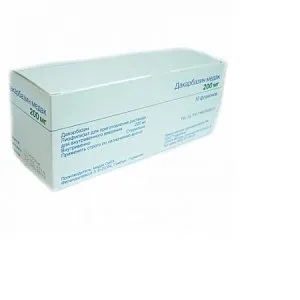
Table of Contents
INSTRUCTIONS FOR MEDICAL USE OF THE MEDICINAL PRODUCT DAKARBAZINE (DACARBAZINE)
Composition:
Active substance: dacarbazine;
1 vial contains 200 mg or 500 mg of dacarbazine;
Excipients: anhydrous citric acid, mannitol (E 421).
Pharmaceutical form. Lyophilisate for solution for injection.
Main physicochemical properties: white or almost white lyophilized mass.
Pharmacotherapeutic group. Antineoplastic agents. Alkylating agents.
ATC code L01A X04.
Pharmacological Properties.
Pharmacodynamics.
Dacarbazine is an alkylating cytostatic agent with a triazene structure.
Its mechanism of action involves inhibition of cell growth (independent of the cell cycle) and inhibition of DNA synthesis. Dacarbazine also exerts an alkylating effect and may engage other cytostatic mechanisms.
Dacarbazine itself is considered to lack antineoplastic activity; however, through microsomal N-demethylation, it is rapidly converted into 5-aminoimidazole-4-carboxamide and a methyl cation, which are responsible for the alkylating action of dacarbazine.
Pharmacokinetics.
Distribution.
After intravenous administration, dacarbazine rapidly penetrates into tissues. Plasma protein binding is 5%. Plasma kinetics are biphasic, with an initial half-life of 20 minutes and a terminal half-life of approximately 0.5–3.5 hours.
Biotransformation.
Dacarbazine is inactive until metabolized in the liver by cytochrome P450, leading to the formation of active N-demethylated compounds HMTC and MTC. This process is catalyzed by the enzymes CYP1A1, CYP1A2, and CYP2E1.
MTC is further metabolized to 5-aminoimidazole-4-carboxamide (AIC).
Excretion.
Dacarbazine undergoes both hydroxylation and demethylation in the liver. Approximately 20–50% of the drug is excreted unchanged by the kidneys via tubular secretion.
Safety preclinical data
Dacarbazine exhibits mutagenic, carcinogenic, and teratogenic effects, which have been demonstrated in experimental studies.
Clinical Characteristics.
Indications.
Malignant metastatic melanoma.
In combination chemotherapy:
- Hodgkin’s disease;
- progressive soft tissue sarcoma (excluding mesothelioma, Kaposi’s sarcoma) in adults.
Contraindications.
- Hypersensitivity to dacarbazine or to any other component of the medicinal product;
- pregnancy or breastfeeding;
- leukopenia and/or thrombocytopenia;
- severe hepatic and/or renal insufficiency;
- in patients concurrently receiving yellow fever vaccination or concurrently using fotemustine.
Special precautions. Standard precautions for handling cytotoxic medicinal products with teratogenic, mutagenic, and carcinogenic effects must be observed.
Dacarbazine is an antineoplastic agent. The vial must not be opened until the instructions for handling cytostatic agents have been read.
Dacarbazine should be handled only by experienced healthcare professionals. As with all handling of cytostatic agents, exposure of personnel must be avoided. During pregnancy, any contact with cytostatic agents should be avoided. Solution preparation should be performed in a designated area, working over a washable tray or over absorbent paper placed on a plastic underlay.
Appropriate protective eyewear, gloves, face mask, and gown must be worn. Syringes and administration devices should be carefully assembled to ensure their integrity and prevent leakage of the drug solution.
If the solution comes into contact with any surface, the surface must be immediately and thoroughly cleaned, and hands and face must be washed.
In case of solution spillage, the liquid should be cleaned up using absorbent material. All contaminated materials must be disposed of (incinerated).
Interaction with other medicinal products and other forms of interaction.
When used prior to or concurrently with agents that adversely affect bone marrow (cytostatic agents, radiation therapy), an enhanced myelotoxic effect of dacarbazine may occur.
Metabolism studies have not been conducted, but it is known that hydroxylation of the parent compound contributes to enhanced antitumor activity. Dacarbazine is metabolized in the liver via P450 enzymes (CYP1A1, CYP1A2, and CYP2E1). This should be taken into account when co-administering medicinal products metabolized by these same enzymes.
Dacarbazine may enhance the photosensitizing effect of methoxsalen.
Administration of live vaccines to patients whose immune system is compromised due to chemotherapy agents such as dacarbazine may result in serious and potentially fatal infections. Therefore, live vaccines should be avoided during dacarbazine therapy. Generally, live viral vaccines should be used with caution only after discontinuation of chemotherapy, taking into account the patient’s immune status depending on the disease and other treatments. Live vaccines should not be administered earlier than 3 months after completion of chemotherapy. Inactivated vaccines may be used if necessary.
Malignant tumors increase the risk of thrombosis; therefore, it is common practice to co-administer anticoagulants. If a patient is receiving oral anticoagulants, the international normalized ratio (INR) should be monitored more frequently due to variable individual sensitivity and potential interactions between anticoagulants and cytostatic agents.
Concomitant use with phenytoin should be avoided, as reduced gastrointestinal absorption of phenytoin may increase the risk of seizures.
Concurrent use of fotemustine may cause acute pulmonary toxicity (adult respiratory distress syndrome), which may lead to a fatal outcome. Fotemustine and dacarbazine should not be used concurrently.
Concomitant use of cyclosporine (and in some cases tacrolimus) requires careful monitoring, as it may enhance immunosuppression and lymphoproliferation.
Special precautions for use.
Treatment should be administered by an experienced oncologist-hematologist in medical facilities where it is possible to monitor clinical, biochemical, and hematological parameters during and after therapy.
If hypersensitivity reactions or functional renal or hepatic insufficiency occur, treatment with dacarbazine should be discontinued immediately. If hepatic veno-occlusive disease is observed, further treatment with this drug is contraindicated.
Note. Physicians should be aware of a severe complication of therapy (rarely occurring and resulting from liver necrosis) caused by occlusion of intrahepatic veins. Therefore, periodic monitoring of liver size, liver function, and blood analysis (especially eosinophil levels) is necessary. In some cases, early treatment with high-dose corticosteroids (e.g., hydrocortisone 300 mg per day), with or without heparin or tissue plasminogen activators, may be effective when venous obstruction is suspected.
Prolonged therapy may result in cumulative toxic effects on the bone marrow.
Due to possible bone marrow suppression, periodic monitoring of white blood cell, red blood cell, and platelet counts is required. Suppression of hematopoiesis may necessitate temporary or permanent discontinuation of treatment with this drug. Extravasation of the drug during intravenous administration leads to tissue damage and severe pain.
Alcohol and hepatotoxic drugs should be avoided during dacarbazine therapy.
Men are advised to use reliable contraceptive methods during treatment and for 6 months after completion of therapy.
Use during pregnancy or breastfeeding.
In animal studies, dacarbazine has demonstrated mutagenic, teratogenic, and carcinogenic effects. In humans, there is also a risk of teratogenic effects.
Dacarbazine is contraindicated during pregnancy and breastfeeding.
Women of reproductive age must use effective contraceptive methods during treatment with dacarbazine and for 6 months after completion of therapy.
Men are advised to use effective contraceptive methods and to avoid planning conception during treatment with dacarbazine and for 3 months after completion of therapy.
Due to the genotoxic potential of dacarbazine, patients are advised to seek consultation regarding options for preserving reproductive potential prior to starting treatment with dacarbazine. After completion of dacarbazine therapy, patients planning pregnancy are advised to seek genetic counseling.
Ability to affect reaction speed when driving or operating machinery.
Dacarbazine may impair the ability to drive or operate complex machinery due to adverse reactions affecting the central nervous system, nausea, and vomiting.
Method of Administration and Dosage
Administer intravenously. Therapy should be conducted by a physician experienced in oncology and hematology.
Dacarbazine is light-sensitive. All dacarbazine solutions must be protected from light, including during administration (use a light-resistant infusion set).
Administration should be performed very carefully to avoid extravasation of the dacarbazine solution into tissues, which may cause tissue damage and pain at the injection site. If extravasation occurs, administration must be stopped immediately, and the remaining dose should be administered into another vein.
Malignant melanoma.
In monotherapy, dacarbazine is usually administered at a dose of 200–250 mg/m² body surface area as an intravenous injection once daily for 5 consecutive days, with repeated cycles every 3 weeks.
As an alternative to intravenous bolus injection, the dacarbazine solution may be administered by short-term infusion (over 15–30 minutes).
Dacarbazine may also be given as an intravenous infusion at a dose of 850 mg/m² once daily, repeated every 3 weeks.
Hodgkin’s disease.
Dacarbazine is administered at a dose of 375 mg/m² body surface area per day (intravenously) every 15 days. In this case, dacarbazine should be used in combination with doxorubicin, bleomycin, and vinblastine (ABVD dosing regimen).
Soft tissue sarcoma in adults.
For the treatment of soft tissue sarcoma in adults, dacarbazine is administered at a dose of 250 mg/m² per day intravenously (days 1–5) in combination with doxorubicin every 3 weeks (ADIC regimen).
During dacarbazine therapy, periodic monitoring of blood counts and renal and hepatic function is required. Since gastrointestinal reactions are common, supportive therapy and antiemetics are recommended.
Due to the potential for gastrointestinal and hematological toxicities, a careful risk-benefit assessment is necessary before each treatment cycle with dacarbazine.
Treatment duration.
The duration of treatment is determined individually by the physician, taking into account multiple factors (type and stage of disease, combination therapy, adverse effects, and therapeutic response induced by dacarbazine, etc.). In Hodgkin’s disease, 6 cycles of ABVD combination therapy are usually recommended. For soft tissue sarcoma and malignant melanoma, treatment duration is determined by the efficacy of dacarbazine and patient tolerance.
Rate of administration.
Doses below 200 mg/m² may be administered slowly by intravenous injection. Higher doses of dacarbazine (from 200 to 850 mg/m²) should be administered by intravenous infusion over 15–30 minutes.
It is recommended to first verify venous patency by injecting 5–10 mL of 0.9% sodium chloride solution for infusion or 5% glucose solution. The same solutions should be used to flush the vial after injection to recover residual amounts of the drug.
When dissolved in water without further dilution with 0.9% sodium chloride solution for injection or 5% glucose solution, the resulting drug solution (100 or 200 mg dacarbazine) is hypo-osmolar (100 mOsmol/kg); therefore, it should be administered slowly over more than 1 minute, rather than as a rapid bolus intravenous injection over a few seconds.
Patients with renal or hepatic impairment.
Dose adjustment is not required in patients with mild renal or hepatic dysfunction. In patients with combined renal and hepatic impairment, the elimination half-life of dacarbazine is prolonged. However, there are currently no established recommendations for dose reduction in such patients.
Elderly patients.
There are no specific recommendations for the use of dacarbazine in elderly patients, as there is insufficient experience with this drug in this patient population.
Preparation of solution for intravenous administration.
The solution should be prepared immediately before administration and used promptly.
Dacarbazine is light-sensitive; therefore, all equipment used for preparation and administration of the solution must be protected from light, e.g., light-resistant polyvinyl chloride infusion systems.
When using standard infusion systems, they should be wrapped in UV-resistant foil.
a) Preparation of dacarbazine solution (dosage 100 mg and 200 mg)
Aseptically add the required volume of water for injection (20 mL for 200 mg dacarbazine) into the vial and shake until fully dissolved. The freshly prepared solution should be administered as a slow injection.
For intravenous infusion, the freshly prepared solution should be diluted in 200–300 mL of 0.9% sodium chloride solution for injection or 5% glucose solution. This solution should be administered as a short-term intravenous infusion over 15–30 minutes.
b) Preparation of dacarbazine solution (dosage 500 mg)
Aseptically add 50 mL of water for injection into the vial and shake until fully dissolved. Dilute the resulting solution in 200–300 mL of 0.9% sodium chloride solution for injection or 5% glucose solution. Administer this solution as an intravenous infusion over 20–30 minutes.
Dacarbazine powder should be used only once. Before administration, visually inspect the solution; only clear, practically particle-free solutions should be used.
Any unused portion of the vial contents after solution preparation must be discarded, as well as any solutions failing visual inspection.
All materials used in the preparation and administration of the solution must be disposed of (incinerated).
Children.
The safety and efficacy of dacarbazine in children/adolescents under 15 years of age have not been established.
There is insufficient data on the use of dacarbazine in children.
Overdose.
The first expected complications in dacarbazine overdose are bone marrow suppression, eventually leading to bone marrow aplasia, occurring approximately 2 weeks after administration. Decreased levels of leukocytes and thrombocytes may be observed in the 4th week. Even suspected overdose requires prolonged monitoring of the patient’s blood parameters.
Dacarbazine overdose must be avoided. There is no specific antidote.
Side effects
Side effects are classified according to frequency of occurrence: very common (> 1/10), common (> 1/100, < 1/10), uncommon (> 1/1000, < 1/100), rare (> 1/10000, < 1/1000), very rare (< 1/10000), and not known (cannot be estimated from available data).
Infections and infestations: rare – infections.
Blood and lymphatic system disorders: common – anaemia, leucopenia, thrombocytopenia; rare – pancytopenia, agranulocytosis.
Immune system disorders: rare – anaphylactic reactions.
Nervous system disorders: rare – headache, visual disturbances, confusion, seizures, facial paraesthesia.
Vascular disorders: rare – flushes.
Gastrointestinal disorders: common – anorexia, nausea, vomiting; rare – diarrhoea.
Hepatobiliary disorders: rare – hepatic vein obstruction leading to liver necrosis, increased hepatic enzyme activity, Budd-Chiari syndrome (with potentially fatal outcome).
Renal and urinary disorders: rare – renal failure.
Skin and subcutaneous tissue disorders: uncommon – alopecia, hyperpigmentation, photosensitization; rare – erythema, maculopapular exanthema, urticaria.
General and administration site conditions: uncommon – influenza-like syndrome; rare – injection site inflammation.
Investigations: rare – increased levels of liver enzymes (e.g. alkaline phosphatase, AST, ALT), increased lactate dehydrogenase (LDH), creatinine and urea levels.
Gastrointestinal disturbances such as anorexia, nausea, and vomiting are common and severe. Diarrhoea has been observed rarely.
Changes in blood counts (anaemia, leucopenia, thrombocytopenia) were frequently observed and were dose-dependent and delayed, with nadir counts occurring after the 3rd–4th week of treatment. Rare cases of pancytopenia and agranulocytosis have been reported.
Following administration of dacarbazine, an influenza-like syndrome with fatigue, chills, fever, and myalgia has been observed. These symptoms may recur after subsequent administrations.
During monotherapy with dacarbazine or in combination therapy, liver necrosis due to obstruction of intrahepatic veins (veno-occlusive liver disease) has been observed rarely, typically occurring during the second treatment cycle. Symptoms included fever, eosinophilia, abdominal pain, hepatomegaly, jaundice, and shock, progressing rapidly over several hours or days. As fatal outcomes have been reported, increased vigilance for the appearance of such symptoms is required.
Irritation at the injection site and some systemic side effects are considered to result from the formation of photodegradation products.
After injection, facial paraesthesia and redness may occur.
Allergic skin reactions such as erythema, maculopapular exanthema, or urticaria may occur very rarely.
Reporting of side effects
Reporting suspected side effects after marketing authorization is important. It allows continued monitoring of the benefit-risk balance of the medicinal product. Healthcare professionals, pharmacists, as well as patients or their legal representatives are encouraged to report all suspected side effects and lack of efficacy via the automated pharmacovigilance information system at: https://aisf.dec.gov.ua.
Shelf life: 2 years.
Storage conditions: Store in the original packaging at 2–8°C. Keep out of reach of children.
Incompatibilities:
Dacarbazine is chemically incompatible with heparin, hydrocortisone, L-cysteine, and sodium hydrogen carbonate.
Packaging: Lyophilisate in a vial, 1 vial per cardboard box.
Prescription status: Prescription only.
Manufacturer: Venus Remedies Limited.
Manufacturer's address and location of operations: Hill Top Industrial Estate, Jharmajri, EPIP Phase-I (Extn.), Bhatoli Kalan, Baddi, Distt. Solan, Himachal Pradesh 173205, India.