D3 kapelka
Ukraine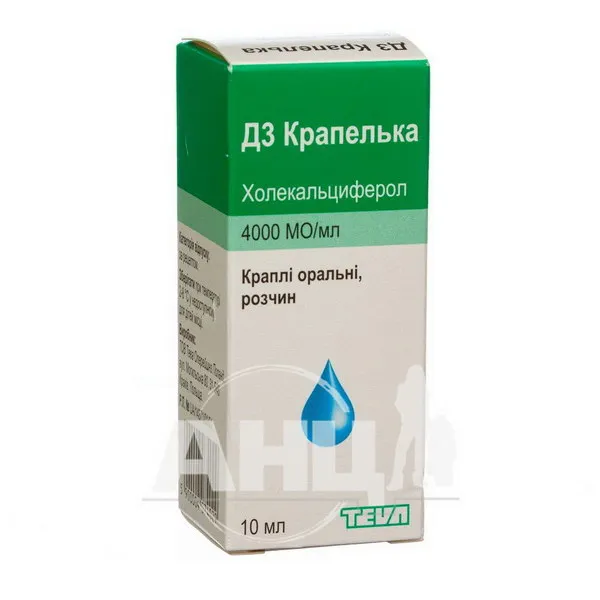
Table of Contents
INSTRUCTION FOR MEDICAL USE OF THE MEDICINAL PRODUCT D3 Krapelka (D3 Krapelka)
Composition:
Active substance: cholecalciferol;
1 ml (20 drops) contains cholecalciferol 4000 IU;
Excipients: methyl parahydroxybenzoate (E 218), butylhydroxytoluene (E 321), polyethylene glycol glyceryl hydroxystearate, macrogol, propylene glycol, citric acid, sodium hydrogen phosphate, purified water.
Pharmaceutical form. Oral drops, solution.
Main physicochemical properties: colorless or light yellow, clear or slightly opalescent solution.
Pharmacotherapeutic group. Vitamin D and its analogues. Cholecalciferol.
ATC code A11CC05.
Pharmacological Properties
Pharmacodynamics
The medicinal product D3 Krapelka, oral drops, solution, contains vitamin D3 (cholecalciferol) in an aqueous solution.
Vitamin D3 is the active antirachitic factor. The most important function of vitamin D is the regulation of calcium and phosphate metabolism, promoting proper mineralization and skeletal growth.
Vitamin D3 is a natural form of vitamin D. It is characterized by a 25% higher activity compared to vitamin D2. It is essential for the function of the parathyroid glands, intestines, kidneys, and skeletal system. Vitamin D plays a significant role in the absorption of calcium and phosphates from the intestine, in the transport of mineral salts, and in the process of bone calcification, as well as in regulating the renal excretion of calcium and phosphates. Together with parathyroid hormone and calcitonin, it regulates the concentration of calcium and phosphates in the blood. The concentration of calcium ions affects several important biochemical processes that maintain skeletal muscle tone, participate in nerve impulse conduction, and influence blood coagulation. Vitamin D3 also participates in immune system function by influencing the production of lymphokines.
Deficiency of vitamin D3 in the diet, reduced absorption, calcium deficiency, as well as lack of exposure to sunlight during periods of rapid growth in children lead to rickets; in adults, to osteomalacia; and in pregnant women, to symptoms of tetany and impaired enamel formation in infants.
Women during menopause, who are frequently affected by osteoporosis due to hormonal disturbances, require an increased dose of vitamin D3.
Pharmacokinetics
Absorption. Vitamin D is well absorbed from the duodenum and the proximal segment of the small intestine.
Distribution. In blood serum, vitamin D binds to a specific protein and is transported to the liver.
Metabolism. Vitamin D undergoes metabolism in two stages: first in the liver, then in the kidneys. In the liver, vitamin D undergoes initial hydroxylation to form 25-hydroxycholecalciferol, followed by further hydroxylation in the renal cortical cells to form 1,25-dihydroxycholecalciferol (a substance considered a hormone). It is stored for a prolonged period primarily in the liver, other fat depots, and muscle tissue.
Excretion. It is slowly released from depots and from the skin (where it is formed due to sunlight or ultraviolet radiation). The action of vitamin D begins relatively quickly, within 2–6 hours, and lasts for 3–5 days.
Vitamin D, together with its metabolites, is primarily excreted with bile into feces, and only a small amount is excreted in urine.
Clinical characteristics.
Indications.
- Prophylaxis of rickets;
- prophylaxis of vitamin D3 deficiency in high-risk patients without malabsorption disorders;
- supportive treatment of osteoporosis;
- prophylaxis of rickets in premature newborns;
- prophylaxis of vitamin D3 deficiency in malabsorption;
- treatment of rickets and osteomalacia;
- treatment of hypoparathyroidism.
Contraindications.
Hypersensitivity to the active substance or to any other component of the medicinal product. Hypercalcemia and/or hypercalciuria, hypervitaminosis D, nephrolithiasis. Pseudohypoparathyroidism (vitamin D requirement may be lower than during normal vitamin sensitivity). Administration of vitamin D may lead to overdose.
Interaction with other medicinal products and other types of interactions.
Concomitant use of vitamin D3 and medicinal products containing large amounts of calcium, or thiazide diuretics, increases the risk of hypercalcemia.
Cholestyramine, colestipol, neomycin, and mineral oils reduce absorption of vitamin D3 from the gastrointestinal tract.
Anticonvulsants (phenytoin, barbiturates) may reduce the effects of vitamin D3.
Administration of vitamin D3 with antacids containing aluminum or magnesium may cause hypermagnesemia.
The medicinal product D3 Krapelka increases the toxicity of cardiac glycosides; therefore, monitoring of serum and urine calcium levels and ECG is necessary.
Rifampicin and isoniazid may reduce the effect of the medicinal product due to increased biotransformation.
Ketoconazole may reduce biosynthesis and catabolism of 1,25(OH)2-cholecalciferol.
Concomitant administration of vitamin D3 with metabolites or analogs of vitamin D is possible only exceptionally and only with monitoring of serum calcium levels (increased risk of toxic effects).
Concomitant use with medicinal products containing high doses of calcium or phosphorus increases the risk of hyperphosphatemia.
Vitamin D may antagonize medicinal products used in hypercalcemia, such as calcitonin, etidronate, pamidronate.
Concomitant use with weight-loss agents (orlistat) and cholesterol-lowering agents may reduce absorption of vitamin D and other fat-soluble vitamins.
Special precautions for use.
Infants may be more sensitive to the effects of vitamin D3; therefore, the medicinal product should be prescribed with caution in this age group.
Vitamin D should be prescribed with caution to patients with impaired renal function and renal stones, as well as to cardiac patients due to an increased risk of hypercalcaemia. The medicinal product should be used with caution in patients with impaired renal function. Long-term use of the medicinal product requires monitoring of renal function by measuring serum creatinine levels.
Due to the possibility of excessive intake of cholecalciferol (vitamin D3), the total daily intake of vitamin D from all sources should be taken into account (other vitamin preparations, vitamin D-fortified milk, fish oil, fish, and eggs). Combined therapy with vitamin D or calcium should be administered only under medical supervision and with monitoring of serum and urinary calcium levels.
The medicinal product should be used with caution in patients undergoing treatment with thiazide derivatives, cardiac glycosides, and in immobilized patients (risk of developing hypercalcaemia and hypercalciuria).
The medicinal product should be used with particular caution in patients with sarcoidosis due to the risk of accelerated conversion of vitamin D into its active metabolite. Serum and urinary calcium levels should be monitored.
In pseudohypoparathyroidism, special attention should be paid to symptoms of intoxication, which may reflect a normal sensitivity response to vitamin D administration and may require adjustment of the dose.
In pseudohypoparathyroidism that has developed after surgical treatment of the thyroid gland, the use of the drug should be discontinued until recovery of parathyroid gland function to prevent vitamin D intoxication.
The medicinal product should be used with particular caution in infants born with a small anterior fontanelle.
The formulation contains methylparahydroxybenzoate (E 218), which may cause allergic reactions (possibly delayed).
Children. Serum calcium levels should be monitored during prolonged administration of daily doses of vitamin D exceeding 1000 IU.
Use during pregnancy or breastfeeding.
Due to increased requirements for vitamin D, this medicinal product is used in women during pregnancy and breastfeeding; however, the recommended dose should not be exceeded.
Vitamin D3 is excreted in breast milk, and this should be taken into account when administering additional vitamin D to infants.
Ability to influence reaction speed when driving vehicles or operating machinery.
There are no data on the effect of the medicinal product on the ability to drive vehicles or operate machinery. However, considering the possibility of adverse reactions affecting the nervous system, caution is recommended.
Dosage and Administration
The medicinal product is administered orally. 1 ml of solution contains approximately 20 drops.
1 drop contains about 200 IU of cholecalciferol. Drops should be added to a teaspoon of juice or milk.
Children
Prophylaxis of rickets
Infants up to 1 year: 2–5 drops (400–1000 IU) daily, depending on physician's recommendation.
Children from 1 year of age: 2 drops (400 IU) daily.
Vitamin D deficiency
Infants up to 1 year: 2–5 drops (400–1000 IU) daily, depending on physician's recommendation.
Children from 1 year of age and adolescents (up to 18 years): 3–5 drops (600–1000 IU) daily, depending on physician's recommendation.
Adults
Pregnant and breastfeeding women: 2 drops (400 IU) daily.
Vitamin D deficiency: 7–10 drops (1500–2000 IU) daily, depending on physician's recommendation.
Osteoporosis prophylaxis: 2–5 drops (400–1000 IU) daily.
The total daily dose of vitamin D should not exceed 1000 IU for both children and pregnant or breastfeeding women.
Children. The medicinal product can be used in children from birth.
Overdose.
Symptoms of overdose may occur at various doses of vitamin D, depending on individual patient characteristics.
In adults, symptoms of overdose may occur when taking 20,000–60,000 IU/day or more for several weeks or months, and in children—when taking 2,000–4,000 IU/day for several months, as well as after a single large intake of the medicinal product.
Symptoms. Chronic vitamin D3 overdose results in hypercalcemia. Early symptoms include constipation, nausea, vomiting (more common in children), diarrhea, dry mouth, thirst, loss of appetite, weakness, headache, frequent urination, drowsiness, photophobia, pancreatitis, rhinorrhea, hyperthermia, decreased libido, conjunctivitis, hypercholesterolemia, increased transaminase activity, cardiac arrhythmia, and uremia. Common symptoms are: muscle and joint pain, headache, weight loss.
In severe cases, corneal clouding may occur; rarely, optic disc edema, uveitis, and even cataract development.
Hypercalcemia may lead to generalized calcification of blood vessels, kidneys, and other soft tissues, resulting in arterial hypertension, heart or kidney failure. In children, growth retardation may occur. Cholestatic jaundice may rarely develop.
Treatment. Vitamin D3 intake should be discontinued, and a calcium-free diet and high fluid intake should be maintained. These measures are usually sufficient, but vitamin D can be stored in fatty tissue, and symptoms of overdose may persist for several weeks after discontinuation. Such patients may be treated with glucocorticoids; only severe hypercalcemia requires intensive therapy. With normal kidney function, calcium levels can be significantly reduced by intravenous infusion of sodium chloride solution (3–6 liters within 24 hours) with addition of furosemide. In some cases, 15 mg/kg body weight per hour of sodium edetate should also be administered, with continuous monitoring of calcium levels and ECG. In cases of oligo-anuria, hemodialysis is required instead. There is no specific antidote.
Side effects.
Generally, no adverse reactions are observed when used at recommended doses.
In cases of individual hypersensitivity to the drug, which is rare, or due to prolonged use of excessively high doses, vitamin D toxicity (hypercalcemia) may occur.
Cardiovascular system: arrhythmia, hypertension.
Gastrointestinal tract: loss of appetite, nausea, vomiting, constipation, colic (including exacerbation of colic), flatulence, abdominal pain, spasms, dyspepsia, dry mouth, diarrhea.
Nervous system: headache, psychiatric disturbances, depression, drowsiness.
Urinary system: elevated calcium levels in blood and/or urine, nephrolithiasis and tissue calcification, polyuria, uremia.
Skin: allergic reactions, including urticaria, rash, pruritus.
Musculoskeletal system: muscle and joint pain, muscle weakness.
Eyes: conjunctivitis, photophobia.
Metabolism and nutrition: hypercholesterolemia, weight loss, polydipsia, increased sweating, pancreatitis.
Hepatobiliary system: increased aminotransferase activity.
Psychiatric disorders: decreased libido.
There have also been reports of rhinorrhea and hyperthermia.
Shelf life. 3 years.
Storage conditions. Store at 2–8 °C in a place inaccessible to children.
Packaging. 10 ml in a dropper bottle, 1 dropper bottle per carton.
Prescription status. Prescription only.
Manufacturers. Teva Pharmaceuticals Poland Sp. z o.o.
Teva Czech Industries s.r.o.
Manufacturer's address and place of business.
80 Mogilska Street, 31-546 Kraków, Poland.
305/29 Ostravská Street, Komárov, 747 70 Opava, Czech Republic.