Buprenorphine
Ukraine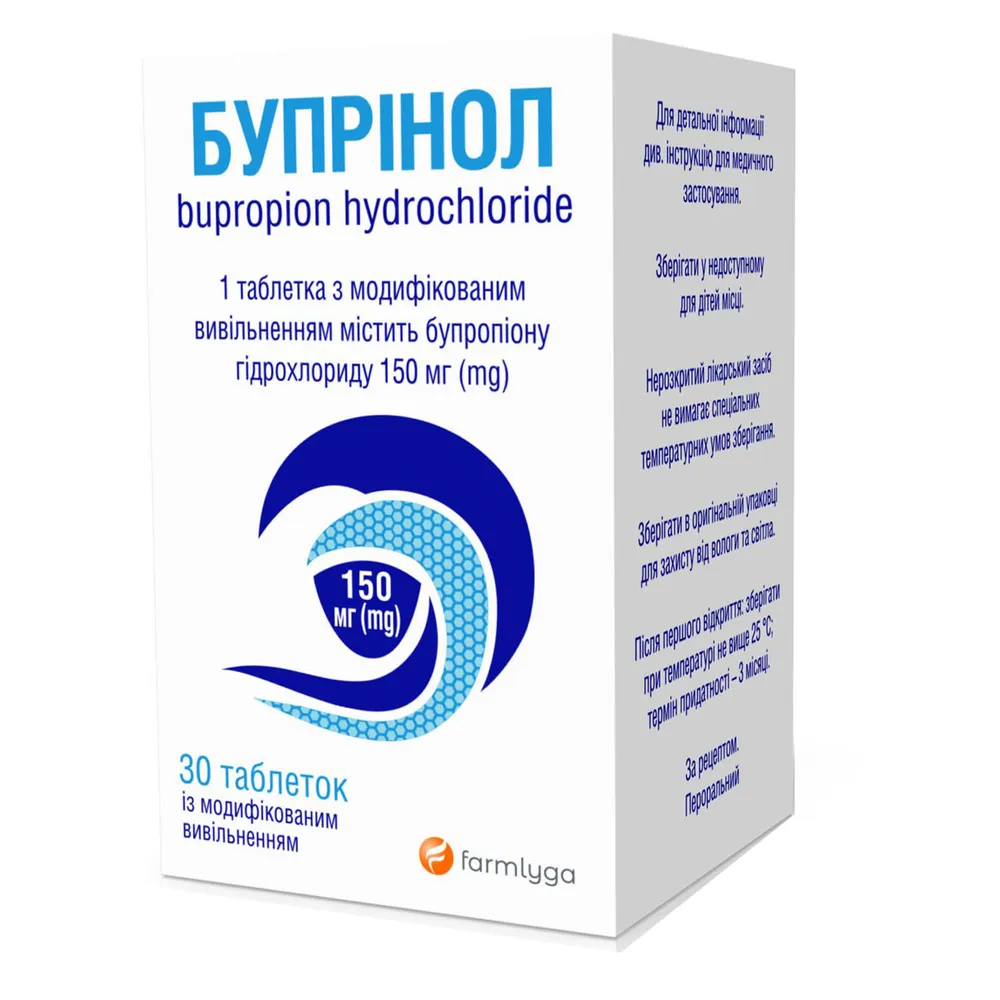
Table of Contents
INSTRUCTIONS FOR MEDICAL USE OF THE MEDICINAL PRODUCT BUPRINOL (BUPRINOL)
Composition:
Active substance: bupropion hydrochloride;
One modified-release tablet contains 150 mg of bupropion hydrochloride;
Excipients: hydroxypropyl cellulose (Klucel EXF); microcrystalline silicified cellulose (ProSolv® SMCC 90); stearic acid 50; magnesium stearate;
Prolonged-release coating: Opadry White, 29A18501 (ethylcellulose, hydroxypropyl cellulose, titanium dioxide (E 171), triethyl citrate);
Modified-release coating: methacrylic acid – ethyl acrylate copolymer (1:1) (Eudragit L-100-55); triethyl citrate; talc.
Pharmaceutical form. Modified-release tablets.
Main physicochemical characteristics: round, biconvex, film-coated tablets of creamy-white to pale yellow color, 8.13 ± 0.4 mm in diameter.
Pharmacotherapeutic group. Other antidepressants. ATC code N06AX12.
Pharmacological Properties
Pharmacodynamics
Bupropion is a selective inhibitor of neuronal reuptake of catecholamines (norepinephrine and dopamine) with minimal effect on reuptake of indoleamines (serotonin) and without inhibition of monoamine oxidase (MAO). The antidepressant effect of bupropion is believed to be mediated through noradrenergic and/or dopaminergic mechanisms.
Pharmacokinetics
Absorption
Following a single 300 mg oral dose of bupropion hydrochloride administered once daily as modified-release tablets to healthy volunteers, the maximum plasma concentration (Cmax) was approximately 160 ng/mL, reached at about 5 hours. At steady state, the Cmax and area under the plasma concentration-time curve (AUC) of hydroxybupropion exceed those of bupropion by approximately 3 and 14 times, respectively. The Cmax of threohydrobupropion at steady state is similar to that of bupropion, while its AUC is about 5 times higher; erythrohydrobupropion plasma concentrations are comparable to those of bupropion. Peak plasma levels of hydroxybupropion are reached at 7 hours, whereas peak levels of threohydrobupropion and erythrohydrobupropion occur at 8 hours. The AUC and Cmax values of bupropion and its active metabolites hydroxybupropion and threohydrobupropion increase proportionally with dose within the single-dose range of 50–200 mg and the multiple-dose range of 300–450 mg/day.
Absolute bioavailability of bupropion is unknown; however, urinary excretion data indicate that at least 87% of the bupropion dose is absorbed.
Administration of bupropion as modified-release tablets taken with food does not significantly affect drug absorption.
Distribution
Bupropion is widely distributed, with a volume of distribution of approximately 2000 L.
Bupropion, hydroxybupropion, and threohydrobupropion are moderately bound to plasma proteins (84%, 77%, and 42%, respectively).
Bupropion and its metabolites are excreted into human breast milk. Animal studies show that bupropion and its active metabolites cross the blood-brain barrier and placenta. Positron emission tomography (PET) studies in healthy volunteers demonstrate that bupropion penetrates the central nervous system (CNS) and binds to the striatal dopamine reuptake transporter (approximately 25% occupancy at 150 mg twice daily).
Metabolism
Bupropion is extensively metabolized in humans. Three pharmacologically active metabolites have been identified in plasma: hydroxybupropion and the amino alcohol isomers threohydrobupropion and erythrohydrobupropion. These may have clinical significance, as their plasma concentrations are as high or higher than those of bupropion. The active metabolites are further metabolized to inactive compounds (some of which are not fully characterized but may include conjugates) and excreted in urine.
In vitro studies indicate that bupropion is metabolized primarily to its major active metabolite hydroxybupropion mainly via CYP2B6, with minor contributions from CYP1A2, 2A6, 2C9, 3A4, and 2E1. In contrast, formation of threohydrobupropion involves carbonyl reduction and does not involve cytochrome P450 isoenzymes (see section "Interaction with other medicinal products and other forms of interaction").
The inhibitory potential of threohydrobupropion and erythrohydrobupropion on cytochrome P450 enzymes has not been studied.
Bupropion and hydroxybupropion are inhibitors of the CYP2D6 isoenzyme, with Ki values of 21 and 13.3 μM, respectively (see section "Interaction with other medicinal products and other forms of interaction").
Studies have shown that bupropion induces its own metabolism in animals after subchronic administration. In humans, there is no evidence of enzyme induction by bupropion or hydroxybupropion in healthy volunteers or patients receiving recommended doses of bupropion hydrochloride for 10–45 days.
Elimination
In humans, after oral administration of 200 mg of 14C-bupropion, 87% and 10% of the radioactive dose were recovered in urine and feces, respectively. The fraction of unchanged bupropion excreted was only 0.5%, consistent with extensive metabolism. Less than 10% of the 14C dose was excreted in urine as active metabolites.
The mean apparent clearance after oral administration of bupropion hydrochloride is approximately 200 L/h, and the mean elimination half-life (T½) of bupropion is approximately 20 hours.
The T½ of hydroxybupropion is approximately 20 hours. The T½ of threohydrobupropion and erythrohydrobupropion is longer (37 and 33 hours, respectively), and their steady-state AUC values are 8 and 1.6 times higher than that of bupropion, respectively. Steady-state concentrations of bupropion and its metabolites are achieved within 8 days.
The insoluble tablet shell of the modified-release formulation may remain intact as it passes through the gastrointestinal tract (GIT) and be excreted in feces.
Special Patient Populations
Elderly Patients
Pharmacokinetic studies in elderly humans have yielded mixed results. A single-dose study showed that the pharmacokinetics of bupropion and its metabolites in elderly subjects do not differ from those in younger individuals. Another pharmacokinetic study with single and multiple doses indicated that accumulation of bupropion and its metabolites may occur to a greater extent in the elderly. Clinical experience has not revealed differences in tolerability between elderly and younger patients, but increased sensitivity in the elderly cannot be ruled out (see section "Special Warnings and Precautions for Use").
Patients with Renal Impairment
Elimination of bupropion and its main active metabolites may be reduced in patients with impaired renal function. Limited data in patients with end-stage renal disease or moderate to severe renal impairment suggest that exposure to bupropion and/or its metabolites may be increased (see section "Special Warnings and Precautions for Use").
Patients with Hepatic Impairment
The pharmacokinetics of bupropion and its active metabolites did not differ statistically significantly in patients with mild to moderate hepatic cirrhosis compared to healthy volunteers, although there was high inter-individual variability (see section "Special Warnings and Precautions for Use"). In patients with severe hepatic cirrhosis, Cmax and AUC of bupropion were significantly higher (mean differences of approximately 70% and 3-fold, respectively) and more variable compared to healthy volunteers; the mean T½ was also longer (approximately 40%). For hydroxybupropion, mean Cmax was lower (approximately 70%), AUC was generally higher (approximately 30%), median Tmax was delayed (approximately 20 hours), and mean T½ was longer (approximately 4-fold) compared to healthy volunteers. For threohydrobupropion and erythrohydrobupropion, mean Cmax was generally lower (approximately 30%), AUC was generally higher (approximately 50%), median Tmax was delayed (approximately 20 hours), and mean T½ was longer (approximately 2-fold) compared to healthy volunteers (see section "Contraindications").
In vitro release of bupropion with alcohol
In vitro tests have shown that at high alcohol concentrations (up to 40%), bupropion is released more rapidly from the modified-release formulation (up to 20% dissolved within 2 hours) (see section "Interaction with other medicinal products and other forms of interaction").
Clinical characteristics.
Indications.
Buprinol is indicated for the treatment of depressive episodes (major depressive disorder).
Contraindications.
The drug is contraindicated:
- In patients with hypersensitivity to bupropion or to any component of the medicinal product;
- In patients receiving any other medicinal product containing bupropion, since the incidence of seizures is dose-dependent, and to avoid overdose;
- In patients with existing seizure disorders or a history of seizures;
- In patients with known central nervous system (CNS) tumors;
- In patients who have at any time abruptly discontinued alcohol or any medicinal product known to be associated with a risk of seizures upon withdrawal (e.g., benzodiazepines and benzodiazepine-like agents);
- In patients with severe hepatic cirrhosis;
- In patients with current or past history of bulimia nervosa or anorexia nervosa;
- Concomitantly with monoamine oxidase inhibitors (MAOIs). At least 14 days must elapse between discontinuation of irreversible MAOIs and initiation of Buprinol therapy. For reversible MAOIs, a 24-hour interval is sufficient.
Interaction with other medicinal products and other forms of interaction.
Since both MAO-A and MAO-B inhibitors also activate catecholaminergic pathways via a mechanism different from that of bupropion, concomitant administration of Buprinol and MAO inhibitors is contraindicated (see section "Contraindications") due to an increased risk of adverse reactions with their combined use. At least 14 days must elapse between discontinuation of irreversible MAOIs and initiation of Buprinol therapy. For reversible MAOIs, a 24-hour interval is sufficient.
Effect of bupropion on other medicinal products
Although bupropion and its main metabolite are not metabolized by the CYP2D6 isoenzyme, hydroxybupropion inhibits the CYP2D6 pathway. Concomitant administration of bupropion and desipramine in healthy volunteers known to be active metabolizers of the CYP2D6 isoenzyme resulted in a significant (2- to 5-fold) increase in Cmax and AUC of desipramine. Inhibition of CYP2D6 persisted for at least 7 days after the last dose of bupropion.
Concomitant therapy with medicinal products having a narrow therapeutic index that are primarily metabolized by CYP2D6 should be initiated at the lower end of the dose range of the concomitant medicinal product. Such medicinal products include: certain antidepressants (e.g., desipramine, imipramine), antipsychotics (e.g., risperidone, thioridazine), beta-blockers (e.g., metoprolol), selective serotonin reuptake inhibitors (SSRIs), and class 1C antiarrhythmics (e.g., propafenone, flecainide). If Buprinol is added to the treatment regimen of a patient already taking such a medicinal product, consideration should be given to reducing the dose of that medicinal product. In these cases, the expected benefit of Buprinol therapy should be carefully weighed against the potential risks.
There are data on potentially life-threatening development of serotonin syndrome with concomitant use of Buprinol and serotonergic agents, such as SSRIs or serotonin-norepinephrine reuptake inhibitors (SNRIs) (see section "Special precautions").
Medicinal products requiring metabolic activation by CYP2D6 (e.g., tamoxifen) may have reduced efficacy when used concomitantly with CYP2D6 inhibitors such as bupropion (see section "Special precautions").
Although citalopram (an SSRI) is primarily not metabolized by CYP2D6, in one study bupropion increased the Cmax and AUC of citalopram by 30% and 40%, respectively.
Concomitant use of digoxin with bupropion may lead to reduced digoxin levels. In one clinical study, AUC0-24 of digoxin was decreased and renal clearance increased in healthy volunteers, based on cross-study comparison. Physicians should be aware that digoxin levels may rise upon discontinuation of bupropion; therefore, patients should be closely monitored for signs of possible digoxin toxicity.
Effect of other medicinal products on bupropion
Bupropion is metabolized to its main active metabolite, hydroxybupropion, primarily by cytochrome P450 CYP2B6 (see section "Pharmacokinetics"). Concomitant use of medicinal products that may affect bupropion metabolism via the CYP2B6 isoenzyme (e.g., CYP2B6 substrates: cyclophosphamide, ifosfamide; and CYP2B6 inhibitors: orphenadrine, ticlopidine, clopidogrel) may lead to increased plasma levels of bupropion and decreased levels of the active metabolite hydroxybupropion. The clinical consequences of inhibition of bupropion metabolism via the CYP2B6 enzyme, and consequently altered bupropion-hydroxybupropion ratio, are currently unknown.
Since bupropion is extensively metabolized, caution is recommended when using bupropion concomitantly with medicinal products known to induce metabolism (e.g., carbamazepine, phenytoin, ritonavir, efavirenz) or inhibit metabolism (e.g., valproate), as this may affect its clinical efficacy and safety.
In a series of studies in healthy volunteers, ritonavir (100 mg twice daily or 600 mg twice daily) or ritonavir 100 mg combined with lopinavir 400 mg, administered twice daily, reduced the exposure of bupropion and its main metabolites by approximately 20–80% in a dose-dependent manner (see section "Pharmacokinetics"). Similarly, efavirenz 600 mg once daily for 2 weeks reduced bupropion exposure by approximately 55% in healthy volunteers. The clinical implications of reduced exposure are unclear but may include reduced efficacy in the treatment of major depression. Patients receiving any of these agents with bupropion may require an increased bupropion dose; however, the maximum recommended dose of bupropion must not be exceeded.
Other interaction information
Buprinol should be used with caution in patients undergoing concomitant therapy with levodopa or amantadine. Limited clinical data suggest a higher incidence of adverse reactions (e.g., nausea, vomiting, and neuropsychiatric disorders – see section "Adverse reactions") in patients taking bupropion concomitantly with levodopa or amantadine.
Although clinical data do not identify a pharmacokinetic interaction between bupropion and alcohol, there have been rare reports of adverse neuropsychiatric events or reduced alcohol tolerance in patients who consumed alcohol during bupropion therapy. Alcohol consumption during bupropion treatment should be minimized or avoided.
Pharmacokinetic studies of bupropion and benzodiazepines used concomitantly have not been conducted.
Based on in vitro metabolic pathways, there is no basis to expect such an interaction. After concomitant administration of bupropion with diazepam in healthy volunteers, sedation was less than with diazepam alone.
Systematic evaluation of the combination of bupropion with antidepressants (other than desipramine and citalopram), benzodiazepines (other than diazepam), or neuroleptics has not been performed. Clinical experience with combination with St. John's wort is also limited.
Concomitant use of bupropion and a nicotine transdermal system (NTS) may lead to increased blood pressure.
Special precautions for use.
Seizures
The recommended dose of bupropion should not be exceeded, as bupropion is associated with a dose-dependent risk of seizures. The overall incidence of seizures in clinical trials with bupropion at doses up to 450 mg/day was approximately 0.1%.
There is an increased risk of seizures with bupropion in the presence of factors that lower the seizure threshold. Therefore, Buprinol should be used with caution in patients with one or more risk factors that lower the seizure threshold.
Prior to initiating Buprinol, an assessment of existing risk factors that may reduce the seizure threshold should be performed for each patient, including:
- Concomitant use of other medicinal products that lower the seizure threshold (e.g., antipsychotics, antidepressants, antimalarials, tramadol, theophylline, systemic corticosteroids, quinolones, and sedating antihistamines).
- Alcohol abuse (see section "Contraindications").
- History of head trauma.
- Diabetes mellitus treated with hypoglycemic agents or insulin.
- Use of stimulants or anorectics.
Treatment with Buprinol should be discontinued and not resumed in patients who experience seizures during treatment.
Interactions (see section "Interaction with other medicinal products and other forms of interaction")
Due to pharmacokinetic interactions, plasma levels of bupropion or its metabolites may change, potentially increasing the risk of adverse reactions (e.g., dry mouth, insomnia, seizures). Therefore, caution should be exercised when bupropion is used concomitantly with medicinal products that may induce or inhibit bupropion metabolism.
Bupropion inhibits metabolism via the cytochrome P450 2D6 isoenzyme. Caution is advised when co-administering medicinal products metabolized by this enzyme.
According to literature data, medicinal products that inhibit CYP2D6 may reduce endoxifen concentrations, the active metabolite of tamoxifen. Therefore, during tamoxifen therapy, bupropion—a CYP2D6 inhibitor—should be avoided if possible (see section "Interaction with other medicinal products and other forms of interaction").
Neuropsychiatric
Suicide/suicidal thoughts or clinical worsening
Depression is associated with an increased risk of suicidal thoughts, suicidal behavior, and suicide (suicide-related events). This risk persists until significant remission occurs. Improvement may not occur for several weeks or longer; therefore, patients should be closely monitored for clinical worsening and suicidal tendencies until such improvement is observed. Clinical experience confirms an increased risk of suicide in the early stages of treatment.
Patients with a history of suicide attempts or those with significant suicidal ideation prior to treatment initiation have an increased risk of suicidal thoughts or suicide attempts and should be closely monitored during treatment. A meta-analysis of placebo-controlled clinical trials of antidepressants showed an increased risk of suicidal behavior in adult patients with psychiatric disorders treated with antidepressants compared to placebo, particularly in patients under 25 years of age.
Treatment with Buprinol, especially during the initial phase of therapy and after dose adjustments, should be accompanied by close monitoring, particularly in high-risk patients. Patients (and caregivers) should be warned to monitor for any worsening of condition, suicidal behavior or thoughts, and unusual changes in behavior. If such symptoms occur, immediate medical advice should be sought.
The emergence of certain neuropsychiatric symptoms may be related to either the underlying disease or treatment.
In patients who develop suicidal thoughts/behavior, consideration should be given to modifying the treatment regimen, including discontinuation of therapy, especially if such symptoms are severe, sudden in onset, or not part of the patient's pre-existing symptomatology.
Neuropsychiatric symptoms, including mania and bipolar disorder
There have been reports of neuropsychiatric symptoms (see section "Adverse reactions"). Psychotic and manic states have been predominantly observed, particularly in patients with a history of psychiatric disorders. Additionally, major depressive disorder may be the initial presentation of bipolar disorder. It is generally believed (although not proven in controlled clinical trials) that treatment of such disorders with a single antidepressant may in itself increase the risk of mixed/mania episodes in patients at risk for bipolar disorder. Limited clinical data on the use of bupropion in combination with mood stabilizers in patients with a history of bipolar disorder suggest a low risk of switching into mania. Prior to initiating antidepressant therapy, patients should be adequately screened to determine if they are at risk for bipolar disorder. This screening should include a detailed psychiatric history, including family history of suicide, bipolar disorder, and depression.
Animal data suggest the potential for bupropion dependence. However, studies on human abuse potential and extensive clinical experience indicate that bupropion has a low potential for abuse.
Clinical experience with bupropion in patients undergoing electroconvulsive therapy (ECT) is limited. Therefore, bupropion should be used with caution in patients receiving ECT.
Hypersensitivity
If hypersensitivity reactions occur during treatment with Buprinol, the drug should be discontinued immediately. The physician should be aware that symptoms may worsen or recur after discontinuation of Buprinol, and symptomatic treatment should be provided for an adequate duration (at least one week). Typical symptoms include skin rash, pruritus, urticaria, or chest pain, but serious adverse reactions may also occur, including angioedema (Quincke's edema), dyspnea/bronchospasm, anaphylactic shock, erythema multiforme, or Stevens-Johnson syndrome. Additionally, arthralgia, myalgia, and fever, together with rash and other symptoms, have been reported, suggesting a delayed-type hypersensitivity reaction (see section "Adverse reactions"). In most patients, symptoms improved and gradually resolved after discontinuation of bupropion and initiation of treatment with antihistamines or corticosteroids.
Cardiovascular disorders
Limited clinical data are available on the treatment of depression with bupropion in patients with cardiovascular diseases. Caution should be exercised when treating this patient group. However, in smoking cessation trials, bupropion was generally well tolerated in patients with ischemic cardiovascular disease.
Blood pressure
In studies of non-depressed patients with stage I hypertension receiving bupropion, no significant increase in blood pressure was observed. However, in clinical practice, hypertension, sometimes severe (see section "Adverse reactions"), requiring emergency treatment, has been reported in patients receiving bupropion. This has occurred both in patients with prior signs of hypertension and in those without prior history.
Baseline blood pressure should be established during initial patient evaluation and monitored regularly, especially in patients with hypertension. Consideration should be given to discontinuing Buprinol if clinically significant increases in blood pressure occur.
Concomitant use of bupropion with nicotine patches may lead to increased blood pressure.
Brugada syndrome
Bupropion may unmask Brugada syndrome, a rare inherited sodium channel cardiac disorder characterized by specific ECG changes (right bundle branch block and ST-segment elevation in right precordial leads), which may lead to cardiac arrest or sudden death.
Special patient groups
Paediatric population
Antidepressant treatment in children and adolescents with major depressive disorders and other psychiatric disorders is associated with an increased risk of suicidal thoughts and behavior.
Patients with hepatic impairment
Bupropion is metabolized in the liver to active metabolites, followed by further metabolism. No statistically significant differences in bupropion pharmacokinetics were observed between patients with mild to moderate hepatic cirrhosis and healthy volunteers. However, plasma bupropion levels showed greater variability among individual patients; therefore, Buprinol should be used with caution in patients with mild to moderate hepatic impairment (see section "Posology and method of administration").
All patients with hepatic impairment should be regularly monitored for possible adverse reactions (e.g., insomnia, dry mouth, seizures), which may indicate elevated levels of bupropion or its metabolites.
Patients with renal impairment
Bupropion is primarily excreted in urine as metabolites. Therefore, bupropion and its active metabolites may accumulate to a greater extent than usual in patients with renal impairment. All patients should be carefully monitored for possible adverse reactions (e.g., insomnia, dry mouth, seizures), which may indicate high levels of the active substance or its metabolites (see section "Posology and method of administration").
Elderly patients
The efficacy of bupropion in elderly patients is inconsistent. In clinical trials, elderly patients followed the same treatment regimen as adult patients, although increased sensitivity in some elderly patients cannot be ruled out.
Effect on urine testing
Since bupropion has a chemical structure similar to amphetamine, it may interfere with certain rapid urine screening methods, potentially leading to false-positive results, particularly for amphetamines. Positive results should usually be confirmed with more specific analytical methods.
Incorrect route of administration
Buprinol is intended for oral use only. Cases of insufflation of crushed tablets or injection of dissolved bupropion have been reported, which may lead to rapid release, rapid absorption, and potential overdose. Seizures and/or fatal outcomes have been reported following intranasal or parenteral administration of bupropion.
Serotonin syndrome
In the post-marketing period, cases of potentially life-threatening serotonin syndrome have been reported with concomitant use of bupropion and serotonergic medicinal products such as SSRIs or SNRIs (see section "Interaction with other medicinal products and other forms of interaction"). If concomitant treatment with other serotonergic agents is clinically justified, close monitoring of the patient is recommended, particularly at the beginning of treatment and when increasing the dose.
Serotonin syndrome may include changes in mental status (e.g., agitation, hallucinations, coma), autonomic instability (e.g., tachycardia, blood pressure fluctuations, hyperthermia), neuromuscular disturbances (e.g., hyperreflexia, incoordination, rigidity), and/or gastrointestinal symptoms (e.g., nausea, vomiting, diarrhea). If serotonin syndrome is suspected, consideration should be given to reducing the dose or discontinuing treatment, depending on the severity of symptoms.
Use during pregnancy or breastfeeding.
Pregnancy
Some epidemiological studies on pregnancy outcomes following bupropion use in the first trimester have shown an association with an increased risk of certain congenital cardiovascular malformations, including ventricular septal defects and left ventricular outflow tract defects. However, these findings are inconsistent across different studies. Animal studies do not indicate a direct or indirect harmful effect regarding reproductive toxicity. Buprinol should not be used during pregnancy unless the woman's clinical condition requires bupropion treatment and there are no alternative treatment options.
Breastfeeding
Bupropion and its metabolites are excreted in human breast milk. The decision to discontinue breastfeeding or to discontinue bupropion therapy should be made considering the benefits of breastfeeding for the newborn/infant and the benefits of bupropion therapy for the mother.
Fertility
There are no data on the effect of bupropion on human fertility. Toxicity studies on reproductive function conducted in rats did not demonstrate a negative effect on fertility.
Ability to affect reaction speed when driving or operating machinery.
Like other medicinal products affecting the CNS, bupropion may impair the ability to perform tasks requiring heightened attention and motor coordination. Therefore, patients should exercise caution when driving or operating machinery until they are certain that Buprinol does not affect their attention or motor coordination.
Method of Administration and Dosage
Dosage
Adults
The recommended initial dose is 150 mg once daily. The optimal dose has not been established in clinical trials. If no improvement is observed after 4 weeks of treatment with 150 mg of Buprinol, the dose may be increased to 300 mg once daily. There should be an interval of at least 24 hours between consecutive doses of the drug.
The onset of bupropion's effect was observed 14 days after the start of therapy. As with all other antidepressants, the full antidepressant effect of Buprinol becomes evident only after several weeks of treatment.
Patients with depression should receive treatment for a sufficient duration, at least 6 months, to ensure that their symptoms have fully resolved.
Insomnia is a common, transient adverse reaction. The occurrence of insomnia may be reduced by avoiding administration of the drug before bedtime (provided that the interval between doses remains at least 24 hours).
Switching Patients from Extended-Release Bupropion Tablets for Depression Treatment
When switching patients from extended-release bupropion tablets taken twice daily to Buprinol, the same total daily dose should be prescribed whenever possible.
Pediatric Population
Buprinol is not indicated for use in children or adolescents under 18 years of age (see section "Special Warnings and Precautions for Use"). The safety and efficacy of Buprinol in patients under 18 years of age have not been established.
Elderly Patients
The drug has shown inconsistent efficacy in elderly patients. In clinical trials, elderly patients followed the same dosing regimen as adult patients. Increased sensitivity in some elderly patients cannot be ruled out.
Patients with Hepatic Impairment
Buprinol should be used with caution in patients with hepatic impairment (see section "Special Warnings and Precautions for Use").
Due to increased pharmacokinetic variability in patients with mild to moderate hepatic impairment, the recommended dose for these patients is 150 mg once daily.
Patients with Renal Impairment
The recommended dose for patients with renal impairment is 150 mg once daily, as bupropion and its active metabolites may accumulate to a greater extent than usual in such patients (see section "Special Warnings and Precautions for Use").
Method of Administration
Tablets should be swallowed whole. Tablets must not be cut, crushed, or chewed, as this may increase the risk of adverse reactions, including seizures.
Buprinol may be taken regardless of food intake.
Discontinuation of Treatment
Although withdrawal symptoms were not systematically observed but only reported spontaneously in clinical trials with bupropion, gradual discontinuation should be considered. Bupropion selectively inhibits neuronal reuptake of catecholamines; therefore, withdrawal symptoms cannot be excluded.
Children
Buprinol is not indicated for use in children or adolescents under 18 years of age (see section "Special Warnings and Precautions for Use"). The safety and efficacy of bupropion in patients under 18 years of age have not been established.
Overdose
Cases of overdose exceeding the maximum therapeutic dose by up to 10 times have been reported. In addition to adverse reactions already reported, overdose led to symptoms such as somnolence, loss of consciousness, and/or electrocardiographic (ECG) changes such as conduction disturbances (including QRS interval prolongation), arrhythmia, and tachycardia. QT interval prolongation has also been reported, although it usually occurred in conjunction with QRS prolongation and increased heart rate.
Although most patients recovered without complications, rare fatal outcomes associated with bupropion use have been reported in patients who ingested high doses of the drug.
Treatment: hospitalization is recommended in case of overdose. ECG and vital signs should be monitored. Adequate airway patency, oxygenation, and ventilation must be ensured. Activated charcoal is recommended. There is no specific antidote for bupropion. Further patient management should be based on clinical indications.
Adverse Reactions
The adverse reactions listed below were identified in clinical experience and are classified by frequency of occurrence and by system organ classes. Adverse reactions are categorized by frequency as follows: very common (≥1/10); common (≥1/100, <1/10); uncommon (≥1/1000, <1/100); rare (≥1/10000, <1/1000); very rare (<1/10000); frequency not known (cannot be estimated from available data).
| Disorders of blood and lymphatic system |
Frequency unknown |
Anemia, leukopenia, and thrombocytopenia |
| Immune system disorders* |
Common |
Hypersensitivity reactions (hypersensitivity), such as urticaria |
| Very rare |
More severe hypersensitivity reactions, including angioedema, dyspnea/bronchospasm, and anaphylactic shock. |
|
| Metabolism and nutrition disorders |
Common |
Anorexia |
| Uncommon |
Weight loss |
|
| Very rare |
Disorders of glycaemia |
|
| Frequency unknown |
Hypnatremia |
|
| Psychiatric disorders |
Very common |
Insomnia (see section "Dosage and administration") |
| Common |
Agitated state, fear |
|
| Uncommon |
Depression (see section "Special precautions"), confusion |
|
| Very rare |
Aggression, hostile behavior, irritability, feeling of anxiety, hallucinations, unusual dreams including nightmares, depersonalization, delirium, paranoid thoughts |
|
| Frequency unknown |
Suicidal thoughts and suicidal behavior***, psychosis |
|
| Nervous system disorders |
Very common |
Headache |
| Common |
Tremor, dizziness, taste disturbances |
|
| Uncommon |
Attention disturbances |
|
| Rare |
Seizures (see note below)** |
|
| Very rare |
Dystonia, ataxia, parkinsonism, coordination disturbances, memory impairment, paresthesia, syncope |
|
| Frequency unknown |
Serotonin syndrome**** |
|
| Eye disorders |
Common |
Visual disturbances |
| Ear and labyrinth disorders |
Common |
Tinnitus |
| Cardiac disorders |
Uncommon |
Tachycardia |
| Very rare |
Pounding heartbeat |
|
| Vascular disorders |
Common |
Significant increase in blood pressure, hot flushes |
| Very rare |
Vasodilation, orthostatic hypotension |
|
| Gastrointestinal disorders |
Very common |
Dry mouth, gastrointestinal disturbances including nausea and vomiting |
| Common |
Abdominal pain, constipation |
|
| Hepatobiliary disorders |
Very rare |
Elevated liver enzymes, jaundice, hepatitis |
| Skin and subcutaneous tissue disorders |
Common |
Rash, pruritus, sweating |
| Very rare |
Multiform erythema, Stevens-Johnson syndrome, exacerbation of psoriasis |
|
| Frequency unknown |
Exacerbation of systemic lupus erythematosus, cutaneous lupus erythematosus. |
|
| Musculoskeletal and connective tissue disorders |
Very rare |
Muscle twitching |
| Renal and urinary disorders |
Very rare |
Changes in frequency of urination and/or urinary retention, urinary incontinence |
| General disorders and administration site conditions |
Common |
Fever, chest pain, asthenia |
*Hypersensitivity may manifest as skin reactions. See "Immune system disorders" and "Skin and subcutaneous tissue disorders".
**The incidence of seizures is approximately 0.1% (1/1000). The most common type of seizure is generalized tonic-clonic seizures. This type of seizure may in some cases lead to post-ictal confusion or memory impairment (see section "Special warnings and precautions for use").
***Cases of suicidal thoughts and suicidal behaviour have been reported during treatment with bupropion or shortly after treatment discontinuation (see section "Special warnings and precautions for use").
****Serotonin syndrome may occur as a result of interaction between bupropion and serotonergic medicinal products, such as SSRIs or SNRIs (see section "Interaction with other medicinal products and other forms of interaction").
Reporting of suspected adverse reactions
Reporting suspected adverse reactions after authorization of the medicinal product is important. It allows continued monitoring of the benefit-risk balance of the medicinal product. Healthcare professionals are asked to report any suspected adverse reactions via the national reporting system.
Shelf life.
3 years. After first opening: 3 months.
Storage conditions.
The unopened medicinal product does not require special storage temperature conditions. Store in the original packaging to protect from moisture and light. Keep out of reach and sight of children.
After first opening: store at a temperature not exceeding 25 °C.
Packaging.
30 modified-release tablets in a plastic container; 1 container in a cardboard box.
Prescription status.
Prescription only.
Manufacturer.
BALKANPHARMA – DUPNITSA AD.
Manufacturer's address and place of business.
3 Samokovsko Shosse Str., Dupnitsa, 2600, Bulgaria.
Marketing Authorization Holder.
UAB “Farmlyga”.
Address of the Marketing Authorization Holder.
Antakalnio g. 48A-304, Vilnius, Republic of Lithuania.