Bupren® ic
Ukraine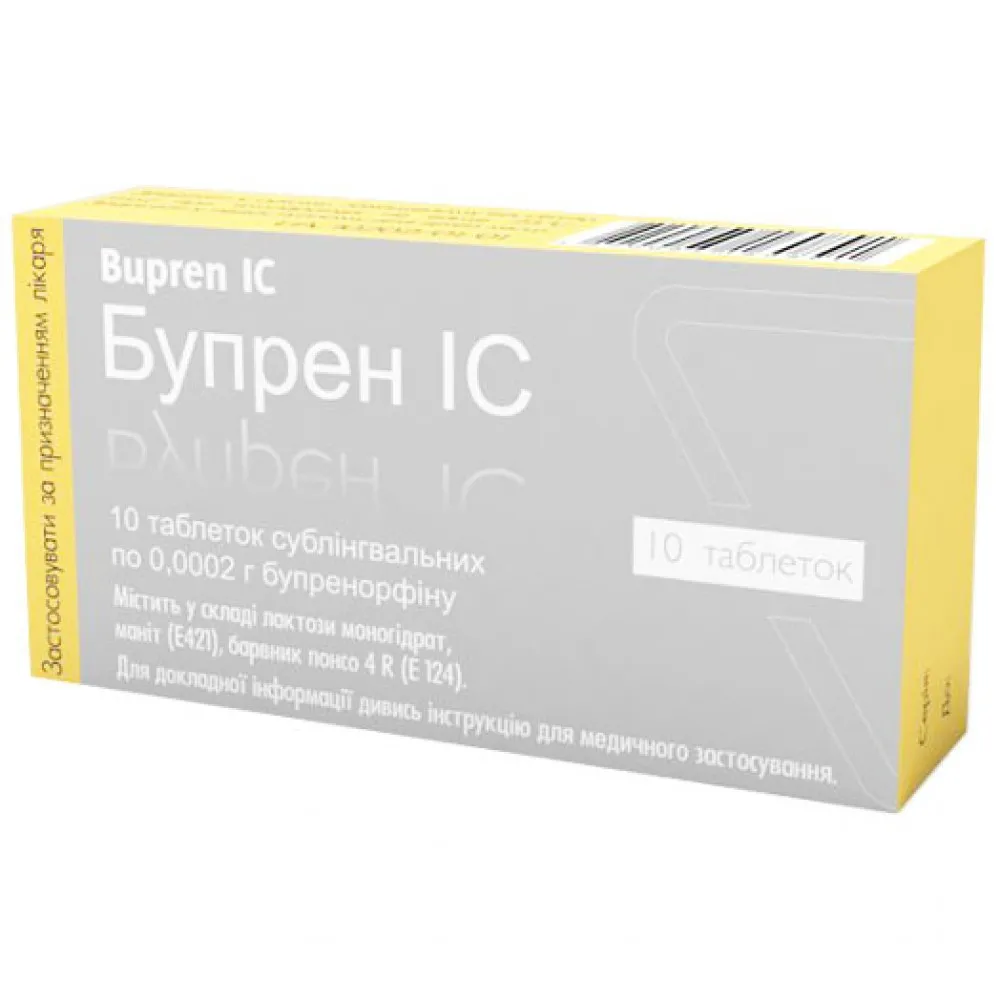
Table of Contents
INSTRUCTIONS FOR MEDICAL USE OF THE MEDICINAL PRODUCT BUPREN® IS (BUPREN IS)
Composition:
Active substance: buprenorphine;
One tablet contains buprenorphine hydrochloride (calculated as buprenorphine) 0.2 mg (0.0002 g) or 0.4 mg (0.0004 g);
Excipients: lactose monohydrate, mannitol (E 421), potato starch, citric acid monohydrate, sodium citrate, povidone, sodium starch glycolate (type A), polyethylene glycol (macrogol), talc, calcium stearate; Ponceau 4R (E 124) – for the 0.2 mg dosage.
Pharmaceutical form. Sublingual tablets.
Main physicochemical properties: tablets of pale pink (0.2 mg dosage) or white (0.4 mg dosage) color, flat cylindrical shape, with bevelled edges; the company trademark is imprinted on one side of the tablet, a score line on the other side.
Pharmacotherapeutic group.
Analgesics. Opioids. Orvinol derivatives. Buprenorphine.
ATC code N02A E01.
Pharmacological Properties
Pharmacodynamics
Buprenorphine is a centrally-acting opioid analgesic. In terms of its mechanism of action, it belongs to the group of partial agonists/antagonists of opioid receptors (μ- and κ-receptors). Its binding to μ-receptors is so strong that buprenorphine blocks the effects of other agonists. At the same time, buprenorphine's intrinsic activity at μ-receptors is very low, and no activity at κ-receptors has been demonstrated. Buprenorphine activates the antinociceptive system, thereby interfering with interneuronal transmission of pain impulses at various levels of the central nervous system (CNS) and altering the emotional perception of pain. The duration of analgesic effect is longer than that of morphine. Buprenorphine suppresses the respiratory center to a lesser extent than morphine. With prolonged use, the risk of developing drug dependence is significantly lower with buprenorphine than with morphine. The partial agonist activity of buprenorphine reduces its suppressive effects on cardiac and respiratory functions, thereby increasing the safety of its use.
Pharmacokinetics
Following oral administration, buprenorphine undergoes presystemic metabolism in the small intestine and liver via N-dealkylation and glucuronidation. Therefore, oral administration of the drug is not advisable. After sublingual administration, absorption is very slow, with bioavailability ranging from 35% to 55%. Buprenorphine is evenly distributed in body tissues and penetrates the blood-brain barrier. Onset of action after sublingual administration occurs within 30 minutes; maximum plasma concentration is reached within 90 minutes. Plasma protein binding reaches 96%. The dose–concentration relationship remains linear within the dose range of 2 mg to 16 mg. Following absorption, a rapid distribution phase occurs, with a half-life of 2 to 5 hours.
Buprenorphine is metabolized primarily in the liver via 14-N-dealkylation to 14-N-desalkylbuprenorphine (nor-buprenorphine) by CYP3A4, as well as by glucuronidation of the parent molecule and the dealkylated metabolite. Nor-buprenorphine is a μ-agonist with weak intrinsic activity.
Elimination of buprenorphine follows a bi- or triexponential pattern. The elimination phase lasts 20 to 25 hours, which is attributed to reabsorption of buprenorphine in the intestine following hydrolysis of conjugated metabolites, as well as the high lipophilicity of the buprenorphine molecule. Elimination of buprenorphine (approximately 80%) occurs primarily via feces as a result of biliary excretion of glucuronidated metabolites; the remainder of the drug is excreted in urine.
Clinical characteristics.
Indications.
Acute and chronic high-intensity pain syndrome (in cancer patients, after surgical interventions, in myocardial infarction, burns, renal colic).
Contraindications.
Hypersensitivity to buprenorphine and other components of the medicinal product, respiratory dysfunction, cardiac failure, hepatic and renal insufficiency, head injuries, acute alcohol intoxication, opioid dependence.
Interaction with other medicinal products and other forms of interaction.
Alcohol
Ethanol enhances the sedative effect of buprenorphine. Buprenorphine should not be taken together with alcoholic beverages or medicinal products containing ethanol.
Concomitant use of medicinal products that should be considered
Benzodiazepine tranquilizers
Concomitant use of buprenorphine with benzodiazepines is associated with a risk of fatal outcome due to respiratory depression associated with CNS function impairment. Dose titration should be individual, and the patient's condition should be closely monitored. The risk of drug abuse should be considered.
Other CNS depressants
Other opioid derivatives (analgesics, antitussives), certain antidepressants, antihistamines (H1-receptor blockers), barbiturates, non-benzodiazepine anxiolytics, neuroleptics, clonidine, and similar medicinal products, when used concomitantly with buprenorphine, may enhance CNS depression.
Serotonergic medicinal products
Buprenorphine should be used cautiously in combination with serotonergic medicinal products such as monoamine oxidase inhibitors (MAOIs), selective serotonin reuptake inhibitors (SSRIs), serotonin-norepinephrine reuptake inhibitors, tricyclic antidepressants, due to an increased risk of developing serotonin syndrome, a potentially life-threatening condition (see section "Special precautions for use").
Monoamine oxidase inhibitors (MAOIs)
Based on experience with morphine, a possible enhancement of opioid effects is known when used in combination with MAO inhibitors.
To date, no significant interaction between buprenorphine and cocaine has been identified.
Buprenorphine is metabolized by CYP3A4.
CYP3A4 inhibitors
Interaction studies between buprenorphine and ketoconazole (a potent CYP3A4 inhibitor) showed increased Cmax and AUC (area under the concentration-time curve) of buprenorphine (approximately by 70% and 50%, respectively) and to a lesser extent norbuprenorphine. When buprenorphine is used concomitantly with ketoconazole, the patient should be closely monitored, and the dose of buprenorphine should be halved at the beginning of ketoconazole treatment. Further dose titration of buprenorphine should be based on clinical response. Thus, co-administration of buprenorphine with potent CYP3A4 inhibitors [such as gestodene, troleandomycin, azole antifungals (ketoconazole, itraconazole), HIV protease inhibitors (ritonavir, indinavir, saquinavir)] may lead to increased plasma concentrations of buprenorphine and norbuprenorphine. Therefore, at the start of treatment with CYP3A4 inhibitors, the need to reduce the buprenorphine dose should be considered.
CYP3A4 inducers
Interaction between buprenorphine and CYP3A4 inducers has not been studied; therefore, careful monitoring of patients who are taking CYP3A4 inducers (phenobarbital, carbamazepine, phenytoin, or rifampicin) concomitantly with buprenorphine is recommended. These medicinal products may enhance the metabolism of buprenorphine; therefore, in patients reporting reduced efficacy of buprenorphine, the dose of buprenorphine should be increased.
Special precautions for use.
The prescribing physician must inform patients about the proper use of the medicinal product.
Diversion
Diversion refers to the transfer of buprenorphine to the illicit market, either directly from patients or from individuals who obtain the medicinal product through theft from patients or pharmacies. Diversion may lead to the emergence of new dependent individuals using buprenorphine as a primary drug, resulting in dependence, risk of overdose, transmission of blood-borne viral infections, respiratory depression, and liver injury.
Respiratory depression
There have been several reports of fatal cases due to respiratory depression associated with improper use of buprenorphine or concomitant use of buprenorphine with CNS depressants (other opioids, benzodiazepines, ethanol).
Sleep-related breathing disorders
Opioids may cause sleep-related breathing disorders, including central sleep apnea and nocturnal hypoxemia. The risk of developing central sleep apnea is dose-dependent. Consideration should be given to reducing the total opioid dose in patients with central sleep apnea.
Hepatitis, hepatic reactions
Cases of acute liver injury have been reported both during clinical trials and in the post-marketing period. A range of abnormalities has been observed, from transient asymptomatic elevations in liver transaminases to hepatic failure. In many cases, underlying liver enzyme disorders, hepatitis B or C virus infection, or concomitant use of other potentially hepatotoxic medicinal products may have contributed to or exacerbated these events. These key factors should be considered before initiating buprenorphine therapy and throughout treatment. If a hepatic reaction of unknown origin is suspected, assess whether buprenorphine is the cause of liver necrosis or jaundice, and discontinue treatment if the patient's clinical condition allows. Liver function should be monitored regularly in all patients.
Serotonin syndrome
Concomitant use of buprenorphine with other serotonergic agents, such as MAO inhibitors, selective serotonin reuptake inhibitors (SSRIs), serotonin-norepinephrine reuptake inhibitors (SNRIs), or tricyclic antidepressants, may result in serotonin syndrome—a potentially life-threatening condition (see section "Interaction with other medicinal products and other forms of interaction").
If concomitant therapy with other serotonergic agents is clinically justified, careful patient monitoring is recommended, particularly at the beginning of treatment and during dose escalation.
Symptoms of serotonin syndrome may include mental status changes, autonomic instability, neuromuscular disturbances, and/or gastrointestinal symptoms.
If serotonin syndrome is suspected, consider reducing the dose or discontinuing therapy depending on the severity of symptoms.
Buprenorphine may cause drowsiness, which may be intensified by other centrally acting agents such as alcohol, tranquilizers, sedatives, and hypnotics.
Buprenorphine may cause orthostatic hypotension.
Animal studies and clinical experience have demonstrated that prolonged use of buprenorphine may lead to opioid dependence, although to a lesser extent than morphine. Discontinuation of the drug may result in withdrawal syndrome, sometimes delayed in onset. Therefore, during treatment, it is essential to consider all surrounding circumstances, maintain control, and adhere strictly to prescribed doses.
Athletes should be advised that the use of buprenorphine leads to a positive result in anti-doping tests.
Safety measures during use
Particular caution is required when using buprenorphine in patients with CNS depression or comorbid conditions such as:
- bronchial asthma (cases of buprenorphine-induced respiratory depression have been reported);
- increased intracranial pressure;
- arterial hypotension;
- prostate hypertrophy;
- urethral stenosis/stricture;
- hypothyroidism, myxedema;
- adrenal insufficiency;
- toxic psychosis;
- alcoholism.
Elderly patients and patients with impaired liver or kidney function, in whom elimination of buprenorphine may be slowed, leading to accumulation and enhanced sedative effects, should be given lower doses.
Use with particular caution in patients receiving monoamine oxidase inhibitors (MAOIs) or other CNS depressants, elderly or debilitated patients, and those receiving concomitant respiratory depressants. Careful dose selection of buprenorphine is necessary in patients taking CYP3A4 inhibitors. Since CYP3A4 inhibitors increase plasma concentrations of buprenorphine, a reduction in buprenorphine dose may be required.
Dental problems
Reports of dental problems, including serious cases, have been received in patients using transmucosal formulations of buprenorphine. Cases of caries (including severe), tooth decay, dental abscesses/infections, tooth erosion, loss of dental fillings, tooth fractures, and tooth loss have been reported (see section "Adverse reactions"). Many of these cases occurred in patients with no prior history of dental problems. Tooth extractions have frequently been required to manage the resulting dental damage. Patients using sublingual buprenorphine tablets should be instructed that, after complete dissolution of the tablet in the oral cavity, they should take a large sip of water, gently swish it around the teeth and gums, and then swallow. Tooth brushing should be avoided for at least 1 hour after administration to prevent mechanical damage to teeth that may occur from brushing. Patients should also be advised to undergo regular dental examinations throughout the entire duration of buprenorphine treatment, including at the initial stages of therapy. If any dental problems arise during sublingual use of buprenorphine, patients should seek immediate dental care.
QTc interval prolongation
Comprehensive studies on the effects of buprenorphine on cardiac function have demonstrated QT interval prolongation of up to 15 ms on electrocardiogram (ECG). This effect is unlikely to be mediated via hERG channels. Based on available data, buprenorphine is unlikely to have proarrhythmic effects when used as monotherapy in patients without risk factors. The risk associated with concomitant use of buprenorphine and other medicinal products that prolong the QT interval is unknown. This information should be considered when evaluating the benefit-risk ratio of buprenorphine use before prescribing it to patients with risk factors such as hypokalemia, severe hypomagnesemia, bradycardia, recent atrial fibrillation, use of digitalis preparations, documented QT prolongation, or asymptomatic long QT syndrome.
Due to the presence of lactose, the medicinal product should not be administered to patients with rare hereditary galactose intolerance, lactase deficiency, or glucose-galactose malabsorption syndrome.
The 0.2 mg dosage form contains a dye that may cause allergic reactions.
Use during pregnancy or breastfeeding.
Currently, there are insufficient clinical data to assess the safety of buprenorphine use during pregnancy; therefore, its use during pregnancy is not recommended.
Buprenorphine passes into breast milk and, at high doses, may suppress lactation. Breastfeeding is not recommended for women taking buprenorphine.
Ability to affect reaction speed when driving or operating machinery.
Patients who drive vehicles or operate machinery should be particularly aware of the risk of drowsiness associated with this medicinal product. This risk is increased when the medicinal product is used concomitantly with alcohol or other CNS depressants.
Method of Administration and Dosage
The medicinal product is intended for use in adults and children aged 16 years and older.
Administer sublingually. The tablet should not be swallowed or chewed. The tablet must be held under the tongue until completely dissolved.
For the treatment of pain syndrome, the medicinal product should be administered at a dose of 0.2–0.4 mg every 6–8 hours. Buprenorphine doses should be individually adjusted depending on the intensity of pain and individual patient sensitivity. If necessary, the dose may be increased. The maximum daily dose is 1.6 mg. The duration of treatment depends on the patient's condition, as well as the nature and duration of the pain syndrome.
Children.
Due to limited data on the use of buprenorphine in children under 16 years of age, administration of the medicinal product in this patient population is not recommended.
Overdose.
With sublingual administration, overdose is unlikely. In case of overdose, symptoms may include nausea, vomiting, drowsiness, dizziness, hallucinations, respiratory depression (possible only with significant exceedance of therapeutic doses), and urticaria.
Treatment. In case of overdose, general supportive measures should be applied, including careful monitoring of respiratory and cardiac function. The main symptom requiring intensive therapy is respiratory depression, which may lead to respiratory arrest and fatal outcome. Airway patency must be ensured, along with assisted or controlled ventilation. The patient should be transferred to an intensive care unit. Administration of an opioid antagonist (e.g., naloxone) is recommended, although its efficacy in reversing buprenorphine-induced respiratory depression may be limited compared to its effects on full agonists. When determining the duration of overdose management, it should be taken into account that buprenorphine has a prolonged duration of action.
Adverse Reactions
The occurrence of adverse reactions depends on the patient's tolerance threshold, which is higher in opioid-dependent patients than in those without opioid dependence.
Immune system disorders: hypersensitivity reactions, including skin and mucosal rashes, urticaria, pruritus, anaphylactic shock, angioedema (Quincke's edema), respiratory distress, dyspnea, bronchospasm.
Psychiatric disorders: anxiety, nervousness, hallucinations, confusion.
Nervous system disorders: insomnia, drowsiness, headache, dizziness, loss of consciousness.
Eye disorders: lacrimation.
Cardiovascular disorders: ECG changes (QT interval prolongation), syncope, arterial hypotension (including orthostatic hypotension), bradycardia, tachycardia.
Respiratory system disorders: rhinorrhea, respiratory depression.
Gastrointestinal disorders: dry mouth, constipation, diarrhea, nausea, vomiting, abdominal pain.
Hepatobiliary disorders: under appropriate conditions, in isolated cases – increased levels of liver transaminases and jaundice, usually with benign clinical course, liver necrosis, hepatitis.
Renal and urinary disorders: urinary retention, impaired kidney function.
Skin and subcutaneous tissue disorders: increased sweating.
Local reactions: dental destruction (including caries, tooth fractures, tooth loss).
General disorders: pallor, asthenia, withdrawal syndrome, back pain, increased sensitivity to cold, chills.
Reporting of suspected adverse reactions
Healthcare and pharmaceutical professionals, as well as patients or their legal representatives, are kindly requested to report all suspected adverse reactions and lack of drug efficacy via the Automated Pharmacovigilance Information System at https://aisf.dec.gov.ua to monitor the benefit-risk balance of this medicinal product.
Shelf life. 4 years.
Storage conditions.
Store in the original packaging at a temperature not exceeding 25 °C.
Keep out of reach of children.
Packaging.
10 tablets per blister; 1 blister per cardboard box.
Prescription category. Prescription only.
Manufacturer.
Limited liability company "INTERKHIM".
Manufacturer's address and place of business.
40-A, 21st km, Starokyivska Road, Odesa, Ukraine, 65025.