Bronholitin
Ukraine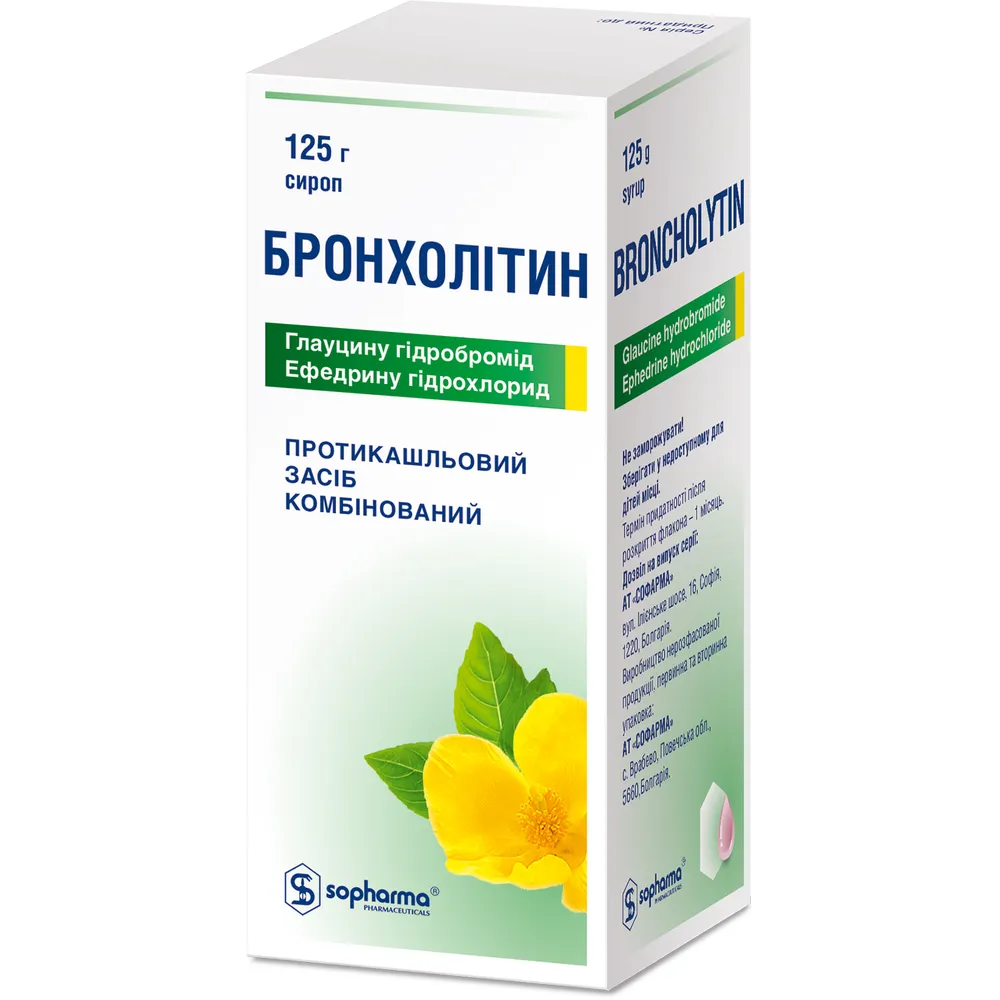
Table of Contents
INSTRUCTION FOR MEDICAL USE OF THE MEDICINAL PRODUCT BROMHOLYTIN (BRONCHOLYTIN®)
Composition:
Active substances: glaucine hydrobromide, ephedrine hydrochloride;
5 ml of syrup contain glaucine hydrobromide 5.75 mg; ephedrine hydrochloride 4.6 mg;
Excipients: basil oil, citric acid monohydrate, sucrose, methylparahydroxybenzoate (E 218), propylparahydroxybenzoate (E 216), polysorbate 80, ethanol 96%, purified water.
Pharmaceutical form. Syrup.
Main physicochemical properties: syrup-like liquid with the odor of basil oil.
Pharmacotherapeutic group.
Agents acting on the respiratory system. Antitussives and mucolytics.
ATC code R05FB01.
Pharmacological properties.
Pharmacodynamics.
Bronholitin is a combined agent with pronounced antitussive and bronchodilating effects. The complex action of the drug is due to the properties of its main components: glaucine hydrobromide and ephedrine hydrochloride. The alkaloid glaucine suppresses the cough center without affecting the respiratory center. It has a weak bronchospasmolytic and adrenolytic effect and does not cause habituation or dependence when used according to the section "Administration and dosage". Ephedrine is an adrenomimetic agent with both direct (stimulates alpha- and beta-receptors) and indirect (inhibits amine oxidase activity) actions. It induces the release of norepinephrine and epinephrine from their storage sites. Ephedrine exerts a spasmolytic effect on the smooth muscle of the bronchi. It provides prolonged relaxation of bronchial musculature due to pronounced stimulation of beta-2-adrenergic receptors. Under the influence of ephedrine, edema of the bronchial mucosa decreases and the bronchial lumen expands. Pharmacological studies of the medicinal product Bronholitin syrup show that it reduces the spastic effect of histamine on the bronchi.
Facilitation of sputum expectoration and bronchial dilation are due to the bronchodilating action of ephedrine.
Pharmacokinetics.
Absorption: after oral administration, glaucine and ephedrine are rapidly and completely absorbed from the gastrointestinal tract.
Distribution: maximum plasma concentration of glaucine is reached within 1.5 hours after administration.
Ephedrine is distributed throughout the body with accumulation primarily in the liver, lungs, kidneys, spleen, and brain.
Metabolism: glaucine and a small portion of ephedrine are metabolized in the liver.
Excretion: glaucine is excreted in urine both as metabolites and in unchanged form.
The elimination half-life of ephedrine is approximately 3–6 hours. It is mainly excreted unchanged in urine.
Clinical characteristics.
Indications.
As part of combination therapy for respiratory diseases accompanied by dry, non-productive cough: acute and chronic bronchitis, tracheobronchitis, bronchial asthma, pneumonia, bronchiectasis.
Contraindications.
- Hypersensitivity to the active substance or to any excipient of the medicinal product.
- Ischemic heart disease.
- Severe and/or uncontrolled arterial hypertension.
- Acute myocardial infarction.
- Severe organic heart diseases with signs of decompensation.
- Thyrotoxicosis.
- Pheochromocytoma.
- Closed-angle glaucoma.
- Prostatic hyperplasia with urinary retention.
- Insomnia.
Interaction with other medicinal products and other types of interactions.
Broncholytin can be used concomitantly with antibiotics, antipyretics, and vitamins. It reduces the effects of narcotic and sedative agents due to the presence of ephedrine in the formulation.
When used concomitantly with cardiac glycosides, certain sympathomimetics, quinidine, tricyclic antidepressants, halogenated anesthetics (halothane), the risk of cardiac arrhythmia increases. Similar effects may also occur with concomitant use of ergot alkaloids or oxytocin. When used simultaneously with reserpine, a sharp increase in blood pressure is possible.
Since ephedrine possesses properties of both alpha-agonists and beta-agonists, it should be used cautiously in patients who have undergone anesthesia with cyclopropane, halothane, or other volatile anesthetics.
Ergot alkaloids, monoamine oxidase inhibitors (MAO inhibitors), and oxytocin potentiate the pressor effect of ephedrine (risk of hypertensive crisis with concomitant use). If treatment with Broncholytin is necessary, a two-week interval should be observed after discontinuation of MAO inhibitors.
When used concomitantly with non-selective beta-blockers, the bronchodilatory effect of the medicinal product is reduced.
Sympathomimetics have an antagonistic effect on the antihypertensive action of beta-blockers.
Ephedrine may counteract the neuronal blocking effect of guanethidine, leading to loss of its hypotensive efficacy.
Ephedrine accelerates the metabolism of dexamethasone.
Concomitant treatment with Broncholytin and oral antidiabetic medicinal products may reduce their hypoglycemic effect.
The product should not be used concomitantly with cough-suppressant agents, both of central (codeine, codterpin) and peripheral (exalgit, libexin) mechanisms of action. Combination with agents causing decreased bronchial secretion (e.g., atropine derivatives) is not justified.
Concomitant use of ephedrine with theophylline may lead to increased nausea, nervousness, and insomnia.
Other medicinal products that stimulate the central nervous system (CNS), or plant-derived tonic beverages (coffee, tea, Coca-Cola), may enhance the CNS-stimulating effects of Broncholytin when used concomitantly.
In patients with arterial hypertension undergoing concomitant therapy with ephedrine and adrenergic neuron-blocking agents, loss of blood pressure control has been observed, which may also occur with the use of other antihypertensive agents.
Enhanced vasoconstriction and pressor effects of ergotamine or methysergide are observed; concomitant use of ergotamine is not recommended (risk of gangrene).
The effects of ephedrine may be reduced by acidification and increased by alkalinization of urine.
Special precautions for use
Due to its central nervous system (CNS) stimulating effect and potential to disrupt sleep, it is not recommended to take Broncholitin syrup after 4 p.m.
Use with caution in patients with diabetes mellitus and renal insufficiency.
Use with caution in patients prone to developing drug dependence.
If symptoms persist or the condition worsens after 5–7 days from the start of treatment, medical advice must be sought to evaluate the appropriateness of continuing therapy.
Cardiovascular effects may occur during treatment with sympathomimetics, including the medicinal product Broncholitin. Post-marketing surveillance data and literature reports include rare documented cases of myocardial ischemia associated with the use of beta-agonists (such as ephedrine hydrochloride). Patients with heart disease (ischemic heart disease, arrhythmia, or heart failure) who are using this medicinal product should be advised to seek medical help if chest pain or other symptoms of worsening cardiac condition occur. Particular attention should be paid to evaluating symptoms such as dyspnea and chest pain, as they may originate from either respiratory or cardiac causes.
Glaucine hydrobromide should not be used in productive cough associated with sputum production, as there is a risk of bronchial obstruction due to retention of bronchial secretions. Medical consultation is required in patients with labile arterial pressure. The product should be used with particular caution in patients with arterial hypertension and benign prostatic hyperplasia. Use with caution due to the risk of collapse resulting from the sympatholytic action of glaucine hydrobromide.
Children and elderly patients are more sensitive to the effects of ephedrine.
Tolerance and dependence may develop after prolonged use of ephedrine.
Broncholitin contains 43.75 g of sucrose per 100 ml. When used at recommended doses, each dose (5 ml) contains up to 2 g of sucrose. Patients with known sugar intolerance should consult a physician before taking this medicinal product. The product may be harmful to teeth.
Broncholitin contains up to 1.7 vol.% ethanol. Each dose (5 ml) contains up to 0.069 g of alcohol. This may be harmful for patients with liver disease, alcoholism, epilepsy, or brain disorders. Alcohol content should be taken into account when administering to pregnant women.
The syrup contains excipients methylparahydroxybenzoate (E 218) and propylparahydroxybenzoate (E 216), which may cause allergic reactions (possibly delayed).
The presence of ephedrine in the product may lead to a positive doping test in athletes.
Use during pregnancy or breastfeeding
Contraindicated during the first trimester of pregnancy and during breastfeeding.
There are no safety data regarding use during the second trimester; therefore, the product should be used only if the benefit to the mother outweighs the potential risk to the fetus.
If ephedrine is used during the third trimester, it may cause fetal tachycardia.
Ability to affect reaction speed when driving or operating machinery
The medicinal product should be used with caution when driving or operating machinery due to the action of ephedrine. Ephedrine may cause mydriasis and affect reaction speed during driving or operating machinery.
Dosage and Administration.
Take orally after meals.
Adults and children aged 10 years and older: 10 ml 3–4 times daily.
Children:
Aged 3 to 5 years: 5 ml of the preparation, diluted immediately before use in 10 ml of cooled boiled water, 3 times daily;
Aged 5 to 10 years: 5 ml 3 times daily.
The duration of treatment is 5–7 days.
Children.
Recommended for children aged 3 years and older.
Overdose.
Symptoms of overdose may include: nausea, vomiting, fever, loss of appetite, nervous excitement, tremor of extremities, dizziness, increased sweating, difficulty in urination, increased or decreased arterial pressure, headache, drowsiness, weakness, rapid fatigue, exacerbation of adverse reactions, paranoid psychosis, delirium, hallucinations.
Treatment: gastric lavage, administration of activated charcoal, and symptomatic therapy.
Adverse reactions.
When using the medicinal product Bronholitin, the following adverse reactions may occur:
From the immune system: hypersensitivity reactions (skin rashes, urticaria, itching sensation, angioneurotic edema, bronchospasm);
From the respiratory system, thoracic organs: dyspnea;
From the cardiovascular system: cardiac rhythm and conduction disorders, tachycardia, extrasystole, arrhythmia, palpitations, increased arterial pressure, myocardial ischemia, chest pain, impaired circulation in limbs;
From the nervous system: headache, tremor, excitement, anxiety, restlessness, insomnia, sedative effect, dizziness;
From the digestive system: dry mouth, anorexia, nausea, vomiting, constipation;
From the urinary system: difficulty in urination; in patients with prostate hyperplasia, urine retention is possible;
From the skin and mucous membranes: increased sweating;
From the sensory organs: visual disturbances;
Other: shortness of breath, weakness, increased libido, dysmenorrhea, tachyphylaxis, tolerance with development of dependence (with prolonged use).
Myocardial infarction occurs very rarely in patients taking ephedrine or pseudoephedrine.
Ephedrine may act as a stimulant in children with nocturnal enuresis and may cause insomnia; it may also produce sedative effects in some children.
Shelf life.
4 years.
Shelf life after opening the bottle – 1 month.
Storage conditions.
Keep out of reach of children. Store in the original packaging at a temperature not exceeding 25 °C. Do not freeze!
Packaging.
125 g syrup in bottles (capacity 125 ml) made of glass or polyethylene terephthalate (PET). Glass bottles are sealed with aluminum or polyethylene caps; PET bottles are sealed with polyethylene caps.
One bottle with a measuring cup in a cardboard box.
Supply category.
Over-the-counter.
Manufacturer.
JSC "Sofarma".
Manufacturer's name and address of business location.
16 Iliensko Shose Str., Sofia, 1220, Bulgaria.